Skip to content
  • Facebook
  • Instagram
  • LinkedIn
  • Youtube
  • BlueSky
  • Threads
Log in
Search Donate
  • About Parkinson’s
    • Understanding Parkinson’s
      • What is Parkinson’s?
      • Types of Parkinson’s
      • Causes of Parkinson’s
    • Signs and symptoms
      • Symptoms of Parkinson’s
      • Diagnosis
    • Facts and figures
      • Parkinson’s statistics
      • Research paper directory
      • Our latest insights
    • Supernav Block 1

      Latest Parkinson's news

      Stay up to date with the latest news stories about Parkinson's over on Parkinson's Life, our online magazine

      Learn more

  • Information and support
    • I have Parkinson’s
      • Newly diagnosed
      • Treatment
      • Complementary therapies
      • Self-help and living well
      • Research
      • Advanced stages of Parkinson’s
    • I am a carer
      • Carer advice and support
      • Carer self-care
      • Planning ahead
    • I am a professional
      • What patients want
      • Resources for healthcare professionals
      • Share your work with the Engagement Network
      • Research Strategy
    • Supernav Block 2

      Self-help and living well

      Find advice on a range of topics to help you live life to the full, from diet and exercise to travel, work, sleep, relationships and leisure activities.

      Learn more

  • About us
    • Who we are
      • Our history
      • Our members
      • Our partners
      • Governance
      • Meet the team
    • What we do
      • Our mission, vision and goals
      • How we are funded
      • Our impact
    • Our work
      • Parkinson’s Europe strategy 2025-2028
      • Defining the impact of Parkinson’s in Europe
      • Helping the European Parkinson’s community grow stronger together
      • Ensuring the voice of the European Parkinson’s community is heard
      • Latest news and updates
    • Supernav Block 3

      Parkinson's Engagement Network

      Join our Engagement Network and be the first to receive opportunities tailored to your interests direct to your inbox

      Learn more

  • Get involved
    • Connect with us
      • Join our Engagement Network
      • Sign up for our newsletter
      • Become a member
      • Contact us
    • Support us
      • Donate
      • Sponsorship and partnership
    • Campaigns
      • World Parkinson’s Day 2026
      • Disease-Modifying Therapy: a new way to slow the progression of Parkinson’s?
      • Parkinson’s treatments when medication becomes less effective
      • Welcome in the Workplace: Parkinson’s and your rights at work
      • Sign our pledge for improved healthcare services for people with Parkinson’s in Europe
      • Advocacy
      • Past campaigns
    • Supernav Block 4

      Find events near you

      Our interactive Parkinson's map shows a range of resources across Europe, from member organisations to events, activity groups to research and campaigns

      Learn more

  • Parkinson’s Life
  • In your country
Search Donate

Home

Year in Review: 10 highlights from 2025

As the year winds down, we take a moment to reflect on the highlights of 2025 with our Parkinson's Life Year in Review
23 December 2025 By Verity Willcocks
News Year Review
Year in Review: 10 highlights from 2025

In 2025, Parkinson’s Europe marked ten years of publishing our online magazine, Parkinson’s Life! We hope you have found our articles interesting, inspiring and informative.

To mark the occasion, below we have selected ten of the best articles published in Parkinson’s Life this year. They include the testimony of well-known person with Parkinson’s Matt Eagles, who celebrated 50 years since his diagnosis this year.

You’ll also find lifestyle tips on walking, dietitian-designed Parkinson’s nutrition programmes and delicious recipes to try.

And for food for thought, there’s our ‘Welcome in the Workplace’ survey findings on working with Parkinson’s. Plus we outline how we will work our hardest to improve lives for people with Parkinson’s guided by the new strategy we launched at the start of the year.

If you have a story idea, interview suggestion or a topic you’d like covered in more detail in 2026, please do get in touch – you can email us at [email protected].

1. We introduce a new Parkinson’s Europe strategy for 2025–2028

Parkinson's Europe strategy 2025-2028

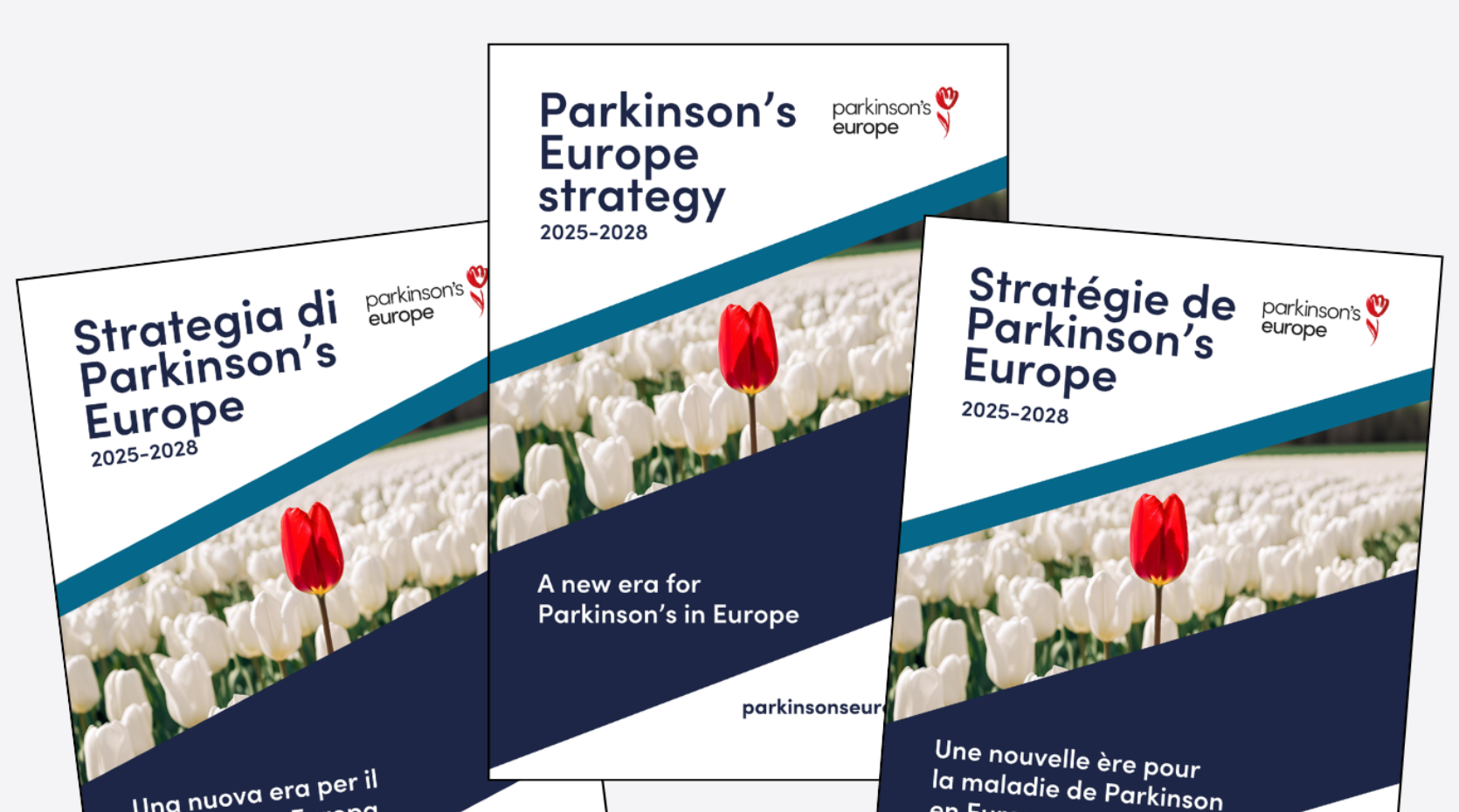
How will Parkinson’s Europe advocate for and amplify the voices of people with Parkinson’s across Europe over the next few years? At the beginning of 2025, we set out how we plan to do this in our brand-new four-year strategy.

Developed with people with Parkinson’s firmly at its heart, the strategy drew on our manifesto, which was created using a survey of almost 1,000 people from the Parkinson’s community across 39 countries, as well as a recent members survey. From these sources the strategy’s three interlinked pillars emerged: Data and Innovation; Empowerment; and Awareness and Visibility.

Data and Innovation focuses on the urgent need to collect data that will give us a clear picture of Parkinson’s in Europe – we need this hard evidence to help us make change.

The Empowerment pillar embodies building tools to help Parkinson’s organisations in Europe better support people with the condition in their country. Growing our Engagement Network is also part of this (sign up here). We are already planning to launch an Engagement Network online hub in 2026.

Our Awareness and Visibility pillar centres on raising awareness that Parkinson’s is the world’s fastest-growing neurological condition – with a particular focus on targeting decision-makers within Europe who have the power to make a difference.

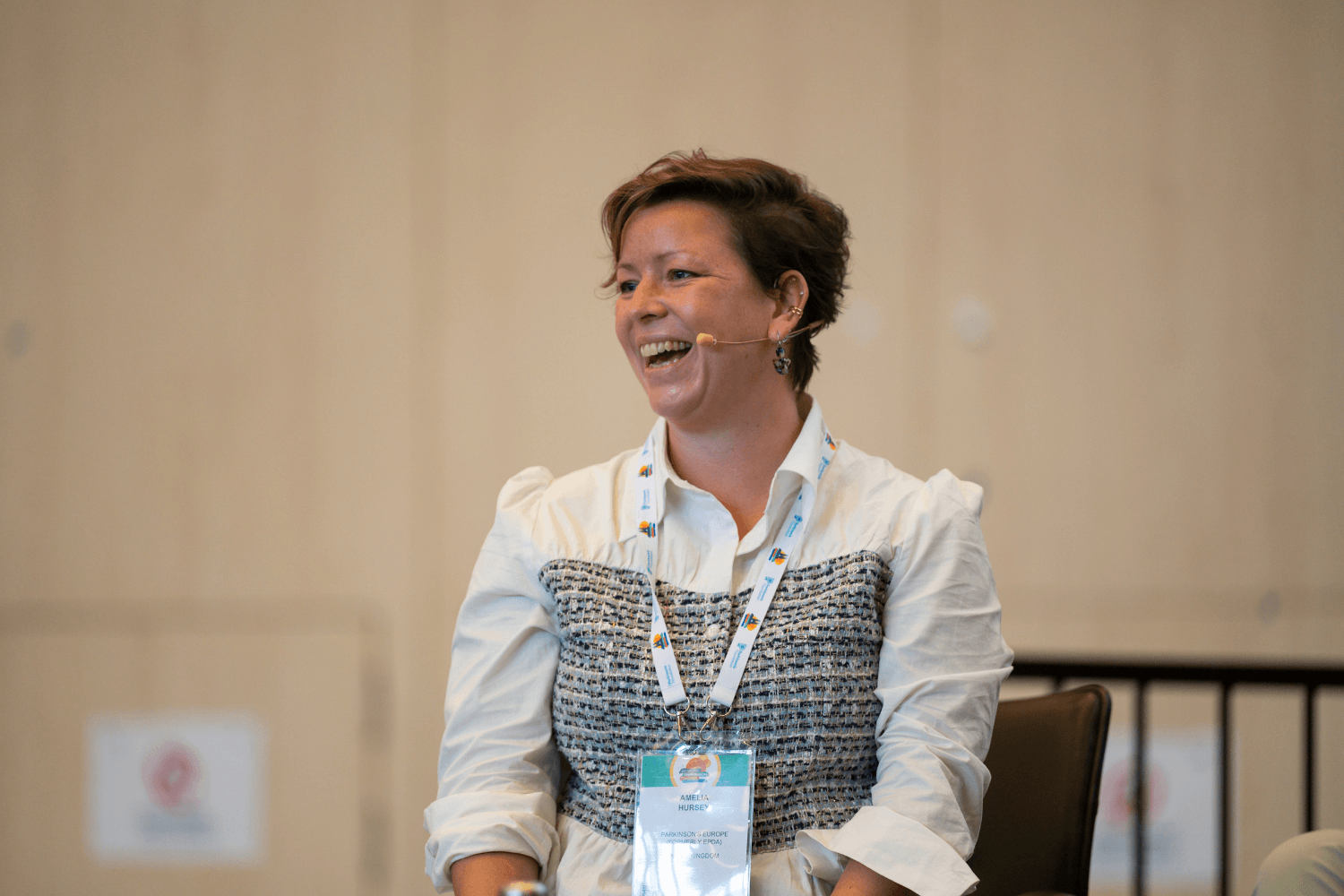
Parkinson’s Europe Strategic Director Amelia Hursey, who led the creation of the strategy, says: “We are excited that all these three pillars interlink and coexist together. Without data and innovation, we cannot empower our community; if we do not empower them, we will not increase visibility. Without visibility, we will not have access to the new innovations out there.”

2. New Parkinson’s research centre opens at Denmark’s University Hospital

Lundbeck Foundation Parkinson's Disease Research Center Director, Professor Per Borghammer

Investigating the causes of Parkinson’s will be one of the core aims of the Lundbeck Foundation Parkinson’s Disease Research Center, now open at Aarhus University Hospital in Denmark, the centre’s head, Professor Per Borghammer, told us in an interview.

Prof. Borghammer, senior consultant at the Department of Nuclear Medicine & PET, said there were questions to be asked about pesticides and toxic substances, as well as virus infections and inflammatory bowel disease. He said: “The more we know about these things, the better we will be able to perhaps even prevent a lot of Parkinson’s cases from ever emerging.”
He also said that the centre, which has a DKK313m (€41.9m) 10-year research centre grant from the Lundbeck Foundation, will have a strong focus on clinical trials. These will include those researching the relief of non-motor symptoms, which he called “the largest unmet need in Parkinson’s”, as well as contributing to disease modification research.

3. “It’s been a quiet miracle,” writes Janette Sinclair on her DBS experience

A photo of Janette Sinclair who is sharing her DBS experience

If you’re considering having DBS (Deep Brain Stimulation surgery), this detailed personal account by Parkinson’s Europe Board member Janette Sinclair is a must-read. A UK national living in Brussels in Belgium, Janette underwent DBS at Leuven University Hospital in January. In May, she wrote in detail about her experience, covering everything from deciding to have the procedure and the pre-op checks to last-minute nerves, what sort of device to have implanted and finally the operation itself. She also explained how she felt after the operation, and what happened when the DBS device was switched on.

“There was no ‘Eureka!’ moment for me: the device just took the place of the drugs I had been taking, only it worked all the time, with no dosage fails or nighttime panics. A quiet miracle,” she wrote.

4. LGBTQIA+ people with Parkinson’s experience higher levels of depression, research reveals

LGBTQ+ people living with Parkinson’s experience higher rates of depression and anxiety,‘Parkinson’s Research With Inclusion, Diversity, And Equity (Pride)’ study reveals

LGBTQIA+ people with Parkinson’s experience higher rates of depression, anxiety, disability and loneliness compared to their cisgender, heterosexual peers, a new study from The University of Nevada, Las Vegas revealed in June, Pride month.

Responding to the ‘Parkinson’s Research With Inclusion, Diversity, And Equity (Pride)’ study from the Rainbows of Aging Team, Parkinson’s Europe President Josefa Domingos said: “We know that loneliness, anxiety, and depression are common among people living with Parkinson’s. For LGBTQIA+ individuals living with Parkinson’s, these feelings can become even more intense, often feeling invisible or isolated,” she said.

“As a Parkinson’s community, we must do better. True care goes beyond treating symptoms. It means seeing and supporting the whole person with dignity, inclusion, and compassion every step of the way.”

5. Travel tips from the Parkinson’s community

Rory Cellan-Jones: tips on travelling as a person with Parkinson's

To celebrate the relaunch of The Parkinson’s Passport, we asked people with Parkinson’s across Europe about their travel plans for the summer, as well as their hacks for travelling and holidaying as a person with Parkinson’s.

Parkinson’s Europe Board member Cathy Molohan makes sure her DBS battery is well charged in case of delays, while Rory Cellan-Jones, UK journalist and Movers and Shakers podcaster, acknowledges the effect stress has on his symptoms, as well as the need to download audiobooks for his insomnia. President of the Greek Association of Patients and Caregivers PAR.KIN.S.O.N., Fotini Skondra, takes a rolator wheelchair to help her walk, and to sit in if she can’t walk at all, while Rune Vethe, of Norwegian cycling club ZWAP (Zwifters Against Parkinson’s) always books an aisle seat on the right-hand side of the plane due to dystonia in his left foot. One thing’s for sure, they don’t let Parkinson’s get in the way of enjoying their holidays!

6. Delicious recipes for people with Parkinson’s

10 delicious recipes for people with Parkinson's

A balanced, nutritious diet can have a hugely positive impact on people with Parkinson’s. To celebrate ten years of Parkinson’s Life, we shared ten Parkinson’s-friendly recipes from over the decade.

There’s everything from light summer salads to hearty winter soups. Plus, there’s a luxurious three-course Christmas meal designed by Michelin-star Scottish chef Martin Wishart that’s easy to chew as well as indulgent. This selection proves that healthy food can also be mouth-watering.

7. Walking tips for people with Parkinson’s from Parkinson’s Europe President and physio Josefa Domingos

Physio-approved walking tips for people with Parkinson’s

Exercise has excellent benefits for people with Parkinson’s, but the condition can make walking more difficult. Problems with gait can lead to shuffling, while poor balance and freezing (the sensation of feet being glued to the floor) can also affect walking.

In this article, physiotherapist (and President of Parkinson’s Europe) Josefa Domingos – who has decades of experience in providing physiotherapy for people with Parkinson’s – gave her tips on everything from daily stretching and strengthening and how to improve stride to using walking cues and the importance of wearing the right shoes.

8. New Parkinson’s nutrition programme launches

New dietitian-approved Nutrition Parkinson's programme launches with 'Mediterranean Parkinson's'

In September, we spoke to Richelle Flanagan, a registered dietitian with young-onset Parkinson’s, about NutritionPD, her online diet programmes for people with Parkinson’s.

Richelle said: “NutritionPD’s mission is to give people with Parkinson’s and their caregivers reliable nutrition information. All programmes have been designed by dietitians who understand Parkinson’s and cover topics like the Mediterranean diet, gut health, and weight management. Our first programme, Mediterranean Parkinson’s, is already helping people feel better.”

Through NutritionPD, people with Parkinson’s can learn how to deal with various symptoms from constipation to gastroparesis, functional dyspepsia and more. You can also find out how what and when you eat affects how well your Parkinson’s medications work.

9. Careers cut short, financial loss and stigma – our survey told a bleak story of working with Parkinson’s

Careers cut short, financial loss and fear of stigma - new survey paints damning picture of working with Parkinson’s

People with Parkinson’s have the potential to work for longer if given adequate support in the workplace, a Parkinson’s Europe study discovered.

Lack of knowledge around workplace rights, fear of stigma and steep financial losses were also among key findings in our ‘Welcome in the Workplace’ survey, which drew responses from nearly a thousand people living with Parkinson’s from across the globe.

The survey was conducted as part of our Welcome in the Workplace campaign. It aimed to inform and empower those who live and work with Parkinson’s, including guidance on how to have important conversations around working with Parkinson’s after diagnosis.

10. Parkinson’s advocate Matt Eagles on 50 years since his diagnosis

“It takes positivity, courage, and a relentless desire to live your best life": Parkinson's advocate Matt Eagles on 50 years since his childhood diagnosis

Matt Eagles is a well-known figure in the Parkinson’s community. For many, the 57-year-old, who was diagnosed with the condition on his seventh birthday, is familiar as the founder of the positivity-powered Parkylife project, or as co-leader and founding member of PD Avengers. For others, it is as a respected advocate who speaks honestly about the Parkinson’s experience – from the challenges to the importance of a positive mindset. We marked 50 years since his diagnosis on 7 November 1975 with this powerful interview.

“Surviving 50 years living with a degenerative chronic neurological condition like Parkinson’s takes positivity, courage, resilience, a large degree of vulnerability, heartache and tears of joy, a support network that always has your back, a desire to bounce back from adversity and a relentless desire to live your best life to survive,” he said.

Read More

Bertrand Delhom aboard and at the wheel of the Neptune during the Ocean Globe Race
News
18 December 2024

Year in Review: 10 highlights from 2024

It’s been a massive year for the Parkinson’s community, from the awareness-raising World Parkinson’s Day 2024 and innovative gender-specific studies...
Read More
News
01 January 2024

5 of our top Parkinson’s Life stories from 2023

Highlights from our most popular stories in 2023
Read More
Man lifting weights
News
29 December 2022

7 of our favourite Parkinson’s Life stories from 2022

Sharing voices from the global Parkinson’s disease community
Read More
Home

Global Alliance for Parkinson’s Platforms (GAPP) unites global trials leaders

18 December 2025 By Verity Willcocks
News clinical trialsdisease modifying treatmentsfranceUK
Global Alliance for Parkinson’s Platforms (GAPP) unites global trials leaders

UK-based organisation Cure Parkinson’s has united with France Parkinson to form new platform trials organisation Global Alliance for Parkinson’s Platforms (GAPP), it announced in November.

GAPP was formed at the second annual International PD-Platform Meeting, which united leaders of Parkinson’s platform trials from around the globe.

Through GAPP, Cure Parkinson’s and France Parkinson hope to speed discovery of new Parkinson’s treatments by strengthening coordination across platform trials worldwide, ensuring they work together rather than in isolation.

Platform trials differ from regular clinical trials in that they test multiple treatments within a single, flexible trial structure. It is hoped that with GAPP’s involvement, potential disease-modifying therapies – treatments that could slow the progression of Parkinson’s – will be evaluated more quickly.

Explaining how the new organisation will work, Simon Stott, Director of Research at Cure Parkinson’s, said: “The creation of GAPP brings together leaders of major Parkinson’s platform trials from the UK, France, the US, Norway and Australia. We will actively involve people living with Parkinson’s, share resources, align data standards, and harmonise study procedures. GAPP will therefore reduce duplication, support smart drug selection, and promote shared learning and insights into regulatory trends across countries.” 

The alliance is made up of a steering group and different working groups, which will focus on drug preparedness, data harmonisation, biomarkers, long-term sustainability and public and patient involvement and engagement (PPIE).

It is hoped that by strengthening global engagement with industry partners, GAPP will make it easier for biotech and pharmaceutical companies to partner with platform trials, contribute candidate drugs (those which have shown potential in early research), and collaborate across regions.

Strengthen impact and create clearer path

By connecting national initiatives in a global effort, GAPP aims to strengthen the scientific impact of each platform trial and create a clearer path from early-phase discovery to definitive late-phase trials.

CEO of Cure Parkinson’s Helen Matthews said: “With France Parkinson we are very proud to have created a global collaboration for Parkinson’s platform trials. This collaboration will speed up progress, improve efficiency and ultimately accelerate a cure.”

Marie Fuzzati, Scientific Director of France Parkinson, said: “France Parkinson is proud to take part in, and to co-coordinate, this international effort alongside Cure Parkinson’s. Only through collaboration and the sharing of international expertise will we be able to advance knowledge and strengthen research, bringing us closer to discovering treatments capable of slowing the progression of Parkinson’s.”


Read More

“Parkinson’s requires an interdisciplinary approach”: UCC’s Suzanne Timmons on leading Ireland’s €4m research hub PD-Life
News
19 November 2025

“Parkinson’s requires an interdisciplinary approach”: UCC’s Suzanne Timmons on leading Ireland’s €4m research hub PD-Life

A new University College Cork-led project, PD-Life, has received €4m to create Ireland’s first all-island Parkinson’s research hub. The project...
Read More
Cure Parkinson’s launches £2m funding call for combination therapies research
News
15 October 2025

Cure Parkinson’s launches £2m funding call for combination therapies research

UK-based organisation Cure Parkinson’s has launched a £2 million funding call to test rationally designed combination therapies for disease modification...
Read More
Logos for Cure Parkinson's and Alzheimer's Research UK
News
12 August 2025

Cure Parkinson’s and Alzheimer’s Research UK announce new partnership

Two leading neurodegenerative research charities in the United Kingdom, The Cure Parkinson’s Trust and Alzheimer’s Research UK, have launched a...
Read More
Home

Parkinsong Contest winner revealed

16 December 2025 By Christy McGhee
News musicSinging
Parkinsong Contest winner revealed

Parkinsong has announced Rob Georg and Kristin K. Smith’s ‘Climb This Mountain’ as the winner of its 2026 Parkinson’s song contest.

The non-profit organisation was launched in 2019, with WPC, and the new contest has attracted entries from around the world. The final shortlist featured 18 recent works from countries including Australia, Austria and Belgium.

Parkinsong CEO Gerald Ganglbauer said the Parkinsong Contest was launched for 2026 because: “I had done duets/awards and blues/grants, so it was time to try something new.”

Votes were gathered via ‘likes’ on each entry’sYouTube video. The successful entries will feature in a professionally produced album, and a show at World Parkinson Congress in Phoenix, Arizona in May 2026.

‘Catchy, feel-good tune’

Ganglbauer told Parkinson’s Life: “Make yourself comfortable in front of your big screen smart TV and watch the playlist. What you will see is of the highest quality and creativity. My favourites are René van Helsdingen, and David Sangster’s animation video.”

“Climb This Mountain is a feel-good clip that reminds of The Sound of Music,” he said of the winning entry. “Cowboys don’t cry, and Rob has a gentle voice. He is a good man as well as one loving his family. We would want him as our son. The tune is catchy too.”

Watch Parkinsong Contest Winner 2026:

Parkinsong Contest winner ‘Climb This Mountain’, by Rob Georg and Kristin K. Smith

He had a hard grip on the reins
As he led me up the Rocky Mountains
Singing all the way
Na na na na na na

My daddy never was afraid
He never lost his balance
Never let me stray
Na na na na na na

Pop Then one night
When he and I were drinkin‘
His hands they started shakin‘
And I knew he would never be the same
And I promised him that I would take the reigns

We’ll climb this mountain
Just like we used to
We’ll cross the river
This time I’ll pull you through
Though life is rocky And your grip is slippin‘
We’ll climb this mountain

We’ve had some hard years
But some good days
And I hold on tight
To every word that he says
Thought we lost him once or twice
But somehow he comes back to life
Even though it’s getting harder to fight

We’ll climb this mountain
Just like we used to
We’ll cross the river
This time I’ll pull you through
Though life is rocky
And your grip is slippin‘
We’ll climb this mountain

Even if the earth is shaking
Under your feet
Trying to knock you to the ground
I’ll be making sure you’re steady
Hold on to me
You can never keep a good man down

INSTRUMENTAL

We’ll climb this mountain
Just like we used to
We’ll cross the river
And this time I’ll pull you through
Though life is rocky And your grip is slippin‘
We’ll climb this mountain

And I sing for him
Na na na na na na
Na na na na na na
Na na na na na na na
Na na na na na na
Na na na na na na
Na na na na na na na


Read More

Birdie Belgium launches new song for World Parkinson's Day
Stories
07 April 2025

“I hope to bring awareness, and open up a safe space to talk”: Birdie Belgium on why she is releasing a new song for Parkinson’s

Belgian singer-songwriter Birdie Belgium is launching a new song on 11 April, to raise awareness and funds for Parkinson’s. A heartfelt...
Read More
'What if Father Christmas had Parkinson’s disease?': The Chase's Paul Sinha joins Paul Mayhew-Archer to perform festive poem
Stories
15 December 2025

‘What if Father Christmas had Parkinson’s disease?’: The Chase’s Paul Sinha joins Paul Mayhew-Archer to perform festive poem

Paul Mayhew-Archer shares his festive message with the Parkinson's community
Read More
Stories
16 September 2021

“With Parkinson’s disease, rhythm can help you walk and singing can help you speak”

We hear from Parkinsong founder Gerald Ganglbauer
Read More
Home

Christmas recipes: four-course festive meal that’s great for people with Parkinson’s

Prepare a stress-free festive meal that’s nutritious for everyone, including people living with Parkinson's
15 December 2025 By Joan van Haaften
Recipes ChristmasRecipes & Nutrition
Christmas recipes: four-course festive meal that’s great for people with Parkinson’s

Looking for ideas and recipes to create a delicious, nutritious and Parkinson’s-friendly Christmas meal? The team behind the Dutch Parkinson’s cooking project ‘Lekker eten met Parkinson’ have adapted a four-course festive menu that can be enjoyed by everyone, and will ensure that people with Parkinson’s get all the necessary nutrients to stay healthy.

Serves: 4

First course – Salmon fillet marinated in lime juice with aniseed and cabbage salads

Ingredients

  • 500g salmon fillet
  • 100ml lime juice
  • 2 tbsp raisins
  • 2 tbsp white wine or cider vinegar
  • 2 tbsp red wine or raspberry vinegar
  • 200g white cabbage
  • 200g red cabbage
  • 2 tbsp sunflower oil
  • 1 tbsp fresh tarragon (chopped)
  • 1 tbsp aniseed
  • 1/3 tsp cayenne pepper
  • Salt
  • Sunflower oil

Preparation

Start your preparations for this dish at least four hours before serving. Start your preparations for the salads a day before serving.

  • Cut the salmon into equal slices, each 2cm thick (approx.).
  • Sprinkle salt, aniseed and hot pepper on both sides slices and leave in the fridge to rest for 30 minutes.

Dressing

  • Place the marinated slices into the lime juice for 90 minutes on each side.
  • Mix the lime juice with the sunflower oil and the tarragon into the dressing.

Salads

  • Put two tablespoons of raisins in vinegar, leave for two hours.
  • Add to the sliced cabbages.
  • Add salt and freshly ground black pepper, oil and tarragon.
  • Place the salads in two parallel lines in the middle of a plate.
  • Place the salmon slices on top and sprinkle with the dressing.

A tip for leftovers

  • Leftover salmon in lime juice can be made into salmon tartare, soup or salad.
  • Any extra cabbage together with (leftover) mashed potatoes can be made into a nutritious soup.
  • You can change the taste of the cabbage salad, which remains fresh up to five days, by combining with boiled chicken.

Second course: Porcini enriched poultry broth with ravioli filled with chicken and/or mushrooms

Ingredients

  • 2 chopped of sunflower oil
  • 1kg chicken wings
    200gr mixed small vegetables
  • 2 celery ribs with leaves
  • 2 medium carrots2 onions
  • 1 leek
  • 100g dried porcini mushrooms
  • 2 cloves
  • 4 bay leaves
  • 6 peppercorns (whole)
  • 12 Chinese ravioli leaves
  • 250g mushrooms
  • 1 tbsp flour
  • 1 tbsp chives or sage
  • 1 egg yolk mixed with 1 tsp oil

Preparation

Start your preparations for this broth a day before serving.

  • Heat the sunflower oil in a pan.
  • Add the chicken and vegetables and sauté until brown.
  • Add 1 litre of cold water and the porcini.
  • Slowly bring to a boil.
  • Simmer for at least four hours.
  • Take out the chicken, vegetables and porcini.
  • Remove meat from the bones.
  • Rinse and chop the porcini.
  • Refrigerate the broth for eight hours overnight, skim fat from the surface.
  • Chop the mushrooms and fry in oil.
  • On a low heat, add porcini, chicken meat, flour and 2 tbsp water.
  • Cook for five minutes, refrigerate and chop fine in your KitchenAid.
  • Mix in the herbs.
  • Brush egg yolk with oil onto each pastry leaf.
  • Place a teaspoonful of the mushroom mix on the corner of each leaf and fold into a triangle.
  • Poach for five minutes in broth.

A tip for leftovers

  • Broth can easily be deep frozen and served at any time.
  • Any extra ravioli can be kept in the fridge.

Main course – Pulled wild boar or venison stewed in dark ale with plums, mashed potatoes, parsnip and broccoli

Ingredients

  • 800g stewing venison or boar (large chunks)
  • 2 tbsp sunflower oil
  • 1 tbsp crushed juniper berries
  • 1 tsp rosemary leaves
  • 1 tbsp chopped thyme leaves
  • 2 tbsp of flour
  • 5 bay leaves
  • 1 bottle brown ale
  • 1 tbsp of red wine vinegar
  • 12 prunes
  • Parsnips (as much as you like)
  • Broccoli (as much as you like)

Preparation

Start your preparations for this stew a day before serving it.

  • Mix juniper berries, rosemary, thyme leaves and flour with some black pepper and salt.
  • Toss your meat through this mix and press until well coated.
  • Heat the oil in a large pan at a high temperature.
  • Fry the meat on all sides to brown.
  • Add bay leaves, ale, vinegar and some water to cover the meat.
  • Cook on a very low fire until your meat falls apart.
  • Take the meat out and refrigerate; pull into strips.
  • Reduce the liquid left in the pan on a high fire until 250ml (approx.) is left.
  • Put the pulled meat in the sauce, add the prunes.
  • Fry the parsnip in sunflower oil.
  • Heat the broccoli in your microwave.
  • Put the parsnip in the middle of a plate and arrange the meat over it.
  • Arrange broccoli around the meat.

A tip for leftovers

  • With the leftover meat you can fill a pasty or garnish a soup
  • Consider adding: some walnuts, cumin seed, small onions, celery or chopped fine herbs, to the sauce.

Dessert – Winter trifle; chestnut purée and cottage cheese, apple, chopped amarena cherries and oatmeal cookies

Ingredients

  • 300g sweet chestnut purée
  • 250g cottage cheese
  • 1 teaspoon vanilla sugar
  • 1 apple (finely diced)
  • 200g amarena cherries (finely chopped0
  • 120g crumbled oat cookies
  • Amaretto liqueur
  • Homemade custard

Preparation

  • Poach the diced apple for two minutes in hot water with some sugar.
  • Mix together the chestnut purée, cottage cheese and vanilla sugar.

Presentation

Build your trifle in layers in a large glass bowl or in a separate glass for each guest.

Taste tips

  • Use alternative fruits.
  • Replace the cottage cheese by a soy product
  • Add a scoop of sherbet ice.

A tip for leftovers

  • This dessert can be kept in the fridge for at least five days.

Explore our collection of Parkinson’s-friendly recipes

Read More

'What if Father Christmas had Parkinson’s disease?': The Chase's Paul Sinha joins Paul Mayhew-Archer to perform festive poem
Stories
15 December 2025

‘What if Father Christmas had Parkinson’s disease?’: The Chase’s Paul Sinha joins Paul Mayhew-Archer to perform festive poem

Paul Mayhew-Archer shares his festive message with the Parkinson's community
Read More
Yves Meersman
Advice
09 July 2025

Prepare the perfect festive dinner with Parki’s chef Yves Meersman

Expert 'mise en place' tips for a stress-free Christmas dinner
Read More
10 delicious recipes for people with Parkinson's
Recipes
26 August 2025

10 delicious recipes for people with Parkinson’s

It is well known that a balanced, nutritious diet can have a hugely positive impact on people with Parkinson’s. For...
Read More
Home

‘What if Father Christmas had Parkinson’s disease?’: The Chase’s Paul Sinha joins Paul Mayhew-Archer to perform festive poem

UK comedy legend Paul Mayhew-Archer, who was diagnosed with Parkinson’s in 2011, joins celebrity friends to perform a poem which imagines that Father Christmas has Parkinson’s
15 December 2025 By Christy McGhee  Sarah McGrath 
Stories CelebritiesChristmasPaul Mayhew-ArcherUK
‘What if Father Christmas had Parkinson’s disease?’: The Chase’s Paul Sinha joins Paul Mayhew-Archer to perform festive poem

What if Father Christmas had Parkinson’s? This is the question posed in a festive poem written by UK TV comedy writer, Paul Mayhew-Archer MBE, performed for charity by Parkinson’s community members including British quiz host and broadcaster Paul Sinha and former England rugby star Mike Tindall.

Mayhew-Archer, the co-creator of iconic British comedy ‘The Vicar of Dibley’, wrote the poem as part of a Christmas appeal for UK charity Cure Parkinson’s.

Shown in the video below, ‘When Santa got Parkinson’s’ was performed online by members of Parkinson’s community at the virtual Christmas concert, ‘Carols for a Cure’.

The poem imagines a Christmas where Santa Claus is diagnosed with Parkinson’s, in a humorous and touching story that ends by encouraging the public to help in the search for a cure for the condition.

Speaking to Parkinson’s Life, Mayhew-Archer shared a special Christmas message with the Parkinson’s community that perfectly reflects his legendary humour.

“To all Parkies – treasure the funny moments,” he said. “One morning it took me ten minutes to get my jumper on, and I finally managed it just as my wife came into the bedroom. ‘Oh no, not that jumper’, she said and whipped it off in an instant. Remembering that moment still makes me laugh, even when I’m feeling low.”

 Performing the poem

Paul Mayhew-Archer

Mayhew-Archer was diagnosed with Parkinson’s in 2011. He was appointed a Member of the Order of the British Empire for his services to people with the condition in 2020.

Joining Mayhew-Archer to virtually perform the poem were other notable figures from Parkinson’s community, including Parkinson’s Africa founder Omotola Thomas and British journalist Rory Cellan-Jones.

Watch ‘When Santa got Parkinson’s’:

Paul Mayhew-Archer’s Parkinson’s Christmas poem: ‘What if Father Christmas had Parkinson’s disease?’

Santa Claus has super powers,
Which mean that in a matter of hours
He can travel the world and deliver a toy
To every girl and every boy.

But a while ago he felt less well.
He found he’d lost his sense of smell.
When Rudolph had the squits in the spring,
Santa couldn’t smell a thing.

His writing got smaller, harder to read
He couldn’t walk at considerable speed,
and when he began to wobble and freeze
a doctor diagnosed Parkinson’s Disease.

This shocked Santa through and through.
But he knew straightaway what he had to do.
If he wanted to deliver a toy,
to every girl and every boy
he had to start that afternoon

Till his wife said “Santa, it’s the middle of June.
Please wait until Christmas Eve –
you might be amazed at what you achieve.”

So Santa did as she suggested, and
on his Christmas Eve, fully rested,
he climbed aboard the golden sleigh, and
was very, very quickly away.

At first all went wondrously well,
Across the world he cast his spell.
Into homes he quietly crept
and left a toy as children slept.
And if he found a Santa treat,
He’d quickly drink and quickly eat.

So he was feeling very merry.
As he downed his 100th sherry.
By merry of course, I mean elated –
Santa was never intoxicated.

But sadly, as the night went on,
his Parkinson’s made things go wrong.
Because his writing was very small,
he could barely read some words at all,
which meant that often he was not able
to read what he’d written on every label.
And so not every girl and every boy was
being given the right toy.

Then as he was passing Dover,
a customs official pulled him over.
“We’ve taken back control,”
said the officer on patrol.
“You’re passing through a UK border,
so I hope your paperwork’s in order.
I’ll need to see what’s in those sacks,
and check you’ve paid the right amount of tax.”

At that point Santa began to wobble and sway,
so he was asked if he’d been drinking that day.
When he said how much he’d swallowed,
as you can imagine, his arrest quickly followed.

They took the reindeer, they impounded the sled.
The contract for Christmas went to Amazon instead.
But Christmas without Santa just wasn’t the same.
Millions continued to whisper his name.

The only man loved in every nation,
adored by every generation.
He gave the world a sense of wonder.
And so the world now undertook to get Santa back,
by giving Parkinson’s the sack.

So every nation worked hell for leather,
even the French and the English worked together.
And today we got the gift we’ve been longing for.
We got the news they found a cure!

So I was grinning ear to ear
when I told my love “I’m in the clear!”
And my love said “Ah, my dear,
that was just a dream, I fear.”

So my moment of exhilaration
was thanks to a Parkinson’s hallucination.
And I, like others, must endure
this thing for which there’s still no cure.
Unless, that is, all of you,
can help to make our dream come true.

“Meanwhile, Santa of course is fine and dandy.
Just don’t leave him a sherry – he’s moved on to brandy.”


Read More

Recipes
15 December 2025

Christmas recipes: four-course festive meal that’s great for people with Parkinson’s

Prepare a stress-free festive meal that’s nutritious for everyone
Read More
Quotes from celebrities and famous people with Parkinson’s – including Michael J Fox, Superman star Valerie Perrine, and Ozzy Osbourne
Insights
08 December 2025

“Live in the moment”: quotes from celebrities and famous people with Parkinson’s – including Michael J Fox, Superman star Valerie Perrine, and Ozzy Osbourne

Live for today, make lifestyle changes, and tell people in your own time – these are some of the wise...
Read More
Movers and Shakers’ podcast creators, including Rory Cellan-Jones, are taking the Parky Charter petition to UK Parliament
Stories
15 July 2025

“You have to build a community”: Movers and Shakers’ podcast’s Rory Cellan-Jones on taking the Parky Charter to Parliament

On 10 March, the presenters behind the well-known UK Parkinson’s podcast Movers and Shakers reignited their Parky Charter campaign by...
Read More
Home

29 powerful quotes about Parkinson’s disease – words of encouragement from people living with Parkinson’s

Quotes and words of support, hope, wisdom, and sheer honesty from people living with Parkinson's
09 December 2025 By Christy McGhee  Sarah McGrath 
Stories quotes
29 powerful quotes about Parkinson’s disease – words of encouragement from people living with Parkinson’s


If you are looking for words of encouragement for someone with Parkinson’s, there is perhaps no better place to look than within the Parkinson’s community itself.

Here, we share some of the words of hope, wisdom, and sheer honesty from people living with Parkinson’s, from the tough moments to the ways their diagnosis has shaped their lives and led to new perspectives and experiences.

Words of encouragement for people living with Parkinson’s

1. “We need more awareness to break the myths and stereotypes around the condition… It can impact anyone, regardless of age or ethnicity.”

It took a decade for Manon Day to receive her Parkinson’s diagnosis. She explains why better understanding was needed around who the condition affects.

Read Manon’s story.

2. “Parkinson’s can be the wake-up call to transform yourself into a better person.”

Sharing his perspective on the link between Parkinson’s and identity, US-based motivational speaker John Baumann explains how the diagnosis has influenced what he values most in life.

Read John’s story.

3.”Go out and explore new avenues. There is so much to see and learn. Parkinson’s is tough, but I have been touched by the incredible kindness of people who have helped me along my way.”

Some 20 years after being diagnosed with Parkinson’s, Cecilia Gordon speaks to Parkinson’s Life about how the condition has enriched her relationships with people and art.

Read Cecilia’s story

4. “No matter what science can do for people living with Parkinson’s, we must prepare our brain and body to face all difficulties.”

Nikolas Koukoulakis tells us how he has indulged in his love of powerlifting by coaching a team of people living with the condition in Greece – and why he encourages others to stay active.

Read Nikolas’s story.

Nikolas Koukoulakis.

5. “I wanted to be invincible, to not be bothered in the mind because that’s where the negativity starts—the fear, the self-pity or the depression. We’re all going to face some obstacles in life. What matters is how you face them.”

Artist Kanti Khanna shares her Parkinson’s journey, and how she discovered her gift for painting after her diagnosis.

Read Kanti’s story

6. “After I was diagnosed, I went on a rollercoaster of emotions, from the initial shock, to disbelief, despair, sadness, anger and resignation, until I finally became more resilient and positive.”

New Zealand-based author Robyn Cotton explains how, after accepting her diagnosis, she was inspired to write a second novel to raise awareness of the condition.

Read Robyn’s story.

7. “Many people know what Parkinson’s looks like… but not the mental anguish it can cause, and the darkest moments we go through.”

Guy Deacon, former colonel of the Royal Armoured Corps in the British Army, tells us about travelling across Africa to help raise awareness of the condition.

Read Guy’s story.

8. “It takes positivity, courage, resilience, a large degree of vulnerability, heartache and tears of joy, a support network that always has your back, a desire to bounce back from adversity and a relentless desire to live your best life to survive.”

As Parkinson’s advocate Matt Eagles marks 50 years since he was diagnosed as a child, he reflects on his highlights and challenges, and the power of a positive mindset.

Read Matt’s story

9. “Young onset is not a death sentence. Yes, some days are going to suck, but you can live your life. It takes some adapting and hard work.”

Samantha Felder was diagnosed with Parkinson’s at the age of 21. In a joint interview feature with her father, the pair explore how the condition has impacted their relationship.

Read Samantha’s story.

Samantha Felder.
Samantha Felder.

10. “While I wouldn’t wish a Parkinson’s diagnosis on anyone, it has brought with it gifts that I’m truly grateful for.”

Author and blogger Jo Yaldren, who spent a year saying “yes” to new experiences, reflects on the memories and skills gained during this time – and why she encourages others to “live your life right now”.

Read Jo’s story.

11. “Stories can connect with people in a way that facts and scientific reports can’t.”

Christine Jeyachandran, a Parkinson’s blogger and filmmaker based in Peru, discusses how her own diagnosis inspired her to make a short documentary about the condition.

Read Christine’s story.

12. “I still find myself hiding my symptoms, not only from other people, but from myself… Nobody sees the struggles that we go through.” 

Bill Bucklew, who undertook a fundraising walk with his friend, John MacPhee, highlights the importance of raising awareness around how the condition impacts people day-to-day.

Read Bill and John’s story.

13. “If women can be equipped early with the information on how Parkinson’s will impact them as women, they’ll be in a much better position to manage it.”

In a #WomenAndParkinsons feature, advocate and blogger Omotola Thomas sheds light on some of the unique challenges faced by women living with the condition.

Read Omotola’s story.

Omotola Thomas.
Omotola Thomas.

14. “This disease awakened me. I now internalise the belief that we have one life, and it is up to us to make it meaningful. Parkinson’s has become a driving force, motivating me to achieve.”

Software engineer Urs Bratschi creates beautifully detailed art using pasta. While he found his early-onset Parkinson’s diagnosis overwhelming, he shares how finding his community helped him accept and learn to live well with the condition.

Read Urs’ story

15. “I resisted becoming part of a Parkinson’s group, but I found that when I finally connected with some people with the condition, they were inspiring, supportive and helpful.” 

Former teacher Leslie Davidson, whose Parkinson’s diagnosis came at the same time that her late husband was diagnosed with another neurological condition, highlights the importance of finding community.

Read Leslie’s story.

16. “Just as people are becoming more open to talking about mental health, I think being more open to talking about Parkinson’s is a good thing. There is no shame attached to it.”

Former BBC political correspondent and journalist Mark Mardell highlights the importance of being “open and honest” about the condition.

Read Mark’s story.

17. “Parkinson’s forced me to slow down, sit with grief, and reevaluate who I really am outside of what I accomplish. It also invited me into a journey of healing and connection that I never expected.”

Healthtech startup founder and young person with Parkinson’s Shan Havins tells Parkinson’s Life how her Parkinson’s community makes the difference between surviving and thriving.

Read Shan’s story

18. “I tell everyone: ‘I am not my disease. I am a person with Parkinson’s, and I aim to live life fully.’ For me, it’s all about giving back. How can I leave the world a shade more beautiful?”

Canada-based artist Barbara Salsberg Mathews discusses why she’s passionate about bringing the art of mime – along with plenty of laughter – to others living with the condition.

Read Barbara’s story. 

Retired teacher and artist Barbara Salsberg Mathews.
Barbara Salsberg Mathews. Image credit: Carrie Branovan.

19. “Find a way to make art, even if you have to change techniques or mediums. Get over the ‘mad at the world’ phase and put that emotion into your art.” 

We explore how creative pursuits helped artist Debra Magid to process her diagnosis – and inspired her to collaborate on projects with her son.

Read Debra’s story.

20. “I was always a person that used to put things off – partly through fearing I was not going to be good enough. Once I was diagnosed with Parkinson’s, I just thought ‘I will now return to football. What does it matter if I’m no good? At least I’m playing football.’ That’s been my philosophy since diagnosis.”

Retired social worker with Parkinson’s, Joe Gregory, 65, was diagnosed on World Parkinson’s Day 2019. He speaks to Parkinson’s Life about how the news inspired him to grab life with both hands.

Read Joe’s story

21. “Before, when I was asked about my condition, I would go into defence mode. But now I’m comfortable saying: ‘I have Parkinson’s – and this is what it looks like.'”

As part of our #WomenandParkinsons campaign, Canada-based Caitlin Nagy shares how a boudoir photoshoot helped boost her self-esteem and confidence.

Read Caitlin’s story.

22. “To adapt with the diagnosis, you need to change your goals. But we still need to push ourselves, even while moderating our goals – you have to find a balance.”

Lifelong sports enthusiast Rune Vethe speaks to Parkinson’s Life about receiving a young-onset Parkinson’s diagnosis, and going on to set up a Parkinson’s cycling club that spans 12 countries.

Read Rune’s story

23. “We haven’t conquered Parkinson’s – but we conquered the fear of Parkinson’s.”

Rock musician Nenad Bach highlights how ping-pong not only helped him to manage his Parkinson’s symptoms, but also inspired him to set up a non-profit dedicated to the sport.

Read Nenad’s story.

24. “Creating images became playful and rewarding and sometimes emotional as I tried to picture things relating to my fears.”

Torrance York, a photographer based in the US, explains how she used her camera to capture her thoughts and emotions around Parkinson’s.

Read Torrance’s story.

25. “An opportunity for an abundant life while living with Parkinson’s fuels me to continue advocating and speaking for those who are no longer able to do so.”

Dr Maria De León, a neurologist living with Parkinson’s, contributes her voice to a piece focused on the importance of campaigning for the community.

Read Maria’s, Sabela’s and Massimiliano’s stories.

26. “I didn’t want to feel sorry for myself. I just wanted to be the liveliest dude with Parkinson’s in the world.”

Walter J Archey III, a US filmmaker and rapper who was diagnosed with Parkinson’s in 2015, shares how living with the condition has impacted his music and perspective on life.

Read Walter’s story.

Walter J Archey III.
Walter J Archey III. Image credit: Marcellus Suber.

27. “Even though I’m definitely not the only older woman going through [Parkinson’s], it sometimes feels that way because I can’t find anyone describing it.”

Former nurse Pam Archer opens up about her experiences living with the condition in her 70s, and why “older women aren’t just variants of men”.

Read Pam’s story.

28. “How you act enormously affects your Parkinson’s and its progression, hence why it is important to fulfil one’s self. For me it was sailing on a world tour but for others it could be dancing or drawing.”

Bertrand Delhom became the first person with Parkinson’s to sail around the world, completing the Ocean Globe Race just four days after World Parkinson’s Day 2024. After his momentous voyage, he speaks to us about changing the way the world views Parkinson’s.

Read Bertrand’s story

29. “Find activities that do you good. There’s no point spending time doing something you don’t enjoy.”

Janette Sinclair, who was diagnosed with the condition in 2013, tells us how boxing classes led by activity centre Action Parkinson are helping to support members of the community in Belgium.

Read Janette’s story.


Read More

Quotes from celebrities and famous people with Parkinson’s – including Michael J Fox, Superman star Valerie Perrine, and Ozzy Osbourne
Insights
08 December 2025

“Live in the moment”: quotes from celebrities and famous people with Parkinson’s – including Michael J Fox, Superman star Valerie Perrine, and Ozzy Osbourne

Live for today, make lifestyle changes, and tell people in your own time – these are some of the wise...
Read More
Matt Eagles
Stories
07 November 2025

“It takes positivity, courage, and a relentless desire to live your best life”: Parkinson’s advocate Matt Eagles on 50 years since his childhood diagnosis

Matt Eagles is a well known figure in the Parkinson’s community. For many, the 56-year-old is familiar as the founder...
Read More
Inspiring women in the Parkinson's community: Maryum 'May May' Ali
Insights
29 July 2025

10 inspiring women in the Parkinson’s community

As we celebrate 10 years of Parkinson’s Life, we look back at the trailblazing women who have made a difference...
Read More
Home

“Live in the moment”: quotes from celebrities and famous people with Parkinson’s – including Michael J Fox, Superman star Valerie Perrine, and Ozzy Osbourne

08 December 2025 By Christy McGhee
Insights Celebrities
“Live in the moment”: quotes from celebrities and famous people with Parkinson’s – including Michael J Fox, Superman star Valerie Perrine, and Ozzy Osbourne

Live for today, make lifestyle changes, and tell people in your own time – these are some of the wise words contained in quotes from celebrities and famous people with Parkinson’s disease.

Parkinson’s is a condition with a wide range of symptoms and challenges. Here, we shine a spotlight on some of the world’s best-loved celebrities and famous people with Parkinson’s, showing how they responded to their diagnosis, and where they have discovered ways to find the positive and live well.

Quotes from celebrities and famous people with Parkinson’s Disease

Ozzy Osbourne

Ozzy Osbourne, Parkinson's advocate and Black Sabbath lead singer, who died at age 76

Legendary Black Sabbath singer Ozzy Osbourne died in July 2025, less than three weeks after performing a memorable farewell concert in his hometown of Birmingham, England. He was diagnosed with Parkinson’s in 2019, aged 76.

““You learn to live in the moment, because you don’t know [what’s going to happen]. You don’t know when you’re gonna wake up and you ain’t gonna be able to get out of bed. But you just don’t think about it.”

Read more about Ozzy Osbourne

Valerie Perrine

Hollywood star Valerie Perrine

Superman star Valerie Perrine, also known for her role in Lenny, first noticed tremors on set, when she was was carrying dishes in a scene.

“I take medications, and I had deep brain stimulation. Those help. Marijuana has also helped. I’ve always lived in the moment. I don’t dwell on the past or worry about the future. I try to live for today, and Parkinson’s hasn’t changed that.”

Read Valerie’s interview

Sonia Rykiel

Sonia Rykiel. Credit: nicogenin, CC BY-SA 2.0 <https://creativecommons.org/licenses/by-sa/2.0>, via Wikimedia Commons
Sonia Rykiel. Credit: nicogenin, CC BY-SA 2.0,  via Wikimedia Commons

Parisien fashion designer Sonia Rykiel, known for creating the Poor Boy sweater, was diagnosed with Parkinson’s at the age of 66.

“I’m not brave, I’m not fantastic. I’m like any other woman. I’m unhappy. I’m difficult. I’m sad. Am I strong, too? Maybe, but not always. There are days when I don’t want to see anyone. The most important thing you learn? You can live with it. Unlike in my mother’s day, it’s still a difficult illness, but it’s treatable. You have so many more things at your disposal to help you.”

Brian Grant

Brian Grant Ex-NBA player

Basketball star Brian Grant was diagnosed with young-onset Parkinson’s disease at the age of 36, two years after retiring from his playing career in the NBA.

“I would tell [someone newly diagnosed with young-onset Parkinson’s disease] to take the time for themselves before they try and help everyone else understand what’s going on with them. If you have a partner let them know first as they will need to know – but as far the kids, relatives and others come out at your own pace.”

Read more about Brian Grant

Pierfrancesco “Frankie” Chili

<a href="https://commons.wikimedia.org/wiki/File:Pierfrancesco_Chili_-_2009_Miller_WorldSBK_round.jpg">The original uploader was Caferace at English Wikipedia.</a>, <a href="https://creativecommons.org/licenses/by-sa/2.5">CC BY-SA 2.5</a>, via Wikimedia Commons
Credit: The original uploader was Caferace at English Wikipedia., CC BY-SA 2.5, via Wikimedia Commons

Italian former Grand Prix motorcycle racer Pierfrancesco ‘Frankie’ Chili shared his Parkinson’s diagnosis in September 2020.

“It was a big blow, but I’m a rider and the riders get up while they have life. I have fallen many ​​times, indeed some think that this disease may be a consequence of those blows to the head and of a head injury in particular remedied many years ago, but I do not ask myself. That’s just the way it is and you have to look ahead. I take medicines that keep the course in check, I can do practically everything and where I can’t I get help.”

Morten Harket

Morten Harket – credit Stian Andersen

A-ha frontman and Norwegian father of five Morten Harket revealed his Parkinson’s diagnosis of several years in June 2025.

“I’ve got no problem accepting the diagnosis. With time I’ve taken to heart my 94-year-old father’s attitude to the way the organism gradually surrenders: ‘I use whatever works’” […] I’m trying the best I can to prevent my entire system from going into decline. It’s a difficult balancing act between taking the medication and managing its side effects.”

Mick Jones

<a href="https://commons.wikimedia.org/wiki/File:Mick_Jones_Wikipedia.jpg">Yancho Sabev</a>, <a href="https://creativecommons.org/licenses/by-sa/3.0">CC BY-SA 3.0</a>, via Wikimedia Commons
Yancho Sabev, CC BY-SA 3.0, via Wikimedia Commons

Mick Jones, Founder of British-American rock band Foreigner, shared his Parkinson’s diagnosis with fans through the band’s Instagram account in February 2024.

“Parkinson’s is a daily struggle; the important thing is to persevere and remind myself of the wonderful career I’ve had in music.”

Alan Alda

Alan Alda

Multi-award-winning actor Alan Alda, known for his role as Hawkeye Pierce in CBS wartime sitcom M*A*S*H, retains his trademark humour even when talking about the challenges of living with Parkinson’s.

“When all is said and done, I think the main thing that keeps me alive is laughing. When something goes wrong, I often see it as funny. Take my Parkinson’s. (Please.) The night I accidentally fell into the dishwasher, I reassured our dinner guests by telling them, “I’m fine. It was only on rinse cycle.” Fortunately, when you’re old, pretty much any bizarre thing you say gets a laugh.”

Read more about Alan Alda

Linda Ronstadt

Linda Ronstadt

Eleven-time Grammy Award-winning US singer-songwriter, Linda Ronstadt, was diagnosed with Parkinson’s aged 66 shortly after retiring from music.

“When you’ve been able to do certain things all your life, like put your shoes on and brush your teeth or whatever – when you can’t do that, you sort of go, ‘What’s this?’. You know, what’s happening here? Come help me with this. And then you have to learn to ask people to help, and that – that took a little doing. But I do that now, because I need the help.”

Michael J Fox

Michael J Fox: Quotes from celebrities and famous people with Parkinson’s disease

The celebrated star of Hollywood movies such as Teen Wolf and Back to the Future has proved an inspiration to many since launching the Michael J Fox Foundation in 2000. He publicly shared his Parkinson’s diagnosis in 1991, at the age of 29.

“I wake up and get the message of what the day is gonna be like, and I try to adjust to it. I keep getting new challenges physically, and I get through it.”

Read more about Michael J Fox

Read More

Female celebrities with Parkinson's Disease include actor Lysette Anthony, Hollywood star Valerie Perrine, and Canadian rock singer Martha Johnson
Stories
17 November 2025

10 famous women with Parkinson’s

Can you name a well-known woman with Parkinson’s disease?
Read More
Michael J Fox shares Parkinson's 'challenges' ahead of Future Boy book launch
News
10 October 2025

Michael J Fox shares Parkinson’s ‘challenges’ ahead of Future Boy book launch

Michael J. Fox has shared the challenges of living with Parkinson’s, ahead of the launch of his new book, Future...
Read More
Words of encouragement for someone with Parkinson's: Inspiring and powerful quotes about Parkinson’s disease, by people living with Parkinson's
Stories
09 December 2025

29 powerful quotes about Parkinson’s disease – words of encouragement from people living with Parkinson’s

Words of wisdom to mark World Parkinson’s Day
Read More
Home

New DBS technology could deliver more personalised Parkinson’s care

DBS specialist Professor Volkmann tells Parkinson’s Europe how Boston Scientific’s new directional leads may offer more targeted DBS treatment
05 December 2025 By Verity Willcocks Sponsored by Boston Scientific
News deep brain stimulationsponsored
New DBS technology could deliver more personalised Parkinson’s care

Medical technology company Boston Scientific has introduced a further innovation in the field of deep brain stimulation (DBS): new directional leads specially designed to deliver more precise and personalised symptom relief in people with Parkinson’s.

New DBS technology

Developed 30 years ago, DBS treatment involves a two-stage surgery followed by a programming phase. During the surgery, electrodes – or leads – are implanted into a patient’s brain. As their positioning is crucial, scans of the brain are taken pre-operation to guide the surgery. Next, a small device called a neurostimulator is inserted under the skin in the patient’s chest. The device is then connected to the leads in the brain. After a period of recovery, a neurologist will programme the device to administer electronic signals via the leads to specific areas of the brain with the aim of relieving various Parkinson’s symptoms.

Boston Scientific claims its new Vercise™ Cartesia™ X and Vercise™ Cartesia™ HX Directional leads, which are used in tandem with image-guided programming, will better enable neurologists to reduce specific Parkinson’s symptoms while minimising side effects, resulting in improved outcomes for DBS patients.

Physician and patient

Created by hand by technicians using the same skill and precision of a watchmaker, the leads have 16 contacts – more than any other directional lead on the market. According to Boston Scientific, these allow the leads to provide 200 per cent more directional span – meaning more targeted stimulation in a particular direction – than other leads.

Professor Jens Volkmann is Chair of Neurology at the University of Würzburg, Germany, one of the ten centres involved in the Extend 3D study which tested these new directional leads for safety and efficacy. He explains the advantage an increased number of contacts brings:

“The stimulation can only be delivered where there are electrical contacts. If you have more contacts, you have more flexibility of where to deliver the stimulation. The electrode has a longer span of contacts that allow a finer and more precise delivery of the stimulation, not only around the electrode, but also towards specific directions, and you can really shape and adjust the stimulation to the individual patient’s anatomy, using the image guided tools. We can perfectly adjust the shape of the electrical field to the shape of the area that needs to be stimulated.”

Essentially, he says, this increases the options available to a neurologist looking to relieve a person’s Parkinson’s symptoms.

“You get a lot more choices with the long-span electrode and Boston Scientific’s Multiple Independent Current Control (MICC) technology because you can position the stimulation field to any place, even between the contacts,” says Prof. Volkmann.

While the leads offer flexibility, they also provide precision. The system enables the creation of two separate stimulation fields on the same electrode, each with its own amplitude, pulse width and frequency.

Such flexibility and the targeted stimulation afforded by the leads may mean that a patient’s DBS can be optimised, with symptoms reduced and side effects minimised, more quickly and efficiently.

Prof. Volkmann describes how these new leads make it easier for a neurologist to address certain Parkinson’s symptoms.

“For example, patients that have tremor very often need stimulation on two sites, not only inside the subthalamic nucleus, but also into some other fibres from the cerebellum to block the tremor, and there is much more flexibility to stimulate two sites with the Boston Scientific system and a long-span electrode,” he says.

In DBS, the painstaking placement of the lead in the brain has always been paramount in order for stimulation to reach the right places. While this remains crucial, the new leads feature five levels of directional contacts plus one non-directional level. This compares to other leads that may only have two levels of directional contacts. Having this increased number of directional contacts offers a broader range that is incredibly useful for the neurosurgeon as it ensures that the stimulation target for relieving symptoms should always be close to directional contacts.

A futureproofed solution

Prof. Volkmann believes that the increased directional range the leads offer will come into its own as a person’s Parkinson’s progresses and they experience more symptoms. It should simply mean that the DBS settings need adjustment rather than an invasive operation.

“If somebody develops gait freezing, and you want to try stimulating the substantia nigra [part of the brain], for example, then you’re right there. You don’t need to reposition the electrode.”

Boston Scientific believes the flexibility the leads offer with the precision from image guided programming will help deliver the personalised therapy that is the future of Parkinson’s treatment.

Prof. Volkmann says: “We have scientific studies from the last couple of years that have helped to show us that there are slightly different areas in the subthalamic nucleus that [when stimulated] improve tremor, bradykinesia, gait problems, speech and so on. So we may reach the point where we can really individualise the therapy to the symptom profile of a particular patient. With this very precise delivery of current, we can basically shape our stimulation to the required shape of the symptoms’ profile. That is a development that is now starting to take place.”

Finally, Professor Volkmann sums up the contribution Boston Scientific’s new directional leads may be able to make to DBS treatment.

“In a nutshell, they give us more flexibility in addressing an individual patient’s need, and also upgradability in the future, so when the symptom profile changes, we don’t have to revise or to reposition [the lead], because we have the option with these implanted electrodes to address different needs, even if they occur over time. I think that brings a lot of reassurance for the patient, to have a therapy that can be adjusted in the best possible way.”

Find out more

Glossary

amplitude – the intensity of the electrical current given off by the electrodes
contacts – individual metal end points of the implant that can be turned on or off
cerebellum – the part of the brain at the base of the skull that is thought to be responsible for co-ordinating voluntary movements, posture and balance
directional span – think of the lead like a small tube. Now imagine placing a narrow vertical sticker on it. The directional span is simply the length of that sticker, the distance from its bottom edge to its top edge
electrical contacts – parts of an electrical device, specifically an electrode in this case
electrical field – the charged space around the electrode
electrode – a thin wire with electrical contacts on the end of it that is placed in specific areas of the brain and linked to an electrical source so that electrical pulses can be sent into that area of the brain
frequency – the number of cycles of an alternating current (AC) waveform per second
image-guided programming – the use of brain-imaging techniques such as f-MRI that tell the surgeons where to place the electrodes and then how to make sure the electrodes are programmed to best suit the patient
long-span electrode – an electrode that has more electrical contacts (see above) than a normal electrode, meaning it can have a stronger directional span (see above). This helps clinicians to program the electrodes
pulse width – how long an electrical pulse may last and how often
substantia nigra – area in the centre of the brain where many dopamine neurons are located. It is thought to be responsible for movement control, reward functions and thinking management. It is part of the basal ganglia circuit
subthalamic nucleus – a small, lens-shaped structure in the brain that is a key component of the basal ganglia circuit also connected with movement control, thinking and emotional functions

Parkinson’s Europe is sharing this article for information purposes only; it does not represent Parkinson’s Europe’s views and is not an endorsement by Parkinson’s Europe of any particular treatments, therapies or products.

Read More

Janette Sinclair, who is telling us about her DBS experience
Insights
25 May 2025

“It’s been a quiet miracle” Janette Sinclair on her DBS experience

Janette Sinclair tells us about her recent personal experience of Deep Brain Stimulation, which she underwent in January,2025.
Read More
Parkinson’s Life podcast Deep Brain Stimulation surgery guests Gerlach Roomans, Lucy Partington-Smith and Veerle Visser-Vandewalle
Podcasts
03 December 2024 Sponsored by Abbott, Boston Scientific and Medtronic

Podcast: understanding Deep Brain Stimulation and Parkinson’s

“Deep Brain Stimulation (DBS surgery) doesn’t cure Parkinson’s, but it helps a lot,” says Gerlach Roomans, guest speaker on the...
Read More
A photo of the three interviewees in this Deep Brain Stimulation article: Prof Lennart Stieglitz, Dr Alexandra Boogers and Ivan O'Regan
Insights
16 September 2024 Sponsored by Abbott, Boston Scientific and Medtronic

Deep Brain Stimulation: Is surgery right for me?

We interview two Deep Brain Stimulation experts and a person with Parkinson's who has received the surgery to discover the...
Read More
Home

European Parkinson’s organisations share festive messages and plans for 2026

Festive wishes from European organisations to the Parkinson's community
02 December 2025 By Christy McGhee
Stories ChristmasMember organisation
European Parkinson’s organisations share festive messages and plans for 2026

As the end of another busy year approaches, we invited Parkinson’s Europe’s member organisations to share their festive cheer with the Parkinson’s community, and discover their wishes and plans for 2026.

We spoke to Parkinson’s organisations from Belgium, Spain, Ireland, Czech Republic, Norway, Portugal, Netherlands, Greece, UK, Italy and France. Check out some of their highlights from 2025, and their hopes and plans for 2026.

Virginie Dirick, Director, Parkinson Association Belgium

Parkinson Association Belgium

“En cette période spéciale de l’année, l’Association Parkinson Belgique souhaite adresser un message d’espoir et d’énergie positive à la communauté Parkinson’s Europe. Ensemble, continuons à avancer contre la maladie de Parkinson, en respectant le rythme de chacun et en mettant la qualité de vie au cœur de nos actions.

“En 2026, nous attendons avec impatience une meilleure sensibilisation et visibilité, ainsi que des progrès continus dans l’accès aux traitements, médicamenteux et non médicamenteux, et leur efficacité, afin que chacun puisse vivre pleinement sa vie, soutenu par la confiance, la solidarité et le bon mouvement.

“L’équipe de l’Association Parkinson Belgique vous souhaite une joyeuse saison festive et une nouvelle année pleine d’énergie, de partage et d’espoir !”

“At this special time of year, the Parkinson’s Association Belgium wishes to send a message of hope and positive energy to the Parkinson’s Europe community. Together, let’s continue to move forward against Parkinson’s disease, respecting everyone’s pace and putting quality of life at the heart of our actions.

“In 2026, we look forward to greater awareness and visibility, as well as continued progress in access to and effectiveness of treatments, both drug and non-drug, so that everyone can live their lives to the fullest, supported by trust, solidarity, and good movement.

“The Parkinson Association Belgium team wishes you a happy festive season and a new year full of energy, sharing and hope!”

Amparo Lopez, Parkinson Federacion Espanola

Parkinson Federacion Espanola

“Nuestro deseo para 2026 es un movimiento asociativo más cohesionado, con más voz, más apoyo y más impacto real en la vida de las personas con párkinson.”

“Our wish for 2026 is a more cohesive associative movement, with a stronger voice, more support and a greater real impact on the lives of people with Parkinson’s.”

The Team at Parkinson’s Ireland, Parkinson’s Ireland, Ireland

Parkinson’s Ireland

“As we look forward to the festive season, all of us at Parkinson’s Ireland would like to send our heartfelt good wishes to the Parkinson’s community across Europe. This is a special time to reflect on all of our work and achievements from this past year. We are deeply grateful to everyone in our community, including people living with Parkinson’s, their families, carers and supporters, who have made the past year so amazing.

“We also want to wish the very best to our branches and members all over Ireland, and to our supporters abroad and throughout Europe. Our wish for 2026 is to continue growing our wonderful team and to build on the incredible work that happens every day. Together we hope to reach more people, offer greater support and keep moving towards a brighter and more hopeful future for everyone affected by Parkinson’s.”

Marta Pátková, chairwoman, Společnosti Parkinson, Czech Republic

Společnosti Parkinson

“Každému, koho se dotýká Parkinsonova nemoc — pacientům, jejich rodinám, dětem i pečujícím. V čase světel a naděje myslíme na každého, kdo žije s Parkinsonovou nemocí i na ty, kteří o ně pečují, podporují je spolu s námi. Zvláštní myšlenku věnujeme rodinám, kde jeden z rodičů žije s Parkinsonovou nemocí a vychovávají společně malé děti. Také myslíme na ty, kteří potřebují specializovanou péči a důstojné dožití. A přejeme mnoho sil všem, kteří o své blízké pečují každodenně, s láskou a vytrvalostí.

“Přejeme si, aby byl rok 2026 průlomový – rokem, kdy se objeví terapie schopná zastavit postup Parkinsonovy nemoci a zaměřit se na její příčiny. Ať je péče dostupná pro každého, kdo ji potřebuje- Ať rodiny najdou pevné zázemí a podporu.

“Ať nám všem nikdy nechybí víra, že má smysl nevzdávat se, nepoddávat se nemoci a hledat v sobě sílu s ní bojovat — krok za krokem, společně.”

“To everyone affected by Parkinson’s disease — patients, their families, children and carers. In this time of light and hope, we think of everyone living with Parkinson’s disease and those who care for them, supporting them along with us. We dedicate a special thought to families where one parent lives with Parkinson’s disease and they raise young children together. We also think of those who need specialised care and a dignified life. And we wish much strength to all who care for their loved ones every day, with love and perseverance.

“We wish that 2026 will be a breakthrough year – the year when a therapy is discovered that can stop the progression of Parkinson’s disease and address its causes. May care be available to everyone who needs it – may families find a strong foundation and support.

“May we all never lose faith that it makes sense not to give up, not to succumb to the disease, and to find the strength within ourselves to fight it – step by step, together.”

Hanne Flaat, ZWAP Cycling Club, Norway

ZWAP Cycling Club, Norway, credit: Johannes Kleppe
Credit: Johannes Kleppe

“Life is not for amateurs! But remember: we can do this! Meeting new people and seeing what they achieve gives me the motivation I need to believe that I can stay active for many years to come. With the network and support I have from those around me, it feels wonderful to have my smile back again. My focus now is to help others in the same situation find the motivation to believe that they too can say, ‘I can do this!’

“As part of the World Parkinson’s Congress (WPC) initiative ‘Pedal to Phoenix’ 2026, I will be cycling with Team West Coast on an unforgettable journey from Seattle to Phoenix. Being diagnosed with Parkinson’s as a young adult was very difficult, but physical activity – especially cycling and the ZWAP community – has helped me regain a meaningful everyday life.

“For me, it’s important to set clear training goals, such as taking part in Pedal to Phoenix. It helps me stay motivated, and I believe it also contributes to slowing the progression of the disease. I hope to inspire others and show how strong community, physical activity, and hope can improve quality of life.”

Laura Morer, Director, Catalan Parkinson’s Association

“From the Catalan Parkinson’s Association, we wish you a holiday full of positive energy to look to the future with optimism.

“By 2026 we will continue working to promote research with the participation of the entire community and raise awareness of Parkinson’s disease to mitigate the stigma.”

Marta Freitas, Executive Coordinator, Young Parkies Portugal (YPP), Portugal

Young Parkies Portugal

“At Young Parkies Portugal, we celebrate the power of connection – the strength that grows when we share experiences, knowledge, and hope. This festive season, we want to honour everyone living with Parkinson’s, their families, friends, and professionals who stand by their side every day. May this time of year remind us that community is not just about belonging, but about lifting each other up, with empathy, courage, and purpose.

“Our wish for 2026 is a world where early-onset Parkinson’s is better understood, where people living with the condition have access to tailored multidisciplinary care, and where no one faces the diagnosis alone.

“We hope to strengthen our national network of support and visibility, expand rehabilitation and education programmes, and continue building bridges across Europe to ensure that every voice in the Parkinson’s community is heard and valued.”

Parkinson Vereniging team

BikevoorParkinson 6 September 2025: (left to right) Prof. Dr. Bas Bloem (cofounder Dutch Parkinson Scientists), Marten Munnekes (general director ParkinsonNet), Nickie van der Wulp (general director Parkinson Vereniging), Adse Jelles (general director ParkinsonNederland). Copyright: D-VOTED Fotografie
BikevoorParkinson 6 September 2025: (left to right) Prof. Dr. Bas Bloem, Marten Munnekes, Nickie van der Wulp, Adse Jelles. Copyright: D-VOTED Fotografie

“De Parkinson Vereniging is dé vereniging van en voor mensen met de ziekte van Parkinson of een parkinsonisme en hun naasten in Nederland. Wij helpen hen regie te houden over hun dagelijks leven, maken ontmoetingen mogelijk, komen voor hen op en bieden hulp en ondersteuning.

“In 2026 bereiken we een belangrijke mijlpaal in de samenwerking binnen Parkinsonalliantie Nederland. De vier organisaties die samenwerken in deze alliantie, Parkinson Vereniging, ParkinsonNederland, ParkinsonNet en de Dutch Parkinson Scientists, lanceren het landelijk parkinsonplatform. Hierin werken we samen aan betrouwbare, uitgebreide en actuele informatie die goed vindbaar is en duurzaam wordt beheerd. Samen staan we sterker!”

“Parkinson Vereniging is the leading association in the Netherlands for people with Parkinson’s disease or parkinsonism and their loved ones. We help them maintain control over their daily lives, facilitate meetings, advocate for them, and offer assistance and support.

“In 2026, we will reach an important milestone in the collaboration within Parkinsonalliantie Nederland. The four organizations working together in this alliance, Parkinson Vereniging, ParkinsonNederland, ParkinsonNet, and Dutch Parkinson Scientists, will launch the national Parkinson’s platform. Here, we will work together to provide reliable, comprehensive, and up-to-date information that is easy to find and managed sustainably. Together we are stronger!”

The Board of Directors of the Parkinson’s Association of Northern Greece

“Αγαπητοί συνασθενείς, φροντιστές. φίλοι και εθελοντές της κοινότητας της νόσου Πάρκινσον. Καθώς πλησιάζουν τα Χριστούγεννα και το νέο έτος, ας αφήσουμε το φως των γιορτών να ζεστάνει τις καρδιές μας και να μας γεμίσει με ελπίδα και αισιοδοξία. Αυτές οι γιορτινές ημέρες μας υπενθυμίζουν τη δύναμη της προσφοράς, της συντροφικότητας και της αλληλεγγύης.

“Ο Σύλλογός μας εκφράζει την ευγνωμοσύνη του προς όλους — τα μέλη, τις οικογένειες, τους φροντιστές, τους εθελοντές, τους γιατρούς και όσους στηρίζουν καθημερινά το έργο μας. Η παρουσία και η προσφορά τους δίνουν νόημα σε κάθε μας προσπάθεια.

“Το 2025 που φεύγει υπήρξε για όλους μια χρονιά γεμάτη προκλήσεις, αλλά και στιγμές δύναμης, επιμονής και αλληλεγγύης. Μαζί καταφέραμε να κρατήσουμε ζωντανό το μήνυμα πως η ζωή με Πάρκινσον μπορεί να είναι δημιουργική, ενεργή και γεμάτη αξία, όταν υπάρχει υποστήριξη και κατανόηση.

“Με πίστη στο έργο μας και με αγάπη για κάθε άνθρωπο που δίνει τη δική του μάχη, ευχόμαστε: Καλά Χριστούγεννα και Ευτυχισμένο το 2026! Το νέο έτος να φέρει υγεία, αισιοδοξία, πρόοδο στην έρευνα, δύναμη στις ψυχές και φως στις καρδιές όλων μας. Ας συνεχίσουμε να πορευόμαστε με κουράγιο, χαμόγελο και πίστη σε ένα καλύτερο αύριο.”

“Dear fellow patients, caregivers, friends, and volunteers of the Parkinson’s disease community. As Christmas and the New Year approach, let the light of the holidays warm our hearts and fill us with hope and optimism. These festive days remind us of the power of giving, companionship, and solidarity.

“Our Association expresses its gratitude to everyone—members, families, caregivers, volunteers, doctors, and all those who support our work on a daily basis. Their presence and contribution give meaning to all our efforts.

“The year 2025 that is coming to an end has been a year full of challenges for everyone, but also moments of strength, perseverance, and solidarity. Together, we managed to keep alive the message that life with Parkinson’s can be creative, active, and full of value when there is support and understanding. With faith in our work and love for every person who is fighting their own battle, we wish you: Merry Christmas and a Happy 2026! May the new year bring health, optimism, progress in research, strength to our souls, and light to all our hearts. Let us continue to move forward with courage, smiles, and faith in a better tomorrow.”

Caroline Rassell, Chief Executive Officer at Parkinson’s UK

Caroline Rassell, Parkinson’s UK

“As we look to the festive season and reflect, it is wonderful to be reminded of all that we have achieved in 2025 for people living with Parkinson’s.

“All our work is focused on providing hope for the Parkinson’s community. From our global ground breaking research projects looking from cause to cure; our funding of specialist clinical roles; our provision of educational materials for health care professionals; our campaigning and lobbying of the Government on workforce shortages and benefits access, and crucially our local communities support of information, advocacy and opportunities to connect, we are focused on ensuring the world is a better place for those affected by Parkinson’s.

“In 2026, we will use our knowledge and expertise derived from our Prevalence Study into Parkinson’s to lead, direct and challenge new research, better funding, and seek to fill the gaps. As we continue to be relentless in our pursuit of improvements for this remarkable community.”

Alexander Reed, President, European Parkinson Therapy Centre, Italy

Alexander Reed

“Colour your life and never give up. If you think Parkinson’s is tough, try dying on a cross, taking the sins of the world and making a miraculous comeback!

“I wish everybody a ‘Cure for Parkinson’s’”

Dr. Marie Fuzzati, Scientific Director, and the Scientific/research Team, Association France Parkinson 

“This festive season, we would like to celebrate the incredible strength, hope, and solidarity of the Parkinson’s community, from people living with Parkinson’s to care partners, researchers, and advocates. Together, we are proving every day that progress is possible when compassion and science meet. May this season bring light, rest, and renewed determination for the year ahead!

“Our wish for 2026 is a cure, but while science advances in that direction we wish for a world where every person with Parkinson’s has access to personalised care, cutting-edge therapies, and the support they need to live life to the fullest.

“We hope to see stronger global collaboration driving breakthroughs, from early diagnosis to neuroprotective treatments, and an ever-growing community united by empathy, knowledge, and hope!”

Read More

Celebrating Christmas with people with Parkinson's across Europe
Stories
16 December 2024

Celebrating Christmas with people with Parkinson’s across Europe

Warning – Christmas spirit incoming! We asked people across the European Parkinson’s community how they plan to spend the festive...
Read More
'What if Father Christmas had Parkinson’s disease?': The Chase's Paul Sinha joins Paul Mayhew-Archer to perform festive poem
Stories
15 December 2025

‘What if Father Christmas had Parkinson’s disease?’: The Chase’s Paul Sinha joins Paul Mayhew-Archer to perform festive poem

Paul Mayhew-Archer shares his festive message with the Parkinson's community
Read More
A man sits in front of a fireplace and Christmas tree with headphones on.
News
02 December 2021

Parkinson’s disease in three words – and other highlights of our Christmas special

What has Parkinson’s given you – and what has it taken away? This is just one of the questions to...
Read More
Home

EU will “do our part” to improve healthcare for people with Parkinson’s in Europe, says MEP

At a European Parliament meeting with Parkinson’s Europe in early November, Croatian MEP Tomislav Sokol promised to help improve Parkinson’s healthcare
01 December 2025 By Verity Willcocks
News advocacyEuropean parliament
EU will “do our part” to improve healthcare for people with Parkinson’s in Europe, says MEP

In an important meeting with the Parkinson’s Europe board on 5 November, Croatian MEP Tomislav Sokol brought hope to the Parkinson’s community by outlining how the EU could help improve Parkinson’s healthcare.

The meeting took place between MEP Sokol, Parkinson’s Europe board members and other stakeholders at the European Parliament in Brussels. Its aim was to inform MEP Sokol of the healthcare challenges the European Parkinson’s community faces, and to find out what the European Union and its institutions can do to help.

A member of the European People’s Party (EPP), MEP Sokol has been an advocate for stronger EU action in the area of health since he was first elected in 2019. He is the EPP Coordinator in the Committee on Public Health (SANT), as well as the European Parliament’s rapporteur for the European Health Data Space (EHDS) and the EPP Group rapporteur for the reform of pharmaceutical legislation.

At the meeting, the board members who live with Parkinson’s and/or work in the field made powerful statements about what needs to change.

Board member Cathy Molohan, who was diagnosed when she was 38, highlighted the lack of information she was given on her diagnosis. She also emphasised the urgent need for new Parkinson’s medications – with levodopa first tested to treat the symptoms of Parkinson’s in 1961.

“The same year the Berlin wall was built; the same year JFK said: ‘Let’s get a man on the moon.’ Now we’ve had a man on the moon, the wall has gone, but levodopa is still the best option,” said Cathy, who was moved to tears as she spoke.

Board member Elisabeth Ildal highlighted how caring for someone with Parkinson’s is usually left to their family members. “That’s not good enough,” she said.

Parkinson’s Europe meets with Croatian MEP Tomislav Sokol

Afterwards, MEP Sokol thanked the board members for their “deeply moving stories” and admitted that he had not known that Parkinson’s is the fastest growing neurological disease.

He acknowledged the need for “a common systematic strategy with concrete goals and benchmarks” to improve Parkinson’s healthcare, before setting out positive ways in which the EU could help.

To address the shortage of nurses trained in neurological conditions, MEP Sokol said that EU Member States should be able to obtain financial support for training healthcare personnel from the EU Social Fund and Cohesion Funds. He also spoke of the need to prioritise the manufacture of medicines in Europe and suggested a way to address inconsistent access to Parkinson’s medications.

“We should propose to introduce an obligation that when a new medicine is approved, it is to be made available in all EU Member States within a year, to avoid inequality in access,” he said.

In reference to clinical trials, he said there was a need to “review the regulations” to make them easier to develop and run. “This is especially important for smaller Member States where currently there is limited access to clinical trials,” he said. He also stated that the EU Horizon Programme could provide funds for research and innovation.

To this, Brian Magennis, board member and Parkinson’s Nurse Specialist at Mater Hospital in Dublin, a centre of excellence for Parkinson’s care, voiced his concerns: “We are at a standstill. I have nothing new to offer my patients. DBS has been developed and has been good from a treatment point of view, but if we need and get more nurses, they need to be trained – that takes a long time. I worry for the future if numbers [of people with Parkinson’s] are doubling by 2030. We need to be proactive rather than reactive, so I’m glad to hear about the Horizon Programme. It’s very encouraging, but I think we need more to offer our patients.”

MEP Sokol concluded with a pledge to take action: “I cannot promise you that this will result in full success, that you’ll have a cure or a medicine that will make life easier in 10 years for patients suffering with Parkinson’s, but we’ll definitely try. We’ll do our part as much as possible. We will fight for this and especially fight to give this topic more visibility than it now has.”

Sponsored by Parkinson’s Europe industry partner AbbVie, the meeting reflected Parkinson’s Europe’s drive to raise the profile of Parkinson’s as the fastest-growing neurological condition globally with MEPs and to forge closer, long-lasting relationships with them, as set out in the Awareness and Visibility pillar of Parkinson’s Europe’s strategy, which was launched earlier this year.

Call to action update

The meeting also highlighted the progress that has been made following Parkinson’s Europe’s launch of the joint Call to Action (CTA) for the improvement of Parkinson’s healthcare last year.

Aimed at European policymakers, it was developed by Parkinson’s Europe with the European Federation of Neurological Association, the International Parkinson and Movement Disorder Society and AbbVie.

It focused on three areas: the recruitment and retention of doctors, nurses and other healthcare professionals who treat people living with Parkinson’s; the establishment of the professional profile of neurodegenerative nurses in all European healthcare systems; and prioritising the adoption of innovative therapies and technologies to optimise timely access to care, particularly in hard-to-reach geographical areas.

The aim is to achieve support for the CTA across all Member States. At the meeting, MEP Sokol and the rest of the delegates were informed that, so far, 11 commitments to the CTA have been gathered across four political families and nine Member States. In addition, Patient Advocacy Groups across nine Member States and key opinion leaders from four Member States have signed up to the CTA.

Other positive steps that have taken place include supporting the healthcare workforce, recognising qualifications and avoiding medical deserts. The SANT Committee, which shapes EU policies on healthcare, pharmaceutical legislation and public health, has also committed to the Neurological Health Strategy.

Although these steps forward were acknowledged, the presentation also emphasised the need to maintain momentum and for health systems to fully recognise the extent of the challenge ahead.

Referring to the CTA, board member Cathy said: “This is only good to me if something comes of it. So it’s wonderful to have a Call to Action but can I emphasise ‘action’ is needed.”

Parkinson’s Europe President Josefa Domingos offered her reflections on the event: “It has been a huge inspiration – to have hope that you can actually do something. We don’t know the results of what we just did, but we know that it inspires us all to fight more. And to know that we can do things at a European and a global level, it is good that we are reminded of that mission – together, we are stronger.”

As a sponsor of PARKINSON’S EUROPE, AbbVie has provided a sponsorship which has been utilised to support the organisation of this meeting. AbbVie has had no influence over the organisation of this meeting. AbbVie and Parkinson’s Europe worked in partnership to develop the nonpromotional “Addressing barriers to care for people with advanced Parkinson’s” report which was discussed by Parkinson’s Europe during this meeting.

Read More

Amelia, Strategic Director for Parkinson’s Europe, addresses MEPs such as German politician Oliver Schenk at European Parliament event
News
17 April 2025

Parkinson’s Europe advocates for improved healthcare at European Parliament event

Parkinson’s Europe shared key statistics and advocated for improved healthcare for people with Parkinson’s at a recent event in Brussels....
Read More
Visibility and awareness steering group: supporting Parkinson's Europe's new strategy
Insights
13 February 2025

Raising awareness of Parkinson’s: why the EU needs to start listening

In our final article in this series exploring the three central strands of Parkinson’s Europe’s new strategy, we look at...
Read More
Pawel Kaczmarek: advocate and young person with Parkinson's
Stories
20 June 2025

“We need more support for the YOPD community”: Pawel Kaczmarek on raising awareness of early-onset Parkinson’s in Poland

Pawel Kaczmarek is someone with a big vision shaped by various perspectives – a person with young-onset Parkinson’s living in...
Read More
Home

Knowledge is power: Parkinson’s Europe visits interactive DBS experience in Belgium

In early November, the Parkinson’s Europe’s board visited a Deep Brain Stimulation education facility in Belgium, in a move that builds on Parkinson’s Europe’s Empowerment strategic pillar
27 November 2025 By Verity Willcocks
News deep brain stimulation
Knowledge is power: Parkinson’s Europe visits interactive DBS experience in Belgium

Empowerment, the second pillar of Parkinson’s Europe’s strategy, was the driver behind the Parkinson’s Europe board visiting an innovative educational facility in Belgium in early November.

Through this pillar, Parkinson’s Europe promises to empower people with Parkinson’s with knowledge about their condition and the treatments available, and DBS Select at Health House in Leuven is a perfect example of this.

An innovative and interactive educational exhibition and guided tour about Deep Brain Stimulation (DBS), it aims to demystify the procedure and increase understanding among people with Parkinson’s considering the treatment.

At DBS Select, prospective patients engage with interactive platforms and videos of patient testimonials. There is also the chance to ask questions in person about all aspects of the surgery and what benefits you might expect afterwards, as well as to voice any concerns about potential side effects.

The visit took place in the context of a potential future partnership between Parkinson’s Europe and Health House, which has an ambitious growth plan for the DBS Select programme. In the next two years, it aims for it to reach 2,000 people affected by Parkinson’s, and to expand from four to 25 centres by the end of 2030, and it sees Parkinson’s Europe as a key partner in helping it achieve this goal.

One possible scenario, which aligns with Parkinson’s Europe’s Empowerment strategic pillar, is a potential larger event at DBS Select next year, to which Member Organisations, volunteers, Board members and stakeholders would be invited.

arkinson’s Europe visits interactive DBS experience in Belgium

Education makes a difference

Parkinson’s Europe board members were full of praise after their visit. Commenting on how important it is for people with Parkinson’s to have access to this kind of educational experience, Parkinson’s Europe board member Elisabeth Ildal said: “It’s totally important, because you have to look into things and get the right information. And it has always been a question of education to get a better quality of life when you have Parkinson’s.”

Cathy Molohan, a Parkinson’s Europe board member who has had DBS, said: “The experience today really showed me how much you can do to lower the barriers for people with Parkinson’s who are considering DBS. It was incredibly interactive, incredibly informative, and I wish I’d had it before I made my decision [to have DBS] in 2020 – it would have made a big difference.”

Angelique van Oosten, Senior Account Manager, Deep Brain Stimulation at Boston Scientific, said: “I had a wonderful experience experiencing DBS Select at Health House. It’s an innovative way to educate patients and provide a good overview of the procedure. Both the pros and cons are covered in a wonderful, honest and open way.”

Nathalie Courtine, Principal Patient Marketing Specialist Neuromodulation at Medtronic International, said “The DBS select programme is a great education programme for people with Parkinson’s considering deep brain stimulation. It’s very well organised, very well structured and done in a very transparent way, giving the right information to the patients.”

Parkinson’s Europe President Josefa Domingos said: “I think it’s a wonderful idea to enhance the educational tools that we have at this moment. Education is one of the most important things that we can do for people with Parkinson’s because of all the misinformation.”

Sponsored by Parkinson’s Europe industry partners Boston Scientific and Medtronic, the visit was part of a trip to Belgium which also included a valuable meeting at the European Parliament with MEP Tomislav Sokol.


Read More

Parkinson’s Life podcast Deep Brain Stimulation surgery guests Gerlach Roomans, Lucy Partington-Smith and Veerle Visser-Vandewalle
Podcasts
03 December 2024 Sponsored by Abbott, Boston Scientific and Medtronic

Podcast: understanding Deep Brain Stimulation and Parkinson’s

“Deep Brain Stimulation (DBS surgery) doesn’t cure Parkinson’s, but it helps a lot,” says Gerlach Roomans, guest speaker on the...
Read More
Janette Sinclair, who is telling us about her DBS experience
Insights
25 May 2025

“It’s been a quiet miracle” Janette Sinclair on her DBS experience

Janette Sinclair tells us about her recent personal experience of Deep Brain Stimulation, which she underwent in January,2025.
Read More
A photo of the three interviewees in this Deep Brain Stimulation article: Prof Lennart Stieglitz, Dr Alexandra Boogers and Ivan O'Regan
Insights
16 September 2024 Sponsored by Abbott, Boston Scientific and Medtronic

Deep Brain Stimulation: Is surgery right for me?

We interview two Deep Brain Stimulation experts and a person with Parkinson's who has received the surgery to discover the...
Read More
Home

‘We need to close the support gap for those who are without help’: Barbara Salsberg Mathews spotlights Parkinson’s caregivers

Canadian artist with Parkinson’s Barbara Salsberg Mathews’s new set of new illustrations shines a spotlight on the Parkinson’s caregiving community, and the need for action
26 November 2025 By Christy McGhee
Stories barbara salsberg mathewsDiversity and Parkinson'sparkinsons carers
‘We need to close the support gap for those who are without help’: Barbara Salsberg Mathews spotlights Parkinson’s caregivers

Canadian artist with Parkinson’s Barbara Salsberg Mathews has created a set of new illustrations to place Parkinson’s caregivers under the spotlight.

Barbara is known for a range of creative works including images showing the five stages of Parkinson’s. and the ‘What Parkinson’s Feels Like’ e-book.

Her latest project seeks to show the diverse range of caregivers in the Parkinson’s community. As well as those who do not have a caregiver themselves.

It features eight illustrations and stories, five depicting caregivers, and three showing people who do not have caregivers or cannot afford one. “Of those three, one is a composite based on the stories of many people living with Parkinson’s,” says Barbara.

Launching the project, she called for an inclusive approach to care. “Let’s widen our view to include those navigating illness alone. Their resilience should not be a substitute for the support they need,” she says. “We urge policymakers, healthcare providers, and community leaders to expand care options for all. This means supplementing informal care with professional services and ensuring that those without partners are not left behind. True compassion is never selective.”

We spoke to the artist more to find out more about the project, and what more needs to be done to support Parkinson’s caregivers. She also shares a sneak peek at her upcoming project for International Men’s Day.

Please tell us more about this project. Why is it so important to represent caregivers in this way?

“Larry Gifford of PD Avengers asked me to honour caregivers for International Caregivers’ Day, by creating illustrations of real people. Partnering with Parkinson’s Europe and PD Avengers, we requested stories and photos from the global Parkinson’s community. I then translated these into illustrations.

“While I appreciated all the responses, most were traditional ‘husband and wife caregivers’. I had hoped to receive a wider variety of submissions, such as parent/child, friends, mixed-race or same-sex partners.

“It was also important to me to represent those who do not have a caregiver or the means to hire one. I asked Parkinson’s organisations to circulate a request for such stories. I only received two submissions, so I created a composite third illustration based on real individuals who are navigating life without support.”

What do you hope this project will achieve for the Parkinson’s community?

“I hope this initiative encourages people to appreciate and support the caregivers in our lives. We need to take urgent action to close the support gap for those who are without help – a growing crisis that needs immediate attention. With the rise of Parkinson’s and uncertain economic times, we must look to the government and communities to step up and provide more concrete support.

“It was interesting to note that some people reacted with anger when viewing my art and reading the descriptions of those struggling without support. This reminded me of my own initial reaction after being newly diagnosed when I attended my first Parkinson’s dancing class. Seeing others with more advanced symptoms was frightening and I wanted to get out of there fast. I soon realised this was just my own fear of what might happen to me as Parkinson’s progressed.”

Please tell us about your process in creating the illustrations.

“This project was time-intensive because I intentionally made the people in the art resemble the real individuals from the photos they sent.

“My process involved:

  • Planning a strong overall composition.
  • Sketching with pencil.
  • Adding colour with watercolour pencils.
  • Using Photoshop to strengthen contrast, brightness, and refine details.”

Featuring a diverse mix of people seems to be a core value in your work. What role does art play in making sure everyone affected by Parkinson’s is included?

“Parkinson’s affects people of all sizes, colours, and backgrounds. I strive to be inclusive and respectful of our differences and similarities, as it’s vital that everyone living with Parkinson’s sees themselves reflected in the narrative.

“I suspect the lack of women in medical illustrations contributed to my doctor repeatedly dismissing my shaky hand as simply ‘aging’ for over a year and a half. This was a motivating factor in my illustrating the ‘Five Stages of Parkinson’s with young women of diverse ethnicities’. “If patients and clinicians both see diverse representations in medical materials, it may help open minds and lead to earlier, more accurate diagnoses.”

What were the highlights of this project for you?

“A highlight of the project was learning about the stigma people felt when asked to share their stories of living alone without caregiver access—it can be a scary and lonely experience.

“This project also made me appreciate my husband even more. While his mother was dying and he was taking her to various cities for medical appointments, he was doing the same for me after I seriously injured my back doing the ‘dopamine dance’. Seeing the worry and exhaustion in his eyes during that period was a stark reminder of his selflessness. I feel incredibly blessed to have his love and support by my side.

“Caregivers can easily become overwhelmed, especially those in the ‘sandwich generation’ who are caring for parents, partners, and children simultaneously. Adding employment to this mix creates an additional layer of pressure, limiting their time, funds, and energy.

“We need more structured support for all caregivers and for those without them. This support should take concrete forms, such as:

  • Free or subsidised transportation
  • Trained personnel to provide essential respite relief
  • Trained guides to help prevent caregiver burnout
  • Funds for those without the means to hire trained caregivers.”

It has been one year since the launch of your e-book What Parkinson’s Feels Like. What impact has it had?

“The impact has been incredibly meaningful. I’m honoured that my art from What Parkinson’s Feels Like is being used in such practical and creative ways to raise awareness and improve communication. Some readers have used my illustrations to better communicate their symptoms and what’s troubling them to their doctors, physiotherapists and care teams. Others have shared the book with their grandchildren to help them better understand why Nana has a shaky hand or trouble with balance.

“It has also led to creative awareness campaigns. For example, a Samba group in Wales has composed music inspired by my artwork, and will be performing alongside a display of my art to raise Parkinson’s awareness.

“A group in the Netherlands created enlarged prints of my work and attached them to the fencing around an outdoor paddleball court. This helped donors at a fundraiser better understand what it’s like to live with Parkinson’s.

“Hearing these anecdotes brings me so much joy. Speaking of joy – I’ll be soon collecting stories on how people with Parkinson’s harvest joy.

You are also planning to work on some new illustrations for International Men’s Day – tell us more about this project?

“This project stems directly from requests I received after illustrating ‘5 Stages of Parkinson’s’ with young women of different ethnicities. People asked me to do the same for men, and I was happy to take on the challenge.

“Here are the new illustrations, released for International Men’s Day (19 November).

Canadian artist Barbara Salsberg Mathews creates Parkinson's illustrations for International Men's Day 2025

“I’m creating medical illustrations that depict the stages of Parkinson’s with young men of different ethnicities. For this latest drawing series, I included three drawings of well known men who got their Parkinson’s diagnosis when young. These include: Muhammad Ali – professional boxer and social activist; Jimmy Choi – winner of three Guinness world records, who also competed on American Ninja Warrior for the past seven years; as well as actor and Parkinson’s advocate, Michael J Fox.

“It’s tragic that so many of my young Parkinson’s brothers face this awful disease. Especially often juggling raising children, holding down jobs, and paying into their mortgages.

“My hope is that seeing young men of diverse backgrounds reflected in these medical illustrations will help promote faster diagnosis. And ensure that young men get the support they desperately need.

“The Hoehn and Yahr scale was created simply to help clinicians measure the severity of Parkinson’s cases. Not everyone progresses through all stages. The original illustrations for these stages featured only older white men. When we don’t see ourselves, clinicians often don’t see all of us. That is why I re-illustrated this series with young men and women to reflect the full community.”

Barbara Salsberg Mathews: Illustrating the Caregiving Experience in Parkinson’s

Denise and Bernard Coley

Bernard and Denise Coley

Denise Coley (diagnosed 2018), lives with Parkinson’s in Morgan Hill, USA and often struggles with appetite. Her husband, Bernard Coley, creatively prepares ‘showcase plates’ to entice her to eat, proving that sometimes, you taste with your eyes first.

Juan Manuel Rivero and Paqui Ruiz

Juan Manuel Rivero and Paqui Ruiz

Paqui Ruiz was diagnosed with Parkinson’s Disease in 2012, on her wedding anniversary. She lives on the island of Tenerife, Canary Islands, Spain, with her husband, Juan Manuel Rivero. Juan is a devoted caregiver, helping Paqui with house cleaning, medication management, and cooking. He also lovingly supports their children. Juan encourages Paqui to persevere; he is her steadfast guide, support, and the love of her life.

Kat and Ken Hill

Kat and Ken Hill

Kat Hill, a nurse practitioner and midwife from Portland, Oregon, USA, was diagnosed with Parkinson’s in 2015 aged 48. She and her husband, Ken Hill, have been married over 35 years and have always been in love. They’ve embraced a unique lifestyle, living in their Airstream trailer like a cabin on their Columbia River Gorge property, where they’ve been clearing felled trees and cultivating the oak forest. As Kat’s Parkinson’s symptoms have progressed, Ken has become an even more active partner. He has made modifications to their trailer to improve her comfort and willingly takes on more responsibilities, especially with mechanical issues, allowing Kat to step back when needed.

Sheena and Andy Oddy

Sheena and Andy Oddy

“My husband, Andy Oddy, 67, was diagnosed with Parkinson’s in August 2023. We moved to Ilfracombe, UK, in October 2022 for the sea, and Andy still enjoys surfing when the waves are good and it’s not too cold. A recent two-hour party boat trip brought him immense joy, reminding us of life before his diagnosis. Though Andy’s appointments and exercise classes now shape our days, we’re committed to living fully, with a six-week tour of Thailand on the horizon. We’ve also found a supportive community, meeting monthly with friends from Parkinson’s UK’s Northern Devon Branch at The Ilfracombe Café, which I host.”

Michel and Earla Dawn Legault

Michel and Earla Dawn Legault

Michel and Earla Dawn Legault of Harrison Hot Springs, British Columbia, Canada, share a love for the outdoors and each other that spans over 40 years. Earla remembers her shorter steps quickening to match Michel’s long strides in their early days, which is when they started holding hands. Michel was 64 when he was diagnosed with Parkinson’s in 2018. Though their walks are now shorter and less frequent, their bond to nature and each other remains strong. They’ve adapted by enjoying ‘walkabouts’ in their yard, admiring their garden’s growth — still hand-in-hand.

Joanna Byers

Joanna Byers

“Diagnosed with Parkinson’s in 2021, I’m a 60-year-old living independently in Northwest Ohio to be near my children. I work full-time, live alone, and manage well, though my children help with tasks like hanging pictures or assembling furniture. While I value my independence and the activity that comes with managing on my own, occasional assistance with things like applying lotion or changing sheets would be nice. I have adapted by using grocery delivery and curbside pickup to save time and energy, especially in winter. Living in an apartment simplifies maintenance and cleaning, and cooking for one is easy. Due to the physical discomforts of Parkinson’s, sharing a home isn’t ideal for me.”

Ido Simonand

Ido Simonand

“I am Ido Simonand, an 82-year-old from Israel who has been living with Parkinson’s disease for the past five years. Despite the daily challenges, I am committed to staying active through physiotherapy and hydrotherapy. My academic background is in stem cell research. I earned my Ph.D. from the Weizmann Institute of Science, and it’s fulfilling to know that the cells I studied are now being applied in clinical cures.”

Devon (based on a composite of real people)

Devon

Devon is 47 years old. Diagnosed at a young age, Devon lost contact with much of his social circle as his symptoms became more visible. Without a stable income or housing, he is unable to afford private care. He struggles to access consistent medical support while navigating the shelter system.

Read More

Mime Over Mind: new therapeutic mime videos created by Canadian artist with Parkinson’s Barbara Salsberg Mathews to help people with Parkinson’s
News
14 May 2025

Mime Over Mind: new mime videos aim to help manage Parkinson’s symptoms

A series of new therapeutic videos have been created by Canadian artist with Parkinson’s Barbara Salsberg Mathews, using mime to...
Read More
Barbara Salsberg Mathews' new illustrations of women with Parkinson's
News
08 March 2025

New women with Parkinson’s illustrations unveiled for International Women’s Day

The Parkinson’s community is filled with strong women who defy the paths predicted for them and blaze their own trail,...
Read More
Women’s Brain Foundation: research must take a sex- and gender-informed approach
News
06 May 2025

Women’s Brain Foundation: Parkinson’s research must consider sex, gender and ethnicity

The Women’s Brain Foundation (WBF) is calling for people to sign and share a new petition demanding a sex- and...
Read More

Posts navigation

Older posts
Newer posts
Our Funders

Special thanks to the organisations who contributed to the funding of this website.

Legal
  • Terms of use
  • Accessibility
  • Medical disclaimer
  • Privacy Policy
  • Cookie Policy
Parkinson's Europe

Lynwood House

Crofton Road

Orpington

Kent BR6 8QE

United Kingdom

[email protected]

Copyright © 2026 Parkinson's Europe.

All Rights Reserved

  • Facebook
  • Instagram
  • LinkedIn
  • Youtube
  • BlueSky
  • Threads