The closer we work together, the faster we’ll find a cure, and we are always striving to unite the Parkinson’s research community across Europe and the wider world.
Engagement Network
Sign up to our Engagement Network and be the first to receive research and knowledge-building opportunities direct to your inbox
Parkinson’s Directory
Find prevalence studies, centres of excellence and more on our interactive map
Research strategy
Our overarching vision is that people with Parkinson’s and their families have access to the highest standards of treatment, support and care they need to live a full and comfortable life.
One of our organisation’s four key strategic goals is to support and facilitate collaboration between people with Parkinson’s and those stakeholders involved in clinical research. We are looking to expand this mission to include other forms of research as well.
Our ambitions to support research are:
- to unite the Parkinson’s community in Europe to want to be part of research and know it is their right to do so
- to build communication systems to help people find out more about what research is available and how they can connect with it
- to connect industry and academics with the Parkinson’s community in Europe to ensure better quality future research and make sure that the voices of the community are represented in their work
- to facilitate the research conversation, breaking down the barriers associated with understanding research.
Executive summary of our research strategy
Our research strategy was created through having conversations with our two key audience groups; the first being our member organisations and the wider Parkinson’s community, the second our industry partners and the business field linked with Parkinson’s.
Often research is found to be complicated and inaccessible. To try and start to overcome part of that barrier, we have translated the executive summary of our research strategy into ten languages for you to use, read and share.
As some of the language within the document is technical, here is a definition of what we mean when talking about involvement and engagement:
Involvement: also known as Patient and Public Involvement (PPI). It includes having people affected by the condition meaningfully involved with the inception, design, delivery and dissemination of research. This is an embedded role that affects decision making and research construct, making changes to elements of a research trial in line with suggestions from these individuals.
Engagement: connecting the voices of people affected by the condition with researchers and research. Engagement is more of an overview and outreach role that can help guide research initiatives and projects rather than making trial specific changes.
Download our research strategy in 11 languages
The purpose of this strategy is to direct the research ambitions of Parkinson’s Europe. Work packages and activities will be driven from these overarching themes and needs.
The Research Steering Group
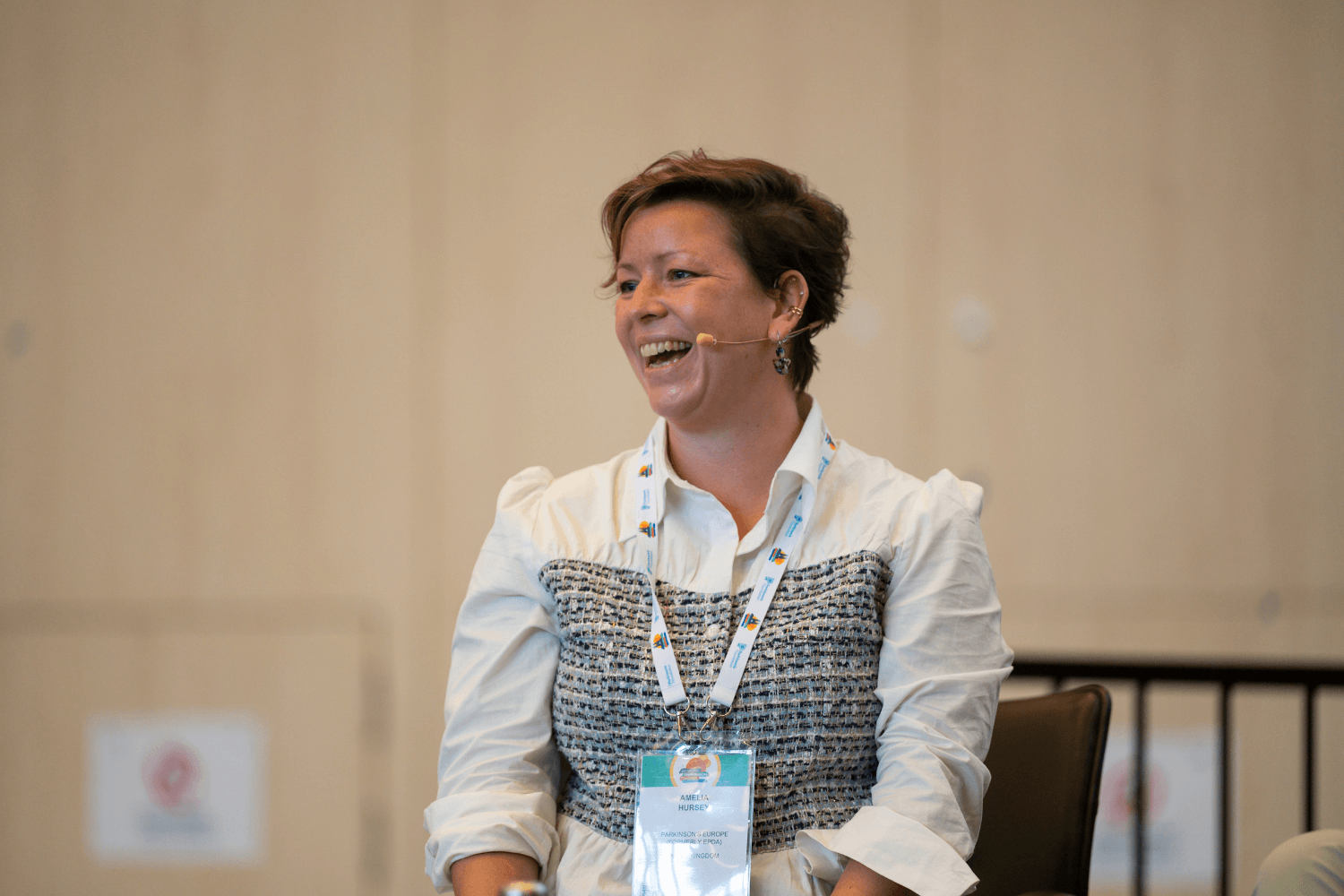
The Research Steering Group (RSG) is a group of ten volunteers who keep our research activities focused and relevant. At Parkinson’s Europe we believe in making sure we work with the whole Parkinson’s community and have their voices at the heart of what we do. The group’s positions are held for two years, they have monthly one hour meetings and 1-2-1 phone calls with Amelia, our Research Manager, to help make sure all of them are confident in sharing their thoughts. Here is a who’s who of our fantastic RSG volunteers.
Our research partnerships
Our research partnerships are currently with two organisations designed to help improve research outcomes and activities by working together with other patient groups and organisations. Partnering with each of these supports our research strategy vision and ambitions.
EUPATI
EUPATI is an independent non-profit foundation. It is a successful programme that provides education and training to increase the capacity and capability of patients and patient representatives to understand and meaningfully contribute to medicines research and development (R&D), and to improve the availability of medical information for patients and other stakeholders. It does so through its Patient Expert Training Programme which has trained more than 250 Patient Experts (EUPATI Fellows), and with 750+ currently enrolled via the EUPATI Open Classroom. In addition, EUPATI provides an open-access multilingual toolbox that has served more than 6.5 million users in 13 languages around the world to date.
Critical Path for Parkinson’s (CPP)
The CPP creates a collaborative environment for leading experts who come together to accelerate the path to treat those impacted by Parkinson’s. Created by C-Path, CPP fosters consensus and data-driven research among scientists from the bio-pharmaceutical industry, academic institutions, government agencies, and patient advocacy associations. Their mission is to serve as the main international vehicle to develop new, regulatory-endorsed drug development tools based on the most current scientific insights into early Parkinson’s, by combining detailed patient data, expertise in clinical trials from companies and academia, and the unique neutral facilitator role of non-profit organisations.
FAQs for researchers and organisations
What are the best ways for researchers to work with people affected by Parkinson’s?
Collaboratively is the best way. Asking direct, clear and meaningful questions of your chosen group is a great place to start. If you are interested in learning more about these techniques there is a lot of training now available to help with this. A great place to start is Parkinson’s UK’s guidance for researchers
Can working with people with Parkinson’s increase funding opportunities?
Absolutely it can and will. Most funders nowadays are looking for evidence of patient and public involvement. Also at approval level the FDA, EMA and MHRA have all made it mandatory for any research trial that is approved to have involvement within their research activities.
What training opportunities are available to help researchers to improve how they work with people with Parkinson’s when conducting research?
As mentioned above, you can read the guidance for researchers. However, reaching out to patient organisations or NGOs is a great place to start. They will be able to guide you with their expertise and knowledge to where you can learn the most within the area you are most interested in.
We are more than happy to share our expertise with you, and you can also receive opportunities for learning direct to your inbox by signing up to our Engagement Network.
We hope these questions echo your thoughts, if not please do let us know the questions you want answered via [email protected]
Further resources for researchers
These resources were developed to help research teams recruit and retain volunteers in Parkinson's clinical trials:
The Michael J. Fox Foundation: Accelerating Clinical Trials – Best Practices for Recruitment and Retention The Michael J. Fox Foundation Recruitment Toolkit The Michael J. Fox Foundation Retention Toolkit