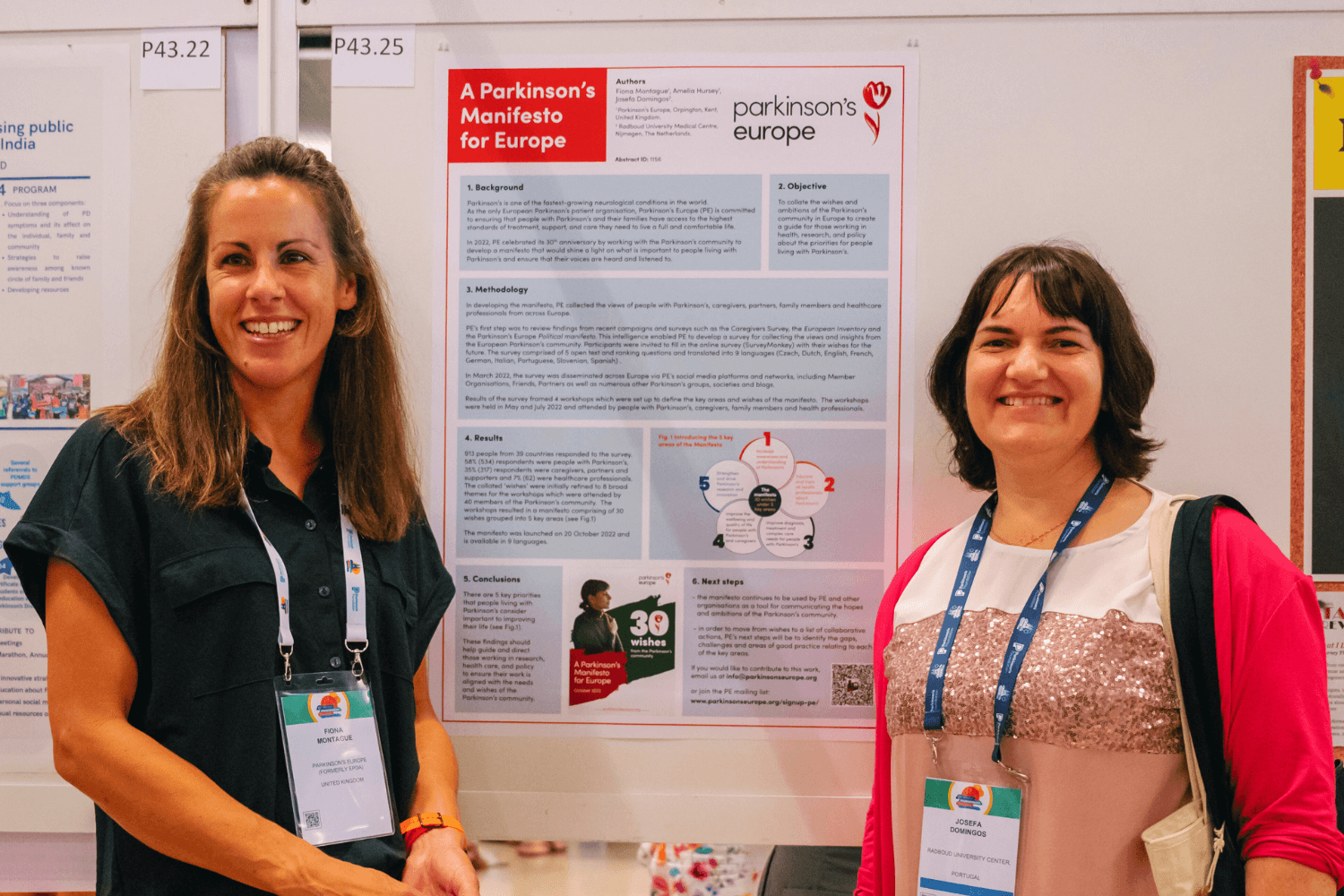
We regularly collaborate with other Parkinson’s organisations and industry partners on surveys collecting vital data on a range of Parkinson’s-related issues, from people with Parkinson’s lived experiences of certain symptoms or aspects of the condition to the reports on European standards of healthcare and support for people with Parkinson’s and their caregivers.
For more information on any of the reports below, please email [email protected]
Our latest reports
Survey on Parkinson’s symptoms, fluctuations and treatment
In 2026, we conducted an online survey aimed at understanding people with Parkinson’s experience with symptoms, motor fluctuations and treatment.
The survey was disseminated online in six languages (English, French, German, Italian, Portuguese and Spanish) and included questions about the symptoms perceived as more impactful by people with Parkinson’s, as well as their treatment preferences and choices. It received nearly 700 responses.
You can download a PDF report giving key insights from this survey by clicking the image below:
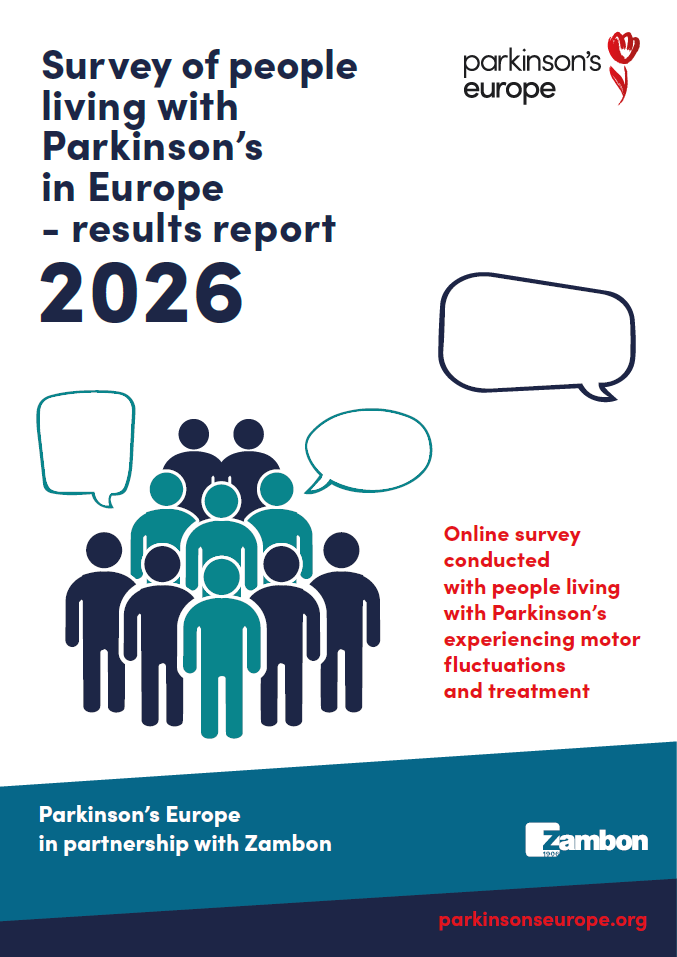
This survey was supported by and developed in partnership with Zambon
Europe-wide survey about work and Parkinson’s
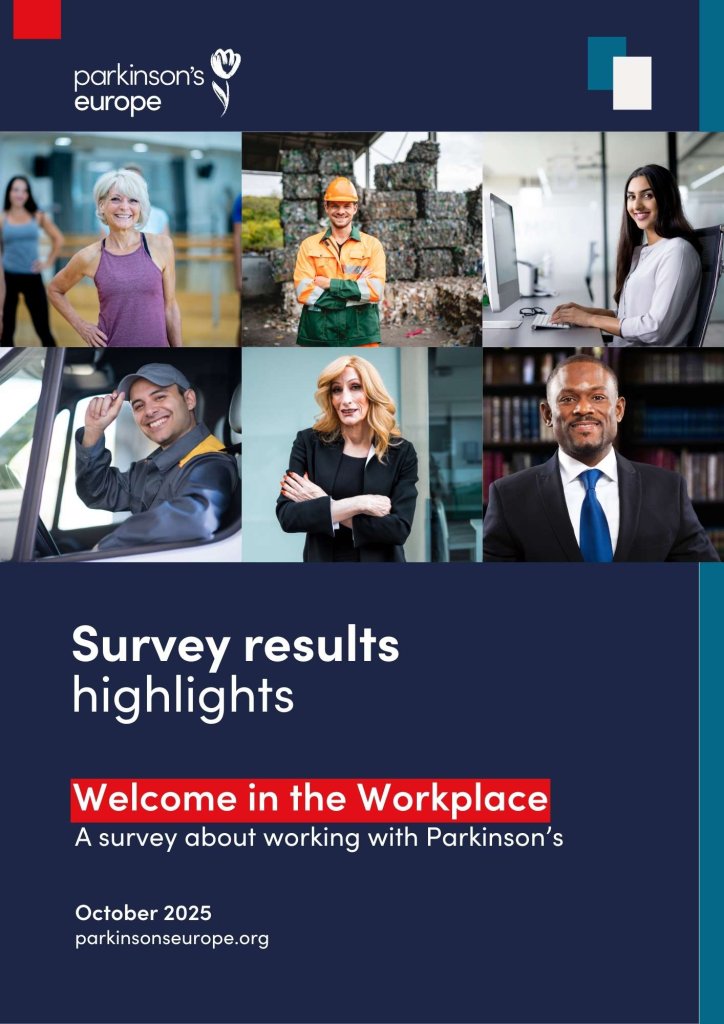
In September/October 2025, we ran a campaign called Welcome in the Workplace, which aimed to raise awareness of your rights at work in Europe when you have Parkinson’s and other long-term health conditions. As part of this campaign, we launched a survey collecting people’s experiences of working with Parkinson’s.
The survey contained 38 questions on topics including how Parkinson’s has affected respondents’ ability to work, how supportive their workplace has been, and their knowledge and use of their rights to reasonable accommodations at work.
We published the survey in four languages (English, Italian, French and German) and received almost 1,000 responses.
You can download a PDF report giving key insights from the work and Parkinson’s survey by clicking the image below:
You can also read more details here.
Study of patient life experience in early-stage Parkinson’s
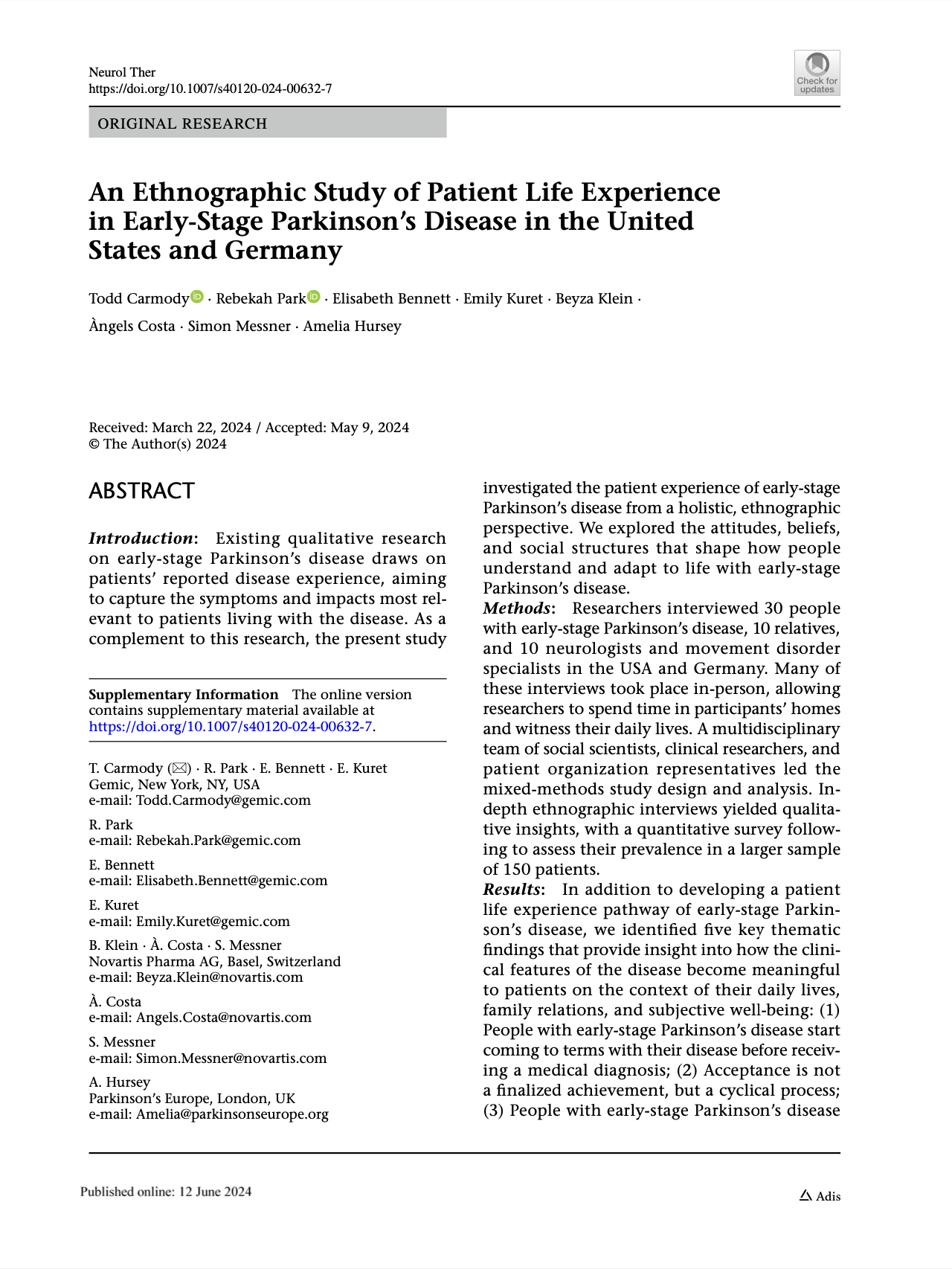
In June 2024, we were thrilled to see a paper co-authored by our Research Manager, Amelia Hursey – alongside Gemic and Novartis – published in the international journal Neurology and Therapy. The paper, titled An Ethnographic Study of Patient Life Experience in Early-Stage Parkinson’s Disease in the United States and Germany, explored the attitudes, beliefs, and social structures that shape how people understand and adapt to life with early-stage Parkinson’s, with its outcomes sourced from interviews with people with early-stage Parkinson’s, their relatives, and doctors.
Researchers identified five key insights: (1) people often begin to come to terms with Parkinson’s before being diagnosed; (2) accepting Parkinson’s is an ongoing process; (3) people with early-stage Parkinson’s value living in the moment; (4) people with early-stage Parkinson’s see slowing the worsening of the condition as an important goal; and (5) learning from the first-hand experience of others can be more valuable than scientific information.
You can read the paper in full via the link below:
Addressing barriers to care for people with advanced Parkinson’s
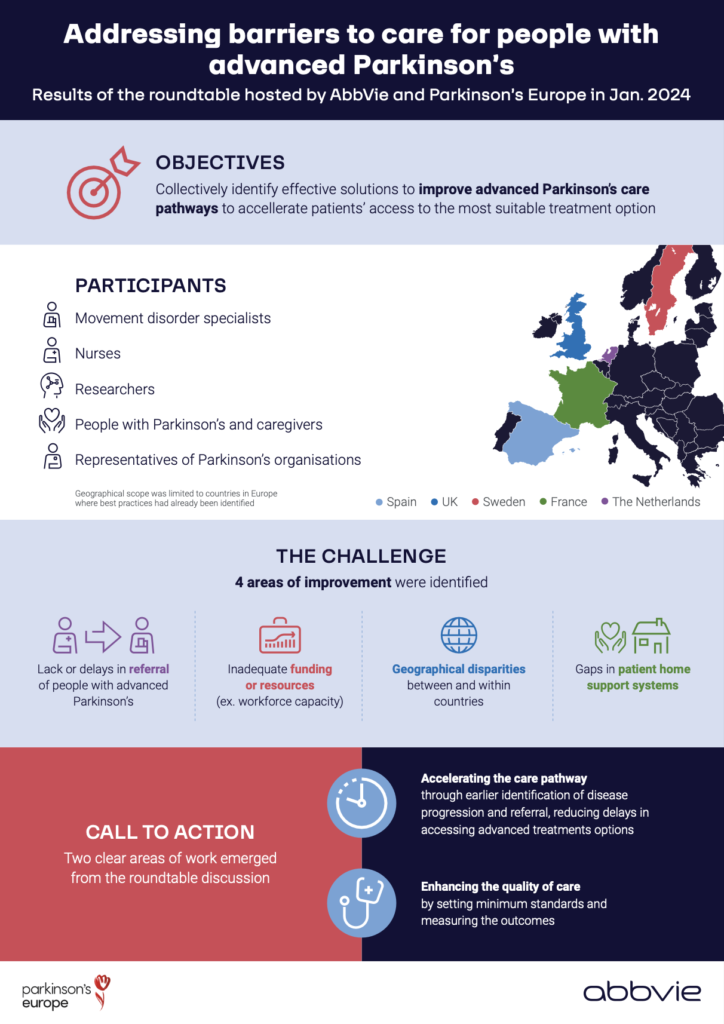
In January 2024, Parkinson’s Europe and AbbVie co-hosted a roundtable on the topic of care pathways for people with advanced Parkinson’s. Expert panelists from different European countries – movement disorder specialists, nurses, researchers, people with Parkinson’s and representatives of Parkinson’s organisations – gave insights about barriers and best practices around care pathways for advanced Parkinson’s, highlighting gaps and common areas for improvement. Some possible solutions and areas of work were also identified.
A report detailing the roundtable main findings, proposed approach and solutions is available for download below:
Addressing barriers to care for people with advanced Parkinson’s
AbbVie have also created an infographic summarising the results of our January roundtable on advanced Parkinson’s, which you can view and download below:
Followup: Call to Action
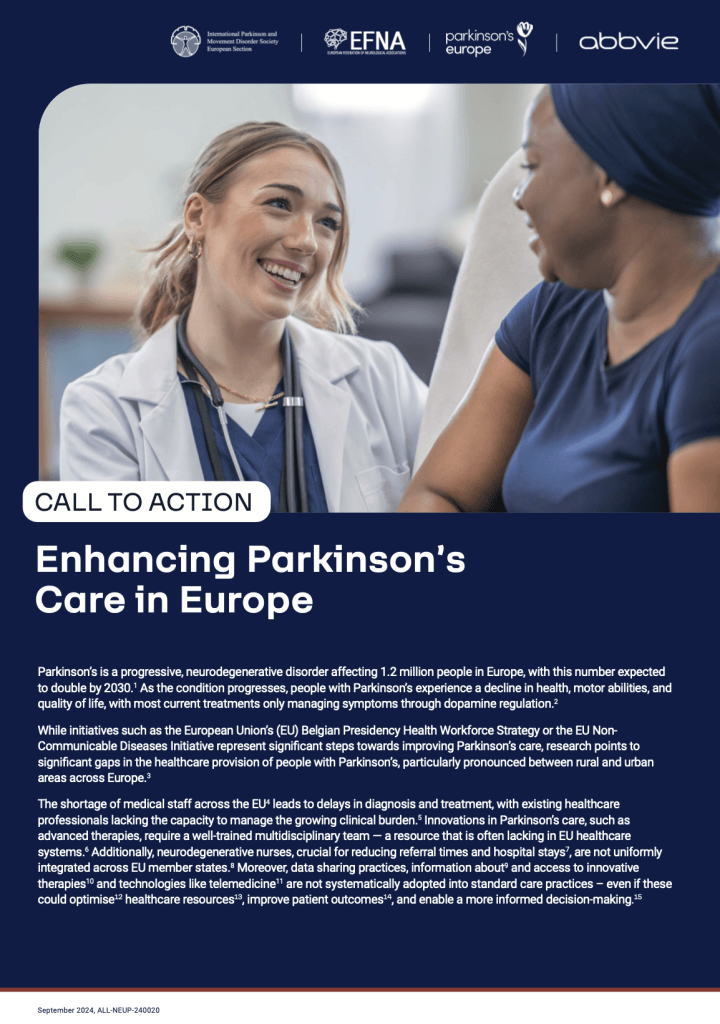
Following the success of the roundtable, Parkinson’s Europe has been working with other important stakeholders in the development of a joint call to action aimed at European policymakers. We are calling for a commitment to improving healthcare services for people with Parkinson’s and pledge to make progress in the following three key areas:
- Recruitment and retention of essential healthcare workforce
- Formalisation of neurodegenerative nurses in healthcare systems
- Access to innovation to optimise healthcare resources
This call to action is the result of a collaborative effort involving the European Federation of Neurological Association (EFNA), the International Parkinson and Movement Disorder Society European Section (MDS-ES), and pharmaceutical company AbbVie. It has been endorsed by 11 national Parkinson’s organisations, and was officially launched on 29 November 2024, World Movement Disorders Day.
Please read and sign our pledge for improved healthcare services for people with Parkinson’s in Europe below:
This project was supported by and developed in partnership with AbbVie.
Survey on access to DBS (Deep Brain Stimulation)
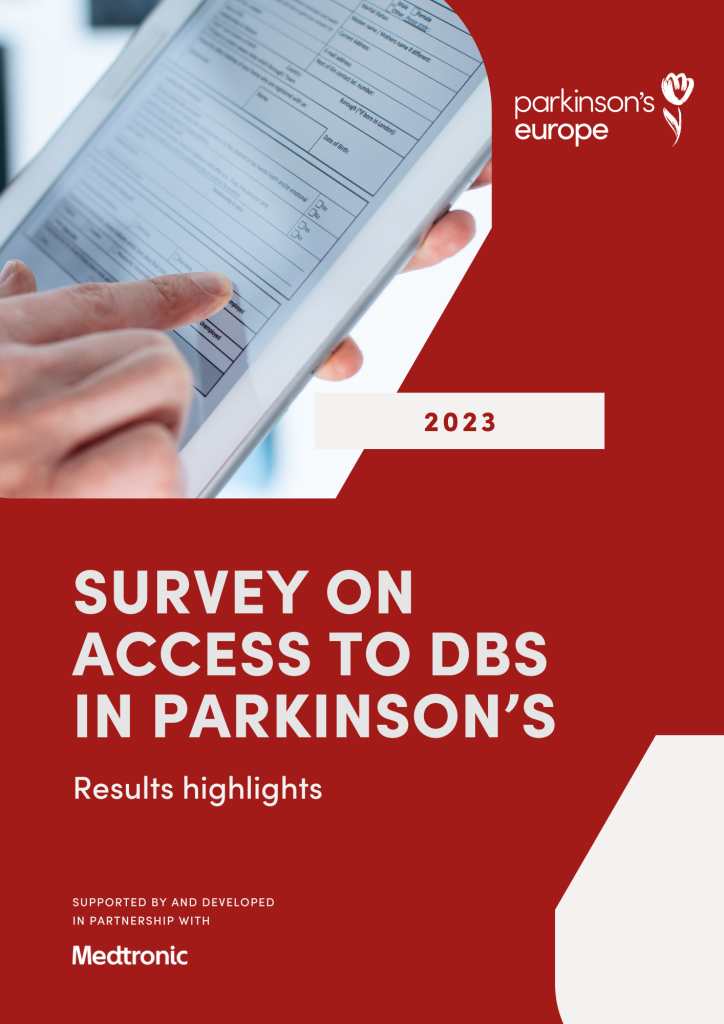
In 2022, Parkinson’s Europe ran a pan-European survey to understand if people with Parkinson’s get enough information and access to Deep Brain Stimulation (DBS), as well as insights into their experience of receiving this kind of treatment.
By collecting this data, we aimed to identify any gaps regarding the information and assistance that people with Parkinson’s receive when considering Deep Brain Stimulation as a treatment option, as well as possibilities for improvement in the treatment pathway.
A report displaying the survey results highlights is available for download below, and you can read more about the survey findings and key takeaways here.
Read the full report:
This data collection project is supported by and developed in partnership with Medtronic.
Survey on awareness about advanced Parkinson’s
In March 2021, Parkinson’s Europe launched an online survey focused on ‘advanced’ Parkinson’s and awareness about treatment options.
By collecting this data, we aimed to understand people with Parkinson’s perception and knowledge about treatment options, especially focusing on ‘advanced’ Parkinson’s. In particular, we aimed to understand if people with Parkinson’s receive timely and adequate information about advanced Parkinson’s therapies from their healthcare professionals. The responses we obtained from this survey will help us in our efforts of supporting the Parkinson’s community to get the right information at the right time.
Survey results show that people with Parkinson’s are most satisfied with their treatment if they feel that they have received satisfactory input from their healthcare professional.
Read the full report:
A summary of the report main findings in Spanish, developed by the Federación Española de Párkinson (FEP), is available at the Observatorio Párkinson website.
This data collection project was supported by and developed in partnership with Britannia Pharmaceuticals Ltd.
Survey on drooling (sialorrhea) in Parkinson’s
In October and November 2020, Parkinson’s Europe carried out a survey focused on drooling (sialorrhea) – a very important yet often-overlooked Parkinson’s symptom.
The results demonstrate how much of an impact sialorrhea can have on people with Parkinson’s – not just on swallowing itself but also on quality of life and communication. They also show that a large percentage of people have not discussed this important symptom with their healthcare professionals – and have therefore not received suitable advice about the possible treatment options available.
Read the full report:
This data collection project was supported by our partner Merz Therapeutics.
European survey on the challenges of Parkinson’s carers
In a pan-European survey carried out in 2019-2020, carers from around Europe have provided their views about the kind of impact caring for a person with Parkinson’s has on their lives.
It reveals that policies, health systems and society at large are not doing enough to support this group of people which provide vital care to people with Parkinson’s.
The survey was available in 14 European languages and aimed at carers of people with Parkinson’s with a broad European scope.
Read the full report:
This data collection project was supported by our partner Air Liquide Healthcare.
Survey on working life and Parkinson’s by Oxford Brookes University and EuPaTh
In 2019, Parkinson’s Europe supported a new survey project about people with Parkinson’s experience of working life and employment around the time of their diagnosis. The survey was part of a research programme exploring the economic impact of Parkinson’s on national healthcare systems and on society as a whole, with the aim of advocating for earlier, and better, services to support people soon after their Parkinson’s diagnosis.
The research project was carried on by researchers at Oxford Brookes University (UK), in collaboration with the European Parkinson Therapy Centre (EuPaTh, Italy), who developed the background research work as well as the survey questionnaire.
The survey results have been developed into a MSc thesis – an abstract of which is available for download below:
Factors affecting change of paid employment status of working and non working people with Parkinson’s in Europe
Parkinson’s Europe supported this project as a dissemination partner only – we were not involved in developing the survey. If you have any questions, please contact Prof Helen Dawes and Dr Johnny Collett at [email protected]
Parkinson’s Europe-UCB survey
In July 2018, Parkinson’s Europe, in partnership with long-term industry partner UCB, created a short online survey to better understand some of the issues people with Parkinson’s and their families/carers across Europe face on a daily basis.
2,000 people from more than 20 countries took part in the survey.
The analysis of the answers will be used to design and propose solutions that will help us to campaign for improvements in healthcare management and enhance people’s everyday quality of life.
Read the full report:
A Parkinson’s Europe-UCB survey to better understand the challenges of living with Parkinson’s
European Inventory
The European Inventory, the first phase of our multi-stakeholder initiative My PD Journey, was carried out between the end of 2014 and beginning of 2015.
This research project was designed to identify gaps in Parkinson’s care and seek out national examples of good practice that could be adopted in other regions. It was completed by an independent research organisation and launched in Brussels in April 2015.
Read the full report:
European Inventory Primary Research Findings
Move for Change
Parkinson’s Europe’s Move for Change data collection project was carried out between 2010 and 2013, and is the largest online European patient survey on standards of care in Parkinson’s to date.
The three-part survey – featuring responses from people with Parkinson’s and carers from 35 European countries – was designed to identify areas of care falling short of the standards set by current clinical guidelines.
Read the key European results:
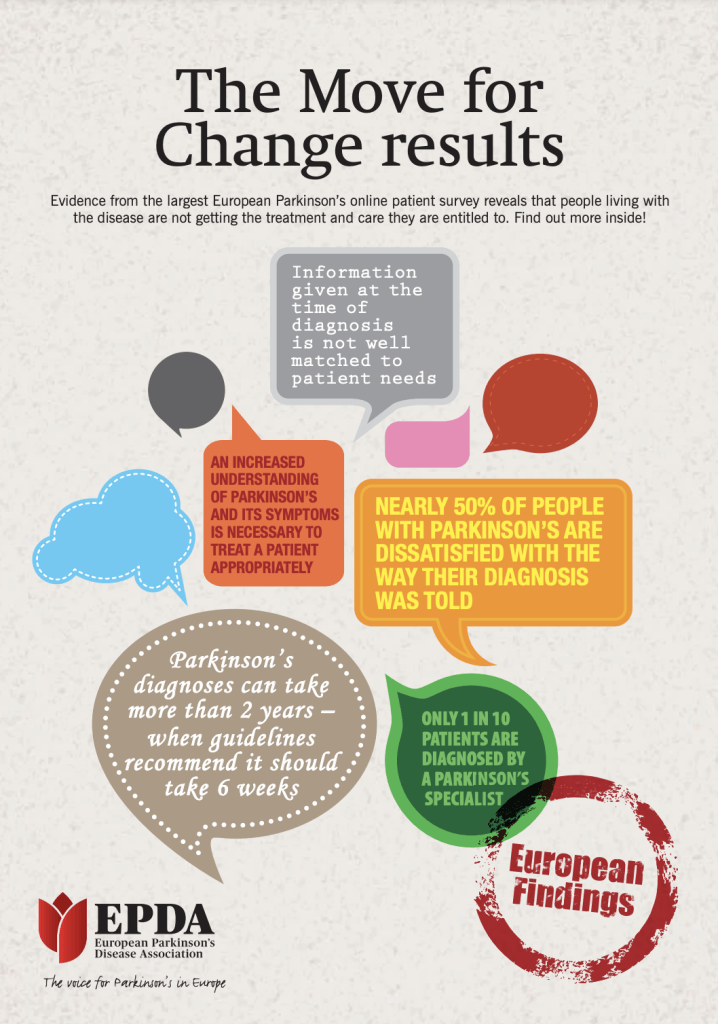
The Move for Change research was authored by two eminent Parkinson’s specialists – Professor Bastiaan Bloem (the Netherlands) and Professor Fabrizio Stocchi (Italy). You can hear Prof Stocchi talk about the Move for Change project below.
The results were presented in three categories which were all published in the European Journal of Neurology. You can read these reports in full below:
Part 1: Diagnosis
Part 2: Access to support services
Part 3: Continuous care and taking part in managing your disease
Occupational Therapy Survey
Parkinson’s Europe carried out its Occupational Therapy Survey from 2008 to 2009. The survey evaluated the contribution occupational therapists make to the management of Parkinson’s on a daily basis.
The survey was translated into Norwegian, Swedish and Slovenian, and the results were published in the European Neurological Journal.
Download the results
Real Life, Real PD Survey
The Real Life, Real PD Survey was a patient survey conducted across 31 European countries in 2007-08, supported by pharmaceutical company GlaxoSmithKline.
It focused on the realities of living with Parkinson’s both ‘day and night’, asking questions surrounding difficulties with daily activities such as eating and dressing, mood and possible impact on relationships plus sleep disturbances and emotional well-being. Almost 3,000 people from across Europe participated in the survey.
Download the results
Participation in Life Survey
The Participation in Life Survey questioned nearly 7,000 people with Parkinson’s in 14 countries worldwide in 1998-99. It asked a range of far-reaching questions relating to the physical symptoms of the disease, problems associated with their treatments and emotional and psychological problems.
Download the results
Global Parkinson’s Disease Survey
The Global Parkinson’s Disease Survey was, at the time, one of the largest surveys ever conducted on Parkinson’s. Carried out in 1997-98, it provided an in-depth and rigorous investigation into the factors affecting a person with Parkinson’s health-related quality of life.
It was a large, international and randomised survey that included perspectives from clinicians, patients and carers from six countries across three continents (Canada, Japan, Italy, Spain, the UK and the US) that had similarly developed health systems. Parkinson’s Europe enrolled nearly 2,000 respondents: 203 clinicians, 1,020 patients and 687 carers.
The survey’s principal aims were to improve on the limitations of previous studies in order to better investigate and understand the factors that influence quality of life, and to identify those elements of disease management that have the greatest effect on the quality of life (in addition to disease stage, related disability and anti-Parkinson’s medication).