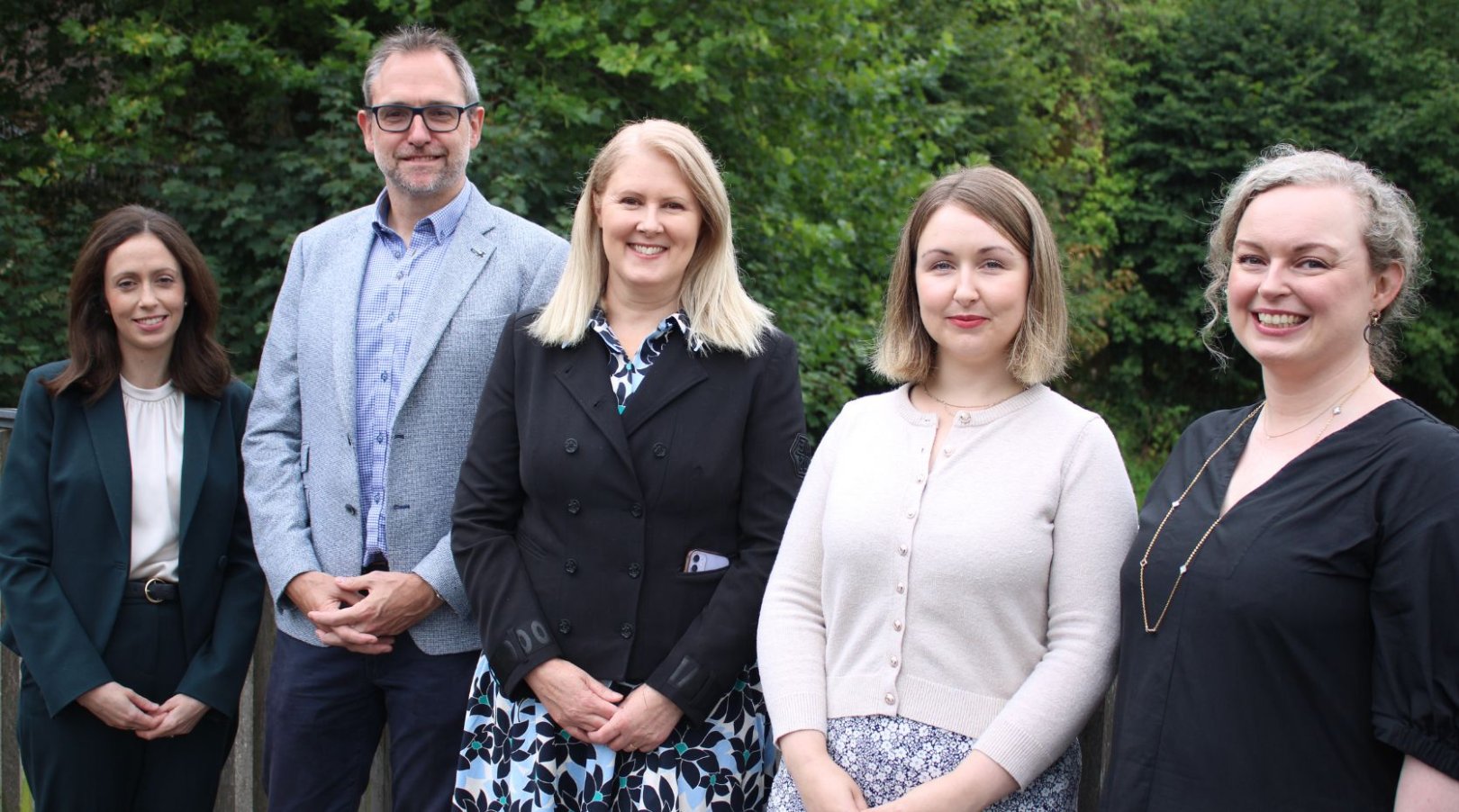
A new University College Cork-led project, PD-Life, has received €4m to create Ireland’s first all-island Parkinson’s research hub.
The project will employ a multidisciplinary, multi-institutional approach, and aims to significantly enhance the wellbeing and quality of life for people living with Parkinson’s.
The research hub will bring together researchers from six third-level institutions and research institutes: University College Cork (UCC), Tyndall National Institute, Trinity College Dublin, University of Limerick, Queen’s University Belfast and the University of Ulster). It will also unite healthcare partners, and Parkinson’s support organisations such as Parkinson’s Ireland and the Parkinson’s UK Northern Ireland branch.
PD-Life will be led by Professor Suzanne Timmons, Head of the UCC Centre for Gerontology and Rehabilitation in the School of Medicine at UCC. She tells Parkinson’s Life more about the project, and why the multi-faceted nature of Parkinson’s makes a united approach so important.
Please tell us about the PD-Life project – what is it, and how did UCC secure funding for it?
“PD-Life is a major cross-border multidisciplinary research collaboration between universities across Ireland, led by UCC, and in Northern Ireland, co-led by Queens University Belfast. This new hub takes a coordinated, sustainable approach to ‘Enhancing wellbeing and quality of life in Parkinson’s disease (PD-LIFE)’ for people living with Parkinson’s in Ireland.
“The project aims to enhance North-South university collaboration and the participation of people living with Parkinson’s and healthcare providers and planners across the whole of Ireland in shaping and enabling meaningful Parkinson’s research.
“It is funded by a specific initiative from the government of Ireland called the North South Research Programme. The PD-LIFE project was evaluated by international experts and was one of four chosen for funding from 131 applications.”
This is the first all-island Parkinson’s research hub in Ireland. Why is a cross-border, multi-institutional approach important?
“Parkinson’s is a chronic, multi-faceted disease, and so it requires an interdisciplinary approach. Universities in Ireland currently do Parkinson’s research alone and often in competition with each other.
“This project facilitates us to work together, bringing together disciplines such as neurology, gerontology, psychiatry, nursing, physiotherapy, occupational science, psychology, anatomy and neuroscience, sociology, pharmacy, biochemistry, linguistics, engineering, economics, computer science, and the creative arts.
“The depth and breadth of research teams’ skills will be enhanced by the project. For example, clinical and psychosocial researchers will embrace technology to enhance and deepen research data; technical researchers will better understand users’ strengths and needs; academic researchers will be able to better influence health policy.
“To do this, the project will develop a new cross-institutional skills training program, with co-developed learning content and mobility opportunities for students and early-career researchers. This will promote research excellence and foster interdisciplinary dialogues.”
What are the key goals and targets you hope PD-Life will achieve?
“In the short term, we hope the project will raise public awareness of Parkinson’s and reduce stigma and misunderstandings. We target this by developing awareness-raising information and guidance for the public, people living with Parkinson’s and family carers, clinicians, policy makers and other stakeholders.
“We will develop Parkinson’s researcher capacity by mentoring junior researchers across all partner institutions. We will also co-develop a sustainable, student-centred, teaching and learning programme on Parkinson’s research and on relevant research skills for these researchers and other researchers.
“In the medium term, the project will produce robust, co-created, all-Ireland data on people living with Parkinson’s real-world needs, cultural and gender impacts, and stigma, mental health and physical activity influences and outcomes.
“This evidence will inform how resources can be better used to inform policy and optimise interdisciplinary clinical practices, and for wider data-driven health and social care planning and development into the future.
“In the longer term, we hope that Ireland becomes an excellent location for world-leading Parkinson’s research and that the data produced by this project will significantly enhance wellbeing and quality of life for people living with Parkinson’s, not just in Ireland but across the world.”
How will PD-Life be structured?
“The hub will begin in April 2026 and will be funded for four years. It will involve six universities and research institutes. These are University College Cork, under the UCC Futures – Future Ageing & Brain Science thematic research area, and Queen’s University Belfast, along with Tyndall National Institute, Trinity College Dublin, University of Limerick, and the University of Ulster.
“It is a virtual hub, so we work mainly online, meeting in person once or twice per year. Our steering committee will have representatives from Parkinson’s Ireland and the Parkinson’s UK Northern Ireland branch, as it is crucial to us to perform research of value to, and with, people living with Parkinson’s.
“We will have a dedicated project manager and about 30 senior researchers. We will work together in core tasks like developing training and knowledge exchange, and in smaller groups across strategic projects, aiming for skills exchange and enhancement at all researcher levels.
“We will employ seven postdoctoral researchers initially, and then nine junior researchers will perform PhD projects across three years, as part of the hub. A big part of the project is mentoring these more junior researchers to become the Parkinson’s research leaders of the future.
The hub will build on research, skills and knowledge across three linked projects: stigma, mental health, and physical activity. Why these topics?
“These themes were shaped by key priorities for people living with Parkinson’s, in Ireland and globally. In fact, two of the top five research priorities for people living with Parkinson’s in Ireland are mental health issues (like depression, anxiety and cognitive change) and lifestyle (like diet and exercise). Our local Parkinson’s Ireland branch also wanted us to raise awareness of stigma.
“Non-motor symptoms like mood, anxiety and hallucinations are under-researched in Parkinson’s despite being research and clinical priorities for people living with Parkinson’s.
“Stigma from others can also impact mental health, as well as wellbeing, socialisation, and motivation to exercise. Exercise can improve movements, mood and resilience, and can slow the worsening of Parkinson’s. Thus, we see these three issues (mental health, stigma and exercise) as being very interlinked and key to quality of life and wellbeing.
“We will also explore gender and culture effects. These will be woven into each project. We aim to develop guidance to promote gender and culturally sensitive Parkinson’s research and to provide data on gender and cultural differences in the lived experience of people with Parkinson’s in Ireland. This will inform recommendations on inclusiveness in Parkinson’s support and care.
“Finally, we are exploring how technology can help people living with Parkinson’s, especially in supporting tailored and effective exercise.”
What would you most like people living with Parkinson’s to know about PD-Life?
“Within the PD-Life programme of research, there will be many opportunities for people living with Parkinson’s in Ireland to contribute as co-researchers on our advisory panel and/or as research participants. We will be sharing the findings from our research with Parkinson’s Europe as it unfolds over the next four years.
“At this point, we would most like people with Parkinson’s in other countries to know how our story began.
“Our local Parkinson’s branch came to me in 2019 with an idea for research to help them advocate for better healthcare services. We applied together for some national funding, and the resulting ‘Mapping-PD’ project was very successful and helped national Parkinson’s service planning, including some new Parkinson’s nurses. It also boosted our local Parkinson’s research cluster in UCC.
“Together with the development of Parkinson’s@NI, a network for Parkinson’s research in Northern Ireland, this inspired this larger grant application so that other universities with Parkinson’s researchers could join us in an all-island hub.
“People living with Parkinson’s made this big project happen and we are delighted to share our good news story to inspire others to keep raising awareness, keep telling researchers what you need and keep pushing for Parkinson’s research funding.”