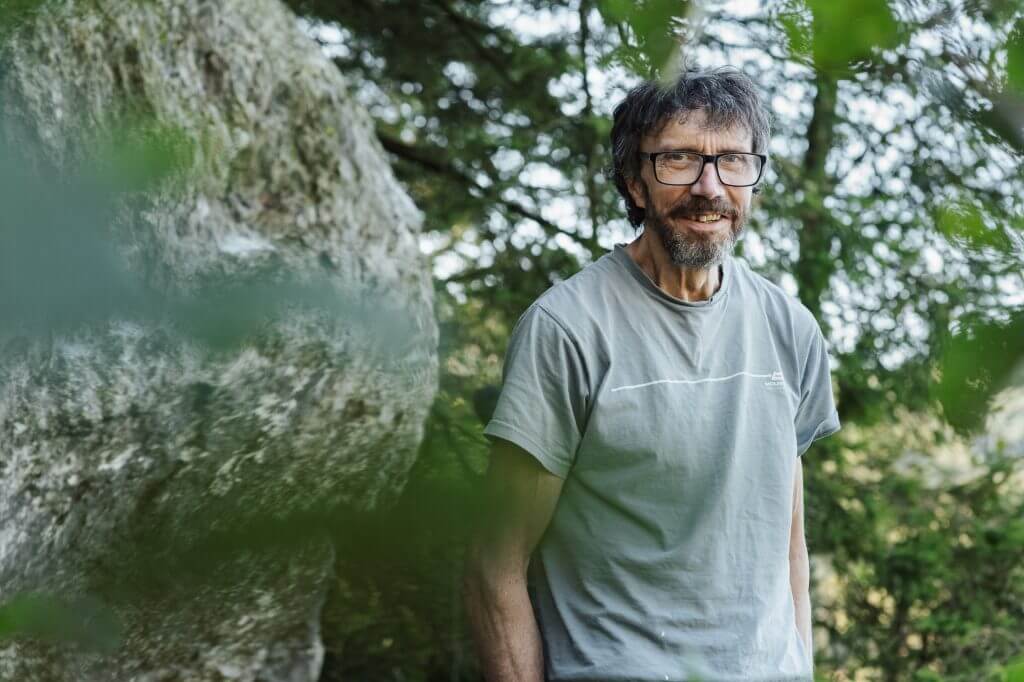
It was while doing his lifelong hobby that former teacher Chris Hamper noticed something was wrong. “I climb a lot, and I realised that my left hand was weak for some reason. I was normally quite a strong climber, and my hand was just letting go on its own,” he says.
Chris, who taught physics at United World Colleges in Wales and then Norway for over 30 years, also noted cognitive changes. “I noticed in the classroom I couldn’t answer students’ questions anymore. I couldn’t stand at the board and spontaneously answer exam questions like I used to be able to.”
It is now eight years since Chris, now 66, received his Parkinson’s diagnosis, and his condition has progressed. “I’m weaker than I was, just slowly my left side gets more and more useless. I can’t do much with this hand; this one doesn’t really move – it shakes. Sometimes my right hand does the same, so that’s the next stage.”
Although he has now retired from teaching, Chris is still climbing. It is something he has done ever since he was small and growing up in Coventry in the UK. “I used to climb trees and stuff and climb around the house. Any bit of rock I’d try and climb around it,” he says. He also used to go climbing with his dad in the Peak District, a famous UK climbing spot.
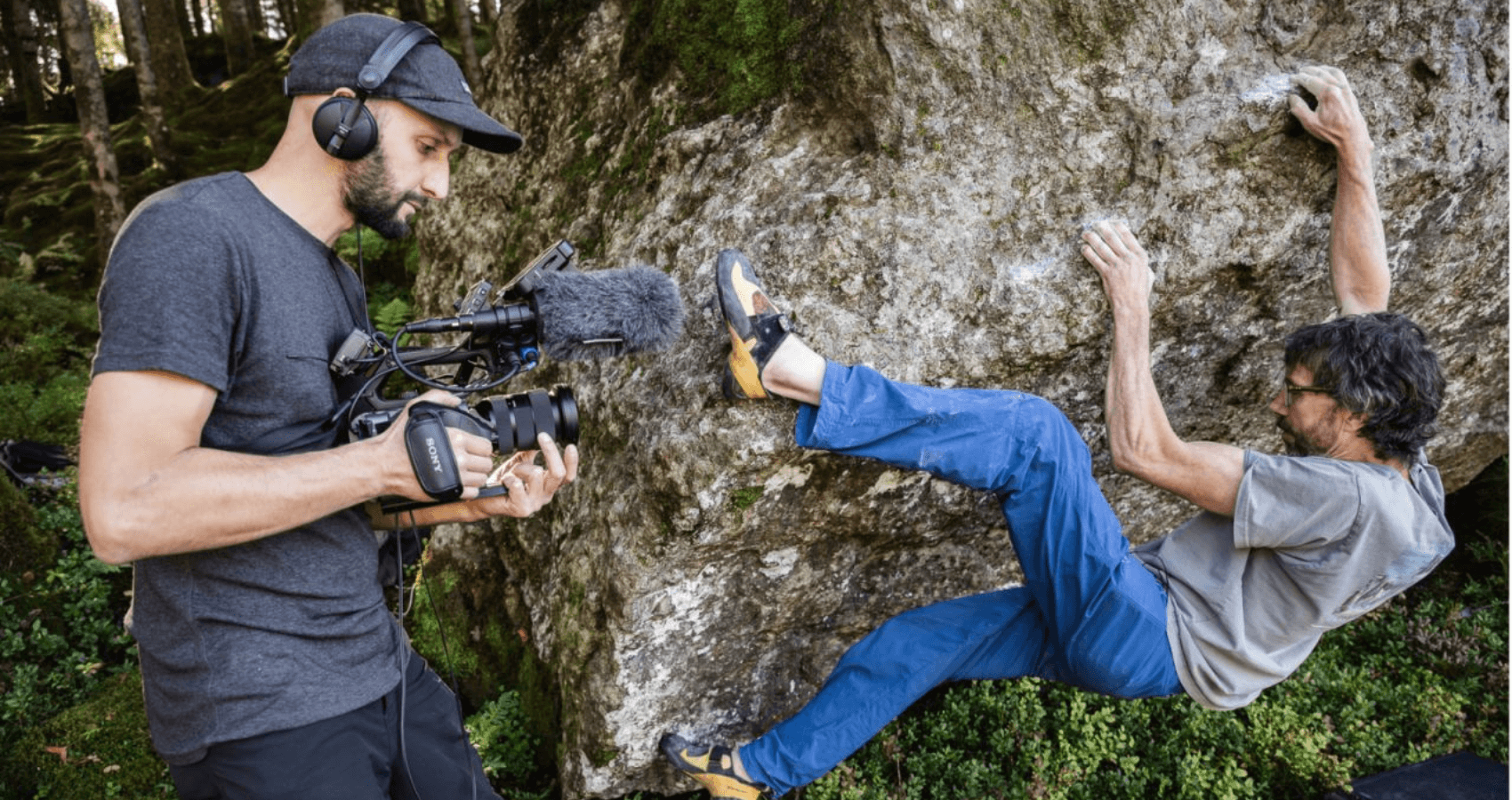
After graduating from Leeds University, Chris tackled a lot of the classic routes alongside some of the world’s best climbers at that time. Before he had Parkinson’s he reached the advanced climbing grade of 8a. Although this has now dropped to 6b due to his condition, Chris is determined to keep going. Now, his passion for climbing and his approach to life with Parkinson’s is being captured for a new documentary – with a working title of The Parkinson Project – which will be released in autumn 2024.
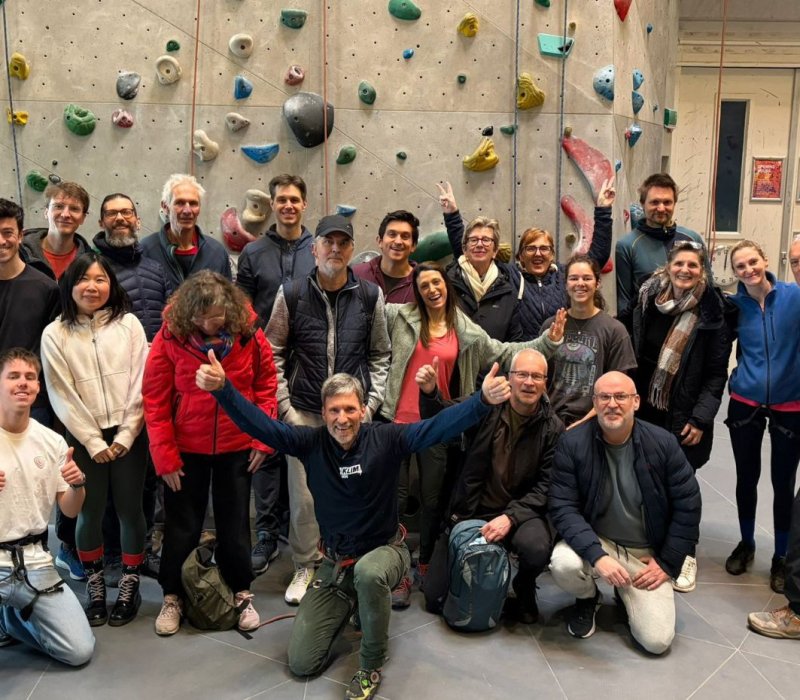
The idea to make a film about Chris was sparked when his wife, Hilary, told Jess James, a professional filmmaker and family friend, about a time when Chris went to a climbing wall and how, having appeared physically weak, he proceeded to wow the other climbers with his skill.
“He started climbing, and within a few minutes there was a crowd around him because he’d gone from being this person who hadn’t looked that comfortable to go into this physical space who then suddenly was doing moves that these younger climbers had all been failing on. And everybody was like, ‘How do you do this? How does this work?’
“That led to a conversation with Chris directly where he said that climbing was one of the key things that allowed his symptoms to be diminished and allowed him to feel much more how he used to pre-Parkinson’s,” says Jess.
Chris explains further: “I feel like I’m not much different to everyone else when I’m climbing. The biggest difference is when I’m clipping bolts – you have to clip the rope into carabiners as you’re climbing up – and my left hand doesn’t work properly; it can’t clip a bolt. But I discovered that the way round it was to put the carabiner always the same way round and then I can clip it. Sometimes I’m maybe a minute trying to hang on one arm, clipping this carabiner with my other arm, and when you pull the rope up to clip it in, if you fall off, then you fall a long way because you’ve got all this rope out. So, my friends get really worried about me. I can hear them talking at the bottom, saying ‘What’s he doing now?!’”
Chris refuses to take the easy option though.
“When I go climbing with them, I’m doing the same climb as they’re doing. And I fall off them; I don’t do them all, but I try the same ones – otherwise I would feel like I was a burden on them, and they’d have to do easy climbs for me.”
Although Chris has currently injured the tendons in his arm, he usually trains or climbs three times a week close to where he now lives in Flekke, Norway – where he built his home next to a boulder!
“Climbing is good for me, for the Parkinson’s, but it’s not good for my joints,” says Chris. “But the doctor says, ‘Just do it,’ because the benefit I get for the Parkinson’s outweighs the small injuries.”
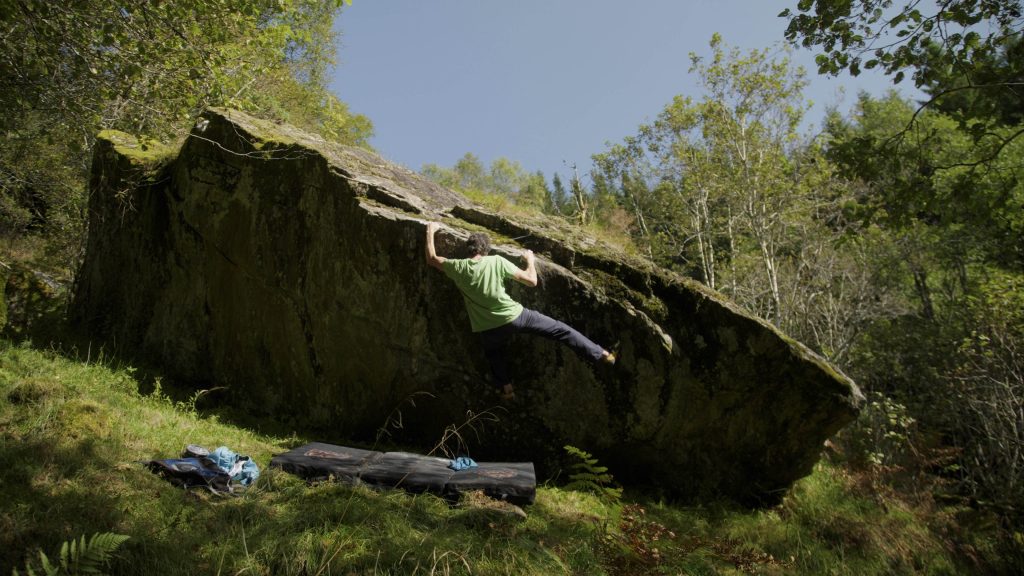
It also helps his mental health. “When I’m climbing it feels good. It’s because you concentrate when you’re climbing, so you don’t think about anything else: you just focus on it. It’s a bit like meditation, I suppose.”
There are other benefits too. “I like going to the climbing wall also because of the social aspect. It’s really disappointing when there’s no one there. I want to go and talk to people. With Parkinson’s, you can get a bit isolated.”
The film follows Chris everywhere from meeting his neurologist to climbing with friends at local crags to the rehabilitation centre. He is also shown climbing in the Peak District.
One of its key messages is that Chris refuses to let Parkinson’s beat him. He is even channelling the obsessive behaviour that is a side effect of his medications into something positive. Every morning he gets up at five o’clock – when it’s -10 degrees Celsius and still dark – to work on his pet project: taking a motorbike apart and rebuilding it into a café racing bike. “My neighbours think I’m crazy – I just can’t wait to get out there.” Before that, he spent two and a half years rebuilding a Triumph Spitfire car.
Jess says: “We hope that in making this film we shed more light on how it is to have Parkinson’s and allow people to be a bit more aware of what it is, the prevalence of it and to potentially offer an example of how somebody can cope very well with it.
“Obviously, from a medical standpoint, things go a very particular way, but if you push against that and are able to develop your life and build your skills around that, then there’s a huge amount to stay positive and be hopeful for. We really hope that in telling Chris’s story and shining a light on his particular example, that that’s a way into that world for a lot of people.”
The Parkinson’s Project: watch the trailer
The Parkinson’s Project is out now – find out more.
Parkinson’s Europe is sharing this article for information purposes only; it does not represent Parkinson’s Europe’s views and is not an endorsement by Parkinson’s Europe of any particular treatments, therapies or products.