Find advice on a range of topics to help you live life to the full, from diet and exercise to travel, work, sleep, relationships and leisure activities.
Our interactive Parkinson's map shows a range of resources across Europe, from member organisations to events, activity groups to research and campaigns
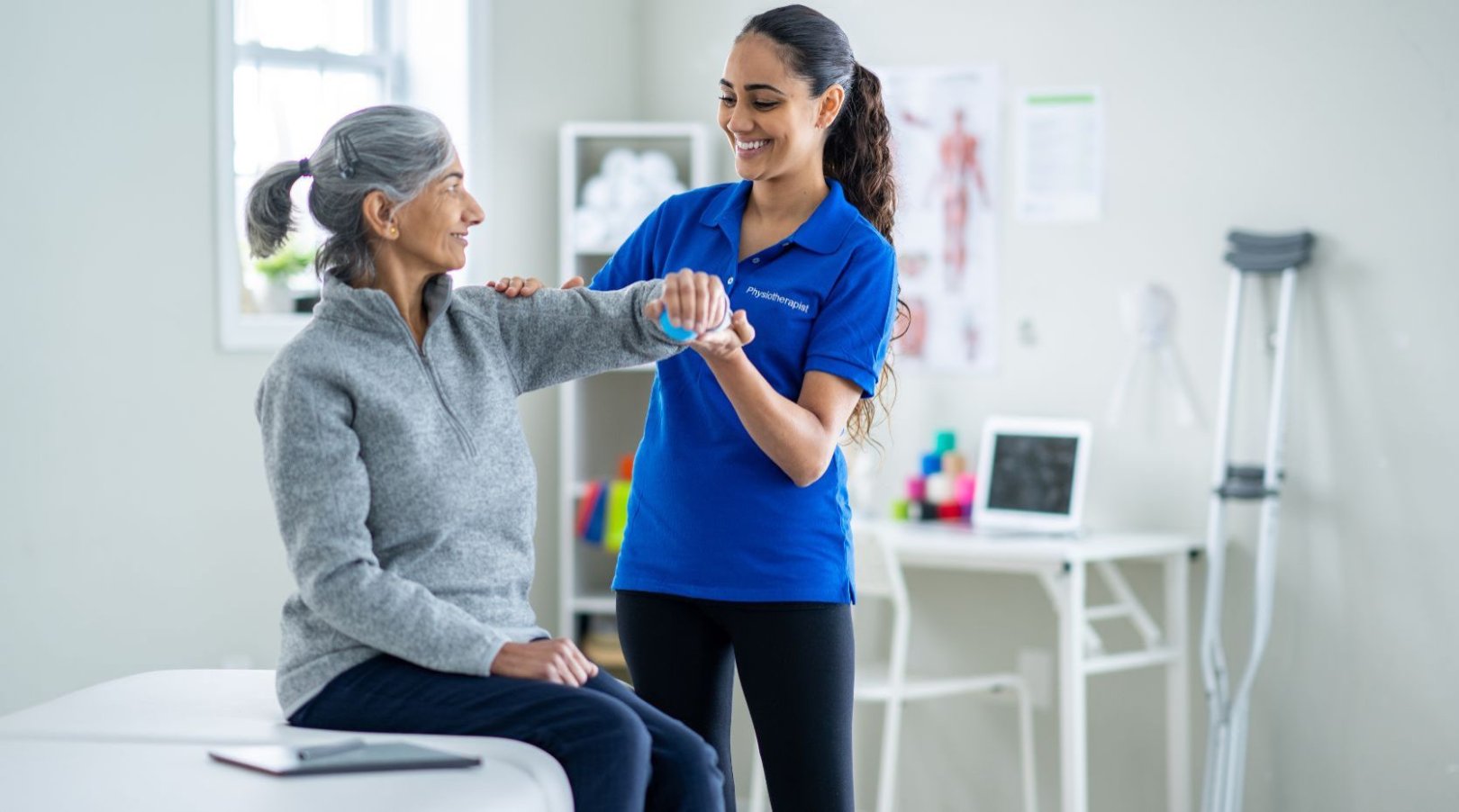
Physiotherapy is a key part of managing many symptoms of Parkinson’s. Your physiotherapist will form part of your Parkinson’s support network, alongside other healthcare professionals, to help keep you moving and living a normal daily life as much as possible.
At your first physiotherapy appointment, your physio will assess your difficulties, mobility and look at the different ways Parkinson’s affects your daily life. Then, with your input, they will set individual goals and create a tailored treatment plan to help you reach them. Meeting with a physio may be completely new to you, and with so much to cover during your appointment, it can be a lot to take in.
Physiotherapist (and President of Parkinson’s Europe) Josefa Domingos – who has spent decades specialising in physiotherapy for Parkinson’s – has approved the following advice.
Here’s our guide on how to get the most out of your Parkinson’s physiotherapy appointment.
What to do before your appointment
Write a list of your top five problems you experience related to your Parkinson’s. Think about when it started, if it improves with Parkinson’s meds, what makes it worse and what makes it better.
Make a list in advance of any questions you’d like to ask your physio. Leave space next to each one so you’re able to write notes during your appointment
Be prepared to explain your key problems and how they affect your daily life. It’s useful to think in advance how to describe difficulties – it’s easy to get tongue-tied when under pressure during an appointment.
Be accurate. Your physiotherapist can only act on the information you provide, so be as accurate and transparent as possible and let them know how you really feel and deal with Parkinson’s
If you don’t fully understand something, ask the physiotherapist to explain again and make some notes for you. Your physio will appreciate it’s a lot of information for you to absorb and will be happy to go through things thoroughly with you and help organise any notes. It’s important you go away from the appointment feeling fully informed.
Consider taking a friend or carer with you who can help take notes or prompt you on questions to raise if you find it difficult. Make sure they understand what you want to say – show them your list of questions before the appointment – so that they can help to explain things if necessary.
Be clear what you hope to gain from your appointment and treatment plan.
Let your physiotherapist know if you have had any treatment before or tried different methods to overcome these problems and explain how effective these were.
If your physiotherapist is unable to help with a particular problem, he or she will be able to suggest other healthcare professionals who may be able to help.
Before you leave your appointment
Jointly agree on your goals of treatment, in particular what you could achieve and when.
Agree on a treatment plan with your physio that is tailored to your daily routine and abilities.
Agree on the best way to keep in touch going forward. You may like to book a follow-up appointment before you leave, to make sure you’re doing exercises properly. Always get in touch between these scheduled appointments if you have any queries.
Plan in advance how you will maintain an exercise regime independently once your treatment has finished.
Agree on what information your physiotherapist will share with your doctor.
Two leading neurodegenerative research charities in the United Kingdom, The Cure Parkinson’s Trust and Alzheimer’s Research UK, have launched a partnership to develop innovative new treatments for people living with Parkinson’s and dementia.
The collaboration will focus on promising new drugs that show potential benefits across both conditions – particularly when it comes to slowing or stopping memory and thinking problems getting worse – building on the growing overlap in potential drug targets between Parkinson’s and Alzheimer’s, which both charities have been investigating in recent years.
Dr Sheona Scales, Director of Research at Alzheimer’s Research UK said:
“Repurposing existing drugs to treat the diseases that cause dementia has huge potential and could be a faster way to find treatments that people are desperately waiting for. But identifying which drugs we should progress into trials is a mammoth task. By working together with Cure Parkinson’s, we’re working faster and smarter to pinpoint these drugs and accelerate the development of the next treatments that will help not only people with dementia, but also Parkinson’s.”
In June, the iLCT programme hosted a joint session where drugs identified as having potential to be repurposed for treating Parkinson’s and Alzheimer’s were reviewed by a panel of international experts.
“We are delighted to announce Cure Parkinson’s partnership with Alzheimer’s Research UK around our International Linked Clinical Trials Initiative. We are confident it will accelerate finding treatments with the potential to slow, stop or reverse Parkinson’s as it means we can investigate drugs of mutual interest, targeting aspects of biology of both conditions. This partnership will also capitalise on shared research findings, expertise and resources to speed up drug development for both conditions.”
As part of this new partnership, both charities will:
Review drug candidates with potential for both Parkinson’s and dementia
Invite international dementia and Parkinson’s experts to jointly evaluate candidates
Involve people affected by the conditions in the decision-making process
Work together to secure the funding and partnerships needed to move promising drugs into clinical trials
Currently, treatments for Parkinson’s and Alzheimer’s aren’t able to stop the conditions from progressing and getting worse.
Alzheimer’s is the most common neurodegenerative condition, with an estimated 7 million people living with Alzheimer’s across Europe alone. Parkinson’s is the fastest-growing neurological condition in the world, with over 1.2 million people living with Parkinson’s in Europe, and an estimated 12 million people living with the condition worldwide.
It is predicted that Parkinson’s cases will double to 25 million by the year 2050.
Common symptoms of Parkinson’s include tremors, stiffness and slowness of movement, whereas common early signs of Alzheimer’s include memory loss, difficulty with decision making, and increased anxiety and agitation.
UK-based organisation Cure Parkinson’s has launched a £2 million funding call to test rationally designed combination therapies for disease modification...
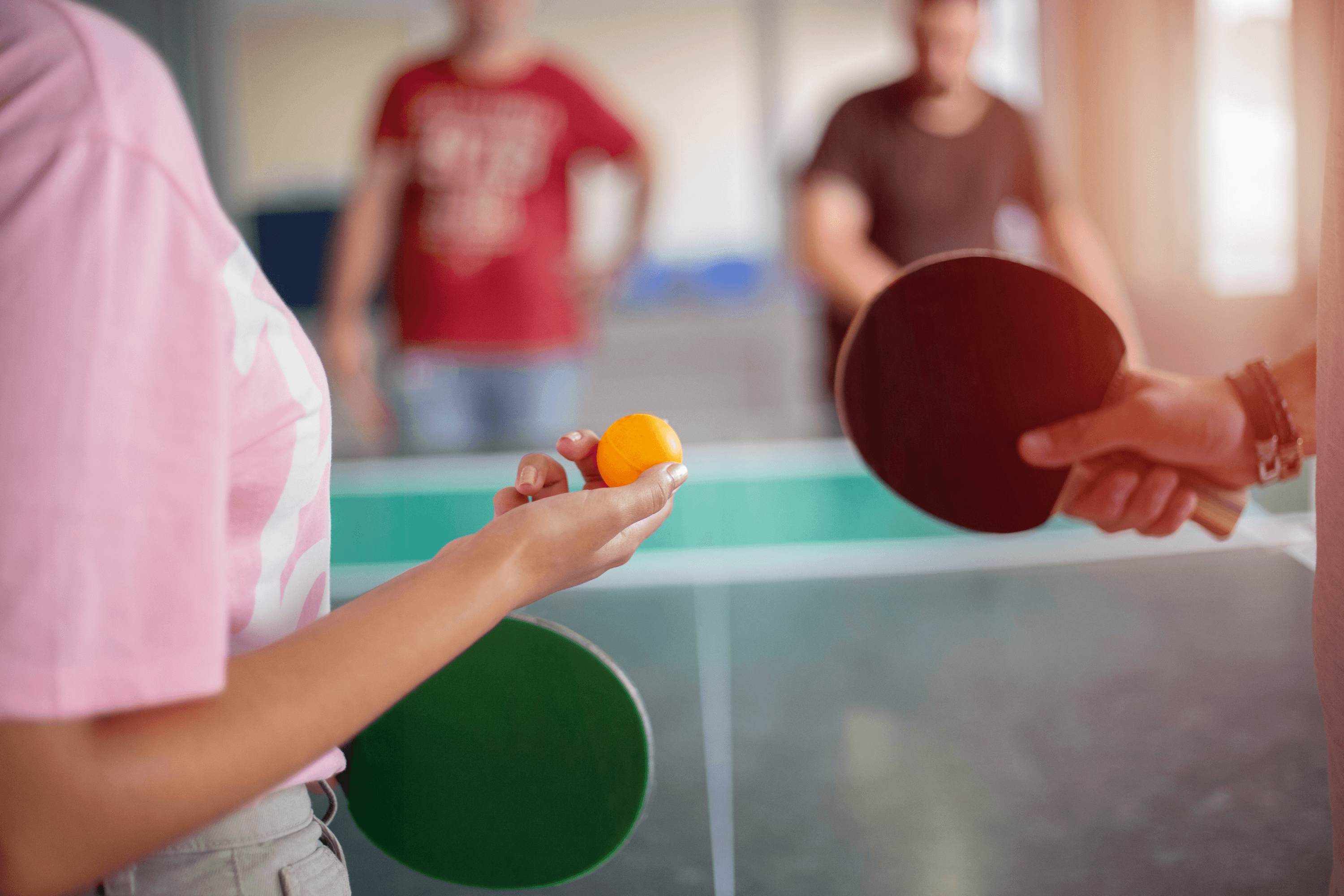
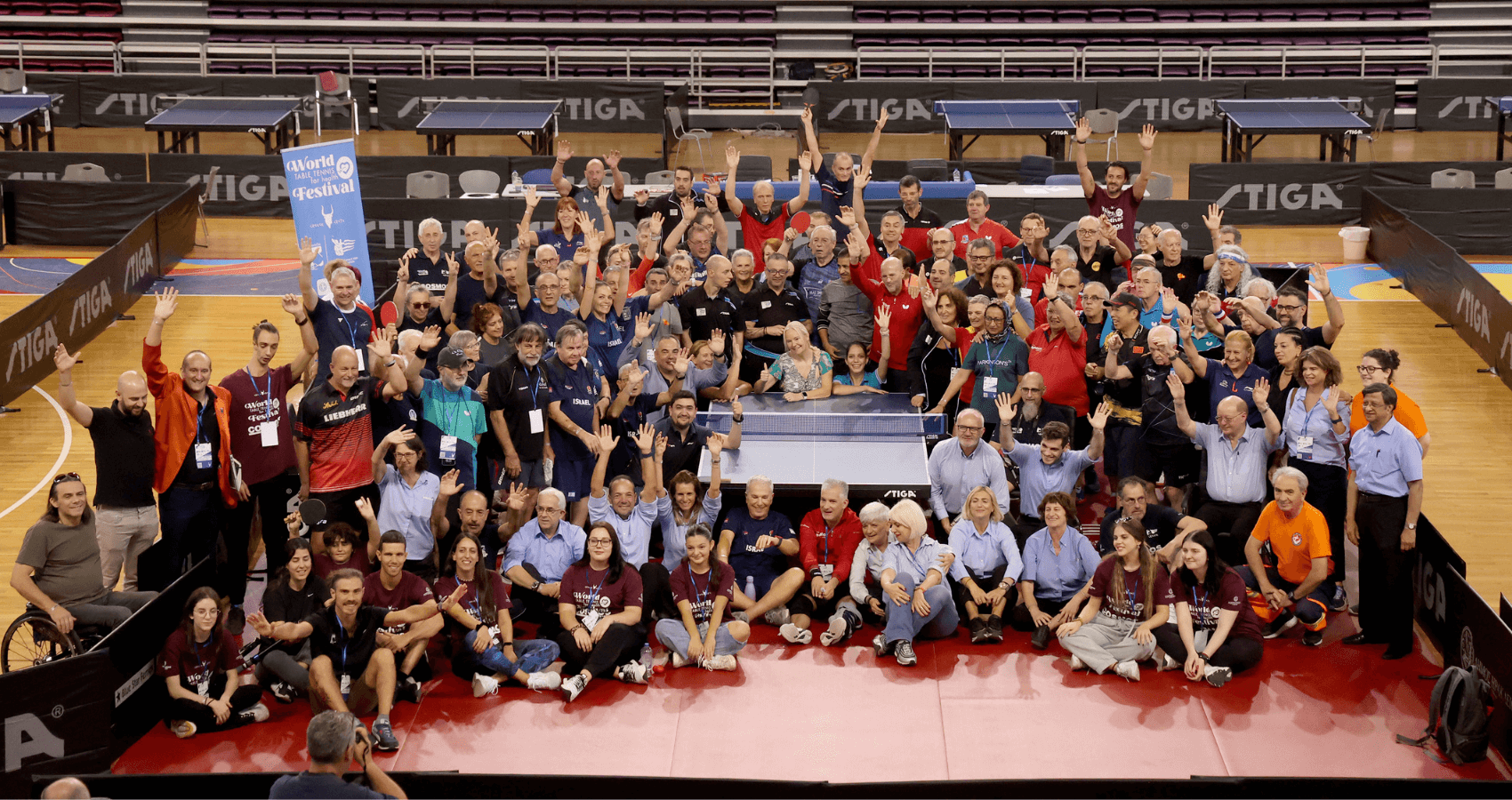
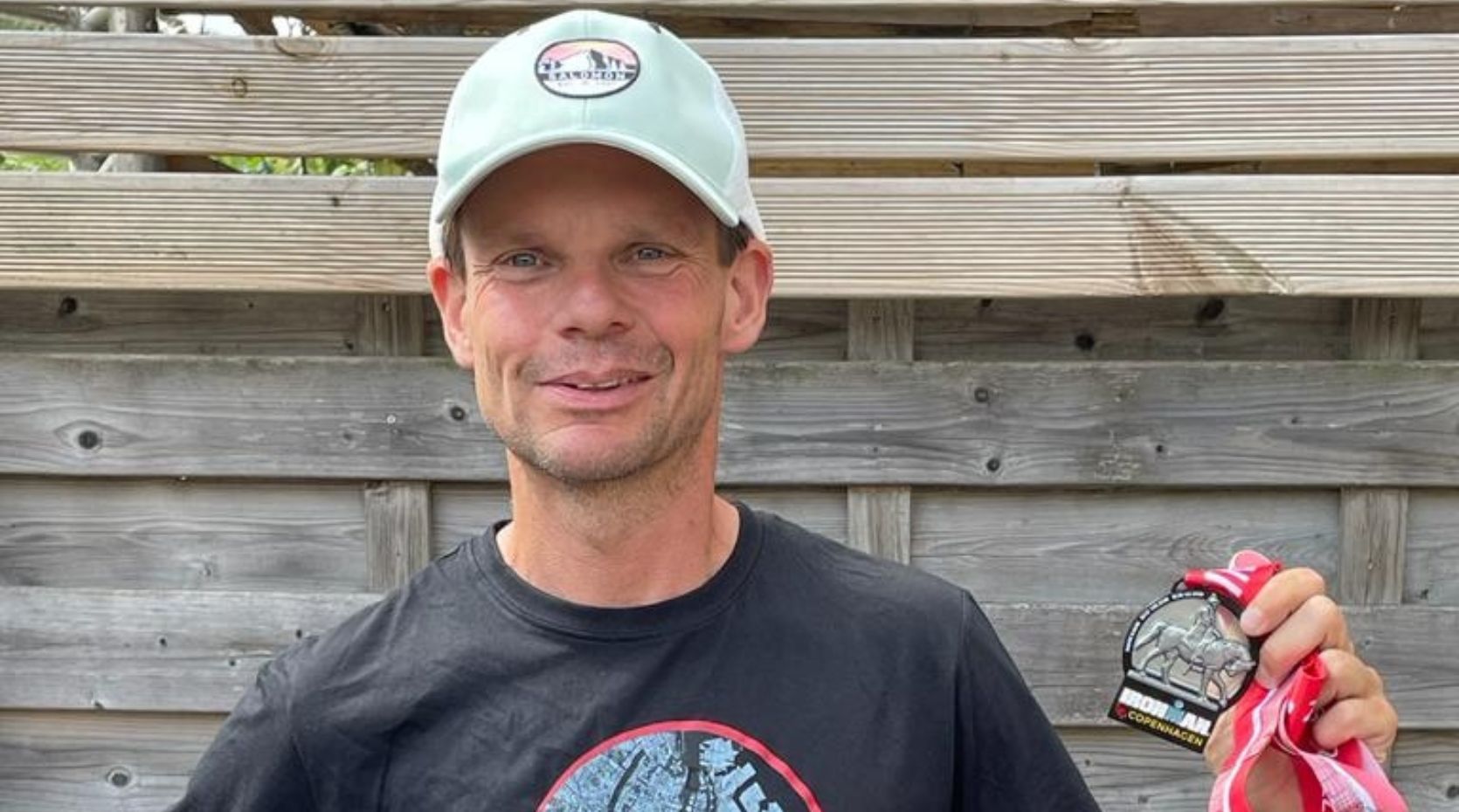
In this guest post, Steve Ries from Luxembourg – who lives with Parkinson’s – tells us about his experience at the World Parkinson’s Table Tennis Championships 2024. You can also read Steve’s report in French and German using the links below.
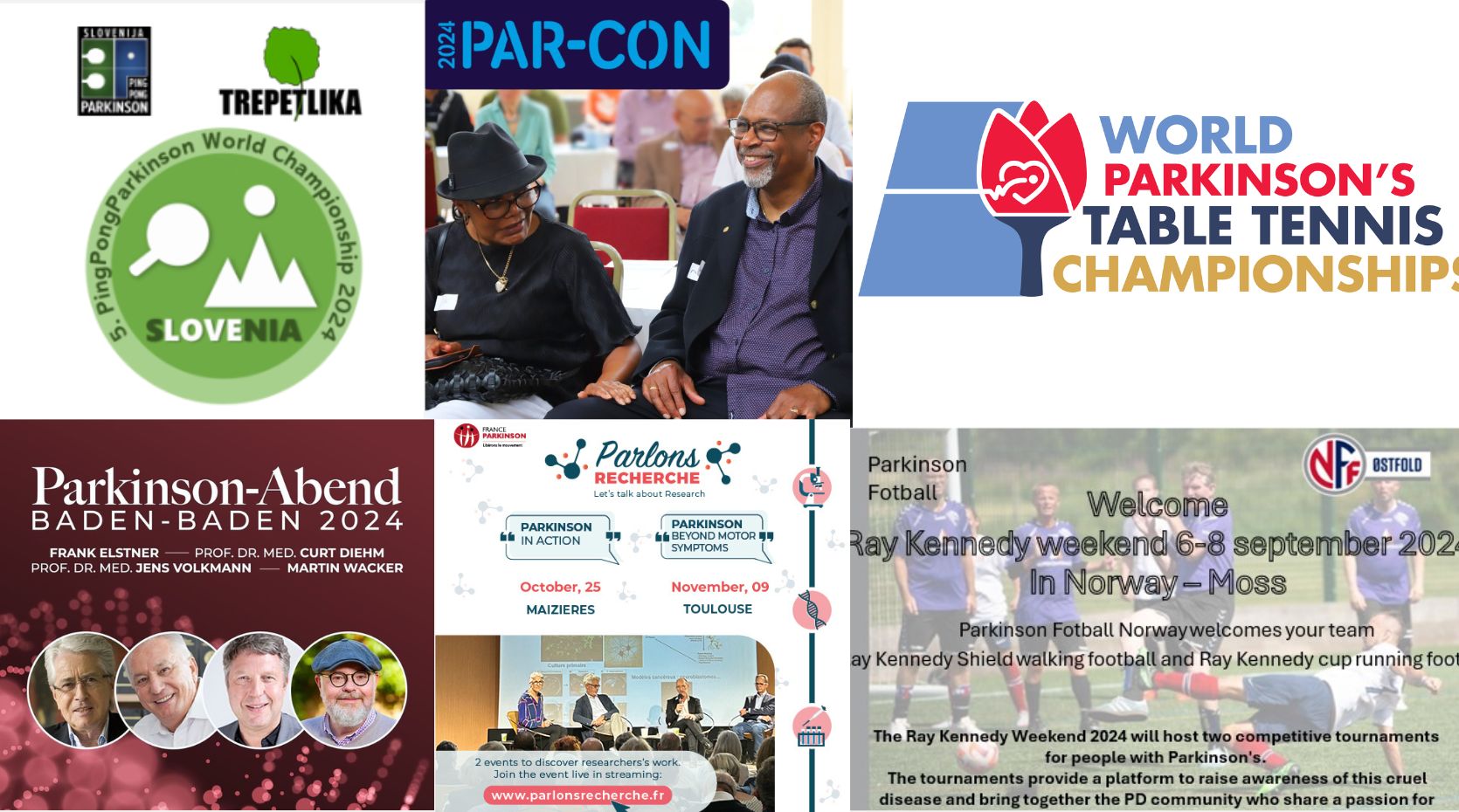
From October 23 to 27, 2024, Majid, Elisabeth, Marco, Andreas, Werner, Jean-Luc and I took part in the World Parkinson’s Table Tennis Championships in Maizières-les-Metz. I’d like to share my experience and impressions with you.
From a sporting point of view, we played table tennis in the form of a “singles”, “doubles” and “mixed doubles” tournament. Everyone played 3 or 4 matches a day, depending on their registration and qualification. The atmosphere in the group was excellent. We had a lot of fun and a lot of good times together.
Every morning, a shuttle bus took us from the hotel to the sports centre and back to the hotel in the evening. To support us, around a hundred volunteers from the TT-Club de Metz entourage were mobilised. Whether serving at the counter, preparing meals, distributing meals in the canteen, serving and clearing tables, from the youngest to the oldest, they were there for us 24 hours a day, and always with a smile. Catering was also provided in the best possible way. In the morning, we had breakfast at the hotel, and at lunchtime and in the evening, we ate at the canteen, not far from the sports centre, together with other participants from all over the world. In turn, we were accompanied and supported during these days by Serena, Vincent and Thierry from the “Parkinson Luxembourg” association.
In the daily programme, sport stood out in a positive way, i.e. table tennis was at the forefront and all the players were fully motivated and participated with pleasure. And as the days went by, one thing became clear to me. The human being was at the centre, and more specifically the person with Parkinson’s!
During the day, during the breaks between games, we had time to prepare for the next game and warm up in an adjacent gym. Otherwise, we followed our group’s games and encouraged each other.
It’s very important to mention that this event is designed and accessible to all people with Parkinson’s. It doesn’t matter if you’re young or old, fast or slow and stiff, more or less athletic; everyone has Parkinson’s, one to a greater or lesser extent than the other. The youngest participant was born in 1979 and the oldest in 1942. Participants were assigned to different groups according to the intensity of their condition and their sporting ability (table tennis). When registering, each player was asked to indicate his or her level of ability.
During the stay, there was always the possibility of chatting with people with Parkinson’s from other countries, and I noticed that many of them took advantage of this opportunity to talk about subjects that we don’t discuss at home, not even in the circle of our families and friends. Perhaps at home, it’s not always possible to reach the appropriate or desired interlocutor.
Here, playing ping-pong, we meet new people at every match. People with Parkinson’s who have the same worries, who feel, think, talk, listen and, perhaps, suffer in the same way as we do. We realize that we’re all floating in the same boat, but that one has a heavier anchor to raise than the other.
As a team, we got to know each other, or got to know each other better. Travelling the distance between the canteen and the field at lunchtime and in the evenings gave us time to talk to each other, sometimes even one on one.. We helped each other. No one was forgotten, and no one felt abandoned.
During these days, I met two people I’ll remember for a long time to come!
The first was Klaus, from Germany, with whom I was assigned as a playing partner after registering for the “double”. We looked each other up by bib number and met on the second day to compete together.
As a surprise for his 76th birthday, his family signed him up for the event and accompanied him from Bavaria to Metz. I think it’s fair to say that we hit it off right from the start, and this impression grew stronger over the following days. After a few brief exchanges of balls as a warm-up, we got on well, also from a sporting point of view. The result was a silver medal. The fact that we had enough time to meet our families was also a very positive factor.
The second acquaintance was a Frenchman in his sixties from the nearby town of Thionville. After a match, he approached me and asked if I had Parkinson’s. I answered in the affirmative, and he asked me if I had time to train with him. In between exchanges, he explained that he had recently been diagnosed with Parkinson’s and was asking himself some serious questions. He had come to Metz not only to watch the games, but also to meet other people with Parkinson’s who could share their experiences with him.
After an hour or so, I had answered a few questions and told him how I’d seen and dealt with different situations over the last few years. He thanked me for the exchange and left me with tears in his eyes.
We had a superb sporting and friendly experience in an environment where the word RESPECT played a key role, both among ourselves and in relations between all the participants. I can say that we were all WINNERS at this festival, and that it helped each and every one of us to progress. Just like every competition in life!
The next edition of this festival will take place in November 2025 in Helsingborg, Sweden. All I can say is: “Join in and be part of it!”
Our warmest thanks go to the staff and volunteers of “Parkinson Luxembourg asbl”, the organizers, the sponsors and our families. Your commitment has made all these wonderful experiences possible.
Find out more about the 2025 World Parkinson’s Table Tennis Championship on the ITTF website
Find out more about exercise and Parkinson’s, table tennis included, on our Self Help and Living Well section.
« World Parkinson’s Table Tennis Championships » : Un rapport d’expérience
Du 23 au 27 octobre 2024, nous, Majid, Elisabeth, Marco, Andreas, Werner, Jean-Luc et moi-même, avons participé aux « World Parkinson’s Table Tennis Championships » à Maizières-les-Metz. J’aimerais vous faire part de mon expérience et de mes impressions.
D’un point de vue sportif, nous avons joué au tennis de table sous la forme d’un tournoi en « simple », « double » et « double mixte ». Chacun a joué 3 à 4 matchs par jour, en fonction de son inscription et de sa qualification. L’ambiance dans le groupe était excellente. Nous nous sommes bien amusés et nous avons passé beaucoup d’agréables moments ensemble.
Chaque matin, une navette nous emmenait de l’hôtel au centre sportif et nous ramenait le soir à l’hôtel. Pour nous soutenir, une centaine de bénévoles issus de l’entourage du TT-Club de Metz se sont mobilisés. Qu’il s’agisse de servir au comptoir, de préparer les repas, de distribuer les repas à la cantine, de servir et de débarrasser les tables, des plus jeunes aux plus âgés, ils étaient présents pour nous 24/24 et ceci toujours avec un sourire. Aussi la restauration était assurée au mieux. Le matin, nous prenions le petit-déjeuner à l’hôtel, le midi et le soir, nous mangions à la cantine, non loin du centre sportif, ensemble avec les autres participants venus des quatre coins du monde. À tour de rôle, nous avons été accompagnés et soutenus pendant ces journées par Serena, Vincent et Thierry de l’association « Parkinson Luxembourg ».
Dans le programme quotidien, le sport s’est distingué de manière positive, c’est-à-dire que le tennis de table était au premier plan et que tous les joueurs étaient pleinement motivés et participaient avec plaisir. Et au fil des jours, une chose m’est apparue clairement. L’être humain était au centre, et plus précisément l’être atteint de la maladie de Parkinson !
Pendant la journée, pendant les pauses entre les matchs, on avait le temps de se préparer au prochain jeu et de s’échauffer dans une salle de sport adjacente. Sinon, nous suivions les matchs de notre groupe et nous nous encouragions mutuellement.
Il est très important de mentionner le fait que cet événement est conçu et accessible à toutes les personnes atteintes de la maladie de Parkinson. Peu importe que l’on soit jeune ou vieux, rapide ou lent et raide, plus ou moins sportif ; tous sont atteints de la maladie de Parkinson, l’un de manière plus ou moins prononcée que l’autre. Le plus jeune participant était né en 1979 et le plus âgé en 1942. Les participants ont été répartis dans les différents groupes en fonction de l’intensité de leur maladie et de leurs capacités sportives (tennis de table). Lors de l’inscription chaque joueur a dû indiquer son niveau.
Pendant le séjour, il y a toujours eu la possibilité d’échanger avec des parkinsoniens d’autres pays et j’ai constaté que beaucoup d’entre eux ont profité de cette occasion pour parler de sujets que nous n’abordons pas à la maison, même pas dans le cercle de nos familles et amis. Peut-être qu’à la maison, il n’est pas toujours possible de joindre l’interlocuteur approprié ou souhaité.
Ici, en jouant au ping-pong, on rencontre de nouvelles personnes à chaque match. Des personnes atteintes de la maladie de Parkinson qui ont les mêmes soucis, qui ressentent, pensent, parlent, écoutent et, peut-être, souffrent de la même manière que soi-même. On se rend compte que nous flottons tous dans le même bateau, mais que l’un a une ancre plus lourde à lever que l’autre.
En tant qu’équipe, nous avons appris à nous connaître ou à mieux nous connaître. La distance à parcourir entre la cantine et le terrain à midi et en soirée nous a laissé le temps de parler entre nous, parfois même entre deux personnes. On s’aidait mutuellement. Personne n’était oublié et personne ne se sentait abandonné.
Lors de ces journées, j’ai fait la connaissance de deux personnes dont je me souviendrai encore longtemps !
La première est Klaus, originaire d’Allemagne, avec qui j’ai été tiré au sort après mon inscription au « double ». Nous nous sommes cherchés à l’aide des numéros de dossard et nous nous sommes rencontrés le deuxième jour pour concourir ensemble.
En guise de surprise pour son 76e anniversaire, sa famille l’avait inscrit à cette manifestation et l’avait accompagné de Bavière à Metz. Je pense pouvoir dire, que nous avons sympathisé dès le premier instant et cette impression s’est densifiée au cours des jours suivants. Après quelques brefs échanges de balles en guise d’échauffement, nous nous sommes bien entendus, aussi du point de vue sportif. Si bien que nous avons remporté une médaille d’argent. Le fait de disposer de suffisamment de temps pour rencontrer sa famille fût également un élément très positif.
La deuxième connaissance était un Français d’une soixantaine d’années, originaire de la ville voisine de Thionville. Après un match, il s’est approché de moi et m’a demandé si j’avais la maladie de Parkinson. J’ai répondu par l’affirmative et il m’a demandé si j’avais le temps de m’entraîner avec lui. Entre deux échanges, il m’a expliqué qu’on lui avait récemment diagnostiqué la maladie de Parkinson et qu’il se posait de sérieuses questions. Il était venu à Metz non seulement pour voir les matchs, mais aussi pour rencontrer des personnes atteintes de la maladie de Parkinson qui pourraient partager leur expérience avec lui.
Au bout d’une petite heure, j’avais répondu à quelques questions et je lui avais raconté ma façon de voir et de gérer les différentes situations au cours des dernières années. Il m’a remercié pour cet échange et m’a quitté les yeux humides.
Nous avons vécu une superbe expérience sur le plan sportif et amical dans un environnement où le mot RESPECT jouait un rôle primordial que ce soit entre nous ou dans les relations entre tous les participants. J’affirme que nous avons tous été GAGNANTS à ce festival et qu’il a fait progresser chacun d’entre nous. Comme chaque compétition que l’on dispute dans la vie !
La prochaine édition de ce festival aura lieu en novembre 2025 à Helsingborg, en Suède. Je ne peux que vous proposer: « Participez et soyez de la partie ! ».
Nous remercions chaleureusement le personnel et les bénévoles de « Parkinson Luxembourg asbl », les organisateurs, les sponsors et nos familles. Votre engagement nous a permis de réaliser toutes ces belles expériences.
Pour en savoir plus sur le « World Parkinson’s Table Tennis Championships » 2025, rendez-vous sur le site Web de l’ITTF.
Pour en savoir plus sur l’exercice physique et la maladie de Parkinson, y compris le tennis de table, consultez notre section « Auto-assistance et bien-être ».
„World Parkinson’s Table Tennis Championships“: Ein Erfahrungsbericht
Vom 23. bis 27. Oktober 2024 haben wir, Majid, Elisabeth, Marco, Andreas, Werner, Jean-Luc und ich selbst, an den „World Parkinson’s Table Tennis Championships“ in Maizières-les-Metz teilgenommen. Ich möchte Ihnen die Erlebnisse und Eindrücke aus meiner Sicht schildern.
Aus sportlicher Sicht haben wir in Form eines Turniers im „Einzel“, „Doppel“ und „Doppel mixt“ Tischtennis gespielt. Jeder bestritt 3-4 Spiele am Tag, je nachdem wie man sich angemeldet und weiter qualifiziert hatte. Die Stimmung in der Gruppe war hervorragend. Wir hatten viel Spaß und schöne Momente miteinander.
Jeden Morgen wurden wir mit einem Bus-Shuttle vom Hotel zur Sportanlage gebracht und abends wieder zurück ins Hotel. Um uns bestens mit allem zu versorgen waren etwa hundert freiwillige Helfer aus dem Umfeld des Metzer TT-Clubs für uns im Einsatz. Ob beim Ausschank am Tresen, beim Zubereiten der Mahlzeiten, beim Essen ausgeben in der Kantine bis hin zum Servieren und Abräumen an den Tischen, von jung bis alt, sie waren rund um die Uhr für uns da und zwar immer mit einem Lächeln im Gesicht. Für Essen & Trinken war bestens gesorgt. Morgens frühstückten wir im Hotel, mittags und abends aßen wir in der Kantine, unweit der Sportanlage, zusammen mit den anderen Teilnehmern, die aus allen Ecken der Welt stammten. Abwechselnd wurden wir an diesen Tagen von Serena, Vincent und Thierry der Parkinsonvereinigung begleitet und unterstützt.
Im täglichen Programm hat sich der Sport positiv hervorgetan, d.h. Tischtennis stand im Vordergrund und alle Beteiligten haben voll motiviert und mit Freude mitgemacht. Und im Verlauf der Tage wurde mir eines klar. Der Mensch stand im Mittelpunkt, und zwar derjenige mit Parkinson!
Tagsüber, während den Spielen hatte man Zeit, sich in einer angrenzenden Sporthalle auf das nächste Spiel vorzubereiten und sich aufzuwärmen. Ansonsten verfolgten wir die Spiele unserer Gruppe und feuerten uns gegenseitig an.
Ganz wichtig zu erwähnen ist die Tatsache, dass dieses Event für alle Menschen mit Parkinson gedacht und zugänglich ist. Egal ob jung oder alt, schnell oder langsam und steif, mehr oder weniger sportlich. Alle haben Parkinson, der eine mehr, der andere weniger ausgeprägt. Der jüngste Teilnehmer war Jahrgang 1979 und der Älteste Jahrgang 1942. Die Teilnehmer wurden, je nach Ausprägung ihrer Krankheit, der sportlichen (Tischtennis) Fähigkeiten, welche jeder in der Anmeldung angeben musste, den jeweiligen Gruppen zugeordnet.
In all den Tagen bestand immer die Möglichkeit sich mit “Parkinsonianern“ aus anderen Ländern auszutauschen und ich stellte fest, dass viele diese Gelegenheit nutzten, um über Themen zu reden, die wir zuhause, auch im Kreis unsere Familien und Freunde nicht ansprechen. Vielleicht ist zu Hause nicht immer der geeignete oder erwünschte Ansprechpartner zu erreichen.
Hier, beim Tischtennisspiel, lernt man bei jedem Spiel neue Leute kennen. Menschen mit Parkinson, welche die gleichen Sorgen haben, so ähnlich fühlen, denken, sprechen, zuhören und vielleicht auch leiden, wie man selbst. Man merkt, wir sitzen alle im selben Boot, aber der eine hat nun mal einen leichteren Anker zu heben als der andere.
Untereinander haben wir uns kennen- oder besser kennengelernt. Vom Spielfeld bis zur Kantine sind wir mittags und abends zusammen zum Essen spaziert. Unterwegs konnte man miteinander reden, manchmal auch in Einzelgesprächen. Es wurde sich gegenseitig geholfen. Es wurde niemand vergessen und niemand fühlte sich allein gelassen.
An diesen Tagen habe ich zwei Menschen kennengelernt, welche mir noch lange in Erinnerung bleiben werden!
Der Erste ist Klaus aus Deutschland, dem ich nach meiner Anmeldung zum „Doppel“ zugelost wurde. Anhand der Startnummern haben wir uns gegenseitig gesucht und sind am zweiten Tag aufeinandergetroffen, um zusammen im „Doppel“ anzutreten.
Als Überraschung für seinen 76. Geburtstag, hatte seine Familie ihn zu dieser Veranstaltung angemeldet und ihn aus Bayern nach Metz begleitet. Ich glaube sagen zu dürfen, dass wir uns vom ersten Moment an sympathisch waren, und das sollte sich in den nachfolgenden Tagen auch auf sportlicher Ebene zeigen. Nach einigen kurzen Ballwechseln zum Aufwärmen waren wir recht gut aufeinander eingespielt, so dass wir uns erfolgreich von Spiel zu Spiel ergänzten und eine Silbermedaille erspielten. Überaus positiv war auch, dass genügend Zeit blieb, auch seine Familie kennenzulernen.
Der Zweite war ein Franzose, Mitte sechzig aus dem nahegelegenen Thionville. Nach einem Spiel kam er auf mich zu und fragte mich ob ich Parkinson hätte. Ich bejahte und daraufhin fragte er mich ob ich Zeit hätte mit ihm zu trainieren. Zwischen den Ballwechseln erklärte er mir, er habe vor kurzer Zeit die Diagnose Parkinson erhalten und mache sich ernste Gedanken und habe viele Fragen. Er sei nach Metz gekommen, nicht nur um sich die Spiele anzusehen, sondern auch um Betroffenen zu begegnen die ihre Erfahrungen mit Parkinson mit ihm teilen könnten.
Nach einer knappen Stunde hatte ich ihm einige Fragen, aus meiner Sicht, beantwortet und ihm erzählt, wie ich in den vergangenen Jahren mit den verschiedensten Situationen umgegangen bin. Er bedankte sich für den Austausch mit mir und verabschiedete sich mit feuchten Augen.
Wir hatten ein super Erlebnis, auf sportlicher und freundschaftlicher Ebene, in einem Umfeld in dem das Wort RESPEKT, untereinander und miteinander, großgeschrieben wurde. Ich behaupte, dass wir alle GEWINNER bei diesem Festival waren und es jeden von uns weiterbringt, so wie jeden Wettkampf, den man im Leben bestreitet.
Im November 2025 wird im schwedischen Helsingborg die nächste Auflage dieses Festivals ausgerichtet. Ich kann nur sagen: „Macht mit und seid dabei!“.
Wir bedanken uns herzlich bei den Mitarbeitern und Helfern von “Parkinson Luxembourg asbl“, den Organisatoren, den Sponsoren und unseren Familien. Ihr Engagement hat uns all diese schönen Augenblicke und Erinnerungen ermöglicht.
Weitere Informationen zur „World Parkinson’s Table Tennis Championships 2025“ finden Sie auf der Website der ITTF.
Weitere Informationen zu Bewegung und Parkinson, einschließlich Tischtennis, finden Sie in unserem Abschnitt „Selbsthilfe und gutes Leben”.
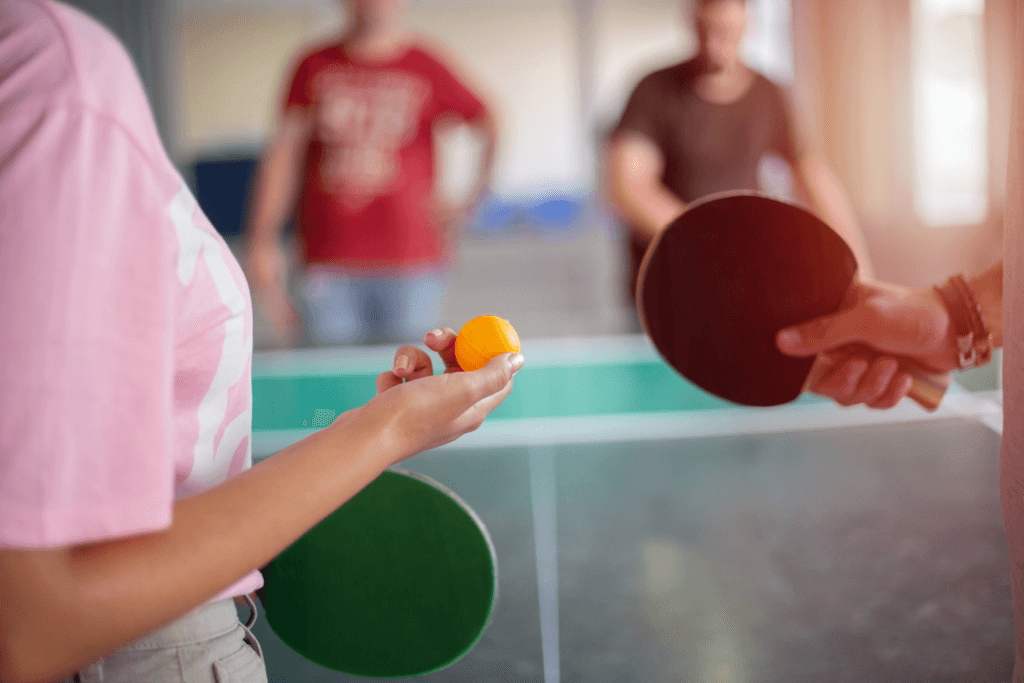
A new Europe-wide project has been launched to help people with Parkinson’s form new neural connections through table tennis. The ‘Spin for Well-being: Active lifestyles through therapeutic table tennis for individuals with Neurodegenerative diseases’ (SWAN) initiative is led by a consortium of organisations across seven EU countries.
Partners include the ITTF Foundation (Germany), the Hellenic Sports Club for Physically Disabled People (Greece) and the University of Ljubljana (Slovenia).
The group will share knowledge and best practices in table tennis health programmes for people with neurodegenerative diseases such as Parkinson’s and Alzheimer’s.
EU SWAN initiative to raise awareness and create curriculum
The 26-month project is part of Erasmus+ Sport, the EU programme to support education, training, youth and sport in Europe. It is funded by the European Union, and additional project partners include KTG Research and Innovation (Cyprus), Alzheimer Leon (Spain), Fondation Compassion Alzheimer Bulgaria (Bulgaria) and the French Federation of Table Tennis (France).
Work will include research, raising awareness, and creating a table tennis curriculum for people with Parkinson’s, to improve their physical, cognitive and social wellbeing.
It aims to build a network of stakeholders who are interested in table tennis’ therapeutic aspects for neurodegenerative diseases care. It is also hoped to see similar programmes adopted in settings such as care homes and by sport organisations.
What are the benefits of table tennis for people with Parkinson’s?
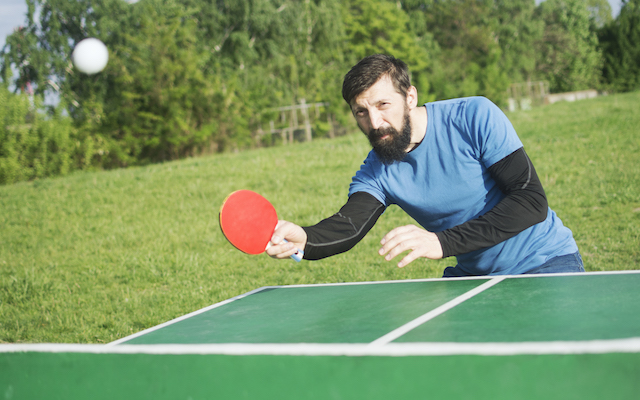
Table tennis is believed to have many potential benefits for people with Parkinson’s, including:
Improved motor coordination and balance
Enhanced cognitive function and reaction time
Positive effects on mood and motivation
Reduction of Parkinson’s symptoms when practiced 3 times per week
A dynamic, social and low-impact environment that motivates continuous engagement.
As we celebrate 10 years of Parkinson’s Life, we look back at the trailblazing women who have made a difference over the past decade. From tech innovations to fundraising and advocacy, here are 10 articles about inspiring women dedicated to improving the lives of people living with Parkinson’s.
Inspiring women
May May Ali advocating for people with Parkinson’s
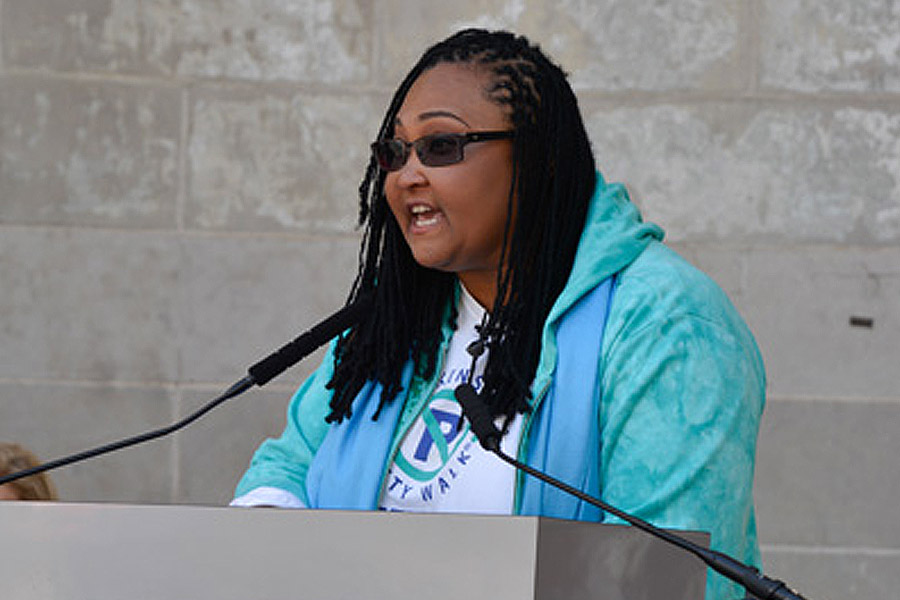
As the daughter of the former World Heavyweight Champion boxer Muhammed Ali, Maryum ‘May May’ Ali has long been a passionate campaigner and advocate for people with Parkinson’s. Her father was diagnosed with the disease in 1984 and died on 3 June 2016. Since 2002, May May has channelled her energy into supporting the US Parkinson Alliance and working as a national spokesperson for its annual Unity Walk for Parkinson’s.
A well-known face at the New York-based walking event, May May encourages people with Parkinson’s and their families to get together to help educate and empower, while raising money and awareness of the disease.
Ahead of the 2015 US Unity Walk, she spoke to Parkinson’s Life about the positive impact the walks have on the Parkinson’s community: “When I go to the US Unity Walk in New York, people are just very happy, very hopeful. They’re one big team and one big family.”
In June 2015, Parkinson’s Life spoke to Olie Westheimer, the recipient of Dr Rana International Parkinson’s Community Service Award, about her outstanding contribution to improving the lives of people with Parkinson’s. Olie was awarded the accolade on World Parkinson’s Day 2015, in recognition of her work as executive director of Brooklyn Parkinson Group and as the visionary behind Dance for PD.
Olie was inspired to develop a dance class for people with Parkinson’s after searching for one and finding none. The Dance for PD classes, which started in New York and have now spread around the world, are led by professional dancers and provide a meaningful community activity which Olie believes is “an important component to the long-term management of Parkinson’s.”
She says: “People with Parkinson’s and their partners often tell us that BPG classes, workshops and support groups are lifesaving.”
How a smart watch changed one graphic designer’s life
Living with a hand tremor takes some getting used to, but for 33-year-old Emma Lawton – a professional graphic designer with young-onset Parkinson’s – it made work nearly impossible. In December 2016 she took part in a British TV show called ‘The Big Fix with Simon Reeve’ where engineers and designers invented life-changing solutions for people living with chronic conditions.
Microsoft Reearch’s Haiyan Zhang built a wearable tremor-reducing device to help Emma, and the results were instant. When wearing the device – named the Emma Watch – Emma was able to control a pen with much more accuracy.
“It makes me excited about the fact my future is back in my control, it’s back in my hands… it makes me forget that I have a tremor,” Emma said.
Banita Khanal sets up Nepal’s first Parkinson’s support group
Although Parkinson’s affects people all over the world, in some countries the support just isn’t in place to help those living with the condition. When Banita Khanal was diagnosed with Parkinson’s at 26, she was shocked to discover there were no support groups in her home country of Nepal.
Dedicated to creating a community for people with Parkinson’s, Banita took matters into her own hands and set up the group, Parkinsons’s Support Nepal (PSN).
The main aim was to raise awareness around the disease in Nepal, and speaking to Parkinson’s Life in 2017, Banita explained the challenges.
“Nepal is a country with poor economic resources, and we find the medical industry to be particularly stretched,” she said. “We firmly believe that by developing awareness about the condition we can secure far better funding to help fight the cause.”
Now, with over 1,800 followers on the PSN Facebook page, the community is really making a difference.
After the shock of a young-onset Parkinson’s diagnosis, Kim Petrie from Ontario, Canada tried to carry on life as normal, keeping the news private as she came to terms with it. However, she soon decided she wanted to do something productive and was inspired to organise a music-based fundraiser to benefit Parkinson’s charities.
“My husband is a musician, and I studied event planning at college,” Kim explained to Parkinson’s Life in 2017. “It just felt right to us, this was our silver-lining, what we felt we must do.”
Going public with her diagnosis after living with Parkinson’s for two years, Kim threw herself into planning the first event, a music concert called Let’s Shake in 2012, which raised over $25,000.
Running as an annual event, Let’s Shake had raised over $250,000 by 2017.
If ever there was a woman to show you that you can live a full life post-Parkinson’s diagnosis, it’s Maura Ward. Speaking to Parkinson’s Life in 2019, Maura shared her inspiring story of travelling the world whilst living with Parkinson’s – and raising thousands of pounds for Parkinson’s in the process.
“Parkinson’s has been the catalyst for me seeing as much as I possibly can when the going is good,” she told us. “ I have visited over 60 countries, more than half of which have been since my diagnosis.”
In 2018 she climbed Mount Fuji, with friends, family and supporters, helping to raise just under £14,000 for The Cure Parkinson’s Trust.
It was Bulgarian-born Tania Park’s love of football that originally led her to Africa. Volunteering for TackleAfrica, a charity that uses football to educate young adults about HIV in Africa, in Zambia 2007, she ended up travelling and volunteering around different African countries, before starting a career in the charity sector.
Parkinson’s Life spoke to Tania in 2023, just a few months after she was appointed CEO of Parkinson’s Africa.
“Our vision is that all African people impacted by Parkinson’s have access to the information, support and healthcare resources needed to live empowered lives,” she explained.
When taking over the role she told us she felt “excited” and “ready” to get involved in Parkinson’s Africa, the first pan-African Parkinson’s advocacy organisation dedicated to helping and empowering those affected by Parkinson’s across the continent.
World’s first hormone study in women with Parkinson’s
Richelle Flanagan (centre) with Professor Aideen Sullivan (left) and Research fellow Lucy Collins-Stack of the University College Cork
In 2024 we reported on the launch of a groundbreaking study looking specifically at the impact of hormonal fluctuations on women with Parkinson’s.
Led by Professor Aideen Sullivan and Research fellow Lucy Collins-Stack at Ireland’s University College Cork (UC), in collaboration with Richelle Flanagan, inventor of the Parkinson’s self-care app My Moves Matter, it was open to women of all ages, from anywhere in the world.
The app was inspired by Richelle’s personal experience with young-onset Parkinson’s and how her symptoms worsened across her menstrual cycle. The first of its kind, the app and study shone a light on the unique ways Parkinson’s affects women.
Artist Barbara Salsberg Mathews releases What Parkinson’s Feels Like e-book
Diagnosed with Parkinson’s in 2020, Canadian artist Barbara Salsberg Mathews was inspired to use her talents to give a voice to the Parkinson’s community.
In 2024, Barbara asked her social media followers: what does Parkinson’s feel like for you? She then transformed their words into evocative illustrations for an e-book called What Parkinson’s Feels Like.
The motive behind the e-book, released in November 2024, was to raise awareness and empathy about Parkinson’s. She says: “Reading these descriptions reminded me that I’m not alone with these symptoms. I could never have created this booklet without the descriptions of all those who shared their lived experiences with Parkinson’s.”
You can download the book for free here in either English, Spanish, French, Italian, German, Ukrainian or Russian, where you’ll also have the option to donate to one of three Parkinson’s charities, including Parkinson’s Europe.
Marking World Parkinson’s Day 2025, Belgium singer-songwriter Birdie Belgium released a moving song inspired by her mother’s 14-year battle with Parkinson’s.
Entitled “It’s Hard to See”, the song is a heartfelt tribute and something Birdie hopes “will bring awareness, make people feel understood, and open up a safe space to talk to one another. Half of the proceeds will go to the research into the health benefits of art, focused on people with Parkinson’s.”
“It’s Hard to See” by Birdie Belgium is available on all good music platforms. A CD is also available to buy.
Vegetarian ‘Beet Wellington’ recipe with mushrooms, aubergines and garlic
Rich in fibre and low in protein, this ‘Beet Wellington’ – a vegetarian spin-off of a steak classic – is a delicious combination of beetroots, mushrooms, aubergines and garlic
1. Preheat oven to 180°C.
2. Place the beetroots into an oven dish and brush them with sunflower oil.
3. Roast the beetroots in the oven for 45 minutes.
4. Remove the skin from the beetroots.
5. Mix sunflower oil with pepper, 1 pinch of aniseed and sage.
6. Brush the oil mixture onto the beetroots. Sprinkle some salt on top (optional).
7. Heat sunflower oil in a frying pan and fry the aubergine, shallots, garlic and mushrooms.
8. Add the tomato purée and a splash of water, stir thoroughly.
9. Add the breadcrumbs, sage and 1 pinch of aniseed. Cook on a low heat for ten minutes, stirring from time to time.
10. Purée the mixture in a blender, leave to cool.
11. Pre-heat the oven to 220°C.
12. Place sheets of pastry on a cool, floured surface.
13. Brush the edges of the pastry with the mixture of egg yolk, water and oil.
14. Place ½ tbsp of breadcrumbs in the middle of each sheet.
15. Spread the purée mixture over the sheets of pastry.
16. Place the beetroot on top of the purée mixture.
17. As tightly as possible, fold the pastry sheets over the purée and beetroot.
18. Turn the pastry over and brush egg yolk over the top.
19. Sprinkle poppy seeds over the dough (optional).
20. Bake the Beet Wellington for 20 minutes, until golden brown.
Culinary tip Serve with a cool, homemade sauce comprising of sour cream, horseradish and a splash of vodka.
Variation You can replace the beetroot with a large turnip of half a kohlrabi.
Nutrition – Rich in fibre, which means it’s suitable for people with constipation
– This dish contains 5-10g of protein per person
– This dish is soft on the inside and crunchy on the outside
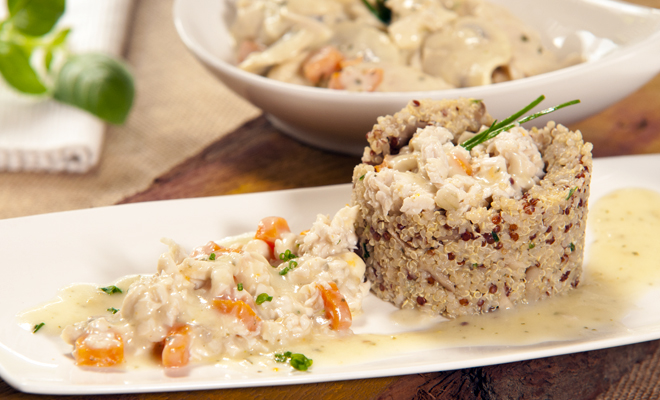
This is tasty and nutritious risotto recipe has a twist – rice is swapped for the high-protein grain, quinoa. Tender wild mushrooms combine with crunchy quinoa to create a dish with exciting textures. This vegetarian recipe can be adapted for people with chewing or swallowing problems by blending ingredients to the required consistency
Cook the quinoa in vegetable stock as indicated on the package.
Dice the peppers and onion. Slice the mushrooms.
Finely chop the garlic.
Pour the sweet corn kernels (from the can) into a sieve and leave to drain.
Method
Fry the vegetables in olive oil.
Add the herbs and garlic, season with pepper and salt. Stir well.
Deglaze with white wine, reduce by half.
Add the pre-cooked quinoa and corn kernels.
Just before serving season with some drops of red wine vinegar and/or lemon juice.
Nutritional information
Nutrition per 100 grams
Energy …………………………………………………………. 136kcal/ 568kJ
Proteins………………………………………………………………………………4.3g
Total fat………………………………………………………………………………3.5g
Saturated fat ……………………………………………………………………..0.5g
Monounsaturated fat……………………………………………………….1.4g
Polyunsaturated fat………………………………………………………….0.6g
Cholesterol ………………………………………………………………………..0.0mg
Carbohydrates…………………………………………………………………20.0g
Sugars. ………………………………………………………………………………..1.6g
Fibres…………………………………………………………………………………..1.8g
Parki’s Kookatelier is a Belgian project focusing on specialised nutrition for people with Parkinson’s disease. The authors are Yves Meersman and Randy Mellaerts. For more information, visit their website here.
Former National Parkinson Foundation dietician Kathrynne Holden explains the benefits of vitamin B3 – also known as niacin – for people with young-onset Parkinson’s
Vitamin B3, or niacin, is one of the vitamins needed for human life. While it is necessary for everyone, it may have added value for people with inherited Parkinson’s disease.
In a recent research study from the University of Leicester, scientists examined the effect of niacin-rich foods on fruit flies. The flies had a genetic mutation similar to the one in people with hereditary Parkinson’s disease. They learned that the high-niacin food prevented the degeneration of neurons in the brains of the flies.
What does this mean for people with Parkinson’s disease?
We can’t assume that an animal study will apply to humans. About 75% of the DNA in fruit flies is the same as human DNA, so although flies are good research subjects, the study results are not conclusive.
However, it is still possible that niacin-rich foods could benefit people with Parkinson’s disease. As niacin is already being used in cancer studies, and in treating strokes, we can trust that increasing high-niacin foods in our diet will be safe, and may be therapeutic. It is important to note that the research indicates that natural, food-based sources of niacin/vitamin B3 are preferable, rather than supplement tablets.
How much niacin/vitamin B3 do we need daily?
The recommended daily amount (RDA) of vitamin B3 for adults is 16mg for men and 14mg for women. There is no risk of excess or toxicity from foods. However, with use of supplement tablets there is an upper limit of 35mg per day for adults. Very high doses of supplements can cause a burning sensation in the skin of the face and chest, and can increase histamine in people with allergies.
Another factor to be aware of is that some people with Parkinson’s disease have orthostatic hypotension (low blood pressure) and vitamin B3 supplements can cause a dangerous drop in blood pressure.
Which foods are high in vitamin B3?
High-protein foods are the richest in vitamin B3. We must consider that people using levodopa may be sensitive to protein, and, if so, will need to carefully time medications and meals, so that the levodopa is absorbed into the bloodstream ahead of protein in the meal.
By combining servings of high-protein foods with grains, vegetables, pulses and fruits you can be certain to get plenty of vitamin B3 in your daily menu. Below is a one-day meal plan that’s high in vitamin B3.
Morning meal 1 cup cooked barley cereal with milk or milk alternative 3.2mg
1 slice whole wheat bread, toasted with butter 1.3mg
1 banana 0.67mg
Juice, milk, coffee or tea as desired
Midday meal Tuna sandwich
(with canned tuna and two slices whole wheat bread 9.6mg
Coleslaw or lettuce salad
Avocado 1.7mg
Beverage of choice
The day’s menu exceeds the RDA for both men and women, yet is well below the upper limit of 35mg. Whether you are living with Parkinson’s or not, this is a healthy day’s menu, with a variety of foods, and ample vitamin B3.
‘Shakshuka’ is a dish of eggs poached in a sauce of tomatoes, chili peppers and onions
Food high in vitamin B3
Meat
Beef liver, cooked 100g – 14mg
Ground beef, cooked 100g – 5.3mg
Lamb, lean, cooked 100g – 6mg
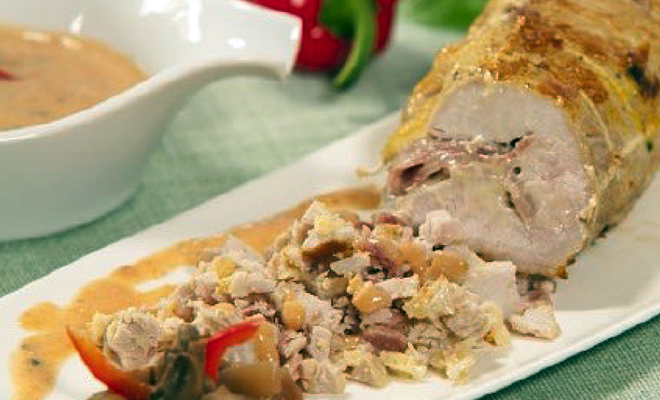
Pork loin, roasted 100g – 5.5mg
Poultry
White meat chicken, cooked 100g – 13.4mg
Turkey breast, roasted 133g – 7.2mg
Duck, roasted 100g – 4.8mg
Fish
Tuna, light, (canned) 115g – 14mg
Salmon, (cooked) 100g – 8.0mg
Halibut (cooked) 100g – 6.2mg
Sardines (canned) 100g – 5mg
Shrimp, boiled 85g – 2.2mg
Dairy
Milk, 3.25% fat 1 cup 245g – 0.2mg
Egg, 1 large (boiled) 0.03mg
Pulses, beans and seeds
Peanut butter, 2 tablespoons – 4.4 mg
Sunflower seeds (toasted) 67g – 2.8mg
Lentils (cooked) 200g – 2mg
Navy beans (boiled) 182g – 1.1mg
Black beans (boiled) 172g – 0.86mg
Grain
Barley (cooked)157g – 3.2mg
Brown rice (cooked) 195g – 2.6mg
Whole wheat bread, 1 slice – 1.3mg
Rye bread, 1 slice, 28 g – 1mg
Vegetables
Mushrooms, white, boiled, 85g – 3.7mg
Sweet potato, baked in skin, 100g – 1.7mg
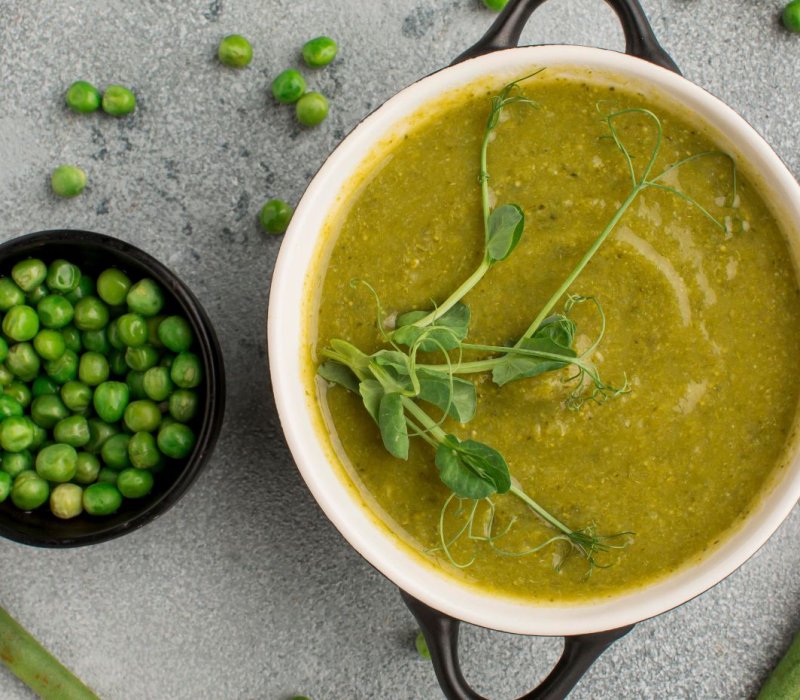
Green peas, boiled, 80g – 1.6mg
Corn, sweet, boiled, 100g – 1.6mg
Asparagus, boiled 100g – 1mg
Carrots, boiled, sliced 78g – 0.5mg
Brussels sprouts, boiled, 78g – 0.47mg
Potato, baked, no skin, 113g – 0.11mg
Pumpkin, boiled and mashed, 120g – 0.04mg
Fruit
Avocado, raw, 100g – 1.7mg
Mango, raw, 165g – 1.1mg
Cantaloupe, raw, 56g – 1.1mg
Banana, raw (small), 100g 0 .67mg
Tomato, 1 (small) – 0.54mg
Grapes (red or green), 100g – 0.18mg
Apple, raw, with skin, 125g – 0.11mg
Kathrynne Holden, a registered dietitian, has specialised in the nutritional concerns of Parkinson’s disease for over 20 years. She has contributed to two physicians’ manuals on Parkinson’s disease, written the booklet ‘Nutrition Matters’ for the NPF.
Sicilian caponata: aubergines in a ‘puttanesca’ tomato sauce recipe
A delicious lunch dish packed full of fibre and robust flavours. It’s ideal for people who are sensitive to protein and it’s soft making it easily digestible
Place the diced aubergine into salted cold water for 10 minutes.
Gently dry the diced aubergine.
Fry the aubergine with the onion in olive oil.
Add the garlic and the celery and braise for 3 minutes.
Add the tomatoes, olives, capers and the sugar.
Deglaze with white wine vinegar.
Season with salt, pepper and cayenne pepper.
Leave to cool and mix in the green herbs.
Putanesca sauce
Fry the onion and bell pepper in olive oil.
Add the tomatoes.
Season with salt, pepper and paprika.
Allow the ingredients to cook thoroughly.
Add water if the sauce becomes too thick.
Pass the sauce through a sieve and leave to cool
Culinary tip The sauce tastes best when it’s nice and spicy. Garnish the caponata with pickled anchovies. This salad is also very suitable side for a barbecue.
Leftovers tip Warm up the salad the following day for lunch or use as a side for a dish with lamb or chicken.
Variation This dish is effectively an alternative ratatouille; you can experiment with adding or leaving out ingredients of your choice.
Nutritional information
Rich in fibre, which means it’s suitable for people suffering from constipation
Stir-fried broccoli recipe from 'Lekker eten met Parkinson'
Make your own vegetarian stir-fry with broccoli, shiitakes and cashew nuts. This recipe is packed with fibre, protein and is also easy to digest
Recipe: broccoli, shiitake mushrooms and cashew nut stir-fry
Ingredients
2 eggs 300g broccoli florets
240g thin Chinese egg noodles (boiled)
200g baby corn cobs
100g shiitake mushrooms
100g cashew nuts (coarsely chopped)
4 tbsp oil
2 tbsp water
2 tbsp ginger syrup
2 tbsp lemon juice
2 tbsp sunflower oil
1 tbsp sesame oil
2 cloves of garlic (thinly sliced)
1 red onion, sliced into rings
Method 1. Remove the stalks from the shiitakes and cut the tops into quarters.
2. Blanch the baby corn for two minutes and then the broccoli for one minute.
3. Fry both the onion and garlic in a wok.
4. Add the shiitake mushrooms and fry for one minute on a high heat.
5. Add the baby corn and broccoli.
6. Add the water, ginger syrup and lemon juice. Heat for a further two minutes.
7. Add the nuts.
8. Fry the egg noodles in a mixture of sunflower and sesame oil.
9. Beat the eggs and stir into the noodles.
Culinary tip
Instead of water, use a splash of Thai chilli or soy sauce for different flavours.
Variation tip
For a non-vegetarian option, use Norwegian prawns or pre-cooked strips of chicken.
Nutritional information
– Rich in fibre, which means it’s suitable for people suffering from constipation
– This dish contains 5–10g of protein per person
– This dish is soft and easy to digest
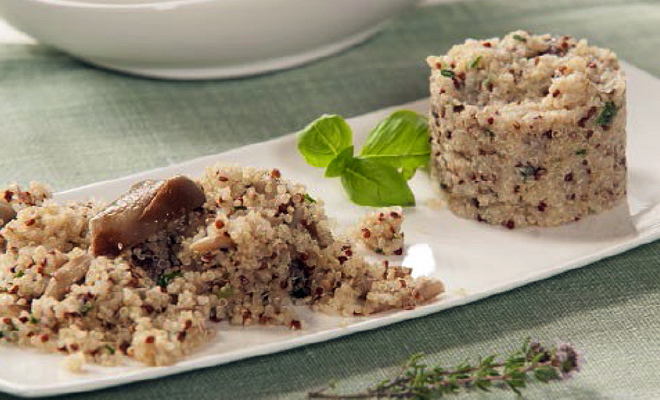
Pearl barley gives a nutty taste boost to this healthy vegetarian dish, as its creamy texture soaks up the bold flavours of the aubergine/courgette and sweet pepper. This dish can be adapted for people with chewing and swallowing problems and is also very nutritious
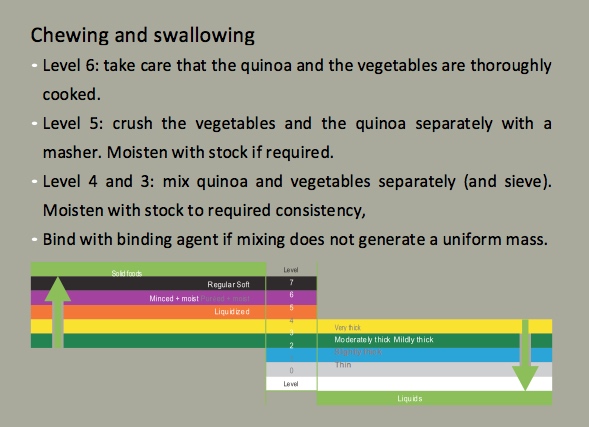
Level 6: Make sure that the vegetables and pearl barley are well cooked.
Level 5: Crush the vegetables, add stock if required.
Level 4 and 3: Finely mix the vegetables and the pearl barley separately. Add stock until required consistency is reached.
Parki’s Kookatelier is a Belgian project focusing on specialised nutrition for people with Parkinson’s disease. The authors are Yves Meersman and Randy Mellaerts. For more information, visit their website here.
Provençale-style aubergine stuffed with ratatouille and vegetarian mince
Aubergines are great for stuffing and this recipe combines scooped-out aubergine flesh with a vegetarian mince to create a rich filling, all served in a baked aubergine shell. This vegetarian recipe can be adapted for people with chewing or swallowing problems by blending ingredients to the required consistency.
Aubergine stuffed with ratatouille recipe ingredients
2 aubergines
2 onions
1 red paprika
1 courgette
2 onions
250g mushrooms
300g diced tomato
250g quorn mince (frozen or pre-packed)
200g quinoa
50g grated parmesan cheese
2 tablespoons tomato purée
4 tbsp olive oil
1 tsp paprika powder
1 clove chopped garlic
1 teaspoon Provençale herb mix
100ml vegetable stock (ready-made)
½ lemon or lime
Pre-preparation
Preheat the oven to 150°C.
Dice the onion, paprika, courgettes and the mushrooms.
Cut the aubergines in half lengthwise, remove the flesh of one half and dice. Add to the other the vegetable mixture.
Brush the inside of the hollowed aubergine with olive oil and place in a buttered oven dish.
Cook the halved aubergine in the oven for 15 minutes.
Ratatouille Preparation
Fry the diced vegetables in heated olive oil until glazed.
Add the quorn mince and season with salt and pepper. Add Provençale herbs or Provençale taste-booster and chopped garlic. Stir well.
Add the tomato purée, stir well and add the vegetable stock. Bring to the boil while stirring.
Immerse half a lemon (with skin) to the bottom of the cooking pan and leave to simmer for 20 minutes on a low heat.
Cook the quinoa according to instructions on the package.
Combination tip
Replace the quorn mince with seitan or tofu for alternative vegetarian options. Or use pork or poultry mince for a meat dish.
Serving tip
Use the hollowed baked aubergine as a ‘serving mould’: stuff with quinoa, add a layer of mixed ratatouille and top off with the ground quorn mince. Drizzle with the creamy ratatouille juice.
Finishing
Remove the half lemon out of the sauce.
Add the diced tomato and bring to the boil while stirring. Leave to simmer on a low heat for 5 minutes.
Season with salt and pepper, Provençale taste-booster or green pesto and take off the heat.
Fill the hollowed aubergine with the ratatouille.
Sprinkle grated parmesan cheese over the filling and serve.
Take the required volume of prepared ratatouille from the cooking pan and leave to drain in a sieve.
Heat the ratatouille juice and thicken to sauce consistency with an instant binder.
Mash, crush or mix the ratatouille to consistency level required.
Use the cream sauce for moistening at level 5, 4 and 3.
Per portion of quinoa, fry 50g quorn mince golden brown in olive oil, season with 1 teaspoon Provençale tastebooster or herb mix. Here too, use the creamy ratatouille juice for crushing or mixing the mince.
Nutritional information
Nutrition per 100g
Energy ………………………………………………………….. 79kcal/ 332kJ
Proteins……………………………………………………………………………..4.5g
Total fat……………………………………………………………………………3.0g
Saturated fat ………………………………………………………………..0.8g
Monounsaturated fat …………………………………………….1.6g
Polyunsaturated fat………………………………………………0.4g
Cholesterol ……………………………………………………………… 2mg
Carbohydrates………………………………………………………………8.4g
Sugars ……………………………………………………………………………..2.6g
Fibres……………………………………………………………………………………….2.4g
Parki’s Kookatelier is a Belgian project focusing on specialised nutrition for people with Parkinson’s disease. The authors are Yves Meersman and Randy Mellaerts. For more information, visit their website here.



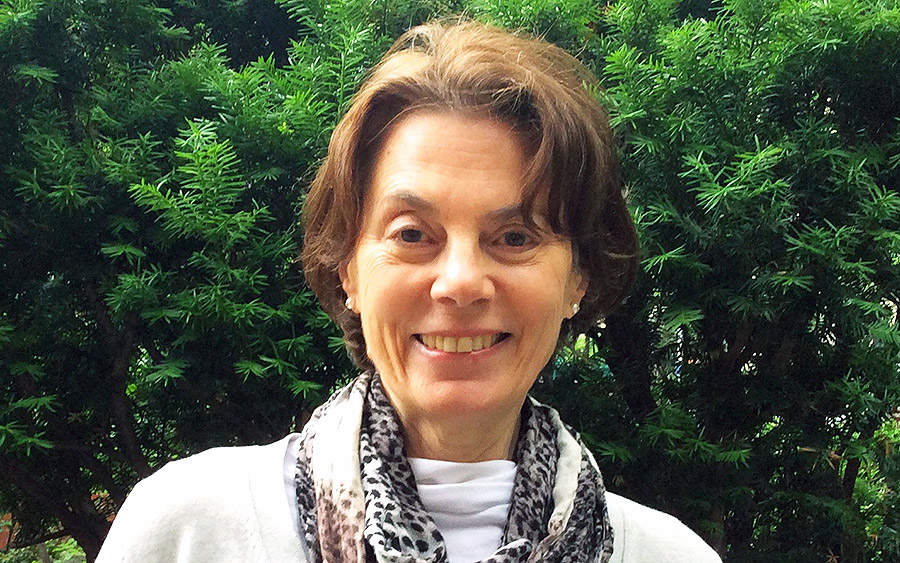 In June 2015, Parkinson’s Life spoke to Olie Westheimer, the recipient of Dr Rana International Parkinson’s Community Service Award, about her outstanding contribution to improving the lives of people with Parkinson’s. Olie was awarded the accolade on World Parkinson’s Day 2015, in recognition of her work as executive director of Brooklyn Parkinson Group and as the visionary behind Dance for PD.
 Although Parkinson’s affects people all over the world, in some countries the support just isn’t in place to help those living with the condition. When Banita Khanal was diagnosed with Parkinson’s at 26, she was shocked to discover there were no support groups in her home country of Nepal.

 It was Bulgarian-born Tania Park’s love of football that originally led her to Africa. Volunteering for TackleAfrica, a charity that uses football to educate young adults about HIV in Africa, in Zambia 2007, she ended up travelling and volunteering around different African countries, before starting a career in the charity sector.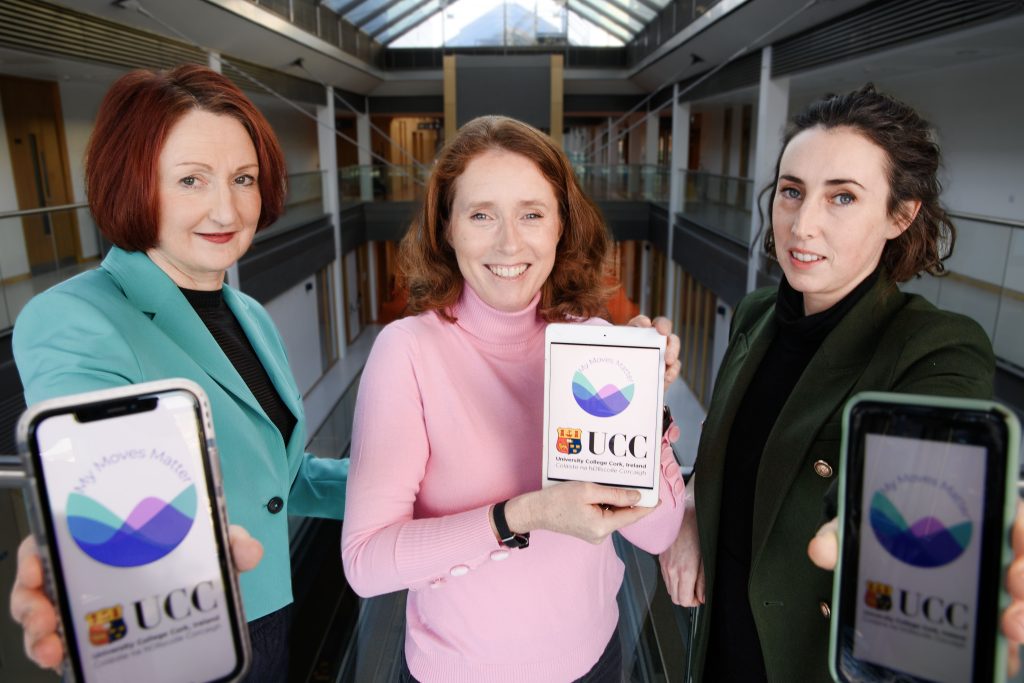
 Diagnosed with Parkinson’s in 2020, Canadian artist Barbara Salsberg Mathews was inspired to use her talents to give a voice to the Parkinson’s community.
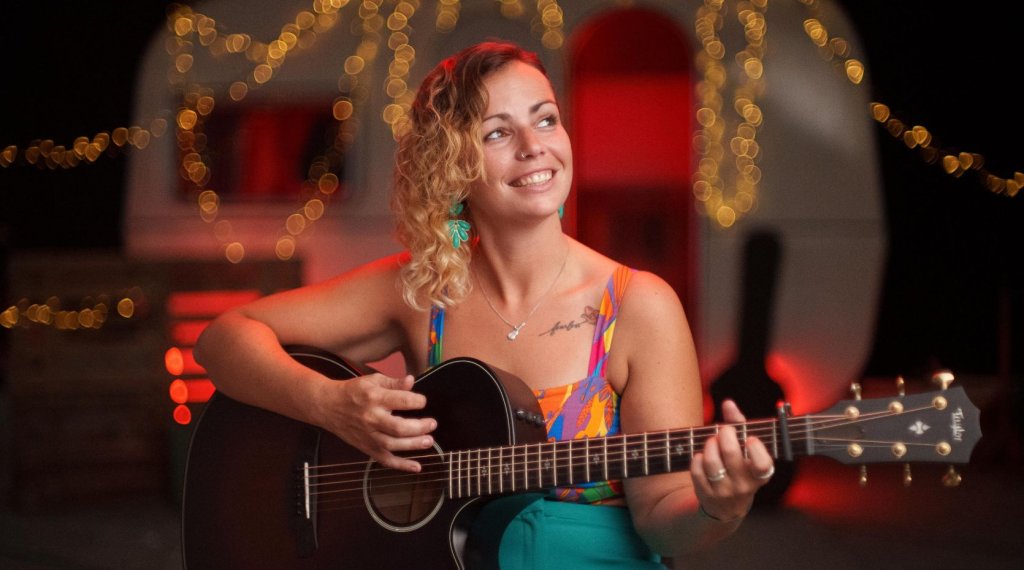 Marking World Parkinson’s Day 2025, Belgium singer-songwriter Birdie Belgium released a moving song inspired by her mother’s 14-year battle with Parkinson’s.