Belgian singer-songwriter Birdie Belgium is launching a new song on 11 April, to raise awareness and funds for Parkinson’s.
A heartfelt tribute to her mother, Birdie wrote “It’s Hard to See” after seeing the effects of her mother’s 14-year battle with Parkinson’s. After sharing the track with Professor Bas Bloem, the song is now being released for World Parkinson’s Day 2025, to raise awareness, offer comfort, and help fund vital research.
Parkinson’s Life spoke to Birdie and her mother Ilde, to hear their different perspectives of the new song.
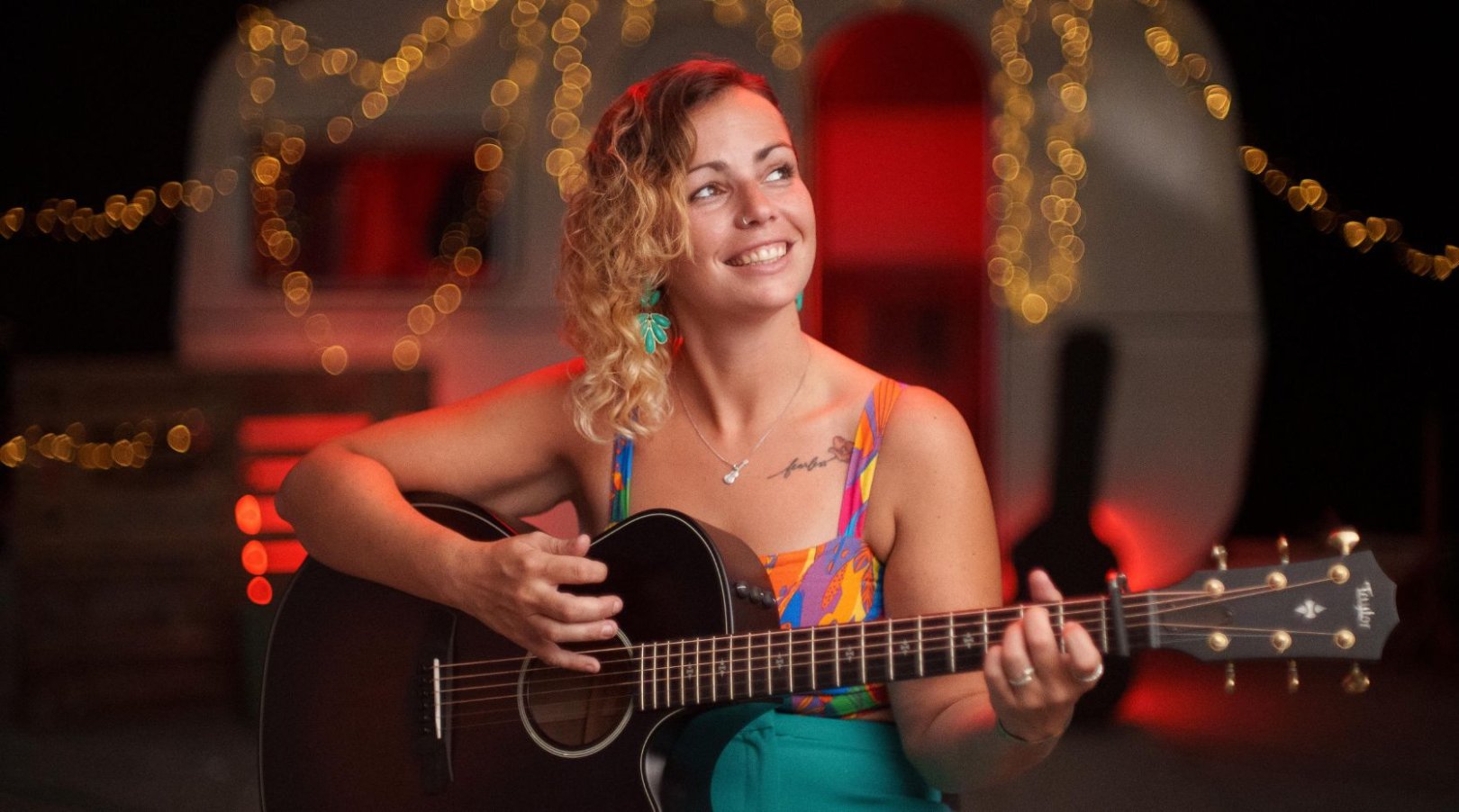
Birdie (Berdien) Belgium, 36, is a singer-songwriter who splits her time between her home in Belgium and Australia. She tells Parkinson’s Life about her experience of seeing her mother living with Parkinson’s, and how she came to write the song.
“In August 2018, I left Belgium to travel for a year in Japan, Australia and New Zealand. In Australia I picked up the guitar for the first time and started songwriting. I always loved singing and it was my dream since I was a little child to sing. This became reality, just by making time for my passions at the age of 30. Australia is a great place to play music and travel and so my one-year trip became four years, as Covid extended my stay even more than intended.
“I returned home for the first time in 2022. I was speechless and shocked to see my mum’s decline in real life. The video calls and the moments we would call – weekly if possible – had been when she was “on” (not “off”). This had contributed to a somewhat distorted image.
“I remember after a few weeks back home, I was triggered by seeing my mum so helpless. I went into my childhood bedroom, and once my emotions were settled enough I felt able to write about it. So I sat down feeling the need to write and play, and in one hour I wrote this song. I felt so much lighter afterwards. Like therapy.
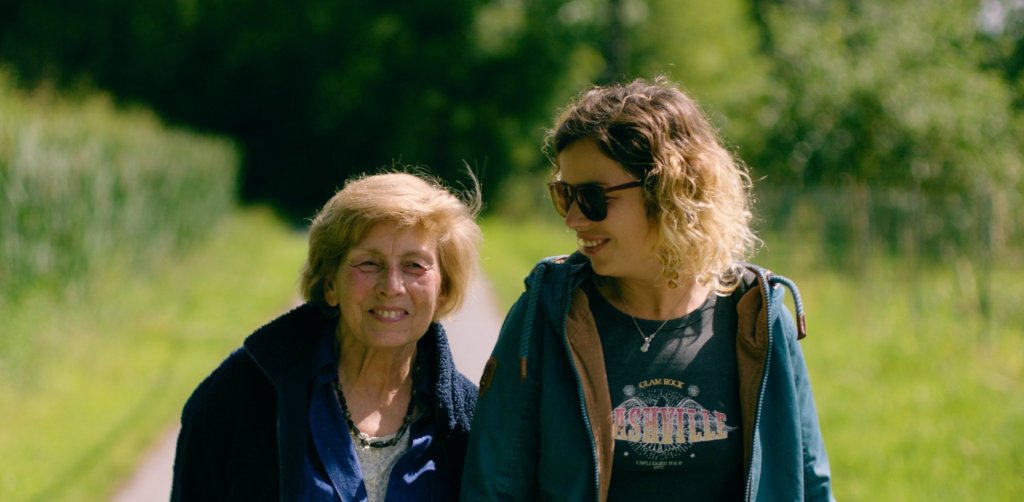
“Since then I’ve been travelling between Belgium and Australia mostly. Trying to find a balance between spending time with my mum and following my dream. I felt like I needed to stay home and take care of my mum, who I love more than anything in the world. But after talking about this with my mum, many times, she made it very clear that she didn’t want me to give up my dreams – she would rather give up now if that was the case. Seeing me chasing my dreams gives her strength and makes her proud.
Understanding Parkinson’s
“Even after my mother’s diagnosis I was very ignorant – most likely a bit in denial, but I also didn’t know much about the disease. It took me years to understand this was a very nasty disease that slowly takes away the things we all take too much for granted. Not being able to go to work, later she couldn’t drive a car. Before you knew it she had moments she would freeze and couldn’t walk.
“These days she cannot speak when she is off, or process what you tell her. She is a strong, independent and proud woman who had to swallow her pride a lot over the last 14 years. Having to ask for help does not come easy for her and it breaks my heart to see her so helpless.
“I had written about my mum before, but not about Parkinson’s. I played this song for her the first time outside in the garden at home, on a sunny day. It was a very emotional moment. In 2023, I was reading one of Bas’s books and I loved how he saw the benefits of art for people with Parkinson’s. I could feel a connection with him through his visions. I immediately sent him an acoustic recording of the song. Wondering if he would even respond, as he is a very busy man, making a difference every day. But he did reply. He was emotional and enthusiastic about how we could do something meaningful together in the future.
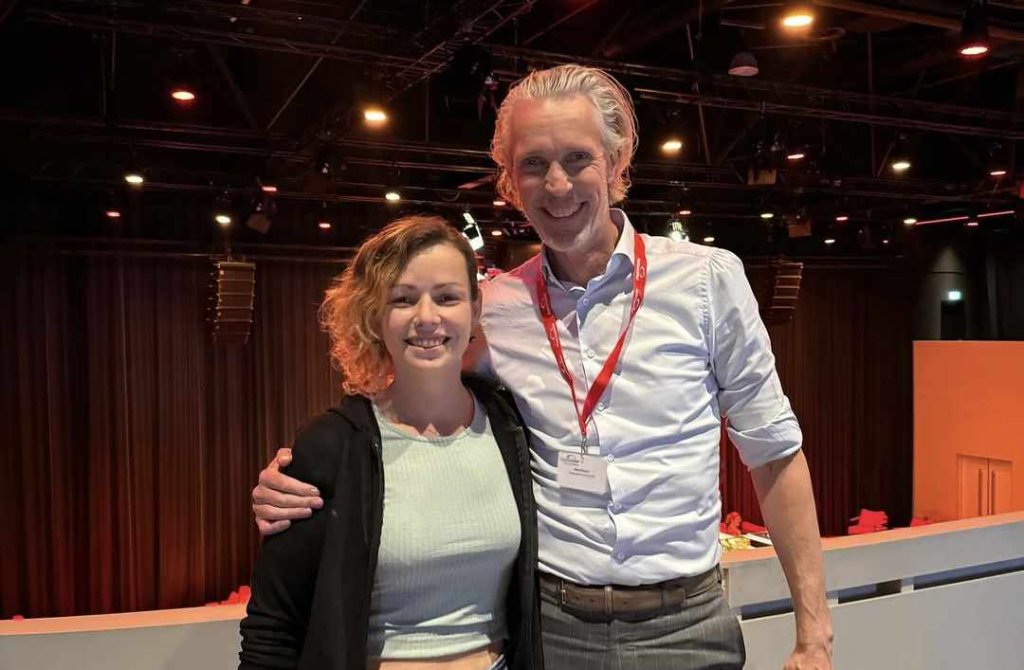
“In June 2024, I performed my song at the Parkinsonnet Congress. The event was organised by Bas, and I met him in real life for the first time. My mum came along on the trip. They organised everything to make it possible for her to be a part of it, which I’ll be always grateful for. It meant the world to my mum and myself.
Bringing people together
“At first I wrote it for me and my mum, about my mum and myself and this ugly disease. When I started to play this song for my audiences over the next year, I realised people connected with it.
“Either they have lost or know someone with Parkinson’s, or someone who is sick. They felt like they could talk about it with me afterwards. I was vulnerable enough to share this with them, so now they could share their story with me.
“Maybe it opens up space or takes away a barrier, allowing people to start a conversation about something that is not easy to talk about. People often feel alone and do not know that many of us carry the same burdens.
“I hope this song will bring awareness, make people feel understood, and open up a safe space to talk to one another. And hopefully the song can contribute to Parkinson’s research. Bas and I decided that half of the proceeds will go to the research into the health benefits of art, focused on people with Parkinson’s disease.”
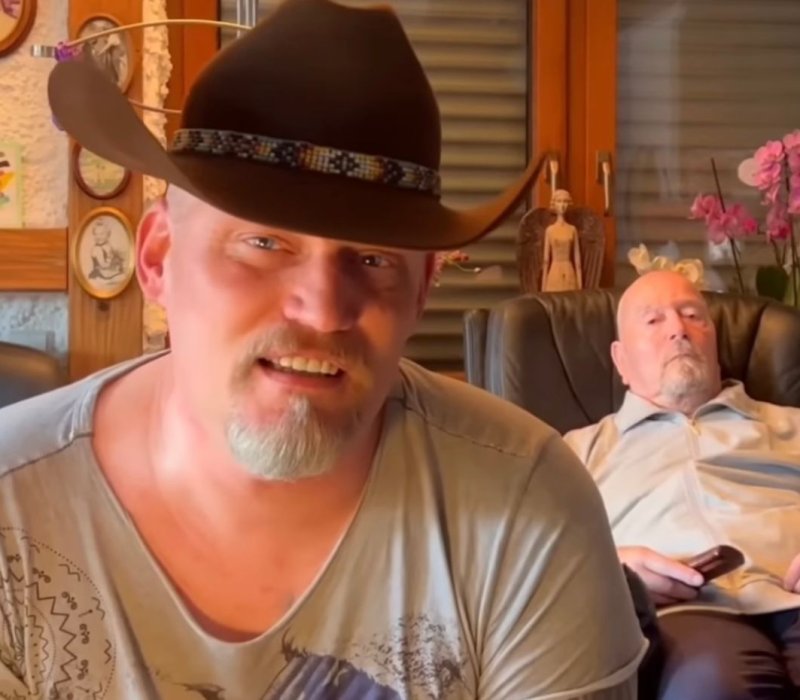
Ilde (Hilde) Vander Elst, 68, lives in Oosterzele, Belgium. She spoke to Parkinson’s Europe about her Parkinson’s journey, and how she feels about the song her daughter Birdie has written for her.
“I always worked as an executive secretary, alongside raising my three children Tijl, Dieter and Berdien, along with social commitment and hobbies. My diagnosis came about when I visited neurologists Professor Dr De Reuk, Ch. Vander Linden, and Professor Comhaire in October 2011.
“My symptoms were of loss of smell, difficulty when walking, slowness, coordination problems, stiffness and trembling. I became afraid of my own body, and experienced problems and comments when performing my job. I had noticed a slow dragging in my left leg. The NMR (Nuclear Magnetic Resonance) scan of my brain resulted in the effective diagnosis of Parkinson’s disease, in addition a coincidental discovery of three meningiomas tumours.
“In January 2012, my neurologist requested a more targeted scan – an injected tracer was followed by a scan of the brain, to detect the dopamine deficiency that is the basis of Parkinson’s disease. This research confirmed the diagnosis.
“At the age of 56, the verdict was Parkinson’s. What I feared became reality. It hit hard. I became afraid of the future and the further progress of our family. My world was turned upside down. My close family and friends sympathised enormously. Their shared energy and drive ensured we would work together to deal with this disease.
Visible and invisible symptoms
“Parkinson’s is drastic and is a daily battle together with your loved ones. Coordination and balance problems affect you in everything you do. Without a break, non stop, without improvement.
“However, many people hardly know what it means to have this incurable disease. There are many external characteristics, but also invisible symptoms that plague the patient and determine the further life of Parkinson’s sufferers.
“I am currently in an advanced phase, with irregular on-off moments and loss of multiple functions. My message is to remain positive; be patient and get to know your body again and again. Parkinson’s is a piece of new identity, which you have to reconcile with the identity you know.
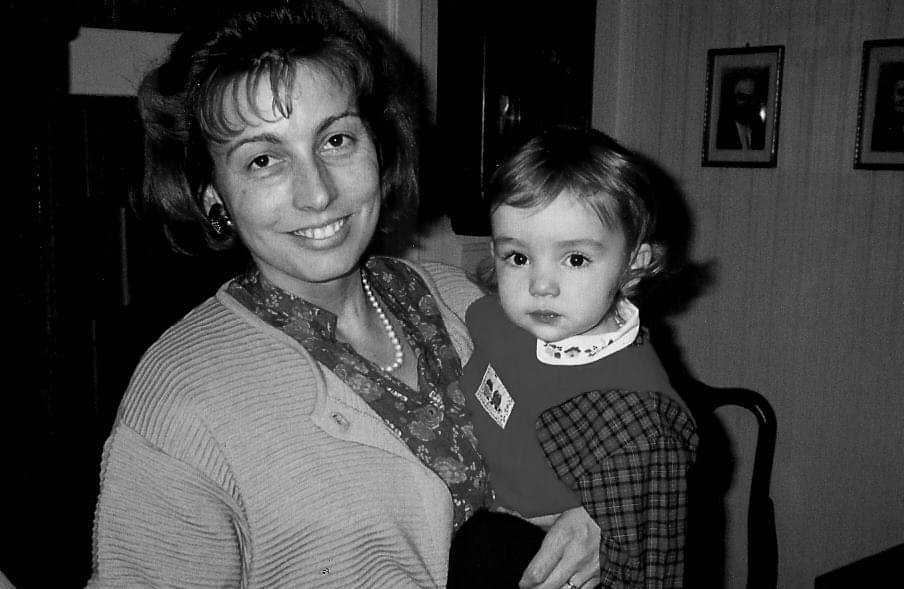
“The love and care of my children, grandchildren and partner, strengthen me again and again. I also find peace in nature and the performance of my still feasible hobbies.
Fighting isolation
“When I heard Birdie’s song, I was touched – happy and sad. It is so striking, the exact wording of the disease, presented in a beautiful song, and now with beautiful, atmospheric images we made together. I am so grateful to her and hope that through this song we can make a difference.
“I am fading away while I am still here. That is the hardest thing about the disease. Not the pain, not the physical limitations, but still trying to be part of society, which you used to be a part of.
“The world around us is not at all tolerant of what deviates. You no longer belong and are pushed to a side track. I experience the contrast between my ever-increasing delay and the ever-faster advancing world, but I no longer externalise it. I am trapped in my own body and only very slowly find bits of a way out. The disease makes your social circle smaller and causes isolation, if you don’t put the effort in to prevent it.
“That is why the following message is conveyed through this song: Keep moving, draw strength from nature and develop yourself creatively and keep yourself artistically occupied.
Breaking the taboo
“Berdien’s song contributes to the awareness of the world’s fastest-growing brain disorder. It brings the message to still be part of society as a valid member and to make Parkinson’s more discussable. It is our mission to work together to make known the impact of this disease on your family, relatives, your friends, and ultimately on your entire existential social life.
“How proud I am of her and happy with such a talented and determined daughter. With the release of this song, I hope the invisible symptoms, which are so serious for Parkinson’s patients, are better known and understood, and that the funds can contribute to research.”
“It’s Hard to See” by Birdie Belgium will be available on all good music platforms from 11 April 2025. You can pre-save the song on Spotify and pre-order on Apple Music. A CD is also available.