Greek-inspired courgette and aubergine vegetarian moussaka recipe

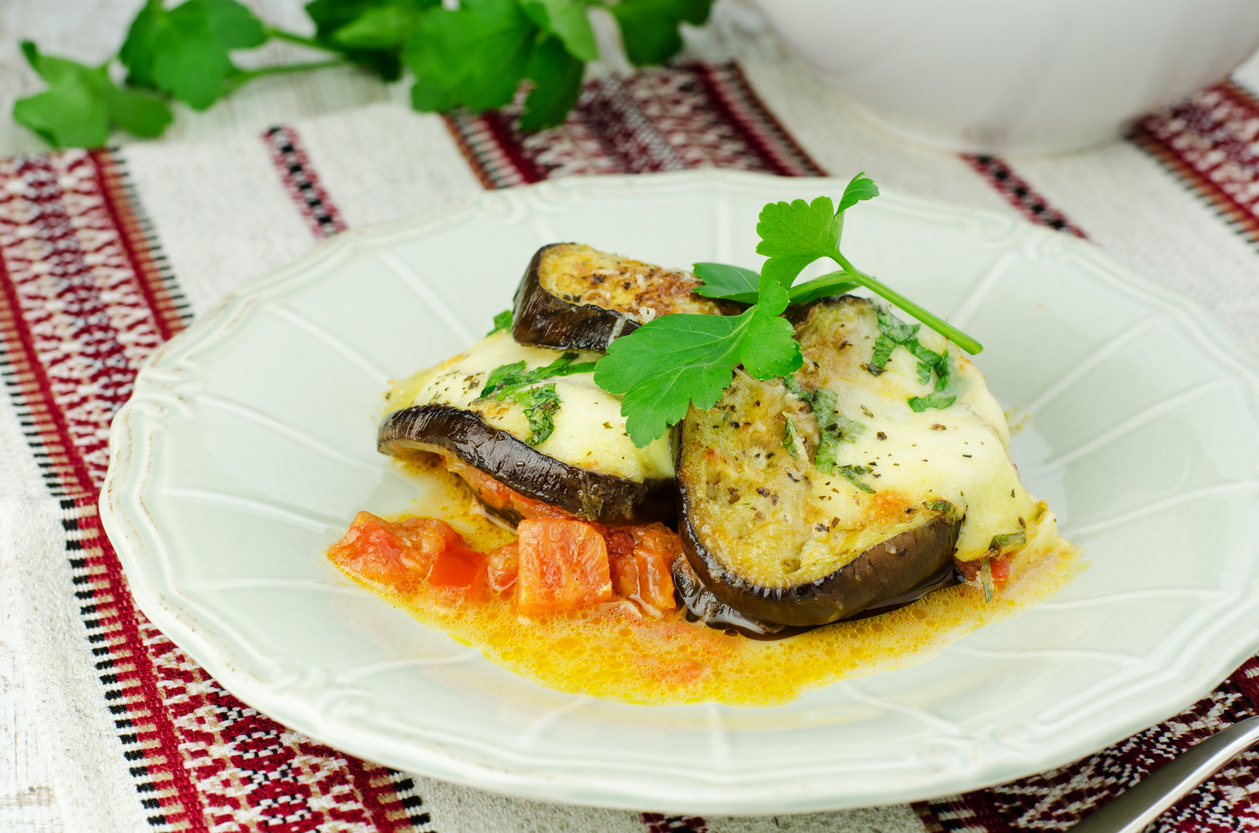
The chefs at Parki’s Kookatelier have taken a Greek classic and transformed it into a vegetarian delight. What’s more, it can be adapted for people with chewing and/or swallowing problems
28 July 2025 Yves Meersman
Recipes

Vegetarian moussaka recipe ingredients

1kg firm potatoes
30g soy butter
40g wheat flour
700ml unsweetened soy milk
500g tofu (or seitan)
8 fresh tomatoes (or 1 tin of tomatoes)
3 garlic cloves
1 aubergine
1 courgette
1 sweet pepper
1 onion
1 tsp oregano
nutmeg
salt and pepper
olive oil

Preparation

1. Preheat the oven to 180°C.
2. Boil the potatoes until ‘al dente’ and cut into slices.
3. Slice the aubergine, courgette and sweet pepper. Dice the tomato.

Method

1. For the white sauce: melt the soy butter and mix with the flour. Stir well with a wooden ladle until the roux is dry.
2. Pour the soy milk into the sauce little by little, while stirring with a whisk until it becomes a smooth, firm sauce. NB – you could also bind the soy milk with a white sauce binding agent.
3. Season with salt, pepper and nutmeg and boil for a few more minutes while stirring.
4. For the tomato sauce, fry the onions in heated olive oil until glazed.
5. Add the tofu or seitan and stew for another five minutes on a low heat.
6. Add oregano, garlic and tomato, bring to the boil while stirring, leave to simmer for 10 minutes.
7. Place the aubergine, courgettes and the sweet pepper onto a greased oven dish and put into the oven. NB – you could also fry the vegetables on both sides in a pan with olive oil.

Finishing

1. Put a layer of vegetables into a lightly greased deep oven dish. Next, add a layer of potatoes and a layer of tomato sauce.
2. Finish with the white sauce.
3. Put the moussaka into the oven for another 15 minutes.

Taste tip
Tofu is a meat replacement made of soy milk. It has a bland flavour but easily takes up the flavours of other foods. It is low in fat and rich in proteins. When cut it into cubes, tofu is easy to shallow fry, deep fry and grill. Seitan is a wheat gluten meat replacement.

Chewing and swallowing
Level 6: make sure the vegetables are well-cooked and crush or cut the vegetables separately. Cut finely.
Level 5: crush the vegetables and the potatoes separately, add vegetable stock if required.
Level 4 and 3: mix and sieve the vegetables and potatoes separately until fine. Add vegetable stock until the required consistency is reached.

Nutrition

Nutrition per 100g
Energy……………………………………………………….. 82kcal/341kJ
Proteins……………………………………………………………………………….. 4.4g
Total fat…………………………………………………………………………………. 1.7g
Saturated fat………………………………………………………………….. 0.2g
Monounsaturated fat …………………………………………….. 1.0g
Polyunsaturated fat………………………………………………. 0.1g
Cholesterol ………………………………………………………………….. 0mg
Carbohydrates………………………………………………………………… 11.8g
Sugars ………………………………………………………………………………….. 2.7g
Fibres………………………………………………………………………………………. 3.4g

Parki’s Kookatelier is a Belgian project focusing on specialised nutrition for people with Parkinson’s disease. The authors are Yves Meersman and Randy Mellaerts. For more information, visit their website here.

Parkinson’s and malnutrition: what are the risks and how do you prevent it?

Our regular guest nutritionist, Kathrynne Holden, explains why people with Parkinson’s can be at risk of malnutrition and describes some of the steps that can prevent it from happening
28 July 2025 Kathrynne Holden
Advice

Parkinson’s is a complicated condition and while many people with Parkinson’s live a long and healthy life, this is not the case for everyone. A recent study found that possibly as many as 60% of people with Parkinson’s are at increased risk for malnutrition.1 “Increased risk” doesn’t mean that 60% of people with Parkinson’s will develop malnutrition, it just means that there is a higher possibility of malnutrition – but it is a good idea to be aware of all its possible causes, so that you can minimise the risk.

The risks and how to minimise them

Below are descriptions of some common nutrition-related concerns that may occur as a result of Parkinson’s, followed by suggestions that could help to resolve the problems.

Sense of smell
One of the first symptoms of Parkinson’s can be loss of the sense of smell, a sense that is necessary in order to taste food. While lack of taste and smell doesn’t always affect appetite, it can become a factor.

Suggestions: Choose favourite or especially desirable foods. Focus on flavour intensity – lemon, garlic, soy sauce, cinnamon, cloves, nutmeg, herbs; and “mouthfeel” – foods that are crunchy, creamy, chewy or have other appealing textures that make them more agreeable when scent and flavour are lacking.

Feeling nauseous
Medications used to treat Parkinson’s often cause nausea.

Suggestion: Ginger is very effective at counteracting nausea. Keep some fresh ginger in the freezer and use it to make ginger tea, or chew a slice of ginger. Keep a container of crystallised ginger handy, to take while on errands or travelling. Even powdered ginger can be used to make tea.

Medication regimes
Medications may cause loss of appetite.

Suggestion: Discuss this with your physician. If medication-induced, it may be possible to try a different medication.

Low mood
Depression is common among people with Parkinson’s and can affect willingness to eat.

Suggestion: Discuss this with your physician. Depression can be due to deficiency of B vitamins, vitamin D, omega-3 fatty acids, or other nutrients – a blood test will show whether this is the case and, if so, supplements should help. In some cases, depression can be alleviated by attending regular counselling sessions, however, some people may require antidepressant medication.

chopped vegetables in plastic containers

Late-stage Parkinson’s
The stage of Parkinson’s can be a factor, because as it progresses, symptoms often become more severe. In addition, motor fluctuations are more likely to occur in later-stage Parkinson’s. ‘Off’-time, dystonia, and dyskinesia can make it difficult both to eat, and to time medications and meals.

Suggestion: Ask your doctor about a longer-lasting medication, such as Stalevo, or Rytary, or a pump, so that ‘off’ time is reduced and the timing of medications and meals is more regulated closely.

Calorie deficit
Tremor and dyskinesia can burn extra calories.

Suggestions: If using levodopa, divide the day’s protein needs between morning, midday, and evening meals, taking levodopa about 30 minutes before each meal. In between meals, eat small, non-protein or low-protein snacks, such as fruits and juices, whole-grain crackers or biscuits, tomato or vegetable soup. These add extra calories without blocking levodopa absorption.

Swallowing and choking issues
Swallowing problems increase fear and risk of choking.

Suggestions: Ask your doctor for a referral to a speech pathologist, who can evaluate your swallowing function, and determine whether you are at risk for choking. If so, the therapist can demonstrate safe swallowing techniques, and recommend chopped, puréed, or otherwise altered foods and liquids. You should also be referred to a dietitian, who can assess your needs and ensure you are getting enough protein and other nutrients.

Motor problems in hands
Rigidity and loss of manual dexterity makes it hard to manage eating utensils.

Suggestion: Ask your doctor for a referral to an occupational therapist, who can recommend specially designed plates, bowls, drinkware, and eating utensils that are easier to manage.

Slowed eating
Chewing and swallowing become tiring, cause slowed eating and inability to finish meals. It may take several hours to finish one meal, so the person is unable to consume enough calories during a day to maintain health.

Suggestion: Choose foods that require little chewing. Include nutrient-rich blended smoothies, minced, mashed or puréed meats, fish, vegetables and fruits such as meatloaf, applesauce, mashed peas, potatoes, carrots, or baby foods. If this is insufficient, ask your doctor about placement of a feeding tube. In many cases, individuals can still eat and enjoy food by mouth; but the feeding tube ensures sufficient fluids to prevent dehydration, and enough protein, vitamins, and minerals for complete nutrition.

Seeking help

For some people, Parkinson’s may present barriers to good nutrition. These can be difficult to deal with. Being aware of such possibilities is important, so that you can prepare as needed. That includes close communication with your neurologist, and the help of specialised health professionals, for their advice and support. With preparation and an experienced healthcare team, you can overcome, – or even prevent – common causes of malnutrition and related illness.

References
1Tomic S1, Pekic V2, Popijac Z3, Pucic T3, Petek M2, Kuric TG2, Misevic S3, Kramaric RP2. What increases the risk of malnutrition in Parkinson’s disease? J Neurol Sci. 2017 Apr 15;375:235-238.

Kathrynne Holden, a registered dietitian, has specialised in Parkinson’s disease nutrition for over 20 years. She has contributed to two physicians’ manuals on Parkinson’s, written the booklet ‘Nutrition Matters’ for the NPF (with some of her work for them archived here). Now retired, she maintains a website on Parkinson’s topics.


Read more: Why you need more vitamin B3 in your diet

Salmon fishcakes recipe with chilli and mayo red dressing

These little fishcake gems are rich in essential omega-3 and so easy to prepare in advance – perfect for storing in the fridge for a later date
28 July 2025 Anne Cutter Mikkelsen, Carolyn J Stinson
Recipes

Salmon fishcakes recipe ingredients

  • 2 cups of cooked, flaked salmon or substitute
  • ½ cup mayonnaise
  • 1 cup ground white bread crumbs 1 tbsp shredded onion
  • 1 egg 4 leaves of lettuce
  • 1 tsp sesame oil
  • 2 tbsp canola or avocado oil for sautéing patties
  • Juice of half a lemon
  • Salt and pepper

For red dressing

  • ¼ cup chilli sauce
  • ¼ cup mayonnaise
  • 1 finely chopped tomato
  • 1 tbsp capers
  • 1 tbsp shredded onion
  • Juice of half a lemon 

For garnish

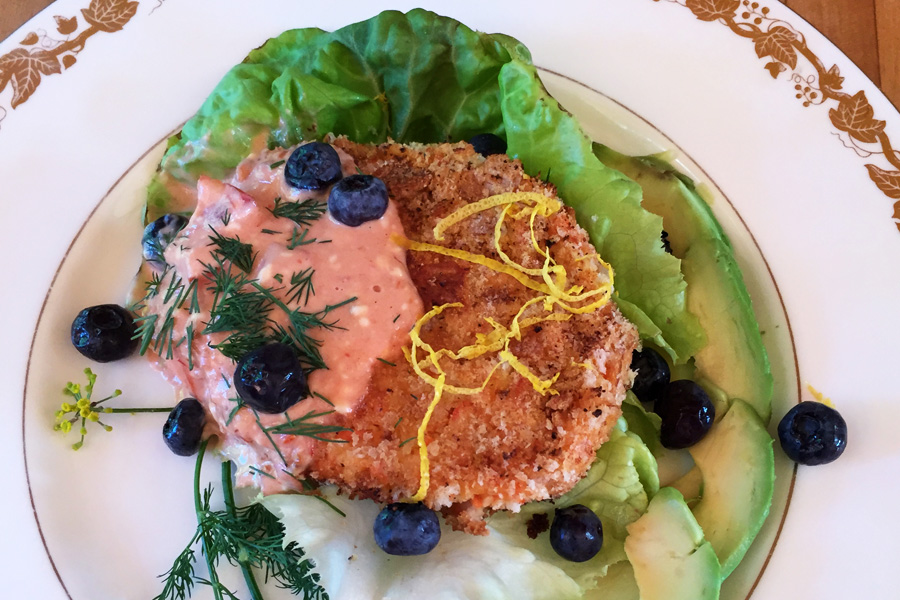
  • ½ avocado, peeled and thinly sliced
  • Lemon zest
  • 1 dozen blueberries
  • 1 tbsp fresh dill or fennel leaves

Preparation

Fishcakes:

1. In a medium-sized mixing bowl, combine half the bread crumbs (reserve other half of bread crumbs for coating) and remainder of ingredients, except cooking oil and lettuce.

2. Mix together and shape into patties.

3. Coat the patties in the remaining bread crumbs.

4. At this stage, you can cover and refrigerate patties overnight, until you’re ready to cook them.

Red dressing:

1. Mix all ingredients.

2. Spoon dressing over one half the salmon patty.

3. Garnish with avocado slices and blueberries.

4. Sprinkle dill or fennel over all and add a zest of lemon.

Method

1. Heat the canola oil in a pan and fry the salmon patties about 7 minutes on each side over a medium heat.

2. Serve each fishcake on a leaf of lettuce and drizzle with the red dressing.

Salmon fishcakes recipe tip

No salmon? Substitute other safe and sustainable fish: flounder, Oregon pink shrimp or Dungeness crab.


Read about the nutritional benefits of salmon here

Salmon-brain-food

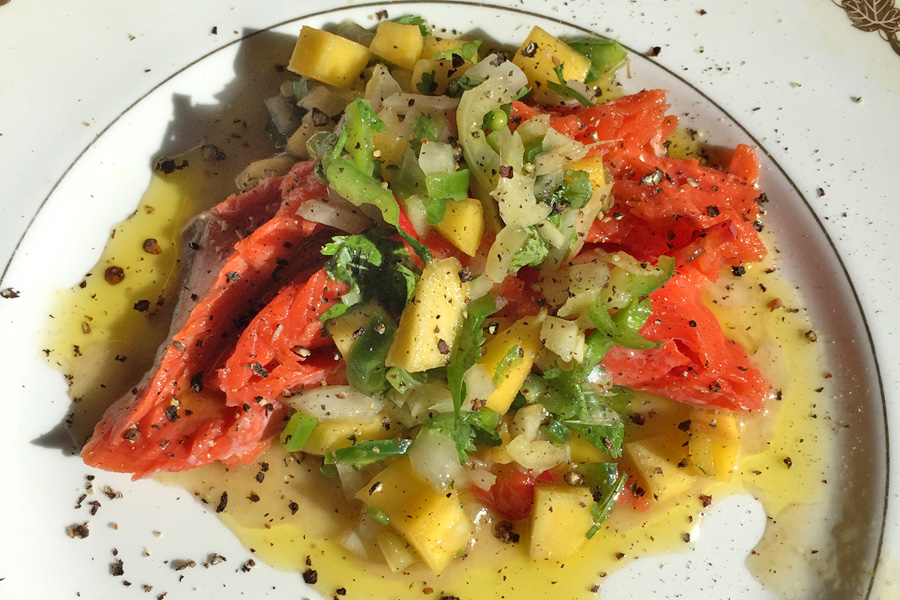
Smoked wild king salmon with mango salsa recipe

Salmon grilled beside coals with smoking wood chips give the most delicate taste sensation. And this recipe is designed with leftovers in mind – so that extra effort won’t go to waste
28 July 2025 Admin
Recipes

Salmon with mango salsa recipe ingredients

  • 1-3 pound salmon filet
  • 2 tbsp olive oil
  • Freshly cracked pepper
  • 2 cloves garlic, finely chopped
  • Zest of whole lemon
  • 2 tsp sea salt
  • Juice of half a lemon

For mango salsa

  • Ripe mango (or three fresh peaches), peeled and chopped
  • 2 tsp ginger root, chopped
  • 1 clove garlic, chopped
  • 2 tbsp red onion, minced
  • 2 tbsp jalapeño pepper, chopped
  • 2 tbsp cilantro, chopped
  • Pinch of cinnamon
  • 2 tbsp olive oil
  • 2 tsp fresh lime juice
  • 1 tbsp red wine vinegar

Tip

To grill, use a chimney to start the charcoal – not starter fluid! One 3-inch chunk of light fruit-wood – pear, plum, or apple. Soak the wood in water to cover for about ½ hour while you prepare the salmon.

Method

1. Rub the flesh of the salmon filet with ingredients above and let it rest until coals are ready.

2. When all the coals are burning, pour them into one end of fire pit or grill and place the soaked wood chips on top of the fire.

3. Place a heavy griddle or cookie sheet on top of the grill, directly over the flames.

4. Brush canola oil lightly over the grill.

5. Place the salmon skin side down on the grill next to the cookie sheet (but not directly over the coals).

6. Close the lid, so that the fruit-wood smoke can work its magic.

7. The fish will cook from the smoke and indirect heat.

8. Cook salmon 10 minutes per pound. Do not turn.

9. Remove salmon from grill. Remember that the fish will continue to cook after removing it from the heat, so gauge your preferred doneness, tenderness, and succulence accordingly. If you do not have access to a grill, you can steam, poach, or bake your salmon in the oven.

For mango salsa

1. Combine all ingredients.

2. Mix and taste.

3. Spoon salsa over entire filet or single servings.


Read about the nutritional benefits of salmon here

Salmon-brain-food

Take Charge of Parkinson’s Disease

Motivated by her husband Mike’s diagnosis, Anne Mikkelsen developed a cooking style that blends her training with emerging science on the importance of brain-healthy fruits, vegetables, spices, and herbs. Mike, an award-winning potter and sculptor, has skillfully adapted his art to accommodate the advancing stages of Parkinson’s.

‘Take Charge of Parkinson’s Disease’ includes healthy lifestyle recommendations and an extensive recipe section, interspersed with Anne’s memoir of her journey with her husband as they discover how to live well with Parkinson’s disease.

‘Take Charge of Parkinson’s Disease: Dynamic Lifestyle Changes to Put YOU in the Driver’s Seat’ by Anne Cutter Mikkelsen and Carolyn Stinson is available in print and ebook from Amazon.

Rich chocolate fondue with strawberries and pineapple

28 July 2025 Joan van Haaften
Recipes

Make your own chocolate fondue with a selection of delicious fruits. This chocolate fondue recipe is full of fibre and easy to digest, suitable for those with chewing difficulties


Ingredients

300g pure chocolate (70% cocoa)
250g washed strawberries
250g fresh pineapple, diced and dried
100ml whipped cream
4 slices of cake

Method

1. Warm the chocolate with the cream in a bowl, using the bain-marie method, while stirring into a smooth sauce.
2. Place a fondue hot plate on the table and light the candle below. Put the pan with chocolate sauce on top of the plate.
3. Skewer a piece of fruit on a fork and dip into the chocolate sauce.

Culinary tip
Do not use fruit that is too moist as this will change the composition of the chocolate, causing lumps.

Variation
This dish also works well with dried tropical fruits or nuts.

Nutritional information

– Rich in fibre, which means it’s suitable for people suffering from constipation
– This dish contains 5-10g of protein per person
– This dish is soft and easy to digest


Read more: Bread rosettes with spinach, feta and oregano


Parki’s Kookatelier: fish soup ‘a la Bouillabaisse’ recipe

28 July 2025 Randy Mellaerts
Recipes

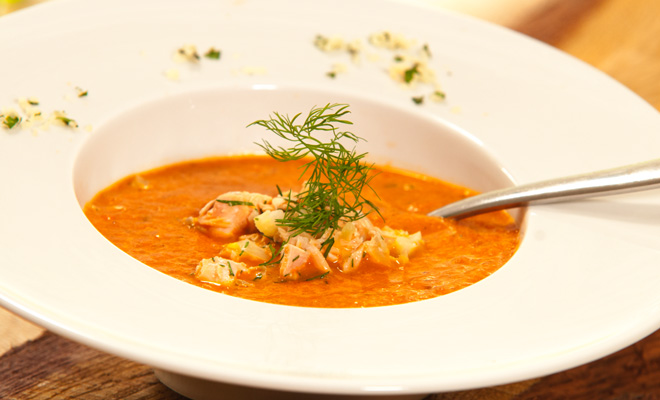
This seafood and fish soup recipe is a typical dish from the south of France and can be adapted for people with chewing and/or swallowing problems. It’s best served with white rice or pasta

Fish soup recipe ingredients

  • 400g firm white seawater fish (eg sea bass)
  • 1l fish stock
  • 1 fennel
  • 1 small leek
  • 1 onion
  • 1 garlic clove
  • 1 dl white wine
  • 200g pink shrimps (frozen)
  • tomatoes
  • salt and pepper
  • a pinch of saffron threads
  • instant binding agent
  • lemon juice
  • thyme, bay leaves
  • tablespoons olive oil

Preparation

  • Slice the onion and fennel into thin strips.
  • Dice the tomatoes.
  • Divide the fish into portions and cook in the fish stock for 3 minutes.

Method

  • Fry the fennel, leek, onion and garlic lightly in olive oil.
  • Add the white wine, fish stock and herbs. Simmer for about 10 minutes.

To serve

1. Take the fish out of the stock and keep warm.

2. Use a binding agent to bind the soup to your taste.

3. Season with salt and pepper.

4. Just before serving, add the shrimps and the fish to the soup.

5. Finish with some saffron threads, a few drops of lemon juice and the diced tomato.

Nutrition

Value per 100g

Energy …………………………………………………………40kcal / 170kJ

Protein………………………………………………………………………. 5.1g

Total fat…………………………………………………………………….. 1.4g

Saturates ………………………………………………………………….. 0.4g

Monounsaturated fat…………………………………………………. 0.9g

Polyunsaturated fat……………………………………………………. 0.1g

Cholesterol………………………………………………………………..14mg

Carbohydrates……………………………………………………………..1.2g

Sugar …………………………………………………………………………..1.0g

Fibre…………………………………………………………………………….0.7g


Chewing and swallowing advice

Dysphagia levels table copy

  • Level 6: take care that the trimmings and the fish are well done, flatten the fish, remove any bones.
  • Level 5, 4, 3: mash, blend and sieve the soup respectively. Use fish stock to dilute the soup.

Taste tip

  • Give the fish soup more taste by adding some white wine.
  • To vary, use fresh mussels instead of shrimps.

Parki’s Kookatelier is a Belgian project focusing on specialised nutrition for people with Parkinson’s disease. The authors are Yves Meersman and Randy Mellaerts.

For more information, visit their website here.

See our collection of recipes for living well with Parkinson’s 

Slow-cooked vegetarian chilli ‘sin carne’ with aubergine recipe

For the non-Spanish speakers ‘sin carne’ means ‘without meat’, making this the perfect soft-textured vegetarian dish for those with swallowing difficulties
28 July 2025 Admin
Recipes

Vegetarian chilli ‘sin carne’ recipe ingredients

  • 1 small aubergine
  • 2 large onions
  • 200g quorn mince*
  • 1 red, 1 yellow and 1 green pepper
  • 2 cloves garlic
  • 3 tablespoons olive oil
  • 250g whole grain rice
  • ½ vegetable stock cube
  • 1 tbsp herb mix chilli con carne
  • 1 tin of chopped tomatoes
  • 1/2 dl white wine
  • 250g red kidney beans (tin)
  • 1 tbsp chopped parsley
  • 1 tbsp chopped chives
  • 1 tbsp lemon juice

Preparation

1. Cut the aubergine into cubes, the onions into rings and the pepper into pieces.

2. Put the red beans into a sieve, rinse in cold running water and leave to drain.

Method

1. Sweat the onion rings and the shredded garlic in heated olive oil until glazed.

2. Add the quorn mince and the herb mix and fry for about 5mins while stirring.

3. Add the aubergine and the paprika and stew until cooked on a low heat.

4. Pour over the white wine, bring to the boil and add the peeled tomato with the liquid.

5. Leave to simmer for about 20mins on a low heat.

6. After 10mins add the red kidney beans, stir well leave to simmer.

7. Meanwhile cook the rice in vegetable stock, drain in a sieve or colander and leave to drain well.

8. Season the chilli sin carne with finely ground pepper, salt and some drops of lemon juice.

Top tip

  • Just before serving, add the finely chopped parsley and chives.
  • In a deep plate shape a nest of the spirelli and pour the chilli sin carne into it.

Chewing and swallowing

  • Level 6: cook the vegetables really well and mash or cut the spirelli separately.
  • Level 5: finely mash, or grind the Chili sin carne and the spirelli separately, add stock if required.
  • Level 4 and 3: Finely mix and sieve the Chili sin carne and the spirelli separately. Add stock until the required consistency.

Nutrition per 100 grams

Energy………………………………………………………….. 82kcal / 341kJ

Proteins………………………………………………………………………………….4.4g

Total fat……………………………………………………………………………………1.7g

Saturated fat …………………………………………………………………….0.2g

Monounsaturated fat ……………………………………………….1.0g

Polyunsaturated fat…………………………………………………..0.1g

Cholesterol ………………………………………………………………………. 0mg

Carbohydrates…………………………………………………………………….11.8g

Sugars ……………………………………………………………………………..2.7g

Fibres………………………………………………………………………………………..3.4g

Oven-baked fish in butter and mixed herbs

28 July 2025 Admin
Recipes

This fish dish is light, healthy and quick to prepare – the perfect accompaniment for rice or potatoes with green beans – while the texture is soft enough for people with dysphagia

Ingredients

  • 800g of fish (e.g. cod, Victoria perch, redfish)
  • 50g flour
  • 200g butter
  • 1 shallot
  • 1 tbsp lemon or lime juice
  • salt and pepper
  • 1 tbsp olive oil
  • 1 tsp Provencal herb mix or taste booster

Preparation

  • Preheat the oven to 120 °C.
  • Mix the soft butter with the herbes de Provence mix (or Provençal taste booster), salt and pepper.
  • Dice the shallot.
  • Remove any bones from the fish fillet.
  • Dust the fish in flour, shake it off well and season with salt and pepper.

TIP: Prepare the herb butter the day before, this generates a stronger flavour.

Method

  • Heat the herb butter briefly in a frying pan and fry the fish on both sides for a couple of minutes until they turn golden brown.
  • Remove the fish fillet from the pan and put it in a butter-greased oven dish.
  • Put the dish into a preheated oven at 120 °C and cook until the fish is ready for about 8-10 minutes.
  • Turn the fish during baking at regular intervals.
  • At the end of the baking time, sprinkle with lemon juice.

Nutrition

Value per 100g

Energy ………………………………………………………… 214 kcal/894 kJ

Protein………………………………………………………………………. 12.2g

Total fat…………………………………………………………………….. 16.4g

Saturates ………………………………………………………………….. 9.3g

Monounsaturated fat…………………………………………………. 0.8g

Polyunsaturated fat……………………………………………………. 0.3g

Cholesterol……………………………………………………………….. 28mg

Carbohydrates…………………………………………………………….. 4.2g

Sugar ………………………………………………………………………….. 0.1g

Fibre……………………………………………………………………………. 0.1g

Chewing and swallowing

  • Cut, mash or mix the fish until required consistency level.
  • Use fish stock or fish sauce to moisten the fish for easier swallowing.

Bread rosettes with spinach, feta and oregano recipe

28 July 2025 Joan van Haaften
Recipes
Why not try this nutritious bread rosettes recipe

Make your own bread substitute with the addition of delicious and healthy vegetables. This dish is rich in fibre and its also soft, making it easy to digest


Ingredients

For 12 rosettes

500g whole wheat flour
500g spinach leaves
200g crumbled feta
20g fresh or 2 packets of dry yeast
2 tsp dried oregano
2 tbsp olive oil
250ml water (lukewarm)
2 cloves of garlic (coarsely chopped)
4 tbsp olive oil
pinch of salt

Rising time: 2 hours

Method

1. Put the flour in a mixing bowl. Add the fresh, crumbled yeast or dried yeast and mix through the flour.
2. Mix in 1 tsp of oregano. Make a well in the centre and pour in the olive oil and water. Mix until a soft dough forms. Add the salt. Leave to rest for 15 minutes.
3. Knead the dough for 5–10 minutes until supple and elastic.
4. Form a ball, place it in the mixing bowl, cover with cling film and allow to rise in a warm spot for 1 hour, or until the volume has doubled.
5. Fry the garlic in olive oil at low heat until glazed. Turn the heat up and add the spinach. Allow to cook and turn over from time to time.
6. Use a strainer to remove all the water from the spinach.
7.  Apply olive oil to the work surface.
8. Roll the dough into a 50 x 30cm rectangle with a thickness of 0.75cm.
9. Divide the spinach and feta over the dough.
10. Make a loose roll, starting at a short side.
11. Cut the roll of dough into 12 slices and place the slices on a baking tray covered with baking paper.
12. Cover with a floured towel and allow to rise for 1 hour.
13. Pre-heat the oven at 200°C and bake the bread in 20–25 minutes until golden brown.
14. Allow the bread to cool on a grid outside the oven.

Culinary tip
Why not make a tasty sauce by seasoning crème fraiche with chopped basil and thick balsamic vinegar.

Variation
This dish also works well if you replace the spinach with braised chard. Divide the chard into leaves and stalks, then cut into small pieces and blanch.

Nutritional information

– Rich in fibre, which means it’s suitable for people suffering from constipation
– One bun contains 1–5g protein
– This dish is soft and easy to digest