Skip to content
  • Facebook
  • Instagram
  • LinkedIn
  • Youtube
  • BlueSky
  • Threads
Log in
Search Donate
  • About Parkinson’s
    • Understanding Parkinson’s
      • What is Parkinson’s?
      • Types of Parkinson’s
      • Causes of Parkinson’s
    • Signs and symptoms
      • Symptoms of Parkinson’s
      • Diagnosis
    • Facts and figures
      • Parkinson’s statistics
      • Research paper directory
      • Our latest insights
    • Supernav Block 1

      Latest Parkinson's news

      Stay up to date with the latest news stories about Parkinson's over on Parkinson's Life, our online magazine

      Learn more

  • Information and support
    • I have Parkinson’s
      • Newly diagnosed
      • Treatment
      • Complementary therapies
      • Self-help and living well
      • Research
      • Advanced stages of Parkinson’s
    • I am a carer
      • Carer advice and support
      • Carer self-care
      • Planning ahead
    • I am a professional
      • What patients want
      • Resources for healthcare professionals
      • Share your work with the Engagement Network
      • Research Strategy
    • Supernav Block 2

      Self-help and living well

      Find advice on a range of topics to help you live life to the full, from diet and exercise to travel, work, sleep, relationships and leisure activities.

      Learn more

  • About us
    • Who we are
      • Our history
      • Our members
      • Our partners
      • Governance
      • Meet the team
    • What we do
      • Our mission, vision and goals
      • How we are funded
      • Our impact
    • Our work
      • Parkinson’s Europe strategy 2025-2028
      • Defining the impact of Parkinson’s in Europe
      • Helping the European Parkinson’s community grow stronger together
      • Ensuring the voice of the European Parkinson’s community is heard
      • Latest news and updates
    • Supernav Block 3

      Parkinson's Engagement Network

      Join our Engagement Network and be the first to receive opportunities tailored to your interests direct to your inbox

      Learn more

  • Get involved
    • Connect with us
      • Join our Engagement Network
      • Sign up for our newsletter
      • Become a member
      • Contact us
    • Support us
      • Donate
      • Sponsorship and partnership
    • Campaigns
      • World Parkinson’s Day 2026
      • Disease-Modifying Therapy: a new way to slow the progression of Parkinson’s?
      • Parkinson’s treatments when medication becomes less effective
      • Welcome in the Workplace: Parkinson’s and your rights at work
      • Sign our pledge for improved healthcare services for people with Parkinson’s in Europe
      • Advocacy
      • Past campaigns
    • Supernav Block 4

      Find events near you

      Our interactive Parkinson's map shows a range of resources across Europe, from member organisations to events, activity groups to research and campaigns

      Learn more

  • Parkinson’s Life
  • In your country
Search Donate

Home

Healthy salmon recipe for a Parkinson’s-friendly diet

21 July 2025 By Kathrynne Holden
Recipes Kathrynne HoldenRecipes & Nutrition
Healthy salmon recipe for a Parkinson’s-friendly diet

Kathrynne Holden, former National Parkinson Foundation dietitian, looks at nutritious and varied meal plans for people with Parkinson’s with chewing and swallowing issues. This delicious and health salmon recipe is easy to chew, and calls on store cupboard ingredients to create a tasty lunch, or light supper.

Enjoy it as part of our Parkinson’s-friendly one-day menu, designed by Kathrynne to help ease chewing and swallowing problems.

Kathrynne says: “I love this easy-to-chew recipe because it features salmon, a valuable source of heart-protective fats, as well as excellent protein. The vegetables make it almost a one-pot meal, while the creamy sauce mixed with the baked potato makes each bite much easier to swallow.”

Healthy salmon recipe: salmon and vegetable potato topper

Serves 2

Ingredients

  • 350ml milk or milk alternative
  • 230g thinly sliced carrots, cooked and drained
  • 230g canned salmon, drained
  • 90g grated Cheddar cheese or vegan cheese
  • 4 tbsp minced onion
  • 4 tbsp minced bell peppers
  • 2 tbsp unsalted butter
  • 1 1/2 tbsp whole wheat flour
  • 1/4 teaspoon garlic powder
  • 1/8 teaspoon ground thyme
  • ground marjoram
  • pre-baked potatoes

Method

  1. In a medium-sized saucepan, sauté the onion and bell peppers in butter for five minutes or until vegetables are tender.
  2. Combine the flour, garlic powder, thyme and marjoram. Stir into onion mixture. Heat and stir for one or two minutes.
  3. Remove from heat. Slowly stir in the milk or milk alternative.
  4. Return to heat and stir until the sauce becomes thickened and reaches the boil.
  5. Stir in the cheese, cooked carrots and salmon and heat through.
  6. Split the baked potatoes and fluff the insides with a fork. Discard the potato skins.
  7. Spoon the salmon mixture over potatoes and stir lightly to blend with and moisten the potato.


Check out more Parkinson’s-friendly recipes

Read More

One-day menu for people with Parkinson’s featuring salmon baked potatoes and split pea soup
Recipes
21 July 2025

One-day menu for people with Parkinson’s featuring salmon baked potatoes

One-day menu ideas for easy-to-chew meal planning
Read More
Crustless quiche
Recipes
28 July 2025

Broccoli and salmon crustless quiche recipe

This protein-rich quiche recipe is perfect served hot or cold
Read More
Salmon-&-mango-salsa
Recipes
28 July 2025

Smoked wild king salmon with mango salsa recipe

Salmon grilled with smoking wood chips give the most delicate taste sensation
Read More
Home

Superman star Valerie Perrine: “I don’t dwell on the past or worry about the future”

Hollywood actor Valerie Perrine, star of Lenny and Superman, shares her experience of living with Parkinson's
21 July 2025 By Scarlett Sherriff
Stories CelebritiesinterviewWomen and Parkinson's
Superman star Valerie Perrine: “I don’t dwell on the past or worry about the future”
"I kept my Parkinson's a secret at Hollywood for as long as I could," says Valerie Perrine.

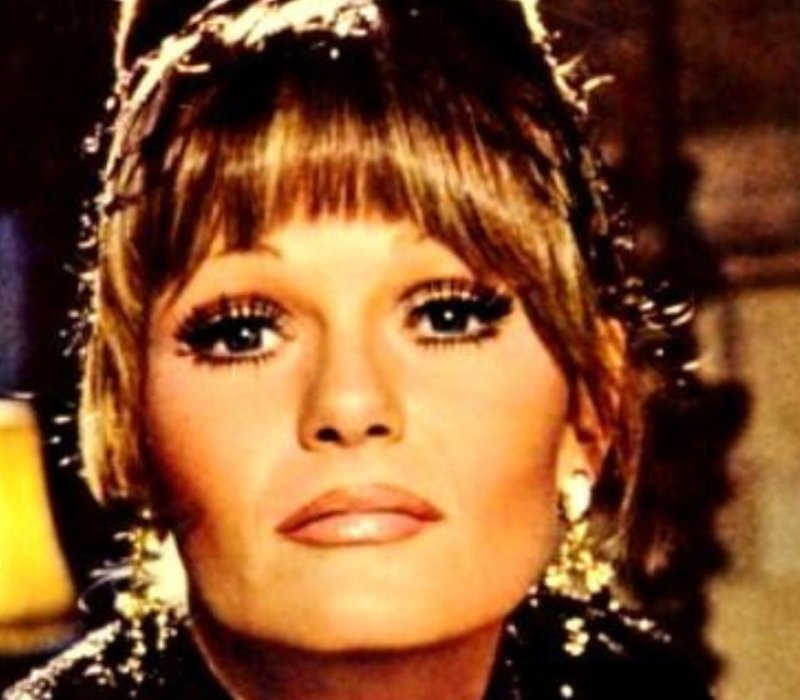
Hollywood actor Valerie Perrine has starred in roles across Hollywood’s big screens, from Honey Bruce in ‘Lenny’ to playing Lex Luther’s companion Eve Teschmacher, alongside Christopher Reeve, in the original 1978 ‘Superman’.

More recently, she was featured in Stacey Souther’s documentary about her life and her experience with Parkinson’s. The acclaimed actor tells us about her career highlights and the impact of her diagnosis.

Valerie, please tell us a bit about yourself and your background as a Hollywood star.

I was an army brat (the child of military parents). I was born in Galveston, Texas, US, and grew up in Japan and Scottsdale, Arizona, US. When I was 19 years old, I ran away from home to Las Vegas, where I became a showgirl.

Valerie Perrine starred as Lex Luther's companion Eve Teschmacher, alongside Christopher Reeve, in the original 1978 ‘Superman’.

I stayed there for around eight years or so when I decided I needed a change. I moved to Hollywood, where I was discovered and became an actress. I’ve lived all over the world, but I live in Los Angeles now.

Acting wasn’t something I pursued. I was at a small dinner party where an agent was looking for someone to play the role of Montana Wildhack in George Roy Hill’s film production of ‘Slaughterhouse-Five’. The agent saw something in me and thought I would be perfect for the part. That’s how I became an actress.

Valerie Perrine relaxing.
Valerie Perrine became an actor after being spotted at a dinner party.

What memories and highlights stand out to you from your early Hollywood career?

I have a lot of great memories from my career, and I was fortunate enough to work with some of the greatest people in the business at the time, in the ’70s.

The film I’m most proud of is ‘Lenny’ (1974), a biographical drama about the comedian Lenny Bruce. I played Honey Bruce, an American showgirl who had been his wife, while Dustin Hoffman played Lenny himself. It was directed by Bob Fosse, who knew exactly what he wanted from me and how to get it. Working alongside Dustin, one of the most talented actors of his era, was a blessing.

Everything came together, and we created something magical. I won Best Actress for that role at the Cannes Film Festival in 1975. It was a lot of hard work but a lot of fun, too. It was my favourite experience acting, and that film catapulted me into being a movie star.

Please tell us about your experience being diagnosed with Parkinson’s.

I first noticed I had a tremor on a movie set. I was carrying dishes in a scene, and we were doing multiple takes. The sound man came over and asked me not to shake them so much. That was the first time I noticed I had tremors.

I was diagnosed with essential tremors first. Then my Parkinson’s diagnosis came years later. It took a while to figure out what I had.

Hollywood film star Valerie Perrine

What was the reaction to your diagnosis like?

Everyone in my family and my friends was surprised and supportive. It wasn’t public knowledge until much later – I kept it a secret at Hollywood for as long as I could. My work ethic is that the show must go on.

The community was very supportive. The last film I did was called ‘Silver Skies’, directed by Rosemary Rodriguez. When she and I met to discuss the role, I told her what my difficulties were, and she told me not to worry and reassured me that we’d work around them. She’s an angel.

How have you managed your Parkinson’s?

I take medications, and I had deep brain stimulation. Those help. Marijuana has also helped.

I’ve always lived in the moment. I don’t dwell on the past or worry about the future. I try to live for today, and Parkinson’s hasn’t changed that.

What was it like to work with director Stacey Souther on the documentary ‘Valerie’?

Stacey and I are best friends – he’s like a son to me. He did an incredible job and really captured my spirit. I’m very proud of him and the film.

The most rewarding part was when the film was considered for the Oscars. Stacey did a lot of work for several years, so seeing the film get recognition made us both very happy.

The most challenging aspects of doing the Valerie documentary were when I wasn’t feeling very well. I knew these were times he had to capture, and he always made sure I felt comfortable and okay.

What advice would you give to someone going through a Parkinson’s diagnosis right now?

Be positive. Be strong. Stay active.

Images: Courtesy of Valerie Perrine and Stacey Souther

Read More

Superman star Valerie Perrine passes away at 82
News
24 March 2026

Superman star Valerie Perrine passes away at 82

Tributes have poured in for Superman star Valerie Perrine, who has passed away after living with Parkinson’s for more than...
Read More
Barbara Salsberg Mathews' new illustrations of women with Parkinson's
News
08 March 2025

New women with Parkinson’s illustrations unveiled for International Women’s Day

The Parkinson’s community is filled with strong women who defy the paths predicted for them and blaze their own trail,...
Read More
Female celebrities with Parkinson's Disease include actor Lysette Anthony, Hollywood star Valerie Perrine, and Canadian rock singer Martha Johnson
Stories
17 November 2025

10 famous women with Parkinson’s

Can you name a well-known woman with Parkinson’s disease?
Read More
Home

“Painting was a deep, lifelong calling”: artist Odysseas Oikonomou on how Parkinson’s has affected his passion

17 July 2025 By Verity Willcocks
Stories artcreativityGreece
“Painting was a deep, lifelong calling”: artist Odysseas Oikonomou on how Parkinson’s has affected his passion

Here, artist Odysseas Oikonomou, a 58-year-old person with Parkinson’s who lives in Athens, Greece, tells Parkinson’s Life how he will not give up painting even though his Parkinson’s symptoms have drastically reduced his output.

And he also has a powerful message for other people with Parkinson’s: do not stop doing what you love.

Odysseas, what does painting mean to you?

“Art is everything to me – it is the reason I exist. It is not just a passion; it is the core of my being.

“I mainly paint portraits of children, but inspiration can come from everything around me – and everything within me. I see the world with the eyes of a painter, even when I am not holding a brush.”

Have you always been artistic?

“I started painting when I was just five years old. It has always been part of who I am. For most of my life, I worked professionally as a painter, selling them to local galleries.

“Painting was not just a profession, but a deep, lifelong calling.

“Now, due to Parkinson’s, I am considered disabled – but I continue to create, even if the process has changed.”

What were your first Parkinson’s symptoms and when were you diagnosed?

“The first signs of Parkinson’s appeared in 2017, when I began experiencing difficulties with my right hand – the one I use to paint. In 2021, a tremor emerged, and that year I was officially diagnosed with Parkinson’s.”

How does Parkinson’s affect your daily life?

“I take ropinirole, levodopa, carbidopa and amantadine to help manage the condition. Even so, Parkinson’s has a deep impact on my daily life.

“I experience stiffness, fatigue, problems with balance and movement, dizziness and, at times, an overwhelming lack of energy. Every day requires adjustment – physically, mentally and emotionally.”

How has Parkinson’s affected your painting?

“Since my diagnosis, my productivity has fallen drastically – I would say by 90–95 per cent. Painting has become physically exhausting. I can only paint for a few hours, and only on some days.

“My body is in pain, I often lack energy and my ability to concentrate has declined. These limitations are deeply frustrating – it feels as if my own body is betraying me.

Painter Odysseas Oikonomou

“And yet, my mind remains active. My thoughts, ideas and inner visions continue. Despite the obstacles, I have made emotional and intellectual progress. Art helps me psychologically – it fills my soul, nourishes me and gives meaning to moments that would otherwise feel empty.

“But the energy deficit and the physical strain are decisive. I no longer practise any other form of art – painting is all I can manage, and even that comes at great cost.”

Do you have any advice for other people with Parkinson’s?

“My advice to others with Parkinson’s – and it is also the advice given by many doctors I trust – is: do not stop doing what you love, no matter the cost.

“Even if you can only do a little, even if it hurts, even if the results come slowly – continue. Because it keeps your soul alive. I simply continue what I have always done – to complete the creative journey I started.

Art by Odysseas Oikonomou

“I do not link my art to the illness, because the art I serve stands above any illness. Painting belongs to the timeless and the sacred – not to the temporary suffering of the body. And I feel honoured to still walk that path, even if slowly, even if in pain.”

Read More

Working as a person with Parkinson's: Jordi Cruz
Stories
10 July 2025

Adapt and grow: how rock climber Jordi Cruz is using his Parkinson’s diagnosis to fuel a Paralympic dream

Madrid-based rock climber with Parkinson’s Jordi Cruz has been climbing since his early twenties. When faced with an early-onset diagnosis...
Read More
Urs Bratschi
Stories
06 June 2025

‘We have one life, and it is up to us to make it meaningful’: Swiss pasta artist Urs Bratschi on embracing life with young-onset Parkinson’s

Creating intricately detailed pieces of art from pasta may not be the skill you would expect from a software engineer...
Read More
Front cover image of new book What Parkinson's Feels Like
News
06 November 2024

What Parkinson’s Feels Like: artist with Parkinson’s publishes illustrated e-book

A new illustrated e-book What Parkinson’s Feels Like by Barbara Salsberg Mathews is now available to download
Read More
Home

“You have to build a community”: Movers and Shakers’ podcast’s Rory Cellan-Jones on taking the Parky Charter to Parliament

Movers and Shakers podcast presenter Rory Cellan-Jones on the battle to collect 100,000 signatures for their parliamentary petition to have the Parky Charter debated in the UK Parliament
15 July 2025 By Verity Willcocks
Stories advocacyRory Cellan-JonesUK
“You have to build a community”: Movers and Shakers’ podcast’s Rory Cellan-Jones on taking the Parky Charter to Parliament

On 10 March, the presenters behind the well-known UK Parkinson’s podcast Movers and Shakers reignited their Parky Charter campaign by starting an official parliamentary petition.

Their aim is for the ‘Increase funding for people with Parkinson’s and implement the “Parky Charter”’ petition to obtain 100,000 signatures by 10 September 2025. If successful, the five-point Parky Charter will then be debated in the UK Parliament.

The charter has identified areas for improvement in Parkinson’s care, ranging from quicker diagnosis to increasing the amount spent on research. It is hoped to kickstart change for people with Parkinson’s in the UK.

The Parky Charter was put together last year by the Movers and Shakers podcasters – former BBC broadcasters Jeremy Paxman, Mark Mardell and Rory Cellan-Jones, former High Court judge Sir Nicholas Mostyn, co-writer of British comedy series Vicar of Dibley Paul Mayhew-Archer, and BBC correspondent Gillian Lacey-Solymar.

On World Parkinson’s Day 2024, the group memorably assembled outside 10 Downing Street, London, to present the-then Prime Minister Rishi Sunak with a 20,000-signature petition for the government to implement their Charter.

Sign the Parky Charter petition

Now, with the new petition having clocked up more than 95,000 signatures at the time of writing, 67-year-old former BBC journalist and Movers and Shakers presenter Rory Cellan-Jones – who was diagnosed with Parkinson’s in 2019 – explains why the journey is just as important as the goal.

How did the Movers and Shakers podcast lead to the Parky Charter?

“It was March 2023, the first episode. It just took off, and we had the most amazing reaction from listeners. Lots of people saying, ‘Thank goodness this is being talked about’ and ‘It is entertaining’ and ‘You are reflecting what we are experiencing’. But also, lots of people were telling us how bad Parkinson’s care was.”

The idea for the Parky Charter began when Caroline Rassell, Chief Executive of Parkinson’s UK, challenged you, is that right?

“At a Parkinson’s UK event we were broadcasting from, Caroline told us to, as she put it, ‘Get aggy [annoyed]’. We produced this Parky Charter, and then we found ourselves promoting it and meeting politicians just before the 2024 general election campaign. Then during the election campaign, we actually had [now Health Secretary] Wes Streeting on [the podcast], making promises.”

Talk us through the five-point Parky Charter.

  1. Speedy Specialists, for people to be seen by a specialist within 18 weeks of a referral. “Speedy specialists, which is one of the key things, will take years [in view of the shortage of neurologists in the UK]. Because training a doctor does not happen overnight. We have got to make [neurology] a more fashionable thing. We need to tie the government down because it has made this commitment to have a number of extra appointments, and with the aim that no one should wait more than 18 weeks for a meeting with a specialist for diagnosis.”
  2. Instant Information. “It is still shocking how people walk out of a diagnosis meeting knowing very little [about Parkinson’s]. It is very common to not be told about things like diet and exercise, which turn out to be important. There is a good Parkinson’s UK folder that some places give people. That needs to be made standard.”
  3. Parkinson’s Passport, giving people with Parkinson’s certain benefits automatically. “That is an idea with various aspects to it. It is about people standing up on trains so that you can sit down, but it is also about benefits. There is a lot of ignorance. We hear tales of people who are told, “Well, you may not be fit for work today, but maybe in a couple of months you’ll get better.” So basically, it’s another means of promoting public understanding.”
  4. Comprehensive Care? “As well as a neurologist, we think people need access to a Parkinson’s nurse, above all. But also, physiotherapists, nutrition experts – it is basically a call for a more flexible way of dealing with Parkinson’s.”
  5. Quest for a Cure. “This one is just about the tiny amount of government money that goes into Parkinson’s research. I think Parkinson’s UK did a Freedom of Information request and found that in the 2021/2022 financial year, the total spent directly on Parkinson’s research [in the UK] was around £6m, which is, as I pointed out to my MP, the price of one of the bigger houses [in London].”

You had a Parky Charter petition for World Parkinson’s Day 2024, didn’t you. Then, you started the new one this year.

“We began to realise that what you needed was one of these parliamentary petitions, which is official, and where [the government] have to respond at certain levels.

“I am kind of obsessed with it at the moment. I’ve worked out that we need to get upwards of probably about 650 signatures every day between now and 10 September to get to 100,000. And we were some days getting only 300 and now we’ve upped our activity.”

So your focus at the moment is to reach 100,000 signatures and get the Parky Charter discussed in the UK Parliament?

“There has been a backbench debate in Parliament. But what’s great about this is it is a hat to hang your campaign on. Yes, it would be great to have the debate, but it’s also just the very process of getting out and getting names, educating people about Parkinson’s.

“I am having conversations all the time about Parkinson’s that I would not be having if we weren’t on this journey. So, the destination is important; the journey is also very important.”

Because you’re raising awareness all the time?

“Yeah, and also it’s great for [Parkinson’s] community groups. We’ve started a competition, saying we’ll make an episode of the podcast with the group that gets the highest number of signatures.

“What we really need to do is encourage local groups, because, you know, we can’t on our own go out into every town centre and read the message [to sign the petition], but we can give you a template for a leaflet. We can give you a QR code. So that is the appeal. Please do it.”

What tips would you give those in other countries who want to run a similar campaign to improve life for people with Parkinson’s?

“For a campaign, obviously, you have got to build a community. You have got to rely on people with Parkinson’s coming together, so you have got to have some sort of forum. You can’t start from nowhere. And we were fortunate enough with that.

Movers & Shakers’ Rory Cellan-Jones: "Our podcast doesn’t have huge download numbers, but the listeners we have are very, very dedicated"

“Our podcast doesn’t have huge download numbers, but the listeners we have are very, very dedicated. So, we have this community, and we are not at all experienced campaigners. At the moment, we have got this petition.

“But obviously, social media is vital these days, and you have got two quite different audiences. You have got the Parkinson’s community, who may not be – this is obviously a massive generalisation – technically aware or social media savvy.

“And then your other audience is the rest of society, who you really want to be onside. You have to reach them in different ways. I mean, we have been out promoting this petition. I have got a T-shirt with a QR code on the back that people can scan.

“First of all, think, what are we trying to achieve? Then, have a reasonably simple message, and then get out there and spread it. I was keen that [the Charter] was focused, so that we had no more than five principles in it. Social media can only get you so far. I think going and meeting people face to face is quite powerful. Politicians, but also just people in the street. You need a call to action – sign our petition, or whatever.”

Have you got any plans for the Movers and Shakers podcast?

“What is amazing is, we are carrying on. Over the summer, we have got four people being profiled, including the novelist Linda Grant, and a man called Jagdeep Aujla [a man with Parkinson’s who runs boxing classes in London for others with the condition].

Movers & Shakers podcasters – former BBC broadcasters Jeremy Paxman, Mark Mardell and Rory Cellan-Jones, former High Court judge Sir Nicholas Mostyn, co-writer of British comedy series Vicar of Dibley Paul Mayhew-Archer, and BBC correspondent Gillian Lacey-Solymar

“Then we are preparing series six, which will start going out in September. We have already recorded two episodes – one of them about cannabis, interestingly. They will go out once a week on a Saturday.

“What we are finding is that the back catalogue is very important. We encourage people to go back to the beginning and listen to the ones about diagnosis and so on. And there are ones about nutrition, about exercise, so there are more than 70 episodes now. They are all available free of charge.”

You’re basically offering light entertainment and information at the same time.

“Yeah. What I often say in my intro is, “We’re here for a bit of a laugh and a bit of a moan.” That is what people do in the pub.”

Is there anything else you would like to add?

“Sign the petition! There are supposed to be around 150,000 people with Parkinson’s in the UK, and when you add in their relatives, approaching a million people are directly affected by it. So, it shouldn’t be hard to get 100,000 signatures but the message just needs to get out there.”

Sign the Parky Charter parliamentary petition


Read More

Meet Parkinson's Europe's new Brussels-based Campaigns and Advocacy Manager, Hildur Kristjana Önnudóttir
Insights
28 April 2025

“I am passionate about access to healthcare and the rights of persons with disabilities”: Campaigns and Advocacy Manager Hildur Kristjana Önnudóttir discusses her new role

Our new Brussels-based Campaigns and Advocacy Manager, Hildur Kristjana Önnudóttir, joined Parkinson’s Europe at the beginning of March. We spoke...
Read More
The cast of the Movers and Shakers Podcast sat around a table recording a podcast in a London pub
News
22 March 2024

Movers and Shakers podcast wins top award

The popular Parkinson's podcast has been crowned Podcast of the Year
Read More
Six high-flyers have come together to launch the 'Movers and Shakers' podcast.
Stories
22 June 2023

The ‘Movers and Shakers’ podcast: “We all have such different perspectives”

Six high-flyers have joined forces to raise Parkinson’s disease awareness
Read More
Home

Adapt and grow: how rock climber Jordi Cruz is using his Parkinson’s diagnosis to fuel a Paralympic dream

Madrid-based rock climber Jordi Cruz on how his early-onset Parkinson's diagnosis has influenced his physiotherapy career and shaped a dream to compete in the Los Angeles 2028 Paralympics
10 July 2025 By Christy McGhee
Stories climbingSpainsportYoung-onset Parkinson's
Adapt and grow: how rock climber Jordi Cruz is using his Parkinson’s diagnosis to fuel a Paralympic dream

Madrid-based rock climber with Parkinson’s Jordi Cruz has been climbing since his early twenties. When faced with an early-onset diagnosis at the age of 39, the experienced climber could see one way forward: to adapt. He tells Parkinson’s Life how his diagnosis has shaped his approach to the sport, and has given rise to a Paralympic vision for 2028.

The physiotherapist also shares why he moved from working with high-performance athletes to exclusively treating people with Parkinson’s. And how his lived experience helps build a bond, and deeper understanding, with his clients.

Jordi, please tell us a little about yourself.

“My name is Jordi Cruz. I am 46 years and I live with my partner Rebeca in Madrid, Spain, whom I met one year after my diagnosis. I call her ‘my tulip’.

“After almost a year together we discovered that the tulip is the Parkinson’s symbol. Rebeca has a tattoo that is a tulip. She got it years ago before we met, as she lived in the Netherlands and this tattoo is in memory of her childhood there. Is this not curious? She with a tulip finding me? Or me finding her? Everything happens for a reason.”

You were diagnosed with young-onset Parkinson’s aged 39. What was your path to diagnosis like?

“I started to feel a small tremor when I extended my right arm. Also when I was brushing my teeth I realised my hand and arm were not really following the instructions of my brain. The same happened when I was writing, the pen just stopped! I was kind of frozen, at least that was my feeling.

“So I decided to visit the doctor. The doctor sent me to the neurologist and after some examinations he asked me, as I was a physiotherapist, what I thought my disease was. I replied ‘I believe I have ALS (Amyotrophic Lateral Sclerosis) and I might die’. Then I started to mention other diseases, the last one being Parkinson’s, and the neurologist told me that indeed it was.

What was your initial reaction to being diagnosed with Parkinson’s at a young age?

“I felt kind of relieved. As I was not going to die! When I left the doctor’s office I realised my price was not death, but there was a price I needed to pay. Also I started to think about all the projects I had planned. I needed to change them, or at least to adapt them to my new situation.

“From the beginning I decided not to hide my new situation, and to be open about it, so that people around me could understand what was happening.

“Also another important decision for me was to adapt my professional life. From working in a clinic I moved to the Madrid Parkinson’s Association to work only with people with Parkinson’s. Some people think that it might be a risky decision, as it is hard to see what is going to happen in my body. But I saw it as an opportunity to better understand this illness and take personal advantage of it.”

As a physiotherapist, who worked with high-performance athletes, how do you think this influenced your response to Parkinson’s?

“As I have been working in the past with high-performance athletes, I have learned to adapt myself to the different situations life brings me. One of the most important things those athletes have is they never give up! They always fight for their objective or target, so that has been a fantastic experience.”

For the past four years, you have been working at the Madrid Parkinson’s Association (APM). Tell us more.

“Well, this is quite a funny story. I wanted to change my professional life, and I was a member of the APM. I told my partner – who I had then just met – that I would love to work at APM. She suggested I open a Linkedin profile. I doubted, as I thought it was not a social space to find a place as physiotherapist. But then we saw an open position at APM! So I applied for it, and boom!

“My partner has always believed in me and supported all my changes from the moment we met. This is just another example of this. At APM I visit our ‘customers’ and help them with some exercises.

Madrid-based rock climber Jordi Cruz works at the Madrid Parkinson’s Association

“Working here made me feel that studying physiotherapy was the right decision. Sometimes during my career I doubted it was something that I really wanted. But working with them, encouraging them, receiving from them all the love, has made me realise how important this profession is and that it was definitely a good decision.

“For my clients, it was also good to have a therapist with this disease. It creates a strong relationship between them and me. It is an experience that is difficult to explain. Before my diagnosis I had also worked briefly with people with Parkinson’s. But once you have it yourself… the bond we create is so beautiful.”

How did you first discover rock climbing, and what does it mean to you?

“I met a girl that I really liked, and she told me she was dating a guy that was a rock climber. So I thought ‘I can also do that’, and went to buy my harness and climbing shoes. That was 24 years ago, she is now my best friend, she does not climb and here I am!”

How has Parkinson’s changed your experience of rock climbing?

“Well, I had and still have an amazing passion for this sport, so my level was quite high. For people familiar with rock climbing grades: I was sending 8b before diagnosis. The first years I was still trying to do some hard routes and I managed to do a couple of 7c+.

Madrid-based rock climber with Parkinson's Jordi Cruz

“My objective was to send 8b+, harder routes than before Parkinson’s, so that I could tell the world and myself that nothing was impossible. While trying and testing a 8b+ I broke a tendon in my finger! So I needed surgery and my finger has lost movement. Also Covid19 came, and my symptoms increased. So I adapted myself and started to do ‘easier routes’ but always around 7a.

“During the coronavirus, they opened a very big climbing gym close to where we live. And as I said, I always adapt myself. So I thought this was also going to be a great place to climb in a more controlled environment.”

How did you come to join the Para-climbing team of the Federación Madrileña de Montañismo?

“During a trip through Europe my partner Rebeca stayed a couple of days in Innsbruck, Austria, and we noticed a paraclimbing competition at a climbing hall we know there. Rebeca told me: ‘You can do that, you can also compete’. But at that stage I did not feel like it, and I rejected that idea.

“In September 2024, I heard about a guy who wanted to go by bike from one city to another in Spain, to spread the word about Parkinson’s. Something woke up inside me. I felt that I had to do something for people with Parkinson’s, and then I remembered what Rebeca told me years ago: ‘compete in paraclimbing’.

“Climbing is something I do well, I love, and overall I believe that climbing is an amazing sport for Parkinson’s. You work with balance, strength, coordination.

“And there, my challenge started! Competing in order to spread the word about Parkinson’s to the world. To encourage other Parkies to keep on dreaming awake, and let the world see with some studies that climbing has a lot of benefits for people with Parkinson’s.”

Please tell us more about your goals for the next few years, and what you hope to achieve for the Parkinson’s community?

“When I started to train in September 2024, I heard that climbing would be a parasport in the LA2028 Paralympic Games in Los Angeles, USA. There my project, ‘Dreaming Awake’ was born: to try to compete at the Paralympics.

“If I take part, the press will interview me. If I am in the press, the world will read about me and about Parkinson’s. As far as I know only one person with Parkinson’s has been at the Olympics, a rower from the USA. If I achieve this objective, I will be the first person competing in Paralympics in an individual sport.

“But the most important thing is not to achieve the objective. The most important thing is to enjoy and see all that is happening during this journey. I am in touch with universities that are willing to do studies about climbing and Parkinson’s. I am getting texts from people thanking me for what I am doing on social media. And this is the beauty of this story.

“All the medals that I am winning will be donated. APM has one, my neurologist has another one. They will all go to a place where they will have a meaning, and where they will be helping people to make them understand life and not stop after the diagnosis.”

What message do you have for anyone reading this who has Parkinson’s, who is interested in trying rock-climbing for the first time?

“Go for it! Try it! Do not be scared. There is a climbing gym in the USA where only people with Parkinson’s go, and they even have people starting to climb at the age of 90. There are a lot of studies that are saying how good this sport is for us! So try to go to a climbing gym, and if you need help, contact me.”

Read More

Ton van den Berg is setting up a network of regular Parkinson’s climbing sessions across the Netherlands
Stories
09 February 2026

ParKLIMson founder Ton van den Berg: “My ambition is a Parkinson’s group in every climbing gym in the Netherlands”

A Parkinson’s diagnosis has not diminished Ton van den Berg’s passion for climbing, sparked when he was a university student...
Read More
Berries: a superfood for Parkinson’s disease
Advice
24 March 2026

Parkinson’s diet and brain function – what is a superfood for Parkinson’s disease?

Dietitian Kinga Topolowska advises on superfoods to help improve long-term brain function for people with Parkinson’s
Read More
Urs Bratschi
Stories
06 June 2025

‘We have one life, and it is up to us to make it meaningful’: Swiss pasta artist Urs Bratschi on embracing life with young-onset Parkinson’s

Creating intricately detailed pieces of art from pasta may not be the skill you would expect from a software engineer...
Read More
Home

Prepare the perfect festive dinner with Parki’s chef Yves Meersman

09 July 2025 By Yves Meersman
Advice ChristmasRecipes & Nutrition
Prepare the perfect festive dinner with Parki’s chef Yves Meersman

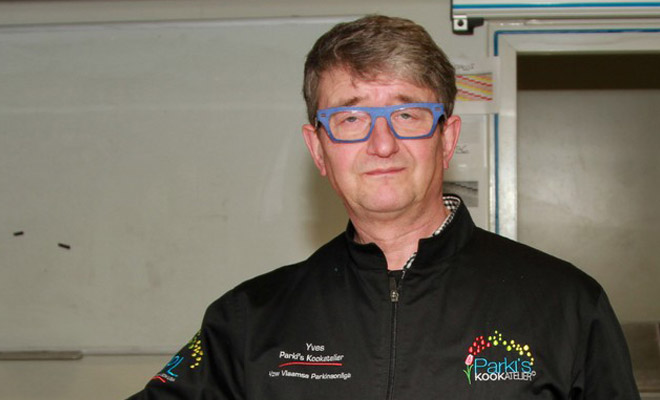
For many enthusiastic cooks the festive season is a great opportunity to show off their skills. But if one of your guests has Parkinson’s disease, you may wonder: how can I prepare a dinner that everybody will enjoy? Here, Yves Meersman, the chef with Parkinson’s behind the Parki’s Kookatelier cooking project, shares his expert tips for a ‘mise en place’ that will help you create the complete festive dinner


As a host you dream of enjoying the delicious meal you prepared with so much love and passion in a festive ambiance with your family. But the reality can be different, as too often you find yourself busy in the kitchen – at best you see your guests between the two courses. That’s not the idea!

That’s why I present to you a festive meal with ingredients you can prepare the day before, or ‘pre-cook’ before the guests arrive on the day itself, leaving you only with the finishing touches to add to the festive meal.

Tip: You can adapt dishes to accommodate the chewing and/or swallowing problems of guests by blending or mashing ingredients

These 12 mise en place rules can be applied to any menu

  1. Order all ingredients and products well in advance.
  2. Make sure you have enough storage space in the fridge to keep all part-prepared dishes cool.
  3. Pre-cook fish or meat until half done, cooking the rest during the re-heating stage.
  4. Parboil all vegetables in advance, cool well under running tap water, drain, pat dry and put in a dish lined with butter. Season the parboiled vegetables just before reheating.
  5. Potato gratin can be pre-cooked in the oven until almost done. Put the pre-cooked dish – after cooling – in the fridge. Take out one hour before reheating the gratin.
  6. Pre-cook rice and dough products until almost done, cool immediately and reheat for one minute in a hot, well-spiced stock; or toss in slightly heated farm butter or olive oil, just before serving.
  7. Cold sauces such as cocktail sauce, tartar or vinaigrette are best prepared the day before to enhance the flavour – store in the fridge. Take out of the fridge about 30 minutes before serving to bring it room temperature – again, this will enhance the flavour.
  8. Prepare sauces the day before without the trimmings. Warm the pre-cooked or sautéed trimmings and add to the warm base sauce just before serving.
  9. Season all warm preparations such as sauces and soups, with a taste booster just before serving.
  10. Pre-heat the oven to 180-200°C, but turn down to 140-150°C when reheating as this will improve the cooking process.
  11. Cut pre-cooked meat into smaller portions after reheating.
  12. Take the temperature of the meat or fish as many times as possible with a thermometer to make sure that it’s fully cooked.

Parki’s Kookatelier is a Belgian project focusing on specialised nutrition for people with Parkinson’s disease. The authors are Yves Meersman and Randy Mellaerts.

For more information, visit their website here.

See our collection of recipes for living well with Parkinson’s 

Read More

Recipes
15 December 2025

Christmas recipes: four-course festive meal that’s great for people with Parkinson’s

Prepare a stress-free festive meal that’s nutritious for everyone
Read More
10 delicious recipes for people with Parkinson's
Recipes
26 August 2025

10 delicious recipes for people with Parkinson’s

It is well known that a balanced, nutritious diet can have a hugely positive impact on people with Parkinson’s. For...
Read More
One-day menu for people with Parkinson’s featuring salmon baked potatoes and split pea soup
Recipes
21 July 2025

One-day menu for people with Parkinson’s featuring salmon baked potatoes

One-day menu ideas for easy-to-chew meal planning
Read More
Home

Study finds further links between impulse control disorder and dopamine agonist medication

Scientists have found evidence that some dopamine agonist medications can cause impulse control disorder in people with Parkinson’s
08 July 2025 By Verity Willcocks
Insights dopamine agonistsimpulse control disorderResearch
Study finds further links between impulse control disorder and dopamine agonist medication

Even a low dose of a dopamine agonist medication could cause an impulse control disorder in some people with Parkinson’s, a Scandinavian multi-centre study, IPAPS (Impulse control disorder Parkinson Agonist Pharmacology Study) has found.

Over the past ten years, it has become clear that taking dopamine agonist medications can lead to some people with Parkinson’s developing an impulse control disorder. This is where a person develops extreme behaviours such as compulsive gambling, excessive spending, hypersexuality or binge-eating. This can have a detrimental impact on their lives and relationships with others, as well as have potential financial or legal implications.

Impulse control and dopamine agonist study

Until now, it has been assumed that impulse control problems are related to the dosage size of a dopamine agonist medication. However, the study’s research into two dopamine agonist medications now partly rejects this. As a result, in Norway levodopa is now the recommended first-choice treatment for Parkinson’s symptoms.

Conducted at four sites in Norway and one in Sweden, the clinical and pharmacological study set out to find out more about the mechanisms behind impaired impulse control, and the role of dopamine agonist medications in this.

Starting as a collaboration between the University of Oslo and The Arctic University of Norway in Tromsø, IPAPS recruited 100 people with Parkinson’s who took regular doses of the dopamine agonist medications pramipexole or ropinirole.

The participants were interviewed, examined, and filled in different rating scales for impulse control and other problems related to Parkinson’s.

Blood was drawn for pharmacological analyses three times in one day – just before the daily dopamine agonist dose, and after six and twelve hours – allowing for accurate measurements of dopamine agonist serum concentrations throughout the day. Degrees of impaired impulse control were correlated to dopamine agonist use and serum concentrations.

New findings for pramipexole and ropinirole

Initial results based on a fraction of the study cohort were published by the European Journal of Neurology last year. More exhaustive findings based on all 100 study participants were published in a separate article by the European Journal of Neurology in January this year.

In the case of pramipexole, no correlations between impaired impulse control and pramipexole dose or serum concentrations were found – meaning that even a low dose of it could lead to some people with Parkinson’s developing an impulse control disorder. This finding led the study’s scientists to advise that those who show signs of an impulse control disorder while on pramipexole should stop taking it.*

As regards ropinirole, both daily dose and total drug exposure (serum concentrations throughout the day) showed a weak but significant correlation with impaired impulse control. These results suggest that ropinirole users experiencing problems with impulse control could benefit from reducing their dose.*

Changes to recommendations in Norway

Dr Espen Dietrichs, a neurologist/movement disorder specialist and professor at the Institute for Clinical Medicine at the University of Oslo and one of the study’s senior authors, says: “Taken together, our results seem to imply that pramipexole treatment should be stopped in people with Parkinson’s that develop impaired impulse control, as these problems are not related to dopamine agonist dose or serum concentrations.

“In ropinirole users having similar problems, a dose reduction may be beneficial and could be tried out as both ropinirole dose and serum concentrations seem to have some importance.”

The study’s insights into the risks of impulse control disorders when taking dopamine agonist medication have changed the recommendations for treating Parkinson’s symptoms in Norway.

Whereas previously, dopamine agonist medications and levodopa treatment were considered equal alternatives when starting treatment for those newly diagnosed with Parkinson’s, now five Norwegian Parkinson’s experts have recommended levodopa alone as the first choice for treating the condition’s symptoms.

*Please consult your neurologist before halting or reducing any Parkinson’s medications.

Read More

The opening credit screen to Parkinson's film Beyond Impulse
Stories
26 February 2025

“People don’t talk about it”: new film explores impulse control disorders in Parkinson’s

German neurologist Dr Ines Debove and filmmaker Bettina Rotzetter discuss their latest film, Beyond Impulse
Read More
Norwegian impulse control disorder video lead
News
17 January 2018

Norwegian Parkinson’s Association tackles impulse control disorders in new film

Watch a new animation explaining impulse control disorders
Read More
Ultraprocessed foods (UPF) linked to Parkinson's
News
01 July 2025

Ultraprocessed foods (UPF) linked to increased risk of Parkinson’s – but more research needed

Eating ultraprocessed foods (UPF) such as ketchup and soda has been linked to increased risk of developing Parkinson’s, according to...
Read More
Home

Meet Parkinson’s Europe’s Visibility and Awareness Steering Group

Meet the team who will drive our work to raise the profile and understanding of Parkinson’s across Europe
04 July 2025 By Christy McGhee
Insights raising awarenessstrategy
Meet Parkinson’s Europe’s Visibility and Awareness Steering Group

People with Parkinson’s and experts from across Europe are coming together to form Parkinson’s Europe’s new Visibility and Awareness Steering Group.

The group has been established to guide and support Parkinson’s Europe’s strategy, focusing on its third strategic pillar.

The group will hold its second bi-monthly meeting this month. The work is being co-ordinated by Parkinson’s Europe’s Director of Communications Laura Vickers-Green, Strategic Director Amelia Hursey and Head of Content Christy McGhee.

Raising the profile of Parkinson’s as the fastest-growing neurological disorder will be one of the key strategic aims the group will support.

It will also seek to guide Parkinson’s Europe’s work to increase awareness and understanding of the real life impact of Parkinson’s.

Meet Parkinson’s Europe’s new Visibility and Awareness Steering Group members:

Cathy Molohan is an Irishwoman living in Frankfurt, Germany. She is mum to two (almost) grown up kids, and a passionate patient advocate.

Cathy Molohan is a passionate patient advocate.

“I am living a great life despite Parkinson’s and doing everything in my power to keep it that way. Together we are strong, and loud, and powerful.”

Retired college tutor David Sangster is British, and was diagnosed with Parkinson’s in 2011, at just 29 years old.

David Sangster: raising awareness of Parkinson's

“Statistically speaking, I was too young to be diagnosed with Parkinson’s back then. Now, in my early forties, I am still too young. I have been through so much with this condition. It doesn’t get any easier, that’s for certain. But you can still find living space within its diminishing parameters – if you have a positive mindset. But some days Parkinson’s wins. It completely violates every part of me. I lose control. To be honest, nothing can prevent the complex aspects of this multi-faceted condition showing itself at the most inconvenient times. This is real. All I want to do is to be me. Be still and to contribute to society the best I can.

“There is still so much to be done to raise awareness of Parkinson’s, to educate society and medical professionals. About the range of symptoms that we face on a daily basis and come to increasingly manifest over the course of the condition. How does Parkinson’s really feel? And what does it actually look like? How does it limit me, and the many others around the world, physically, mentally and emotionally?”

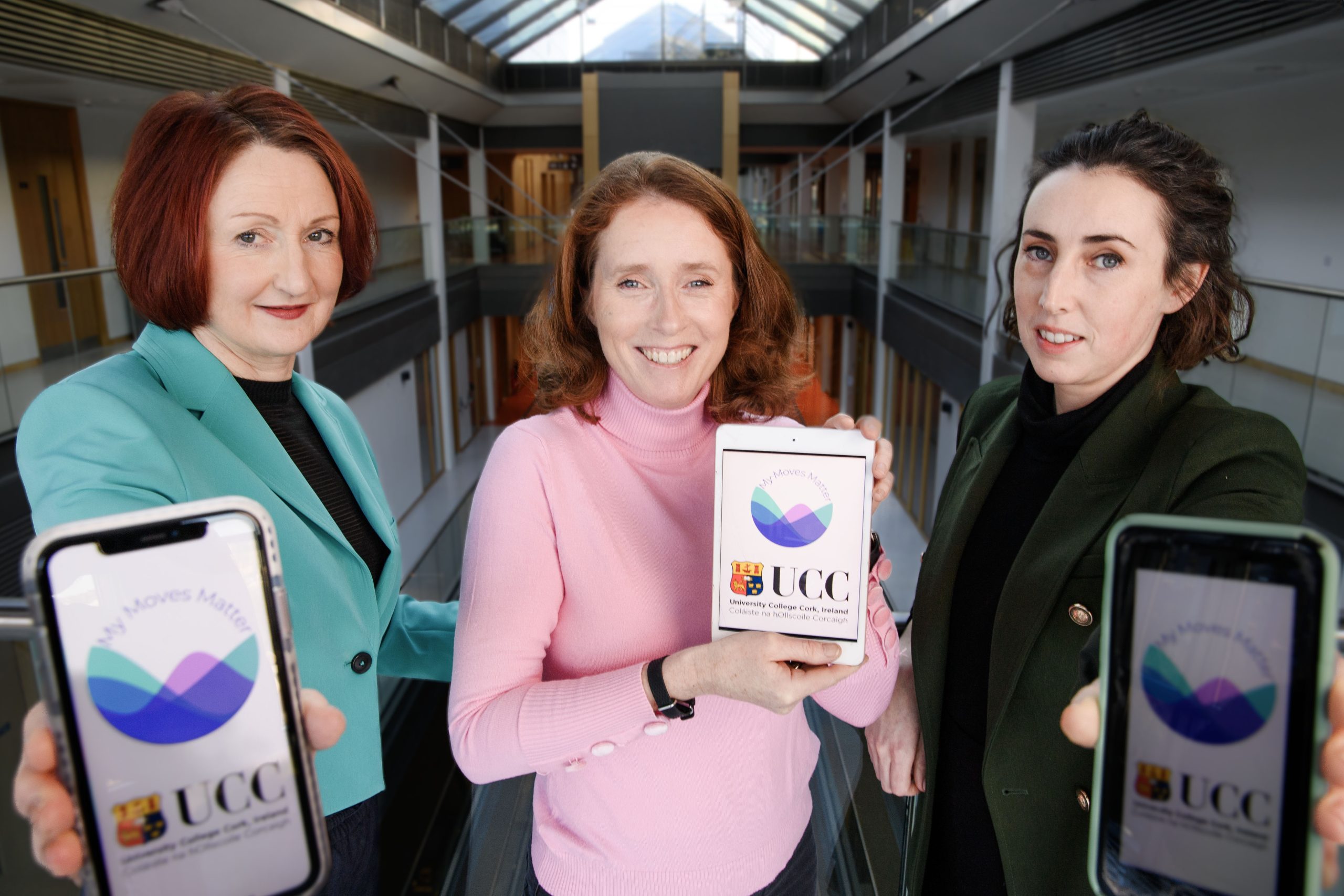
Emma O’Shea is a researcher and lecturer at the Centre for Gerontology and Rehabilitation at University College Cork, in the South of Ireland.

Researcher Emma O’Shea

“I am passionate about creating impact with research findings, and am currently the Chair of the ‘Research and Impact’ subcommittee of Parkinson’s Ireland. Our research group has led a national programme of research over the past five years. This has shown that the symptoms and experiences of Parkinson’s are not always well understood by society. This has knock-on effects, including stigma and under-provision of specialist services and support for people and families living with Parkinson’s.”

Lisa Wynne is a Parkinson’s nurse specialist with over ten years of Parkinson’s experience, having trained in adult and pediatric nursing prior to this.

Parkinson's nurse specialist Lisa Wynne

“I currently work with the Irish national charity, based in Dublin, supporting people living with Parkinson’s and their families. I am very interested in this steering group to help raise awareness on a European level, spreading the same message and working together for greater impact.”

Paqui Ruiz was born and lives in Tenerife, Canary Islands.

Activist Paqui Ruiz

“I am a Spanish woman with early-onset Parkinson’s for more than twelve years, married and with four children. After six years of struggling to maintain my creative and positive identity, I decided to publish a blog “Con P de Párkinson”. A space where Spanish-speaking women with Parkinson’s can find support and visibility.

“My diagnosis came after a long process of medical confusion. Today, thanks to the people who have supported me, I have found true friends. I continue to value each day as an opportunity to live fully and share my experience with others.

“I am an activist and ambassador for the Degén Foundation. Thanks to the WPC I discovered that activism goes beyond my street, my province and my country. Parkinson’s is not only a health problem, it also involves society and the policies of countries and the European Union.

Pawel Kaczmarek is from Poznań, Poland, and has been living with the challenges of advanced Young Onset Parkinson’s for over a decade.

Pawel Kaczmarek: AI focus

“While I work supporting researchers professionally, my personal drive is focused on turning my own experiences into opportunities for connection and innovation within the Parkinson’s community.

“I am eager to join forces with fellow enthusiasts to challenge perceptions, improve awareness, and help give Parkinson’s a stronger voice. Especially focusing on how to leverage technology and AI to empower people with Parkinson’s to stay at or return to work. Not only as a means of preventive therapy, but also as a way to bring value to their loved ones, societies and economies.”

Pedro Maria is based in Lisbon, Portugal, and works for Portuguese pharmaceutical company BIAL. He is also father to a seven-year-old daughter, and has more than 20 years of experience in the pharmaceutical industry.

Pedro Maris has has more than 20 years of experience in the pharmaceutical industry

“Since 2021, I have been working in the Parkinson’s space at BIAL as a Senior Global Marketing Manager. My focus is on delivering effective solutions that empower people with Parkinson’s to self-manage their OFF episodes.

“I strongly believe that European people with Parkinson’s deserve a stronger voice to ensure better access to Parkinson’s education, support, and treatment.”

Wendy Van Wijk lives in the Netherlands and was diagnosed with Parkinson’s in 2017 at the age of 47.

Writer Wendy Van Wijk aims to inspire others

“Despite everything, I maintain a positive outlook on life. Through my magazine, Wendy’s Parkinson Journey, I aim to inspire others. Not only by sharing my own story but also by highlighting the powerful and hopeful stories of fellow patients.

“Working together, we can expand our reach, strengthen our voice, and stand as one united community to make a difference.”

Antonella Macerollo, Consultant Neurologist at the Walton Centre in Liverpool, UK, and Honorary associate professor at University of Liverpool.

Antonella Macerollo, Consultant Neurologist at the Walton Centre in Liverpool, UK, and Honorary associate professor at University of Liverpool

“I have worked in the field of movement disorders and especially Parkinson’s since 2007, when I was in medical school. I am passionate about working with charities dedicated to people living with neurological conditions. They are the real voice, and I would like to contribute to make ‘louder’ this voice.
“I am trustee of the Dystonia UK and Regional Lead of the Parkinson’s Excellence Network of the North West Region in the UK. I am delighted to join this group because I feel the need to contribute in increasing visibility and awareness of this condition in Europe. Especially in relation to non-motor symptoms and neuromodulation therapies.”

Meet our new Empowerment Steering Group, and Data and Innovation Steering Group.

Read More

Meet Parkinson’s Europe’s new Empowerment Steering Group
Insights
10 June 2025

Meet Parkinson’s Europe’s new Empowerment Steering Group

A Parkinson’s nurse, physiotherapist and Deep Brain Stimulation patient are among those who have joined together to form Parkinson’s Europe’s...
Read More
Meet Parkinson's Europe's new Data and Innovation Steering Group
Insights
21 May 2025

Meet Parkinson’s Europe’s new Data and Innovation Steering Group

People with Parkinson’s and European experts from a range of fields including research, IT, physiotherapy and data science are coming...
Read More
Parkinson's Europe strategy 2025-2028
Stories
22 January 2025

5 key takeaways from our new Strategy

Parkinson’s Europe is thrilled to start 2025 with a brand new, multi-year strategy, and we think you should be too....
Read More
Home

Ultraprocessed foods (UPF) linked to increased risk of Parkinson’s – but more research needed

01 July 2025 By Christy McGhee
News Recipes & NutritionResearchUltraprocessed Foods
Ultraprocessed foods (UPF) linked to increased risk of Parkinson’s – but more research needed

Eating ultraprocessed foods (UPF) such as ketchup and soda has been linked to increased risk of developing Parkinson’s, according to new research published by the American Academy of Neurology’s medical journal.

UPF consumption significantly increases the risk of developing prodromal (early signs) of Parkinson’s, suggests the ‘Long-Term Consumption of Ultraprocessed Foods and Prodromal Features of Parkinson Disease’ study, published in Neurology.

The report used data from two US studies to explore the link between consuming higher amounts of ultraprocessed foods like potato chips, and early Parkinson’s-related nonmotor symptoms such as constipation and body pain. It was based on more than 42,800 participants, with a follow-up period of up to 26 years.

Participants consuming approximately 11 servings of UPFs per day had a 2.5-fold higher likelihood of exhibiting three or more prodromal Parkinson’s features. This was compared with those who consumed only three servings per day, the study showed.

UPF link to Parkinson’s needs further research

The research indicates more studies are needed to confirm whether lowering UPF consumption may prevent the occurrence of nonmotor symptoms that often precede a diagnosis of Parkinson’s, the article says.

Dr Katherine Fletcher, Research Lead at Parkinson’s UK, agreed that although the study was long-running and included a large sample size, more research was needed.

“Research into diet in general is difficult as people often will inaccurately self-report what their diet comprises. This could be down to forgetting to fill in the diary at the time, to subjective interpretation of amounts of UPFs,” Dr Fletcher said.

“The study group also lacked ethnic and socio-economic diversity, which is vital when looking to better understand factors that contribute to the causes of a health condition.”

What are Ultraprocessed Foods (UPFs)?

While definitions can vary, the term Ultraprocessed Foods (UPFs) is generally used to describe products which have been created by using a number of industrial stages. According to the NOVA classification system, UPFs are ‘formulations of ingredients, mostly of exclusive industrial use, typically created by series of industrial techniques and processes (hence ‘ultra-processed’)’.

Common ultra-processed food and drinks products include:

  • Carbonated soft drinks
  • Sweet, fatty or salty packaged snacks
  • Confectionery
  • Mass produced packaged baked goods such as breads, cookies and cakes
  • Margarine and other spreads
  • Sweetened breakfast cereals and fruit yoghurt and ‘energy’ drinks
  • Pre-prepared meat, cheese, pasta and pizza dishes
  • Poultry and fish ‘nuggets’ and ‘sticks’
  • Reconstituted meat products; such as sausages, burgers, hot dogs
  • Packaged ‘instant’ soups, noodles and desserts

Eating well with Parkinson’s

While there is no specific diet recommended for people with Parkinson’s, having a well-balanced, healthy diet is strongly recommended. Eating well can help manage Parkinson’s symptoms like constipation, fatigue, dyskinesia (involuntary movements) and stress.

Find out more about eating well as a person with Parkinson’s.

Read More

Healthy vs unhealthy foods: Foods to avoid with Parkinson's disease - dietitian-approved advice on what foods to limit and why
Advice
05 January 2026

Foods to avoid with Parkinson’s disease – dietitian-approved advice on what foods to limit and why

Expert dietitian Kinga Topolowska explains how diet can impact Parkinson’s symptoms and medication
Read More
New dietitian-approved Nutrition Parkinson's programme launches with 'Mediterranean Parkinson's'
News
19 September 2025

New dietitian-approved NutritionPD programme launches with Mediterranean focus

Hoping to provide the ‘missing piece in Parkinson’s care’, the team behind My Moves Matter have created NutritionPD, a dietitian-designed...
Read More
10 delicious recipes for people with Parkinson's
Recipes
26 August 2025

10 delicious recipes for people with Parkinson’s

It is well known that a balanced, nutritious diet can have a hugely positive impact on people with Parkinson’s. For...
Read More
Home

Travel advice for people with Parkinson’s – the Parkinson’s community share their best tips

Travelling comfortably with Parkinson's – we asked the European Parkinson's community their best advice for a successful trip
27 June 2025 By Christy McGhee
Advice travelTravel tips
Travel advice for people with Parkinson’s – the Parkinson’s community share their best tips

Sunsoaked beaches or famous landmarks? Rest and relaxation or intrepid adventures? There is no doubt travel can open up the door to new experiences and allow us to escape the everyday grind. But Parkinson’s symptoms and needs can add an extra layer of planning and preparation to even the most meticulous itinerary.

To celebrate the relaunch of The Parkinson’s Passport, we asked people with Parkinson’s across Europe about their plans to travel this year. Their advice works for all types of getaway, including travel for business, holidays and events.

Here are people with Parkinson’s top tips on what they do before – and during – a trip to make each break as enjoyable as possible

Cathy Molohan, 52, Frankfurt, Germany

Cathy Molohan: tips on travelling as a person with Parkinson's

Travel plans: “We are travelling to the US because my son is in high school near Chicago. We are planning a mixture of city break in Chicago and countryside in northern Michigan. I am travelling with my husband, daughter (20) and son (16). We are staying in home swap accommodation, so have three lovely big houses to look forward to. I prefer this to hotels – more space, more flexibility, more “real life”.”

Tips for travelling with Parkinson’s: “We plan to do a river boat architecture tour in Chicago, and to visit wineries in Michigan. Hopefully we will be brave enough to swim in the lake too (cold!).
“The flight is always stressful as a person with Parkinson’s, and I will make sure to have my DBS battery fully charged in case there are delays. And of course I will take my meds as hand luggage. Once we arrive, we plan to take things easy and not make the mistake of trying to see too much. Better to enjoy a couple of regions properly.”

Rory Cellan-Jones, 67, London, UK

Rory Cellan-Jones: tips on travelling as a person with Parkinson's

Travel plans: “We are going to an AirBnB in the seaside village of Tresaith on Cardigan Bay in West Wales. My wife Diane and I are taking our son and daughter-in-law and our two grandchildren – and our very nervous rescue dog Sophie. We will drive in two cars.

“We discovered this lovely house perched looking over the bay seven years ago and loved it – each year we book it for the next summer as we leave. It is so relaxing and we are very used to the fact that if the temperature goes above 20C it’s a heatwave.

Tips for travelling with Parkinson’s: “Hmm, tricky… the main thing we need to do in advance is to get our dog used to our grandchildren – she is terrified of them at the moment. It is important because I get quite stressed and worried about mixing the dog with the kids, and that makes my Parkinson’s worse.

“The other thing is I need to make sure I have got plenty of audiobooks downloaded. I suffer badly from insomnia – and sadly it doesn’t get much better on holiday. So I expect to be creeping out at 3am to listen to an audiobook without waking anyone.”

Fotini Skondra, 48, Chalkída, Greece

Fotini Skondra: tips on travelling as a person with Parkinson's

Travel plans: “I travel often, and combine my husband’s work and my obligations at the PAR.KIN.S.O.N. Association, as well as small or large getaways for recreation. Unfortunately, due to the busy schedule, we do not plan vacations much in advance.

“However, we have planned a trip to Qatar in November for rally races, and we also made three trips abroad last winter (seven days in Dubai, 15 days in Los Angeles, San Francisco and Las Vegas, and four days in Paris).”

Tips for travelling with Parkinson’s: “On these trips, the rolator wheelchair (pictured above) helped me a lot, because I have fluctuations. So I could either push it when I had difficulty walking and it gave me rhythm. Or sit and be pushed when I could not walk at all. And close it and leave it in the trunk of the bus or car when I did not need it. Due to its small size, I can also take it with me in the airplane cabin.”

“I do not prefer specific places or means of transportation, nor do I avoid any because of the disease. I go everywhere by any means. But I make sure to look out for the conditions that I may need to prepare for, such as transatlantic trips, places that require standing. And I always inform the service staff in advance.

“I always have a completed Parkinson’s Passport in my bag. I am thinking of making a Badge with a lanyard – one side in Greek and the other in English – describing my travel needs too.”

Rune Vethe, 50, Sandefjord, Norway

Rune Vethe: tips on travelling as a person with Parkinson's

Travel plans: “I have two trips planned this summer. In August, I will travel with my wife and two sons (17 and 19) to Protaras, Cyprus. We visited two years ago. It is a huge tourist destination but fits with what we, and our boys, want. We look for a straightforward sun, sea and swimming holiday in a hotel, with warm weather. Even I can swim in the ocean when it is warm.
“I will also travel with my ZWAP ‘cycling family’ at the end of June for our annual signature outdoor ride, the Tour de Zwap. It is all prebooked and set up, organised by our committee for over a year. We fly into Porto and out of Fargo, staying in 11 different hotels.”

Tips for travelling with Parkinson’s: “Our family holiday destination was chosen specifically for the warm sea temperature. Some people with Parkinson’s find a cold plunge helpful, but I really need the sea to be warm to enjoy it. It is also all arranged as a package, which is easier for me as a person with Parkinson’s.

“Whilst flying, I make sure to choose an aisle seat on the right-hand side of the plane. I have dystonia in my left foot which makes my knee go outwards, so at least I have space for that in the aisle. I also always have my medication in hand luggage.

“To prepare for the cycling holiday, we all exercise a lot in winter time on ZWIFT. To be prepared physically is important. We cycle 85km per day, which everyone can do, but how pleasant or unpleasant it will be depends on that preparation. We also have meetings before to share our experience, on how to do such a ride as a person with Parkinson’s. Some people have done this type of trip before, and some are new, so we can communicate with each other and share tips. Those meetings are important to manage expectations.

“We bring our own bikes, so I will travel with a huge cardboard box to transport mine. While I’m on holiday, or at the airport, I always try to accept help if it is offered. In the past I was proud, and reluctant to. But after a while I realised of course I could receive help. Now, if someone wants to help me, I see it also as an opportunity to raise awareness.

Elisabeth Ildal, 65, Gl. Holte (near Copenhagen), Denmark

Elisabeth Ildal: tips on travelling as a person with Parkinson's

Travel plans: “I will be spending my summer on the beautiful Danish island of Bornholm, known as the ‘Sunshine Island’, where I am lucky enough to have a wonderful summerhouse. Since 2018, I have been opening my home to people with Parkinson’s for approximately 8–10 days. The first time I did this was in 2018 for nine DJs from Radio Parkies.

“This year’s camp will be a combination of table tennis, biking, and simply enjoying life with good food, wine, and great friends. The camp runs 28 June until 6 July, with people coming from Denmark, Iceland, the UK, Portugal, Spain, Germany, Scotland, and the US. It has now become an official ITTF Foundation Camp, and I am incredibly grateful for the support from the ITTF Foundation. ITTF Foundation’s Ramon Moncho will be the coach, focusing on specialised training for people with Parkinson’s.

Tips for travelling with Parkinson’s: “It is always a refreshing break for me to help PwPs, and it brings me great joy to play table tennis with them. I always tell people: ‘Always carry your medication with you’. Travelling is never a problem for me. I love traveling to Bornholm as much as anywhere else in the world. I wish everyone around the globe a happy, sunny summer.”

Massimiliano Iachini, 57, Turin, Italy

Massimiliano Iachini: tips on travelling as a person with Parkinson's (taken by his mother)

Travel plans: “My next trip is planned for the end of September 2025. Unfortunately Parkinson’s and Covid have restricted my ability to travel during the past few years. But since I was diagnosed in 2007, travel has been my favourite medication!
Freezing moments and other complications of the condition have completely changed the way I travel.

“Fortunately I am very motivated to travel, and as President of the Associazione Italiana Giovani Parkinsoniani, I recently helped win a grant from the Italian neurologist foundation LIMPE-DISMOV. This sports and wellness meet-up will be a special version of the Walk for Parkinson’s event AIGP organises annually. Called ‘Spinti Dal Respiro’, the three-day event will immerse participants in the unspoiled nature of Trentino. There will be outdoor activities, opportunities to connect with local students, and an introduction to Nordic walking.

Tips for travelling with Parkinson’s: “I love to travel slowly and safely, in a responsible and inclusive way. Unfortunately in Italy there is no tourism office specialising in disabled-friendly travel. However I recommend the travel specialist Village for All, who have vetted every property in their collection.

“I prefer to rent an apartment rather than a hotel, as you get more space for the same price. And I think it’s important to make sure everyone I am travelling with is aware of my needs ahead of the trip.”

Steve Morley, 63, North Ayrshire, Scotland

Steve Morley: tips on travelling as a person with Parkinson's

Travel plans: “My partner Elaina and I have been on quite a few holidays over the last couple of years, making the most of life before my symptoms get worse. I was diagnosed in October 2018 and for five years had relatively mild symptoms. But over the last year they have got worse, particularly with an increase in “off” periods as my medication wears off.

“So far this year we have been to Lanzarote, Gran Canaria, Cyprus and Majorca. We also have trips planned for June to Altea, and in late November to Helsinborg, Sweden for the World Parkinson’s Table Tennis Championships (initiated by the ITTF Foundation). The latter will probably be the trickiest, as we will fly from Glasgow to Copenhagen in Denmark then get a train to Helsingborg. Having said that, we travelled by train last year to the World Championships in Metz, France which involved several changes!”

Tips for travelling with Parkinson’s: “We generally stay in hotels and travel by air and train. My partner is a keen cyclist and I like to play table tennis as it slows down my symptoms. We therefore always check that the hotel has a table tennis table. I’ve also found local table tennis clubs to play while on holiday!

“The best thing we have done on recent trips is book passenger assistance at the airport or railway station. Although sometimes I can walk ok, at other times I really struggle. Passenger assistance really helps as you do not have to queue at security or passport control.”

Agnes Jan, 61, Carinthia, Austria

Agnes Jan: tips on travelling as a person with Parkinson's

Travel plans: “After my Parkinson’s diagnosis in May 2019, I discovered table tennis as a therapy for myself. Since then I have travelled to many Parkinson’s table tennis tournaments in Europe and I am very successful. My husband always accompanies me on my travels because he knows exactly when I need my medication or a rest. We flew to Eystrup in Germany this month, but we also travel by car or train. It depends on where we are going and how far the journey is.

“My next trip takes me to Oldenburg, Germany. I am playing at the Ping Pong Parkinson German Open with 300 players with Parkinson’s from all over the world. We will take two days for the journey, and stopover in Bremen as we want to see the city.

“In August we travel to the Scottish Open in Largs. Then in October we are going to Italy for the Ping Pong-Parkinson World Parkinson Championships. There I will defend the women’s doubles world championship title, which I won in 2024 with Melanie Jeska (GER). In November we will travel to Helsingborg, Sweden, to the World Parkinson’s Table Tennis Championships (initiated by ITTF Foundation). I also have two world championship titles to defend in Sweden.”

Tips for travelling with Parkinson’s: “For me it is important that we allow ourselves enough time when travelling – for example, between connecting flights – because I have problems walking in end-of-dose phases. We often take two days for the journey and take everything easy. Stress worsens my symptoms and that is why we avoid it.

“I always have enough medication in my hand luggage for the planned duration of my trip, plus two days. I do this because once my table tennis colleague’s luggage did not arrive on time. It would be terrible to be far from home without medication.

“I always take a doctor’s letter with me when I travel, so that I can explain at the security check why I have so many medications with me.”

Andrea Müllner, 58, Wunsiedel, Germany

Andrea Müllner: travel tips for people with Parkinson's

Travel plans: “I love to travel, especially to attend PingPongParkinson events. Table tennis means a lot to me. It keeps me active and connected. This year, I am excited to compete in Helsingborg and Lignano Sabbiadoro.”

Tips for travelling with Parkinson’s: “As a Parkinson’s patient, careful planning is essential. I always pack all my medications, plus extras, in my carry-on, along with snacks and water for taking pills. Along with a medical certificate, and a listing of my medications. I check if hotels and venues are accessible and request assistance at airports if needed.

“I also bring comfortable clothes, my table tennis gear, and my headphones. Travel insurance that covers pre-existing conditions is a must. With good preparation, I can relax and fully enjoy my trips and tournaments.”

Joe Gregory, 66, Reading, UK

Joe Gregory: tips on travelling as a person with Parkinson's

Travel plans: “I have been very, very fortunate to have travelled to play walking football with people living with Parkinson’s in many countries over the last few years, including Denmark, USA, Nigeria, Basque Country, Norway and Singapore.”

Tips for travelling with Parkinson’s: “Sometimes I travel with team mates, sometimes alone. I always take and wear my Sunflower ‘Hidden Disabilities‘ lanyard on the train and airplane. While I have never requested any special assistance at airports or other travel hubs, I feel so much less anxiety knowing staff and others will understand why I may have difficulty in negotiating my way on rail journeys, and through airport baggage check-in, security, and boarding.

Hidden Disabilities sunflower lanyard: tips on travelling as a person with Parkinson's

“Rail and airport staff recognise and respect the lanyard notification that I may just need a little help for the benefit of all, and often guide me through special assistance passages and barriers without my asking.

“Most importantly, the lanyard reassures me that in the event of any Parkinson’s-related difficulty, staff will recognise that I have Parkinson’s. It is a largely ‘hidden’ condition that affects and restricts me somewhat, and I may need a little help if I’m struggling – for everyone’s sake.”


Alex Reed, Brescia, Italy

Alex Reed, Brescia, Italy

Travel plans: “Before I had Parkinson’s I travelled everywhere. For example, to Red Sea scuba (for diving), to the Caribbean (diving), to Key West, Florida (diving) – you may recognise a theme! All hot destinations and great for scuba diving! Also business travel to Korea, Japan, San Francisco, Baltimore and New York (I live in Italy). Parkinson’s has restricted some of the travel. Now after 20 years, I believe that travel is essential in order to be focused on your life rather than on Parkinson’s.”

Tips for travelling with Parkinson’s: “I am still autonomous, so I plan ahead. For example this summer I want to go to San Francisco to see my mate Matt at the Fox Foundation. I will plan my daily pill intake, I will get insurance and I will go! My words of advice are to plan ahead, think of all the eventualities. Focus on having fun not on Parkinson’s. You are stronger than you think, so believe in yourself.”

Gemma Fallon, UK

“We went away with my dad who was diagnosed three to four years ago. We have been to Tenerife with him, and more recently to Italy. The main things I would suggest are to book assisted travel with the airlines. It’s great and really helps. No worrying about standing around or getting to the gate on time. Also, book a seat with extra leg room if you can and near the loo. You won’t be able to book emergency exits, as you have to be able to open the doors, etc, but extra legroom is worth the money.

“Warmth is lovely but heat is a killer! No-one feels like doing much in 30+degrees, but add Parkinson’s on top and you’re asking for a Herculean effort just to walk out for lunch. A handheld usb fan was a help. Also, dad found that his meds didn’t work as well when he was really hot. Take constipation meds with you as you are likely to have digestive issues from flying, different cuisine, and so on and that is another issue you don’t want to be dealing with abroad.

“Take a cushion. My dad found his got a lot of use on the plane, wheelchair, restaurant chairs and so on. Don’t try to do too much. One day out and about and going for dinner, one day of rest. Avoid crowded places and consider travelling off peak. Dad struggled walking in crowds as he couldn’t maintain momentum. Make sure you research to see if there are any events on which will make the area even busier. When I took dad to the Lakes there was a triathlon taking place and you couldn’t move for people and camera crews! Dad found it incredibly stressful.

“Communicate. It was frustrating for me to have to second guess when dad was not comfortable in a situation. He did not want to ‘be a burden’ and was mindful that he was there with other people. What he did not realise was that he is not a burden, and that we were all stressed and anxious about him! Just say if you need a break or you do not feel comfortable, the people you are with love you, and they want you to enjoy your holiday.”

Read More

Parkinson's-friendly holidays represented by a couple sitting on deckchairs on the beach at sunset
Advice
16 February 2026

3 therapeutic holidays for people with Parkinson’s in Europe

These therapeutic holiday providers in Italy, Portugal and Spain offer Parkinson's-friendly travel for summer and beyond
Read More
New Parkinson's Passport designed to make travel easier
News
02 June 2025

Parkinson’s Passport relaunched in multiple languages to make travel easier

‘Parkinson’s passport’ makes travelling easier
Read More
Travelling with Parkinson’s
Advice
02 June 2025

10 top tips for travelling with Parkinson’s

Finnish author and campaigner Timo Montonen shares his top tips
Read More
Home

Parkinson’s UK LGBTQIA+ Network: a safe space to connect

Parkinson’s Life spoke to Parkinson's UK online LGBTQIA+ network co-founder Chris Rawlins, about why the group is so important, and how it might evolve in the future
27 June 2025 By Christy McGhee
Stories CommunityDiversity and Parkinson'sLGBT+UK
Parkinson’s UK LGBTQIA+ Network: a safe space to connect
Parkinson's UK LGBTQIA+ Network is run by volunteers (l-r): Chris, Paul and John

Living with Parkinson’s can come with its own particular set of challenges. As can being part of the LGBTQIA+ community. So what do you do when both apply to you? For person with Parkinson’s Chris Rawlins, the answer was clear. There was a need for a Parkinson’s LGBTQIA+ network.

Seeking a space where people could both be fully themselves without fear of prejudice, and connect over shared experiences, he teamed up with two other volunteers to establish Parkinson’s UK’s dedicated LGBTQIA+ network. The group held its first regular meeting in August 2023, and since has grown to a network of 30 members.

“I have never met (co-founders) John, based in the northeast and Paul, Bristol, in person,” says Chris. “But we got together as we were all members of the LGBTQIA+ community, who had been diagnosed with Parkinson’s, trying to find a way to meet up with people in a similar situation.”

The trio quickly realised there would be too few members to warrant local gatherings in person. So instead, they decided to set up UK-wide online meetings.

“We started off meeting every two months, but it is now monthly,” Chris says. The meetings alternate between a relaxed social gathering, and a more formal meeting with speakers.

While the group is run by volunteers, Parkinson’s UK provides “fantastic” support. This has included providing free access to Zoom subscription services to help easily hold the meetings online. In fact, recent speakers have included Parkinson’s UK CEO Caroline Rassell, as well as speakers from external organisations.

There are plans to expand the range of speakers even further. “We are keen to split the mix of speakers 50-50 going forward, for example there is scope to talk to people at [UK LGBTQ+ charity] Stonewall, for example,” Chris says. “Because there are specific issues LGBT+ people with Parkinson’s face that others don’t. So we need to start engaging with more LGBT+ organisations too.”

Connecting the Parkinson’s LGBTQIA+ community

Since its first meet-up, the group has grown not only in size but in confidence. For the first few meetings, “We were all a bit nervous, both the co-ordinators and those attending,” says Chris. “It takes a while to build trust and confidence, so our first meetings were about building that. We make it very clear that what is discussed in the room stays in the room. We have some really good friendships developing. It is a safe space.”

That is not to say connecting with current members, and attracting new ones, is straightforward. With members spread across the UK, and the fact Parkinson’s can make travel difficult for many, the group is limited to meeting virtually for now.

“It is much easier to shake hands, look someone in the eye and offer them a cup of tea in person,” Chris says. “Online it is more challenging. We have to think more creatively about what the ice breaker should be, to enable everyone to speak and settle the nerves.”

Expanding the network

Over the past two years, the group has grown by word of mouth. Along with support from Parkinson’s UK who added details of the group to their website, and encouraged local group co-ordinators to share it with their members.

“But there may be people in the community who are diagnosed with Parkinson’s who don’t know about Parkinson’s UK at all. Or that they have anything for LGBT+ people,” says Chris. Building up relationships with other organisations and media, such as Stonewall, could help raise awareness of the network, he says. “I would be really interested in finding out whether other groups like ours exist in different parts of Europe. In linking up with them to learn from each other and swap ideas.”

Wider outreach is important to make sure everyone is aware of and feels welcomed into the network, he adds. While the UK spread and age range is diverse, membership is currently made up mainly of white, gay men. So there are plans to connect with more people with Parkinson’s from other demographics.

“There is a whole piece of work about going out to other organisations to think about how we engage people nationally. As well as LGBT+ bodies, we need to speak to representatives from different communities.”

Uniting over shared experiences

Connecting with other people sharing similar experiences is a core part of the group’s purpose. Studies have shown that LGBTQIA+ people tend to face specific challenges, for a number of reasons. Chris references a recent report focusing on the LGBT+ community aged 50-plus in London. It highlights the increased hardships and discrimination faced by this demographic, along with social isolation, long-term health conditions, and financial stress.

“There are issues for LGBT people, and having Parkinson’s adds another layer of complexity.” Chris says.

“The feedback we have had is that people are just thrilled and delighted that the group exists. Because they know that there is a readily accessible group of people going through issues similar to them that they can talk to. Where they can just be themselves.”

Recalling his own experience of not feeling comfortable enough to mention his husband at a local Parkinson’s group, Chris explains members of the network appreciate knowing “they do not have to hide anything, or ask themselves the question ‘what happens if I come out in this meeting? Will I be accepted?’ So by having a specific group, I think it just provides that safe space to people.”

LGBTQIA+ advocacy for people with Parkinson’s

While the network has primarily served to connect LGBTQIA+ people with Parkinson’s socially, there is scope for advocacy in future, Chris says. The network works closely with the team within Parkinson’s UK that organises the charity’s attendance at London Pride, for example. However, despite the benefits of meeting up in person at such an event, logistical challenges prevent many members from attending. In addition to travelling to London, taking part often involves waiting around for long periods of time and limited access to toilet facilities.

“There are simple things that Pride could do, such as allowing disability charities to go first in the march, so they do not have to wait at the beginning,” Chris explains. “Now we have found our feet, it is time to start thinking about campaigning and advocacy.”

Improving support for the LGBTQIA+ Parkinson’s community in general can be as simple as avoiding assumptions, Chris says. “It goes back to basics. It is about language. When I first went to see a Parkinson’s nurse one of the first questions was ‘Is your wife supportive?’.  Because I had said I was married.”

As a gay man with a husband, phrasing the question to use spouse or partner might have made the exchange easier, he says. “So across the health service generally, there is a requirement for training people in how to use language correctly.”

Accessing support both at home, or in a care home, can also be a daunting prospect, he adds. “I’m in my sixties and I don’t know whether I will have to go into a social care setting at some point. But there are lots of stories, both anecdotal and in print, of where LGBT people have faced huge discrimination from staff within nursing homes. It would be tragic if people felt they had to go back into the closet in order to feel safe in a care home.

“Part of our advocacy has to be thinking about the issues LGBT people generally face in nursing home settings. And how they can be protected to make sure this sort of thing doesn’t happen.”

Chris’ advice for other Parkinson’s organisations (or individuals) across Europe who would be interested in setting up a similar network:

  • Take action: “My best pointer is to just get started. And the best time to do it is now. You will not get everything right to start off with, but by doing something and seeing what could be better, you end up in a better place.”
  • Connect: “As part of getting started, get in touch with others who have been in the same situation. I am happy to share our experience with you. It’s so easy in this type of work to get ‘analysis-paralysis’, so just get started!”
  • Be relevant: “Part of the challenge of having an online group is motivating people to attend. That’s why we try to find interesting speakers who can actually say something that will add value to people’s lives and be relevant to them.”
  • Share the work: “At first three people felt a bit much, but now preparing for a social Saturday meeting can take three-four hours to set up. Setting up and preparing for speaker meetings also takes a bit of time. So if we start to do more advocacy, we will need to split the work in 3 different spheres.”

Interested in finding out more about Parkinson UK’s online LGBTQIA+ network? Or in exchanging ideas about setting up your own? You can contact Chris on [email protected].


Read More

LGBTQ+ people living with Parkinson’s experience higher rates of depression and anxiety,‘Parkinson’s Research With Inclusion, Diversity, And Equity (Pride)’ study reveals
News
24 June 2025

LGBTQIA+ people with Parkinson’s experience higher levels of depression, new research reveals

LGBTQIA+ people living with Parkinson’s experience higher rates of depression and anxiety, a new study has revealed. Respondents also reported...
Read More
Shan Havins, young person with Parkinson’s and AskShan Founder
Stories
25 June 2025

‘Representation is improving, but many of us still feel unseen’: healthtech innovator Shan Havins on visibility, and building a more equitable future

Parkinson’s Life speaks to Shan Havins, 38, young person with Parkinson’s and founder of healthtech startup Thrive Well Together (TWT)....
Read More
Urs Bratschi
Stories
06 June 2025

‘We have one life, and it is up to us to make it meaningful’: Swiss pasta artist Urs Bratschi on embracing life with young-onset Parkinson’s

Creating intricately detailed pieces of art from pasta may not be the skill you would expect from a software engineer...
Read More
Home

‘Representation is improving, but many of us still feel unseen’: healthtech innovator Shan Havins on visibility, and building a more equitable future

25 June 2025 By Christy McGhee
Stories AIDiversity and Parkinson'sLGBT+Young-onset Parkinson's
‘Representation is improving, but many of us still feel unseen’: healthtech innovator Shan Havins on visibility, and building a more equitable future

Parkinson’s Life speaks to Shan Havins, 38, young person with Parkinson’s and founder of healthtech startup Thrive Well Together (TWT). Shan lives in Idaho Falls, Idaho, USA, with her wife and their four-year-old son.

Shan, please tell us a bit about yourself

“I am the founder of Thrive Well Together (TWT), a healthtech startup creating AI-powered conversational care companions for people living with chronic illnesses. My background is a blend of nursing, higher education, national lab research, and technology innovation. More than any title I have held, I am someone who believes in the power of empathy, connection, and community to change lives.”

How did you come to be diagnosed with Parkinson’s?

“I was diagnosed with young-onset Parkinson’s in my late thirties, after years of unexplained symptoms. These ranged from digestive issues and dystonia, to balance problems and a tremor in my left pinky (little finger).

“I had been seeking answers for a long time, and when I finally received a Parkinson’s diagnosis, it was both validating and life-altering. I went from leading a 70-person team in a high-stakes research role, competing in powerlifting and strongman events, and chasing every professional milestone imaginable, to being stopped in my tracks.

“Parkinson’s forced me to slow down, sit with grief, and reevaluate who I really am outside of what I accomplish. It also invited me into a journey of healing and connection that I never expected.”

What has connecting with the Parkinson’s community meant to you?

“The Parkinson’s community quite literally saved me. I initially connected through online groups and social media, and then through organisations like the Davis Phinney Foundation and Young Onset Parkinson’s Network.

“What I found was a deeply generous, resilient community that shares knowledge, vulnerability, and joy. For my family and me, this connection has made the difference between surviving and truly living with Parkinson’s. It is a lifeline.”

What changes would you like to see in the way Parkinson’s is represented and understood?

“As a queer woman with young-onset Parkinson’s and a toddler at home, I often feel like an outlier in the public image of what Parkinson’s looks like. Representation is improving, but many of us still feel unseen in clinical spaces, public campaigns, and support resources.

“The assumption is often that Parkinson’s is a disease of older straight white men, and while they matter too, it is important that the full spectrum of experience is visible.

Shan Havins, young person with Parkinson’s

“I would love to see broader, more inclusive narratives, and healthcare systems that recognise how factors like gender identity, caregiving status, and disability intersect to shape how we access care. I have had to fight for culturally competent, responsive care, and I know I am not alone in that.”

Please tell us more about TWT. What does it offer people with Parkinson’s and their loved ones?

“TWT was born from a simple truth: getting diagnosed is only the beginning. Navigating chronic illness, especially one as complex and isolating as Parkinson’s, requires more than just clinical care. It requires connection, information, and support between appointments, especially for those who are newly diagnosed or do not yet have a care team they trust. I created TWT to fill that gap.

“Our work centres people living with illness, not just their symptoms. We are also heavily focused on supporting their caregivers and family members. No one who is impacted by chronic illness should be left to carry it alone.”

TWT’s AskShan tool is an AI-powered online chat companion, designed to offer advice and support. What inspired you to develop this?

“AskShan was born from my lived experience. I needed something that could talk to me at 2am when I was panicking. Something that could help me sift through the noise and figure out what questions to ask my neurologist. I took everything I learned the hard way after my diagnosis, and built a tool I wished I had from the beginning. AskShan is an AI-powered conversational support companion modeled after my own experience with Parkinson’s.”

Tell us how AskShan works. Is it designed to work in place of, or alongside traditional care?

“It offers practical advice, emotional support, and resource referrals in a way that is deeply human and easy to access. It is also multilingual. We are consistently working toward improving its cross-cultural accuracy, so that it can support as many people as possible, anywhere in the world.

“We intentionally designed AskShan to complement, not replace, traditional care. It’s meant to be there at 2AM when you are feeling most alone. When you have a question you are afraid to ask. Or when you are overwhelmed and you don’t know what to do next. It is designed to walk with you between appointments, not be used in their place.

“We will always offer AskShan free to the public, so that no one goes without support due to an inability to pay for it. We will also soon be releasing a paid version of AskShan. This version will remember previous interactions, can make proactive recommendations, and give users the ability to have text message conversations with the tool.”

How do you hope to develop TWT in the future?

“The vision for TWT is bigger than AskShan. We are building a whole portfolio of AI companions to support people across many chronic conditions, and virtual research assistants that help patients and scientists alike.

“We want to bring this level of personalised, empathetic, intelligent support to everyone, regardless of geography, income, or diagnosis. I believe we can help shape a future where care is more equitable, more human, and more responsive to real life. And we are working to ensure that future is already on its way.”

Read More

Urs Bratschi
Stories
06 June 2025

‘We have one life, and it is up to us to make it meaningful’: Swiss pasta artist Urs Bratschi on embracing life with young-onset Parkinson’s

Creating intricately detailed pieces of art from pasta may not be the skill you would expect from a software engineer...
Read More
Barbara Salsberg Mathews' new illustrations of women with Parkinson's
News
08 March 2025

New women with Parkinson’s illustrations unveiled for International Women’s Day

The Parkinson’s community is filled with strong women who defy the paths predicted for them and blaze their own trail,...
Read More
Women’s Brain Foundation: research must take a sex- and gender-informed approach
News
06 May 2025

Women’s Brain Foundation: Parkinson’s research must consider sex, gender and ethnicity

The Women’s Brain Foundation (WBF) is calling for people to sign and share a new petition demanding a sex- and...
Read More

Posts navigation

Older posts
Newer posts
Our Funders

Special thanks to the organisations who contributed to the funding of this website.

Legal
  • Terms of use
  • Accessibility
  • Medical disclaimer
  • Privacy Policy
  • Cookie Policy
Parkinson's Europe

Lynwood House

Crofton Road

Orpington

Kent BR6 8QE

United Kingdom

[email protected]

Copyright © 2026 Parkinson's Europe.

All Rights Reserved

  • Facebook
  • Instagram
  • LinkedIn
  • Youtube
  • BlueSky
  • Threads