Women and Parkinson’s: gender differences should be a priority for researchers, new report says

A new report highlights gender differences in Parkinson's, and has identified a number of ways to improve care for women with Parkinson's.
20 January 2025 Laura Vickers-Green
News

A new report has highlighted the need for a sex-and-gender-specific focus when it comes to Parkinson’s research and care, and has identified a number of ways to improve care for women with Parkinson’s.

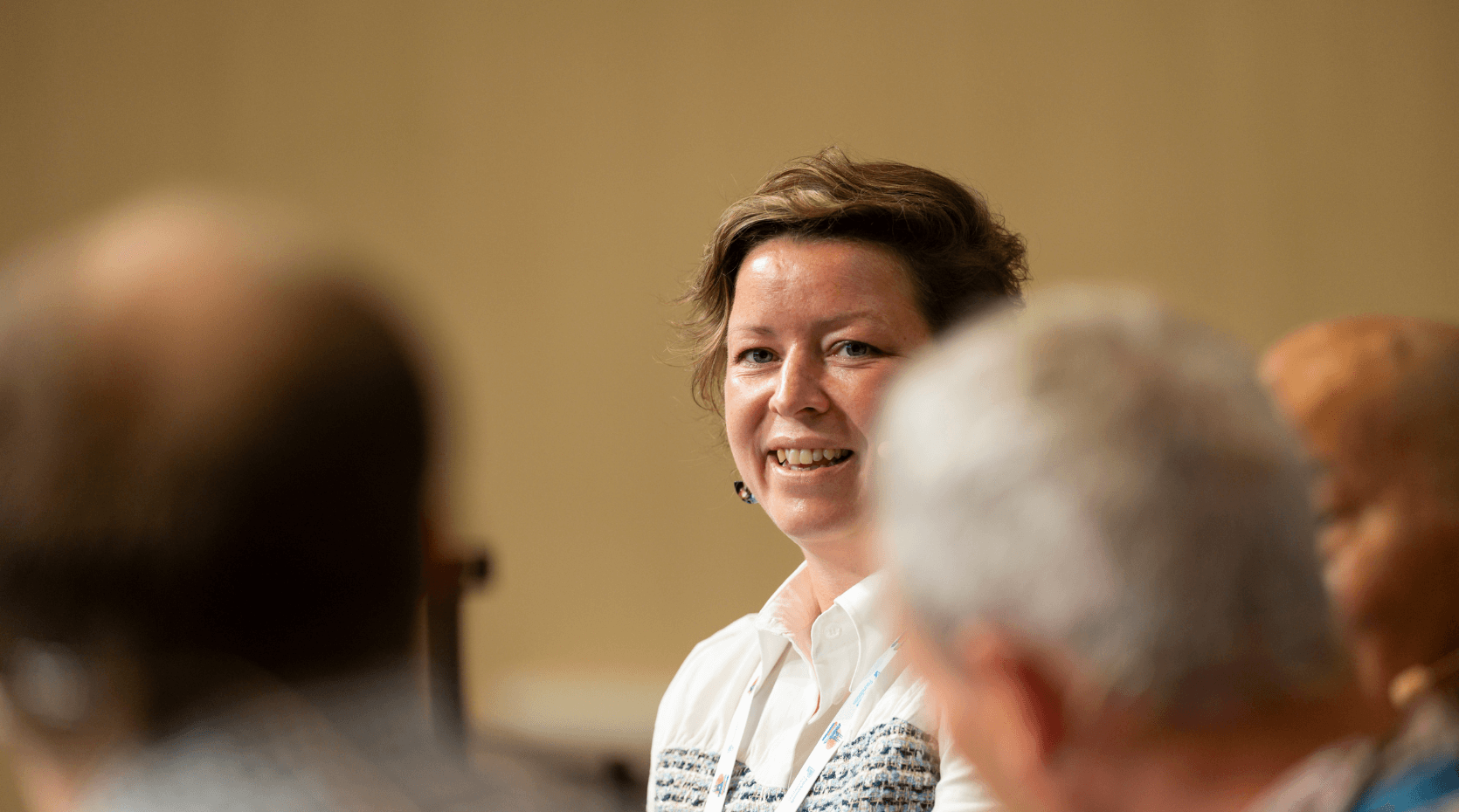
Published in Nature Medicine in January 2025, the report — titled “Using a Sex- and Gender-Informed Lens to Enhance Care in Parkinson’s Disease” — was compiled by the Women’s Brain Foundation, and co-authored by a group of ten Parkinson’s researchers from across Europe and North America, including Parkinson’s Europe President, Josefa Domingos.

Clinical differences between men and women with Parkinson’s

The paper highlights evidence of a number of stark contrasts in the symptoms and experience of men and women with Parkinson’s, including:

  • A faster progression of Parkinson’s symptoms in women, as well as a later onset of motor symptoms, and a lower mortality rate
  • How female-specific hormonal changes, for instance during menstruation and pregnancy, can make Parkinson’s symptoms worse
  • Women respond to Parkinson’s treatment differently than men. For instance, when taking levodopa, the most widely used Parkinson’s medication, women have an 80% greater risk of the medication wearing off before their next dose is due.

Social stigma

The report also shines a spotlight on important societal and cultural differences to the way women experience Parkinson’s: for example, they’re more likely to be the primary caregivers for their children, and women with Parkinson’s are less likely to receive care support from their partner or friends.

The paper further argues that women of colour are even more affected: not only do they struggle to come to terms with having a condition which has an incorrect public perception of mainly affecting elderly white men, in the case of black women in the USA, they have “the longest time to diagnosis and the longest time for access to care”.

Recommendations

Several recommendations are listed in the report, including using gender-neutral language (such as “journey partner” rather than caregiver), ensuring more women are included in clinical trials, and promoting workplace policies that take into consideration the additional challenges that many women with Parkinson’s face. The authors also recommend taking urgent measures to regulate neurotoxic substances, which most commonly affect women of colour in low and middle income countries.

The report “highlights the unique perspective of women living with Parkinson’s”, authors say

Doctor Antonella Santuccione-Chadha, President of Women’s Brain Foundation and co-lead author of the report, explains:

“The patient’s voice is a core value and asset at the heart of the work we do at the Women’s Brain Foundation since its inception. This work, supported by Abbvie, highlights the unique perspective of women living with Parkinson’s Disease—addressing their distinct needs related to hormonal cycle fluctuations, specific dosage titration for optimized symptom management, and reducing side effects from treatments. These critical aspects are not yet part of clinical guidelines, but we are relentlessly working to fill this gap, educating stakeholders to meet this urgent unmet need, potentially transforming lives and reducing healthcare costs.”

Doctor Roberta Marongiu, co-lead author, Women’s Brain Foundation board member and Professor of Genetics and Neuroscience at New York’s Weill Cornell University, added:

“The innovation of this work lies in its patient-centric approach, and originated from the joint effort of an international team of patients, caregivers, policymakers, scientists, and healthcare professionals to address the unmet needs of women with PD.

This paper underscores the urgent need to strengthen research on sex/gender for understanding disparities in PD, and to provide inclusive and tailored care frameworks that accounts for the interplay between sex/gender and societal factors. Addressing these disparities will improve outcomes and quality of life for all patients, particularly women and underserved groups.”

Parkinson’s Europe President, Josefa Domingos, explains how this report aims to improve quality of life for everyone with Parkinson’s:

“As we uncover the significant disparities in symptoms, treatment responses, and disease progression between men and women with Parkinson’s, it becomes essential to address these critical differences. With this initiative, we aim to raise collective awareness and, through the power of research, help pave the way toward a future where personalized care is not just an aspiration but a reality—ensuring a better quality of life for everyone living with Parkinson’s.”

Read the report in full on Nature Medicine, and find out more about women and Parkinson’s.

Parkinson’s UK announces new logo, brand refresh and “community-first” strategy

New approach will put “those living with the condition at the heart of its work”, says the charity
15 January 2025 Verity Willcocks
News

The charity Parkinson’s UK has this week announced a new “community-first” strategy, as well as a new logo and refreshed brand identity to reflect this.

Explaining its fresh approach, a statement from the charity said: “This means keeping those living with the condition at the heart of its work, as well as those giving them care and support.”

The new strategy is the outcome of a consultation with more than a thousand of the 153,000 people living with Parkinson’s in the UK. Through speaking to this group, the charity identified that “living well with the condition right now is their top priority” in the wake of the UK’s cost of living crisis and the pandemic, which had “huge impacts” on their health.

Parkinson's UK new tagline "Pushing for better, right here, right now" which they announced alongside new logo

Accompanying the new approach is a refreshed brand identity complete with a new strapline, ‘For every Parkinson’s journey’, as well as a new Parkinson’s UK logo. The logo incorporates the tulip, which became the international symbol of Parkinson’s after Dutch horticulturalist and person with Parkinson’s J.W.S. Van der Wereld named a tulip variety after Dr James Parkinson back in 1980.

Parkinson’s UK said that the new design identity aims to be “more visible, accessible and relevant to everyone affected”, to reflect the charity’s commitment to “being there for everyone, no matter who they are, where they live in the UK, or at what stage their condition is.”

Caroline Rassell, Chief Executive of Parkinson’s UK, said: “For 55 years, Parkinson’s UK has provided information and support to the Parkinson’s community. … Now we have 153,000 people and their loved ones looking to us for expert advice and help navigating daily life. Updating our brand makes us more accessible and relevant to them, as well as scientists and health and social care professionals. Including everyone in our work means we can continue to offer the right services and ultimately find better treatments.”

Juliet Tizzard, Director of External Relations at Parkinson’s UK, added:

“We’re so grateful to the many people with Parkinson’s for helping to shape our refreshed brand. Their insights and influence give us the confidence that we are doing the right thing: building a strong, inclusive and supportive community, relentless in our mission to have a positive impact on the lives of people with Parkinson’s, today.”

Parkinson’s UK campaigns for improved health and care, funds research into groundbreaking new treatments and runs support services for people with Parkinson’s across the UK.

Read more news and updates about Parkinson’s UK on Parkinson’s Life

Michael J Fox receives Medal of Freedom from President Biden

At a ceremony at The White House on 4 January, Michael J Fox was among 19 new recipients of the Presidential Medal of Freedom.
06 January 2025 Laura Vickers-Green
News

Michael J Fox was among 19 new recipients of the Presidential Medal of Freedom at a White House ceremony earlier this week.

US President Joe Biden awarded the medals, which are the country’s highest civilian honour, presented to individuals who have made exemplary contributions to the prosperity, values, or security of the United States.

During a ceremony on Saturday 4 January 2025, Michael J Fox received enthusiastic cheers as he was presented with his medal, with a White House representative reading the following statement about his notable contributions to America:

The Presidential Medal of Freedom is awarded to Michael J Fox… one of the most beloved actors of our time. With remarkable wit and charm, he introduced iconic characters to the centre of American culture, from Alex P Keaton to Marty McFly, and more.

With undaunted resilience and optimism, he also warms hearts and captivates audiences as a fearless advocate for those with Parkinson’s, channeling his endearing personality to advance treatments, move us closer to a cure, and remind us of the power of American possibilities.

Watch a video of Michael J Fox receiving his medal from President Biden below:

Fox released the following statement on the website of the Michael J Fox Foundation:

“Receiving the Presidential Medal of Freedom is humbling, an honor I could never have anticipated. I’m grateful for this recognition, which I share with the patients, families and researchers who have brought us closer than ever to ending Parkinson’s disease once and for all.”

Fox established the Michael J Fox Foundation in 2000, after disclosing his Parkinson’s diagnosis in 1991, and the Foundation has since raised more than $2 billion for Parkinson’s research projects. This included the significant breakthrough of discovering a Parkinson’s biomarker in 2023, and collaborating with the Critical Path for Parkinson’s Consortium (including representatives from Parkinson’s Europe) on a new staging framework for Parkinson’s, which was launched in early 2024.

This isn’t the first time Michael J Fox has been honoured for his contributions to the global Parkinson’s community. In 2023, he received an honorary Oscar, the Jean Hersholt Humanitarian Award, for his work fighting Parkinson’s. He also won a Lifetime Achievement Award at the 2024 Media Access Awards, and was named one of Time‘s 2024 list of influential people in health.

Aside from Michael J Fox, other recipients of the Presidential Medal of Freedom in 2025 included former Secretary of State Hillary Clinton, U2 front-man Bono, actor Denzel Washington, and fashion designer Ralph Lauren.

Image credit: 358897408 | Michael Fox © Fred Duval | Dreamstime.com

3 things we want to see in 2025

Here we outline our three main hopes for the Parkinson’s community as we step into a new year
01 January 2025 Sarah Dawson
Insights

The start of a new year offers the perfect opportunity to take stock and look to the future. In 2025, Parkinson’s Europe is committed to driving change for those living with Parkinson’s.

Through campaigns for improved and more personalised care to global initiatives to empower the worldwide Parkinson’s community, here are the three areas where we’d like to see change in 2025.

1. For the EU to listen to our call to action about improving Parkinson’s care in Europe

nurse holding patient's hand

At the start of 2024, Parkinson’s Europe and AbbVie co-hosted a roundtable on the topic of care pathways for people with advanced Parkinson’s. Expert panellists from all over Europe, including movement disorder specialists, nurses, researchers, people with Parkinson’s and representatives of Parkinson’s organisations, all shared their insights around care pathways for advanced Parkinson’s. The roundtable highlighted four common areas for improvements, inspiring our Parkinson’s Europe call to action.

“The call to action is aimed at European policy makers, calling for the improvement of Parkinson’s treatment and care,” explains Francesco De Renzis, Partnership Project Manager for Parkinson’s Europe. “In 2025, we aim to use this CtA as a lobbying tool to raise awareness of these topics and push decision makers to invest more resources in supporting neurodegenerative healthcare workforces across Europe, to achieve higher standards of care for people with Parkinson’s, regardless of where they live.”

2. More real-world data to understand the bigger picture of Parkinson’s in Europe

scientist looking through microscope

While research into Parkinson’s is on-going, this year we want to see a more joined-up approach, using real-world data to effectively advocate for the Parkinson’s community.

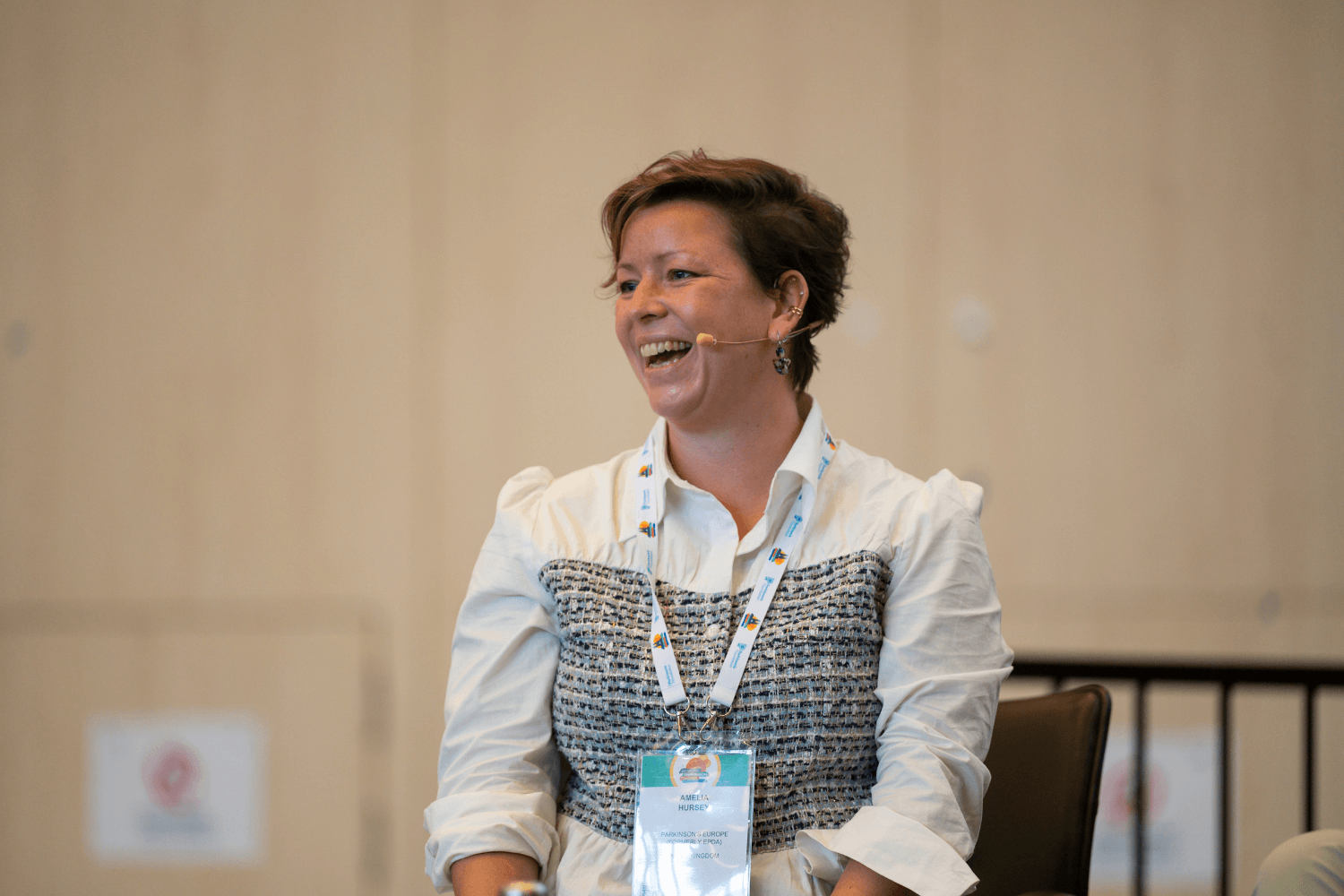
Amelia Hursey, Research Manager at Parkinson’s Europe says: “We need data to give strength to any argument we make to improve the lives of people with Parkinson’s. There are huge amounts of health and real-world Parkinson’s-related data in Europe, however it’s not all linked together. If we can harmonise the appropriate bits of data together, we can use that to engage with decision makers at all levels, helping them to understand why issues need to be addressed and how Parkinson’s impacts the European community.”

You can read about our Parkinson’s Engagement Network and what we’ve achieved in 2024 here.

3. Even more global collaboration to empower the Parkinson’s community across the world

older couple sitting on sofa smiling

If we really want to drive change, we need to do it together, At Parkinson’s Europe we recognise how crucial it is to work with the global experts and those engaged in Parkinson’s worldwide, to be able to make impactful progress. 2024 has seen some amazing initiatives relating to Parkinson’s across the globe, the most recent of which being the National Plan to End Parkinson’s in the USA.

Parkinson’s Europe Research Manager, Amelia Hursey, believes we need to keep building on this momentum: “We joined the Critical Path for Parkinson’s initiative in 2023, and from this became a member of the NeuroImpact Coalition in 2024, which is an initiative led by patient organisations across the globe. Being part of this work enables us to make sure that the voice of the European Parkinson’s community is represented and listened to. We know the needs and challenges of each Parkinson’s community in the countries of Europe are distinct and unique, therefore needing to be recognised in the new developments that are happening.”

What are your hopes for 2025? Let us know in the comments!

Year in Review: 10 highlights from 2024

As the year wraps up, we take a moment to reflect on the highlights of 2024 with our Parkinson's Life Year in Review
18 December 2024 Sarah Dawson
News

It’s been a massive year for the Parkinson’s community, from the awareness-raising World Parkinson’s Day 2024 and innovative gender-specific studies to the epic sporting challenges undertaken by those living with Parkinson’s.

Here are 10 of our favourite and most-read stories from Parkinson’s Life in 2024

1. A new staging framework for Parkinson’s

In January a groundbreaking new Parkinson’s framework was published in a paper in The Lancet, after being developed by the Critical Path for Parkinson’s Consortium (CPP).

Hailed as a “major step” in Parkinson’s research, the new framework aims to help define and stage Parkinson’s based on biology, rather than symptoms. Using two medical tests in clinical trials – which you can read more about here – the proposal looks to help identify Parkinson’s in people even before symptoms appear.

Similar to the Predict-PD research project – which this year surpassed its goal to recruit 10,000 participants – being able to begin clinical trials in people with Parkinson’s who aren’t even showing physical symptoms is part of the ongoing effort to develop the scientific knowledge to help identity, treat and ultimately cure Parkinson’s.

2. Firsts for women in Parkinson’s

Year in review - firsts for women with Parkinson's
Richelle Flanagan (centre) with Professor Aideen Sullivan (left) and Research fellow Lucy Collins-Stack of the University College Cork

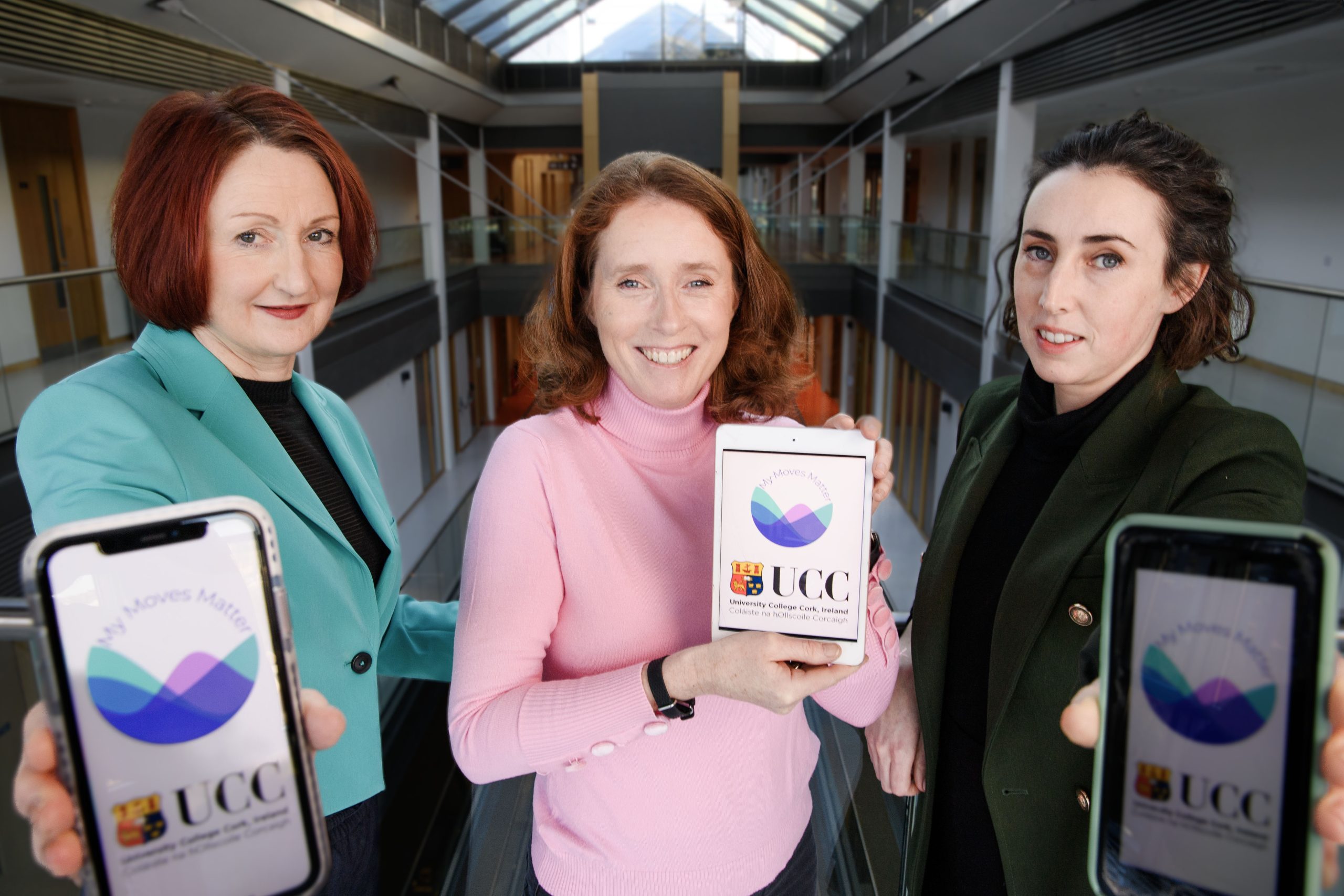
2024 saw the launch of innovative studies and initiatives championing tailored research into the ways Parkinson’s uniquely affects women. In March we spoke with Richelle Flanagan, a woman with Parkinson’s and inventor of the Parkinson’s self-care app My Moves Matter, who collaborated on Ireland’s University College Cork’s study investigating hormonal fluctuation in women with Parkinson’s.

More recently, we covered the news of a landmark global initiative, Gender Equitable Medicines for Parkinson’s Disease, working to advance actionable research on how Parkinson’s affects women. All positive steps towards a more equitable approach to detection, disease management and therapies for those living with Parkinson’s.

3. A new website for Parkinson’s Europe

A screenshot of the new Parkinson's Europe website showing the navigation bar and the interactive map

March saw the launch of our new and improved Parkinson’s Europe website. From an easy-to-navigate homepage to exclusive member area for Parkinson’s Europe Member Organisations to access and share resources, everything was designed to help people with Parkinson’s, healthcare professionals and Parkinson’s organisations find the information they need easily.

Parkinson’s Life – Parkinson’s Europe’s online magazine – was added to the main website and continues to be a go-to hub for the Parkinson’s community. The revamped website also saw the inclusion of an interactive Parkinson’s map, where users can discover local Parkinson’s groups and hear about important events.

4. World Parkinson’s Day 2024

World Parkinson's Day Year in review

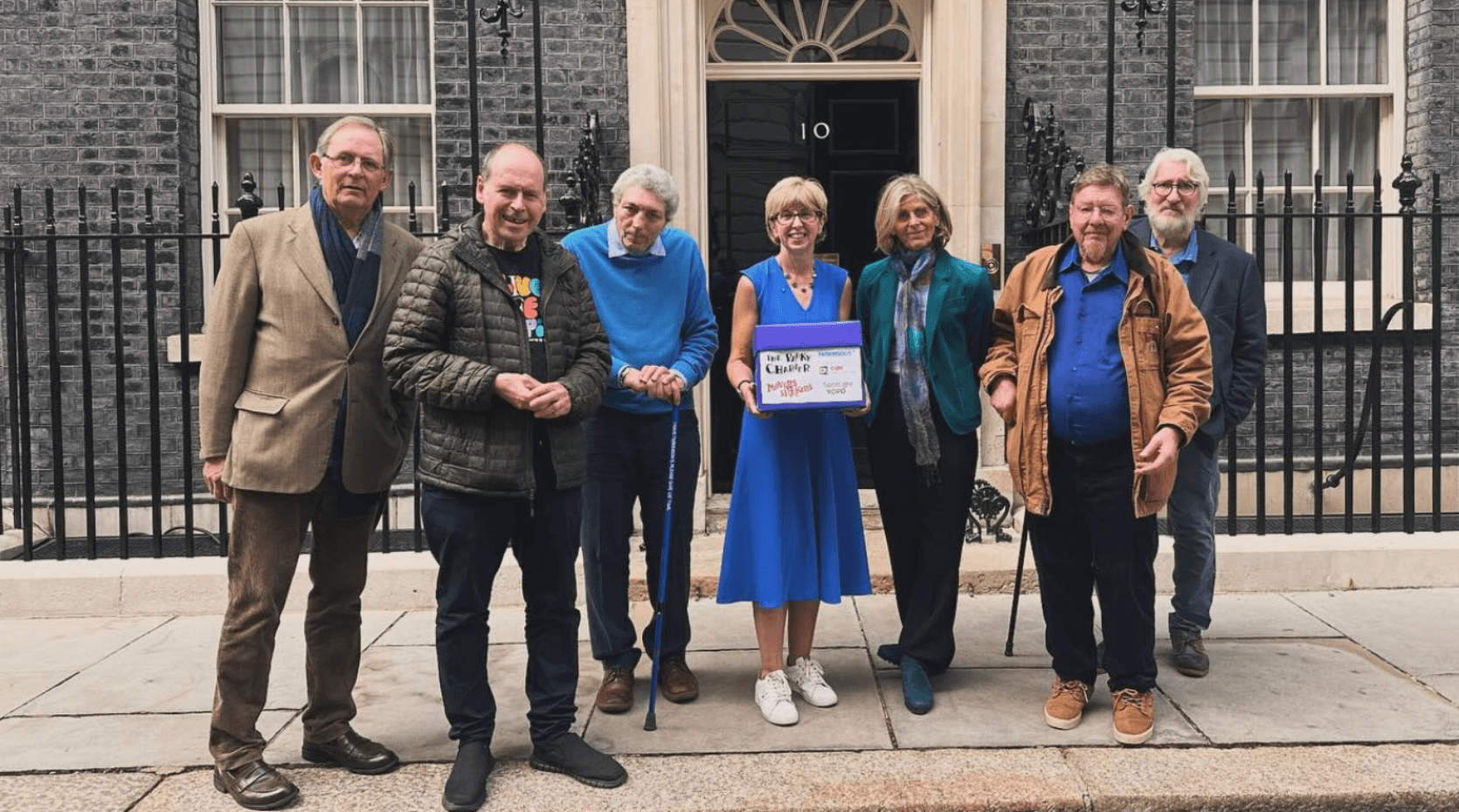
Across the world, the Parkinson’s community came together to make World Parkinson’s Day 2024 one to remember. Global landmarks were lit up to mark the occasion and raise awareness, Parkinson’s Europe launched their Summer of Sport and the podcast legends The Movers and Shakers presented their ‘Parky Charter’ to the UK Prime Minister at 10 Downing Street. It was an impressive world-wide effort to raise funds and awareness on all things Parkinson’s related.

5. National Plan to End Parkinson’s Act in the US

Congress has passed the National Plan to End Parkinson's Act in the USA

June saw the National Plan to End Parkinson’s Act passed unanimously by the US Senate. This historic bill is the USA’s first-ever federal legislation dedicated to ending Parkinson’s disease, including things like increasing research funding, improving early diagnosis, and enhancing public awareness of Parkinson’s.

The news was welcomed enthusiastically by the Parkinson’s community across America, leaving the question: how can Europe learn from the National Plan to End Parkinson’s Act, and bring about something similar for the European Parkinson’s community?

6. A person with Parkinson’s was an Olympic torch-bearer

Anthony Desjardins, Olympic torch bearer for Paris 2024

We all know that representation matters, especially when the eyes of the world are watching. In May this year, 41-year-old Anthony Desjardins – diagnosed with Parkinson’s in 2021 – was chosen to carry the Paris 2024 Olympic Flame through his home city of Montpellier, France.
With over 10,000 followers, Anthony uses his social media accounts to talk about the benefits of sports and exercise for Parkinson’s.

Describing representing Parkinson’s on Paris 2024’s world stage as “an honour” Anthony said: “ I’m as happy to carry the torch for myself as I am to carry it for the entire Parkinson’s community.”

7. People with Parkinson’s did some amazing sporting challenges

A photo of Gary Shaughnessy during one of his many Parkinson's exercise challenges

Ready to make 2025 the year you get more active? Take inspiration from Parkinson’s Europe Summer of Sport, and these people with Parkinson’s who are pushing themselves to their limits by taking on incredible exercise challenges.

From the World’s Toughest Row race to epic 450km bike rides, we spoke to 12 men and women who’ve really gone the extra mile for Parkinson’s. Just four days after World Parkinson’s Day 2024, Frenchmen Bertrand Delhom became the first person with Parkinson’s to sail around the world and we shared his story here.

8. Beech Band invention

Carl Beech and Nick Whiteley with their prototype of the Beech Band

Diagnosed with Young-Onset Parkinson’s just last year, 51-year-old Carl Beech has already made waves in the Parkinson’s community with the Beech Band – a clever gadget to help control speech issues. The wearable wrist band device replicates the tapping technique he used to help him with his Parkinson’s related stammer.
“I found out that not only a beat but tapping myself had a profound impact,” Carl explained. “I realised the comforting and distracting nature of it took my mind off the problem.” He set about designing an accessible device that can be used by those with fine motor control issues, and the Beech Band was born. Now in the manufacturing process, Carl hopes the first batch of Beech Bands will be available to buy early 2025. Watch this space!

9. We helped launch a new Parkinson’s book

Front cover image of new book What Parkinson's Feels Like

Artist Barbara Salsberg Mathews was inspired to use her talents to give a voice to the Parkinson’s community this year. Using descriptions written by people with Parkinson’s about what it’s like to live with the condition, Barbara has transformed their words into emotive illustrations for a new e-book, What Parkinson’s Feels Like.

Barbara hopes the e-book will build empathy and raise awareness about Parkinson’s. She says: “Reading these descriptions reminded me that I’m not alone. I could never have created this booklet without the descriptions of all those who shared their lived experiences with Parkinson’s.”

You can download the book for free here in either English, Spanish, French, Italian, German, Ukrainian or Russian. There’s also the option to donate to one of three Parkinson’s charities, including Parkinson’s Europe.

10. Improving care for people with advanced Parkinson’s

A person with advanced Parkinson's discussing care with a medical professional

At the start of the year Parkinson’s Europe and AbbVie held a roundtable for global experts in the field to talk about how to improve care for people in the advanced stages of Parkinson’s.

Inadequate resources and availability of expert staff, the crucial role Parkinson’s nurses play in improving care, and how those living with advanced Parkinson’s in rural areas aren’t receiving the same level of care as those living in cities, were all topics that featured highly in our roundtable discussions. To drive change, we’re launching a petition for people to pledge to our resulting “Call to Action”, aimed at European policymakers.

What was your highlight of 2024? Share with us on your social media platform of choice (search “Parkinson’s Europe” to find us).

Person with Parkinson’s is developing new drug treatment

Frenchman with Parkinson’s Guillaume Brachet is working 70 hours a week to develop a new Parkinson’s drug treatment
13 December 2024 Verity Willcocks
News

Despite having an incurable condition, many people with Parkinson’s refuse to be beaten, whether it’s taking up incredible physical feats, raising thousands in cash for research, or making huge efforts to raise awareness. But after being diagnosed with young onset Parkinson’s at just 29 years of age in 2018, Guillaume Brachet, from near Tours in France, is going one step further: he is trying to develop a new drug to treat people with Parkinson’s.

The idea came to Guillaume, who has a phD in biology and has worked as a medical biologist, a pharmacist and as an assistant lecturer, after he read a scientific paper by Leuven university.

Guillaume Brachet

“I was looking for some hope,” says Guillaume, who says he has read more than 700 scientific articles about Parkinson’s. “I was reading the scientific literature about Parkinson’s disease to gain insight into where the science was, [to find out] if there was some hope for some [new] treatment in the time frame of my life, if it was something that I wouldn’t be able to expect for the upcoming years or decades.”

Guillaume developed a theory that a combination of various existing medications might have the potential to create a disease-modifying formula for people with Parkinson’s. He then spent six months approaching pharmaceutical companies with a 60-page rationale for his theory. But after being told more research was required, Guillaume realised he needed to raise money to fund the laboratory-based research required to move the project forward.

This was the motivation behind his 2022 ‘Parkinson sur Loire’ challenge, which saw Guillaume kayak 150km along the Loire. “‘Parkinson sur Loire’ was against the flow, from the ocean, up the river, because it was a metaphor of sports against Parkinson’s,” says Guillaume.

Guillaume on his ‘Parkinson Sur Loire’ challenge in 2024

After he raised 45,000 euros during the gruelling challenge, two Marseilles-based research organisations Neuron Experts and Syncrosome matched it with another 45,000 euros of funding.

After the laboratory-based research yielded promising results in April 2023, Guillaume launched his own drug development company CXS Therapeutics five months later. A subsidiary company Sappiens is about to be launched, which will focus on the development of the potential new Parkinson’s drug. It was patented earlier this year as CXS003, and Guillaume hopes that it may be able to slow the progression of the condition.

As CEO of both companies, Guillaume works nearly 70 hours a week as he works towards phase 2 trials of CXS003 taking place next year. He hopes that if it is proved to be safe and effective, a potential new Parkinson’s treatment could be available in 2029.

Find out more about Parkinson’s research

7 new Parkinson’s books in English, Italian and Dutch

From emotive illustrated stories to fascinating memoirs and picture books for children, here are 7 new Parkinson’s book worth adding to your 2024 reading list
04 December 2024 Sarah Dawson
Advice

Building on our popular series of Parkinson’s book recommendations from spring and summer this year, we wanted to share even more suggestions for new Parkinson’s books to add to your reading list this winter.

While other roundups have featured a wide mix of books in multiple languages, including Spanish, Greek, Czech and French, these new releases are predominantly in English, with one Italian selection and one Dutch. If your language isn’t included here, do look at our original roundup which features an inclusive list of titles for much of our European audience.

As always, we’d love to hear from you. Please do keep your recommendations of new Parkinson’s books coming – either tag us on social media, or send us an email with details to [email protected]

Parkinson’s Books in multiple languages

What Parkinson's Feels Like book cover

What Parkinson’s Feels Like by Barbara Salsberg Mathews

Diagnosed with Parkinson’s in 2020, artist Barbara Salsberg Mathews was inspired to use her creative talents to give a voice to the Parkinson’s community. Collecting descriptions written by people with Parkinson’s around the globe about what it’s like to live with condition, Barbara has transformed their words into emotive and impactful illustrations. What Parkinson’s Feels Like was created to build empathy, inform and raise awareness about Parkinson’s. It’s a unique book that deserves a spot on every bookcase.

Download the book for free here in either English, Spanish, French, Italian, German, Ukranian or Russian.

Parkinson’s Books in English

Grandpa Used to Drive Big Trucks book cover

Grandpa Used to Drive Big Trucks written by Martha Nance and Steve Witebsky, illustrated by Matthew Karren

Co-written by a neurologist specialising in Parkinson’s disease and a grandfather living with it, Grandpa Used to Drive Big Trucks is a charming picture book perfect for children aged three to eight years. Packed with engaging illustrations and age-appropriate language about Parkinson’s, this heartwarming story aims to open up conversations and cover tough topics in a child-friendly way.

Buy for £19.21 on Itasca Books or Amazon (US only).

I will CURE my Parkinson's book cover

I will CURE my Parkinson’s by Lisa Bradbury

Australian wellbeing specialist Lisa Bradbury was diagnosed with young-onset Parkinson’s disease (YOPD) when she was just 48 years old. Finding her way through the complex world of medical treatments and alternative therapies, I will CURE my Parkinson’s is Lisa’s self-help guide, empowering those living with Parkinson’s to advocate for their health and make informed decisions when it comes to treatment – both scientific and holistic.

Buy for £6.11 on Amazon.

Movement disorders volume 8 book cover

Movement Disorders in Neurology and Systemic Disorders (Volume 8) edited by Pramod Kumar Pal and Ali Shalash

The latest release in the International Review of Movement Disorders series focuses on the ever-advancing device-aided therapies in Parkinson’s disease. It’s a comprehensive read at 450 pages and features a collection of chapters written by global experts in the field. Bringing together specialists in neurology and Parkinson’s from around the world, it shines a light on the advances being made in Parkinson’s therapies.

Buy for £178 on WH Smith or Amazon.

three Nines Fine book cover

Three Nines Fine: A Journey with Brain Health by Alanah Rochelle Knibb and Omotola Thomas

This powerful and beautifully illustrated graphic novel tells the story of Asabi, a woman diagnosed with YOPD, who decides to move her family from Africa to the UK. Struggling with her diagnosis, the move and motherhood, she turns to her aunt, who is living with Lewy body dementia, to find answers and support. Inspired by true events, and supported by Alzheimer’s Research UK’s Inspire Fund, this book offers a fresh and insightful perspective on the connection between Parkinson’s and Lewy body dementia, as well as sharing everyday ways we can improve our own brain health.

Buy for £12 on Amazon.

Parkinson’s Books in Italian

Raccontare e il mio mestiere book cover
Raccontare è il Mio Mestiere by Giangi Milesi

As the President of Parkinson Italia, Giangi Milesi gives an authentic insight into his life and career as a leading figure in the Italian NGO sector. This fascinating memoir – translated as ‘Telling is My Job’ – is an inspiring read into the challenges of a life spent championing the third sector, and the search for meaning in a complex, modern world.

Buy for €18 on Scatole Parlanti.

Parkinson’s Books in Dutch

Leven Met Parkinson book


Leven Met Parkinson by Frank Schopman

Frank Schopman’s candid account of living with Parkinson’s is uplifting, moving and deeply personal. From his diagnosis nine years ago at 52 (after both his mother and brother were diagnosed), to having to leave his job as a teacher due to the symptoms, Leven Met Parkinson showcases Schopman’s positive spirit as he focusses ‘not on what Parkinson’s does to you, but what do you do with Parkinson’s.’

Buy for €16.99 on Uitgeverij Abessijn.

If you’ve got any recommendations of new Parkinson’s books, email us at [email protected]