Find advice on a range of topics to help you live life to the full, from diet and exercise to travel, work, sleep, relationships and leisure activities.
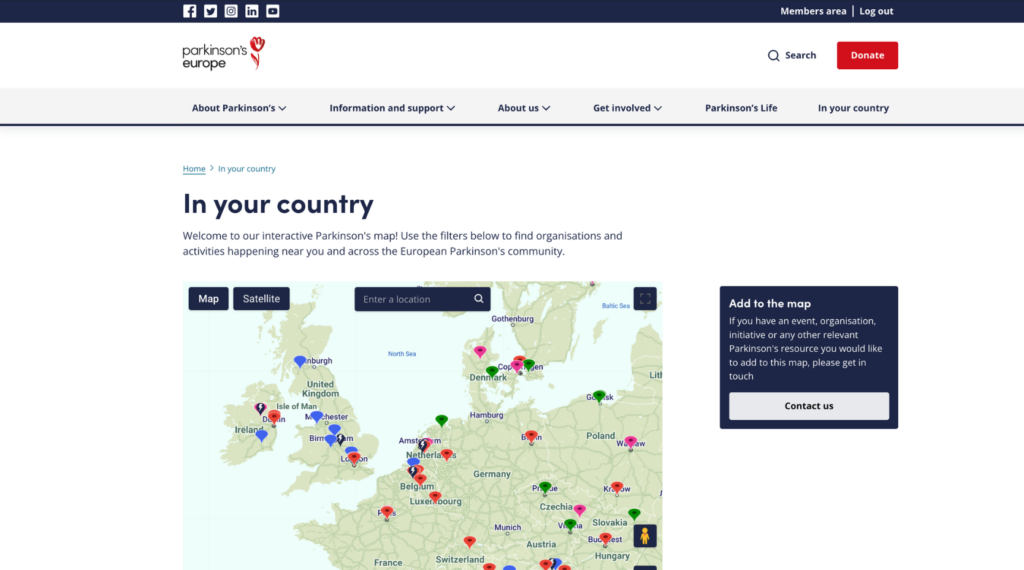
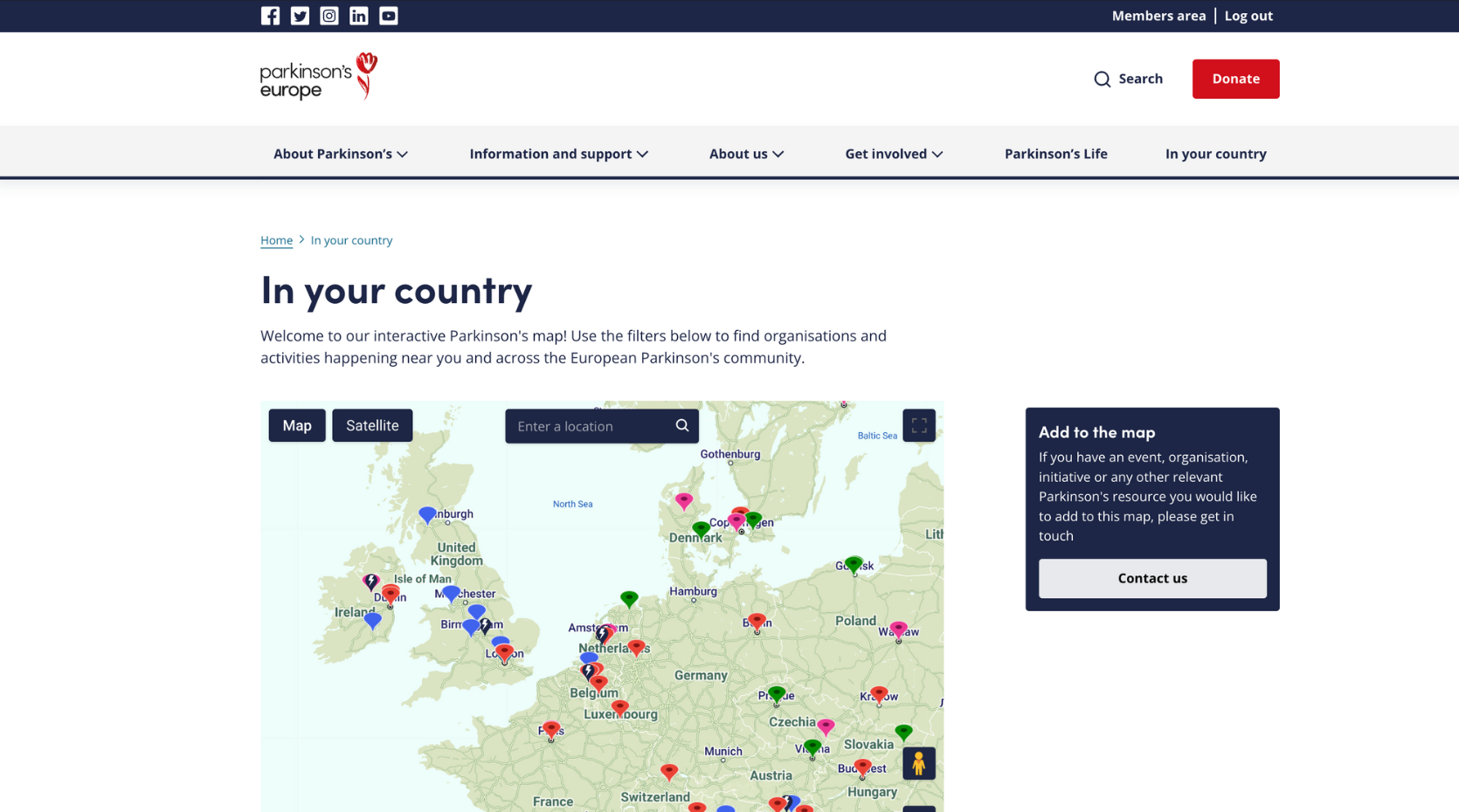
Our interactive Parkinson's map shows a range of resources across Europe, from member organisations to events, activity groups to research and campaigns
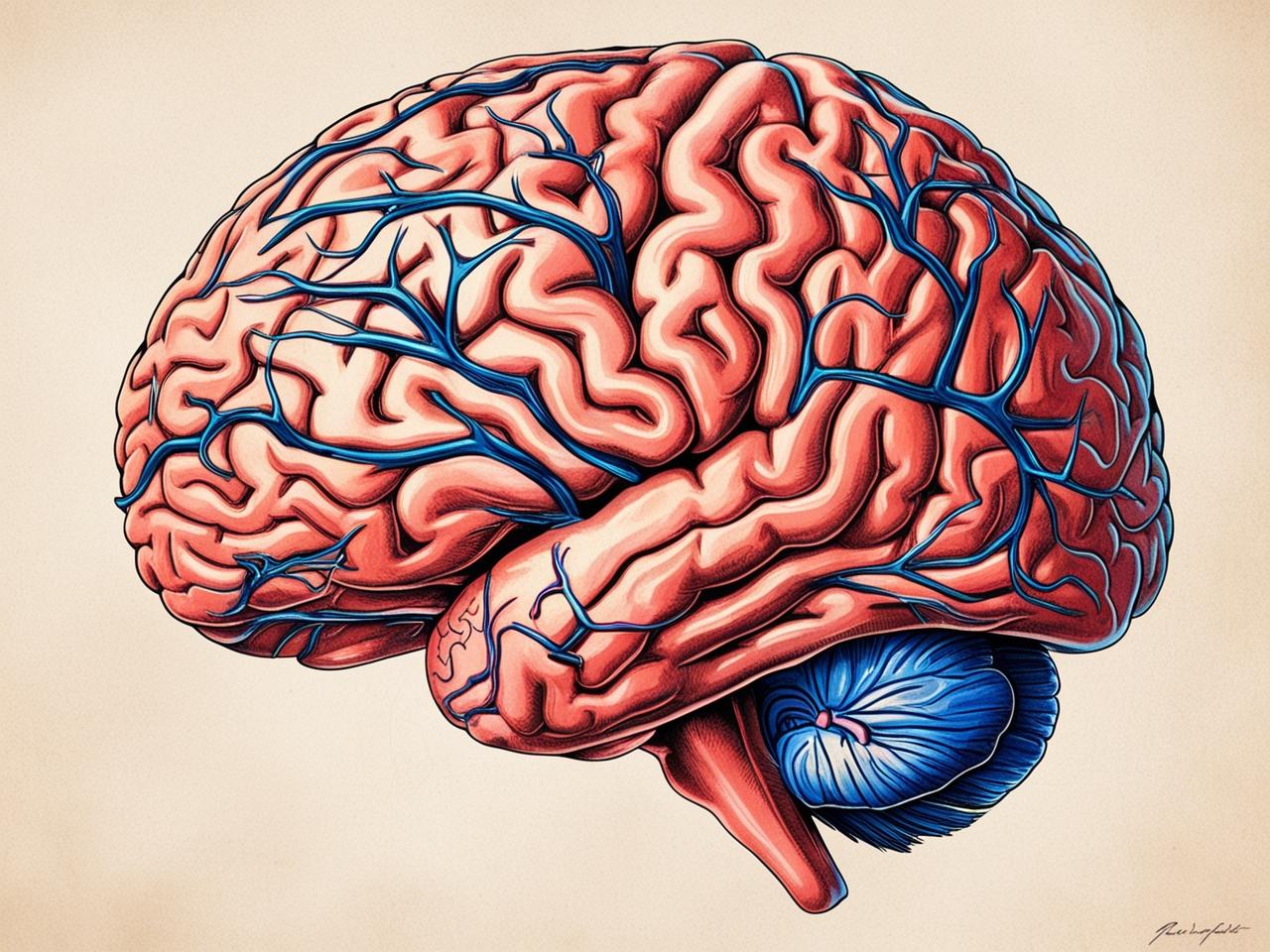
TwinBrain: what new ‘brain in motion’ technology can reveal about Parkinson’s
How ground-breaking medical imaging is helping EU-funded researchers monitor brain activity during movement – and what this could mean for diagnosing and treating Parkinson’s
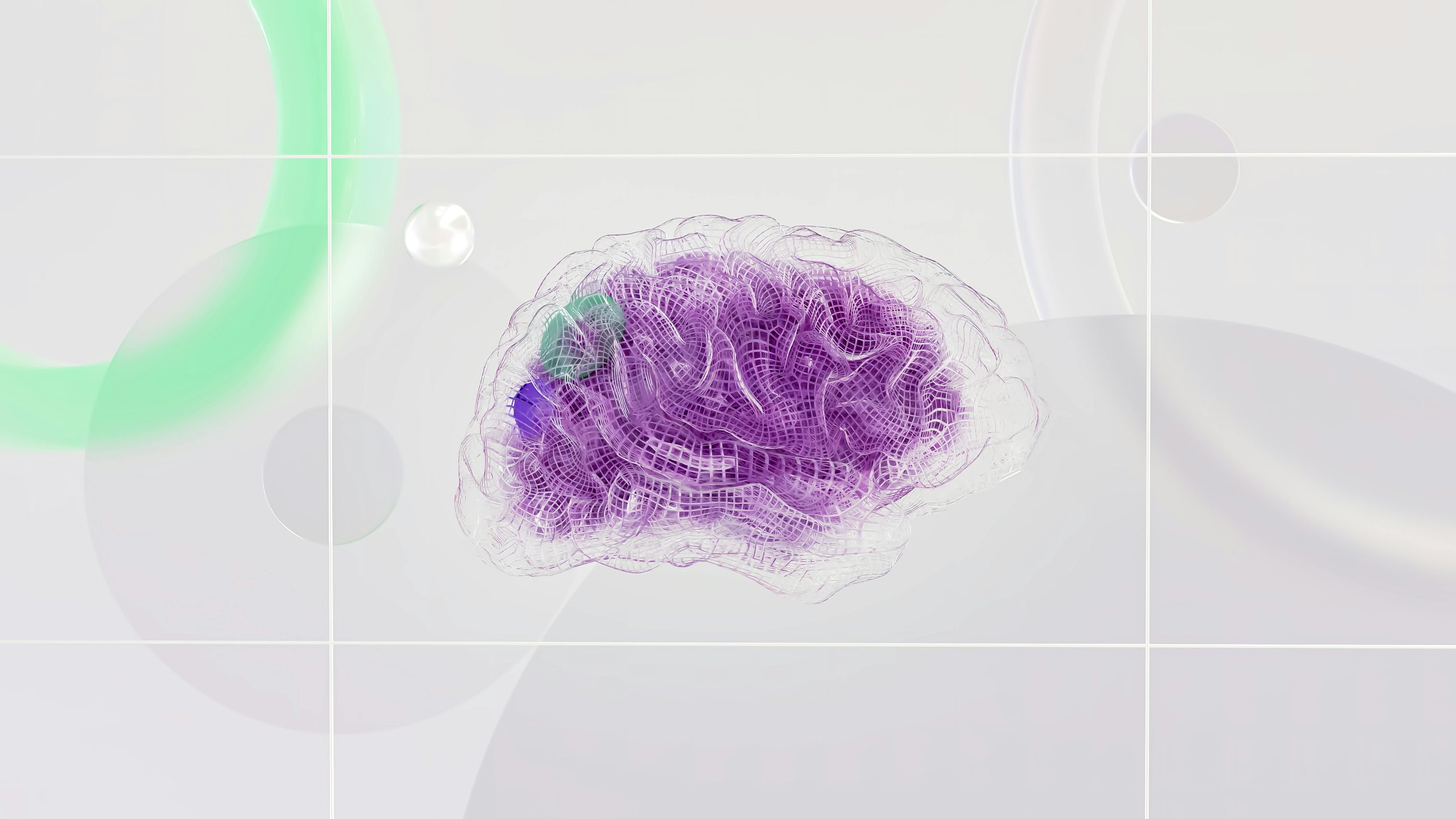
Neuroimaging has made huge strides in trying to demystify the human brain, but there’s still so much to discover. While most studies have been conducted under stationary conditions – usually with the participants lying down – a three-year research initiative is taking a more dynamic approach. The EU-funded TwinBrain – ‘Twinning the brain with machine learning for neuro-muscular efficiency’ – project, coordinated by Slovenian scientists, has developed game-changing technology to monitor a patient’s brain activity while they move around their environment.
The brain is a powerful multitasker, working hard behind the scenes while we all get on with our daily lives. But it’s exactly this type of day-to-day brain activity which TwinBrain is keen to explore further. Investigating what is going on in the brain as we walk, balance or run has been a big challenge for neuroscientists. However, innovative new technology developed by the TwinBrain project now makes it possible to monitor new areas of the brain while in movement.
The brain in motion
Led by Dr Uroš Marušič, senior research associate at the Science and Research Centre in Koper, Slovenia, and head of the Slovenian Mobile Brain/Body Imaging Lab – SloMoBIL, the TwinBrain research has been studying the brain during everyday activities, with the hope of picking up the early signs of disorders that affect brain-to-body coordination, like Parkinson’s.
The initiative has been a global collaboration, bringing together researchers from the Technical University of Berlin in Germany, the University of Trieste in Italy and the University of Geneva in Switzerland.
Together they have developed cutting-edge technology called mobile brain/body imaging (MoBI). This advanced imaging allows specialists to monitor the brain and body movement simultaneously, making it possible to spot any signs of neurological issues and – crucially – start treatments earlier.
The MoBI technology, developed in 2021 in Berlin, combines electroencephalogram (EEG) technology, a test that measures electrical activity in the brain, with electromyography (EMG) which measures muscle response or electrical activity in response to a nerve’s stimulation of the muscle. Simply put by Dr Marušič, “We can now measure what is going on in the brain while you are walking, running, or doing other types of physical or mental activity.”
As part of the TwinBrain initiative, this MoBI technology was transferred from Germany to Slovenia, while neurologists and researchers from Italy and Switzerland have further enhanced its performance.
What this means for Parkinson’s
The TwinBrain initiative is focused on making strides in the diagnosis and treatment of complex neurological conditions that affect movement, including Parkinson’s.
Speaking to Horizon – the EU Research and Innovation Magazine – Dr. Marušič explains: “In early-stage Parkinson’s, behind the scenes, the brain is compensating for balance and movement deficiencies. This can lead to a person tripping or falling.” The hope is that MoBI will offer a more comprehensive look at exactly what is going on in the brain during this ‘multi-task’.
Paolo Manganotti, a professor of neurology at the University of Trieste, was involved in the recruitment and testing of volunteers for the TwinBrain study, with 57 participants taking part in MoBI testing since 2021. Manganotti found that participants were very willing to take part to “help improve outcomes not only for themselves, but also for future patients.”
Speaking to Horizon magazine, Paolo Manganotti said: “TwinBrain offers groundbreaking insights for clinical practice. By integrating the latest technology, we can revolutionise the diagnosis and monitoring of Parkinson’s disease within a few years, increasing patient satisfaction and their quality of life.”
Looking to the future
Dr. Marušič is keen to continue advancing the MoBI technology with on-going research though the TBrainBoost project and new research partners from across Europe.
Ultimately, the aim is for the TwinBrain initiative to result in earlier and more advanced treatment with people living with Parkinson’s and other neurological disorders.
For Dr Marušič this is all about personalised healthcare. Speaking to Horizon magazine, he said, “I want patients to be able to come to one place to address all issues at the same time. Personalised centres offering diagnostics and treatments tailored to your needs – one place that does it all.”
Amelia Hursey, Research Manager for Parkinson’s Europe, is also keen to see how this new technology and research can be used to help with early diagnosis, adding: “Any new technological development that may help us to detect Parkinson’s early is exciting. We hope that the research being done to see if these measures can be used for Parkinson’s as a supportive biomarker are successful.”
To find out more about TwinBrain visit the project website here.
Researchers in South Korea have found that people with “body-first” Parkinson’s may experience faster symptom progression than those with “brain-first”...
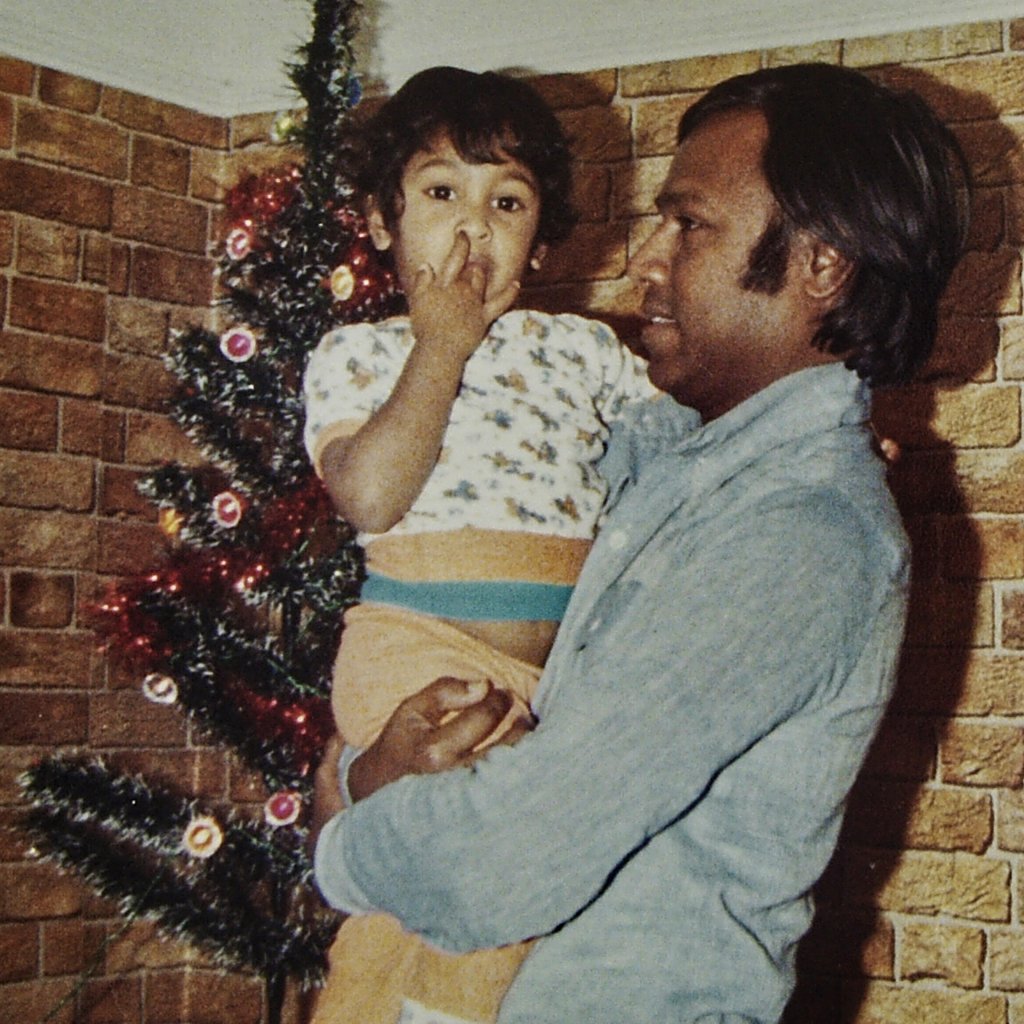
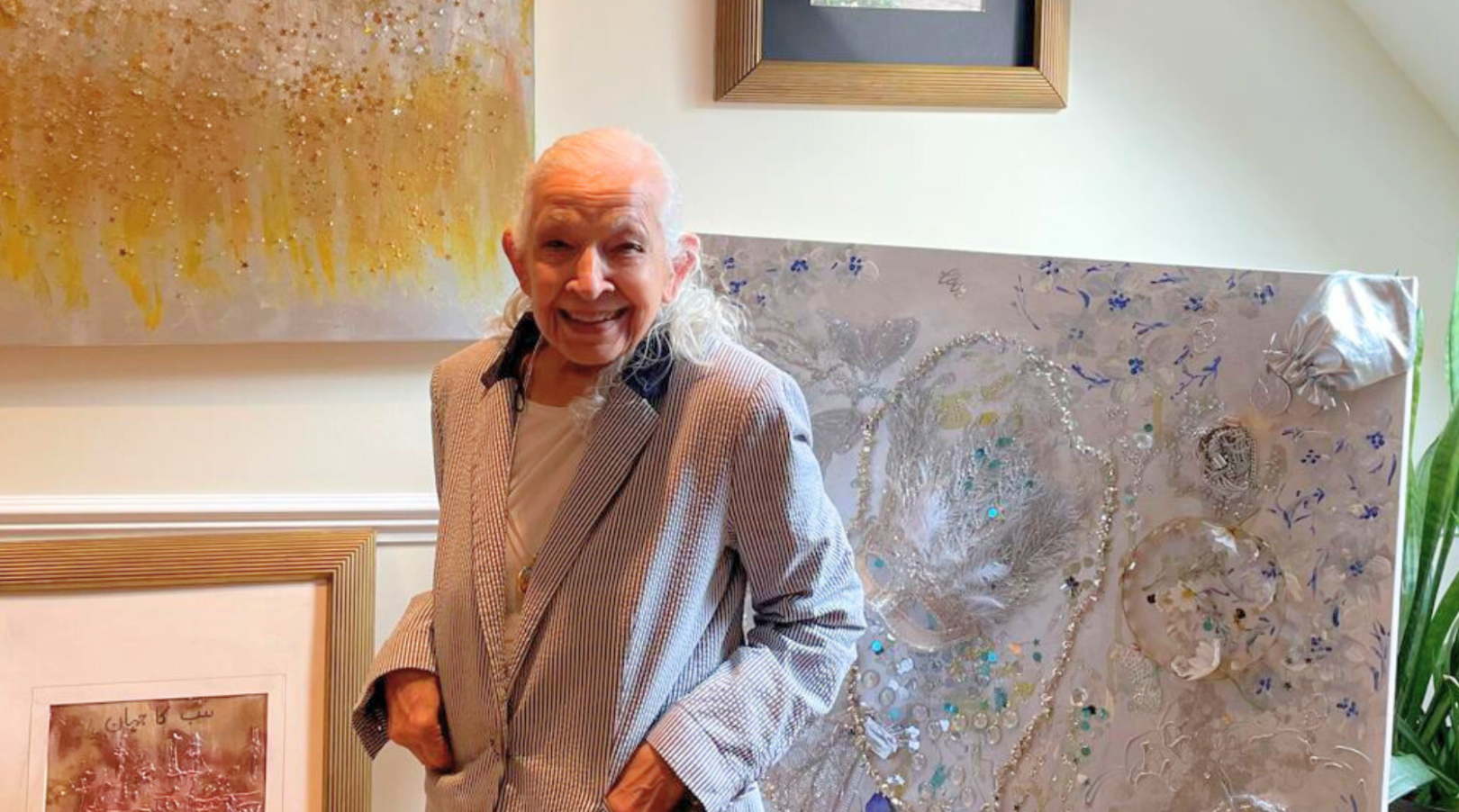
“So what if I’ve got Parkinson’s?” Kanti Khanna says was her first thought after being diagnosed with Parkinson’s 16 years ago, at the age of 64. Kanti has lived in Birmingham since 1968, when she travelled to the UK for the first time as a newly-wed Indian bride.
“You might as well have told me I’d got the flu. I wouldn’t have reacted differently,” says Kanti. “I’d already had tremors in my left hand for a couple of years. Something I had chosen not to think about until it got to a point when my family and friends insisted that I see my GP.”
When the diagnosis was made, Kanti says, “Those around me made it out to be a big deal, they were upset. I chose to not dwell on the implications.”
“Whatever comes, goes,” is a Hindu philosophy that may be applied to the cycle of life and also to situations, somewhat on the lines of “this too shall pass” or “nothing lasts forever.”
Kanti says this philosophy helped her see Parkinson’s as “just another situation that is as impermanent as the body.”
“I wanted to be invincible, to not be bothered in the mind because that’s where the negativity starts—the fear, the self-pity or the depression. We’re all going to face some obstacles in life. What matters is how you face them.”
Kanti faced her obstacles by coming closer to God, she says. “I’d been meditating for decades before my Parkinson’s diagnosis but the condition deepened my connection with the Divine.”
One day while sitting on the top floor of a double-decker bus, Kanti remembers drawing a fire on her iPad. “I had been thinking about the concept of ‘the fire of meditation’, in the sense that meditation is a tool to introspect and change deep-seated habits.”
Doodling on her iPad and taking photographs of flowers were two fascinations that Kanti kept up with even after her Parkinson’s diagnosis, driven by her innate love for the art of presentation.
“I have always been attracted by the art of presentation,” she says. “I taught cookery in the eighties, and would have demonstrations of Indian cooking at home for groups of 12-20 people. The elements of design in food presentation and flower arrangements is something I enjoy. It’s a creative hobby.”
That experience drew Kanti to art when in 2015, she was “looking for something to fill my life and to get away from the isolation that sometimes hit me,” she says. “By then I’d experienced the pitiful looks, the ‘what-have-you-done-to-get-Parkinson’s’ looks, and I believe, I had held up pretty well against the odds.”
But still, sometimes, I had this nagging thought of proving myself.
“I decided to try my hand at painting, and that worked for me from the word go,” she says. “The beauty is I would get fully immersed in the colours and the form, it was the perfect release. While I was painting, the tremors ceased. And I could be so creative.”
Flowers are a recurring theme in Kanti’s art
At the outset, flowers were a recurring theme in Kanti’s art but she became bolder after a friend who is an art consultant once remarked on seeing one of her paintings: “I would pay Pounds 400 for that.”
“I had never thought of selling my work,” says Kanti. “I was just painting for the love of it. But the fact that someone put a value to my work gave me a boost.”
Kanti gradually switched to themes associated with her interest in spirituality and meditation.
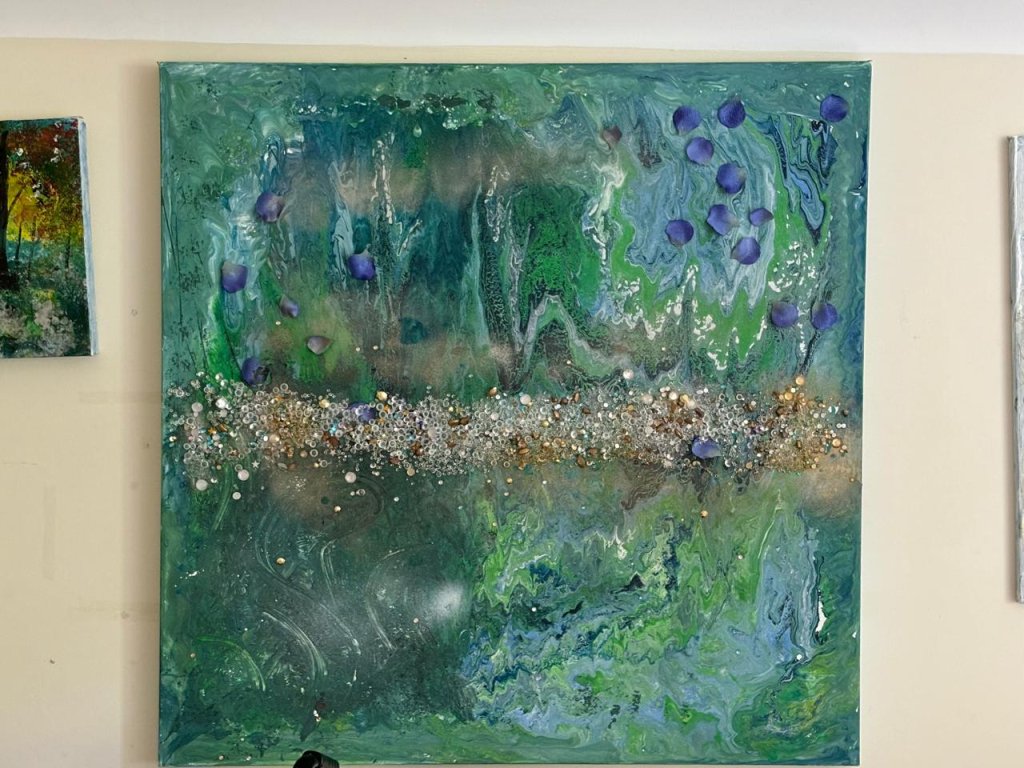
“My art looks abstract but it is actually themed on my understanding of life,” she says. “I believe the soul is like a sparkling point of energy, a star, if you will; that’s why you see a lot of use of jewels and stones and glitter in my art.”
“I believe the soul is like a sparkling point of energy, a star, if you will; that’s why you see a lot of use of jewels and stones and glitter in my art.”
“Many of my paintings are representations of the brotherhood of souls, or the home of souls, you could say. I am also attracted to trees, from the concept of the ‘tree of life’.”
Kanti’s work brings to life the walls of her home in Birmingham, UK. But with no plans to sell her work, her husband and she soon ran out of place to showcase her best effort. “I presented a few paintings to friends and family. Once when a friend was decorating a home, she asked for a few pieces, and we agreed that she would pay the cost of the materials.”
Another of Kanti’s textured, jewel-adorned paintings
Kanti remembers a time she left home to visit a meditation centre without her purse. “Forgetfulness and falls were two downsides I had to learn to contend with,” she says. “I realised I had no money when the ticket collector came round. He knew me well, and he knew I had Parkinson’s. Not just he, all the regulars on the bus knew of my condition. But that didn’t help. I needed a ticket. So I asked a woman seated near me, a regular, if I could borrow a pound. Of course she was happy to help.”
“The next time I boarded the bus, I had a painting for her.”
“Yes, she loved it. And yes, such moments reaffirm my belief that Parkinson’s isn’t a constraint to living a full life.”
Parkinson’s and women: new global initiative to explore unique impact
Critical Path Institute announce a landmark initiative, Gender Equitable Medicines for Parkinson’s Disease, dedicated to advancing actionable research on how Parkinson’s affects women
Non-profit Critical Path Institute (C-Path) plans to focus on a long-overlooked area of research – the different ways Parkinson’s uniquely affects women and individuals across the sex and gender spectrum.
Since its launch in 2005, the independent, non-profit has pioneered advancing better treatments and drug development. The Gender Equitable Medicines for Parkinson’s Disease (GEM-PD) initiative will use diverse data and innovative technologies, including artificial intelligence and digital health technologies, to help accelerate the development of more personalised treatments.
The initiative will also focus on drug development to help provide a more equitable approach to detection, disease management and therapies for all individuals living with Parkinson’s.
C-Path CEO Klaus Romero, M.D., M.S., FCP, says: “GEM-PD will further catalyse our efforts to address unmet need in Parkinson’s disease therapies.”
Sarah Zenner-Dolan, Parkinson’s patient, and C-Path advisor, adds: “As someone living with Parkinson’s, I’m hopeful that through a better understanding of how the disease affects women uniquely — from disease onset to clinical diagnosis and treatment response — we can develop treatments that truly reflect each person’s unique experience. This initiative gives me hope that future therapies will better address the specific challenges women face with Parkinson’s.”
Building on the work of CPP
GEM-PD will partner with and build upon the achievements of C-Path’s Critical Path for Parkinson’s (CPP) Consortium.
Amelia Hursey, Research Manager at Parkinson’s Europe explains: “CPP is a global consortium gathering data from all of its stakeholders so we can collectively understand more about Parkinson’s and work towards finding a cure. Each initiative that comes out of CPP is going to help the Parkinson’s community, and gender differences are a very important part of that picture.”
Collaboration and data sharing are crucial to driving innovation. CPP’s global database has already had an impact on drug development, by examining how factors such as biomarkers and genetics shape the living experiences of those with Parkinson’s.
Over the last 10 years, CPP has achieved significant success, including the first biomarker qualified by the European Medicines Agency for use in clinical trials targeting early-stage of disease. Working in partnership with CPP, C-Path’s GEM-PD initiative aims to continue this progress to develop more tailored solutions for the Parkinson’s community.
Women-focused initiative to help fill research gaps
“The launch of GEM-PD is a major step in addressing the gaps in Parkinson’s research,” said Diane Stephenson, Ph.D., Vice President of Neurology, and Executive Director of CPP. “By focusing on women’s distinctive experiences, we’re filling a critical need for more personalised approaches to treatment. This initiative not only strengthens our existing tools and databases but also creates new opportunities for innovation.”
Gender specific research in Parkinson’s is hugely important, and something Cathy Molohan – observer on the Parkinson’s Europe Board – feels strongly about: “I’m delighted to see that the topic of gender and Parkinson’s is being addressed,” she shares. “It is essential that we understand the impact of hormones on women’s symptoms, and that we can adjust treatment accordingly. Women experience very different symptoms to men and metabolise medication differently. It’s high time we do more to understand these differences and stop treating men and women the same. There is a lot of hype at the moment about personalised medicine, and yet we are failing to personalise treatment at the most basic level – that of gender.”
Experts welcome unique gender focus
The initiative has been received positively by experts within the Parkinson’s community, including Dr Soania Mathur, a Toronto-based PwP and Parkinson’s advocate who has been passionately involved in supporting additional research in women and Parkinson’s and the research gap.
“For too long women living with Parkinson’s disease have not had their unique experience with this disease recognised and there are a number of unmet needs in this part of our community,” she explains. “Not only are there differences in the physical manifestation of Parkinson’s but also a significant difference in the emotional experience and the psychosocial stressors that women face. So to see efforts directed towards unique gender experiences and the development of personalised approaches to care is long overdue.”
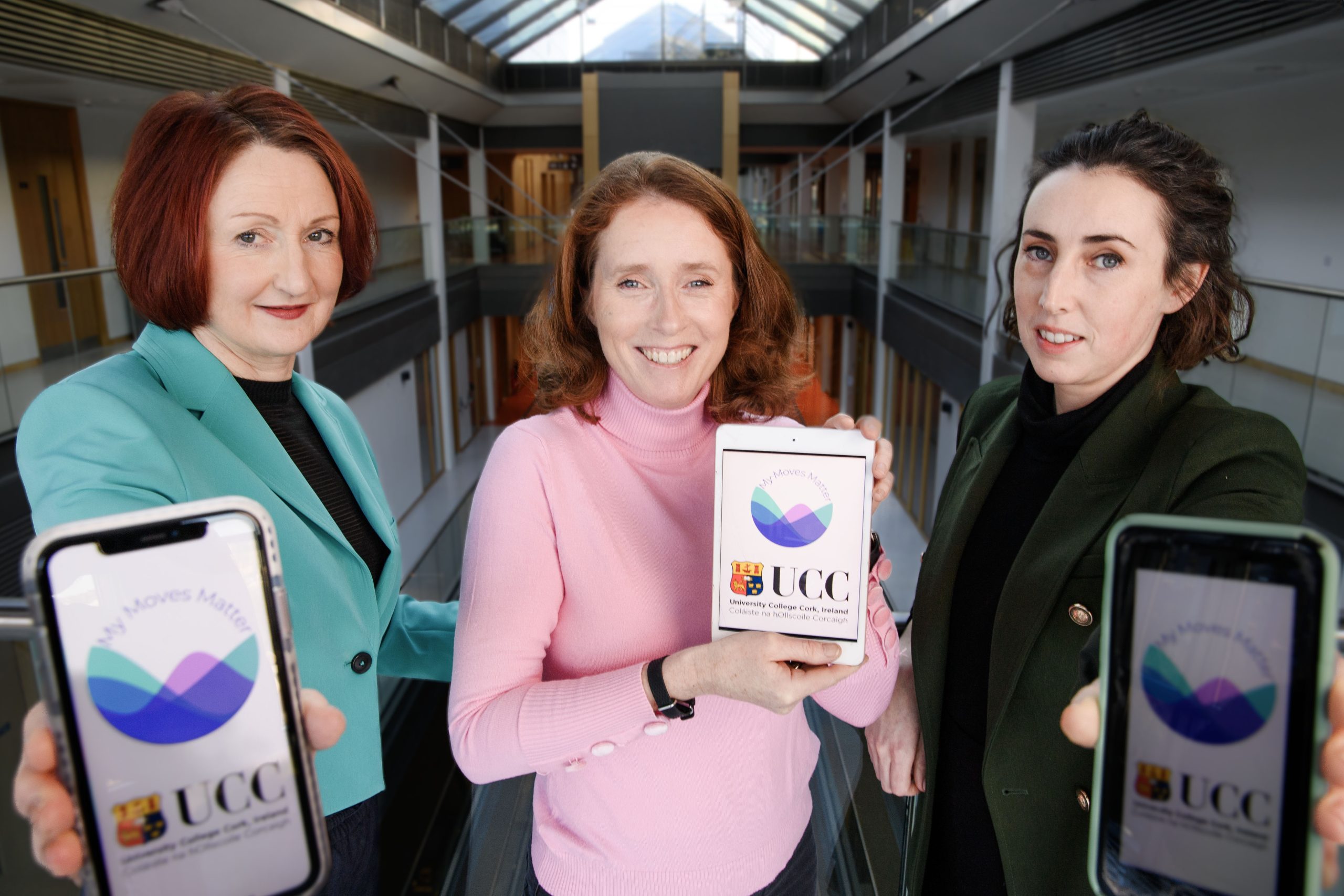
Richelle Flanagan, the inventor of the Parkinson’s self-care app My Moves Matter and a woman living with Parkinson’s, echoes this opinion, saying: “Over the last five years, through co-founding the Women’s Parkinson’s Project and the My Moves Matter app, I have been advocating for better personalised care for women with Parkinson’s. We can see in the aggregated data from My Moves Matter differences in the patient reported symptom tracking between women and men,” she says.
“We would be delighted to collaborate with this great initiative by C-Path to accelerate better management of women with the drugs we have today. But also to help identify new pathways to slow progression for both women and men, through a better understanding of the pathology of Parkinson’s through a sex-specific lens.”
You can find out more about C-Path and the Gender Equitable Medicines for Parkinson’s Disease (GEM-PD) initiative at C-Path.org
Seit der Erfindung der Tiefen Hirnstimulation (kurz THS) als fortschrittliche Behandlungsmethode für Morbus Parkinson in den späten 1980ern hat sich viel verändert.
Als Professor Lennart Stieglitz, Neurochirurg und leitender Arzt am Universitätsspital Zürich, vor 19 Jahren am Beginn seiner Karriere stand, wurde die Behandlung noch anders gesehen. „Die THS war damals eine Art letzte Behandlungsmöglichkeit für ältere und schwerkranke Parkinson-PatientInnen“, erklärt Stieglitz.
Seitdem hat sich die Technologie weiterentwickelt und die verfügbaren klinischen Daten sind umfangreicher geworden. Jetzt wird die Tiefe Hirnstimulation auch Menschen mit Parkinson in einem früheren Stadium angeboten.
Stieglitz fährt fort: „Heute wissen wir, dass PatientInnen von dieser Behandlung profitieren, egal, wann sie begonnen wird – und ihr ganzes Leben lang. Das heißt für uns, dass wir über die THS als Behandlungsmethode sprechen sollten, sobald Symptome wie Unterbeweglichkeit oder Dyskinesien auftreten. Die THS ist meiner Meinung nach zur Zeit die modernste Behandlungsmöglichkeit für fortgeschrittenen Parkinson.“
Die Tiefe Hirnstimulation ist eine der Behandlungsoptionen für Parkinson-PatientInnen, deren Symptome nicht mehr gut auf Medikamente ansprechen.
Während der Operation wird ein Einschnitt am Schädel vorgenommen und feine Drähte (Elektroden) werden im Gehirn implantiert. Anschließend wird ein Neurostimulator, ein kleines Gerät, im Brust- oder Bauchbereich unter die Haut platziert. An einem bestimmten Punkt nach der Operation wird die Hochfrequenzstimulation eingeschaltet und ihre Auswirkungen auf die Symptome der PatientInnen überwacht. Die Stimulation wird allmählich erhöht, in der Regel über einen Zeitraum von vielen Monaten hinweg, um ein optimales Niveau und die bestmögliche Lebensqualität zu erreichen. Da es sich bei Morbus Parkinson um eine fortschreitende Erkrankung handelt, kann die THS entsprechend dem Verlauf der Krankheit kontinuierlich individuell angepasst werden.
Die Tiefe Hirnstimulation kann motorische Symptome wie Tremor, Langsamkeit und Steifheit verbessern, eignet sich jedoch nicht zur Behandlung nicht-motorischer Symptome. Das heißt in der Regel, dass Menschen mit Parkinson ihre Medikamentendosis – um bis zu zwei Drittel – verringern können, so Professor Stieglitz.
Viele Menschen mit Parkinson konnten sich als Ergebnis der Operation über erheblichen Nutzen freuen – einige feiern am Datum ihrer Operation sogar einen zweiten Geburtstag.
Ivan O’Regan, der an Parkinson leidet und kürzlich mit einer Tiefen Hirnstimulation behandelt wurde, und seine Familie.
Ivan O‘Regan, ein 44-jähriger Buchhalter aus Irland, hat seinen THS-Eingriff im Februar 2022 nie bereut. Vor seiner Operation nutzte O‘Regan seit 2017 eine Apomorphin-Pumpe, die bei ihm jedoch seit 2020 zu Erbrechen führte und Zysten im Magen verursachte. Auch seine psychische Gesundheit litt darunter. Er erklärt: „Ich hätte es vorgezogen, bewegungsunfähig dazusitzen anstatt die Pumpe einzuschalten – so schlimm war es schon.“
Seit seinem THS-Eingriff haben sich seine Parkinson-Symptome und damit seine Lebensqualität dramatisch verbessert. O‘Regan weiter: „Ohne die THS weiß ich wirklich nicht, was wir gemacht hätten. Es ist ein Unterschied wie Tag und Nacht.“
Trotz der Vorteile der Tiefen Hirnstimulation bestehen noch immer Fehlinformationen bzw. ein mangelndes Bewusstsein über die Behandlung – und Ängste, dass etwas schiefgehen könnte, sind bei den PatientInnen, die über den Eingriff nachdenken, nicht selten.
Dr. Alexandra Boogers, derzeit Clinical Fellow und Neurologin an der Universität von Toronto in Kanada, ist eine der GründerInnen des Schulungsprogramms DBS Select am Health House im belgischen Leuven. Sie verfügt über langjährige Erfahrung in der Aufklärung von Menschen mit Parkinson über die Operation, die damit einhergehenden Risiken, mögliche Nebenwirkungen und – besonders wichtig – die Vorteile, die sie sich von der THS erwarten können.
Ihrer Meinung nach variieren die Bedenken von Menschen mit Parkinson: „Sie haben oft Angst vor einer Operation am Gehirn und davor, dass etwas [im Gehirn] geschädigt werden könnte und sich ihr Zustand nach der Operation verschlimmern könnte.“
Sie fährt fort: „Der Großteil der PatientInnen sträubt sich tatsächlich vor dieser Operation.“
Um diese Ängste zu zerstreuen, ist es besonders wichtig, dass Menschen mit Parkinson über alle Aspekte der THS gut aufgeklärt werden.
„Bei ihrer Aufklärung scheuen wir uns nicht vor den Details“, sagt Dr. Boogers. „Ich spreche über alles – alle möglichen Komplikationen, alle möglichen Vorteile, alle möglichen Nebenwirkungen. Interessanterweise bekomme ich manchmal zu hören, dass ich mehr Zeit damit verbringe, die Nebenwirkungen zu beschreiben als die Vorteile; aber ich tue das aus der Überzeugung, dass die PatientInnen sehr gut informiert sein sollten.“
Professor Stieglitz, der bereits ca. 500 THS-Eingriffe durchgeführt hat – durchschnittlich zwei pro Woche –, stimmt zu, dass die Aufklärung von Menschen mit Parkinson vor der THS-Operation entscheidend sei, um deren Ängste zu zerstreuen.
Am Universitätsspital Zürich sind Parkinson-KrankenpflegerInnen oft die ersten medizinischen Fachkräfte, die die Möglichkeit einer THS gegenüber Menschen mit Parkinson erwähnen. Da sie sich seit der Diagnose um die PatientInnen kümmern, haben KrankenpflegerInnen wahrscheinlich eine enge Beziehung zu ihnen und beantworten deren Fragen zum Eingriff. Potenzielle THS-PatientInnen am Universitätsspital Zürich bekommen auch eine umfangreiche Broschüre zu lesen – und vor allem Zeit zum Nachdenken.
Der gesamte THS-Prozess – von dem Vorschlag als mögliche Behandlung, der Aufklärung der PatientInnen, der Durchführung der Voruntersuchungen, um zu bestimmen, ob sich die jeweilige Person für den Eingriff eignet, bis hin zum eigentlichen Eingriff – kann bis zu sechs Monate dauern.
Professor Stieglitz dazu: „Wir besprechen den Eingriff mehrmals mit den PatientInnen, bevor diese sich entscheiden müssen. Wir geben ihnen sehr viele Informationen. Meiner Erfahrung nach haben die PatientInnen, mit denen ich über eine mögliche THS spreche, keine Angst mehr. Ich versuche, die Lücken zu schließen, damit sie sehr gut informiert sind – danach ist es kein Problem mehr.“
Dr. Boogers möchte Menschen mit Parkinson beruhigen, indem sie ihnen erzählt, was in allen eventuellen Fällen passiert: „Ich erläutere ihnen zunächst detailliert die mit der Operation verbundenen Risiken – Blutungen, Infektionen, Anästhesie, Antibiotika.“
Professor Lennart Stieglitz, Neurochirurg und leitender Arzt am Universitätsspital Zürich in der Schweiz, der bereits Hunderte Operationen mit Tiefer Hirnstimulation durchgeführt hat.
Ein Abwägen der Risiken und Chancen
Wie bei jeder Operation bestehen auch bei einem THS-Eingriff bestimmte Risiken, etwa von Blutungen oder Infektionen. Menschen mit Parkinson machen sich oft Gedanken über Gehirnblutungen, doch diese treten nur sehr selten auf, in ein bis drei Prozent der Fälle. Am Universitätsspital Zürich sind es ein Prozent.
Professor Sieglitz meint: „Von den 500 Eingriffen, die ich vorgenommen habe, gab es zwei PatientInnen mit schweren symptomatischen Blutungen, und beide haben sich gut erholt.“
Die Infektionsraten können je nach Krankenhaus unterschiedlich sein, sind in der Regel jedoch ebenfalls niedrig. Am Universitätsspital Zürich liegt das Risiko von THS-PatientInnen, sich eine Infektion zuzuziehen, die chirurgisch behandelt werden muss oder in der teilweisen oder kompletten Entfernung der Implantate resultiert, bei ein bis zwei Prozent.
Dazu Dr. Boogers: „Bei der Besprechung der Nebenwirkungen betone ich, wie diese gemindert werden können. Wenn eine Infektion auftritt, brauchen wir intravenöse Antibiotika; daher müssen die PatientInnen das Krankenhauspersonal unbedingt über mögliche Allergien gegen Antibiotika informieren.“
Selbst wenn sich PatientInnen eine Infektion zuziehen, die dazu führt, dass das Gerät entfernt werden muss, heißt das nicht, dass sie auch in Zukunft keine THS erhalten können. Dr. Boogers erklärt: „Frühestens nach drei Monaten können wir eine Neuimplantation in Betracht ziehen.“
Professor Stieglitz erinnert sich an einen jüngsten Fall – nur einen der letzten 300 Eingriffe am Universitätsspital Zürich –, bei dem das THS-Gerät entfernt werden musste, nachdem ein Parkinson-Patient sieben Monate nach dem THS-Eingriff eine Infektion entwickelt hatte. Trotzdem möchte sich der besagte Patient diesen Herbst noch einmal einem THS-Eingriff unterziehen. Dazu Professor Stieglitz:
„Er hat sehr von der Behandlung profitiert und ist deshalb sehr unglücklich darüber, das Gerät im Moment nicht zu haben.“
Professor Stieglitz erklärt auch, dass Menschen mit Parkinson ein höheres Risiko eines Delirs nach der Anästhesie aufweisen: „Darüber informieren wir die PatientInnen auf jeden Fall.“
Sonstige Bedenken in puncto Tiefer Hirnstimulation
Menschen mit Parkinson haben oft Angst vor Suizidgedanken nach dem Eingriff. Laut Dr. Boogers sind diese jedoch extrem selten.
Sie meint dazu: „Wenn man Tiefe Hirnstimulation googelt, kann man Geschichten finden, die einen überwältigen können.“
Dr. Boogers betont, dass sich die Betroffenen an ihre THS-ÄrztInnen wenden müssen, die dann untersuchen können, warum solche Gedanken auftauchen.
Ein weitere Sorge, die einige Menschen mit Parkinson haben könnten, dreht sich darum, nach dem Eingriff eventuell an den Rollstuhl gefesselt zu sein. Daten zufolge ist dies jedoch sehr selten.
Dr. Boogers dazu: „Das kommt wirklich nicht sehr häufig vor. Das würde bedeuten, dass es während der Operation Komplikationen gab, dass es beim Einsetzen einer der Elektroden zu einer massiven Blutung kam, die erheblichen Schaden verursacht hat. Blutungen, die durch das Einsetzen der Elektroden verursacht werden, sind extrem selten – das Risiko liegt bei unter einem Prozent. Wenn tatsächlich eine Blutung auftritt, ist diese in der Regel asymptomatisch, das heißt, dass wir sie zwar auf dem CT-Scan bemerken, aber keine damit verbundenen Symptome sehen. Diese größeren Probleme, die also [in den Augen der PatientInnen] schiefgehen könnten, treten in Wirklichkeit beinahe niemals ein.“
PatientInnen, die die THS in Betracht ziehen, können sich auch sorgen, dass sie nach dem Eingriff keinen Nutzen spüren – dass der Eingriff also nicht funktioniert. Dr. Boogers erklärt dazu: „Wenn der Draht gut platziert ist, verbessern sich die motorischen Symptome bis zu einem gewissen Grad immer. Und natürlich müssen wir definieren, was ‚funktionieren‘ für die PatientInnen tatsächlich bedeutet. Für den einen könnte das heißen, dass er mit einem Rollator in den Supermarkt gehen und Lebensmittel einkaufen kann. Für die andere könnte das heißen, dass sie ans andere Ende der Welt fliegen und unabhängig sein kann.“
Realistische Erwartungen
Menschen mit Parkinson müssen realistische Erwartungen bezüglich der möglichen positiven Wirkungen der THS auf ihr Leben haben. Allgemein gesagt: Sie können nach der Operation das tun, was sie zuvor unter der Einnahme von Medikamenten tun konnten. Anders ausgedrückt, verbessert die Operation nicht die Qualität der Zeit, in der sie sich leicht bewegen können, sondern sie sollte die Dauer dieser Zeit verlängern.
Dr. Boogers gibt ein Beispiel: „Letzte Woche habe ich einen Patienten gesehen, der zu mir meinte: ‚Ich bin 65 und arbeite Vollzeit, ich habe einen Laden. Ich möchte mich dem THS-Eingriff unterziehen, damit ich auch mit 75 noch Vollzeit in meinem Laden arbeiten kann.‘ Das ist leider unrealistisch.“
Sie fährt fort: „Aber wenn die Erwartung ist, dass man sich in 10 Jahren noch selbst so um sich kümmern kann, dass man nur wenig Hilfe von anderen benötigt? Dabei kann die THS eventuell durchaus helfen.“
THS-PatientInnen sollten auch wissen, dass die THS zwar ihre Lebensqualität verbessern, aber das Fortschreiten der Parkinson-Krankheit nicht verlangsamen kann.
Professor Sieglitz meint: „Die THS funktioniert von Beginn an immer gleich. Aber das Problem ist, dass sich Morbus Parkinson mit der Zeit verändert und irgendwann neue Symptome dazukommen können (etwa Probleme beim Schlucken, Gleichgewichtsstörungen oder sogar Demenz), die nicht auf Medikamente oder THS reagieren.“
Dr. Alexandra Boogers, derzeit Clinical Fellow und Neurologin an der Universität von Toronto in Kanada, ist eine der GründerInnen des Schulungsprogramms DBS Select am Health House im belgischen Leuven.
Ein Gespräch über Nebenwirkungen
Genau wie Medikamente Nebenwirkungen haben können, müssen PatientInnen auch ein offenes Gespräch mit einer medizinischen Fachkraft über unerwünschte Wirkungen führen, die die THS in ihrem Fall haben könnte – und darüber, welches Gesamtergebnis sie sich wünschen. Einige Menschen mit Parkinson leiden zum Beispiel unter Gleichgewichtsstörungen oder undeutlicher Sprache – wie etwa Ivan: „Mein Sprechen hat sich wahrscheinlich etwas verschlechtert, vor allem in den letzten sechs Monaten. Ich bin mir nicht ganz sicher, ob das auch ohne die THS passiert wäre.“
Dr. Boogers erklärt, dass Fortschritte in der THS-Technologie in manchen Fällen bedeuten, dass diese Nebenwirkungen durch eine Anpassung der Stimulation gemindert werden können:
„Oft lasse ich die PatientInnen entscheiden: ‚Was ist Ihnen wichtiger? Möchten Sie keinen Tremor mehr haben, allerdings eine etwas undeutliche Sprache? Oder möchten Sie lieber eine deutliche Sprache, aber einen geringen Tremor?‘“
Eine Verbesserung des Familienlebens
Ein weiterer Faktor, über den sich die PatientInnen bewusst sein müssen, ist die Tatsache, dass die Behandlung ihr Leben – und damit auch die Beziehung, die sie zu ihren Liebsten haben – drastisch verändern kann.
Professor Sieglitz meint: „Wir informieren die PatientInnen von Anfang an darüber, dass sich diese Krankheit nicht nur auf eine Person, sondern auf die ganze Familie auswirkt. Nach der Behandlung können sich Beziehungen und Rollenmodelle innerhalb ihrer Familie ändern, und darauf müssen sie vorbereitet sein.“
Für Ivan und seine Partnerin Eleanor verbesserte die THS seine Symptome so stark, dass die Behandlung ihrer Meinung nach ihre Beziehung gerettet hat.
Ivan gibt zu, dass er vor der THS Eleanor oft sagte, dass er die Apomorphin-Pumpe aktiviert habe, wenn dies gar nicht der Fall gewesen sei. „Aufgrund der Nebenwirkungen der Pumpe habe ich sie oft nicht verwendet und blieb lieber in einem bewegungsunfähigen Zustand“, erklärt er und fährt fort: „Das hat zu Situationen geführt, in denen mich Eleanor auf einem Stuhl ‚feststeckend‘ vorfand, als ich mich eigentlich hätte um unsere zwei kleinen Kinder kümmern sollen. Meine Unzuverlässigkeit und die Last, die Eleanor dadurch aufgebürdet wurde, haben unsere Beziehung sehr strapaziert.“
Glücklicherweise hat die THS all das geändert.
„Die größte Verbesserung war die Wiederherstellung des Vertrauens in unsere Beziehung“, meint Ivan zu den Vorteilen, die die THS ihm und seiner Familie gebracht hat. Er erzählt weiter: „Jetzt bewege ich mich immer, wodurch diese Unvorhersehbarkeit ausbleibt, die für uns zuvor so schwierig war. Wir können jetzt gemeinsam Unternehmungen planen, etwa Tagesausflüge oder Urlaube, ohne ständig Angst haben zu müssen, dass uns meine Symptome einen Strich durch die Rechnung machen. Die Verbesserung meines Zustands hat sich stark auf unser Familienleben ausgewirkt.“
Eine weitere Erwägung besteht darin, dass mit einer THS meist auch eine Reduzierung der Medikamenteneinnahme – und damit auch das Risiko einer falschen Einnahmezeit oder Dosierung – einhergeht. Dies kann besonders für ältere oder Demenz-PatientInnen wichtig sein.
Die Entscheidung für die Tiefe Hirnstimulation treffen
Auf die Frage, welchen Rat er PatientInnen geben würde, die Angst vor einer THS haben, meint Professor Stieglitz: „Ich würde ihnen empfehlen, so viele Informationen wie möglich einzuholen.“
Obwohl es ein optimales Zeitfenster für einen THS-Eingriff gibt, ist dieses laut Professor Stieglitz groß genug, um Menschen mit Parkinson genügend Zeit zu lassen, alle Fakten zu sammeln, die sie für die Entscheidung benötigen, ob ein THS-Eingriff das Richtige für sie ist.
Er erklärt: „Es bleibt auf jeden Fall genügend Zeit, sich Wissen anzulesen, Informationen einzuholen und mit verschiedenen SpezialistInnen oder auch PatientInnen zu sprechen. Wenn die PatientInnen das möchten, organisieren wir den Kontakt mit anderen PatientInnen, die in der Vergangenheit behandelt wurden, damit sie Informationen aus erster Hand erhalten können.“
Professor Stieglitz‘ lange Liste der PatientInnen, die gerne bereit sind, über ihre Erfahrungen mit der THS zu sprechen, ist Beweis genug für den Nutzen, den die Behandlung für Menschen mit Parkinson bieten kann. Aufgrund der Behandlung können sich sie und Menschen wie Ivan über eine Verbesserung ihrer Symptome freuen, die oftmals lebensverändernd ist.
Stimulation cérébrale profonde : la chirurgie pourrait-elle être une option pour moi ?
Nous interrogeons deux spécialistes de la stimulation cérébrale profonde et un patient atteint de la maladie de Parkinson qui a subi l'opération pour en savoir plus sur la SCP.
16 November 2024
Verity Willcocks Sponsored by Abbott, Boston Scientific and Medtronic
Depuis l’invention de la stimulation cérébrale profonde (SCP) pour traiter la maladie de Parkinson à la fin des années 1980, beaucoup de choses ont changé.
Lorsque le professeur Lennart Stieglitz, neurochirurgien et médecin-chef à l’hôpital universitaire de Zurich, en Suisse, a débuté sa carrière il y a 19 ans, la SCP était perçue différemment. « La SCP était une thérapie de dernier recours pour les patients âgés atteints de la maladie de Parkinson à un stade très avancé », explique-t-il.
Depuis, la technologie a évolué et les données cliniques disponibles se sont accumulées, si bien que la stimulation cérébrale profonde est désormais proposée aux personnes atteintes de la maladie de Parkinson à un stade plus précoce.
« Aujourd’hui, nous savons que les patients bénéficient de ce traitement quel que soit le moment de sa mise en œuvre, et ce, tout au long de leur vie. Cela signifie que, pour nous, le moment approprié pour envisager la SCP est dès l’apparition de fluctuations motrices, de dyskinésies ou d’autres symptômes de ce type », poursuit-il. « À l’heure actuelle, il s’agit, à mon avis, du meilleur traitement de la maladie de Parkinson à un stade avancé.
L’intervention chirurgicale de SCP est l’une des options thérapeutiques proposées lorsque les symptômes de la maladie de Parkinson commencent à résister aux médicaments.
Elle consiste à pratiquer une incision dans le crâne afin d’introduire de minces fils (électrodes) dans le cerveau. Un petit boîtier appelé générateur d’impulsions est ensuite implanté sous la peau de la poitrine ou de l’abdomen. La stimulation à haute fréquence est activée après l’opération, et ses effets sur les symptômes de la maladie de Parkinson font l’objet d’un suivi. La stimulation est ensuite progressivement augmentée, généralement sur une période de plusieurs mois, afin d’atteindre des niveaux optimaux et la meilleure qualité de vie possible. La maladie de Parkinson étant une maladie progressive, la SCP peut également être continuellement ajustée et personnalisée en fonction de l’évolution du patient.
La stimulation cérébrale profonde peut améliorer les symptômes moteurs tels que les tremblements, la lenteur et la rigidité, mais n’a aucun effet sur les symptômes non moteurs. Selon le professeur Stieglitz, elle permet généralement aux personnes atteintes de la maladie de Parkinson de réduire des deux tiers leur traitement médicamenteux.
De nombreuses personnes atteintes de la maladie de Parkinson en ont tiré des bénéfices considérables, à tel point que certaines fêtent chaque année la date de leur opération comme un deuxième anniversaire.
Ivan O’Regan, atteint de la maladie de Parkinson, qui a récemment subi une opération de stimulation cérébrale profonde, et sa famille.
Ivan O’Regan, comptable irlandais de 44 ans, ne regrette pas d’avoir été opéré en février 2022, bien au contraire. Il recevait auparavant un traitement par pompe à apomorphine, démarré en 2017. Mais en 2020, la pompe a commencé à lui causer des vomissements et des kystes à l’estomac. Sa santé mentale en avait également pris un coup. « Je préférais rester assis là, incapable de bouger, plutôt que d’activer la pompe – voilà où j’en étais arrivé », raconte-t-il.
Depuis qu’il bénéficie de la SCP, ses symptômes de la maladie de Parkinson et sa qualité de vie se sont considérablement améliorés. « Si je n’avais pas eu la SCP, je ne sais pas ce que nous aurions fait. C’est le jour et la nuit. »
Pourtant, malgré les bénéfices de la stimulation cérébrale profonde, la désinformation ou le manque général de sensibilisation persistent, et les craintes de ce qui pourrait mal se passer sont courantes chez les personnes qui envisagent de subir la procédure.
Le Dr Alexandra Boogers, clinicienne et neurologue à l’université de Toronto (Canada), est l’une des fondatrices du programme d’éducation DBS Select au Centre de santé de Louvain (Belgique). Elle possède une grande expérience dans l’éducation des personnes atteintes de la maladie de Parkinson, afin de mieux leur faire comprendre l’intervention chirurgicale, les risques encourus, les effets secondaires possibles et, surtout, les bénéfices qu’elles peuvent attendre de la SCP.
Lorsqu’on lui demande les causes de l’anxiété ressentie par les personnes atteintes de la maladie de Parkinson, elle répond qu’elles varient : « L’une des craintes vient évidemment du fait qu’il s’agit d’une opération du cerveau. Les patients ont peur que quelque chose soit endommagé [dans le cerveau] et que cela ne fasse qu’aggraver la situation. »
Elle poursuit : « La majorité des patients sont réticents à l’idée de subir une intervention chirurgicale. »
Pour dissiper cette crainte, il est essentiel de veiller à ce que les personnes atteintes de la maladie de Parkinson soient bien informées sur tous les aspects de la SCP.
« Lors de l’éducation, nous ne négligeons aucun détail », explique le Dr Boogers. « Je parle de tout : de toutes les complications possibles, de tous les bénéfices possibles, de tous les effets secondaires possibles. On me dit parfois que je passe plus de temps à parler des effets secondaires que des bénéfices, mais c’est parce qu’il est important à mes yeux que les gens soient très bien informés. »
Le professeur Stieglitz, qui a pratiqué environ 500 SCP (à raison de deux par semaine en moyenne) reconnaît qu’il est essentiel d’éduquer les personnes atteintes de la maladie de Parkinson avant l’opération pour dissiper leur anxiété.
À l’hôpital universitaire de Zurich, les infirmières en pratique avancée Parkinson sont souvent les premiers professionnels de santé à évoquer la possibilité d’une SCP auprès des personnes atteintes de la maladie de Parkinson. S’étant occupées d’eux depuis leur diagnostic, les infirmières sont généralement proches des patients et sont à même de répondre à toutes les questions qu’ils peuvent se poser à ce sujet. Les patients éligibles à une SCP à l’hôpital universitaire de Zurich se voient aussi donner un long dépliant à lire et, surtout, du temps pour réfléchir.
L’ensemble du processus de stimulation cérébrale profonde (la suggestion en tant que traitement potentiel, l’éducation du patient, les examens préliminaires nécessaires pour déterminer si une personne est éligible à la procédure, et enfin l’opération elle-même) peut prendre environ six mois.
« Nous discutons de ce processus à plusieurs reprises avant que les patients n’aient à prendre une décision, explique le professeur Stieglitz. Et nous leur donnons une foule d’informations. D’après mon expérience, lorsque je présente tous les détails de la SCP aux patients, ils n’ont plus peur. J’essaie de combler les lacunes pour qu’ils soient vraiment bien informés. Après, il n’y a plus aucun problème. »
Le Dr Boogers prend soin de rassurer les personnes atteintes de la maladie de Parkinson en leur expliquant ce qui se passera dans chaque situation. « J’explique tout d’abord les risques liés à l’opération : saignements, infection, anesthésie, antibiotiques », commente-t-elle.
Le professeur Lennart Stieglitz, neurochirurgien et médecin-chef à l’hôpital universitaire de Zurich en Suisse, qui a pratiqué des centaines d’opérations de stimulation cérébrale profonde.
Équilibrer les risques et les opportunités
Comme toute opération, la procédure SCP comporte certains risques, mais ceux-ci sont comparables à ceux d’autres interventions chirurgicales (hémorragie ou infection, par exemple). L’hémorragie cérébrale est un aspect de la chirurgie qui inquiète les personnes atteintes de la maladie de Parkinson ; cependant, ce phénomène est rare et ne se produit que dans un à trois pour cent des cas. À l’hôpital universitaire de Zurich, le taux est de un pour cent.
Le professeur Stieglitz est formel : « Sur les 500 opérations que j’ai effectuées, j’ai vu deux patients souffrir d’hémorragies symptomatiques graves, et tous deux se sont bien rétablis. »
Les taux d’infection peuvent varier d’un centre à l’autre, mais ils sont généralement faibles. À l’hôpital universitaire de Zurich, le risque que les patients ayant subi une SCP contractent une infection nécessitant un traitement chirurgical et le retrait partiel ou total des implants est de un à deux pour cent.
Le Dr Boogers explique : « Quand je parle des effets secondaires, j’insiste sur la façon dont nous pouvons les atténuer. En cas d’infection, il faut administrer des antibiotiques par voie intraveineuse ; les personnes atteintes de la maladie de Parkinson doivent donc veiller à informer le personnel hospitalier de toute allergie aux antibiotiques. »
Même si un patient contracte une infection qui entraîne le retrait du dispositif, cela ne signifie pas qu’il ne peut plus bénéficier de la SCP. Le Dr Boogers précise : « Au bout de trois mois, nous pouvons envisager une réimplantation. »
Le professeur Stieglitz raconte un cas récent, l’unique fois sur les 300 dernières interventions chirurgicales effectuées à l’hôpital universitaire de Zurich, où le système SCP avait dû être retiré car une personne atteinte de la maladie de Parkinson avait développé une infection sept mois après son opération. Malgré cela, la personne en question souhaite à nouveau subir une SCP cet automne.
« Comme le traitement lui avait beaucoup réussi, il est très malheureux d’avoir à s’en passer pour le moment. »
Le professeur Stieglitz indique également que les personnes atteintes de la maladie de Parkinson présentent un risque plus élevé de délire après l’anesthésie. « C’est une chose dont nous informons les patients. »
Autres préoccupations concernant la stimulation cérébrale profonde
Beaucoup de patients atteints de la maladie de Parkinson ont peur d’avoir des pensées suicidaires après l’opération, bien que, selon le Dr Boogers, cela soit extrêmement rare.
« Si vous faites des recherches sur la stimulation cérébrale profonde dans Google, vous pouvez trouver des histoires qui font froid dans le dos », dit-elle.
Le Dr Boogers insiste sur le fait que toute personne concernée doit prendre contact avec son spécialiste SCP, qui cherchera à comprendre pourquoi de telles pensées se manifestent.
Certaines personnes atteintes de la maladie de Parkinson craignent également de se retrouver en fauteuil roulant après l’intervention. Cependant, les données montrent que cela est très rare.
« C’est très peu fréquent, explique le Dr Boogers. En fait, cela voudrait dire qu’il y a eu une complication pendant l’opération et que l’implantation de l’électrode a entraîné une hémorragie massive qui a causé des dommages importants. Or, une hémorragie causée par l’implantation de l’électrode est extrêmement rare : inférieure à un pour cent. Et s’il y a une hémorragie, elle est généralement asymptomatique, c’est-à-dire qu’elle est détectée par scanner, mais qu’elle ne provoque aucun symptôme. En fait, ces problèmes majeurs dont les gens ont si peur ne surviennent presque jamais. »
Les patients qui envisagent d’avoir recours à la SCP peuvent également craindre de ne pas ressentir d’amélioration par la suite – en d’autres termes, ils ont peur que l’opération ne soit pas réussie. Le Dr Boogers explique : « Si l’électrode est bien positionnée, les symptômes moteurs s’améliorent toujours dans une certaine mesure. Et puis, il faut définir ce que le patient entend par « réussie ». Pour un patient, la SCP est « réussie » s’il peut aller faire ses courses à l’épicerie avec un déambulateur. Pour un autre patient, la SCP est « réussie » s’il peut partir en voyage à l’autre bout du monde, s’il peut être indépendant. »
Des attentes réalistes
Il est essentiel que les personnes atteintes de la maladie de Parkinson aient des attentes réalistes de ce que la SCP peut leur apporter. En règle générale, elles pourront faire après l’opération ce qu’elles pouvaient faire lorsqu’elles étaient sous traitement médicamenteux avant l’opération. En d’autres termes, l’opération n’améliorera pas la qualité de leur temps « on », mais devrait en augmenter la quantité.
Le Dr Boogers donne un exemple : « La semaine dernière, un patient m’a dit : « J’ai 65 ans, je travaille à plein temps, j’ai un magasin. Et je veux avoir une SCP parce que je veux pouvoir travailler à plein temps dans mon magasin quand j’aurai 75 ans ». Malheureusement, ce n’est pas réaliste. »
Elle poursuit : « Mais si vous voulez être toujours capable, dans 10 ans, de prendre soin de vous de manière à n’avoir besoin que d’une aide minimale de la part d’autrui, la SCP peut vous venir en aide. »
Les patients doivent également savoir que, si la SCP peut améliorer leur qualité de vie, elle ne ralentit pas la progression de la maladie de Parkinson.
Le professeur Stieglitz précise : « La SCP fonctionne de la même manière dès que vous commencez à l’utiliser. Le problème est que la maladie de Parkinson évolue avec le temps et qu’à un moment donné, de nouveaux symptômes peuvent apparaître (troubles de la déglutition, troubles de l’équilibre ou même démence), et ces symptômes ne répondent ni aux médicaments, ni à la SCP. »
Le Dr Alexandra Boogers, clinicienne et neurologue à l’université de Toronto (Canada), l’une des fondatrices du programme d’éducation DBS Select au Centre de santé de Louvain, en Belgique
Une conversation sur les effets secondaires
De la même manière que tout médicament peut avoir des effets secondaires, les patients doivent avoir une conversation ouverte avec un professionnel de santé sur les effets indésirables potentiels de la SCP et le résultat global qu’ils souhaitent obtenir. Certaines personnes atteintes de la maladie de Parkinson peuvent par exemple éprouver des problèmes d’équilibre et des troubles de l’élocution. Ivan en a fait l’expérience : « Mon élocution s’est probablement un peu détériorée, surtout au cours des six derniers mois. Je ne sais pas trop si cela se serait produit si je n’avais pas eu de SCP. »
Le Dr Boogers explique que les progrès de la technologie SCP permettent dans certains cas de minimiser ces effets secondaires en ajustant la stimulation.
« Souvent, je laisse le patient décider : qu’est-ce qui est le plus important pour vous ? Voulez-vous être débarrassé des tremblements, mais avoir de légers troubles de l’élocution ? Ou voulez-vous que votre élocution soit claire, mais qu’il vous reste un peu de tremblements ? »
Améliorer la vie de famille
Un autre facteur à prendre en compte est que la SCP peut être si efficace qu’elle change radicalement la vie du patient, et par conséquent sa relation avec ses proches.
Le professeur Stieglitz explique : « Dès le début, nous disons au patient que cette maladie ne touche pas une seule personne, mais toute la famille. Les relations peuvent changer après le traitement, ainsi que les rôles au sein de la famille, et il faut s’y préparer, », ajoute-t-il.
Pour Ivan et sa compagne Eleanor, la SCP a tellement amélioré ses symptômes qu’ils sont convaincus que le traitement a sauvé leur relation.
Avant la SCP, Ivan admet qu’il disait souvent à Eleanor que sa pompe à apomorphine était en marche alors que ce n’était pas le cas. « En raison des effets secondaires de la pompe, je choisissais souvent de ne pas l’utiliser, préférant rester dans un état ‘off’ où je ne pouvais pas bouger », explique-t-il. Cela a conduit à des situations où Eleanor me trouvait ‘coincé’ sur une chaise alors que j’étais censé m’occuper de nos deux jeunes enfants. Mon manque de fiabilité et le fardeau que je représentais pour Eleanor ont mis notre relation à rude épreuve », admet-il.
Heureusement, la SCP a changé tout cela.
« L’amélioration la plus significative a été le rétablissement de la confiance dans notre relation, déclare Ivan à propos des bénéfices que la SCP lui a apportés, à lui et à sa famille. Maintenant, je suis toujours en mouvement, ce qui a éliminé l’imprévisibilité qui nous posait tant de problèmes auparavant. Nous pouvons désormais planifier des activités ensemble, comme des excursions ou des vacances, sans avoir à craindre que mes symptômes n’interfèrent. L’amélioration de mon état a eu un effet profond sur notre vie de famille ».
Il faut également tenir compte du fait que la SCP, en réduisant la prise de médicaments, limite le risque de se tromper d’heure ou de dosage, ce qui peut être un problème pour les patients plus âgés ou les personnes atteintes de démence.
Prendre la décision de recourir à la stimulation cérébrale profonde
À la question de savoir quel conseil il donnerait à quelqu’un qui s’inquiète de subir une opération de SCP, le professeur Stieglitz répond : « Je lui dirais d’essayer d’obtenir autant d’informations que possible à ce sujet ».
Bien qu’il existe une fenêtre optimale pour la SCP, le professeur Stieglitz indique qu’elle est suffisamment large pour permettre aux personnes atteintes de la maladie de Parkinson de rassembler tous les éléments dont elles ont besoin pour décider si la chirurgie SCP leur conviendrait.
« Il y a largement le temps de lire, d’obtenir des informations et de parler à différents spécialistes ou même à des patients. Si les patients le souhaitent, nous les mettons en contact avec d’autres patients ayant déjà reçu le traitement, afin qu’ils puissent obtenir des informations de première main. »
La longue liste de patients du professeur Stieglitz prêts à partager leur expérience positive de la SCP parle d’elle-même des bénéfices que le traitement peut offrir aux personnes atteintes de la maladie de Parkinson. Grâce à lui, ces patients et d’autres personnes comme Ivan bénéficient aujourd’hui d’une amélioration de leurs symptômes qui leur change souvent radicalement la vie.
Stimolazione cerebrale profonda: la chirurgia può essere una strada praticabile?
Abbiamo intervistato due esperti nella stimolazione cerebrale profonda (in inglese “Deep Brain Stimulation” o DBS) e una persona affetta da malattia di Parkinson, che si è sottoposta a questa procedura chirurgica, per esaminare la DBS con maggiore attenzione.
15 November 2024
Verity Willcocks Sponsored by Abbott, Boston Scientific and Medtronic
Ne è stata fatta di strada da quando la stimolazione cerebrale profonda (DBS) fu introdotta come trattamento avanzato per la malattia di Parkinson alla fine degli anni ’80.
Quando il prof. Lennart Stieglitz, neurochirurgo e primario presso l’Ospedale universitario di Zurigo, Svizzera, iniziò il suo percorso professionale 19 anni fa, la situazione era certamente diversa: «La DBS era considerata una terapia di ultima istanza riservata a pazienti anziani o con malattia di Parkinson in stadio molto avanzato», chiarisce.
Da allora, grazie all’evoluzione delle tecnologie esistenti e alla disponibilità di un numero crescente di dati clinici, la stimolazione cerebrale profonda è diventata una strada percorribile anche per i pazienti nelle fasi iniziali della malattia.
«Oggi sappiamo che i benefici di questo trattamento si manifestano a prescindere dallo stadio della malattia in cui viene avviato, e che perdurano per tutta la vita del paziente. Questo significa che, per noi, il momento giusto per discutere della DBS arriva non appena si manifestano effetti quali wearing-off, discinesie o altri fenomeni tipici della patologia», prosegue. «Per quanto mi riguarda, oggi rappresenta l’opzione più all’avanguardia per il trattamento della malattia di Parkinson avanzata.»
La DBS è una delle opzioni terapeutiche offerte quando i sintomi del Parkinson non rispondono più in modo soddisfacente alla terapia farmacologica.
La tecnica prevede innanzitutto un’incisione nell’osso cranico, seguita dall’impianto di cavi sottili (elettrodi) nel cervello. Dopodiché, un piccolo dispositivo chiamato generatore di impulsi viene collocato in una tasca sottocutanea nel torace o nell’addome. A un certo punto, una volta portata a termine la procedura, si provvede ad attivare la stimolazione ad alta frequenza e a monitorarne gli effetti sui sintomi del paziente. La stimolazione viene poi aumentata gradualmente, di solito nell’arco di alcuni mesi, fino a raggiungere livelli ottimali in grado di migliorare il più possibile la qualità della vita. Poiché il Parkinson è una condizione progressiva, la DBS può essere continuamente regolata e personalizzata in base al percorso del paziente.
La stimolazione cerebrale profonda può migliorare i sintomi motori caratteristici della malattia, come tremori, lentezza e rigidità muscolare, ma non ha alcun effetto sui sintomi non motori. Secondo il prof. Stieglitz, questo significa che i pazienti sono generalmente in grado di ridurre i farmaci assunti anche di due terzi.
La procedura ha apportato enormi benefici a numerose persone affette da Parkinson, tanto che alcune celebrano un “secondo compleanno” per ricordare la data dell’intervento.
Ivan O’Regan, un malato di Parkinson che di recente si è sottoposto a stimolazione cerebrale profonda, raffigurato con la sua famiglia.
Ivan O’Regan, un commercialista irlandese di 44 anni, non ha mai rimpianto la decisione di sottoporsi all’intervento nel febbraio 2022. Prima della DBS, utilizzava una pompa di apomorfina dal 2017, ma già nel 2020 le infusioni avevano cominciato a causare vomito e polipi gastrici, con ricadute anche a livello psicologico. «Arrivato a un certo punto preferivo restarmene immobilizzato su una sedia piuttosto che mettermi la pompa; ero davvero stanco», spiega.
A seguito del trattamento, Ivan ha però constatato un notevole miglioramento sia a livello dei sintomi che della qualità della vita in generale. «Non so come avremmo fatto senza la DBS; adesso è tutta un’altra vita», conclude.
Eppure, nonostante i benefici comprovati della stimolazione cerebrale profonda, continuano a sussistere disinformazione e scarsi livelli di sensibilizzazione, oltre a timori che qualcosa potrebbe andare storto durante la procedura.
La dottoressa Alexandra Boogers, una neurologa con al suo attivo un percorso di alta specializzazione presso l’Università di Toronto, in Canada, è stata tra i fondatori del programma di formazione DBS Select presso il centro Health House di Leuven, in Belgio. Ha maturato un’esperienza significativa nella sensibilizzazione dei pazienti di Parkinson in merito alla procedura, ai rischi correlati, ai possibili effetti collaterali e, soprattutto, ai benefici che i malati potrebbero ottenere dal trattamento.
Riflettendo sui timori più comuni tra i pazienti, ha detto che sono molteplici: «Una delle paure più ovvie è che, trattandosi di chirurgia cerebrale, il cervello potrebbe risultarne danneggiato, peggiorando le condizioni del paziente.
Le persone manifestano quindi una certa riluttanza a sottoporsi alla procedura», spiega.
Per placare queste paure, è essenziale fare in modo che i pazienti affetti da malattia di Parkinson siano sufficientemente informati su tutti gli aspetti della DBS.
«Quando educhiamo i pazienti non tralasciamo alcun dettaglio», prosegue la dott.ssa Boogers. «Mi assicuro di coprire proprio tutto, dalle possibili complicazioni ai potenziali benefici ed effetti collaterali. Anzi, talvolta mi viene fatto presente che dedico troppa attenzione agli effetti avversi a discapito dei benefici, ma è solo perché credo che le persone dovrebbero avere a disposizione proprio tutti gli elementi per decidere.»
Il prof. Stieglitz, che ha eseguito personalmente circa 500 procedure di DBS, con una media di due a settimana, concorda sul fatto che la sensibilizzazione sia fondamentale per dissipare eventuali preoccupazioni.
Presso l’Ospedale universitario di Zurigo, la possibilità di ricorrere alla DBS come opzione terapeutica viene spesso presentata per la prima volta da un infermiere specializzato. Gli infermieri sono in una posizione ideale per chiarire i dubbi dei pazienti, poiché in genere li seguono sin dalla diagnosi e tendono a instaurarvi un rapporto di fiducia. In più, coloro che pensano di sottoporsi alla DBS all’Ospedale universitario di Zurigo ricevono un corposo opuscolo informativo e, soprattutto, hanno anche tutto il tempo di pensarci con calma.
L’intero processo di stimolazione cerebrale profonda può richiedere circa sei mesi, dalla proposta come potenziale trattamento alla procedura vera e propria, senza dimenticare la fase di sensibilizzazione del paziente e i test preliminari necessari per valutarne l’idoneità.
«La procedura viene discussa con il paziente diverse volte prima della decisione finale e ci preoccupiamo di fornire sempre informazioni in abbondanza», spiega il prof. Stieglitz. «In base alla mia esperienza, quando presento a un paziente la possibilità di sottoporsi a un intervento di DBS, le paure scompaiono molto rapidamente. Provo sempre a fornire tutti i chiarimenti del caso per assicurarmi che i pazienti siano bene informati; fatto questo, non ci sono più problemi.»
Anche la dott.ssa Boogers dedica tempo e attenzione a rassicurare i malati di Parkinson, e lo fa esponendo nel dettaglio gli esiti associati a diversi scenari: «Inizio fornendo una panoramica dei diversi rischi associati alla procedura, ovvero emorragie, infezioni e rischi correlati all’anestesia e all’uso di antibiotici», chiarisce.
Prof. Lennart Stieglitz, neurochirurgo e primario presso l’Ospedale universitario di Zurigo, Svizzera, che ha eseguito centinaia di interventi di stimolazione cerebrale profonda
Il giusto equilibrio tra rischi e opportunità
Così come con qualsiasi intervento chirurgico, la DBS comporta alcuni rischi (tra cui emorragie o infezioni) che sono però perfettamente in linea con quelli associati ad altre procedure. Le emorragie cerebrali sono un aspetto che suscita preoccupazione per i malati di Parkinson, anche se è bene puntualizzare che si tratta pur sempre di un effetto raro che si verifica solo nell’1-3% dei casi. Presso l’Ospedale universitario di Zurigo, la percentuale è pari all’1%.
Come spiega il prof. Stieglitz: «Nei 500 casi di cui mi sono occupato, ho visto soltanto due pazienti con gravi emorragie sintomatiche, ed entrambi si sono poi ristabiliti.»
I tassi di infezione possono variare da un centro all’altro, ma in generale anche questi numeri tendono a essere bassi. All’Ospedale universitario di Zurigo, il rischio che i pazienti contraggano un’infezione che richieda trattamento chirurgico a seguito di DBS, con rimozione completa o parziale dell’impianto, è compreso tra l’1% e il 2%.
«Quando parlo degli effetti collaterali, espongo sempre anche le strategie che possiamo mettere in campo per mitigarli», sottolinea la dott.ssa Boogers. «In caso di infezione si dovrà fare ricorso ad antibiotici per via endovenosa, quindi è importante che le persone malate di Parkinson informino il personale ospedaliero di eventuali allergie agli antibiotici.»
Ma anche laddove un paziente contragga un’infezione che richieda la rimozione del dispositivo, ciò non preclude la possibilità di sottoporsi alla DBS una seconda volta. «Il reimpianto può avvenire a distanza di almeno tre mesi», puntualizza la dott.ssa Boogers.
Il prof. Stieglitz ha raccontato di un caso recente (solo uno degli oltre 300 interventi eseguiti presso l’Ospedale universitario di Zurigo) in cui si è resa necessaria la rimozione del dispositivo DBS a seguito di un’infezione manifestatasi sette mesi dopo la procedura. Nonostante questo sviluppo, il paziente ha tuttavia deciso di sottoporsi nuovamente al trattamento nell’autunno di quest’anno.
«Ha ottenuto grandi benefici dalla terapia e non è per nulla contento di doverne fare a meno per il momento.»
Il prof. Stieglitz spiega inoltre che i pazienti con Parkinson presentano un rischio maggiore di sviluppare disturbi di tipo delirante a seguito di anestesia. «Questo è uno degli aspetti che affrontiamo con i pazienti.»
Altri timori sulla stimolazione cerebrale profonda
Un’altra delle principali paure delle persone con Parkinson è correlata all’insorgenza di pensieri suicidi dopo l’intervento chirurgico, sebbene, secondo la dott.ssa Boogers, si tratti di un fenomeno estremamente raro.
«Ricercando la stimolazione cerebrale profonda su Google ci si può imbattere in storie alquanto sconcertanti», spiega.
La dottoressa sottolinea che tutti i pazienti interessati da questo tipo di sintomi dovrebbero rivolgersi al proprio consulente DBS per approfondirne le cause.
Alcune persone temono poi di ritrovarsi costrette su una sedia a rotelle come conseguenza della procedura, sebbene i dati a disposizione indichino che anche questa sia un’eventualità remota.
Secondo la dott.ssa Boogers, uno scenario del genere è altamente improbabile: «Vorrebbe dire che l’impianto dell’elettrodo durante la procedura dovrebbe dar luogo a un’emorragia di una portata tale da generare un danno significativo. Gli episodi emorragici provocati dall’inserimento dell’elettrodo sono di per sé estremamente rari, ossia meno dell’1% dei casi. Se poi si verificano emorragie, queste tendono a essere asintomatiche, nel senso che sono osservabili dalla tomografia computerizzata ma non comportano alcun sintomo. In sostanza, tutti questi eventi così gravi di cui i pazienti possono avere timore in realtà si verificano molto raramente.»
I pazienti che valutano di sottoporsi alla DBS potrebbero temere di non trarre alcun beneficio dalla procedura, ovvero che non funzioni. «Se l’impianto viene eseguito nel modo corretto, i sintomi motori migliorano sempre in una certa misura», prosegue la dottoressa. «Ma è anche utile appurare quali siano le reali aspettative dei pazienti in termini di successo della procedura: alcuni si accontenteranno di poter andare a fare la spesa con l’aiuto di un deambulatore, mentre altri vorranno viaggiare da un capo all’altro del mondo ed essere totalmente indipendenti.»
Aspettative realistiche
È essenziale che i pazienti con malattia di Parkinson abbiano aspettative realistiche sui possibili benefici della DBS. In generale, si può dire che le capacità acquisibili dal paziente dopo la procedura saranno equivalenti a quelle ottenute con la terapia farmacologica prima dell’intervento. In altre parole, la DBS non migliorerà necessariamente la qualità delle attività svolte nelle fasi ”ON”, ma dovrebbe avere un impatto positivo sulla quantità.
La dott.ssa Boogers ha citato un esempio a questo proposito: «La settimana scorsa una paziente mi ha detto “ho 65 anni, e lavoro a tempo pieno nel mio negozio, mi aspetto che la DBS mi permetterà di preservare questo stesso stile di vita anche a 75 anni”; purtroppo questa non è un’aspettativa
realistica. La DBS può però aiutare i pazienti a condurre una vita relativamente autonoma anche dopo 10 anni dall’intervento, con un’assistenza minima da parte di terzi; è più ragionevole vederla in questi termini.»
Un altro aspetto importante da tenere presente è che, fermo restando le probabilità della procedura di migliorare la qualità della vita, il trattamento non ha l’effetto di rallentare la progressione della malattia.
Come spiega il prof. Stieglitz: «Il funzionamento della DBS si mantiene costante nel tempo; ma il guaio è che il Parkinson segue una sua evoluzione e, a un certo punto, potrebbero entrare in gioco nuovi sintomi come difficoltà di deglutizione, disturbi dell’equilibrio o persino demenza. E questi sintomi non rispondono a terapie farmacologiche o alla DBS.»
Dott.ssa Alexandra Boogers, neurologa specializzatasi presso l’Università di Toronto, in Canada, nonché tra i fondatori del programma di formazione DBS Select presso il centro Health House di Leuven, Belgio
Parlare degli effetti collaterali
Così come i farmaci comportano inevitabilmente degli effetti collaterali, anche nel caso della DBS è importante che le persone discutano apertamente con un professionista sanitario degli eventuali effetti indesiderati e degli obiettivi che desiderano raggiungere con la procedura. Ad esempio, alcuni pazienti affetti da Parkinson manifestano disturbi dell’equilibrio e dell’articolazione della parola, come nel caso di Ivan: «La mia capacità di esprimermi è deteriorata, soprattutto negli ultimi sei mesi. Non so dire se le cose sarebbero andate diversamente se avessi deciso di non sottopormi alla DBS.»
La dott.ssa Boogers spiega che, grazie ai progressi compiuti nel campo della DBS, in alcune circostanze è possibile ridurre gli effetti indesiderati regolando l’intensità della stimolazione.
«Spesso lascio la decisione al paziente, in base a ciò che reputa più importante: meglio eliminare il tremore e introdurre potenzialmente qualche difficoltà di linguaggio, o privilegiare la chiarezza espressiva senza eliminare del tutto il tremore?»
Migliorare la vita in famiglia
Un altro aspetto che è bene tenere presente è che l’efficacia della DBS può essere tale da cambiare drasticamente la vita della persona, e con essa anche le relazioni con i familiari.
«Spieghiamo subito al paziente che il Parkinson non colpisce solo il malato, ma anche la sua famiglia», spiega il prof. Stieglitz. «È bene essere preparati ai possibili cambiamenti nelle dinamiche familiari e nei modelli di ruolo preesistenti.»
Per Ivan, il miglioramento ottenuto grazie alla procedura è stato così significativo che, sia per lui sia per la sua compagna Eleanor, la DBS è riuscita a salvare la loro relazione.
Prima di sottoporsi al trattamento, Ivan ammette che spesso lasciava credere a Eleanor di usare la pompa di apomorfina, anche se in realtà preferiva non utilizzarla. «Spesso evitavo di usare la pompa a causa degli effetti collaterali che provocava, anche se ciò significava rimanere in una condizione in cui non riuscivo neppure a muovermi. Così, Eleanor a volte mi trovava immobilizzato su una sedia anche quando avrei dovuto accudire i nostri due bambini», dice. «Questa mia inaffidabilità, unita al peso che gravava sulle spalle di Eleanor, ha messo a dura prova la nostra relazione.»
Ma, fortunatamente, la DBS ha cambiato le cose in meglio.
«La procedura ha contribuito davvero a ripristinare la fiducia nel nostro rapporto», racconta Ivan parlando dell’impatto positivo della DBS sulla sua vita privata. «Ora sono sempre in movimento, e questo ha eliminato l’imprevidibilità che prima era difficilmente gestibile. Possiamo fare piani, organizzare gite o vacanze senza la costante preoccupazione che i miei sintomi possano interferirvi. Il miglioramento della mia condizione ha avuto un effetto importante sulla nostra famiglia».
Un altro aspetto da considerare è che, sottoponendosi alla procedura, si riduce solitamente la quantità di farmaci assunti e si limitano i rischi connessi a possibili errori nel dosaggio o nella posologia, aspetti che possono costituire una preoccupazione nei pazienti anziani o affetti da demenza.
Decidere di sottoporsi a stimolazione cerebrale profonda
Parlando dei possibili consigli che potrebbe offrire a un ipotetico paziente preoccupato all’idea di sottoporsi a un intervento di DBS, il prof. Stieglitz raccomanderebbe innanzitutto di raccogliere quante più informazioni possibili.
Sebbene esista una finestra ottimale in cui effettuare la procedura, il prof. Stieglitz spiega che le tempistiche sono sufficientemente ampie da consentire una decisione ben ponderata sull’adeguatezza del trattamento.
«C’è sicuramente abbastanza tempo per leggere, raccogliere le informazioni necessarie e consultarsi con specialisti o anche con altri pazienti. Su richiesta dei pazienti possiamo metterli in contatto con altre persone che si sono sottoposte alla procedura in passato, in modo da ottenere informazioni di prima mano.»
La lunga lista di pazienti soddisfatti del trattamento che si sono affidati alle cure del prof. Stieglitz parla da sé, ed è certamente una conferma dei benefici della DBS per i malati di Parkinson. Oggi, pazienti come Ivan hanno l’opportunità di sperimentare un miglioramento dei sintomi che ha spesso un impatto determinante sulla loro qualità della vita.
Estimulación cerebral profunda: ¿Me conviene esta cirugía?
Para conocer los hechos acerca de la ECP, entrevistamos a dos expertos en estimulación cerebral profunda y a una persona afectada por el párkinson que se sometió a la cirugía.
15 November 2024
Verity Willcocks Sponsored by Abbott, Boston Scientific and Medtronic
Desde que se comenzó a aplicar la estimulación cerebral profunda (ECP) como tratamiento avanzado del párkinson a finales de los 80, se han producido muchos cambios.
Cuando el Doctor Lennart Stieglitz, neurocirujano y médico jefe del servicio en el Hospital Universitario de Zúrich en Suiza, comenzó su carrera hace 19 años, se percibía de otra manera. «La terapia con ECP se utilizaba como último recurso en pacientes de edad avanzada o en fases muy avanzadas de párkinson», comenta.
Desde entonces, la tecnología ha evolucionado y hay más datos clínicos disponibles, por lo que la estimulación cerebral profunda se ofrece a pacientes en etapas más tempranas de párkinson.
«Hoy día, sabemos que los pacientes se benefician de este tratamiento, con independencia de cuándo se empiece, para el resto de su vida. Esto significa que, para nosotros, el momento adecuado para considerar la introducción de ECP es en cuanto aparecen síntomas como el deterioro de fin de dosis o la discinesia», añade.
«Actualmente es, en mi opinión, el tratamiento de vanguardia para la enfermedad de Parkinson avanzada.
La cirugía de ECP es uno de los tratamientos que se ofrecen cuando los síntomas del párkinson dejan de responder bien a la medicación.
Consiste en la realización de una incisión en el cráneo para introducir unos cables finos (electrodos) en el cerebro. A continuación, se introduce un dispositivo llamado generador de pulso debajo de la piel, en el pecho o el abdomen. En un momento determinado, tras la cirugía, se activa la estimulación de alta frecuencia y se supervisan sus efectos en los síntomas del paciente con párkinson. La estimulación se va incrementando gradualmente, normalmente en un periodo que comprende muchos meses, hasta alcanzar unos niveles óptimos y una mejor calidad de vida. Dado que el párkinson es una enfermedad progresiva, la terapia de ECP también se puede ir ajustando y personalizando continuamente en función de la evolución del paciente.
La estimulación cerebral profunda puede mejorar síntomas motores como los temblores, la lentitud y la rigidez, pero no trata los síntomas no motores. Esto implica que normalmente los pacientes con párkinson pueden reducir su medicación en hasta dos tercios, explica el Doctor Stieglitz.
Muchas personas afectadas por el párkinson han experimentado una enorme mejora como resultado de este tratamiento, hasta el punto de que algunas celebran un segundo cumpleaños cada año desde su cirugía.
Ivan O’Regan, paciente con párkinson sometido recientemente a la estimulación cerebral profunda, con su familia.
A Ivan O’Regan, un contable irlandés de 44 años, le cambió la vida cuando se sometió a la ECP en febrero de 2022. Previamente, y desde 2017, llevaba una bomba de apomorfina, pero en 2020 le provocaba vómitos y quistes estomacales. Su salud mental también se vio afectada. «Prefería quedarme sentado, sin poder moverme, a ponerme la bomba; así eran las cosas», afirma.
Desde que se sometió a la ECP, sus síntomas y su calidad de vida han mejorado enormemente. «Si no me hubiera sometido a la ECP, no sé qué habríamos hecho», señala. «Ha sido un cambio del día a la noche».
Aun así, a pesar de los beneficios de la estimulación cerebral profunda, sigue existiendo información errónea y una carencia generalizada de concienciación, y el temor sobre lo que pudiera salir mal es habitual entre quienes barajan la posibilidad de someterse al procedimiento.
La Dra. Alexandra Boogers, médica asistente y neuróloga de la Universidad de Toronto, Canadá, fue una de las fundadoras del programa de formación DBS Select en el centro Health House de Lovaina en Bélgica. Tiene una amplia experiencia en informar a pacientes con párkinson sobre la cirugía, los riesgos que implica, los posibles efectos secundarios y, lo más importante, los beneficios que deberían esperar de la ECP.
Cuando le preguntamos por los aspectos que suelen preocupar a los enfermos de párkinson, nos comenta que estos suelen variar: «Uno de los temores es, obviamente, que se trata de una cirugía cerebral y que el cerebro podría resultar dañado, lo que significaría que el individuo saldría de la intervención en peor condición».
Continúa: «La mayoría de pacientes tienen esa reticencia generalizada a someterse a cirugía».
Para mitigar este temor, resulta esencial asegurarse de que las personas con párkinson estén bien informadas de todos los aspectos de la ECP.
«Al informar a las personas, no obviamos ningún tipo de detalle», apunta la Dra. Boogers. «Les hablo de todo: cualquier posible complicación, cualquier posible beneficio, cualquier posible efecto secundario. Resulta interesante que a veces me dicen que paso más tiempo explicando los efectos secundarios que los beneficios, pero lo hago porque creo que las personas deberían estar bien informadas».
El Dr. Stieglitz, que ha llevado a cabo aproximadamente 500 procedimientos de ECP (dos a la semana de media), coincide en que informar a las personas con párkinson antes de que se sometan a esta cirugía resulta esencial para disipar la ansiedad.
En el Hospital Universitario de Zúrich, el personal de enfermería del departamento de párkinson es a menudo el primero que sugiere a los pacientes con esta enfermedad la posibilidad de someterse a la ECP. Al haberse ocupado de ellos desde el diagnóstico, lo más probable es que tengan una relación más estrecha con los pacientes y que puedan responder a cualquier duda que tengan sobre el procedimiento. Los potenciales pacientes de ECP del Hospital Universitario de Zúrich también disponen de un extenso folleto y, lo que resulta esencial, de tiempo para reflexionar.
Todo el proceso de la estimulación cerebral profunda, desde que se sugiere su posible aplicación, se informa a la persona y se realizan las pruebas preliminares necesarias para establecer la idoneidad del candidato para el procedimiento, hasta que se lleva a cabo, puede llevar alrededor de seis meses.
«Discutimos este proceso muchas veces antes de que los pacientes tengan que decidirse», apunta el Dr. Stieglitz. «Y les proporcionamos mucha información. En mi experiencia, cuando hablo a los pacientes acerca de la posibilidad de la ECP, dejan de sentir miedo. Procuro aclarar cualquier duda para que estén verdaderamente informados, por lo que después de este momento, ya no hay ningún problema».

La Dra. Boogers se preocupa por dar seguridad a las personas con párkinson explicándoles qué pasará en cada imprevisto. «Primero enumero todos los riesgos relacionados con la cirugía: hemorragia, infección, anestesia, antibióticos, etc.», comenta.
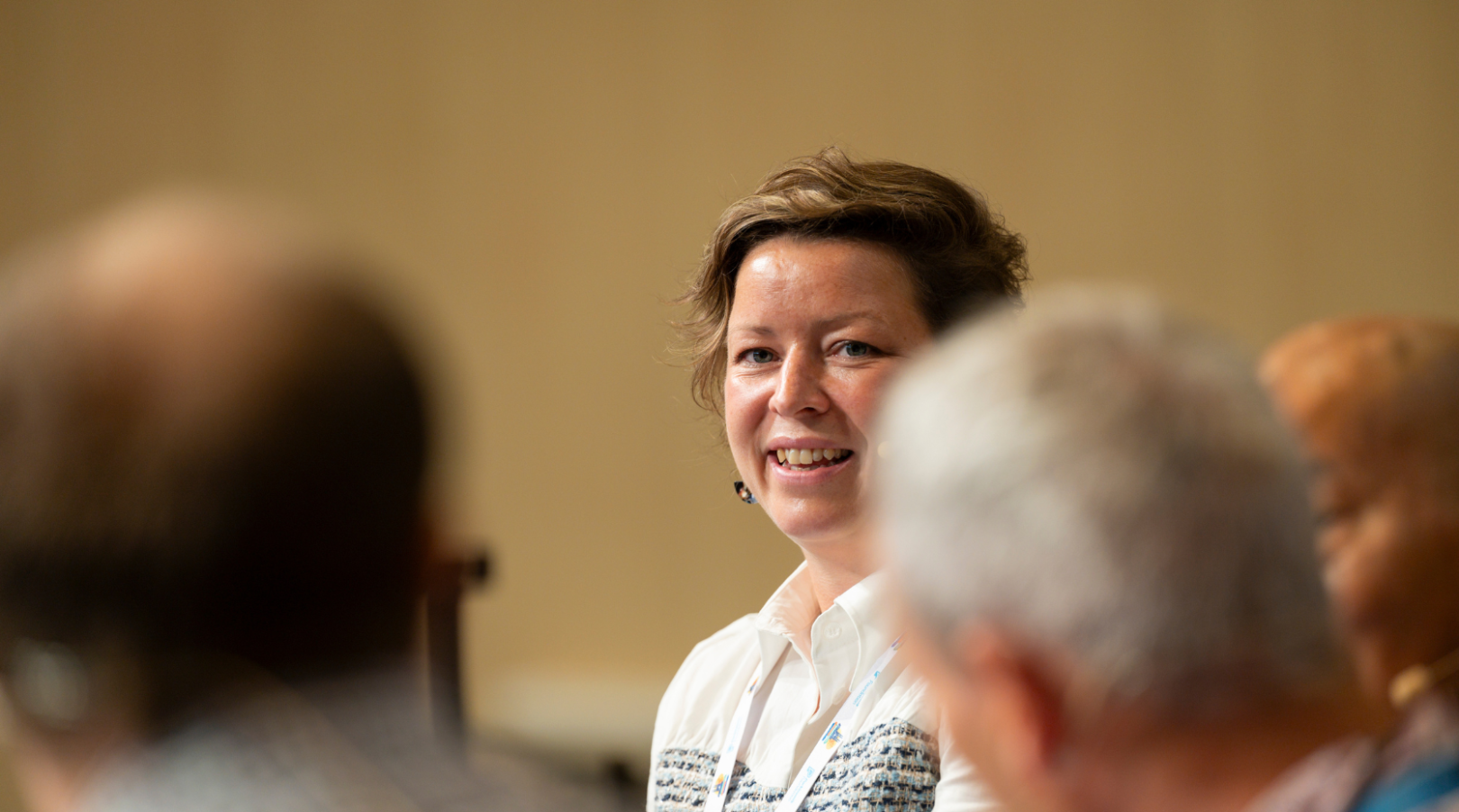
El Doctor Lennart Stieglitz, neurocirujano y médico jefe del servicio en el Hospital Universitario de Zúrich en Suiza, que ha realizado cientos de intervenciones de estimulación cerebral profunda.
Sopesar los riesgos y las oportunidades
Como cualquier intervención, la ECP conlleva ciertos riesgos, pero no más que otras (por ejemplo, hemorragia o infección). La hemorragia cerebral es un aspecto de la cirugía que preocupa a las personas con párkinson; sin embargo, es muy infrecuente y se produce solo en entre un uno y un tres por ciento de los casos. En el Hospital Universitario de Zúrich, la cifra es de un uno por ciento.
El Dr. Stieglitz comenta: «En los 500 casos de los que me he ocupado, he tenido dos pacientes con hemorragia sintomática severa, y ambos se recuperaron bien».
Las tasas de infección pueden variar de un centro a otro, pero en general también son bajas. En el Hospital Universitario de Zúrich, el riesgo de que los pacientes de ECP contraigan una infección que requiera tratamiento quirúrgico y la retirada parcial o completa de los implantes es de entre un uno y un dos por ciento.
La Dra. Boogers explica: «Al comentar los efectos secundarios, hago hincapié en cómo podemos mitigarlos. Si se produce una infección, necesitamos antibióticos por vía intravenosa, por lo que los pacientes deben asegurarse de informar al personal del hospital sobre cualquier alergia a los mismos».
Incluso si un paciente contrae una infección que resulta en la retirada del dispositivo, no significa que no pueda volver a someterse a la intervención. La Dra. Boogers especifica: «Consideramos la reimplantación como mínimo tres meses después».
El Dr. Stieglitz recuerda un caso reciente, solo uno en las últimas 300 intervenciones en el Hospital Universitario de Zúrich, en el que hubo que extraer el sistema de ECP de un paciente con párkinson tras desarrollar una infección siete meses después de someterse a la cirugía de ECP. A pesar de ello, la persona en cuestión está deseando volver a someterse a la intervención este otoño.
«Se benefició muchísimo de la terapia y está muy triste porque tiene que vivir sin ella en estos momentos».
El Dr. Stieglitz también indica que las personas con párkinson tienen un mayor riesgo de delirio tras someterse a anestesia. «Es algo de lo que informamos a los pacientes».
Otras preocupaciones acerca de la estimulación cerebral profunda
Un importante temor que tienen las personas con párkinson está relacionado con ciertos pensamientos suicidas tras la cirugía, aunque, según la Dra. Boogers, son extremadamente infrecuentes.
«Si se hace una búsqueda en Google acerca de la estimulación cerebral profunda, se pueden encontrar historias sobrecogedoras», afirma.
La Dra. Boogers pone de relieve que cualquier afectado debería ponerse en contacto con su asesor de ECP, el cual podrá investigar por qué se producen estos pensamientos.
Otra preocupación que pueden tener algunos pacientes con párkinson es que necesiten silla de ruedas tras el procedimiento. Sin embargo, los datos revelan que es muy poco frecuente.
La Dra. Boogers observa: «Es una situación extremadamente infrecuente. Eso querría decir que ha habido alguna complicación en la cirugía, que la inserción del electrodo ha provocado una hemorragia masiva que ha provocado daños significativos. Pero las hemorragias provocadas por la inserción del electrodo son extremadamente infrecuentes; se dan en menos del uno por ciento de los casos. Si hay alguna hemorragia, normalmente es asintomática, lo que significa que la localizamos en un TAC, pero en realidad no vemos ningún síntoma asociado. Así que, estas situaciones extremas que la gente cree que podrían producirse no ocurren casi nunca».
Aquellos que consideran la ECP también pueden tener el temor de no sentir ninguna mejoría después; en otras palabras: de que no funcione. La Dra. Boogers aclara al respecto: «Si el electrodo está bien colocado, los síntomas motores siempre mejoran en cierta medida. Entonces, tenemos que definir lo que de verdad significa “funcionar” para el paciente. Para unos pacientes, podría significar poder ir a la tienda a comprar comida con un andador. Y puede que para otros, esta palabra signifique poder volar al otro extremo del mundo, ser independientes».
Expectativas realistas
Es crucial que las personas con párkinson tengan expectativas realistas acerca de lo que puede hacer la ECP por ellas. En términos generales, lo que podían hacer cuando se medicaban antes de la cirugía es lo que podrán hacer después. En otras palabras: la intervención no mejorará la calidad de su fase «ON», pero debería aumentar la cantidad.
La Dra. Boogers da un ejemplo: «La semana pasada, un paciente me dijo que tenía 65 años y que trabajaba a tiempo completo en su tienda. Quería someterse a la ECP porque quería poder seguir trabajando al mismo ritmo cuando tuviera 75. Lamentablemente, no es una expectativa realista».
Continúa: «Pero si la expectativa es que en 10 años a partir de ahora pueda valerse de manera que únicamente necesite una ayuda mínima de los demás, eso sí es algo en lo que la ECP puede ayudarle».
Los pacientes que se someten a ECP también necesitan saber que, aunque esta pueda mejorar su calidad de vida, no ralentiza el avance de la enfermedad de Parkinson.
El Dr. Stieglitz comenta: «La ECP funciona igual desde el momento en que comienza a usarse. El problema es que el párkinson cambia con el tiempo y, llegados a un punto, pueden surgir nuevos síntomas (como trastornos de deglución, trastornos del equilibrio o incluso demencia), y estos síntomas no responden a la medicación ni a la ECP».
La Dra. Alexandra Boogers, actualmente médica asistente y neuróloga de la Universidad de Toronto, Canadá, fue una de las fundadoras del programa de formación DBS Select en el centro Health House de Lovaina en Bélgica.
Una conversación sobre los efectos secundarios
Al igual que cualquier medicación puede provocar efectos secundarios, es necesario que el paciente mantenga una conversación abierta con un profesional sanitario acerca de los efectos indeseados que pueda tener la ECP en su caso, además del resultado general que quiera lograr. Algunos enfermos de párkinson podrían, por ejemplo, experimentar problemas de equilibrio y trastornos del lenguaje, y esto es algo que Ivan ha experimentado: «Mi lenguaje se ha podido deteriorar un poco, probablemente algo más durante los últimos seis meses. No estoy del todo seguro de si habría sucedido igualmente si no me hubiera sometido a la ECP».
La Dra. Boogers explica que los avances en tecnología de ECP permiten que en algunos casos se puedan minimizar estos efectos secundarios ajustando la estimulación.
«A menudo, dejo que el paciente decida qué es lo más importante para él. Si quiere liberarse de los temblores pero arrastrar un poco el habla, o si quiere comunicarse con claridad pero con algo de temblor».
Mejora de la vida familiar
Otro factor del que hay que ser consciente es que la ECP puede ser tan eficaz que la vida del paciente podría cambiar drásticamente y, por tanto, su relación con sus seres queridos.
El Dr. Stieglitz comenta: «Desde el principio, le decimos al paciente que se trata de una enfermedad que afecta no solo a una persona, sino a toda la familia. Tras el tratamiento, las relaciones podrían cambiar y los papeles de cada miembro también, por lo que hay que estar preparados», advierte.
Para Ivan y su pareja, Eleanor, la ECP mejoró tanto los síntomas que creen que el tratamiento ha salvado su relación.
Antes de la ECP, Ivan admite que a menudo le decía a Eleanor que llevaba puesta la bomba de apomorfina cuando no era así. «Debido a los efectos secundarios de la bomba, a menudo decidía no usarla y prefería mantenerme en estado “OFF” y no poder moverme», confiesa. «Esto llevaba a situaciones en las que Eleanor me encontraba postrado en una silla cuando se suponía que tenía que cuidar a nuestros dos pequeños. La falta de confianza que generaba en Eleanor y la carga que suponía sometió a nuestra relación a muchísima presión», explica.
Afortunadamente la ECP lo cambió todo.
«La mejora más significativa ha sido que ha vuelto la confianza a nuestra relación», afirma Ivan sobre los beneficios que la ECP ha aportado a su vida y la de su familia. «Ahora siempre estoy moviéndome, lo que ha eliminado la impredecibilidad que antes nos atenazaba. Ahora planeamos actividades juntos, como excursiones o vacaciones, sin la preocupación constante de que mis síntomas interfirieran. La mejora de mi enfermedad ha tenido un impacto muy profundo en nuestra vida familiar», concluye.
Es necesario tener en cuenta que al someterse a la ECP, normalmente se reduce el consumo de medicamentos, por lo que también se reduce el riesgo de equivocaciones en la frecuencia y las dosis, un aspecto fundamental para pacientes mayores o con demencia.
La decisión de someterse a la estimulación cerebral profunda
Al preguntarle qué consejo daría a alguien preocupado por someterse a una intervención de ECP, el Dr. Stieglitz afirma: «Le diría que intente recabar la mayor cantidad de información posible».
Aunque hay una ventana óptima para la ECP, Stieglitz explica que es lo suficientemente amplia y que las personas que padecen párkinson tienen tiempo más que suficiente para recopilar todos los datos que necesitan y decidir si esta intervención es adecuada para ellos.
«Definitivamente, hay tiempo suficiente para leer, obtener información, hablar con distintos especialistas e incluso otros pacientes. Si los pacientes lo solicitan, les ponemos en contacto con otros que ya se hayan sometido al tratamiento para que obtengan la información de primera mano».
La larga lista de pacientes del Dr. Stieglitz dispuestos a compartir lo que la ECP ha hecho por ellos habla por sí misma sobre los beneficios que este tratamiento puede ofrecer a las personas con párkinson. Como resultado, estos pacientes y personas como Ivan ahora disfrutan de una mejoría en los síntomas que a menudo les cambia la vida.
This year has seen several new Parkinson’s apps arrive on the market, adding to the ever-growing enthusiasm in the Parkinson’s community for using technology to help the condition. We take a look at three recent Parkinson’s apps to arrive on the scene, covering information-sharing, music and symptom tracking.
Turnto
Turnto is an innovative, free health app bringing together real-time treatment breakthroughs and clinical trial findings, all in one easy to navigate portal. The app was originally launched by Founder and CEO, Jessica Dove London, in response to the difficulty accessing any health breakthrough information after her son was diagnosed with a rare type of Cerebral Palsy. Recently the Turnto app has grown to help serve the Parkinson’s community, allowing you to find ‘everything and anything about Parkinson’s in one place.’
Here you can get access to easy-to-understand summaries of new medical research, the ‘full picture’ real treatment reviews from users, advice from other people living with Parkinson’s and personalised updates to your phone or tablet each day.
Jessica explains: “Health breakthrough information is like a living thing. It’s living in research, living in the patient community who are often trying things years ahead of the research, it’s living in the amazing clinicians and amazing researchers, and it can take many years for treatments or interventions to be translated to the community. We want to speed that up together.”
Passionate about the health and wellbeing benefits of singing for people living with Parkinson’s, MediSing has been holding group online singing sessions since 2014. Expanding on this, they have now launched an interactive singing app to work alongside in-person singing classes or for those who can’t attend classes. Developed in collaboration with speech-language therapists and people living with Parkinson’s, the easy-to-use app features songs and vocal exercises to help provide fun daily strength-building workouts for the voice. This collaborative effort is at the heart of the app with Nicola Wydenbach, Director of Training at Sing to Beat Parkinson’s, explaining: “The Parkinson’s community have been fundamental in the co-creation of this app.”
Parkinson’s ON is a simple, no-nonsense, free app designed to empower people to take control of their Parkinson’s. Developed and self-funded by Kuhan Pushparatnam, a person with Parkinson’s and co-host of the 2 Parkies in a Pod podcast, it provides a digital solution to many of the day-to-day issues he encountered.
“I’ve always believed tech, when done right, can be a great enabler in daily life, but despite a growing number of apps launched in recent years, Parkinson’s is still under-served compared to other conditions,” he says. “So I set out to build a simple, ‘Parky-friendly’ app that would not only empower me, but ultimately allow for a better, more informed quality of care.”
The app touches on three key themes: ON Time (helping users keep on top of medication with reminders and logs), ON Track (for users to track their their activity levels and symptoms) and ON Top (self-care content and access to the exclusive podcast.)
What really makes Parkinson’s ON unique is that it is designed by and for people with Parkinson’s. And the initial reception has been overwhelmingly positive, with 92% of people who trialled the app reporting feeling more ‘empowered’ as a result.
When sports coach Olivier Deharynck learned he had Parkinson’s, he saw no reason to cut back on his exercise regime. In fact, after a conversation with his neurologist, who gave him the ‘green light’, the 53-year-old triathlete decided his diagnosis would actually be a trigger to intensify his sports practice.
Olivier, who lives in Belgium, says: “When I learnt that I had Parkinson’s, the neurologist told me ‘go ahead, do as much sport as you can’. When I came back home, I told my wife: ‘I’ve got Parkinson’s but I need to do a lot of exercise’ – she thought the neurologist was crazy!”
Receiving a diagnosis changed not only Olivier’s perspective, but also his sporting performance. As a triathlete, “I saw my performances diminishing but I didn’t know that I had Parkinson’s. I was training more and more but performing less and less,” he says. “I became a triathlete with mediocre performances, but knowing that I had Parkinson’s, I became really good. My ego changed and I said to myself: “I’m not that bad after all”. So now for me finishing an ironman it’s all fun, even though I’ll finish it in the maximum time allowed.”
Although Olivier first began noticing symptoms in his forties, doctors suggested a combination of age and a demanding sports routine were the cause. It wasn’t until years later, at the age of 49, Olivier’s GP referred him to a neurologist. “I walked from the neurologist’s waiting room to his office, and he had already understood what I had,” he says. “It took me years to get to a diagnosis that was made in under 30 seconds.”
Despite the long wait, Olivier’s diagnosis was made easier by an “optimistic’ neurologist who delivered the news gently. “My neurologist was really good, saying ‘you might have a small but really a small Parkinson’s’ – as if a small Parkinson’s exists! Having no previous knowledge of Parkinson’s, I fell for it. He then added: ‘In any case I’m not worried for you as you’re an athlete, so you’ll manage easily. So it was very optimistic from his side, but he was right in the way he gently delivered the news. A specialist with a human approach, that’s rare!”
Positive approach to diagnosis
Determined to become an expert on the condition, Olivier began reading up on Parkinson’s – a process that helped him turn years of searching for answers into a new start.
While incorporating targeted exercises into his regime has helped – “I now have better balance than 20 years ago!” – Olivier recognises a supportive environment is key to coping with the daily challenges of life with Parkinson’s.
“The side effects from medication can be devastating,” he says. “You can’t really notice it when looking at me, but in reality I struggle and fight against cramps, against fatigue as sleep is bad, against slowness of movement (bradykinesia). Anything out of the ordinary is a catastrophe, especially in regards to my timetable and memory loss.” High, and fluctuating emotions, are among the non-motor symptoms he experiences.
“I need to live in a very protective and caring environment, as it becomes tough when stepping out of that world. In my sport challenges I do step out of my comfort zone, but I know how I will react, I prepare, and I receive good support from my friends and family.”
Concentrating on positive activities, such as sports coaching, have also helped. “I can’t say that it gets rid of the symptoms, but it makes my everyday life positive. Having exciting projects and being positive creates a dopamine substitute somewhere.”
Adapting exercise to a range of abilities
Exercise has always been a part of Olivier’s life. His son encouraged him to start trail runs, and a colleague got him into triathlons. So it’s not surprising that sport has remained an important part of Olivier’s life since his Parkinson’s diagnosis – but he’s careful to manage his expectations. “Now, if I finish my triathlon it’s an achievement in itself. I no longer expect from myself what I expected yesterday. I push and outdo myself of course, but I no longer have timed objectives. If and when I have to give up, which happens, well I give up. Onto the next!
It’s clear that Olivier’s passion for intense sporting challenges like triathlons and Ironman events, are a positive focus for him. Yet he recognises other people with Parkinson’s may benefit from a more gentle approach to exercise.
“When you have Parkinson’s, getting out of your chair and exercising is already tough. So starting off with a triathlon objective might be a little bit ambitious. I recommend balance circuits and nordic walking to get started. I focus on getting people to cycle in other ways (such as a velomobile or tricycle), in terms of balance or power output. Solutions exist, we need to share them within our circles. I think sport and exercising, getting started or getting yourself back in it, must come from the inside and from yourself.”
Physical and mental strength
Olivier’s challenges this year have included cycling approximately 1,600km on a velomobile (a three-wheeled recumbent bicycle) in ten days from Nivelles, Belgium, to Montpellier University Hospital, France, in May.
“The velomobile idea came whilst cycling with friends,” he says. “There was a strong wind coming from the side, it affected my balance and I didn’t have the power and agility to rectify it. I had a friend riding a velomobile with us, and he offered to switch bicycles. So I tried his velomobile and suddenly no issues at all in regards to the wind.”
The experience was enough to convince Olivier to purchase his own velomobile, although with typical ambition he did so with a goal in mind.
“I wasn’t going to buy one to go buy some croissants. It’s costly, so I wanted to do something ambitious with it. This same friend and I were planning on riding the Vélodysée (part of the Atlantic Coast Route), and then the Non Pharmacological Intervention Society (NPIS), based in Montpellier, asked us to join them there. So we finalised our plan from Nivelles to Montpellier. Two other friends joined us with their velomobiles and we were off!”
The challenge brought more than just sporting accomplishment, however. “It’s really more the emotions and friendships. The team cohesion was amazing; we left close friends and we came back friends of the heart. We were happy to see our wives and children, but actually quite sad not seeing each other everyday afterwards.”
The next month, Olivier completed a 108km Nordic walk from Liège, Belgium, to Dinant, Belgium, in 24 hours. “I always dreamt of doing a 100km. As I couldn’t do it running anymore, I decided to do it walking. I was pretty much always accompanied by someone, but I was the only one to do the 100km. The first 75km were totally fine, I nearly thought that it was too easy! But in the last 25km, with the accumulation of rain and humidity, I started developing blisters and it felt like walking on knives. That was really between the 75th and 85th kilometre, going from laughing to not laughing at all.”
The physical demands then became an internal battle. Olivier recalls: “On the 85th kilometre, people started questioning if I should continue or not, and the simple thought of other people deciding for me convinced me to continue. I wasn’t letting anyone stop me apart from myself! I managed to finish my challenge, quite tired though – I fell asleep at the bar terrace while having a drink. It was a really challenging experience due to the injuries. A nice experience however, more internal this time around and more about pushing back my limits.”
What lessons did he take from such demanding feats? “There are always solutions and we can always find something to learn. Maybe being a bit more prepared, you can never be prepared enough.
When presenting in a school about his projects, a teenager asked Olivier if Parkinson’s had brought him any positives. Stating he’d rather not have Parkinson’s, he replied that it has led to accomplishments that he wouldn’t have otherwise undertaken.
“Since this teenager asked me this question, I think about it everyday and I realise how lucky I am. I’m grateful when I’m out for a drink as much as when I’m cruising down France with my velomobile. Everything becomes pleasure as I realise my luck. And the more pleasure I take in accomplishing projects, the more projects I accomplish and the more my disease’s progression slows down.”
Communication and support
From finding sponsors to practical help such as adjusting his velomobile, friends and family have been an invaluable source of support, he says. “They’ll also remind me to take my dopamine for example when I’m in the midst of a challenge, I’ll usually forget! I’m very lucky to be surrounded by such caring people.”
New challenges on the horizon include a Montpellier-Annecy tricycle trip, rounded off with a lake tour in Polynesian canoes. Olivier is also calling for people with Parkinson’s to join in a 24-hour challenge at Lake Genval in Belgium in June 2025. Primarily a sailing race, it can be completed using any means where participants relay each other for 24 hours. “It’s very convivial and friendly. I’ll be doing it using a pedal-drive kayak, so the idea is to have a Parkinson’s team to complete it. As long as people can go in and out of the kayak, we’ll be very happy to welcome anyone for as long as they can”
Olivier is also planning a pedal-drive kayak tour of the Canary Islands, a Lille-Champagne cycle, and of course: “Whenever I can get a cheeky triathlon in, then I don’t hesitate to sign up”.
For the Parkinson’s community as a whole, communication is an important part of reducing stigma and raising awareness, he says. “Some people feel shame about their diagnosis, and don’t dare to talk about it. I’ve had people telling me that their colleagues thought they were alcoholics as they didn’t open up about their Parkinson’s. No condition or disease is shameful, so we need to talk about it.”
From competitive sporting events, to raising awareness of Parkinsons’, it’s clear Olivier believes in teamwork. “I’m a big believer in united we are stronger. We need to keep meeting new people and communicating new ideas between ourselves, that’s very important. When you bring people together, you can move mountains.
“Originally, I didn’t want to put myself forward and for people to think that I’m doing impossible things like Superman. That’s not true at all, I just believe in my dreams – otherwise, I’m Mr Everyman. If I can do it, everyone can.”
A new e-book, What Parkinson’s Feels Like: a collection of illustrations inspired by descriptions written by people with Parkinson’s around the globe, has been created by Canadian artist with Parkinson’s Barbara Salsberg Mathews to raise awareness and share with others what it’s like to live with the condition.
Free to download, the e-book is the result of a question Barbara posted to her social media followers with Parkinson’s earlier this year: what does Parkinson’s feel like for you? Barbara then created several artworks conveying the essence of the responses she received using mixed media including watercolour, ink, acrylic paint and Photoshop.
Describing what she wanted to achieve with the book, Barbara says: “As [cognitive psychologist, musician, and author] Daniel Levitin wrote, ‘The power of art is that it can connect us to one another and to the larger truths about what it means to be alive and what it means to be human.’ So, I used my skills as an illustrator, especially while I can still draw and paint, to capture what Parkinson’s really feels like.”
Barbara found the process of working on the illustrations profoundly meaningful.
“At first, I had thought we’d create a comic book with a few drawings per page. But the descriptions submitted were often quite complex and deeply moving. These required more time to capture the visuals that I saw in my imagination, all the while honouring the contributors’ voices.”
Barbara Salsberg Mathews
Sometimes Barbara’s Parkinson’s symptoms slowed her down, with fatigue forcing her to pace herself. “At times, I pushed my weak, formerly dominant hand and arm to convey what was in my head, as often my body ran ‘out of gas’ when my meds wore off. But I got used to telling myself, ‘I can still draw and paint, it just takes me longer.’”
Barbara also believes that working on the project improved her art. “Many of the submissions challenged me as an artist, which helped make my work stronger. For example, Dave Clark, one of the presenters of podcast 2 Parkies in a Pod, described living life in slow motion. I wanted to suggest a fast-moving world in contrast to the slow-moving person in my artwork. So, I blurred the people in the background.”
Seeing their thoughts converted into art struck a chord with those who sent their descriptions of Parkinson’s to Barbara.
Those sent in by Richelle Flanagan, an Irish dietitian with Parkinson’s and founder of the My Moves Matter app, and Dr Soania Mathur, a Canadian Parkinson’s advocate with Parkinson’s, were merged as follows: “Parkinson’s feels like an unwelcome guest who is still in my house when I get home and I have to look after them. They try holding me back as I do my best to face the challenges that are inevitable.”
Barbara’s resulting painting, of a woman coming home to find a man sitting at her table expecting dinner, provoked this response from Richelle: “Mr Parkinson is feeding on my dopamine neurons. I look forward to the day that I can stop feeding him and boot him out!”
Paqui Ruiz, of the Spanish association of women with early onset Parkinson’s Con P de Parkinson, likened having Parkinson’s to being on a rollercoaster – a view shared by Ben Stecher and Judy Furman: “Parkinson’s feels like a never-ending roller coaster ride of emotions, with ups and downs, never knowing what’s around the next bend.”
In response, Barbara drew a group of people on a never-ending rollercoaster. Commenting on the picture, Paqui said: “This is how I think the disease develops. There is a twisted side and there are better sides; it’s the duality of our body, how we feel, how we are seen. Our essence as a human being is something that neither this nor any other disease can take away from us.”
Barbara says: “Reading these descriptions reminded me that I’m not alone with these symptoms. I could never have created this booklet without the descriptions of all those who shared their lived experiences with Parkinson’s. I’m most grateful to my fellow Parkinson’s sisters and brothers.”
You can download “What Parkinson’s Feels Like” (as well as free copies of the illustrations from the book) here, where you’ll also have the option to donate to one of three Parkinson’s charities: Parkinson’s Europe, Parkinson Canada or PD Avengers.
Parkinson’s personalised care a step closer in the UK as new trial begins
Improving quality of life for people with Parkinson’s and those with other long-term conditions is the focus of a new £2.5-million experimental programme
A trial of a new £2.5-million personalised care and self-management programme aimed at improving quality of life for people with Parkinson’s and others with long-term conditions began in the UK in September.
Called Co-Action, the new four-year programme is the result of the findings that came out of the OPTIM-PARK European research trial funded by the Joint Programme for Neurodegenerative Diseases. Designed to bring about a multi-sector intervention to support people with Parkinson’s and carers in their daily lives, the project produced five scientific articles* after consulting people with Parkinson’s, family carers, representatives from voluntary organisations and healthcare professionals in Denmark, Norway, Spain and the UK between 2020 and 2022. Four of the studies were published over the past two years, while the final one, about a proposed care pathway to support personalised care for people with Parkinson’s and their families, will be published next year.
Professor Mari Carmen Portillo, Professor of Long Term Conditions at the UK’s University of Southampton, and leader of the OPTIM-PARK project, spoke about its aims: “Based on our previous experience of doing research with people with other long-term conditions and people with Parkinson’s, we found out that there are many similarities across conditions, that the systems of support vary from country to country, and that there’s a huge gap when it comes to working with carers in this field. So, we thought that it was a good idea to try to propose an intervention that could bring together the different systems of support, and to check how it could be rolled out in different countries.”
Co-Action for personalised care
The Co-Action programme will focus on providing systematic personalised care, which was one of the most important findings to come out of one of the five OPTIM-PARK articles, “Perspectives of people with Parkinson’s disease and family carers about disease management in community settings”. It established that throughout the course of Parkinson’s, as well as a medical treatment plan, people need access to emotional support, physical rehabilitation, and information on health services, voluntary associations and community groups.
Prof. Portillo explains more: “One of the problems with the existing clinical guidelines – not only for Parkinson’s, but for all long-term conditions – is that they focus very much on the biomedical aspects of the conditions, on the diagnosis and the journey related to medical treatment and consultation. When we talk about personalised care, we need a game-changing shift from a treatment or biomedical approach towards a person-centred approach, in which we focus on what really matters to people on a daily basis. And this may not be connected to the condition per se. It may be acceptance [of the condition], or a need to know which resources or systems of support are available. We are talking about fatigue, social life, social support and loneliness. One of the ideas that came out was that health and social care would work more closely together by involving voluntary Parkinson’s associations to achieve personalised care and improve the Parkinson’s journey.”
Professor Mari Carmen Portillo
One of the aims of Co-Action is, therefore, to implement a care pathway that will set out how voluntary organisations could play a bigger and more structured role, working alongside health and social care services to provide consistent and meaningful care.
Prof. Portillo says: “We have done plenty of research in which we have seen that even for other conditions, voluntary organisations can cover a lot of needs when it comes to the management of the condition alongside formal services.”
Care coordinators vital
Another of the published OPTIM-PARK articles, “A Parkinson care coordinator may make a difference”, found that a care coordinator would be vital if such a collaborative approach was to work. This person would assess the needs of the person with Parkinson’s and involve them and their family carers in deciding which systems of support in the community would be best for them.
The coordinator would then synchronise the work of the different voluntary organisations with that of healthcare providers according to the person’s needs and follow up to see if and how these support systems were helping them.
An app is also currently in development that people with Parkinson’s or other long- term conditions – such as arthritis – will be able to use in order to access resources to improve their quality of life. The app is being supported by the Applied Research Collaboration programme Wessex at the University of Southampton to test its applicability in primary care services.
One service for all conditions
The published articles also highlighted that those living with long-term conditions like Parkinson’s share common problems, which should be the focus of care pathways rather than individual diagnoses.
The new Co-Action programme will, therefore, see people with different conditions accessing similar services. For example, a person with Parkinson’s could join support groups to improve mobility alongside someone with arthritis who could also have mobility needs.
Co-Action is taking place across three different sites in the UK, and Prof. Portillo says that the participation of those with two or more long-term conditions will be essential: “We want to include them to help us shape our intervention further so that it’s even more meaningful for them; this is very much about engaging them and co-producing with them.”
Prof. Portillo is working with colleagues in Spain to propose and test a similar study working with people with multiple long-term conditions including Parkinson’s there.
*The four OPTIM-PARK studies already published are:
Professor Oliver Bandmann – the Professor of Movement Disorders Neurology and Co-Director of the Cross-Faculty Neuroscience Research Institute at University of Sheffield, UK – is the winner of this year’s Tom Isaacs Award.
He received the award in recognition of his vital research focused on discovering new treatments with the potential to slow, stop or reverse Parkinson’s.
The award was presented virtually to Professor Bandmann on behalf of Cure Parkinson’s and Van Andel Institute (VAI) as part of the annual Grand Challenges in Parkinson’s Disease symposium, held in Michigan, in September.
Professor Bandmann’s ground-breaking research group screened a library of 2,000 compounds in patient tissue to identify promising compounds, including ursodeoxycholic acid (UDCA), a drug already in use to treat liver disease. Work by Professor Bandmann suggests UDCA may also address mitochondrial dysfunction in Parkinson’s models. As a result, the team were able to take UDCA to clinical trial at phase 2, with positive results, and UDCA is now moving forward to the next stage of clinical testing.
Alongside this research, Professor Bandmann investigates non-motor symptoms of Parkinson’s, in particular the common symptom of pain. He also runs two movement disorders clinics every week and is the Movement Disorders Service Lead at Sheffield Teaching Hospitals NHS Foundation Trust, a role through which he has worked to improve the service for patients and training for Parkinson’s nurses.
Under his leadership, a regional shared care protocol for Parkinson’s drugs was developed and implemented across South Yorkshire which has dramatically simplified and standardised the availability of primary care drugs for Parkinson’s.
The Tom Isaacs award was set up in memory of Cure Parkinson’s late co-founder and President, to recognise a researcher who has significantly impacted the lives of people living with Parkinson’s and has involved people with Parkinson’s in their work.
“I was absolutely delighted to receive the Tom Isaacs Award. I remember Tom well – he was incredibly inspirational,” said Professor Bandmann. “However, I would like to acknowledge that this award really reflects the excellence of Parkinson’s research across the Sheffield Neuroscience community. I’m also very lucky to work together with such wonderful clinical colleagues in our Sheffield Teaching Hospitals Movement Disorders Service.”
Professor Bandmann is a clear example of the very essence of the Tom Isaacs award. He is passionate about working to improve accessibility for people with Parkinson’s, encouraging healthcare providers to embrace novel ways of working, such as digital monitoring and remote appointments where appropriate.
As a National Neurosciences Advisory Group (NNAG) Lead for two years, Professor Bandmann took on feedback from public and patient consultations. He worked to develop a new pathway which emphasised the importance of a timely and well managed diagnosis for people with Parkinson’s and other movement disorders, and subsequent regular access to healthcare professionals.
He has also served as the President of the Doncaster branch of Parkinson’s UK, and has been involved in several awareness raising and community outreach campaigns.
Helen Matthews, CEO of Cure Parkinson’s said: “We are thrilled to present the Tom Isaacs award for 2024 to Oliver. He and his team are breaking new ground in the search for disease-modifying treatments for Parkinson’s, and he has consistently worked to improve the care received by those diagnosed with the condition. We are delighted to celebrate Oliver’s passion and commitment to the Parkinson’s community with this thoroughly deserved award.”
Parkinson’s Life’s #WomenAndParkinsons campaign – a series highlighting the unique experiences of the estimated three million women worldwide who live...