What are ‘off’ periods – and how can they impact people with Parkinson’s disease?

13 July 2023 Sophie Parrott Sponsored by Bial
Insights

What are ‘off’ periods, what causes them – and why is raising awareness of them so important? Dr Lazzaro di Biase and advanced nurse practitioner Brian Magennis share their insights


“Management of Parkinson’s is really about symptom control,” says Brian Magennis, an advanced nurse practitioner based at Mater Misericordiae Hospital in Dublin, Ireland. His deep knowledge of Parkinson’s comes not only from his patients, but also his father, who lives with the condition.

As Brian explains, one way to control Parkinson’s symptoms is through levodopa, a dopamine replacement agent considered by many to be a “gold standard” treatment for the condition. However, as the condition progresses, moments can occur when, despite medication, it becomes more difficult to manage both motor and non-motor symptoms. These moments are known as ‘off’ periods.

Dr Lazzaro di Biase, a neurologist and head of the movement disorders service at the Campus Bio-Medico University of Rome, Italy, refers to this ‘off’ state as a “hallmark of Parkinson’s symptoms”. It can come in several forms.

Describing one such form, known as wearing ‘off’, Lazzaro says: “The ‘off’ state can kick in when levodopa is eliminated from our body – and people begin to express motor symptoms that are related to the low amount of dopamine going to the brain.”

Other types include partial ‘on’ or dose failure: “Sometimes, a dose of medication may provide incomplete relief of symptoms or fail to provide any symptom relief at all,” Lazzaro explains.

Meanwhile, unpredictable ‘off’ episodes are the moments when people transition suddenly from ‘on’ to ‘off’ with no obvious link to medicine dosage timings. “These are often the most difficult to manage,” says Lazzaro, “as they are not easily corrected by adjusting the medication schedule.”

Another type is “delayed ‘on’ – which is when it takes longer for someone’s medications to kick in”, says Brian.

Lazzaro adds that ‘off’ periods are complex and can impact a wide range of symptoms, including “tremor and stiffness, as well as non-motor symptoms such as panic attacks and depression”.

“Most people don’t just suddenly turn ‘off’ but wind down”

Brian explains that the ‘off’ period phenomenon has often been compared to an on/off light switch, but he sees it as more of a dimmer switch. “Most people don’t just suddenly ‘turn off’, but wind down, slowly switching ‘off’,” he says. This means that these states can sometimes be anticipated – and even avoided altogether.

But this might be easier said than done, according to Lazzaro – who says informing people about how to recognise an ‘off’ state is a key challenge. “This is especially the case for people in the beginning phases of Parkinson’s. ‘Off’ periods can be present, but as the symptoms are very mild, people are unlikely to recognise them.” He also notes that these periods are more noticeable in the later stages of the condition, regardless of the person’s age.

In addition to emphasising the value of being able to identify when these periods occur, the two experts stress the importance of monitoring them over time. As with many Parkinson’s symptoms and characteristics, ‘off’ periods are likely to develop in severity as the condition progresses. “That’s when you might have to adapt the current baseline treatment or look to other options,” says Brian. These other treatment options might include on-demand medication, which is designed to tackle ‘off’ periods when they occur.

He advises people with the condition to keep a diary of symptoms and medications to help identify possible ‘off’ periods. Constipation, infection and dehydration are among the factors frequently identified for triggering ‘off’ periods in such journals, he says, because they can “inhibit oral medicine absorption and limit the optimal response”.

Lazzaro adds that because levodopa is absorbed in the small intestine, delays to gastric emptying can slow the absorption of the drug. “There can also be variations in how individual people metabolise levodopa,” he adds, “which can lead to different durations of effect and levels of symptom control.”

Consistent medication intake is key. “Timing is very important to avoid ‘off’ periods,” says Lazzaro, “because it’s related to the level of fluctuation of dopamine. It may take some trial and error to find the regimen that provides the most effective symptom control.”

Brian agrees: “I always say to my patients that the more reliable they are with taking their medication, the more predictable the control of their symptoms will be.”

The importance of raising awareness

Lazzaro argues that awareness is “the most important part” of effectively managing challenges associated with ‘off’ periods. “By recognising and being aware of these symptoms, people with Parkinson’s may be able to manage parts of their own therapy,” he says.

“People often learn to recognise their own individual ‘off’ symptoms over time. It’s important for people with Parkinson’s to communicate closely with their healthcare providers about any changes in symptoms or medication response, so that the treatment plan can be adjusted as needed,” he continues.

“It’s not only for the person with the condition to understand, but also for their family or the people around them,” adds Brian. “‘Off’ periods can be very distressing for both groups when they happen.” He explains how anxiety around these states can prompt people to, for example, take risks with walking that may lead to falls. “But if people understand what ‘offs’ are, they can do something about it.”

For Brian, learning about ‘off’ periods and raising awareness of how to manage them comes back to supporting people with symptom control. “If we can get that right, then people with the condition may function better, live better, be less prone to having medical problems – and have a better quality of life.”

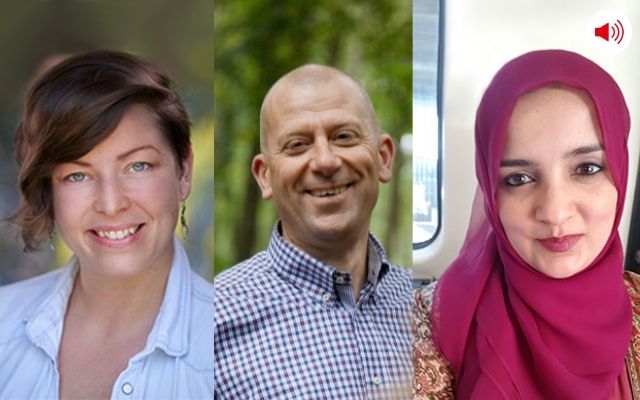
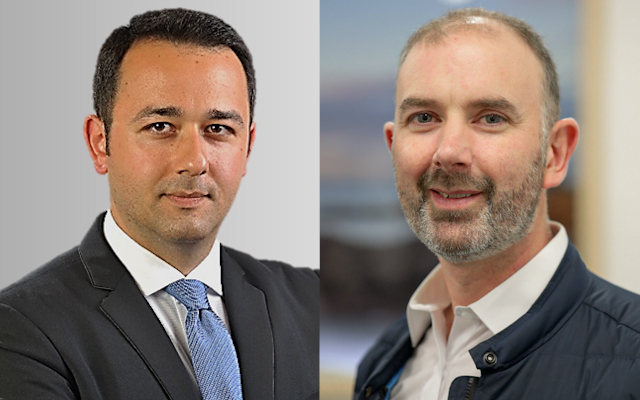
Lead image: Dr Lazzaro di Biase (left) and Brian Magennis (right). Brian Magennis image credit: Clinical Photography Department at the Mater Hospital, Dublin, Ireland.


Parkinson’s Europe is sharing this article for information purposes only; it does not represent Parkinson’s Europe’s views and is not an endorsement by Parkinson’s Europe of any particular treatments, therapies or products.

Parkinson’s Europe’s highlights of the World Parkinson Congress

Our Board members outline their highlights of the July event
12 July 2023 Verity Willcocks
News

The sixth World Parkinson Congress (WPC), which took place in Barcelona, Spain, from 4 to 7 July 2023, was an important event for Parkinson’s Europe. Here, some of our Board members look back on their WPC highlights.

The triennial international forum organised by the World Parkinson Coalition is the only scientific event to gather the entire Parkinson’s community together – and it is this inclusive focus that our new president, Josefa Domingos, cited as one of her WPC highlights. “The event thoughtfully integrated the perspectives and insights of individuals with personal experience, as well as their caregivers, into all aspects of its proceedings,” she says. “This approach provided a comprehensive and holistic view of the issues at hand, fostering a more compassionate and supportive community.”
The momentum and force for change such a large event can foster by uniting so many different Parkinson’s stakeholders stood out for Parkinson’s Europe Board member Cvetka Pavlina Likar. “There was a special excitement at the Congress of expectation, hope and the desire to find out as soon as possible how to stop Parkinson’s if it cannot be cured,” she says.

Parkinson’s Europe Board member and Advanced Nurse Practitioner Brian Magennis praised the opening ceremony for providing “great inspiration”, with the “amazing contribution from Sir Paul McCartney” and the ‘Parky Raccoon’ song being particularly special moments.

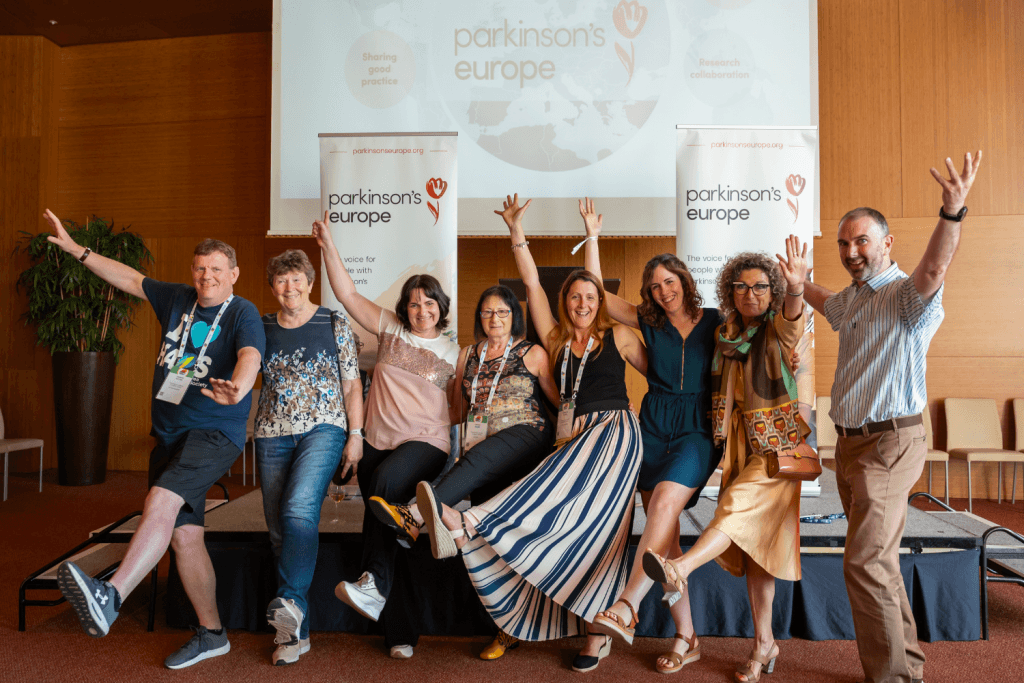
Parkinson’s Europe Board members at the World Parkinson Congress 2023

Brian also extolled the WPC’s breadth of content. “The programme was a rich blend of basic science, clinical science and practical care sessions related to Parkinson’s. There was a strong emphasis on genetics and biomarkers mixed with new theories on nutrition and exercise and disease modification,” he says.

Patricia Pérez, coordinator at the Spanish Federación Española de Párkinson (FEP), shares this view: “The scientific level of the presentations was of a high standard and covered a wide range of topics of interest in Parkinson’s research,” she says.

“The scientific level of the presentations was of a high standard and covered a wide range of topics of interest in Parkinson’s research,” says Patricia Pérez, Parkinson’s Europe Board member

The invite-only Leadership Forum, which takes place a day before the main event begins, is key to the WPC. Co-chaired by Parkinson’s Europe director general Russell Patten, it saw more than 100 leaders come together to identify the priorities in the Parkinson’s field.

This was one of the highlights for the FEP, whose president, Andrés Álvarez, director, Alicia Campos, and Patricia, participated in the Leadership Forum working group, ‘Engaging People with Parkinson’s in Clinical Research’.

By involving all Parkinson’s stakeholders, the WPC provides a vital place for meaningful debate. Josefa singled out the World Café brainstorming session in particular for focusing on a crucial question: what are possible solutions to end stigma that can be implemented or influenced by leaders in the community?

The WPC is also an important platform for sharing the most recent research. Josefa, who works with people with Parkinson’s as part of her vocation as a physiotherapist, draws attention to findings about whether specific types of exercise can alleviate certain Parkinson’s symptoms more effectively than others.

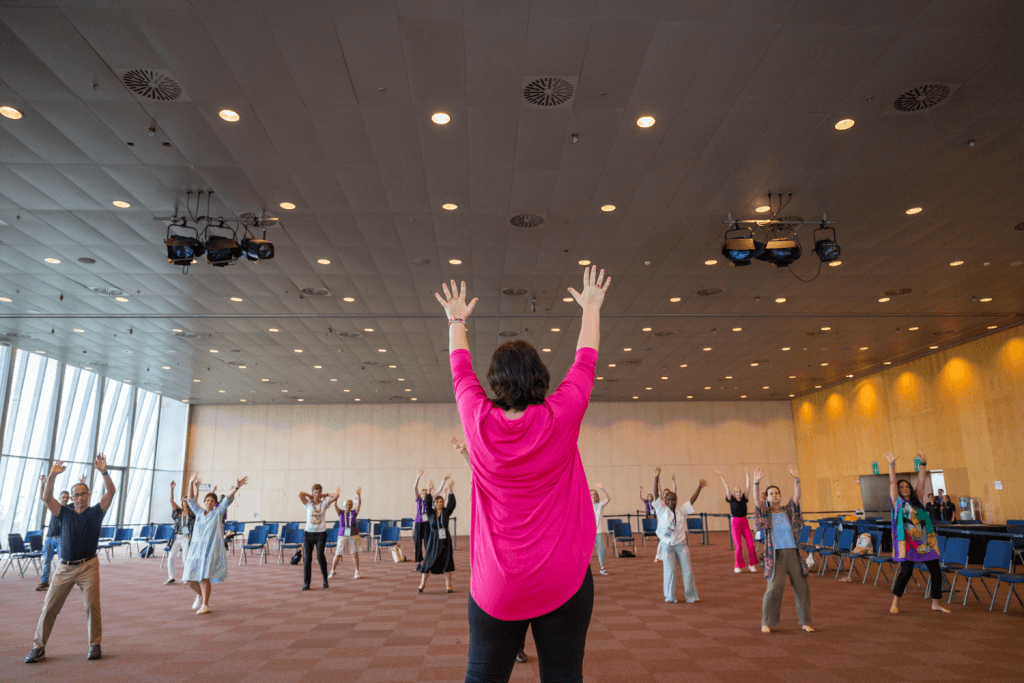
Exercise was an important topic at the WPC

“For example, to improve the severity of motor signs and disability, the evidence now suggests that the highest-ranked interventions were dance, aqua-based training, and gait/balance/functional training. However, flexibility training might have a trivial or no effect on the severity of motor signs. When it comes to improving quality of life, the evidence suggests that aqua-based training probably has a large beneficial effect. And for those experiencing freezing of gait, the highest-ranked interventions were strength/resistance training, aqua-based training, and dance. While more comprehensive studies are needed to strengthen our confidence in these findings, they offer a fresh approach to recommending physical exercise as part of Parkinson’s management,” she says.

The WPC’s important role in sharing and spreading knowledge was also a highlight for Cvetka, who is president of the Parkinson’s Disease Society of Slovenia.

Bastiaan R. Bloem’s presentation, ‘Why should we track Parkinson’s disease?’, was very good in showing how people with Parkinson’s can participate in the monitoring of their disease and therefore feel better and, when they need help from a neurologist, to ask for it,” she says.

Another of her highlights was the presentation on the differences in Parkinson’s in men and women, which she says is “particularly important”. She also singled out Georgina Aldridge’s talk, ‘The role of alpha-synuclein and co-pathology on cognitive and non-motor symptoms’. “This is important due to the large number of non-motor disorders in Parkinson’s,” she says.

As a community, we are stronger together and an inherent part of the WPC is meeting with people from the global Parkinson’s community. The opportunity to network as well as greet old friends and make new ones at gatherings like the Parkinson’s Europe social event is something many of our Board members listed among their highlights. “The experience of attending the WPC has been rather insightful as it has given us the opportunity to meet people and Parkinson’s organisations from all over the world and to share impressions about our work with the Parkinson’s community,” says Patricia.

Josefa Domingos said the WPC underlined the need for all stakeholders – healthcare, research – to put the priorities of people with Parkinson’s first. “The Congress conveyed a universal message that emphasises the significance of considering the opinions and needs of individuals with Parkinson’s and their families throughout the entire process of care delivery and research. This will help reduce differences between the interests of professionals and the needs of those with Parkinson’s taking part in worldwide research and treatment programmes and promote a fairer and patient-focused approach.”

Find out more about the World Parkinson Congress

Smartwatches could speed Parkinson’s diagnosis

Wearable technology could predict Parkinson’s years before a clinical diagnosis, a UK study has found
04 July 2023 Verity Willcocks
News

Smartwatches could help to predict Parkinson’s up to seven years before a clinical diagnosis, according to research by Cardiff University in the UK.

Wearable technology that tracks accelerometry (acceleration of motion) could help to identify people who are most likely to develop Parkinson’s, researchers from the University’s Neuroscience and Mental Health Innovation Institute (NMHII) and the UK Dementia Research Institute found.

While Parkinson’s is largely recognised for its motor symptoms, non-motor changes in the earlier or prodromal stage of the condition can predate the onset of these symptoms by many years.

Dr Kathryn Peall, Clinical Senior Lecturer in the NMHII, said: “Parkinson’s disease is a progressive movement disorder caused by the loss of brain cells that use dopamine. However, by the time of clinical diagnosis approximately 50-70 per cent of these brain cells will have been lost. This makes early diagnosis of the disease difficult.

“We know that as Parkinson’s disease develops, there are changes to the speed of movement, so we investigated whether accelerometry could work as a prodromal marker for Parkinson’s disease, and ultimately allow for earlier diagnosis.”

Using data from over 500,000 individuals aged 40-69 years, the researchers compared data on accelerometry to models based on genetics, lifestyle, blood biochemistry, and prodromal symptoms data.

They found that computer programmes trained using the accelerometry data performed the best in being able to distinguish both those with clinically diagnosed Parkinson’s and prodromal Parkinson’s from the general population.

Dr Cynthia Sandor, Dementia Research Institute, Cardiff University, UK

Dr Cynthia Sandor, from Cardiff University’s Dementia Research Institute, which supported the study, said: “To our knowledge, this is the first demonstration of the clinical value of accelerometry-based biomarkers for prodromal Parkinson’s disease in the general population. Our results showed a pre-diagnosis reduction in acceleration was unique to Parkinson’s disease and was not observed for any other disorder that we examined.

“It suggests that accelerometery could be used to identify those at elevated risk for Parkinson’s disease on an unprecedented scale.

“In a clinical setting, continuous or semi-continuous monitoring of individuals can’t be achieved because of time, cost, accessibility and sensitivity. But smart devices capable of collecting accelerometer data are worn daily by millions of people.

“While much more work will need to be done before this is put into clinical practice, our discovery marks a significant leap forward in the early diagnosis of Parkinson’s disease, and suggests that devices such as activity trackers and smartwatches could play a key role in clinical monitoring.”

Read the full paper Wearable Movement-Tracking Data Identify Parkinson’s Disease Years Before Clinical Diagnosis published in Nature Medicine.

5 things to look out for at the upcoming World Parkinson Congress

29 June 2023 Verity Willcocks
News

Parkinson’s Europe will play an important role at World Parkinson Congress (WPC) in Barcelona, Spain, this July. Taking place every three years, this is the only scientific event that unites people with Parkinson’s with world-class experts and healthcare professionals as they debate the latest discoveries – and explore how to live well with the condition


Are you ready for the sixth World Parkinson Congress (WPC)?

The exciting event will take place in Barcelona, Spain, from 4 to 7 July 2023. Organised by the World Parkinson Coalition, this triennial international forum is the only scientific event to gather the entire Parkinson’s community together – including those with the condition, world-renowned experts and healthcare professionals. Its aim? To share the latest scientific discoveries and medical practice developments linked to Parkinson’s – and to explore how those with the condition can achieve the best quality of life.

Parkinson’s Europe played a key role in the very first WPC back in 2006 and has contributed to its success ever since through support and promotion efforts. This year, with the event taking place for the first time in mainland Europe, the organisation will have a higher profile than ever as the only European Parkinson’s umbrella association.

So, what can people expect from the upcoming event?

The forum is the only scientific event to gather the entire Parkinson’s community together.

1. Leadership Forum

The WPC Leadership Forum, which is co-chaired by Parkinson’s Europe director general Russell Patten, will take place on 3 July – the day before the World Parkinson Congress begins.

This invite-only event will see more than 100 leaders from the global non-profit Parkinson’s community come together. CEOs, executive directors and senior staff will discuss best practice approaches in Parkinson’s fundraising – and seek to expand their knowledge on how to serve people in the community.

With an opening presentation on the Leadership Forum’s ‘Vision, Mission and Values’, the event will involve three key sessions:

  • ‘The evolution of the Leadership Forum: Where we go from here’ – with a welcome address from the World Parkinson Coalition’s executive director Elizabeth ‘Eli’ Pollard.
  • ‘Finding solutions’ – including insights from the World Health Organization’s Dr Tarun Dua on the public health approach and a discussion on eradicating Parkinson’s stigma.
  • ‘Mobilising and connecting communities’ – exploring public policy development around the world and setting out strategic goals and objectives for the Coalition to work towards over the next three years.

The approved goals and objectives will be presented at the WPC Closing Ceremony on 7 July. After the Congress, these solutions will be shared alongside a final report with the World Health Organisation, government agencies, pharmaceutical industry partners and other stakeholders.

2. Working Groups

Focused Working Groups were set up after the last WPC in 2019, with keen support from Parkinson’s Europe. Over the past four years, these groups have regularly met to discuss and try to determine solutions for some of the challenges faced by the Parkinson’s community.

Parkinson’s Europe research manager, Amelia Hursey, and director general, Russell Patten, have been involved in these Working Groups, which have focused, respectively, on ‘Engaging People with Parkinson’s in Clinical Research’ and ‘Young Onset Parkinson’s’. The other Working Groups include: ‘Global Equity, Access and Inclusion’; ‘Building International Relationships’; and ‘Technology’.

On 4 July, these groups will report back on what they have learned – and outline their focus for the coming three years. At the event, Parkinson’s Europe’s partnership project manager, Francesco De Renzis, will co-chair the Working Group session focused on ‘Anti-Stigma and Parkinson’s’.

3. Clinical Research Village

The WPC Clinical Research Village hosts a range of talks and panel discussions that are open to all. From around 11:30am to 2pm CEST on Wednesday, 5 July, through Friday, 7 July, the talks will cover a range of topics, such as worldwide partnerships, equity, diversity and inclusion, and global considerations in research.

These talks include a discussion exploring patient involvement and engagement, which will be moderated by Amelia Hursey at 11:45am CEST on Wednesday.

“It’s a unique opportunity for everyone in the Parkinson’s world who has an interest in research to come together and learn from each other,” says Amelia. “I’m very excited to hear what everyone has to say and to bring that knowledge back into my work at Parkinson’s Europe.”

4. Parkinson’s Europe presentations and booth

At this year’s WPC, Parkinson’s Europe will have four in-person poster presentations to share informative insights with attendees about a variety of topics.

Two of these posters focus on scientific studies with which it has been involved. The first explores the treatment of ‘advanced’ Parkinson’s in collaboration with the pharmaceutical company Britannia. The second investigates the usability, understandability and acceptance of the MY PD-CARE digital tool for tracking and communicating the symptoms of Parkinson’s in collaboration with the pharmaceutical company AbbVie.

The organisation’s remaining poster presentations focus on A Parkinson’s Manifesto for Europe – the Parkinson’s Europe resource that aims to shed light on what is important to those in the community – and its educational campaign on improving sleep. Session times for these posters can be found on the Parkinson’s Europe website.

In addition, on Wednesday through Friday, attendees can visit Parkinson’s Europe at WPC booth 703. Team members will be collecting information and data across the five key focus areas outlined in its manifesto – with visitors invited to share what is happening in their country around advocacy, education, treatment, wellbeing and research. Those unable to attend can share thoughts from their country by completing an online form.

5. Award for Lizzie Graham

For Parkinson’s Europe, a WPC highlight will be the presentation of the prestigious Robin A Elliott Award for Outstanding Community Service to its very own Board member, co-founder, former secretary general and former executive director Lizzie Graham.

As Lizzie enters retirement, the award is a fitting tribute to her decades of work for the Parkinson’s community. The presentation will take place on Wednesday, 5 July, at 9am CEST.

As one of her many achievements, Lizzie can be credited with helping to make the WPC the success it is today. In 2004, the World Parkinson Coalition was set up with the explicit purpose of uniting the Parkinson’s community against the condition by holding a regular conference.

Working towards holding its first-ever Congress in Washington, US, in 2006, the Coalition turned to Lizzie and Parkinson’s Europe – then the European Parkinson’s Disease Association (EPDA) – to help forge connections with prominent names in the European Parkinson’s community.

“They had few lead-ins at that time and appreciated our close involvement and support – not only from a European level but also from a global level because of all the contacts we had,” Lizzie remembers.

“We were more than willing to spread the word as widely as possible. I notified people like Professor Bas Bloem, Professor Eduardo Tolosa, Professor Fabrizio Stocchi, Professor Per Odin and so on.” She was also proactive in promoting the WPC among EPDA members and wrote to them asking for support.

Lizzie says: “These early beginnings set the scene for our contribution to all future WPC events, leading to the present day with Russell Patten on the steering group – and the involvement of what is now Parkinson’s Europe.”

35 new Parkinson’s drug trials launched in last year

29 June 2023 Parkinson's Life team
News

Researchers launched 35 new clinical trials of Parkinson’s drug therapies in the last year, according to recent findings published in the ‘Journal of Parkinson’s Disease’.

The 2023 Parkinson’s drug development pipeline report noted a slight decrease in active trials compared to the 2022 update (down from 147 to 139 overall). About one-third of trials were still in Phase 1, half were in Phase 2 – and just 20 (14%) were in Phase 3, raising concerns about ‘slow progress’.

However, of the active trials logged on ClinicalTrials.gov at the time of the latest report, 35 were found to be newly registered.

The report authors concluded: “The slow progress and lack of agents transitioning from Phase 2 to Phase 3 is concerning, but collective efforts by various stakeholders are being made to accelerate the clinical trial process, with the aim of bringing new therapies to the [Parkinson’s] community sooner.”

The ‘Movers and Shakers’ podcast: “We all have such different perspectives”

22 June 2023 Sophie Parrott
Stories

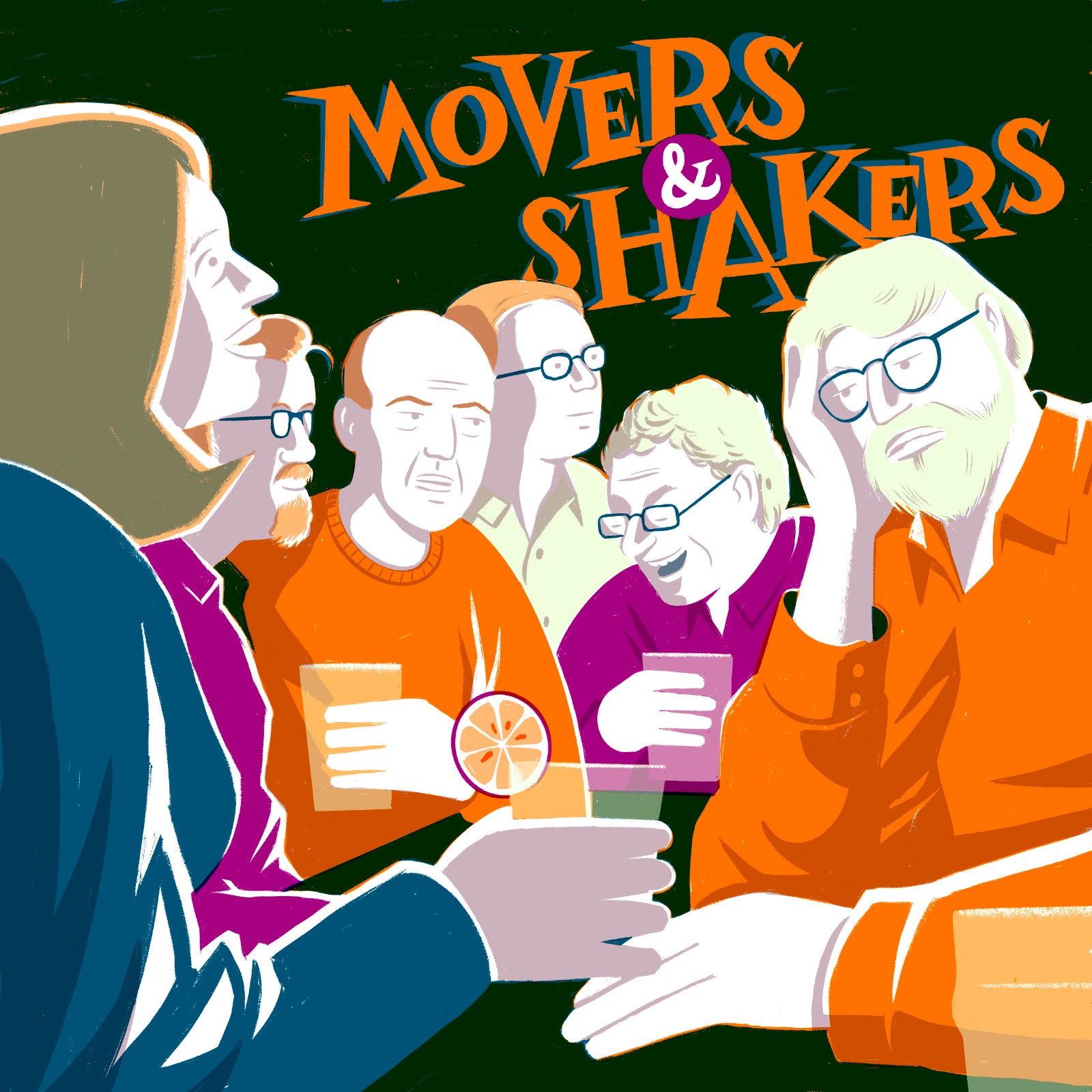
A group of UK-based high-flyers – including comedy legend Paul Mayhew-Archer, journalist Mark Mardell and former news host Gillian Lacey-Solymar – have launched a podcast for the Parkinson’s community. In this article, three co-hosts discuss the aim behind ‘Movers and Shakers’ and how it came to be


If you’ve ever crossed paths with someone who has worked as a journalist or broadcaster, you may be aware that interviewing and asking (sometimes difficult) questions is a big part of the job.

This is something that Gillian Lacey-Solymar will know all too well from her time spent as a journalist and co-host of the BBC business and news show ‘Working Lunch’. But after years of asking the questions, she has now taken a seat on the other side of the microphone to discuss her experiences of living with Parkinson’s.

Diagnosed with the condition 11 years ago, Gillian – who has also worked as a management consultant at McKinsey & Company and a lecturer at University College London, UK – describes her experience of receiving the news as “terrible”.

“My leg was trembling, and I had convinced myself that I had a trapped nerve,” she says. “The doctor did a scan on my brain and said: ‘I think you’ve got Parkinson’s’.”

More than a decade later, Gillian is one of six UK-based high-flyers – including Jeremy Paxman, Mark Mardell and Rory Cellan-Jones – who have come together to launch the ‘Movers and Shakers’ podcast.

First aired in March 2023, the audio series seeks to raise awareness of the condition – and boost fundraising efforts for the Parkinson’s community.

'Movers and Shakers' podcast.
The ‘Movers and Shakers’ podcast was first launched in March 2023. Image credit: Till Lukat.

“It meshes together quite nicely”

‘Movers and Shakers’ sees the group regularly convene to discuss the challenges – and the positives – of their Parkinson’s experiences. The episodes will cover a variety of topics, from Parkinson’s links with sex and shopping to diet, dating and new research.

Also joining Gillian, Jeremy, Mark and Rory as co-hosts are Sir Nicholas Mostyn, a High Court judge known for handling a string of high-profile divorces, and Paul Mayhew-Archer MBE, best known as the co-writer of the British sitcom ‘The Vicar of Dibley’.

Since his diagnosis in 2011, Paul has campaigned and fundraised for research into the condition. He also created the award-winning documentary ‘Parkinson’s: The Funny Side’, charting his own experience.

“From the moment I was diagnosed with Parkinson’s, I decided to try and find the funny side – and that kept my spirits up. I started to think of jokes [having] to do with Parkinson’s,” he says. “I adore performing, and it has led me to experiences that I wouldn’t have had otherwise.” Now, Paul tours up and down the country with his stand-up comedy show, ‘Incurable Optimists’.

Gillian says that Paul is a hilarious co-host and praises the humour he brings to the podcast. “Everyone has their own role to play,” she says. “Mark has very recently been diagnosed; I’ve had deep brain stimulation (DBS) surgery; Rory is the one who probably has the most interaction with doctors, and so on. We all have such different perspectives on things that it meshes together quite nicely.”

Sitting down to discuss their own experiences is a big part of the podcast offering – but the group also invites specialists and international experts to shed light on different aspects of the condition. “Recently, we have had some of the most fantastic guests on – including one of the greatest DBS surgeons in the world and a wonderful former surgeon who is an expert on different forms of exercise,” says Paul.

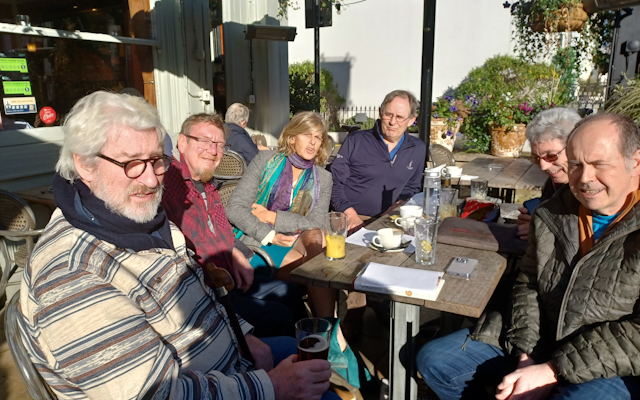
Published on a weekly basis, the episodes are recorded in a pub in Notting Hill in London – where the group can be seen squeezing around a narrow table to interact with one another. Laughing, Paul says: “It would be an awkward place for able-bodied people to go, even more so for people with Parkinson’s! Every time one of us needs to go to the toilet, we have to clamber over one another. It’s terribly funny.”

The six co-hosts of the 'Movers and Shakers' podcast.
“We all have such different perspectives on things,” Gillian explains. Image credit: Sally Jones.

A resource for the Parkinson’s community

The podcast may have only been on the scene for a couple of months now – but the co-hosts explain that ‘Movers and Shakers’ has already received fantastic feedback from the audience. “I think there are a lot of very lonely people out there who think nobody really understands Parkinson’s,” says Paul. “We’re saying: ‘We’re here, and it’s similar for us.’”

Gillian adds that they have received a host of letters, emails and comments from listeners. “It’s overwhelming that we have connected with so many people out there. I think they are grateful that we’re talking about the condition and perhaps that we don’t take ourselves too seriously.”

Looking to the future, Mark – who recently shared his story with Parkinson’s Life – says he hopes that the podcast will do “for listeners what it has done for me”.

“Hearing from my clever fellows delivers a jolt of recognition, that someone else has the same weird symptoms, the same strange thoughts and fears,” he says. “Parkinson’s is not a death sentence but rather life without any current prospect of parole – but it shouldn’t mean you’re locked in solitary. Join us and you won’t be alone.”

Interview: poet with Parkinson’s Martin Pickard talks creativity and Parkinson’s

Martin Pickard on rediscovering poetry after developing the condition, and co-founding online poetry collective Poets with Parkinson’s
15 June 2023 Verity Willcocks
Stories
Martin Pickard, co-founder of poetry collective Poets with Parkinson’s

There is increasing evidence to show that, after developing Parkinson’s, some people discover a new artistic side they never knew they had – and those who were already artistic can find that it boosts their creativity.

Martin Pickard, from Bedfordshire in the UK, is a co-founder of new online poetry collective Poets with Parkinson’s and has personal experience of this artistic boost. “There seems to be a percentage of people with Parkinson’s who get this creative surge, and poetry took hold of me,” he says.

Martin began writing poetry as a teenager but then family life and a busy career in facilities management took over. Decades later, during a two-year “limbo” when he was struggling to cope with mysterious symptoms that would eventually be explained by a Parkinson’s diagnosis, he took it up once more. “I came back to it as therapy to start with, to help me work out what was happening to me, but got really caught up in it,” he says.

Martin was finally diagnosed during the Covid-19 lockdown in 2020. “I couldn’t go and see anybody, I couldn’t go to any support groups, I couldn’t even meet with my kids to talk about it. Everything was online,” remembers Martin. But through poetry he was able to build bonds with other people with Parkinson’s. “Through various Facebook groups, I met a few people and discovered there were more like me! During lockdown I started running some open-mic events for poets with Parkinson’s and we built this little community,” he says.

Last year, Martin got together with a few other poets to found Poets with Parkinson’s, a platform where poets with the condition share their work with others on an online poetry ‘wall’. He and his two fellow administrators check the 80 or so poems that come in each month and most get posted on the site. Martin, who retired in 2019, says that simply running the website can take up a day of his time every week. “One, it’s something for me to do – a replacement for my previous addiction of work – but also there’s a real community; these are lovely people and it’s really nice to be able to curate [their work] and help them.”

The poetry on Poets with Parkinson’s is not all about Parkinson’s, and Martin stresses that this is why the group is called Poets with Parkinson’s, not Parkinson’s Poets. “We’re poets who happen to have Parkinson’s; we don’t only write about Parkinson’s, but our Parkinson’s experience obviously informs the way we look at the world,” he says.

Poets with Parkinson’s has taken off both in the UK and around the world. There are nearly 50 members who post their work on the site, while a further 100 come to the regular open-mic sessions or take part in other Poets with Parkinson’s activities. “We’ve got a very active group in Germany, who run German poetry evenings and events as well, and then we’ve got regulars from Italy, America, Croatia, Australia – all sorts of places,” says Martin.

The collective is a lifeline for some of its users. “With this condition it’s easy to feel isolated – even a bit fragile. Some of our members tell us they really look forward to the time they spend with us and it’s one of the top spots of the month. And the community of sharing and commenting on each other’s poems – people really value it,” says Martin.

He also makes time to produce his own poetry. “I probably spend an hour or two a day working on my poems,” says Martin, who writes and performs as a “Shaken Word” poet. “My poems are real slow-burners; I don’t sit down and write it. I just finished one I started about three months ago. I let it cook and fester and ripen…”

He shares that he writes three types of poetry: one that is personal and just for him; regular poetry; and poetry to help advocate for Parkinson’s, including a series he has written about non-motor symptoms. “Because people only know tremor, it was really nice to do a collection of what about the constipation, what about the depression, what about the indecision, what about the sleepless nights,” he says.

Martin was also involved in this year’s Parkinson’s UK campaign for World Parkinson’s Day. “We had poems up in lights on Piccadilly Circus, on billboards and all sorts of places,” he says.

Last year, Martin took part in an Innovation Lab run by Parkinson’s Europe to explore how to raise awareness, inspire and encourage exploration of the ‘creative burst’ experienced by some people with Parkinson’s. Sponsored by NeuroDerm, the workshop brought together people with Parkinson’s, neurologists and technologists to experiment with immersive experiences.

Asked if he believes in a Parkinson’s ‘creative surge’, Martin replies: “No question, and almost all of our group members say the same thing – even those that wrote poetry before say that since developing the disease they feel this extra surge of creativity, this extra impetus; they’re writing deeper, longer, more insightful poetry.”

Indeed, poetry is not Martin’s only creative outlet. “I’ve taken up a bit of art as well,” he says. “I never did that at all before Parkinson’s. I do a lot of pen-and-ink stuff, but I’ve also been playing around with acrylics and painting brightly coloured flowers and birds and things – I haven’t got a clue what I’m doing! It’s fun and it uses up some of that creative energy.”

Watch Martin perform his poems on YouTube

Parkinson’s in TV and film

The Parkinson’s community rate films and TV series where the condition is portrayed
09 June 2023 Verity Willcocks
Advice

Last month, we asked the Parkinson’s community for their views on the portrayal of the condition by fictional characters in TV shows and films – and they came back with some very interesting answers.

The topic raised lots of thought-provoking questions; not just about how important it is that the condition is portrayed accurately, but also about the part TV and film can play in increasing public awareness about Parkinson’s.

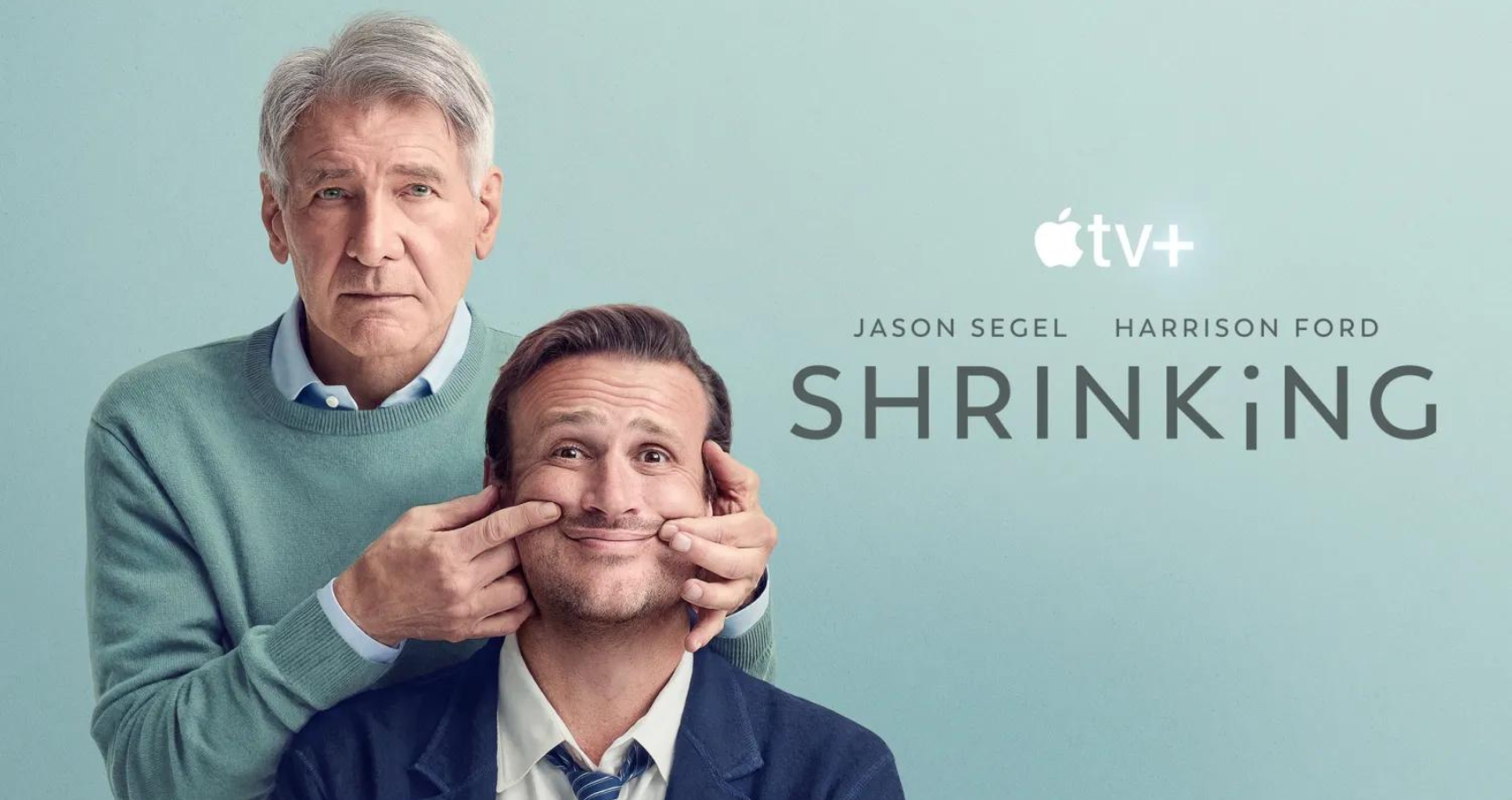
Harrison Ford received praise for his portrayal of Dr Paul Rhoades, a man with Parkinson’s in Apple TV+’s Shrinking, which has just been given the green light for a second series. “Harrison Ford is doing a great job in Shrinking,” said Larry Gifford of Parkinson’s advocacy group PD Avengers.

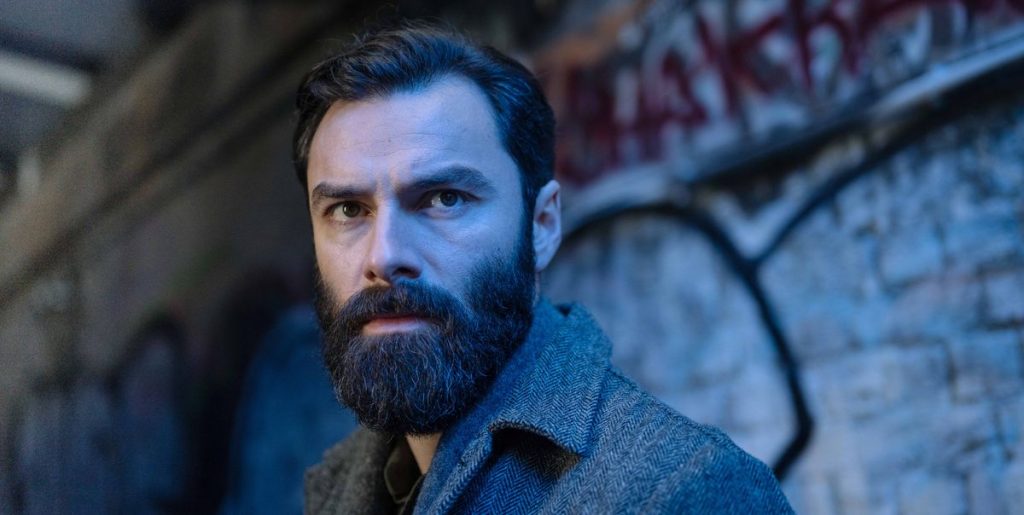
Aidan Turner’s role as a man recently diagnosed with young-onset Parkinson’s in last year’s ITV series The Suspect stood out for Martin Pickard of poetry collective Poets with Parkinson’s. “I was pleasantly surprised,” said Martin. “In the first place, it was good to actually see a character with Parkinson’s on the TV – I honestly cannot remember seeing one before, it’s like we don’t exist!

“Secondly, the portrayal was very real with plenty of mention of symptoms other than tremor, and the impact of stress on the condition. I read later that Parkinson’s UK had assisted with the characterisation, which would have helped a lot. I think it will have helped non-Parkinson’s people to understand more about the life we lead.”

English actor Eddie Marsan’s turn as Terry Donovan, a man with Parkinson’s in TV series Ray Donovan – which ran on Showtime from 2013 to 2020 – was also praised by more than one person. “Terry in Ray Donovan – excellent portrayal of Parkinson’s,” said Adell Dunleavy on our social media platforms. “With each new series you could see his progression. Amazing acting.”

Aidan Turner plays Dr Joe O’Loughlin in The Suspect

The New Music, a 2019 film about a classically trained pianist who, following diagnosis, ends up in a punk band, was singled out for its realism by John Macphee on our social media platforms.

The 2018 film Kinetics, about an unlikely friendship between Rose, a middle-aged woman with early-onset Parkinson’s, and Lukas, a rebellious teenage boy who enjoys Parkour, was a highlight for Nigel Smith of Poets with Parkinson’s. “I like the realism – the main actress [and writer Sue Wylie] had Parkinson’s – but also the contrast between the restriction of one character with the freedom of the other.”

It wasn’t all positive feedback, however. Anne Hathaway was slated for her role as Maggie, a young woman diagnosed with Parkinson’s in Love and Other Drugs (2010). Mirjam Holzel said her portrayal was “not realistic. Usually, the head and eye movements are not frozen enough – apparently the poker face is a difficult thing to act.” Nevertheless, Mirjam was “very moved by the film and happy they chose good-looking actors”. She also found the part where Maggie’s boyfriend asks a man whose wife is in the advanced stages of Parkinson’s for advice “very emotional”, quoting the reply given by the man in the film: “My advice is to go upstairs, pack your bags, and leave a nice note.”

And surprisingly, given that it is a medical soap, Grey’s Anatomy came in for criticism. “Dr David Hamilton’s character wasn’t believable,” posted Carol Janssen. “The doctors worked on a miracle cure for Parkinson’s. They performed some experimental surgery that doesn’t exist in the real world and then the whole storyline just disappeared.”

Want to watch Parkinson’s on screen? Here’s a list of TV series and films as well as documentaries featuring the condition.

Films and TV series featuring Parkinson’s

Ecstasy (2023)

A short, dark comedy about a man with Parkinson’s who enlists his son to help him score some ecstasy pills to help alleviate his symptoms. Watch on YouTube.

Kaleidoscope (TV series, 2023)

A master thief and his crew attempt an epic and elaborate heist worth $7 billion dollars, but betrayal, greed and other threats undermine their plans. Giancarlo Esposito portrays Leo Pap, who has Parkinson’s. Watch on Netflix.

Kinetics (2018)

Written by and starring person with Parkinson’s Sue Wylie as Rose, a middle-aged woman with early-onset Parkinson’s, and Lukas, a rebellious teenage boy who enjoys Parkour.

Late Night (2019)

Starring Emma Thompson as Katherine, a late-night talk-show host, and John Lithgow as Walter, her kind and indulgent husband who has Parkinson’s. Watch on Prime Video.

Love & Other Drugs (2010)

In 1990s Pittsburgh, medicine peddler Jamie Randall (Jake Gyllenhaal) starts a relationship with Maggie Murdock (Anne Hathaway), a young woman living with Parkinson’s. Watch on Prime Video.

Mank (2020)

1930s Hollywood is re-evaluated through the eyes of scathing social critic and alcoholic screenwriter Herman J. Mankiewicz (Gary Oldman) as he races to finish the screenplay of Citizen Kane (1941). In the film, Jamie McShane plays character Shelley Metcalf who faces a Parkinson’s diagnosis. Watch on Netflix.

Marriage Story (2019)

Noah Baumbach’s emotional divorce drama features actor with Parkinson’s Alan Alda, who plays Bert Spitz, the attorney of Adam Driver’s character, Charlie Barber. Baumbach doesn’t mask Alda’s shaking hands but keeps them in the frame, a visual contrast to the slick moves of the sharklike lawyers elsewhere in the movie. Watch on Netflix.

Ray Donovan (TV series, 2013–2020)

Ray Donovan, a professional ‘fixer’ for the rich and famous in Los Angeles, can make anyone’s problems disappear except those created by his own family. Ray’s brother Terry Donovan – played by Eddie Marsan – is a former boxer who has developed Parkinson’s. Despondent and shy, Terry owns a boxing gym in LA where his father and brothers hang out. Watch on Prime Video.

Shrinking (TV series, 2023)

This comedy about grief by Bill Lawrence, Brett Goldstein and Jason Segel features Harrison Ford as a wise, funny therapist who has recently been diagnosed with Parkinson’s. Watch on Apple TV+.

The Good Wife (TV series, 2009–2016)

Michael J. Fox plays Louis Canning, a New York attorney who suffers from tardive dyskinesia. Watch on Prime Video.

The Manor (2021)

After suffering a mild stroke and showing signs of Parkinson’s, Judith Albright (played by Barbara Hershey) reluctantly moves into a historic nursing home where she becomes convinced a supernatural force is killing the residents. Watch on Prime Video.

The New Music (2021)

After his Parkinson’s diagnosis, a classically trained pianist embarks on a path of self-discovery, leading him to a punk band. Their rebellious lifestyle and music provide a distraction from his troubles and a sharp contrast to his old life. Watch on AppleTV+, Sky Store or Prime Video.

The Suspect (ITV, 2022)

In this UK drama series, Aidan Turner plays Dr Joe O’Loughlin, who is coming to terms with a recent Parkinson’s diagnosis. Watch on ITVX.

The Spiral (2020)

In this multiple award winning short film, Igor Buzaev tells the story of a girl who dreams to treat her father from Parkinson’s. The film is based on a true story. Watch here.

Parkinson’s documentaries

Still: A Michael J. Fox Movie, a documentary exploring Michael J. Fox’s personal and professional triumphs and travails with Parkinson’s was released in May 2023

English National Ballet

A short video for World Parkinson’s Day featuring dancers from the ENB’s Dance for Parkinson’s programme. Watch on Twitter.

Happy Hour (2023)

Dr Ines Debove and filmmaker Bettina Rotzetter explore the topic of quality of life and Parkinson’s. Watch on YouTube.

HerStory

An opera performed by 85 people with Parkinson’s across the UK. Watch on Instagram.

Mediflix

Mediflix is a platform created to help find the answers, advice, and guidance needed to better understand specific health conditions. Watch films about Parkinson’s here as well as videos by Parkinson’s advocacy group, PD Avengers.

Passion, Purpose & Parkinson’s (2023)

Director Olz McCoy’s short documentary about three creative people living with Parkinson’s and their respective experiences. In partnership with Cure Parkinson’s and Parkinson’s UK. Watch on vimeo.

Sr. (2022)

Robert Downey Jnr’s film features the actor and his dad, who lives with Parkinson’s. Watch a trailer on YouTube. Watch the film on Netflix.

Still: A Michael J. Fox Movie (2023)

Biography/documentary film exploring Michael J. Fox’s personal and professional triumphs and travails with Parkinson’s. Watch on Apple TV+.

Stutz (Jonah Hill) (2022)

Follows Jonah Hill and his therapist Phil Stutz as they have candid discussions about mental health and anxiety, as well as giving an honest insight into Stutz’s life with Parkinson’s. Watch on Netflix.

What’s the best and worst portrayals of Parkinson’s you’ve seen on TV or in film? Tell us in the comments below.

Parkinson’s disease and creativity: “I discovered artistic abilities I never knew I had”

08 June 2023 Verity Willcocks
Stories

Have you experienced a boost in creativity since developing Parkinson’s disease? We explore how the phenomenon has impacted people across the community – and highlight its potential to “maximise wellbeing, reduce disease burden and improve quality of life” for those with the condition


While we might know a lot about the symptoms associated with Parkinson’s, much less is known about the creative surge that some people experience after they have developed the condition.

It is a fascinating phenomenon – and one that has been experienced by a small-yet-significant number of people with Parkinson’s. In many of these cases, people who had previously shown little interest in artistic pursuits found themselves with a sudden desire to create art.

A previous article written for Parkinson’s Europe in 2021 by Professor Rivka Inzelberg, neurologist at Tel Aviv University, Israel, noted “a large number of clinical reports on art-naive persons with Parkinson’s who developed artistic skills after diagnosis”.

And it isn’t just visual forms of art that appeared to get the creative juices flowing for people with Parkinson’s. “It spreads over a colourful spectrum, such as sculpting, wood crafting, poetry and novel writing, playwriting, and jewellery and lace making,” Inzelberg wrote.

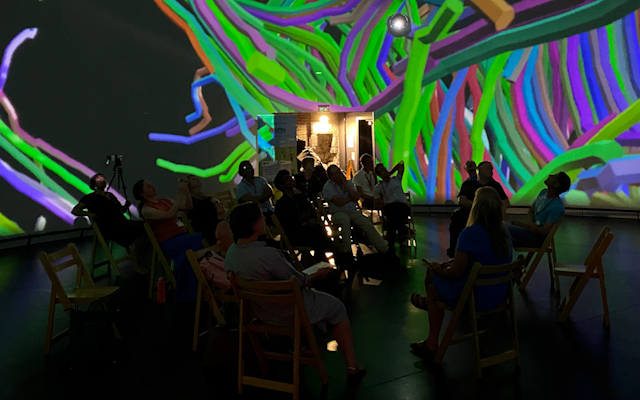
Delegates attending a workshop at the Innovation Lab.
A glimpse into the creative exploration of the 2022 Parkinson’s Europe Innovation Lab.

“While performing art, the movement just flows”

To convey this phenomenon, Inzelberg explained how one person with Parkinson’s, who had never written before, began to compose poems – and won an International Association of Poets competition. Another person with no previous writing experience developed their skills and went on to win a literary prize.

Tsipi Shaish, a painter, sculptor and Parkinson’s Europe Board member, also fell into the category of people with the condition who unearthed a creative side. “I discovered artistic abilities I never knew I had,” she said. “I have found a whole new part of myself, which I love and embrace.”

Moreover, there are several examples of people with Parkinson’s who were already artistic prior to their diagnosis – and either became more prolific after they developed the condition or gained inspiration that elevated their work to new heights.

The first published study on this topic compared the works of 40 established artists, both before and after their Parkinson’s diagnosis. The data found that, rather than declining – as some might have expected – the participants’ creativity and experimentation levels increased. Even more surprising, particularly for those who paint or draw, was that many said their motor symptoms didn’t hinder them when creating new works of art.

Inzelberg conveyed the testimonies of some people with the condition. She recalled them saying: “I don’t feel any limitation while painting, just the urge to paint more” and “While performing art, the movement just flows”.

Unlocking creativity with the Innovation Lab

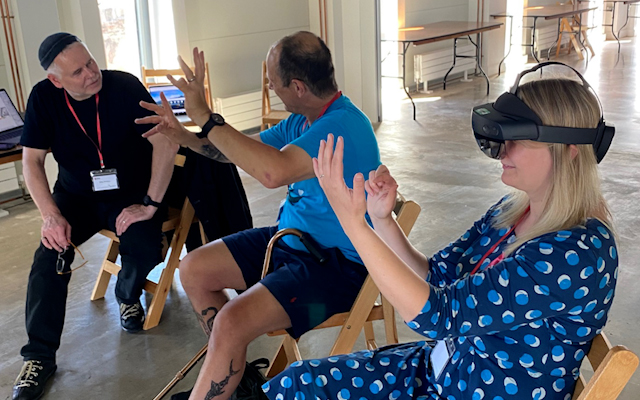
To explore how people with Parkinson’s might unlock their creative sides through virtual reality (VR) and augmented reality, Parkinson’s Europe held a two-day Innovation Lab last year.

With the support of pharmaceutical and medical technology company Neuroderm, the event took place in a state-of-the-art immersive dome in Plymouth, Devon, UK. The only one of its kind in Europe, this space allows video to be projected on a hemispherical screen that surrounds the viewer.

At the event, artists with Parkinson’s, neurologists, brain specialists, geriatricians and digital specialists gathered to experiment with the immersive experiences and investigate how to raise awareness of the condition as well as inspire and encourage people with Parkinson’s to unlock their creative potential.

The Innovation Lab included three workstations where participants could turn images into 3D software for modelling, capture video for use in the dome and experiment with VR storyboarding and editing. The aim was to explore how the technology could create an immersive experience for people with Parkinson’s.


While discussing the benefits people with Parkinson’s can derive from creative pursuits, one of the event’s attendees, Dr Camille Carroll – associate professor and honorary consultant neurologist at the Peninsula Medical School, University of Plymouth, UK – said: “Parkinson’s might in itself open a door to creativity, and this might be a useful avenue to explore for people to maximise wellbeing, reduce disease burden and improve quality of life.”

Among the other attendees were Parkinson’s Europe Board member Tsipi Shaish, and Martin Pickard, co-founder of the new online poetry collective Poets with Parkinson’s. Martin is a firm believer in the creative boost that some people with Parkinson’s experience.

Commenting on his experience with the poetry collective, Martin said: “Almost all of our group members said the same thing – even those that wrote poetry before diagnosis said that after they developed the condition, they felt this extra surge of creativity and this extra impetus. They found they were writing deeper, longer, more insightful poetry.”

One of the most powerful features of the Innovation Lab proved to be the multidisciplinary exchange of experiences and ideas to raise awareness, encourage exploration of Parkinson’s creativity and provide opportunities to improve the wellbeing of people with Parkinson’s.

A group discussion at the Innovation Lab inside an immersive dome.
“Parkinson’s might in itself open a door to creativity,” explains Dr Camille Carroll.

“Creativity is a secret gift given to people with Parkinson’s”

Science has not yet come up with an explanation for the potential link between Parkinson’s and the creative surge experienced by some people. One possible theory is that it may be a side effect of the anti-Parkinsonian medication levodopa, but this does not explain every case.

Whatever the cause, the creative boost can be an unexpected silver lining for those living with the condition. “It seems that the awakening of artistic creativity is an exquisite and specific secret gift given to people with Parkinson’s,” Inzelberg wrote.

And for those with the condition who haven’t experienced this surge of creativity, there are still plenty of benefits to be gained from taking up an artistic pastime.

Lead image: Delegates at the Innovation Lab, July 2022.

“I hope viewers laugh, cry and have a little dance in their seats”

25 May 2023 Sarah McGrath
Stories

Three years on from the making of ‘Ecstasy’, we catch up with director Grant Taylor to hear how the Parkinson’s community has responded to the short film – and why he hopes positive stories around disability and care can help “give them the motivation to keep going”


Nearly three years ago, we delved into the inspiring story behind ‘Ecstasy’ – a short film created by UK-based filmmaker Grant Taylor. Centred around the experiences of a man living with Parkinson’s and his son, the film portrayed their extraordinary quest to obtain an ecstasy pill so that the father could dance with his wife at her birthday party.

Grant’s personal connection to Parkinson’s – linked to the experience of his father Bob Taylor, who was diagnosed with Parkinson’s 25 years ago – has motivated him to shed light on the experiences of individuals living with the condition.

With the film now available online, we caught up with the writer and director to explore the response ‘Ecstasy’ has received from the Parkinson’s community.

A close-up of a clapperboard on the set of Grant Taylor's short film.
Grant’s short film is now available to watch online. Image credit: Chris Cox

In our last interview, you spoke about the process of making your short film ‘Ecstasy’. What journey has the film been on since then?

The last time we spoke, my team had completed two days of filming on ‘Ecstasy’, which is a comedy-drama about a man with Parkinson’s and his quest to buy an ecstasy pill with his son.

Our plan had been to shoot the entire film in two days, but things didn’t go to plan – we had a burst tyre on our lighting van and a biblical rainstorm that delayed things. We had to raise money so we could shoot for a third day. That turned out to be the day the UK entered lockdown due to Covid-19, so our crowdfunding efforts hit a standstill. Thankfully, when things opened up again, we raised the rest of our funds and completed our final day of filming.

We raised over £20k to make the film, and it was important for the team to also support Parkinson’s research. We were able to raise £1.5k towards research into the condition.

Tell us about the experience of screening the film at festivals and other events. What has the reaction been like?

Seeing our film on the big screen – listening to audiences’ reactions, hearing their laughs and seeing their tears – has been an incredible experience. We’ve been lucky: our film has played at festivals all across the UK as well as some BAFTA-qualifying film festivals and an Oscar-qualifying film festival. Along the way, it’s won seven awards, and we couldn’t be prouder of what we’ve achieved.

With each screening, it’s been so special hearing audience members react and speaking to them afterwards. My favourite screening was with my dad’s local Parkinson’s group in Dartford, UK. It was a full house of people from the Parkinson’s community, and the screening really hit home because that’s what our film was about: connecting with people living with Parkinson’s and their families.

An on-set image taken on the production of the short film 'Ecstasy'.
Grant says the positive reaction to the film has been “an incredible experience”. Image credit: Chris Cox

How have members of the Parkinson’s community responded to ‘Ecstasy’?

Gina, one of the film’s extras who lives with Parkinson’s, said: “The film was absolutely fabulous, inspirational, heart-rending and thought-provoking – what a privilege to have been involved.”

We also had total strangers from all across the world donate hundreds and thousands of pounds to our crowdfunding campaign. An American woman named Julie, whose husband lives with Parkinson’s, was extremely invested throughout. She became an executive producer on the film and shared it with her husband as a complete surprise.

Meanwhile, my dad was there on the film shoot and saw the early edits; he has been to a number of screenings and seen the project win awards. All that – combined with his significant cameo in the film – has made him super proud.

Commenting on the project, my dad said: “What I was not prepared for was the emotional outpouring from complete strangers about the parallels in their own lives – it brings hope for the future.” Even though it’s an upbeat, hopeful film, he loves a good cry! It’s been an emotional experience from the crowdfunding all the way through to completion.

What do you hope viewers will gain from watching the film?

Lots of people know nothing about Parkinson’s, so I’ve used my experience to share what I know – whether it’s the nuances of taking medication or the complications of freezing. It’s those everyday moments that made the movie real – and hopefully entertaining. Films about disability and care shouldn’t be miserable – they should make people feel but give them the motivation to keep going.

I hope viewers of ‘Ecstasy’ laugh, cry and have a little dance in their seats. It’s a fun, action-packed film with heart – made by people affected by Parkinson’s in their lives for people living with Parkinson’s.

Lead image credit: Lee Bolton

Increasing the profile of World Parkinson’s Day

11 May 2023 Sarah McGrath
News

We explore how organisations around the world marked World Parkinson’s Day this year and why improved awareness and recognition of the event are crucial for those in the community


“Many people are unaware that World Parkinson’s Day is still not officially recognised as a global health day,” says Veronica Clark, president of Parkinson’s Europe.

Every year on 11 April, World Parkinson’s Day invites people from around the world to unite to raise awareness of the condition – and to celebrate the work being done in the community. However, despite having launched way back in 1997, it is not mandated by the World Health Organisation (WHO) Member States as an “official” global public health day.

Veronica explains that, as part of an online campaign focusing on this year’s event, Parkinson’s Europe asked the community whether World Parkinson’s Day should be officially recognised alongside days dedicated to conditions such as Alzheimer’s and cancer. “We were delighted that more than a thousand people across Europe agreed with us,” she says, “and it inspired us to consider doing more to ensure it gets formal recognition in the future.”

In line with their Parkinson’s Manifesto for Europe, the organisation hopes to increase engagement with regional and global health bodies to raise awareness of the event – and address the key issues that matter to those impacted by the condition.

Italian Parkinson’s associations members launch and sign A Parkinson's Manifesto for Europe for World Parkinson’s Day.
Italian Parkinson’s associations launch and sign A Parkinson’s Manifesto for Europe for World Parkinson’s Day. Image credit: Veneto region press office

Campaigning for change

“Since the first World Parkinson’s Day, 25 years ago, numbers of Parkinson’s cases across the world have doubled at a faster pace than any other neurological condition,” Veronica says.

So, to underline the pressing importance of recognising the condition, Parkinson’s Europe launched a social media campaign aimed at raising awareness in the lead-up to World Parkinson’s Day – as well as an online map featuring the global events and activities taking place throughout April. The map showcased almost 100 events across 40 countries.

Among the initiatives featured was the Spanish Parkinson’s Federation’s awareness film ‘Give Me My Time’, which reflects on the time that people with Parkinson’s need in their daily activities and social lives. The PD Avengers campaign ‘Dopamine Dance Against Parkinson’s’ was also a hugely popular campaign that encouraged those living with the condition – as well as their friends and loved ones – to dance in the face of the condition.

Meanwhile, Dutch and Flemish neurologists, patient organisations and caregivers took to the European Parliament as representatives of the condition; at the event, Parkinson’s Europe Board Member Karl Wouters called for the parliament to address the ‘Parkinson’s pandemic’.

Members of the community also contributed to a film montage that Parkinson’s Europe compiled entitled ‘What Parkinson’s Means to Me’– which became the organisation’s most watched video ever on social media.

“Parkinson’s needs more funding, research and better treatment”

But what more can be done going forward to raise awareness of the condition, particularly outside of the Parkinson’s community? Another new video from Parkinson’s Europe asked people living with the condition and healthcare professionals to share their thoughts.

“We really need to humanise Parkinson’s and the image of it to make it more inclusive,” said Matt Eagles, head of patient engagement at healthcare communications agency Havas Lynx Group.

This outlook was echoed by Parkinson’s advocate Anthony Desjardins, who said: “Most people don’t know the many faces of Parkinson’s and that the symptoms are not always visible. There needs to be more representation of people with the condition in mainstream media.”

Meanwhile, Parkinson’s advocate Nikita Krielaart encouraged others with the condition to “share your story. Tell how life is with Parkinson’s – the positive things but also the negative things”.

Ultimately, it comes down to increasing understanding and awareness while also improving the resources dedicated to tackling the condition. “Across Europe and the wider world, Parkinson’s needs more funding, research and better treatment to provide a better quality of life, and ultimately a cure, for people with the condition,” says Veronica.

“It’s still not too late to add your name to the growing list of voices who agree that World Parkinson’s Day should be made an official health day. Giving World Parkinson’s Day the official recognition it deserves will help increase the impact of its message.”

Lead image: Društvo TREPETLIKA presentation at the Slovenian Parliament on World Parkinson’s Day. Credit: Miran Juršič

Parkinson’s Europe co-founder Lizzie Graham wins World Parkinson Coalition award

11 May 2023 Sarah McGrath
News

Parkinson’s Europe co-founder Lizzie Graham has won a World Parkinson Coalition (WPC) award for her contribution to the Parkinson’s community.

Lizzie is one of four people set to receive the Robin Elliott Award – which is given out every three years to individuals whose efforts best embody the goals and ethos of the WPC.

She will be presented with the award in a ceremony at the World Parkinson’s Congress, which will be held in Barcelona later this year.

Commenting on the news of Lizzie’s award, Parkinson’s Europe President, Veronica Clark, said: “Lizzie is Lizzie, and we love her for who she is and what she has done for us all – for people with Parkinson’s past and present and, I’m sure, future.”

Lizzie co-founded the European Parkinson’s Disease Association (renamed Parkinson’s Europe last year) in 1992. She has since held several roles within the organisation – including secretary general and executive director.