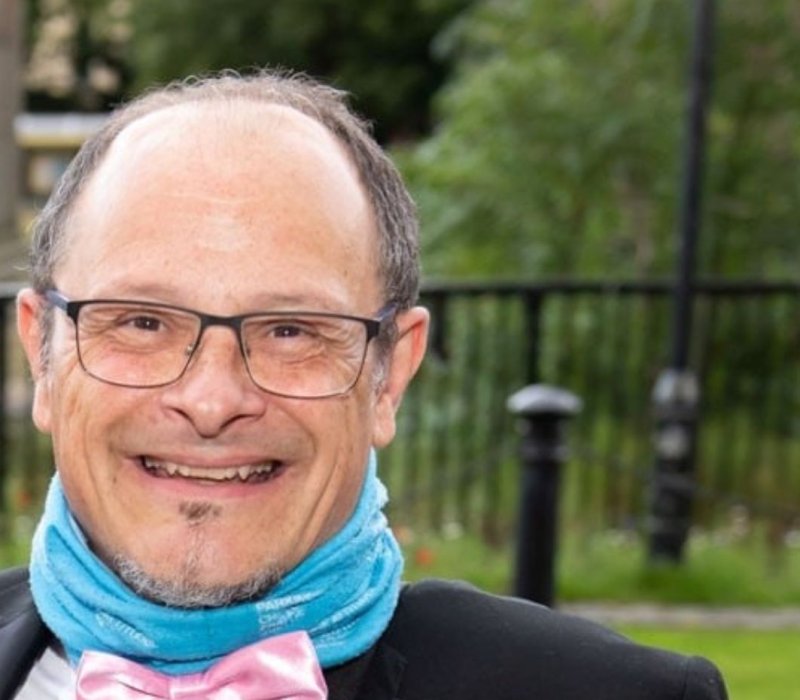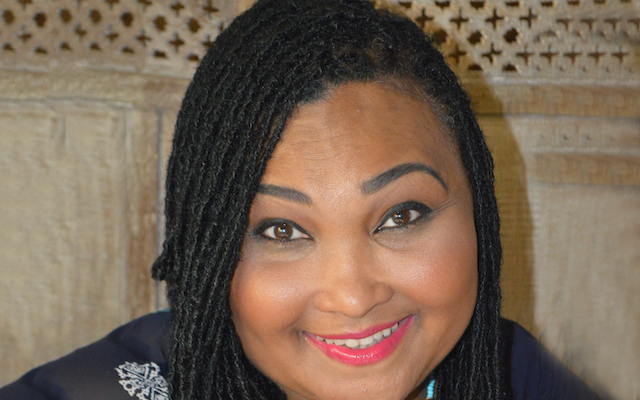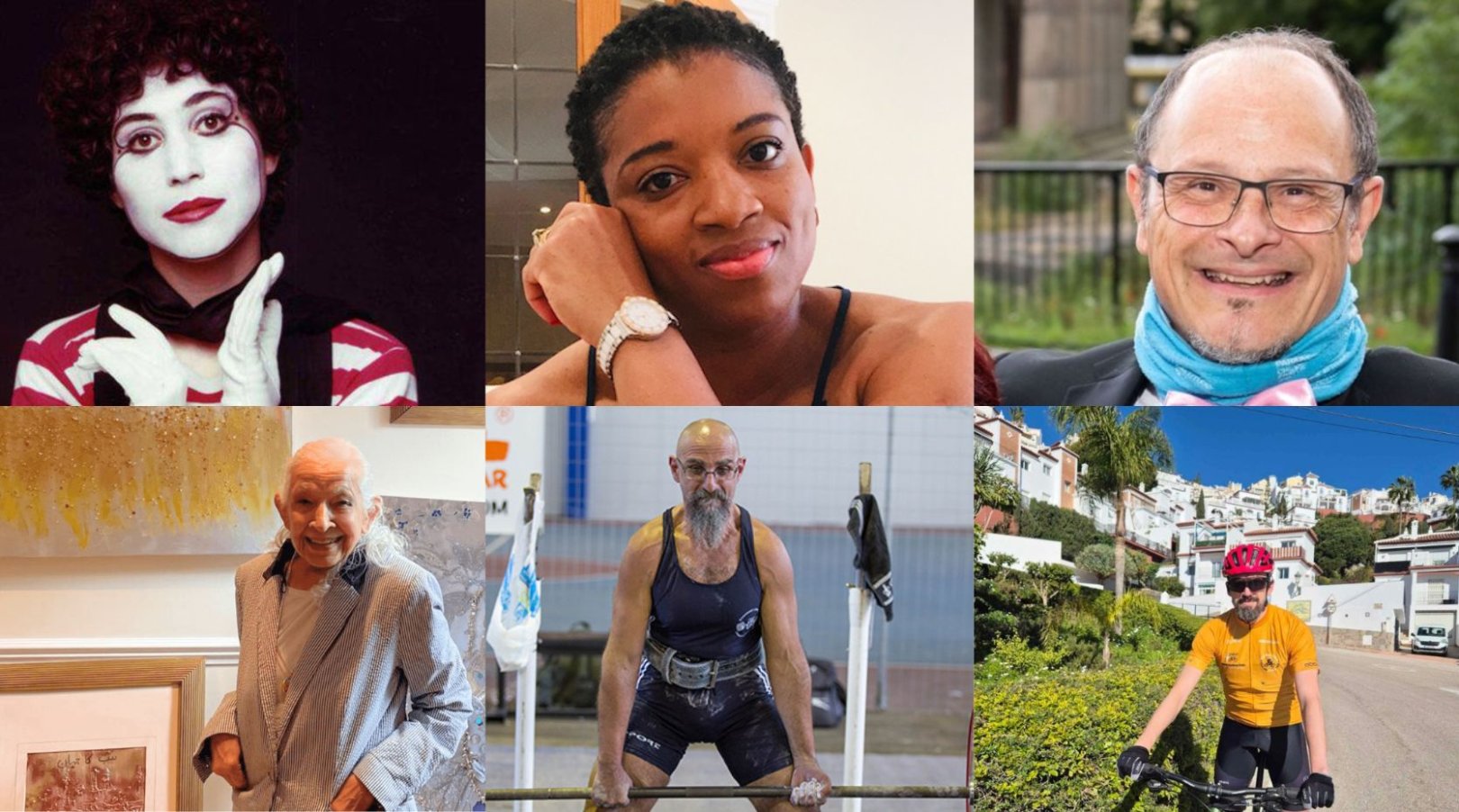
If you are looking for words of encouragement for someone with Parkinson’s, there is perhaps no better place to look than within the Parkinson’s community itself.
Here, we share some of the words of hope, wisdom, and sheer honesty from people living with Parkinson’s, from the tough moments to the ways their diagnosis has shaped their lives and led to new perspectives and experiences.
Words of encouragement for people living with Parkinson’s
1. “We need more awareness to break the myths and stereotypes around the condition… It can impact anyone, regardless of age or ethnicity.”
It took a decade for Manon Day to receive her Parkinson’s diagnosis. She explains why better understanding was needed around who the condition affects.
2. “Parkinson’s can be the wake-up call to transform yourself into a better person.”
Sharing his perspective on the link between Parkinson’s and identity, US-based motivational speaker John Baumann explains how the diagnosis has influenced what he values most in life.
3.”Go out and explore new avenues. There is so much to see and learn. Parkinson’s is tough, but I have been touched by the incredible kindness of people who have helped me along my way.”
Some 20 years after being diagnosed with Parkinson’s, Cecilia Gordon speaks to Parkinson’s Life about how the condition has enriched her relationships with people and art.
4. “No matter what science can do for people living with Parkinson’s, we must prepare our brain and body to face all difficulties.”
Nikolas Koukoulakis tells us how he has indulged in his love of powerlifting by coaching a team of people living with the condition in Greece – and why he encourages others to stay active.

5. “I wanted to be invincible, to not be bothered in the mind because that’s where the negativity starts—the fear, the self-pity or the depression. We’re all going to face some obstacles in life. What matters is how you face them.”
Artist Kanti Khanna shares her Parkinson’s journey, and how she discovered her gift for painting after her diagnosis.
6. “After I was diagnosed, I went on a rollercoaster of emotions, from the initial shock, to disbelief, despair, sadness, anger and resignation, until I finally became more resilient and positive.”
New Zealand-based author Robyn Cotton explains how, after accepting her diagnosis, she was inspired to write a second novel to raise awareness of the condition.
7. “Many people know what Parkinson’s looks like… but not the mental anguish it can cause, and the darkest moments we go through.”
Guy Deacon, former colonel of the Royal Armoured Corps in the British Army, tells us about travelling across Africa to help raise awareness of the condition.
8. “It takes positivity, courage, resilience, a large degree of vulnerability, heartache and tears of joy, a support network that always has your back, a desire to bounce back from adversity and a relentless desire to live your best life to survive.”
As Parkinson’s advocate Matt Eagles marks 50 years since he was diagnosed as a child, he reflects on his highlights and challenges, and the power of a positive mindset.
9. “Young onset is not a death sentence. Yes, some days are going to suck, but you can live your life. It takes some adapting and hard work.”
Samantha Felder was diagnosed with Parkinson’s at the age of 21. In a joint interview feature with her father, the pair explore how the condition has impacted their relationship.

10. “While I wouldn’t wish a Parkinson’s diagnosis on anyone, it has brought with it gifts that I’m truly grateful for.”
Author and blogger Jo Yaldren, who spent a year saying “yes” to new experiences, reflects on the memories and skills gained during this time – and why she encourages others to “live your life right now”.
11. “Stories can connect with people in a way that facts and scientific reports can’t.”
Christine Jeyachandran, a Parkinson’s blogger and filmmaker based in Peru, discusses how her own diagnosis inspired her to make a short documentary about the condition.
12. “I still find myself hiding my symptoms, not only from other people, but from myself… Nobody sees the struggles that we go through.”
Bill Bucklew, who undertook a fundraising walk with his friend, John MacPhee, highlights the importance of raising awareness around how the condition impacts people day-to-day.
13. “If women can be equipped early with the information on how Parkinson’s will impact them as women, they’ll be in a much better position to manage it.”
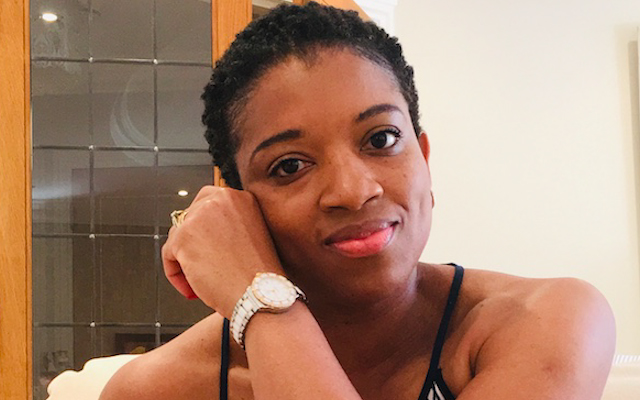
In a #WomenAndParkinsons feature, advocate and blogger Omotola Thomas sheds light on some of the unique challenges faced by women living with the condition.
14. “This disease awakened me. I now internalise the belief that we have one life, and it is up to us to make it meaningful. Parkinson’s has become a driving force, motivating me to achieve.”
Software engineer Urs Bratschi creates beautifully detailed art using pasta. While he found his early-onset Parkinson’s diagnosis overwhelming, he shares how finding his community helped him accept and learn to live well with the condition.
15. “I resisted becoming part of a Parkinson’s group, but I found that when I finally connected with some people with the condition, they were inspiring, supportive and helpful.”
Former teacher Leslie Davidson, whose Parkinson’s diagnosis came at the same time that her late husband was diagnosed with another neurological condition, highlights the importance of finding community.
16. “Just as people are becoming more open to talking about mental health, I think being more open to talking about Parkinson’s is a good thing. There is no shame attached to it.”
Former BBC political correspondent and journalist Mark Mardell highlights the importance of being “open and honest” about the condition.
17. “Parkinson’s forced me to slow down, sit with grief, and reevaluate who I really am outside of what I accomplish. It also invited me into a journey of healing and connection that I never expected.”
Healthtech startup founder and young person with Parkinson’s Shan Havins tells Parkinson’s Life how her Parkinson’s community makes the difference between surviving and thriving.
18. “I tell everyone: ‘I am not my disease. I am a person with Parkinson’s, and I aim to live life fully.’ For me, it’s all about giving back. How can I leave the world a shade more beautiful?”
Canada-based artist Barbara Salsberg Mathews discusses why she’s passionate about bringing the art of mime – along with plenty of laughter – to others living with the condition.

19. “Find a way to make art, even if you have to change techniques or mediums. Get over the ‘mad at the world’ phase and put that emotion into your art.”
We explore how creative pursuits helped artist Debra Magid to process her diagnosis – and inspired her to collaborate on projects with her son.
20. “I was always a person that used to put things off – partly through fearing I was not going to be good enough. Once I was diagnosed with Parkinson’s, I just thought ‘I will now return to football. What does it matter if I’m no good? At least I’m playing football.’ That’s been my philosophy since diagnosis.”
Retired social worker with Parkinson’s, Joe Gregory, 65, was diagnosed on World Parkinson’s Day 2019. He speaks to Parkinson’s Life about how the news inspired him to grab life with both hands.
21. “Before, when I was asked about my condition, I would go into defence mode. But now I’m comfortable saying: ‘I have Parkinson’s – and this is what it looks like.'”
As part of our #WomenandParkinsons campaign, Canada-based Caitlin Nagy shares how a boudoir photoshoot helped boost her self-esteem and confidence.
22. “To adapt with the diagnosis, you need to change your goals. But we still need to push ourselves, even while moderating our goals – you have to find a balance.”
Lifelong sports enthusiast Rune Vethe speaks to Parkinson’s Life about receiving a young-onset Parkinson’s diagnosis, and going on to set up a Parkinson’s cycling club that spans 12 countries.
23. “We haven’t conquered Parkinson’s – but we conquered the fear of Parkinson’s.”
Rock musician Nenad Bach highlights how ping-pong not only helped him to manage his Parkinson’s symptoms, but also inspired him to set up a non-profit dedicated to the sport.
24. “Creating images became playful and rewarding and sometimes emotional as I tried to picture things relating to my fears.”
Torrance York, a photographer based in the US, explains how she used her camera to capture her thoughts and emotions around Parkinson’s.
25. “An opportunity for an abundant life while living with Parkinson’s fuels me to continue advocating and speaking for those who are no longer able to do so.”
Dr Maria De León, a neurologist living with Parkinson’s, contributes her voice to a piece focused on the importance of campaigning for the community.
Read Maria’s, Sabela’s and Massimiliano’s stories.
26. “I didn’t want to feel sorry for myself. I just wanted to be the liveliest dude with Parkinson’s in the world.”
Walter J Archey III, a US filmmaker and rapper who was diagnosed with Parkinson’s in 2015, shares how living with the condition has impacted his music and perspective on life.

27. “Even though I’m definitely not the only older woman going through [Parkinson’s], it sometimes feels that way because I can’t find anyone describing it.”
Former nurse Pam Archer opens up about her experiences living with the condition in her 70s, and why “older women aren’t just variants of men”.
28. “How you act enormously affects your Parkinson’s and its progression, hence why it is important to fulfil one’s self. For me it was sailing on a world tour but for others it could be dancing or drawing.”
Bertrand Delhom became the first person with Parkinson’s to sail around the world, completing the Ocean Globe Race just four days after World Parkinson’s Day 2024. After his momentous voyage, he speaks to us about changing the way the world views Parkinson’s.
29. “Find activities that do you good. There’s no point spending time doing something you don’t enjoy.”
Janette Sinclair, who was diagnosed with the condition in 2013, tells us how boxing classes led by activity centre Action Parkinson are helping to support members of the community in Belgium.