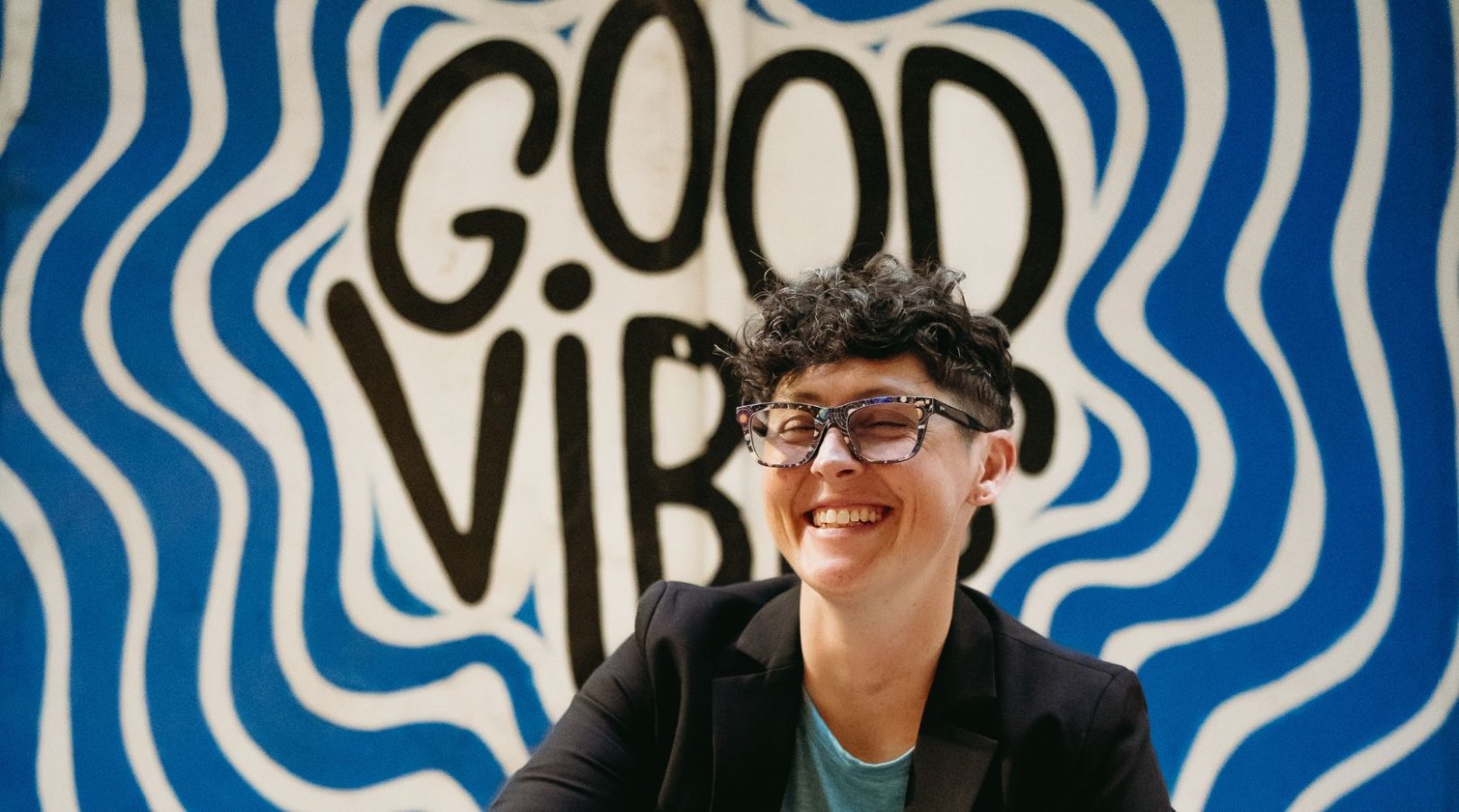
Parkinson’s Life speaks to Shan Havins, 38, young person with Parkinson’s and founder of healthtech startup Thrive Well Together (TWT). Shan lives in Idaho Falls, Idaho, USA, with her wife and their four-year-old son.
Shan, please tell us a bit about yourself
“I am the founder of Thrive Well Together (TWT), a healthtech startup creating AI-powered conversational care companions for people living with chronic illnesses. My background is a blend of nursing, higher education, national lab research, and technology innovation. More than any title I have held, I am someone who believes in the power of empathy, connection, and community to change lives.”
How did you come to be diagnosed with Parkinson’s?
“I was diagnosed with young-onset Parkinson’s in my late thirties, after years of unexplained symptoms. These ranged from digestive issues and dystonia, to balance problems and a tremor in my left pinky (little finger).
“I had been seeking answers for a long time, and when I finally received a Parkinson’s diagnosis, it was both validating and life-altering. I went from leading a 70-person team in a high-stakes research role, competing in powerlifting and strongman events, and chasing every professional milestone imaginable, to being stopped in my tracks.
“Parkinson’s forced me to slow down, sit with grief, and reevaluate who I really am outside of what I accomplish. It also invited me into a journey of healing and connection that I never expected.”
What has connecting with the Parkinson’s community meant to you?
“The Parkinson’s community quite literally saved me. I initially connected through online groups and social media, and then through organisations like the Davis Phinney Foundation and Young Onset Parkinson’s Network.
“What I found was a deeply generous, resilient community that shares knowledge, vulnerability, and joy. For my family and me, this connection has made the difference between surviving and truly living with Parkinson’s. It is a lifeline.”
What changes would you like to see in the way Parkinson’s is represented and understood?
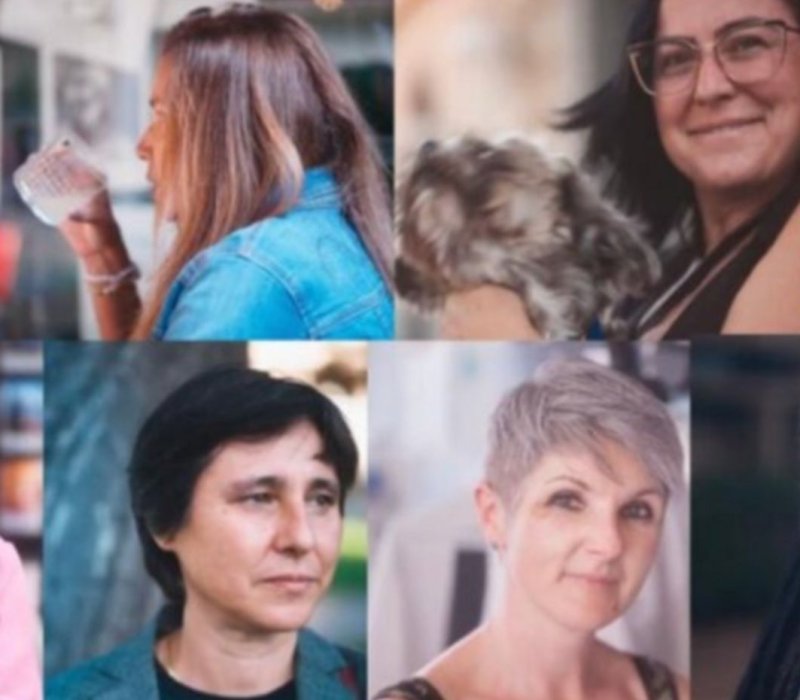
“As a queer woman with young-onset Parkinson’s and a toddler at home, I often feel like an outlier in the public image of what Parkinson’s looks like. Representation is improving, but many of us still feel unseen in clinical spaces, public campaigns, and support resources.
“The assumption is often that Parkinson’s is a disease of older straight white men, and while they matter too, it is important that the full spectrum of experience is visible.
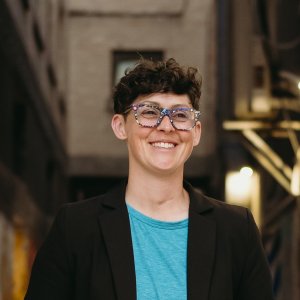
“I would love to see broader, more inclusive narratives, and healthcare systems that recognise how factors like gender identity, caregiving status, and disability intersect to shape how we access care. I have had to fight for culturally competent, responsive care, and I know I am not alone in that.”
Please tell us more about TWT. What does it offer people with Parkinson’s and their loved ones?
“TWT was born from a simple truth: getting diagnosed is only the beginning. Navigating chronic illness, especially one as complex and isolating as Parkinson’s, requires more than just clinical care. It requires connection, information, and support between appointments, especially for those who are newly diagnosed or do not yet have a care team they trust. I created TWT to fill that gap.
“Our work centres people living with illness, not just their symptoms. We are also heavily focused on supporting their caregivers and family members. No one who is impacted by chronic illness should be left to carry it alone.”
TWT’s AskShan tool is an AI-powered online chat companion, designed to offer advice and support. What inspired you to develop this?
“AskShan was born from my lived experience. I needed something that could talk to me at 2am when I was panicking. Something that could help me sift through the noise and figure out what questions to ask my neurologist. I took everything I learned the hard way after my diagnosis, and built a tool I wished I had from the beginning. AskShan is an AI-powered conversational support companion modeled after my own experience with Parkinson’s.”
Tell us how AskShan works. Is it designed to work in place of, or alongside traditional care?
“It offers practical advice, emotional support, and resource referrals in a way that is deeply human and easy to access. It is also multilingual. We are consistently working toward improving its cross-cultural accuracy, so that it can support as many people as possible, anywhere in the world.
“We intentionally designed AskShan to complement, not replace, traditional care. It’s meant to be there at 2AM when you are feeling most alone. When you have a question you are afraid to ask. Or when you are overwhelmed and you don’t know what to do next. It is designed to walk with you between appointments, not be used in their place.
“We will always offer AskShan free to the public, so that no one goes without support due to an inability to pay for it. We will also soon be releasing a paid version of AskShan. This version will remember previous interactions, can make proactive recommendations, and give users the ability to have text message conversations with the tool.”
How do you hope to develop TWT in the future?
“The vision for TWT is bigger than AskShan. We are building a whole portfolio of AI companions to support people across many chronic conditions, and virtual research assistants that help patients and scientists alike.
“We want to bring this level of personalised, empathetic, intelligent support to everyone, regardless of geography, income, or diagnosis. I believe we can help shape a future where care is more equitable, more human, and more responsive to real life. And we are working to ensure that future is already on its way.”