Meet some furry friends supporting people with Parkinson’s disease

27 April 2023 Sarah McGrath
Stories

To mark National Pet Awareness Month, we talk to four people about how pets have impacted their experience of Parkinson’s, from boosting their mental wellbeing to providing them with “unconditional” love – and why taking on a furry companion needs to be a “thoughtful decision”


Did you have pets before or after you were diagnosed with Parkinson’s?

Leslie Davidson, Canada: I was diagnosed with Parkinson’s in 2011. Our family cat had died before my diagnosis, so my husband and I decided not to replace her at the time because we were retired and travelling a lot. Now, I have a Ragdoll cat named Pearl. I brought her home as a tiny kitten in November 2022.

Wytze Russchen, Spain: I have a mixed-breed puppy called Foxy, whom I adopted one year ago and who lives with my boyfriend and me. I was diagnosed in 2008 when I was 37. I didn’t have any pets at that time; though the moment I was forced to stop working in 2016, I bought a puppy called Boni, whom I had for over five years, but who unfortunately passed away in December 2021.

Clare Addison, UK: My husband and I have a 12-year-old cat and a miniature labradoodle who is now seven years old. I received my diagnosis in 2016. We got our dog around that time, but that decision was made more because my children wanted one. As a couple, we’ve always had pets. We previously owned a hamster and two other cats who lived for 17 years.

Peter Schielzeth, Germany: Together, my husband and I have a nine-year-old Dalmatian called Basti, whom we’ve had for over eight years. I found out I had Parkinson’s in 2014. At that time, we didn’t have a dog, as our previous one had passed away a year before.
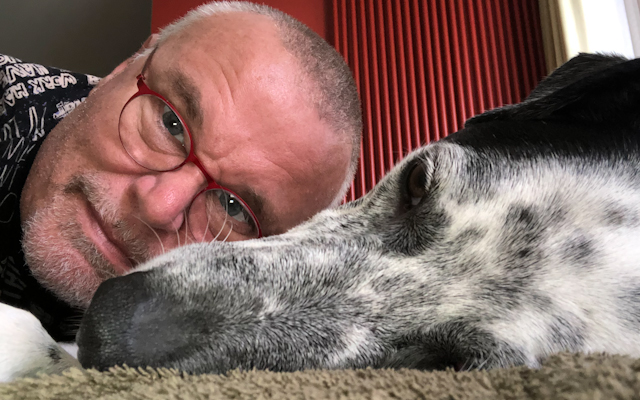
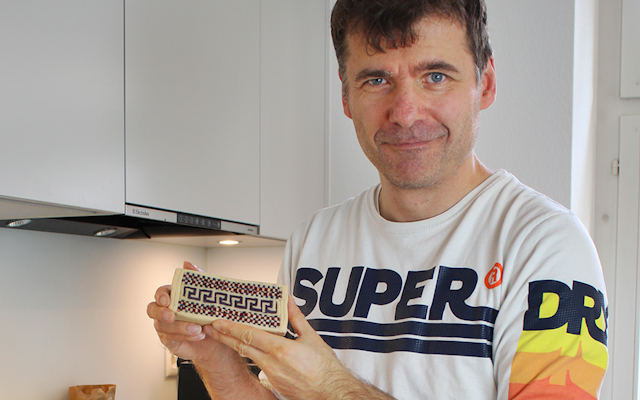
Peter Schielzeth with his Dalmatian Basti.
Peter with his dog Basti.

Has Parkinson’s affected your ability to look after your pet?

Leslie: I don’t feel it has, but I think that’s because I opted for a cat. I love dogs, but I knew I wouldn’t always be able to give a dog the exercise it needed. That said, I have younger, healthier friends and family who say they will look after Pearl should the need arise.

Clare: It has occasionally, so for that reason, I’m glad I share responsibility in case I’m having a bad day.

Wytze: ‘Thanks’ to Parkinson’s, I have time to look after my dog. Before my diagnosis, I was working so hard that I wouldn’t have had the time to care for a pet. Luckily, I can still take care of Foxy myself, although sometimes I wish I could walk longer and faster with him – fortunately, my boyfriend and I can share the daily walks. I promised my dog and myself that if I have a bad day, I will never project my frustration onto him.

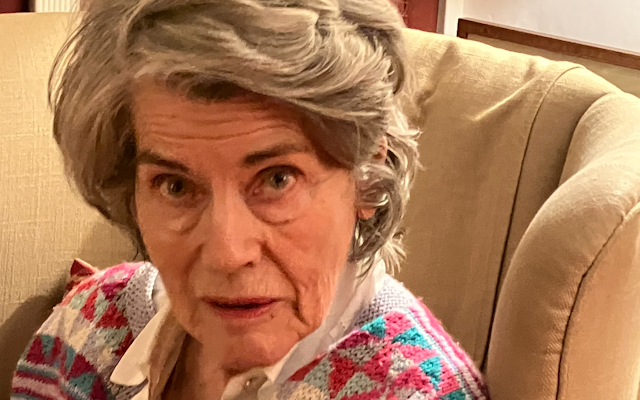
Wytze Russell and his dog Foxy.
Wytze with his dog Foxy.

How does having a pet impact your wellbeing?

Clare: Generally, it’s a huge positive. Our cat is a cuddly comfort; she’s quietly loving, inquisitive and soft, and she calms the whole household. Our dog is a bundle of fun and cheekiness, who drags you out for a walk even if you’re not keen, which is great for me – but she’s equally happy to sit around on a cold, rainy day.

Leslie: My cat is constant entertainment, and it’s lovely to be greeted when I walk in the door. I find nothing more soothing than a purring cat on my lap, a cup of tea nearby and a good book in hand.

Peter: Basti is just there for me unconditionally. He is my best fitness motivator and keeps me moving, regardless of my mood or the weather. He is there when I need a friend or someone to cuddle. He makes me laugh and take responsibility for our mutual wellbeing.

Wytze: Physically, Foxy makes me walk 15,000 steps a day. If I feel down or stuck because of Parkinson’s, he licks me, cheers me up and forces me to go out and move – which of course is very important in my fight against Parkinson’s. There have been moments he’s saved my life just by being there. The unconditionality of his affection is extraordinary.
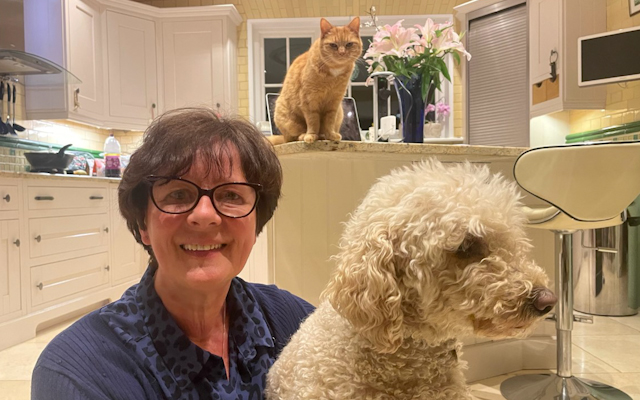
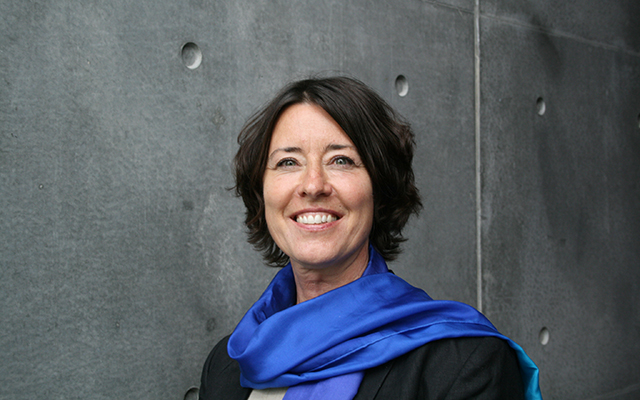
Clare Addison pictured with her cat and her dog.
Clare says having pets is “a huge positive”.

Do you encourage people with Parkinson’s to have pets?

Clare: A dog is great if you’ve got a busy household and the care doesn’t totally fall on you. I wouldn’t be without our dog, as I’ve grown to love her, and she’s part of our family. But I feel it’s very important that dogs are well trained, not too noisy and respond reliably when called. The cats are easy and live alongside us without being too demanding. A pet share is also a great option, as is borrowing an animal for a short time, because you get the benefit of the fun but less of the commitment and cost.

Wytze: If you are able to take care of the pet, yes, I strongly recommend it. It gives you purpose and a reason to wake up and go out. However, you own a pet for the rest of its life, so make sure you have support and assistance from others when you need help with your Parkinson’s.

Peter: Yes, but be considerate of what pet you choose. There’s nothing worse than having to separate from your pet because you can’t manage it. It’s important to think ahead, as this is a commitment that will likely last for over 10 years. For example, if you have trouble walking, a cat might be less demanding. If you’re struggling with ‘off’ periods or other Parkinson’s symptoms, make sure to set up an arrangement with somebody that can help look after your pet.

Leslie: It has to be a very thoughtful decision that considers the needs of the animal. For example, I no longer keep my pills on my night table but in the drawer – accidental poisoning never occurred to me until I spilled pills in Pearl’s presence, and she bounced over to check them out. But I think caring for a pet can shift our focus off of ourselves and our Parkinson’s. As long as we’re able to care for them, I think pets enhance our quality of life.
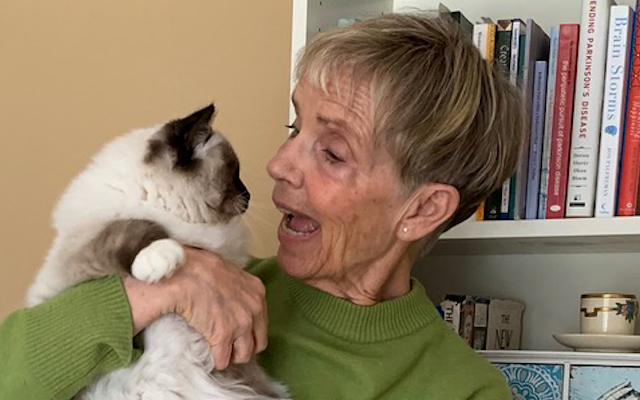
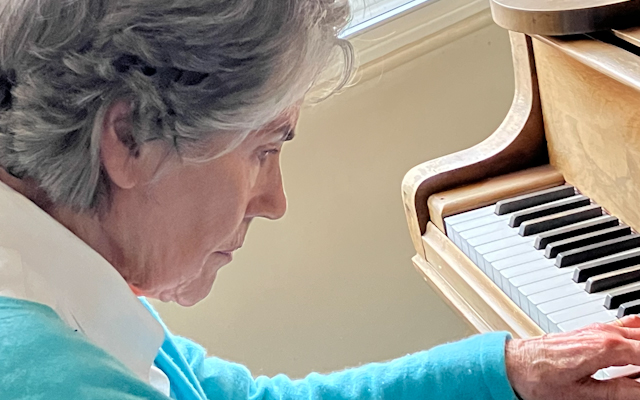
A picture of Leslie Davidson holding her cat Pearl.
Leslie think “pets can enhance our quality of life.”

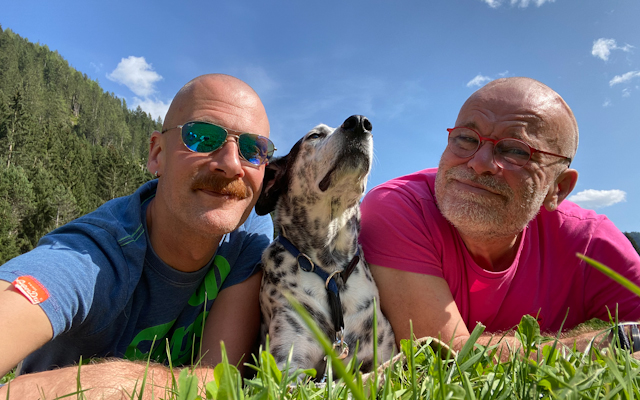
Lead image: Peter Schielzeth (right) his husband Daniel, and their dog Basti.

Podcast: What you need to know about apomorphine pump treatment for Parkinson’s disease

20 April 2023 Sophie Parrott Sponsored by ConvaTec
Podcasts

In this episode of our multi-award-winning podcast, a neurologist and a couple impacted by Parkinson’s meet to discuss apomorphine pump treatment and its potential impact for people living with the condition


“I felt numb.” These are the words UK-based Bob Taylor uses to describe the moment he received his Parkinson’s diagnosis back in the late 1990s. “I didn’t hear much of the conversation afterwards – it came as a bit of a shock.”
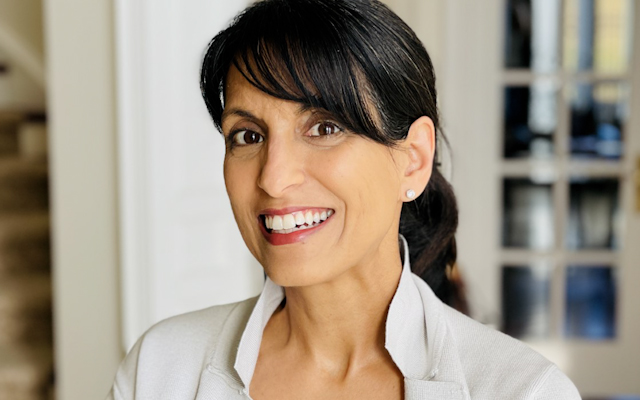
More than 20 years on, Bob and his wife, Liz Taylor, have been on a “rollercoaster of a journey” together. During this time, they have explored several different treatment options to help manage his symptoms, including deep brain stimulation.

Among the options they have tried is an apomorphine pump – a small device that provides doses of a type of liquid dopamine agonist, which is primarily used to treat people in more ‘advanced’ stages of the condition.

“When Bob first started to use the apomorphine pump, it was primarily because he had been taking so much medication [to help manage his symptoms],” explains Liz, who has supported Bob as a caregiver throughout his experience. “He was having such severe ‘on-off’ periods that it was really difficult to get a good quality of life and to actually achieve anything on a daily basis. Using the pump has enabled Bob to carry on without these violent ‘on-off’ periods.”

An expert perspective

In this episode of the Parkinson’s Life podcast, Bob and Liz are joined by neurologist Dr Tove Henriksen – who shares her professional perspective on this kind of  treatment.

Based at the Bispebjerg Hospital in Copenhagen, Denmark, Tove has been helping to treat people with the condition for around 30 years.

She explains that one advantage of an apomorphine pump is its potential to “diminish the motor fluctuations of the ‘on-off’ phenomena that you may have experienced. So, in that way, you can reduce the number of pills and the number of medications that will be necessary throughout the day.”

Tove encourages those considering this treatment option to consult others who have experience with the  pump: “I can only say what it entails when you look at it from the outside, but the [people] who are using it – they can tell the whole story.”


Parkinson’s Europe is sharing this article for information purposes only; it does not represent Parkinson’s Europe’s views and is not an endorsement by Parkinson’s Europe of any particular treatments, therapies or products.

Cecilia Gordon on creating art: “I don’t seek inspiration; it comes to me”

13 April 2023 Sophie Parrott
Stories

Music teacher and artist Cecilia Gordon discusses how Parkinson’s has impacted her relationship with art – and shares how others can incorporate the craft into their lives


Tell us a bit about yourself.

I was born in Oslo, Norway – my mother was Norwegian, and my father was English. I spent most of my school days in England, apart from one year in Norway when I was growing up. I think the time spent over there must have contributed to my appreciation of art because it opened my eyes to the magic of colour. I loved the multi-coloured houses that were set against the white snow, the blue skies and fjords, and the dark green fir trees.

I eventually enrolled as a mature student at the Anglia Ruskin University, England. I had been all set to do an English degree but switched to music. One evening, while strolling through a French village, through an open window I suddenly heard one of Beethoven’s string quartets being played beautifully and I knew that music was to be my destiny.

Since my school days, my career has been in music, with the piano being my main instrument of choice. I’ve been a piano teacher throughout my career and have taught a range of people, inside and outside of school settings. My passion for all types of art was initially stimulated by my home environment. Over the years, it has grown to include poetry as well.

Please tell us about your experience of being diagnosed with Parkinson’s.

I was diagnosed back in 2003. My doctor suspected that I had Parkinson’s and sent me to a specialist who later confirmed it. The specialist was encouraging – his positive attitude did a lot to help me come to terms with the condition.

Following his lead, I became rather blasé and played down the seriousness of the condition.

A painting shared by Cecilia Gordon.
“I also like painting pictures. I don’t seek inspiration; it comes to me,” Cecilia explains.

You are an artist. What forms of art do you like to work in?

I’ve loved music since I had my first percussion lesson in kindergarten. This has grown over the years, and I have made it my life’s work. Nowadays, I play the piano, the bassoon, and I’ve had a go at the double bass, the viola, the cello and the oboe – as is often the case with music teachers. Music can elevate your mood and your mind. One can lose oneself in it.

I also like painting pictures. I don’t seek inspiration; it comes to me. Once I start a picture, I don’t know how it is going to turn out. It seems to have a will of its own, almost as if someone else is painting it. I don’t seem to be in control – it controls me.

How has Parkinson’s impacted your relationship with art?

As I am now less mobile, I have developed greater powers of concentration and observation. This means that I can become fully absorbed in what I am painting – something that has proven to be very therapeutic. I am also able to observe people with a new level of intensity, which has led to a deeper level of understanding and, consequently, richer relationships. Painting people can help you learn about how they are feeling.

Since I have developed Parkinson’s, I have become increasingly absorbed by shape and colour. A dominant colour always informs the composition. Shapes interest me. I often make shapes and patterns in my mind out of seemingly ordinary, disconnected things around me. This has made me more imaginative and given me great satisfaction in creativity.

Cecilia Gordon.
Cecilia says “creating art helps me to relax, which makes me happy.”

How can people with Parkinson’s incorporate art and music into their lives?

I attend local art groups where I get a lot of encouragement from the people around me. I also attend musical concerts. Creating art helps me to relax, which makes me happy and benefits my personal wellbeing. I play music, which satisfies the soul. I listen to poetry being read aloud because it is rhythmically musical.

My advice to others would be to go out and explore new avenues. There is so much to see and learn. Parkinson’s is tough, but I have been touched by the incredible kindness of people who have helped me along my way.

From dawn to dusk: 7 daily tools for people with Parkinson’s disease

13 April 2023 Sarah McGrath
Advice
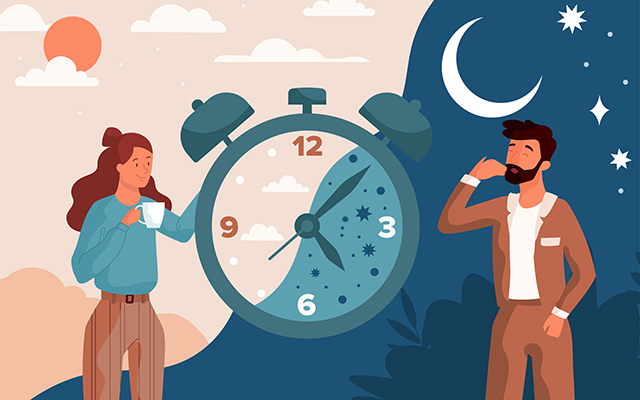
Circadian rhythm concept. Healthy day and night cycle. Man falls asleep, and woman turns off the alarm clock and falls asleep. Cartoon modern flat vector illustration isolated on colorful background

Keen to make everyday tasks a little easier? We round up several items that may help to improve accessibility and comfort among people with Parkinson’s, from the moment they wake up to bedtime


Getting ready to start the day

  1. Magnetic fasteners

Parkinson’s symptoms such as tremor and dyskinesia can make getting dressed in the mornings more challenging. Utilising magnetic buttons could help to speed up this process – and eliminate some of the hassle.

Morning wake-me-up

  1. Two-handed mug

Built to make drinking easier and to keep spills to a minimum, dual-handed mugs often have large handles designed to support a tighter grip – and a weighted base that can help with hand tremor.

Going about your day

  1. Portable voice amplifier

Parkinson’s can impact speech in various ways. For those struggling to make themselves heard, a portable voice amplifying device can help to increase speaking volume and improve understanding.

Coming home

  1. Key turners

Have you ever struggled with small, fiddly keys? Key turners, which are ideal for people who experience challenges with dexterity, can make keys easier to hold and rotate – reducing the effort needed to return home after a long day.

Tucking into a meal

  1. Insulated dishes

Keep your dinner plate stable and your food hot with insulated dishes. Maintaining a meal’s ideal temperature can enable people with the condition to take their time eating, without worrying about their food getting cold.

Winding down  

  1. Toe stretchers

Designed to soothe the entire foot, toe stretchers may benefit people who experience cramping. The tool works to relax the muscles and improve circulation – giving ‘putting your feet up at the end of the day’ a whole new meaning.

Heading off to bed

  1. Night light

If you’re prone to waking up in the night, consider installing a night light. Using a softer glow to illuminate the path to the bathroom may help to improve your sleep overall – and ensure you get the rest you need before a new day.

Study explores predictors of cognitive impairment in Parkinson’s disease

13 April 2023 Sarah McGrath
News

Cognitive impairment can affect some people with Parkinson’s – and may greatly impact their quality of life. Now, researchers in China have examined the possible risk factors for cognitive impairment in those with the condition.

The study analysed data from 409 people with Parkinson’s within two years of their involvement in the Parkinson’s Progression Markers Initiative (PPMI) – an international study that follows people with and without the condition over time. The participants, who were newly diagnosed and experiencing normal cognitive function at the start of the research, were studied for at least five years.

Published in ‘Frontiers in Aging Neuroscience’, the results indicate that older age at onset, high blood pressure and worse baseline motor symptoms may be among factors that could contribute to an increased risk of developing cognitive impairment.

The researchers cautioned that “a larger sample and much more comprehensive assessment, and prolonged follow-up, will be required”.

Busting Parkinson’s disease myths with our infographic

06 April 2023 Aileen Scoular
Advice

From common symptoms to who’s at risk, many myths and misconceptions still surround Parkinson’s. Ahead of World Parkinson’s Day on 11 April, we’re resharing the infographic we designed to share knowledge in the community and beyond


Many of the people we interview for Parkinson’s Life tell us that others – including their own friends and family – don’t always understand the realities of living with the condition.

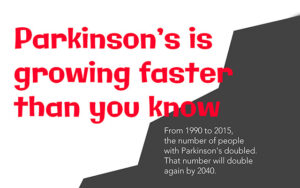
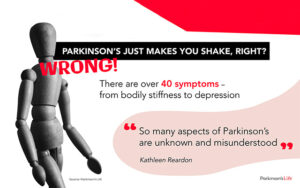
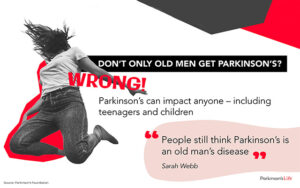
For instance, how many people know that there are 40 possible symptoms? Or that Parkinson’s can affect people of any age?

To tackle this, we created an infographic to bust three myths surrounding the condition and, in turn, help improve understanding and awareness.

Designed to be easily shareable on social channels, including Twitter and Instagram, the infographic can be used by anyone who wishes to take a stand against common stereotypes – and help to amplify the voices of people with the condition this World Parkinson’s Day.

Parkinson's Life infographic.
Parkinson’s Life infographic, also available as individual, shareable assets.

#PLMythBusters

The goal of this simple storyboard is to open a dialogue beyond Parkinson’s community and help to raise awareness of common symptoms, so that diagnosis and treatment come sooner. At the same time, we hope that it will encourage friends, family and colleagues to support people living with Parkinson’s in practical and meaningful ways.

Commenting on the launch of the infographic, Parkinson’s Life editor, Johanna Stiefler Johnson, said: “We hope this infographic can help increase awareness around the condition and have a positive impact not only on the lives of people with Parkinson’s, but those outside the community as well.”

What are the myths around Parkinson’s that you think need to be tackled?


Could frailty be a potential risk factor for Parkinson’s disease?

06 April 2023 Sophie Parrott
News

Frailty can refer to a reduction in physical function, and its attributes – including a slow walking speed and weak grip – are commonly experienced by people with Parkinson’s.

Until now, there has been limited insight into the link between frailty and the risk of developing the condition over time. This is what led researchers at the Huazhong University of Science and Technology in China to analyse data from a large UK study, which was gathered over a 12-year period.

Published in JAMA Neurology, the analysis found that frailty may be linked to an 87% higher risk of developing the condition.

Commenting on the results, the researchers said: “These findings indicate that physical frailty is a potential risk factor for [Parkinson’s], and the assessment and management of frailty might have clinical significance in the at-risk population.”

Parkinson’s disease and pregnancy: “There is so much we still don’t know”

30 March 2023 Sarah McGrath
Stories

Five women share how their experiences of pregnancy were impacted by Parkinson’s, from uncertainty around medication to increased symptom severity – and offer advice to others in the community


Tell us about your initial experiences of pregnancy and Parkinson’s.

Caitlin Nagy, Canada: I was elated to find out that I was pregnant. It was something that I had wanted my whole life, and it was finally happening. But that definitely came with some fears and concerns from me and my husband. I had been diagnosed with Parkinson’s four years prior. I chose to not go on medication prior to getting pregnant because my doctor had advised that there was not enough research around pregnancy and Parkinson’s medication.

Dr Annelien Oosterbaan, Netherlands: I was diagnosed at the end of 2016. I already had three kids before my Parkinson’s diagnosis, but in 2021, I experienced my first pregnancy with the condition. I had already done my own research before deciding to become pregnant. Still, this didn’t really help me or reassure me, since there is so much we still don’t know. It felt risky, not knowing whether my Parkinson’s would become worse. Little information was available on aspects like medication use and breastmilk.

Richelle Flanagan, Ireland: I thought I had Parkinson’s when I was three months pregnant with my daughter. But I had to wait until I had finished breastfeeding my daughter to get a dopamine transporter scan, which confirmed my diagnosis. So, while pregnant, I was in the weird position of not knowing if I had the condition or not. Thankfully, it was an uneventful pregnancy. I was not concerned for myself but rather about how the condition would impact my daughter’s life.

Richelle Flanagan and her daughter.

Dr Soania Mathur, Canada: I was diagnosed with young-onset Parkinson’s when I was 28 and pregnant with my first daughter. I was blessed to have two more daughters in the years that followed. Not surprisingly, there was no consensus to inform me about the risks I needed to be aware of. So, the expected joy of pregnancy was marred by a feeling of uneasiness and a fear of the unknown. I was worried about the effects of the condition and the medications I was taking on the health of my unborn baby.

Ellie Finch Hulme, UK: I was diagnosed at the age of 29, almost 10 years ago. I got married the following year and became pregnant soon after that. Knowing that I had a neurodegenerative condition made me decide to try for a baby sooner rather than later. Thankfully, everything looked pretty normal throughout my pregnancy, and I was well looked after with extra scans and appointments.

Ellie Finch Hulme with her children.

How did pregnancy impact your Parkinson’s symptoms and vice versa?

Soania: I was unsure how my Parkinson’s would respond to the physical and psychological demands of pregnancy. I wasn’t able to find much research on how symptoms are impacted – and the reports I did find were conflicting. Although many women with Parkinson’s had their symptoms return to typical levels after birth, others reported a deterioration in their condition that didn’t improve.

Personally, I found that my symptoms worsened a bit during my pregnancies, primarily because I reduced my medications substantially. But they returned close to baseline once I gave birth. 

Caitlin: My first trimester was tricky. My tremors were in hyper-overdrive – I was shaking all over the place to the point where my friends’ kids would call me ‘the shaky lady’. This was so heartbreaking as a mum: to wonder if my daughter would have to deal with these kinds of comments. In the second trimester, my symptoms were even worse – I lost my energy and had a lot of fatigue and pain in my body. By the third trimester, I was pretty much bedridden.

Annelien: My Parkinson’s symptoms got more and more severe during the course of my last pregnancy. Before, I only took my medication once every four hours. By the end of my pregnancy, I was taking my medication once every three hours.

In the first trimester, I was vomiting a lot due to pregnancy hormones, which totally sabotaged my medication intake and made controlling the condition a real challenge. I struggled with sleeping issues, suffered from more ‘off’ periods during the day and dealt with longer periods of tremors in my hands. I worried more. Though the delivery was not negatively influenced, the whole experience was very different to my other pregnancies.

Dr Annelien Oosterbaan with her family.

What more needs to be done to support pregnant women with Parkinson’s?

Ellie: Something that really should be given more thought and sensitivity is bottle feeding. I was told it would be unlikely I’d be able to breastfeed due to the medication I was taking – not a risk I was prepared to take. But I was not equipped for the emotional trauma that this caused me. Yes, my babies were fed. But I felt this choice was stripped from me (because of the condition), and I was resentful of this. Some emotional support and signposting of where to get advice would be excellent, as frankly, I had none.

Richelle: I know women with Parkinson’s who have been told not to have a baby because they wouldn’t be able to cope and women who were told it was okay to take agonists while others were given the opposite guidance. This advice can make the difference between choosing to have a baby or not. That needs to change. The risks need to be discussed on an individual basis.

Soania: Ultimately, there needs to be a change in the way we treat women with Parkinson’s during pregnancy. We need to develop standardised treatment guidelines, and this will only happen when the appropriate research is done. If these were developed, it would ease some of the worries that women have about the effects of the condition or the impact medications might have on the health of their baby. Women should feel confident that their care is based on sound research or an informed expert opinion.

Dr Soania Mathur.

What advice would you give to other pregnant women who are living with Parkinson’s?

Annelien: Don’t be afraid. After delivery, I quickly got back in shape and my sleep immediately improved. Doing lots of physical exercise has helped me, and I would advise every person living with the condition to exercise. I am also working on an international registry for pregnancy and Parkinson’s, which will hopefully lead to the production of guidelines and management advice. 

Richelle: Connect with support groups for women who are going through or have gone through the same journey. Though it was bittersweet to have my daughter delivered alongside news of my diagnosis, I wouldn’t change it for the world. Like most people with Parkinson’s, we can worry about the future, but that only takes away from today. I choose to keep myself better today so there’s a greater tomorrow for me and my family.

Ellie: Listen to the healthcare professionals, but also listen to yourself and your own body. We self-manage our Parkinson’s a lot of the time: you know what’s best for you. Don’t benchmark yourself against or compare yourself to others, whether they have Parkinson’s or not.

Caitlin: Trust your gut. Some days are going to be tough and that’s okay – because the good days make up for the 1,000 bad ones. Remember how strong you are, and focus on how amazing you are for being able to grow a beautiful baby in your womb.

Caitlin Nagy and her family. Credit: Hayley Gill.

Lead image: Dr Annelien Oosterbaan

Chemical used in dry cleaning may be associated with Parkinson’s disease

30 March 2023 Sarah McGrath
News

The chemical trichloroethylene (TCE) has been used across a number of industries: to decaffeinate coffee, degrease metal parts, remove stains and dry-clean clothing. It’s currently banned in the European Union and the US states New York and Minnesota, except for authorised industrial uses.

Now, scientists led by Dr Ray Dorsey in the US have conducted new research claiming that TCE could be linked to an increased risk of Parkinson’s.

Published in the ‘Journal of Parkinson’s Disease’, the study investigated case studies of seven people who were exposed to TCE prior to a Parkinson’s diagnosis – including basketball legend Brian Grant.

The researchers “postulate that this ubiquitous chemical is contributing to the global rise of Parkinson’s and that TCE is one of its invisible and highly preventable causes”.

They called for the cleaning of TCE-contaminated sites and for indoor air exposure to be diminished – as well as for further studies to be conducted to understand TCE’s relationship to the condition.

Parkinson’s in the news: March

30 March 2023 Admin
News

We round up some of this month’s Parkinson’s stories from around the world – including new research into the effect of physical exercise on symptoms and the launch of a podcast exploring the impact of the condition


How can physical exercise help manage Parkinson’s symptoms?

The Cochrane Movement Disorders review has analysed existing data to study the impact of physical activity on people with the condition.

Led by Dr Elke Kalbe, professor of medical psychology at the University of Cologne, Germany, the review found that various forms of physical exercise – ranging from dance to yoga and water-based activities – resulted in mild-to-large improvements in motor-related symptoms of Parkinson’s.

‘Movers & Shakers’ – a new podcast for the Parkinson’s community

A group of familiar faces – including BBC presenter Jeremy Paxman and Paul Mayhew-Archer, co-creator of the British sitcom ‘The Vicar of Dibley’ – have joined forces to launch a podcast for the Parkinson’s community.

‘Movers & Shakers’ will bring together six friends with the condition to talk about their experiences with Parkinson’s through open and honest conversation.

Have you heard about WPC’s 2023 video competition?

The World Parkinson Coalition has announced a shortlist of 12 top films from the World Parkinson’s Congress (WPC) video competition – which aim to showcase what it is like to live with the condition.

A panel of judges has selected a Grand Prize winner from the shortlist, but voting is open to the public for the People’s Choice Award. Both winning films will be announced and screened at the WPC’s opening ceremony in Barcelona in July this year.

Former Kansas City Chiefs player Otis Taylor dies following Parkinson’s battle

American football player Otis Taylor has died at the age of 80 following a battle with the condition. The long-serving Kansas City Chiefs wide receiver was diagnosed with Parkinson’s and associated dementia back in 1990.

“He was one of the most dynamic receivers of his era, and he helped revolutionize the position,” Chiefs chairman Clark Hunt said in a statement. “Our thoughts and prayers are with his family.”


Read more:

Parkinson’s in the news: February

Parkinson’s in the news: January

‘I Got You’ – a musical tribute to Parkinson’s disease caregivers

30 March 2023 Sophie Parrott
Stories

Executive producer Susan Lust and songwriter Arlon Bennett talk about a new original music video produced by the Parkinsons Wellness Project, which seeks to recognise the crucial efforts of care partners in the community


When a person is diagnosed with Parkinson’s, it can impact their relationships with friends and family. Over time, those living with the condition may turn to partners for help in everyday life – while their loved ones might find themselves taking on the role of a caregiver.

To pay tribute to those who have adopted a caring role, Parkinsons Wellness Project produced an original music video based on Arlon Bennett’s song ‘I Got You’.

Led by director Danny Feder and cinematographer Lara Aqel, the three-minute video is set at Clover Stadium in New York, US. It sees Arlon strum on his guitar and sing about the challenges of living with Parkinson’s – as well as the essential part that care partners can play in navigating these difficulties.

Lights, camera, action

Susan Lust, who was an executive producer of the video, says that recognising care partners in the Parkinson’s community is crucial. “We all need companionship and connection,” she explains. “Without care partners, it is a very lonely world.”

This is exactly what this short film aims to shine a light on. But how did this music video come to be? “We asked Arlon to write an original song for our TulipFest Wellness Expo and Concert – and he spent a year working on it,” explains Susan.

“While he comes across as a smooth performer in the video, Arlon faces daily challenges with life’s regular routines. But his philosophy is to keep going – and he does this with the help of those closest to him. Parkinsons Wellness Project wanted to celebrate that spirit in the song and video.”


As the music video progresses, Arlon can be seen standing in the baseball park surrounded by brightly coloured tulips – a flower which is said to be symbolic of the Parkinson’s community. He is later joined by dancers who help to visually bring to life the range of feelings that can be experienced by people with the condition, from isolation to love and hope.

“The group of dancers in the celebratory end shot of the music video is made up of volunteers, dancers, dance teachers and people living well with Parkinson’s – who all gave up their time and support to make this video full of joy,” Susan reflects.

Arlon Bennett in the music video for 'I Got You'.
Singer songwriter Arlon Bennett says he felt care partners “needed to be recognised”.

For songwriter Arlon, raising awareness of care partners’ role in the community is important. “These people are greatly needed, but they are often behind the scenes. We felt they needed to be recognised.”

The motivation also ran deeper: “As an artist battling Parkinson’s myself, the need for inspiration and to inspire is always present. I had to prove that if I could still do what I do, then anybody else can still do what they do.”

The video is set to screen at the upcoming World Parkinson Congress – an international forum for medical professionals and people with the condition – held in Barcelona, Spain, in July 2023.

Answering your questions about deep brain stimulation

23 March 2023 Sophie Parrott Sponsored by Medtronic
Advice

Early next month, medical tech company Medtronic will host a virtual webinar to discuss deep brain stimulation (DBS). Join consultant neurologist Dr Alan Whone (pictured above) and DBS nurse Russell Mills to learn more about how the technology works – and how it can support people with Parkinson’s


What is deep brain stimulation? How can it benefit certain people with Parkinson’s? When it comes to exploring DBS as a potential treatment option, these are some of the key questions that the community wants answered.

DBS therapy can be a viable choice for people whose motor symptoms no longer respond well to medication. The procedure involves inserting a device under the skin and connecting it with fine wires (leads) to specific areas of the brain. Electric stimulations delivered to these targeted areas then change some of the signals linked to Parkinson’s symptoms.

But how can this treatment help the right candidates gain greater control over their symptoms in daily life? To answer some of the common questions around DBS, medical technology company Medtronic is hosting a virtual webinar designed to serve as an informational resource for the Parkinson’s community.

Demystifying developments in DBS

Titled ‘Discover DBS and access the newest BrainSense™ technology’, the webinar will take place on 4 April at 18:00 BST (19:00 CEST or 20:00 EEST). It is open to anyone interested in learning more about the treatment.

“One of the things for people with Parkinson’s to understand is that DBS technology advances all the time,” commented Dr Alan Whone, consultant neurologist at Southmead Hospital in Bristol, UK, who will be co-chairing the session to shed light on the treatment.

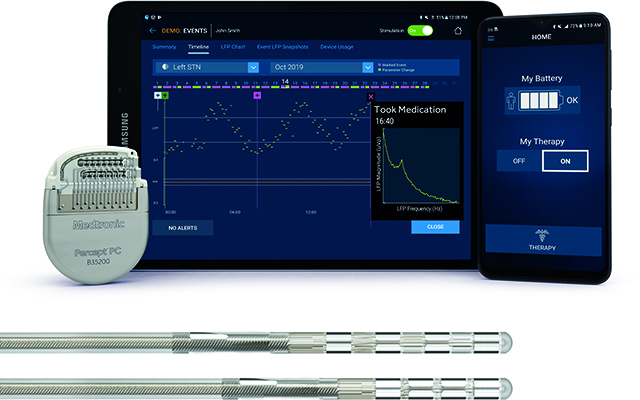
In addition to sharing insights about deep brain stimulation and its potential benefits for people with Parkinson’s, the webinar will highlight information about Medtronic’s latest BrainSense™ technology. Launched in 2020, this technology – embedded in the Percept™ PC neurostimulator device – is able to capture brain signals while simultaneously delivering therapeutic stimulation at any given time.

The Percept™ PC neurostimulator device.
BrainSense™ technology is embedded in the Percept™ PC neurostimulator device.

“BrainSense™ technology allows the recording of electrical impulses out from the brain,” explained Dr Whone. “So, you’re not just able to apply electrical impulses into the brain – you can actually record its own electrical impulses coming back.”

A significant feature of this technology is that these signals can be recorded both inside and outside of clinical settings. This comprehensive data can be considered against factors such as symptoms, medications and side effects, as well as the device’s simulation settings. Medical professionals can access this data in real time and adapt care according to individual needs, which may evolve over time.

The ‘patient programmer’ also offers people with Parkinson’s the opportunity to manage their own therapy, allowing them to tailor the device’s stimulation throughout the day with options that have been pre-programmed by their doctor.

The webinar will explore the various features of this technology in more detail and discuss how it might be useful to those with the condition, in a clinical environment and beyond.

Highlighting the experiences of people with Parkinson’s

Russell Mills.
Join DBS nurse Russell Mills at Medtronic’s upcoming webinar.

Dr Whone will be joined by Russell Mills, a DBS nurse based in Newcastle, UK, who will be able to share insights on how people in the Parkinson’s community have responded to this technology.

Among these is clinical research nurse and tree surgeon Nick Vallotton, who was diagnosed with Parkinson’s at the age of 38. He previously talked about living with the condition and starting his DBS journey in 2021.

“I kind of just cruised along on medication, and it was chopped and changed according to how I felt at the time,” he recalled. “But then, a couple of years ago, I was getting really bad – my walking was deteriorating and I was stumbling around and falling a lot.”

He explained that he also had problems with dystonia (a range of movement disorders that cause muscle spasms and contractions). These symptoms reportedly became easier to manage after he began DBS treatment: “A real, immediate benefit was the fact that these muscle cramps had gone,” he said.

Nick also highlighted how the device has helped him in communicating with medical professionals. “When I go to the clinic to see the nurse, she connects to my device via Bluetooth,” he said. “She can adjust the neurostimulator and the direction of the leads and the frequency of the stimulation, to try and alleviate my symptoms.”

Learn more in a webinar setting

Medtronic’s upcoming webinar will serve as an educational resource, to inform those who are interested in learning more about DBS and BrainSense™ technology.

Attendees will have the opportunity to put forward questions, to ensure that the session and its content are as useful as possible.

In the lead-up to the webinar, Dr Whone said: “One of the reasons I think that movement disorders neurology is such a great branch to be in, is because we really can have an impact – particularly on [people] with Parkinson’s where we have a large armoury of therapies that we can apply.

“Certainly one of the most exciting therapies to apply is DBS, because it has such a large effect size.”


Parkinson’s Europe is sharing this article for information purposes only; it does not represent Parkinson’s Europe’s views and is not an endorsement by Parkinson’s Europe of any particular treatments, therapies or products.