Find advice on a range of topics to help you live life to the full, from diet and exercise to travel, work, sleep, relationships and leisure activities.
Our interactive Parkinson's map shows a range of resources across Europe, from member organisations to events, activity groups to research and campaigns
Molecule of DNA, double helix, 3D illustration. Genetic mutation and genetic disorders
Previous research has suggested that people with Parkinson’s may generally be less likely to develop most cancers. However, a new international study has found a potential genetic link between certain types of cancer and the condition.
The team analysed genetic data from genome-wide association studies – a research approach that aims to identify gene variations associated with disease risk – to recognise common genetic risk factors between cancer and Parkinson’s.
The findings uncovered a genetic link between the condition and both prostate cancer and melanoma. Meanwhile, the sum of various gene variants (otherwise known as the polygenic risk score) that contribute to Parkinson’s was significantly associated with a higher risk of breast cancer.
“Our results suggest the importance of shared genetic variants between Parkinson’s and some cancers,” the researchers concluded in the study, which was published in the medical journal ‘Movement Disorders’. They highlighted the need for further studies to better understand the link.
How can poetry help to raise awareness of Parkinson’s? In light of World Poetry Day on 21 March, we look back at five interviews with writers who have picked up their pens to share their perspectives on the condition
Stella Pierides on capturing the “essence” of Parkinson’s
British writer Stella Pierides says she feels like she been writing all her life. The poetry form of haiku has particularly drawn her interest – and supported her personal wellbeing since her Parkinson’s diagnosis in 2017.
“The aim of the haiku poet is to capture the essence of a moment or experience and share it with others,” explains Stella, who encourages others to read and write the form as a way to exercise the mind. “I make the case that it may serve as a creative tool to support the psychological wellbeing and help improve the quality of life of people with Parkinson’s.”
Stella says writing haiku poetry has enabled her to put into words “the fears and pain of Parkinson’s” – and capture her experiences with the condition.
Dean Cook on using limericks to help stimulate his mind
After being diagnosed with Parkinson’s around 2008, Dean Cook tackled his feelings about the condition with his love of writing poetry – especially limericks. “We Parkinson’s folks [can] have trouble sleeping, so sometimes I wake up in the middle of the night and – just to keep the mind active – I’ll put together some rhymes and limericks,” he says.
He discusses one of his “tongue in cheek” works, ‘Parkinson’s Blues’: “One night I got to thinking about how we read so much and hear so much about the progress made in Parkinson’s, but we [often] don’t actually see anything being done – that inspired me to write the poem.”
Dean encourages other people with the condition taking up the art form. “We need to squeeze out as many good days as we can,” he says.
Meet Parkinson’s Life poetry competition winner Catherine Strisik
US-based writer and editor Catherine Strisik won first place in our 2019 poetry competition with her moving piece, ‘Circular Green Metal Hairbrush with Missing Bristles and Worn Rubber Handle’.
An emotional depiction of Parkinson’s, marriage and grief, the poem was written two months after the death of Catherine’s husband, Larry, who had lived with the condition for seven years. “This poem came to me,” she recalls. “I had been cleaning when I found his hairbrush in a drawer. It represents my grief in writing.”
Reflecting on her win, she adds: “When I found out, I felt this very familiar grief rise up from deep, deep within me. This poem means more to me now as I have some distance from the situation.”
Back in 2019, Marc Woodward captured our attention as runner-up in the Parkinson’s Life poetry competition. In his poem ‘San Francisco’, the US city provides a backdrop for the writer’s feelings of nostalgia and subtle reflections about the condition.
According to Marc, the poem was not even supposed to be about Parkinson’s. “It was meant to be about San Francisco, but Parkinson’s came sneaking in!” he explains. “I am trying to avoid writing about Parkinson’s too much really, because I don’t want it to define me… I just want to be who I am.”
Mike Bell, a designer-turned poet, was diagnosed with Parkinson’s in 2015 – after which he challenged himself to write a poem every day for a year. The undertaking, which he says he hopes will help him to maintain his mental skills, has continued to this day.
For World Parkinson’s Day in 2016, we asked Mike to write a poem specifically for the often-overlooked carers of people with the condition. ‘Close to Parkinson’s: Hurting’ aims to raise awareness of the work that caregivers do to help their loved ones maintain their quality of life.
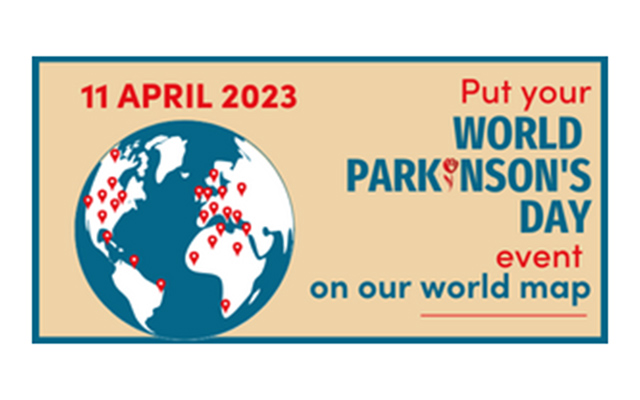
Parkinson’s Europe is inviting you to share your World Parkinson’s Day plans to help raise awareness of the condition and ensure that the annual event gets the attention it deserves
Every year on 11 April, World Parkinson’s Day invites people from around the world to unite in raising awareness of the condition and celebrate the work being done by those in the community.
To mark the important occasion this year, Parkinson’s Europe has created an online World Parkinson’s Day activity map, designed to showcase global events and campaigns that will be running next month. From participating in online conferences, to undertaking athletic challenges, to promoting the condition’s universal logo – there are countless ways to join in.
For those still seeking some inspiration, the umbrella organisation has released a ‘World Parkinson’s Day campaign toolkit’ to support individuals and groups with the ideas and resources needed to plan out their day. Background information is also available for those wishing to learn more about the annual event, which started in 1997.
By highlighting the activities and events taking place, Parkinson’s Europe hopes to promote and support the community, boost awareness of the condition and ensure that Parkinson’s gets the attention it deserves.
Parkinson’s Europe’s call for greater awareness of the condition
In addition to encouraging members of the community to share their plans, Parkinson’s Europe is calling on policymakers and global health leaders to recognise the cultural, social and economic effects of Parkinson’s – the fastest-growing neurological condition in the world.
As part of this goal, the organisation is highlighting the five urgent priority areas identified in its 2022 ‘Parkinson’s Manifesto for Europe’ – a declaration that shone a light on what is important to those in the community.
Increasing awareness and understanding of Parkinson’s, improving quality of life for people in the community and educating healthcare professionals about the condition were among the key priorities outlined in the manifesto.
Parkinson’s Europe hopes that, with enough support for its campaign, World Parkinson’s Day will be officially observed by global leaders.
Get involved
So, how will you help to raise the profile of Parkinson’s this April?
Connect with Parkinson’s Europe to share what you are doing to mark World Parkinson’s Day – individually or with your local group. No event or activity is too small to earn a place on the map.
Visitors to the website will also be invited to tick a box declaring whether they would like World Parkinson’s Day to be observed as a global health day going forward.
By sharing your voice, you can support the organisation in its campaign to raise the status of the annual awareness day and ensure the condition receives the global recognition that it needs.
concept of creative thinking or machine learning, graphic of brain combined with maze pattern
Research into new potential therapies for people with Parkinson’s is complex, which means that not all clinical trials will successfully move on to the next phase.
This proved to be the case for US biotech company Aptinyx, which announced that it will halt further development work on an investigational therapy following “disappointing” results in the second phase of its study.
The research had set out to examine the effect of NYX-458 – an oral therapy created to modulate the activity of receptors in the brain that are responsible for communication between neurons. The aim of the therapy was to improve cognition in people with cognitive impairment linked to Parkinson’s or Lewy body dementia. Yet, when compared to a placebo, the therapy didn’t demonstrate “meaningful improvements” in cognitive function.
Dr Andy Kidd, president and CEO at Aptinyx, said: “We are very disappointed that the results of this Phase 2 study did not validate the therapeutic potential observed previously in preclinical studies of NYX-458 in models of cognitive impairment.”
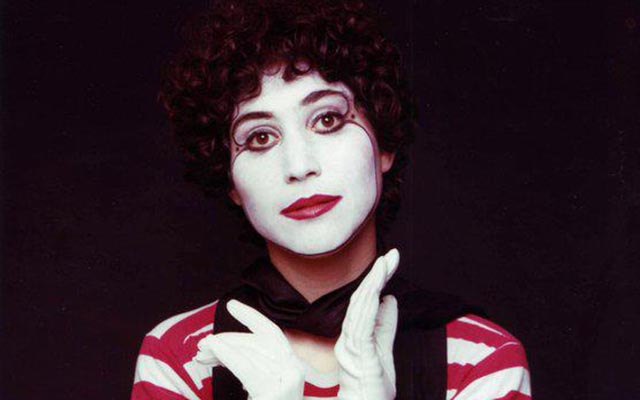
Retired teacher and artist Barbara Salsberg Mathews shares how she was first mesmerised by mime and how she’s used her love of the art form to try to help others with Parkinson’s “live life fully”
Please tell us a bit about yourself and your experience with Parkinson’s.
I’m based in Toronto, Canada. I started mime when I was 16 years old and became obsessed with it. I saw the French actor and mime artist Marcel Marceau perform live and was completely mesmerised. I was fortunate in high school to have a very talented mime teach us, and I became her assistant. I had such fun that I ended up creating a theatre company that toured for around seven years.
I then studied experimental theatre in Paris, France, and eventually became a high school art and drama teacher instructing improv as well as visual art. Afterwards, I worked as a corporate trainer, which involved teaching using all the senses to help corporate learners work more effectively in teams. After being the head of visual arts at a school in Toronto, I retired to a nice small town and was living my dream of travelling and painting.
Then, one day, my hands started shaking. I found out I had Parkinson’s, and things suddenly changed. The news was pretty devastating. I cried; I couldn’t believe it. I kept saying that it was just a tremor or a pinched nerve. But no, it was Parkinson’s. So, I had to rewrite my future. I decided to focus on the legacy I could leave behind, whether it was taking part in research trials or teaching mime as a therapeutic tool to help other people with the condition.
How did you first realise the impact mime had on your Parkinson’s?
I was reading ‘The Brain’s Way of Healing’ by Dr Norman Doidge, which has a chapter on a man who retrained himself to walk normally with Parkinson’s by slowing down the movements of walking and then speeding them up. I realised that what he was doing was a lot like mime, and I thought: “Why don’t I apply mime to try to help override some of my annoying Parkinson’s symptoms?”
Often, I would be holding a glass, and without knowing it, I’d start spilling the water inside because my right arm was weak. So, I visualised that I had a marionette string on my right hand that did not move, and that imagery held. I would practise imagining the marionette string while miming walking and holding the glass. Through this, I was able to retrain my body – now, most people wouldn’t know that I have Parkinson’s when they see me walking.
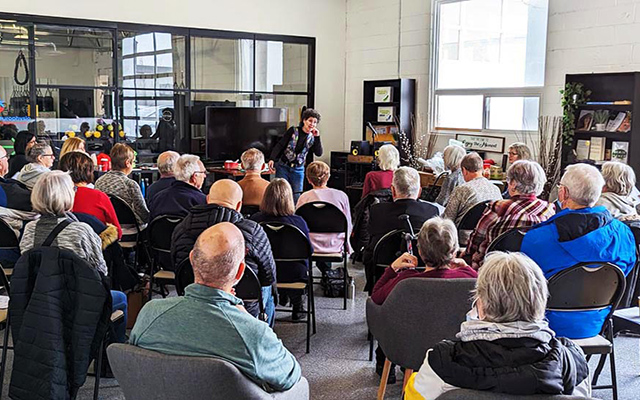
I then discovered that there was a mime artist named Rob Mermin living in Vermont, US, who also has Parkinson’s and who was teaching mime to others with the condition. He gave me his blessing to build on the work he was doing, which led me to help direct talks and workshops for people with Parkinson’s on how mime may be used as a therapeutic tool.
How can mime support people living with Parkinson’s?
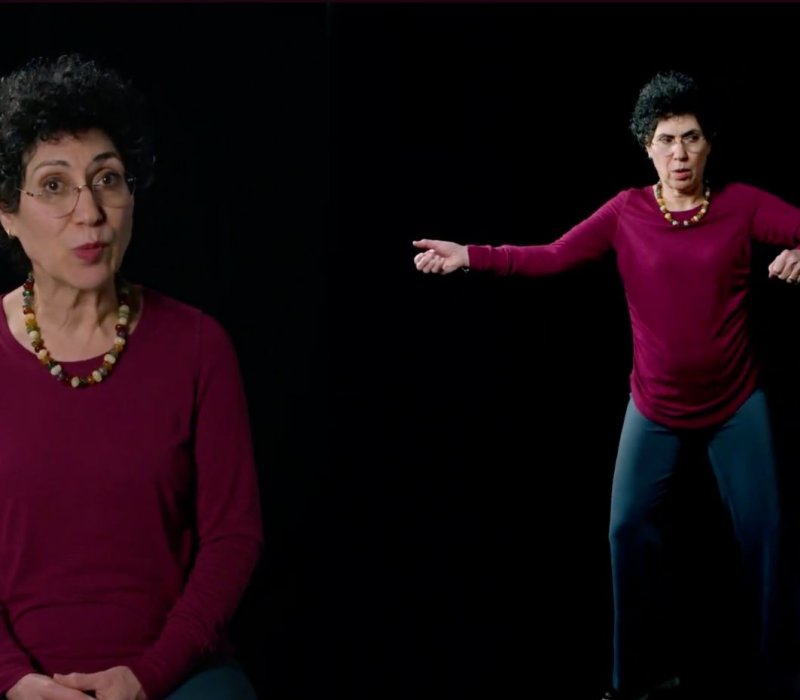
When teaching, I use three techniques. I really focus on fine motor skills so that people can learn how to control and isolate every part of their body, including their faces. Then, imagery is very important to help override any mental resistance. And the last technique I use is motor memory. People may think of this as ‘muscle memory’, but the muscles don’t remember – it’s through repeating motions over and over again that the brain remembers.
By applying mime illusions, I found: “Hey, I’m not shaking when I’m doing this.” I could walk without dragging my foot. When teaching, people would come up to me with big smiles and say: “Wow, that’s fun!” or “When I was doing that, I wasn’t shaking.” I love seeing the smiles on people’s faces and seeing the changes that can happen in one workshop – when I see people standing tall and moving with confidence. Most of all, I love the laughter. I have such fun.
There are not a lot of people who can teach mime, so it’s important to me to help inspire others to learn it. It’s not just a beautiful art form – it can be a very powerful, practical and useful tool for people with Parkinson’s. I’d hate to see this tool disappear.
Barbara says she “loves seeing the changes” that happen in one workshop.
What advice do you have for someone who has recently been diagnosed with Parkinson’s?
We need to laugh more. We’re going through tough times, but it’s nice to find moments of play and enjoy life as well. Life is not a dress rehearsal. I tell everyone when I do my workshops: “I am not my disease. I am a person with Parkinson’s, and I aim to live life fully.” For me, it’s all about giving back. How can I leave the world a shade more beautiful?
Mark Mardell has enjoyed a successful and varied career in journalism – from working as the BBC’s political correspondent to presenting the news and current affairs programme ‘The World This Weekend’. In 2022, he revealed his Parkinson’s diagnosis on a podcast. The journalist and presenter sheds light on his career – and highlights why open conversations about the condition are key
Please tell us a bit about yourself and your experience of Parkinson’s.
I’ve always worked in journalism. I started off in commercial radio in the UK, working in Teesside at BBC’s local station Radio Tees before joining Radio Aire in Leeds, then the Independent Radio News in London. After that, I went on to work as a BBC political correspondent for years.
I spent some time in Europe as the BBC’s first Europe editor, which was great fun. I also went to America, where I served as the North America editor, before returning to England around 2015. There, I presented the current affairs programmes ‘The World This Weekend’ and ‘The World at One’.
I’ve done a lot of TV over the years, but my first love was radio. The driving force of my journalistic career has been to meet people, explain what they think and travel the world.
In 2022, I was diagnosed with Parkinson’s. My experience was relatively unusual. I had spoken to people who had been to the doctor and their diagnosis had come as a complete shock to them. But before my diagnosis, I was pushing my doctors to accept that it was Parkinson’s because I had realised that something was wrong.
I found opening grocery packaging difficult. I thought to myself: ‘They are making it more difficult to get into these things – you need scissors to get them open!’ I didn’t really think: ‘Is something wrong with your fingers?’
Mark relaxing on holiday in Malaga, Spain.
How has your life changed since your diagnosis?
No longer driving was one of the biggest things. Changes in my voice and typing were another, given that all I’ve done throughout my life is communicate, mainly through my voice. Now I’ve got a weak voice and it gets weaker during the day.
For most of my life, I had my wife telling me: ‘You’re booming too much in public’, or ‘You’re too loud’, and now I struggle to make myself heard, literally. I can find it very frustrating in conversations because you do become slightly invisible when people can’t hear you. Typing messages and emails has also become slower – I have to do it finger by finger.
But I don’t see these changes as the enemy; I see it as the new me. The fact that I am slower is something that I have to accept. I’m determined to carry on doing the things I enjoy. I’m not very good at taking exercise but something I must do is resume yoga.
You spoke about your Parkinson’s diagnosis on a podcast. What response did you receive afterwards?
When I went on Roger Bolton’s podcast, ‘Beeb Watch’, I had said to the producer: ‘I’m going to have to mention my voice, because it does sound different to anyone who knows me.’
Even after all the years I’ve spent working in journalism, I hadn’t thought that I was a big enough name for it to be of interest to the public. But the news of my diagnosis was picked up by many papers – and then by the news and current affairs show the ‘Today Programme’.
The way that people responded was really nice – I should have realised that it would have been. Broadcaster Jeremy Paxman had his documentary ‘Paxman: Putting Up with Parkinson’s’ out the week I went public, so I think that added a bit of news interest in the way these things roll together.
Do you think people, particularly those with a following, should talk openly about their experiences with the condition?
Yes, it’s very important. I’ve always tried to be open and honest. I think it’s one of the things that makes me a journalist: I believe in sharing information. Just as people are becoming more open to talking about mental health, I think being more open to talking about Parkinson’s is a good thing. There is no shame attached to it.
Mark stood outside The White House, Washington DC, US, preparing to do a live broadcast for BBC News.
Is it beneficial for the Parkinson’s community to have public figures that they can look up to?
I don’t think it’s necessarily a case of having someone to look up to, but it’s good to have a name that you might recognise. I think we all become interested when people we have heard of do something – this is really the basis of journalism.
I’ve lived with my diagnosis for coming up to a year now, and while it has been annoying and frustrating, it hasn’t been a disaster. It hasn’t plunged me into deep depression or stopped me from doing the things I really love.
I think the more people talk about these things, the more knowledge is gathered, and the more progress can be made. Certainly, with Parkinson’s, you can live a relatively full life.
What advice would you give to someone who has recently been diagnosed?
My advice would be to visit helpful websites, and meet other people with Parkinson’s and talk to them. I’m lucky that I get to meet with a group that British journalist Rory Cellan-Jones set up, where I have the chance to chat with others.
I feel very privileged to have had an active and fun life. I’m going to continue having as much fun as possible despite this condition.
cinematic image of an happy multiethnic senior couple. Indoors Lifestyle moments at home. Concept about seniority and relationships
Does sexual wellness in the Parkinson’s community need more focus? It’s an area that the American Parkinson Disease Association (APDA) and media brand Havas Health Plus have targeted through the launch of a free intimacy guide.
Available to people in the US, ‘The ParkinSex Booklet & Kit’ aims to support those whose relationships may have been impacted by emotional and physical distance linked to the condition. Alongside an educational guide, the kit includes items such as candles, coupons for adaptative clothing and massage stones.
Following a positive response to an initial pilot distribution of the guides in the US, there is now a waitlist for future kits.
Commenting on the launch in a press release, APDA president and CEO Leslie Chambers said: “The challenges of Parkinson’s can often result in intimacy and connection getting left behind. This is why we created ‘The ParkinSex Booklet & Kit’, to help people with [the condition] receive intimacy in new ways.”
A new international study has examined whether deep brain stimulation (DBS) is more effective at tackling non-motor symptoms in certain subtypes of the condition
Deep brain stimulation (DBS) surgery involves inserting electrodes into the brain to change electrical signals associated with Parkinson’s symptoms – with the aim of improving quality of life for people living with the condition. But could DBS tackle non-motor symptoms more effectively in some people than in others?
Parkinson’s may be allocated to different subtypes depending on which motor symptoms are dominant. For example, in the ‘postural instability and gait disturbance’ (PIGD) subtype of the condition, difficulty walking and standing are the most prevalent symptoms, while the ‘tremor-dominant’ (TD) subtype is associated with tremor.
Now, researchers in Germany, the UK, Brazil and Italy have explored whether DBS might better support people with the PIGD subtype of Parkinson’s than those with the TD form of the condition. Their hypothesis? That those with the PIGD subtype – which has been reportedly linked to a higher burden of non-motor symptoms and worse quality of life – would experience “more beneficial non-motor effects” than the group with the TD subtype.
As part of their study, published in the journal ‘Parkinsonism & Related Disorders’, the team examined 130 people with Parkinson’s who had undergone DBS surgery at study centres in Germany and the UK between February 2012 and April 2021. Of these, 82 participants had the PIGD form of Parkinson’s, while 33 had the TD subtype and the remaining 15 had a mix of other types.
Using the Non-Motor Symptoms Scale (NMSS), the scientists analysed participants’ reported symptoms six months after receiving the treatment. They also examined changes in the participants’ quality of life, such as their ability to perform daily tasks.
Greater non-motor improvements observed in PIGD group
The NMSS scores revealed that DBS led to significant decreases in non-motor symptoms for participants with the PIGD subtype of Parkinson’s, including in areas of communication and daily living activity. The observed benefits were greater in the PIGD group than in the TD group.
“This study provides evidence of a favourable outcome of total non-motor burden in PIGD compared to tremor-dominant patients undergoing DBS for [Parkinson’s],” the researchers wrote.
In light of their findings, they recommended that larger studies with greater follow-up periods be conducted to further explore the area – and that greater attention be given to people’s individual symptoms. “These differences of clinical efficacy on non-motor aspects should be considered when advising and monitoring [people with Parkinson’s] undergoing DBS,” they concluded.
Around three million women worldwide are living with Parkinson’s – but their specific needs and experiences are often neglected. Ahead of International Women’s Day 2023, we look back at our #WomenAndParkinsons campaign – where interviewees share how the condition has impacted their lives
We launched the #WomenAndParkinsons campaign in 2019 to highlight the knowledge gap around how Parkinson’s affects women. Investigating the topic revealed some shocking insights. Women experience a more rapid disease progression, a lower survival rate, are less likely to be monitored by a movement disorders specialist – and are less likely than men to undergo complex treatments like deep brain stimulation.
At the start of the campaign, Russell Patten, director general of Parkinson’s Europe, said: “This campaign is necessary if women living with Parkinson’s are to receive what they, and everyone living with Parkinson’s, deserve: an appropriate diagnosis, improved treatment options and a better quality of life.”
More than two years later, we’ve been lucky to speak to women in the community about a variety of subjects including diagnosis, menopause, medication and research.
When Ingrid Roesner was diagnosed with Parkinson’s at the age of 57, she said it was “a relief not to have a brain tumour or a stroke, but a shock to be told I had an ‘old person’s disease’”.
Since then, Ingrid has worked to prioritise how she communicates with others – whether it’s been writing down her experiences, creating drawings, or making graphs and reports to clearly communicate her needs when meeting with healthcare professionals.
For Ingrid, strong communication is essential for managing the condition: “It allows you to learn from others and motivate each other, and it enables you to show your strength.”
At the age of 33, Caitlin Nagy refused, at first, to accept her Parkinson’s diagnosis. She recalls how she struggled with insecurity throughout the following years, which ultimately prompted her to set a goal for herself to “prove to myself that I still love my body”. She challenged herself to participate in a boudoir photoshoot.
Caitlin credits the photoshoot for helping her improve her self-confidence. “It’s created such a huge shift in me in terms of accepting my body and loving it for the way it is,” she says. “Before, when I was asked about my condition, I would go into defence mode. But now I’m comfortable saying: ‘I have Parkinson’s – and this is what it looks like’.”
UK-based Pam Archer was diagnosed with the condition during Parkinson’s Awareness Week. When researching information about women and Parkinson’s, she says that few resources focused on how older women coped with the condition – making her feel “invisible”.
Pam shares the importance of highlighting older women’s experiences and tackling questions around how Parkinson’s affects them differently. As she notes: “When it comes to older people being diagnosed with Parkinson’s, it seems to be only about older people – which we are. But even older women aren’t just variants of men.”
Ireland-based dietician Richelle Flanagan hid her Parkinson’s diagnosis for two years, for “fear of judgment”. But after meeting other people with the condition and visiting the World Parkinson Congress in 2019, she felt motivated to share her story.
Making people aware of the impact the condition has on women was particularly important to Richelle. So far she has set up a survey about hormones and women’s Parkinson’s symptoms, and co-founded the Women’s Parkinson’s Project to help advocate for better treatment and research for women living with the condition. After all, Richelle says, “everyone benefits from raising awareness”.
Series one of Parkinson’s Life podcast saw campaigners Sharon Krischer, Omotola Thomas and Mariette Robijn get together, discussing topics that ranged from the stereotype that people with Parkinson’s tend to be “old, grey, dusty men”, to the discovery that symptoms “will be worse during your period”. The group noted that being better informed about Parkinson’s during their diagnosis “would have made a difference” to their experiences of the condition.
When Cathy Molohan was first diagnosed with Parkinson’s, she was “determined” not to let the condition stop her role co-running the communications company EnglishBusiness.
Although Parkinson’s symptoms meant parts of the work became “exhausting”, Cathy was grateful to her “amazing” colleagues and clients for their support. “It was a hard balancing act to look after myself and my business commitments at the same time,” she explains.
Cathy eventually decided to leave her job to focus on spending time with her family. “It’s essential to create a workplace where chronic illness is not a taboo,” she says. “I think many women try and be everything and do everything – Parkinson’s just doesn’t allow that. Or at least, it forces you to choose what and how much you do.”
At the age of 37, a Parkinson’s diagnosis left María Martinez* with a “monumental” identity crisis. She initially struggled, as she left her job as a journalist and grappled with impulsive behaviours linked to her Parkinson’s medication. But after having psychological therapy at a specialised centre for women, María began to accept the condition and put her life in place.
“Women have to learn to be their own highest priority in life,” she says. “We have to learn to say ‘me first’, we have to learn to say ‘no’ on our own, without the consent of the group. We have to learn to be impervious to social judgment – even more so if health is at stake.”
Parkinson’s Life’s #WomenAndParkinsons campaign – a series highlighting the unique experiences of the estimated three million women worldwide who live...
Neurologist Ines Debove and filmmaker Bettina Rotzetter talk about their Parkinson’s awareness video ‘Happy Hour’, share why quality of life was a central theme –and highlight the response from the community
Parkinson’s can impact people in many different ways. Some may experience difficulties walking or speaking while others might encounter problems with sleeping and fatigue, to name just a few symptoms of the condition. This means the impact on quality of life can vary from person to person.
To shine a light on some of these challenges, filmmaker Bettina Rotzetter and neurologist Ines Debove of the Bern University Hospital (Inselspital) created an awareness video supported by Parkinson Schweiz (Parkinson Switzerland).
Titled ‘Happy Hour’, the 24-minute film explores the topic of quality of life through the eyes of those living with Parkinson’s, their relatives and subject matter experts to showcase how the condition can affect each person differently. As the video progresses, cast members share what the term ‘quality of life’ means to them and talk about the impact Parkinson’s has had on their lives and their loved ones.
So, how did ‘Happy Hour’ come to be? As a senior physician working at Inselspital, Ines frequently works alongside people with Parkinson’s. Through her job, she has been able to learn more about the lived experiences of those with the condition. “It is from these encounters that ideas come to me for topics to address and tackle in film projects,” she explains.
“Quality of life plays a key role for people impacted by Parkinson’s. That is why we have chosen this challenging and individual topic.”
Filmmaker Bettina’s expertise also played a crucial role in developing the film, which required extensive forward planning. “You need to research and understand before you can have a vision of how to compose a storyline. Taking a deep dive into the topic is crucial to bring the story to life,” she says. “Ines does this from a medical and scientific perspective, which I admire, while I focus on the visual perspective.”
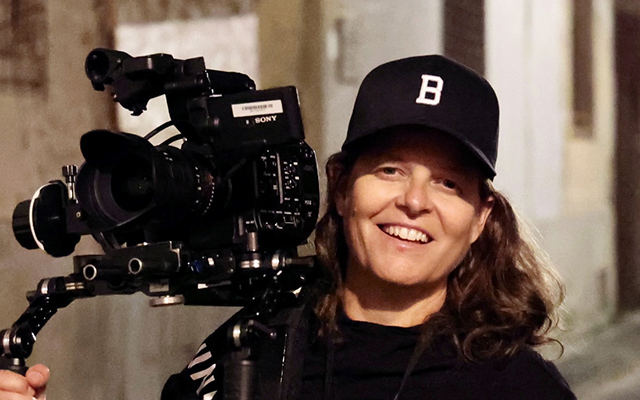
Bettina Rotzetter with some camera equipment.
“We all interpret quality of life differently”
Reflecting on the film’s chosen focus, Bettina explains: “We all interpret quality of life differently. This is because quality of life depends on various factors, which are weighted differently by each person. Therefore, what makes one person happy may be completely unimportant to another.
“People often take for granted the simple things that make up their quality of life. When a person is confronted with circumstances in which one of these factors disappears or changes, such as physical health, psychological well-being or level of independence, they often think more and more about these little things. The film helps to show this.”
Several cast members make an appearance in the short film. Among them is Michael, who has been living with Parkinson’s for 15 years. He shares how his quality of life is supported by his passion for taking photos, particularly of the stars at night.
“To capture the play of colours in the atmosphere and the starry sky at the right moment, he climbs mountains and waits in the cold all night for the right moment,” recalls Ines. “As a filmmaker, Bettina wanted to capture Michael on a mountain, so she went up there for a weekend with him. It was an incredible experience for both of them as he showed Bettina his passion and his happy hour.”
Bettina and Michael spent a weekend on Eggishorn, a mountain in Switzerland.
Subject matter experts are also featured in the video, sharing their professional input on the subject matter. Hubert Kössler, co-head of the pastoral care and medical ethics department at Inselspital, was among the experts who helped to inform the short film’s narrative. “The brainstorming sessions and interviews we had with Hubert supported us significantly,” explains Ines. “He was able to provide a neutral perspective, helping us to better understand the topic of quality of life from his point of view.”
Ines Debove and and Hubert Kössler.
“We hope the film can encourage people and their families”
The team shares that ‘Happy Hour’ has received positive feedback from the Parkinson’s community, with many praising the cast members for speaking so openly and honestly about their experiences.
Reflecting on the film’s outcome, Ines says: “We realise how important it is to give people with Parkinson’s a voice and a platform to be seen and appreciated as individuals.”
By sharing these stories, the neurologist and filmmaker duo hope to convey individual perspectives of those affected by the condition. “The impact of Parkinson’s on quality of life is very different for each person. No story is the same; no interpretation is the same,” says Bettina.
“The stories in the film illustrate this from different perspectives. We hope it can encourage people with Parkinson’s and their families, despite the difficulties they may face in their daily lives.”
Some people in the later stages of Parkinson’s can experience hallucinations – “when you see, hear or feel things that aren’t there”. With most research into this topic centred on visual hallucinations, a team in Australia set out to investigate data around non-visual hallucinations in people with the condition.
Published in the ‘Journal of Neurology’, the analysis drew on 91 relevant studies released between 1970 and 2022. The team found that visual hallucinations appeared to be most common, with an expected prevalence of up to 96.6%. Meanwhile, non-visual hallucinations – including auditory (relating to the sense of hearing) and olfactory (relating to the sense of smell) – had an estimated prevalence of up to 73.3%.
Concluding that non-visual hallucinations may “impact a notable proportion” of people with the condition, the team said: “More direct research and clinical attention need to be devoted to the study and management of such hallucinatory experiences.”
We hear from Janette Sinclair about helping to launch activity centre Action Parkinson – and how its boxing classes are helping to support the Parkinson’s community in Belgium
Please tell us a bit about yourself and your experience of Parkinson’s.
I have lived permanently in Brussels, Belgium, for 20 years. Before that, I was a civil servant in the UK, where I’m from. Since 2007, I’ve worked in human resources. I’ve worked particularly on special educational needs, disability issues and social policy, as well as with pensioners – which turned out to be really interesting work. I have enjoyed what I’ve done.
I was diagnosed with Parkinson’s in 2013. It was a big shock. By the time of my diagnosis, I was so exhausted that I had few interests outside of work and family life. It was a big deal to take up a hobby. I tried to learn the trumpet, but I could not get a single note out, so I moved on to piano, which I had played at school and then not touched for over 30 years.
I now take lessons at a local music academy, and I love it! Playing an instrument is so good for my condition. Music can be a cognitive challenge that involves keeping the beat, coordinating hands and pedals, and playing with feeling.
Can you tell us about Action Parkinson and what it aims to achieve?
I helped set up Action Parkinson, an activity centre in the Brussels region of Belgium that opened in 2019. It was created by and for people with Parkinson’s who wanted a dedicated space for meeting others and somewhere to organise regular physical activities for the community. It became a reality thanks to a patron, Alain Mallart, who also lives with the condition.
We try to offer a safe space where people can come and meet one another. Additionally, we try to put on a range of activities that are recommended for people with Parkinson’s. We have Nordic walking, Tango dance classes and gymnastics, as well as singing, arts and crafts and cognitive games. Partners are welcome at all the classes, but boxing is the main one that a couple of partners regularly attend.
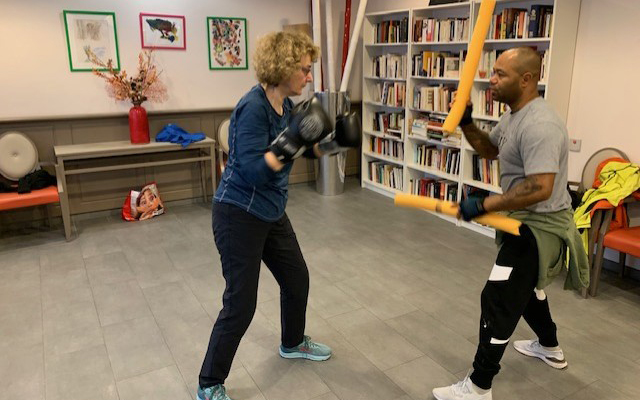
Janette taking part in a one-on-one boxing session.
Can you tell us about the boxing classes that are on offer?
We started to run a boxing class when our centre first opened, and it has maintained a core of people who come every week. To meet growing demand, we introduced a second class last year.
Boxing was something I was keen to do. We were eventually able to find a boxing coach that could teach classes at Action Parkinson, and we have had several coaches over the years. Since 2021, we have worked with the former professional lightweight boxer Carel Sandon. Our trainer is really good at incorporating and supporting people with limited physical movement, as long as they can stand unaided for periods of time.
These workshops are for all people with Parkinson’s, in both early and later stages of the condition, who might experience rigidity or more pronounced bradykinesia (slowness of movement).
What does a typical boxing class involve?
When we get into the class, we start with shoulder, neck and arm exercises to get us moving. We do various exercises that involve squatting because exercising the thighs can help with core balance. Once we feel a bit more warmed up, we do some shadowboxing (sparring with an imaginary opponent as a form of training). This gets us used to the positions and stances and reminds us to keep our guard up, to get us ready for putting the gloves on.
Throughout the class, we’ll practice activities with the coach. For example, he’ll have the paddles on, and we’ll try hitting them. When one person is practising with the coach, everyone else is supposed to be shadowboxing to make sure they know what they’re doing. We might also do this in pairs.
When we get to the end of the session, we each have ‘a minute in the ring’ where we do a bit of sparring with the coach. We finish with a cool-down stretch. It’s a very full hour, but our coach makes us laugh a lot.
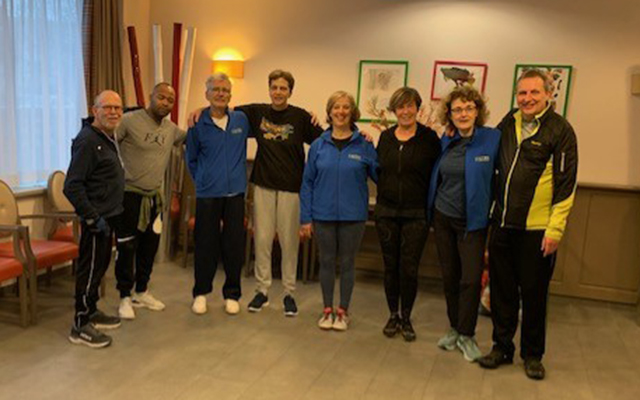
Some of the class including trainer Carel, Action Parkinson coordinator Cecile Gregoire, Janette and husband Carl.
How can boxing support people with Parkinson’s?
It’s very good exercise. Classes are nice as well because they involve working with a good group of people. Some of the potential benefits of boxing might include improved coordination, development of muscle strength and increased self-esteem.
Recently, a new person came to the class. At the start, he was sitting down, seemingly stiff and not very mobile. Then class started, and as he started trying to make the right movements, a huge smile came over his face. It was as though he could feel himself cutting through the mud that we so often wade through with our movements. It wasn’t an easy ride, but he just had this grin on his face.
Boxing keeps me going. I wouldn’t hesitate to encourage others to take it up, as long as they are careful. My message to other people with Parkinson’s is this: find activities that do you good. There’s no point spending time doing something you don’t enjoy because you’ll likely drop it before long. If you find something you like to do, it might help you through the harder times.