Find advice on a range of topics to help you live life to the full, from diet and exercise to travel, work, sleep, relationships and leisure activities.
Our interactive Parkinson's map shows a range of resources across Europe, from member organisations to events, activity groups to research and campaigns
We hear from Janette Sinclair about helping to launch activity centre Action Parkinson – and how its boxing classes are helping to support the Parkinson’s community in Belgium
Please tell us a bit about yourself and your experience of Parkinson’s.
I have lived permanently in Brussels, Belgium, for 20 years. Before that, I was a civil servant in the UK, where I’m from. Since 2007, I’ve worked in human resources. I’ve worked particularly on special educational needs, disability issues and social policy, as well as with pensioners – which turned out to be really interesting work. I have enjoyed what I’ve done.
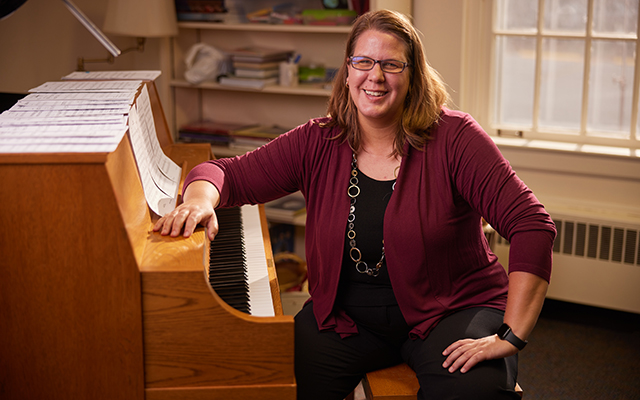
I was diagnosed with Parkinson’s in 2013. It was a big shock. By the time of my diagnosis, I was so exhausted that I had few interests outside of work and family life. It was a big deal to take up a hobby. I tried to learn the trumpet, but I could not get a single note out, so I moved on to piano, which I had played at school and then not touched for over 30 years.
I now take lessons at a local music academy, and I love it! Playing an instrument is so good for my condition. Music can be a cognitive challenge that involves keeping the beat, coordinating hands and pedals, and playing with feeling.
Can you tell us about Action Parkinson and what it aims to achieve?
I helped set up Action Parkinson, an activity centre in the Brussels region of Belgium that opened in 2019. It was created by and for people with Parkinson’s who wanted a dedicated space for meeting others and somewhere to organise regular physical activities for the community. It became a reality thanks to a patron, Alain Mallart, who also lives with the condition.
We try to offer a safe space where people can come and meet one another. Additionally, we try to put on a range of activities that are recommended for people with Parkinson’s. We have Nordic walking, Tango dance classes and gymnastics, as well as singing, arts and crafts and cognitive games. Partners are welcome at all the classes, but boxing is the main one that a couple of partners regularly attend.
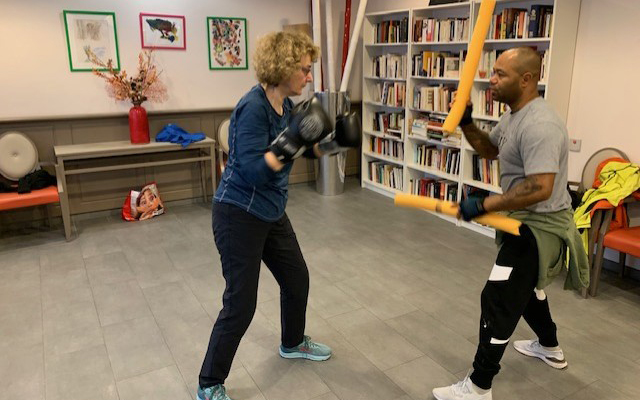
Janette taking part in a one-on-one boxing session.
Can you tell us about the boxing classes that are on offer?
We started to run a boxing class when our centre first opened, and it has maintained a core of people who come every week. To meet growing demand, we introduced a second class last year.
Boxing was something I was keen to do. We were eventually able to find a boxing coach that could teach classes at Action Parkinson, and we have had several coaches over the years. Since 2021, we have worked with the former professional lightweight boxer Carel Sandon. Our trainer is really good at incorporating and supporting people with limited physical movement, as long as they can stand unaided for periods of time.
These workshops are for all people with Parkinson’s, in both early and later stages of the condition, who might experience rigidity or more pronounced bradykinesia (slowness of movement).
What does a typical boxing class involve?
When we get into the class, we start with shoulder, neck and arm exercises to get us moving. We do various exercises that involve squatting because exercising the thighs can help with core balance. Once we feel a bit more warmed up, we do some shadowboxing (sparring with an imaginary opponent as a form of training). This gets us used to the positions and stances and reminds us to keep our guard up, to get us ready for putting the gloves on.
Throughout the class, we’ll practice activities with the coach. For example, he’ll have the paddles on, and we’ll try hitting them. When one person is practising with the coach, everyone else is supposed to be shadowboxing to make sure they know what they’re doing. We might also do this in pairs.
When we get to the end of the session, we each have ‘a minute in the ring’ where we do a bit of sparring with the coach. We finish with a cool-down stretch. It’s a very full hour, but our coach makes us laugh a lot.
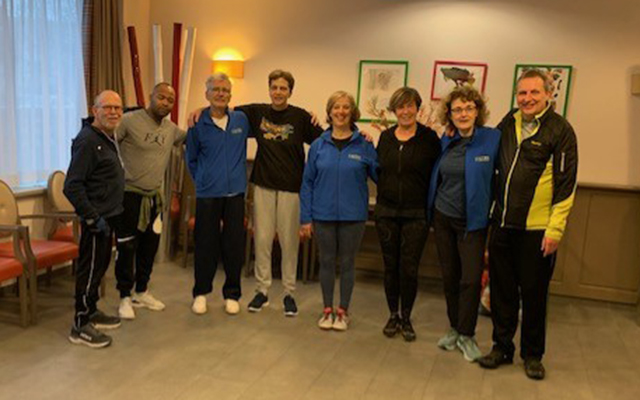
Some of the class including trainer Carel, Action Parkinson coordinator Cecile Gregoire, Janette and husband Carl.
How can boxing support people with Parkinson’s?
It’s very good exercise. Classes are nice as well because they involve working with a good group of people. Some of the potential benefits of boxing might include improved coordination, development of muscle strength and increased self-esteem.
Recently, a new person came to the class. At the start, he was sitting down, seemingly stiff and not very mobile. Then class started, and as he started trying to make the right movements, a huge smile came over his face. It was as though he could feel himself cutting through the mud that we so often wade through with our movements. It wasn’t an easy ride, but he just had this grin on his face.
Boxing keeps me going. I wouldn’t hesitate to encourage others to take it up, as long as they are careful. My message to other people with Parkinson’s is this: find activities that do you good. There’s no point spending time doing something you don’t enjoy because you’ll likely drop it before long. If you find something you like to do, it might help you through the harder times.
How can pictures help to raise awareness of Parkinson’s? We look back at three inspiring interviews with photographers who have captured honest reflections of life with the condition
Torrance York on conveying her personal experience
When US-based photographer Torrance York was diagnosed with Parkinson’s, she was concerned about how the condition might affect her ability to take photos. Keen to continue pursuing her passion for the art form, she eventually decided to focus the camera on her condition.
The result? A photography collection called ‘Semaphore’. The collection uses various objects and details from daily life to help visually convey her experience with Parkinson’s.
Reflecting on the inspiration behind this collection, which she has exhibited internationally, Torrance said: “Creating these images became playful and rewarding and sometimes emotional as I tried to picture things relating to my fears.”
In October, the photography project will be exhibited at the Danforth Museum of Art, US, and a book, launched with art publisher Kehrer Verlag, showcases some of the imagery in Torrance’s collection.
Torrance says “creating these images became playful and rewarding”. Image credit: Torrance York.
Safi Alia Shabaik on documenting her father’s journey
After her father was diagnosed with Parkinson’s, US-based photographer Safi Alia Shabaik moved back to Los Angeles to help take care of him and to be with her family.
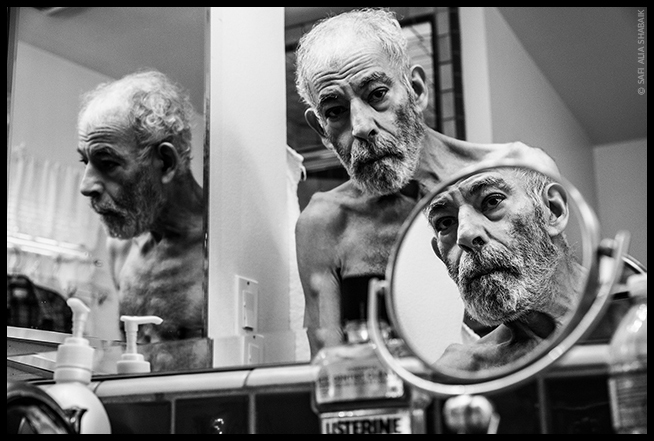
The father–daughter duo decided to collaborate on a photo series to help raise awareness of Parkinson’s. The visual series, ‘Personality Crash’, shared an intimate perspective of Aly Shabaik’s experience of the condition.
“Our collaboration stemmed from a heartfelt desire to understand disease, mental illness and loss of self,” Safi recalled. “My father was an active participant and collaborator from the beginning until his last living day.”
Her debut exhibition of ‘Personality Crash’ opened in Los Angeles on 18 February 2023, with a day of programming set to take place on 25 February for virtual attendees – offering people the opportunity to hear from creative artists with Parkinson’s and more.
A photo collaboration to help raise awareness of Parkinson’s. Image credit: Safi Alia Shabaik.
Paul Meyler on highlighting young people living with the condition
With a father and grandfather who have both lived with Parkinson’s, UK photographer Paul Meyler was all too familiar with the impact the condition can have on people and their families.
Keen to shine a light on the experiences of young people with the condition, he captured an inspiring series of portrait images titled ‘Living with Early Onset Parkinson’s’.
The aim of the project was to celebrate people “thriving day-to-day while coping with the condition” – some of whom shared their perspectives on managing symptoms and challenging stereotypes with Parkinson’s Life.
Sarah Webb, one of the women photographed as part of Meyler’s series, said of the condition: “People still think Parkinson’s is an ‘old man’s disease’, which is not the case.”
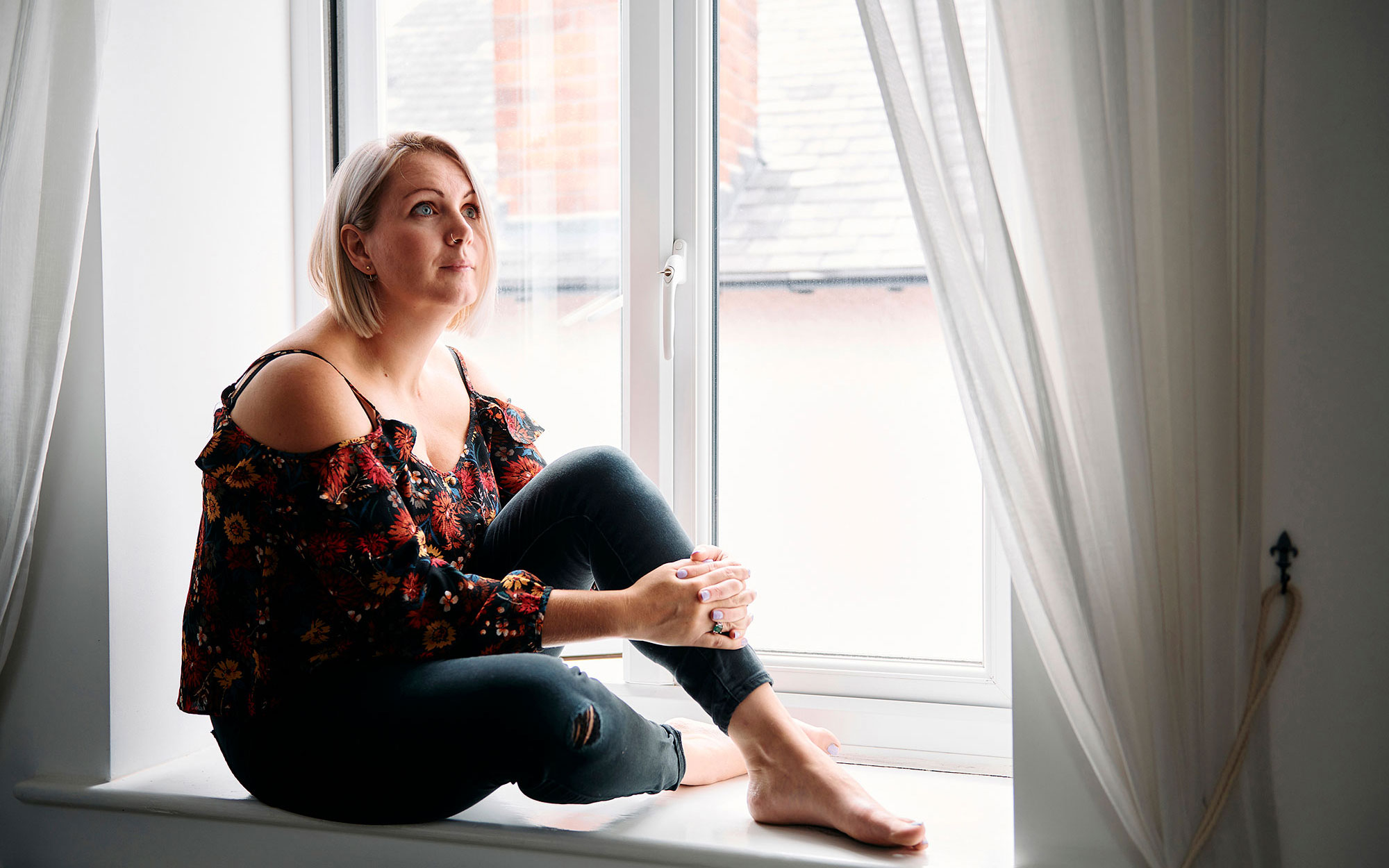
A portrait of Genna Douglas as part of Paul’s photography series. Image credit: Paul Meyler.
We round up some of this month’s Parkinson’s news stories from around the world – from the impact that dreams might have on the condition to the premiere of a new Michael J Fox documentary
Researchers in Spain investigated the burden of care in 721 patient-caregiver relationships across seven countries. The questionnaire results showed that caregivers for people in later stages of Parkinson’s experienced a greater burden of care than those who supported people in earlier stages of the condition. Commenting on the study, lead study author Pablo Martinez-Martin said that “strategies to reduce the burden of caregivers of people with Parkinson’s are urgently required”.
In a documentary that premiered at the US Sundance Film Festival, the ‘Back to the Future’ star and Parkinson’s advocate opened up about his rise to fame – and his experience with the condition. Featuring interviews with Fox alongside footage of his daily life, the film received a standing ovation at the festival and has earned praise for its honest and revealing depiction of the actor’s life. It will reportedly be available to stream on Apple TV+ later this year.
Scientists analysed the cognitive, motor and psychosocial performance of 127 men and 72 women living in the south-eastern US who were in the earlier stages of Parkinson’s. The men were found to experience worse cases of depression, motor symptoms and quality of life related to the condition – though researchers highlighted that this was specific only to the region studied.
Research journal ‘Scientific American’ investigated the potential link between Parkinson’s and dream enactment. Blending personal accounts with scientific findings, the piece outlined how acting out dreams in the rapid eye movement (REM) phase of sleep may be an early sign of a neurodegenerative condition.
A study from Spain has suggested that deep brain stimulation in the subthalamic nucleus (an area of the brain typically targeted in the treatment) might offer similar benefits to people both with and without gene mutations associated with the condition. The scientists noted that larger studies were needed over a longer period of time to confirm their findings.
Researchers in Hong Kong have assessed the impact of mindfulness meditation on levels of anxiety and depression in people with Parkinson’s compared with that of stretching and resistance training exercise (SRTE).
The small study involved 68 people with Parkinson’s who were randomly assigned to take part in either a mindfulness programme or an SRTE programme over the course of eight weeks. The mindfulness programme involved meditation sessions, while the SRTE programme focused on full-body exercise sessions.
Participants in the mindfulness programme showed decreased symptoms of depression immediately after the programme, while the symptoms of those in the SRTE group remained level. However, no significant changes were identified between the two groups after three months. Furthermore, no differences in anxiety levels were identified in either group or between the two groups.
“These findings suggest that mindfulness meditation might be a promising complementary lifestyle practice for… managing depressive mood among [people] with Parkinson’s,” the researchers concluded.
Richelle Flanagan has been a registered dietitian for the past 19 years, is a wife and mum to two children and has lived with YOPD for six years. Her lived experience has led her to develop My Moves Matter, a digital self-care companion tailored to support and empower women to live well with Parkinson’s. Here she discusses probiotics, protein foods and levodopa absorption, eating dairy and gluten, and reveals what she eats as a PwP
Richelle Flanagan
Should PwPs take probiotics? If so, are any particular types recommended?
Several studies have shown the benefit of different probiotic supplements for PwPs as a treatment for constipation. For those PwPs on levodopa treatment this leads to an improvement in symptoms due to improved uptake of the drug from the gut from where it travels in the blood to cross the blood-brain barrier into the brain. However, there is very little research on the effect of probiotics on Parkinson’s progression. A very recent study using the probiotic Symprove in rats showed positive signals and we wait with anticipation for the results of the UK Symprove study in PwPs, which is due to finish this summer.
Research has shown again and again that people with Parkinson’s have high levels of lactobacillus bacteria in their guts. These bacteria are normally known to be anti-inflammatory, so the question remains as to why they are high in PwPs. One hypothesis is that it is the gut’s way of trying to reduce inflammation by overproducing these bacteria. Some strains of lactobacillus are able to produce enzymes that can break down levodopa medication into dopamine while in the gut. One theory is that the levodopa medication drives the proliferation of lactobacillus by providing a feeding ground for them. Until there is more definitive research on the types of probiotic strains that are safe for PwPs, it is probably advisable to be careful of taking any probiotic off the shelf. In the meantime, discuss with your neurologist whether you should be taking a probiotic product and, if so, which one you should take.
PwPs can also improve the good bacteria in their guts by eating foods that provide nourishment to help the good bacteria grow. These are known as prebiotic foods and include many of the Mediterranean foods, such as wholegrains (barley, couscous, wheat bran, rye bread and oats), leafy green veg (cabbage, asparagus, spring onions) and other vegetables such as garlic, onion, beetroot, fennel bulb, green peas, snow peas, sweetcorn and artichoke, pulses (chickpeas, red kidney beans, lentils and baked beans), and fresh and dried fruits (dried dates and figs, nectarines, bananas and watermelon).
Can you tell us how eating protein can affect levodopa absorption and what can be done about this?
It is a well-known phenomenon that when protein foods break down into amino acids in our digestive system, they travel from the small intestine via your bloodstream to cross the blood-brain barrier. Unfortunately, levodopa medication crosses at the same point in the blood-brain barrier as the amino acids. This can reduce the amount of levodopa that is absorbed, which can result in symptoms not being as well controlled. Therefore, some PwPs may benefit from taking levodopa 30-60 minutes before a protein-rich meal or 60-120 minutes afterwards.
For those who are taking levodopa medication more than five to six times a day and experiencing a lot of symptom fluctuations, this timing between food can become very difficult. For some of these PwPs, a protein re-distribution diet (PRD) can be really beneficial. A PRD means that most of your protein is eaten in the evening. This means that the levodopa has very little protein to compete with during the day when breakfast, lunch and any snacks are low in protein. However, the issue with this diet is that people sometimes end up not eating their required protein to maintain weight and muscle which will have a negative impact on Parkinson’s. It is therefore advisable to follow this diet under the guidance of a dietitian.
On the flip side, there are some people who suffer from dyskinesias, younger-onset Parkinson’s (YOPD) and women with Parkinson’s, who may find that if they time their levodopa medication separate from protein-containing meals that their dyskinesias may get worse due to better absorption of levodopa. Hence a protein re-distribution diet would make dyskinesias worse. However, a treating neurologist may consider reducing the levodopa dosage alongside the PRD to achieve better symptom control but with less dyskinesia.
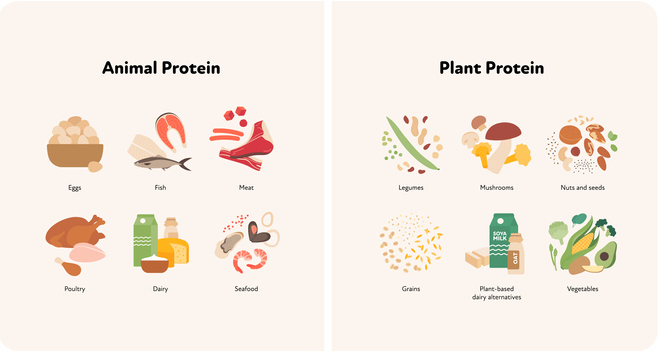
Healthy food guide concept. Vector flat modern illustration. Animal and plant protein compare Infographic with product icon and name labels.
Just as protein can impact the absorption of levodopa across the brain, high-fat and high-protein meals such as a roast dinner can slow down the emptying of the stomach. This means that your levodopa tablet remains in the stomach longer before moving to the small intestine where it is absorbed to travel to your brain. The longer the tablet is in the stomach the more the tablet can be broken down, meaning less levodopa gets to your brain. This may mean that your symptoms are not as well controlled. So, if you are going out for a three-course meal, you need to consider what your medication timing is and choose wisely on the menu: go for vegetarian dishes and avoid dishes high in dairy-based sauces.
But to be honest, everyone is different with regards to the impact protein foods and larger meals have on their medication absorption. The only way to know for sure how you respond is to track when and what you eat in relation to your levodopa medication and how your symptoms respond. By tracking your food, medication and symptoms you can get a picture of what is going on and you can share with your neurologist to see what adaptations you can make.
Are there any foods PwPs should eat or avoid eating?
As with the general population, PwPs should limit foods and drinks high in fat, sugar, and salt such as cakes, biscuits, fizzy, sweetened drinks, takeaway meals, eat less red and processed meat and drink less alcohol. Similarly, they should focus on eating a more plant-based diet by increasing wholegrain foods, fruit and vegetables, olive oil and olives, pulses, white and oily fish, nuts, seeds, and spices. PwPs should eat more berries, green leafy vegetables, olives and olive oil and prebiotic foods as I mentioned in part one of this feature.
Should PwPs eat dairy?
A set of dairy products.Milk, yogurt,sour cream,cottage cheese,butter,ice cream,roquefort,parmesan, edam, tilsiter,camembert, gouda and mozzarella.Dairy products isolated on a white background.
Research shows a low to moderate association of lower-fat dairy foods with risk of developing Parkinson’s with low to no association with fermented dairy foods such as yogurt. However, the evidence is very conflicting, making it difficult to ascertain the mechanism that is linked with a risk of developing Parkinson’s. There is only one prospective study on dairy and progression of Parkinson’s, and this associated higher rates of progression in those who ate ice cream, cheese, and yogurt, yet there was no association with milk. We need more research to understand the reasons why it is associated with risk and to understand if it has any true association with progression.
There are several potential theories behind the association, including that high urate levels have been associated with lower risk of Parkinson’s while dairy is known to lower urate levels, and there is the debate about the pesticide content of dairy but this may be impacted by different countries’ agricultural practices. Then there is the probiotic and milk fat content and its effect, and a more recent theory about the effect of galactose as the mechanism behind the association. So many questions, very few coherent answers.
We must remember that association does not mean causation and that many PwPs have heart disease and high blood pressure and dairy foods have positive associations for heart health and lowering blood pressure. The MIND diet is associated with slower progression, and it recommends limiting butter and cheese due to their saturated fat content, but that low-fat milk and yogurt are fine to eat. It really comes down to the individual PwP and their medical history and tailoring dietary requirements to their own health needs. However, the confusion over dairy continues to be one of the most common questions by PwPs and as it is a food that in moderation can confer many benefits there really needs to be more clarity through more targeted research.
Should PwPs eat gluten?
I have coeliac disease, which I think may somehow through a gut-brain connection be associated with my Parkinson’s and, anecdotally, I certainly seem to have come across a fair few people with both diseases. However, being gluten-free obviously did not reduce my risk of getting Parkinson’s! The evidence does not currently show a strong association between the two conditions. My own theory is that it may be due to gluten affecting the leakiness of the gut and the misfolding of alpha synuclein in the enteric nervous system creating a perfect storm.
A gluten-containing diet does not cause Parkinson’s and there is no need for people to follow a gluten-free diet unless they have coeliac disease or non-coeliac gluten sensitivity. Unfortunately, people who eat a gluten-free diet can be lacking in the many nutrients that are good for Parkinson’s such as wholegrains, fibre and B vitamins due to the lower fibre content of their diets. PwPs who also have coeliac disease need to work harder to ensure they get wholegrains and fibre into their diet which as we know are important for PwPs.
How does having Parkinson’s influence what you eat personally?
I always had a healthy diet, but I am probably more conscious now of following the Mediterranean/MIND dietary patterns – increasing my berry intake and eating more Vitamin C-rich foods. I also find that me and alcohol don’t mix very well together anymore so I have the very odd glass of wine.
I also discovered that my long-standing low blood pressure may have been a prodromal symptom and I have managed that through ensuring I drink a pint of cold water first thing in the morning and ensure I drink 2 litres of fluid daily. If I’m exercising or if it’s hot outside, I drink more. I also take extra salty snacks if needed. I sea-swim and I was advised that the cold water can cause blood-pressure drops, so I drink 1-2 pints of cold water to increase my blood volume before going in the sea. This, along with specific exercises such as the ‘butt clench’, helps to keep my blood pressure up.
Food guide concept. Vector flat modern illustration. Mediterranean diet infographic pyramid with label, rules and recomendation. Colorful food, meat, fruit and vegetables icon set. Water and alcohol.
I was put on a tablet to increase fluid retention and it has made a massive difference, ridding me of some terrible episodes of dizziness and nausea which were quite debilitating at times.
I am mindful that it takes longer for me to pass a bowel motion, so I ensure that my diet is high in wholegrains and fruit and vegetables and pulses to keep the bowel moving. I also take my medication half an hour before my meals where possible and if not, I take it a good hour after meals and I keep on top of my weight, ensuring I don’t lose weight and maintain my muscle mass.
Finally, I ensure I take freshly squeezed orange juice with my tablets and plenty of water to ensure my tablets go down my oesophagus. I use cold and sometimes fizzy water to stimulate my swallow and sometimes I eat a chopped apple if I have the sensation where I feel my tablet hasn’t gone down. Thanks to attending the World Parkinson Congress in Kyoto in 2019 I learnt from a Japanese speech pathologist that I should get a video fluoroscopy – a study of my swallow – done. It took me almost a year to get it after much personal medical expense to find out at the age of 48 that I had the swallow of a 65-year-old. So, I did the LSVT Loud programme with my speech and language therapist followed by Expiratory Muscle Strength Training, which improved my swallow and voice function. After a hiatus of almost two years waiting for a follow-up post-Covid, I am finally back with my SLT ready to keep on top of my voice and swallow strength. I recommend that every PwP should have a baseline swallow assessment (ideally with a video fluoroscopy) with an SLT.
Read part one of Richelle’s diet and nutrition advice
Tuning into a new television series is an activity that most of us are partial to from time to time. We round up three shows portraying Parkinson’s disease on TV – and explore how the community has responded to them online
‘Kaleidoscope’
In the popular Netflix show ‘Kaleidoscope’ – a series following a crew of thieves who plot and attempt to pull off a huge heist – the lead character and swindler mastermind, Leo Pap, has Parkinson’s.
Fans flocked to social media to debate the correct order of episodes (you don’t have to watch them chronologically), while others were quick to weigh in about the portrayal of Pap’s condition. The series received mixed responses from the Parkinson’s community online:
Watching #KALEIDOSCOPE and they just brought up Parkinson’s. As someone whose partner has YOPD, seeing the disease become more visible on television makes me hopeful that the public interest (and funding) will also rise.
Ok, I'm loving #KALEIDOSCOPE on Netflix, but .. #parkinsons is NOT a "terminal" illness!! It can cause complications that *might* shorten life but we die WITH Parkinson's not from it!! Convo "how long?" "2 years, maybe 10 dunno"… WTF!?
Another programme to add to the mix is the star-studded Apple TV series ‘Shrinking’. Featuring Harrison Ford and Jason Segel, the 2023 show follows a grieving therapist who starts to offer his clients unfiltered and brutally honest opinions.
Throughout the series, the audience is introduced to the therapist’s boss, Paul, who is living with Parkinson’s and, therefore, dealing with his own set of challenges. The release of the series drummed up a lot of media attention and conversation online, with some sharing praise for Ford’s performance:
A review for #Shrinking is 100% coming next week. Super impressed by this show. Props to Ford for nailing a lot of the Parkinson’s mannerisms (holding his hand to not shake, tremors while reaching for things, overly gripping this tight in hand).
‘The Suspect’, a drama series released by the UK channel ITV last year, features a lead character coming to terms with living with Parkinson’s. The programme follows successful psychologist Joe O’Loughlin, who assists the police with a potential murder enquiry – but later finds himself at the centre of the case.
O’Loughlin’s character is portrayed by 39-year-old Aidan Turner. The Irish actor connected with a musician who has Parkinson’s to explore how the condition’s symptoms should be depicted on-screen. Some members of the community highlighted the series on Twitter:
The Suspect new drama; The series introduces Dr Joe O’Loughlin a man who has the perfect life a beautiful wife, a loving daughter and a successful career as a clinical psychologist. But nothing can be taken for granted as he navigates life after being diagnosed with Parkinson’s
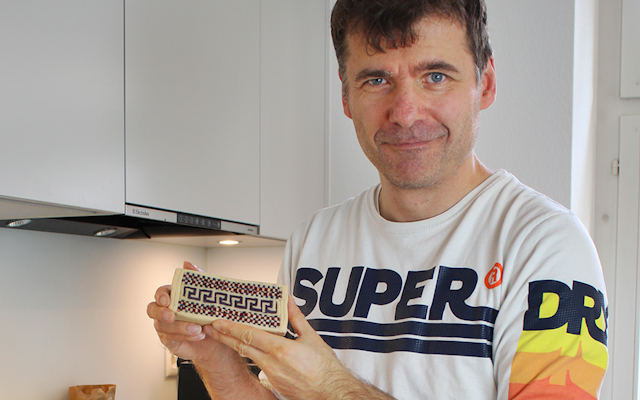
Swiss software engineer Urs Bratschi shares why he began creating pasta art, how living with Parkinson’s has impacted his ambitions, and why it’s crucial to “find a task that fulfils you”
Please tell us a bit about yourself and your experience with Parkinson’s.
I’m based in Switzerland and have worked in software development for almost 30 years. I’m currently working full-time, and I don’t want that to change for as long as possible. In the summer of 2014, I noticed that my right arm no longer swung when I walked – this was my first symptom of Parkinson’s.
When the diagnosis came, I was desperately looking for something that could help me and free me from it. Most people never experience having to turn their whole worldview upside down, but it’s happened to me twice: the first time when I realised I was gay, and the second when I was diagnosed with Parkinson’s.
Yet I have learned so much about myself and the world through the condition – it has made me more open, goal-oriented and positive.
How did your journey with pasta art begin?
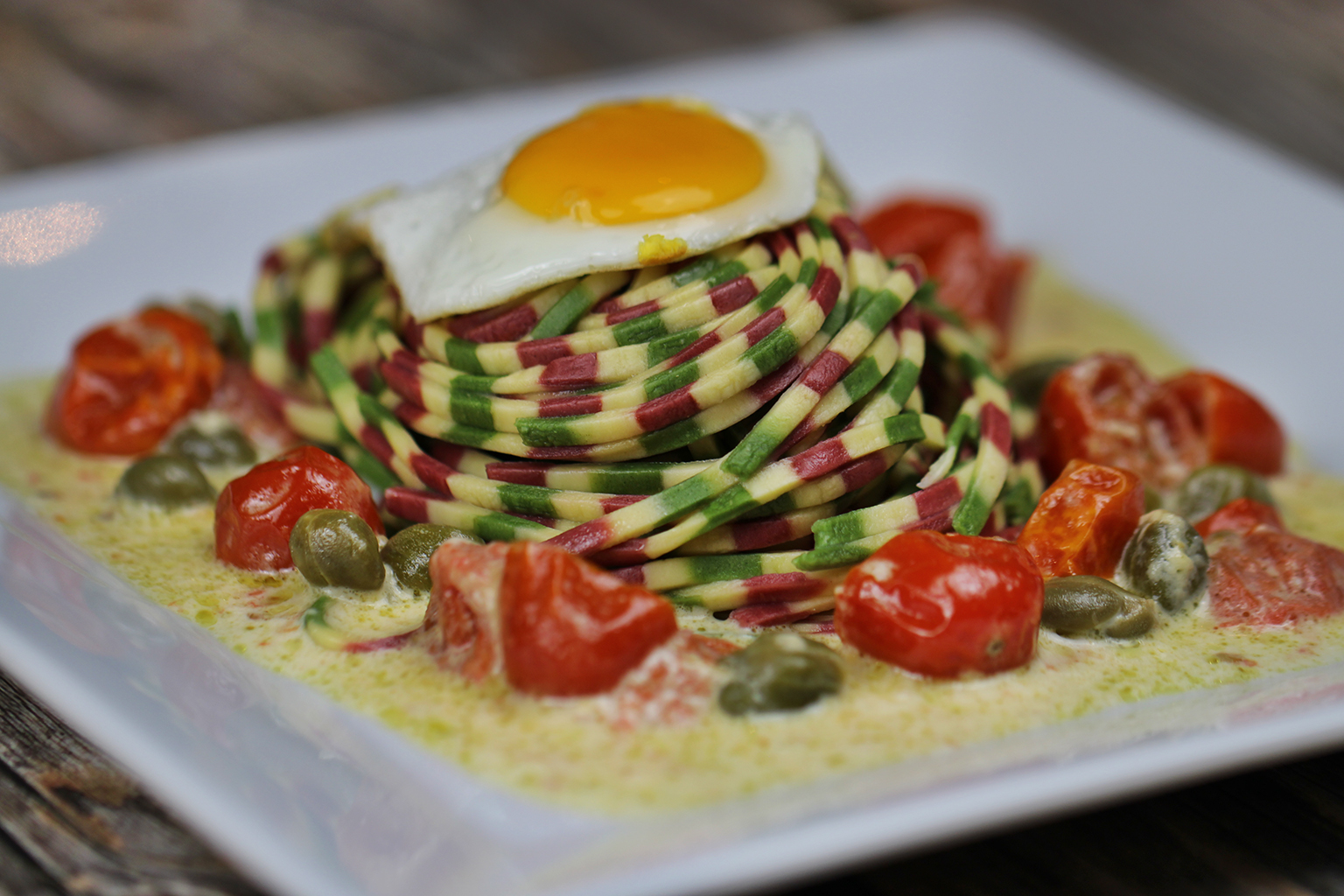
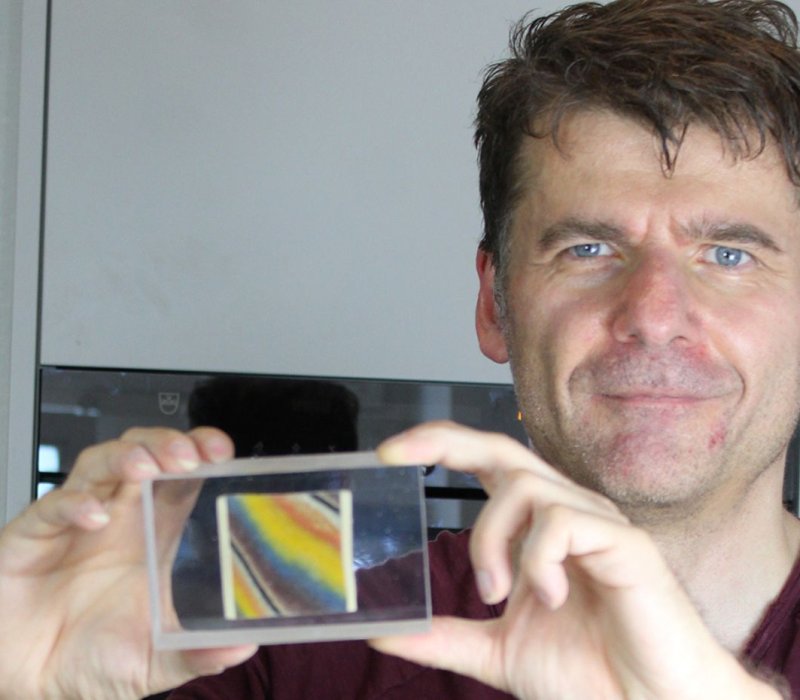
I bought my pasta roller 13 years ago with the idea of making my own pasta. My first attempt at making tagliatelle failed, but I recognised the mistakes and successfully made it again. Then I started colouring the pasta, and a work colleague teased that I should make a rainbow. At first, I didn’t take it that seriously, but somehow, I wanted to know if it was possible. I researched how to create the colours, and from there, making rainbow stripes was no longer difficult – and I wanted even crazier challenges!
I think pasta dough has a terrible consistency: it can be tough, difficult to shape, and once you cut it, it’s not easy to put back together. But the nature of the task is what appeals to me. ‘Impossible’ often just exists in our heads. You can do things that seem impossible if you believe they’re possible.
I like having an artistic and logical outlet, which I have in creating pasta art and in my job working with computers. Pasta art and software development are not that different – they both involve creative concepts that need to be built with different components.
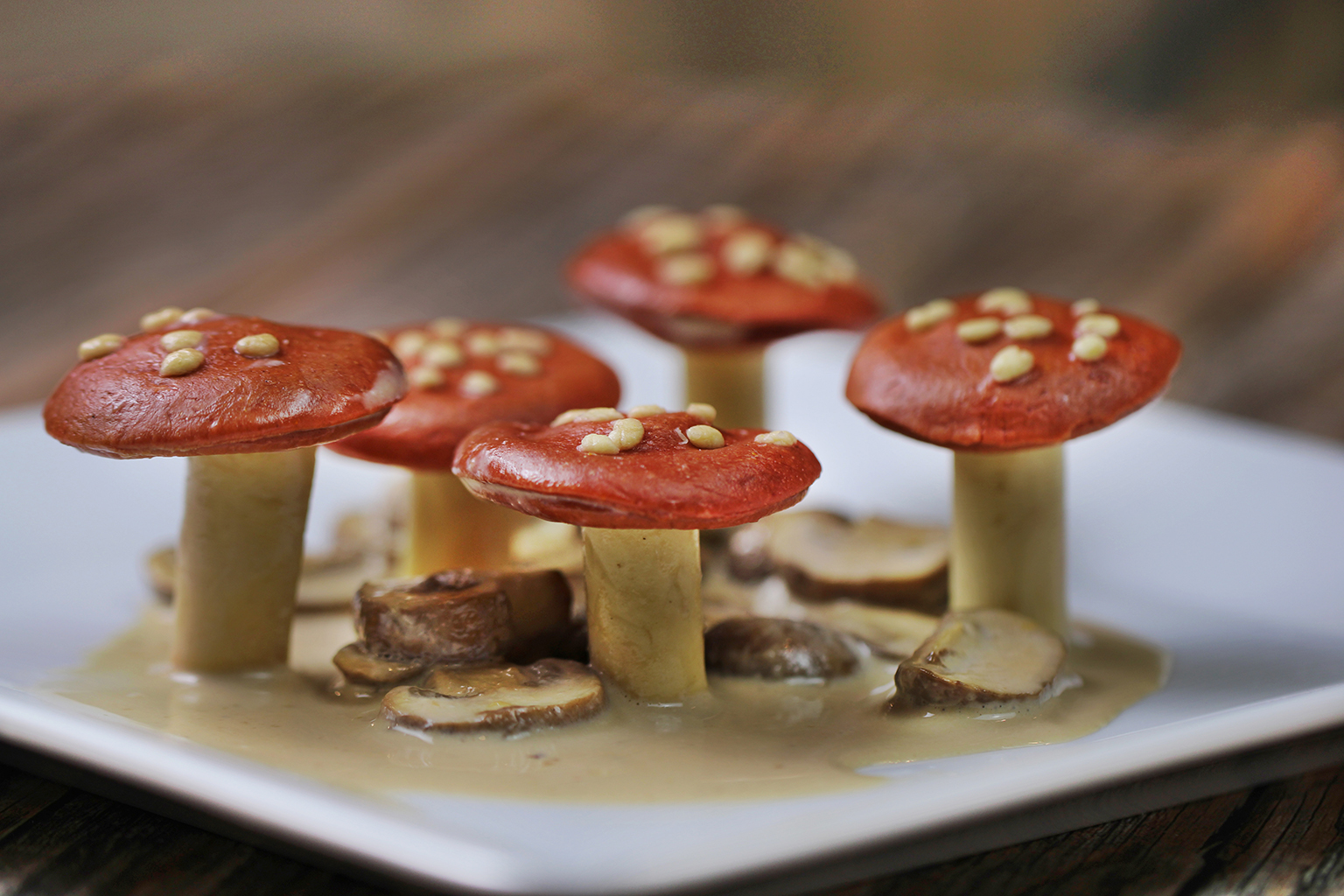
In 2021, I started building patterns into three-dimensional blocks of dough, from which cross sections are made. So, the design possibilities have expanded massively. That’s when my friends told me my pasta was not for eating – it was art.
What is your typical process for creating pasta art?
It starts, of course, with an idea. Sometimes I see something and just want to make it as pasta – although the final concept usually only develops during the process. I often work with rainbow colours: if you add some black and include undyed dough, you can combine eight different doughs together.
Creating three-dimensional models requires the biggest effort. To do this, the dough is brought to the desired shape, cut and combined until the desired pattern is present in the dough model. This often takes three to four hours, or even more in very complex cases. Then cross sections are made from the block of dough, and the desired pasta is assembled. Finally, the pasta is cooked, photographed and eaten.
Has Parkinson’s impacted your ability to create pasta art?
When I stand for a long time in the kitchen, the muscles in my back cramp – it feels like a knife is stuck in my back. Depending on how fit I am on the day, I sometimes have to take a break and lie down. But Parkinson’s hasn’t made anything impossible for me so far.
I think it also has had a positive aspect. Without the condition, I’m not sure I would have developed the skill in my pasta to the point where it’s become an art. Parkinson’s has changed a lot about me. I know what I want, and I don’t procrastinate. I want to achieve something in my life.
What advice do you have for someone who has recently been diagnosed with Parkinson’s?
It is not easy to come to terms with this diagnosis. But you should work on finding a task that fulfils you. Spending hours in the kitchen making pasta art might not be for everyone, but I think it’s important to have an activity you enjoy and goals you want to achieve within that activity – whatever it is.
It is important to me to set an example for others that life goes on – and can go on well. It undoubtedly takes some work on yourself. But is there any real alternative to just making the best of it? I know that I can have a fulfilling, exciting life with Parkinson’s. Today, I think that Parkinson’s and I belong together, and that’s okay.
The team consulted data from a genome-wide association study (GWAS), which captured information about genes in individuals’ cells to identify small genetic alterations. The data set included 37,688 people with Parkinson’s and 18,618 people linked genetically to the condition, such as siblings and children – along with a control group of over 1.4m.
Variation in platelet size was found to be greater in people with Parkinson’s, highlighting this as a potentially useful indicator for diagnosis.
Commenting on the research, senior author Dr Jake Gratten said the findings “provide a foundation for future work to improve prevention and prognosis of common neurological diseases”.
Richelle Flanagan has been a registered dietitian for the past 19 years, is a wife and mum to two children and has lived with YOPD for six years. Her lived experience has led her to develop My Moves Matter, a digital self-care companion tailored to support and empower women to live well with Parkinson’s. Here she gives advice on what kinds of diet plans people with Parkinson’s should follow.
Richelle Flanagan
How important is diet for people with Parkinson’s?
I think it’s totally underutilised as a way of helping people with Parkinson’s (PwPs). That is from the perspective of both being a dietitian and living with the disease and doing the research myself. I think in some cases people may be being escalated up with Parkinson’s medications before looking at how their symptoms may be improved by certain lifestyle aspects as they do for other chronic diseases.
I have never worked with a chronic disease where diet and nutrition play such a fundamental role regardless of age, gender, ethnicity and Parkinson’s stage. However, we need more research to investigate the effect of diet and nutrition on Parkinson’s in areas such as malnutrition, post-DBS weight gain, bone health, medication influences, executive function, cognition, bowel function and so much more. Diet in Parkinson’s is totally under-researched in comparison to other chronic disease areas such as cardiology, cancer and diabetes.
What sort of diet should a PwP follow? Can it slow progression?
The evidence is beginning to build for the benefit of diet and nutrition not only in helping to manage and reduce Parkinson’s symptoms, but also in potentially slowing progression. Research papers have assessed diet quality in terms of the Mediterranean diet, of which there are several regional variations, including the Greek Mediterranean diet and the MIND – Mediterranean in neurodegenerative delay – diet.
These variations share fundamental characteristics, which are beneficial in the health of people living with Parkinson’s. One key characteristic is the reduction of intake of less healthy foods such as highly processed, high-fat and sugar snacks and baked goods, sugary drinks, processed meals and processed meats high in saturated fat and salt.
Healthy patterns of the diet include eating a largely plant-based diet with plenty of unprocessed cereals, especially whole grains, fruits and vegetables, pulses, nuts, seeds, herbs and spices; olive oil as the main source of fat; moderate consumption of fish and seafood, poultry, eggs and dairy products such as yogurt and a low consumption of red meat. There is some evidence that the MIND diet may have more specific advantages for Parkinson’s due to the additional focus on berries and green leafy vegetables.
A study in 2018 of older PwPs showed that the MIND diet may be associated with slower progression of the condition. The same authors also found that specific nutrients within the PwPs’ diets were associated with slower progression. These include carotenoids, vitamin E and vitamin C, which are found in leafy greens and berries. A 2022 study suggests MIND and Mediterranean diets are associated with fewer patient-reported symptoms over time, with the MIND diet being twice as effective in reducing symptom severity.
There is limited but hopefully growing evidence that the Mediterranean diet may help to slow progression of Parkinson’s. The question remains as to whether this is a direct or indirect result of the diet. For example, the high fibre content may improve Parkinson’s symptoms by reducing constipation, which for many PwPs improves levodopa uptake into the brain and therefore improves symptoms. Or does the diet indirectly improve symptoms by improving the balance of good and bad bacteria in the gut which we know plays a role in Parkinson’s? Or is it the anti-inflammatory phytonutrients in fruit and vegetables that have an effect? There are so many constituents in foods that it is hard to identify which specific element is potentially beneficial. Research shows that it is the synergistic effect of the different elements of food that confers the benefit, i.e., the fibre and the phytonutrients acting together.
There is limited but hopefully growing evidence that the Mediterranean diet may help to slow progression of Parkinson’s
Are there any differences between diets that male and female PwPs should follow, or diets to follow at different ages?
One study showed that higher adherence to the MIND diet was significantly associated with developing Parkinson’s at a later age, especially in women, with an almost 17.5-year difference between those women with the highest adherence to the diet versus the lowest. They found that the Greek Mediterranean diet was more effective than the MIND diet in men, with an almost 8.5-year difference between those men with the highest adherence versus the lowest. The effect size of the MIND diet in women was more than three times that of the men. The tendency for women to adhere more strongly to the MIND diet may have contributed to their lower rates of Parkinson’s.
There are a couple of studies that suggest women with Parkinson’s suffer from more food addiction issues. There is also some evidence indicating that women suffer from more weight loss particularly in the earlier stages of the disease and have higher levels of osteoporosis and higher fracture risk.
What we lack is more sex- and gender-specific research on PwPs. Determining the subtle differences in the metabolic profiles of the different diets and their interplay with sex/gender may help to elucidate elements of what causes Parkinson’s and how we might slow its progression.
What part does weight play in the condition – should you gain or lose weight? Are there any types of diets that aren’t recommended for PwPs?
One longitudinal study in PwPs showed that decreasing BMI was associated with higher (worse) scores over time in both the motor and total Unified Parkinson’s Disease Rating Scale (UPDRS). Another study showed that clinically significant weight loss within the first year of diagnosis was independently associated with dependency, dementia, and death. So yes, weight plays a significant role in Parkinson’s, but many neurologists, GPs, nurses and health professionals neglect this aspect. In fact, when I did a nutrition survey of 82 people for the Dublin branch of the Parkinson’s Association of Ireland, 63 per cent reported that they had lost weight unintentionally since their diagnosis, but almost 60 per cent reported that neither their GP nor their neurologist had ever weighed them. Research has shown that increasing weight and nutritional status – where a PwP is underweight – can improve symptoms and quality of life.
On the other hand, being obese has been shown in one study to be associated with more rapid progression in early-onset PwPs. Obesity can develop due to issues such as impulse control disorder triggered by dopamine agonist medication which can cause people to over-eat. Weight gain has also been seen post-DBS, which some attribute to the reduced energy expended due to the reduction in symptoms after the surgery.
PwPs should aim for an ideal body weight for their height, known as the Body Mass Index within the range of 18-24. Being overweight within the range of 25-29 does not seem to be associated with progression as much as being obese (BMI >30). However, people should try to keep their weight in check, avoiding being underweight (a BMI of <18) or exceeding a BMI of 27.
There are no specific weight-loss diets for Parkinson’s but reducing daily calories and following a Mediterranean-style diet is recommended. Intermittent fasting has been seen to be beneficial for weight loss in the general population and can potentially benefit Parkinson’s symptoms. Eating between the daylight hours of 7am to 7pm is a natural form of overnight fasting. PwPs often report food cravings due to fluctuating dopamine levels which can lead to grazing between meals and late at night. However, filling up on wholegrain and plant-based foods can help to keep you full, cut cravings and reduce constipation – all of which can help improve symptoms.
One weight-loss diet some PwPs try is the ketogenic diet. There are some very small studies that show a benefit for PwPs, however, the diet is complex to follow, and we do not know what the long-term health risks compared to the weight-loss benefits could be. I would recommend getting advice from a dietitian if you are considering a ketogenic diet.
A word of caution is that weight loss can lead to a need to reduce one’s levodopa medication as a lower body weight can lead to greater absorption of the medication which can lead to side effects such as dyskinesia. It is therefore important for PwPs to track their symptoms when losing weight. This also applies to PwPs who lose weight unintentionally, who find that their dyskinesias may worsen due to the higher levodopa absorption – this is particularly true for women with Parkinson’s who absorb levodopa more rapidly than men, as shown in this study.
Next week, Richelle discusses probiotics, protein foods and levodopa absorption, eating dairy and gluten, and reveals what she eats as a PwP. Read part two.
There are numerous reported benefits to following Mediterranean (MEDI) and Mediterranean‑DASH Intervention for Neurodegenerative Delay (MIND) diets. Though slightly different,...
Researchers in Lithuania have explored whether artificial intelligence (AI) could be used to distinguish between the voices of people with and without Parkinson’s.
The team built an AI learning model using vocal data from 50 Italian people, including 28 people with the condition and 22 without. Then, the AI model evaluated voice recording samples of 104 Lithuanian people saying the same sentence as the previous group.
This data enabled the researchers to identify instances of Parkinson’s with 90% accuracy among the Italian samples and 80% accuracy among the Lithuanian samples.
Commenting on the study, the scientists noted that the AI model has the potential to supplement traditional methods of diagnosis. Lead author Rytis Maskeliūnas said in a press release. “We are not creating a substitute for a routine examination of the patient – our method is designed to facilitate early diagnosis of the disease and to track the effectiveness of treatment.”
Do you have romance in your life? With Valentine’s Day right around the corner, listen to our podcast episode about managing love, relationships and breakups while living with Parkinson’s
Whether you’re happily single, in a relationship or somewhere in between – there’s something for everyone in our episode on ‘Love, sex and Parkinson’s’.
Hear what US-based writer Heather Kennedy and Canadian musician Robbie Tucker have to say about dating new people, approaching intimacy – and their experiences managing committed relationships since being diagnosed with Parkinson’s.
Robbie, who has struggled at times to balance relationships with his condition, says: “Parkinson’s is like dating two people, if you’re with somebody. Parkinson’s needs your time. It needs your efforts. It wants what it wants, and it takes what it needs.”
While Heather agrees, sharing how Parkinson’s played a partial role in the end of her marriage, she believes in keeping an open mind to new relationships. “Don’t forget to let love surprise you,” she says. “I believe that we can be better and healthier when we feel loved.”
Ultimately, she says: “Love really is a transformative experience.”
This article was originally published in February 2021.
We hear from Stephanie Wallis about launching her UK-based organisation, Stepping Stones Health and Well-being, teaching exercise classes to people with Parkinson’s and encouraging those in the community to get moving
Please tell us a bit about yourself.
I live in Basingstoke in Hampshire, England. My family includes two children and one dog, so I keep very busy while running my own business: Stepping Stones Health & Well-being. I teach exercise classes in the Basingstoke area and have worked in the fitness industry for over 21 years.
My main passion is rehabilitation exercise. After gaining my Level 3 diploma in exercise referral (which qualifies graduates to design, plan and deliver exercise programmes), I was asked if I would like to teach cardiac rehabilitation. This sounded so interesting that I went on to receive my Phase 4 cardiac rehab qualification. While doing the referral scheme at a local sports centre, I met participants living with cancer and thought it would be beneficial to gain my Level 4 cancer rehabilitation qualification.
In 2017, a local Parkinson’s support group reached out to see if we could provide a class specifically for people with Parkinson’s. I went and studied a few courses to gain knowledge on exercise and the condition. When I started to see the benefits people were experiencing through exercise, I knew this was what I wanted to do. I recently completed my Level 4 exercise qualification for long-term neurological conditions.
What sparked your passion for providing rehabilitation care to clients through exercise?
I get real enjoyment out of helping people achieve something. The more I worked with people with different medical conditions, the more I saw how exercise could benefit them physically or mentally and improve their quality of life. Seeing these results pushed me to try to help more people.
Stephanie is passionate about the benefits of exercise for people with Parkinson’s.
Can you tell us about your organisation, Stepping Stones Health and Well-being, and what it aims to achieve?
I started the business in 2020 in the middle of the Covid-19 pandemic. I wanted to be able to provide exercise classes for people living with medical conditions that made it difficult to exercise in a mainstream class. I had seen first-hand the benefits that exercise can have, especially for people with Parkinson’s.
I wanted to provide classes that people could feel comfortable in, knowing they wouldn’t have to worry about whether they were able to do an exercise or not. I wanted to create a setting where people could meet others going through similar experiences and offer support to one another.
Why is exercise important for people with Parkinson’s?
Experts recommend, on average, 2.5 hours of exercise a week, which has been shown to be beneficial for a range of Parkinson’s symptoms. The potential benefits include better balance; improved posture; better sleep; improved strength to help with everyday tasks; reduced anxiety, stress and depression – and more. The earlier you can start exercising from diagnosis, the better.
How do your classes aim to support people with Parkinson’s?
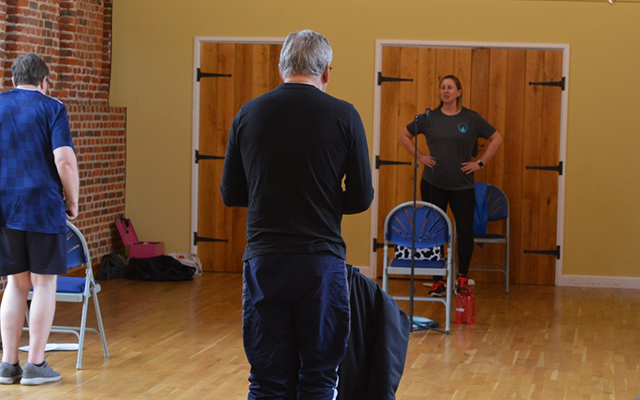
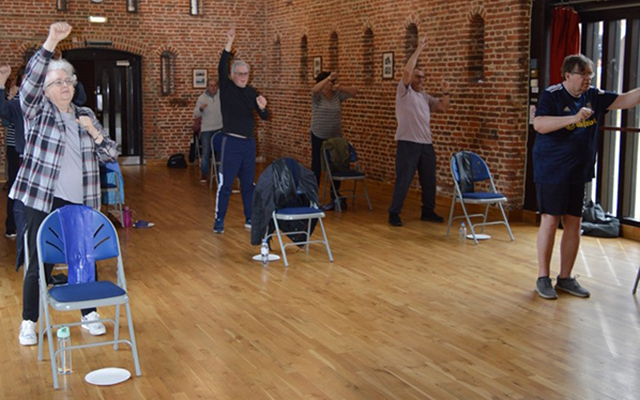
Across both classes, we work on strength – focusing on the legs and posture muscles, dual-movement tasks, cognitive exercises and strength and balance in the hands and fingers. I blend functional exercises, such as sit-to-stands, with more fun exercises, like telling the time with your arms or feet. We practice anything from juggling and throwing foam javelins to boxing and climbing agility ladders. It’s about getting you moving while getting your brain working as well. There is always a chair at each station so that any exercise can be adapted. All I ask is that clients get their doctors’ consent to exercise beforehand.
Those that come to the class say how it has helped them get out of the house, meet other people and improve their confidence. Everyone shares tips and knowledge about what they have found beneficial – it’s as much a support group as an exercise class. The class offers people the opportunity to try to reduce the impact of Parkinson’s on their everyday life – and to feel a part of a local community.
Stephanie says her class helps people “feel part of a local community.”
What is your advice for people with Parkinson’s looking to incorporate exercise into their routine?
Always seek medical guidance first to make sure you are safe to exercise. Start slowly and only work to your ability. Exercises can be done seated – most of the exercises I do will have a seated option. Keep the exercises simple, and just work on the range of movement first.
Any form of activity can be beneficial. It doesn’t have to be a full-on exercise class. Walking, gardening, housework – these are all ways to get your body moving. Just work at your own level.