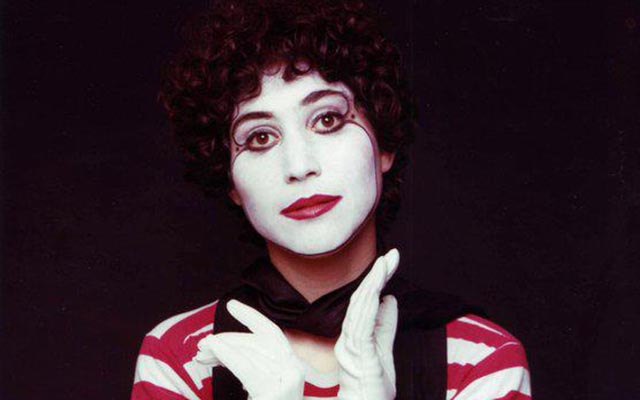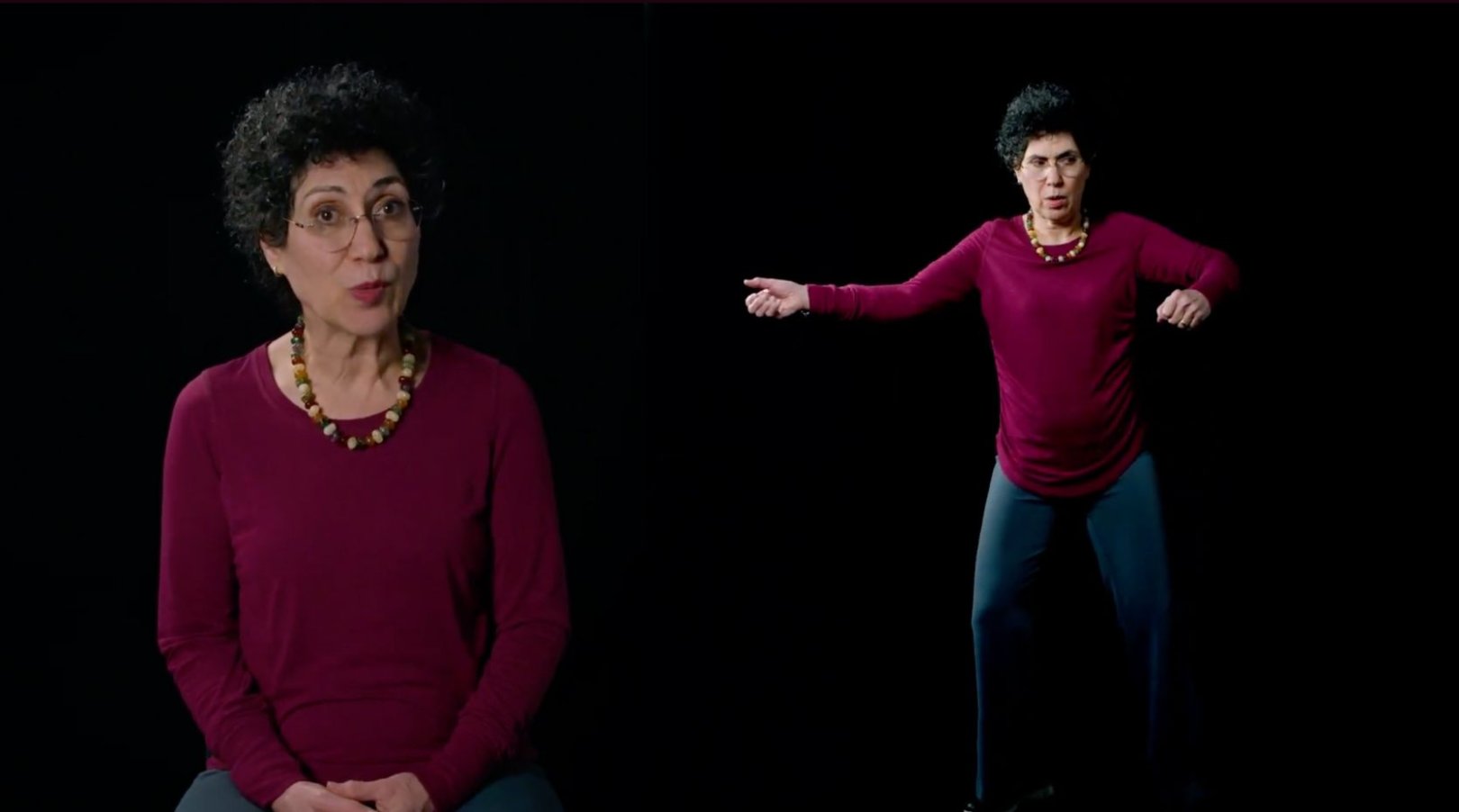
A series of new therapeutic videos have been created by Canadian artist with Parkinson’s Barbara Salsberg Mathews, using mime to help people with Parkinson’s manage their symptoms.
The Mime Over Mind series for people with Parkinson’s includes 12 videos, led by the retired teacher and former professional mime artist.
Barbara was diagnosed with Parkinson’s in 2020, having noticed issues with her posture, right arm and foot. She says using mime techniques have helped retrain her brain to create new neural pathways to help manage these symptoms.
Barbara explains: “To walk normally, I use imagery. I visualize swallowing a coat hanger to improve how I carry my shoulders. Whenever I think of that coat hanger, my shoulders immediately return to their correct position.
“To improve my posture, I imagine a puppet string at the back of my crown, holding me up and another string moving my frozen right arm forward and backward while walking. I also concentrate on feeling my right heel touch the ground when walking, to prevent my foot from dragging.”
Mime videos aim to improve Parkinson’s symptoms
Barbara decided to share her knowledge to help others with Parkinson’s, working with the University of Guelph in Canada to develop the Mime Over Mind programme. Supported by Parkinson Canada’s CARE Fund, she has created 12 videos, available on her Mime Over Mind YouTube channel.
Therapeutic mime can improve balance and gait, and increase range and fluidity of movement, she says, with the benefit of being fun, easy to learn, and requiring no special equipment.
The videos are typically between two and five minutes long, and each come with a downloadable transcript.
Adaptable exercises
“I’ve also included ways to modify the exercises to suit different stages of Parkinson’s Disease,” Barbara adds. “And ways to extend the activities, should people wish to challenge themselves or practice these lessons with others.”
She recommends viewing the videos in order, as they run from the easiest to more difficult sessions. Users should also wear comfortable clothing and shoes, and work at their own comfort level.
“It is helpful to go through the lessons with short and frequent visits,” Barbara advises. “The important thing is to be mindful and aim to do your personal best.”
The videos can be used over a 30-minute session three times a week, or shorter, more frequent sessions if preferred.
Barbara’s recent works include an e-book, ‘What Parkinson’s Feels Like: a collection of illustrations inspired by descriptions written by people with Parkinson’s around the globe’, capturing the essence of what living with Parkinson’s is like.
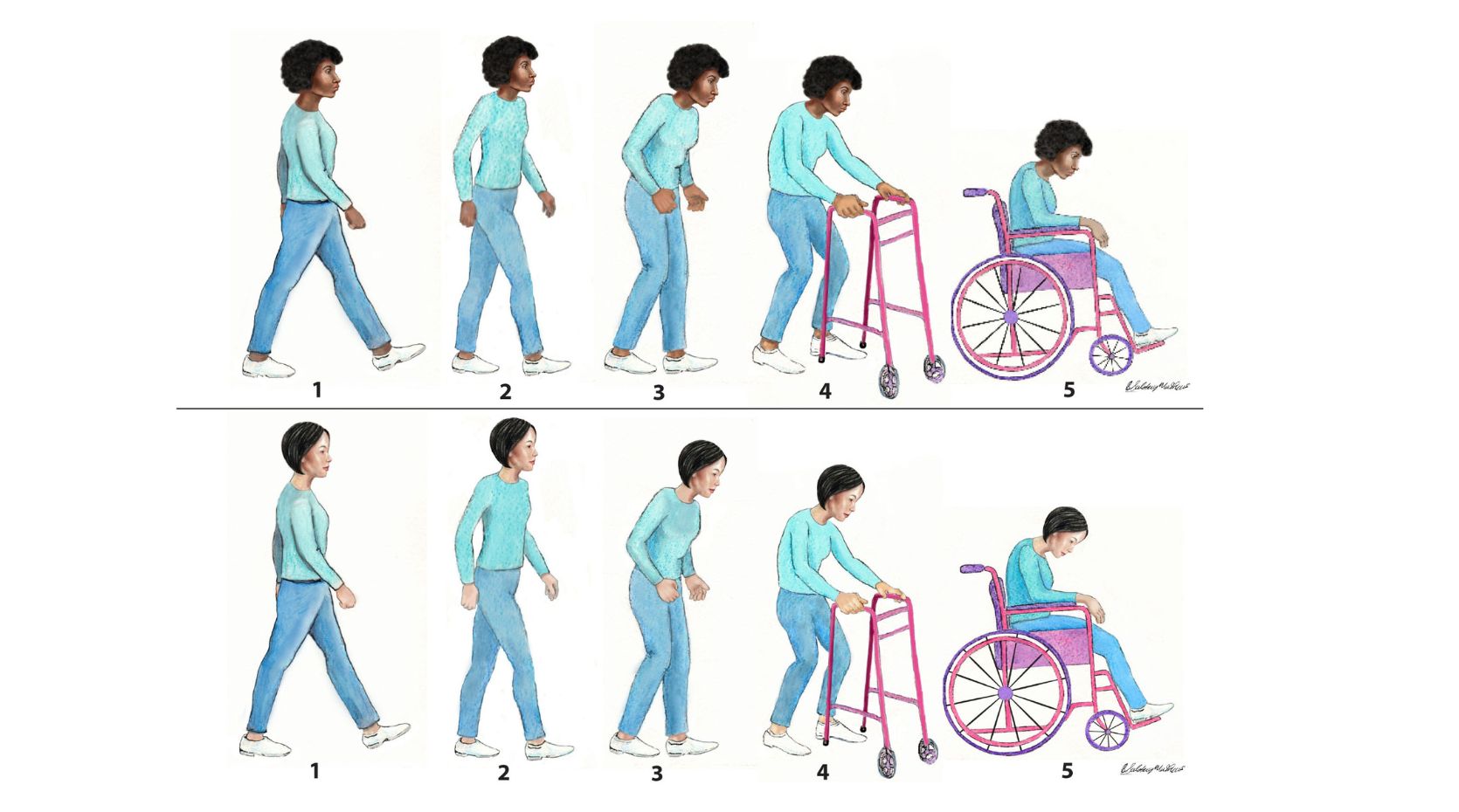
She also released a set of new illustrations for International Women’s Day. The images show the five stages of Parkinson’s featuring young women from various cultures, communities and backgrounds.
Find out more about exercising with Parkinson’s.