Find advice on a range of topics to help you live life to the full, from diet and exercise to travel, work, sleep, relationships and leisure activities.
Our interactive Parkinson's map shows a range of resources across Europe, from member organisations to events, activity groups to research and campaigns
Our hopes for the Parkinson’s community in the year ahead.
This year, Parkinson’s Europe will continue to advocate to improve the lives of people with Parkinson’s, as well as to campaign for more research into its causes and for the development of new medications. Here are three areas where we’d like to see change in 2024:
Progress on pesticides
There is growing scientific evidence that exposure to certain pesticides may be a contributory factor in the development of Parkinson’s. Despite last year’s campaign by the scientific and Parkinson’s communities to alert the European Commission to growing evidence that the pesticide glyphosate could be a cause of the condition, in November it gave its permission for it to be used for another 10 years. Our battle is not over, however, and this year we will continue the fight to make our voices heard about the potential dangers of exposure to this and other pesticides.
Together, we’re stronger. You can play a proactive role in improving life for people with Parkinson’s by joining the Parkinson’s Europe engagement network.
Whether you live with Parkinson’s, or know someone who does, or if you work in the field of Parkinson’s, you can help to make a change.
This is how it works: you sign up to become a network member and tell us exactly what opportunities you are interested in hearing about – ranging from lobbying for change, to shaping research, improving treatment and finding a cure. We then email you as soon as one of those opportunities becomes available, so that you can take the next step if you want to take part. It’s as simple as that.
Research is the engine driving change and hope for people with Parkinson’s. Last year, we saw an incredible breakthrough with the discovery of a Parkinson’s biomarker by a group of scientists led by The Michael J. Fox Foundation (MJFF). They discovered a new tool which can detect abnormal alpha-synuclein – known as the “Parkinson’s protein”. The α-synuclein seeding amplification assay can detect pathology in spinal fluid not only in people with Parkinson’s, but also in those who have not yet been diagnosed or shown symptoms but are at a high risk of developing the condition. It is hoped that this could help to diagnose Parkinson’s in the future as well as provide the foundation for finding new treatments – perhaps preventing those with the biomarker from ever developing the condition.
Another study, by the Université of Montréal (UdeM) in Canada, found that Parkinson’s may go undetected for as long as 10 years before symptoms develop. Their findings suggest that dopamine levels in the brain remain sufficiently high for many years before motor changes appear. We look forward to the further progress science will make this year.
As 2024 begins, we pause to take a look back at the highlights of Parkinson’s Life 2023, from inspirational interviews to timely advice, and an in-depth look into a little-explored area for women with Parkinson’s.
A new year is full of promise, but it’s also a time to reflect on the things we’ve learned during the year that’s just ended, not to mention our favourite memories.
For many of us being more active is our top resolution for the coming year – and for people with Parkinson’s it’s particularly important.
Not keen on getting sweaty? With its slow, fluid movements, Tai Chi can bring big benefits for people with Parkinson’s. A scientific study found that it had a significant beneficial impact on balance, gait and motor scores.
We’ve found five activities that you can do whatever the weather – look for a class near you or take part online.
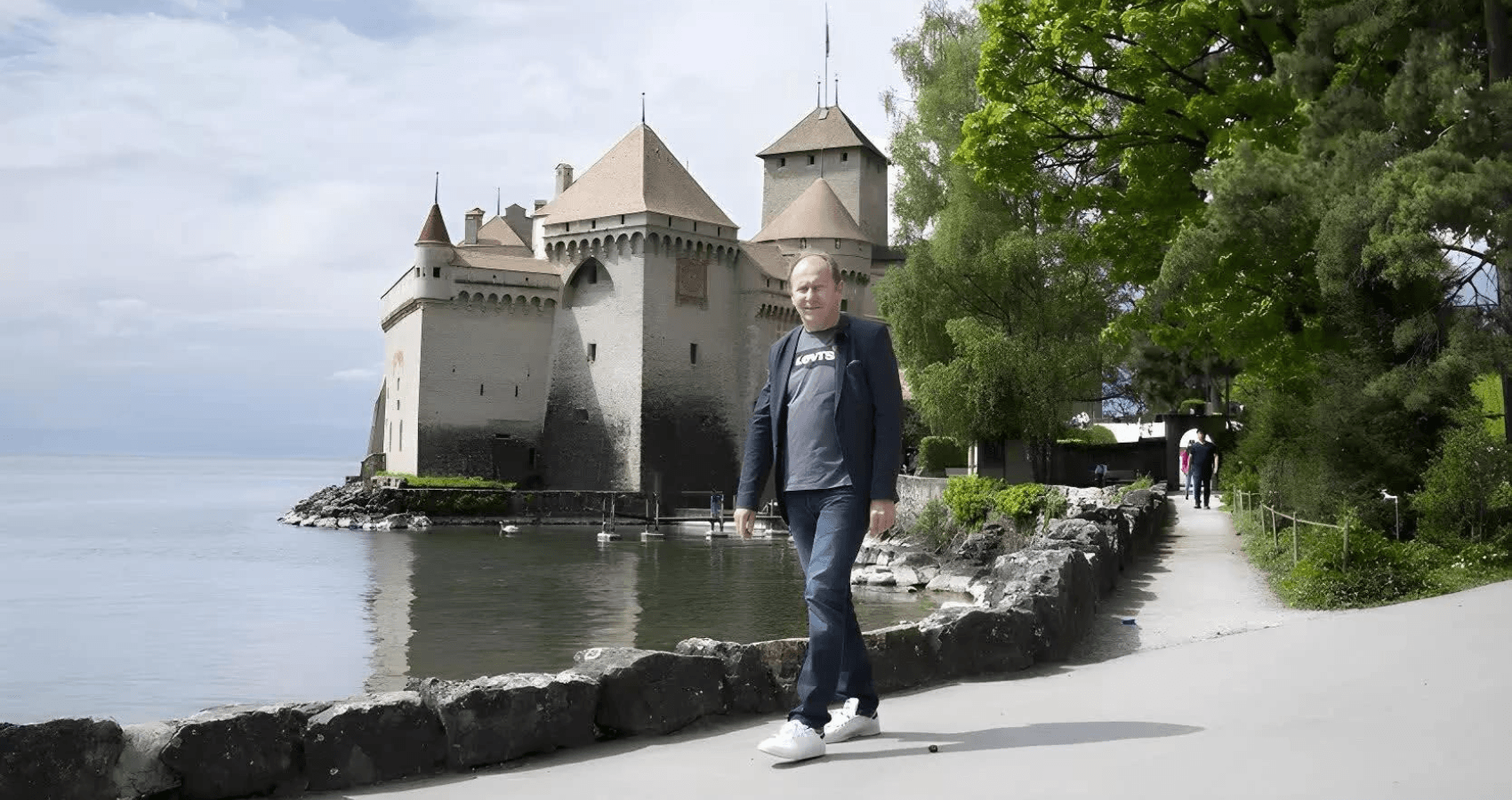
Could 2024 be the year that you discover poetry, painting or even pasta art like Switzerland-based software developer Urs Bratschi?
Whether it’s sunbathing pasta people or a plate of standing pasta ‘mushrooms’, only when Urs has created it, cooked it and photographed it is it ready to eat.
Urs believes having the condition has given him a creative spark that some people with Parkinson’s experience.
“Without the condition, I’m not sure I would have developed the skill in my pasta to the point where it’s become an art,” Urs told us.
New year, new baby? For women with Parkinson’s getting pregnant comes with additional worries. In this article, women shared their experiences with us and highlighted the urgent need for more research to be done in this area.
Dr Annelien Oosterbaan from the Netherlands said: “I already had three kids before my Parkinson’s diagnosis, but in 2021, I experienced my first pregnancy with the condition. I had already done my own research before deciding to become pregnant. Still, this didn’t really help me or reassure me, since there is so much we still don’t know. It felt risky, not knowing whether my Parkinson’s would become worse.”
To address the gap in research, Annelien has since founded Pregspark, an online registry which is collecting data from pregnant women with Parkinson’s around the world.
This year, make life with Parkinson’s a little easier with our pick of the best gadgets to help you throughout the day. From magnetic fasteners to speed up dressing to insulated dishes to keep your food warm while you take your time eating, these clever tools can take the stress out of those daily tasks.
Brighten up winter days with a Parkinson’s podcast. Last March, new podcast Movers and Shakers became an instant hit with listeners. Presented by six UK highflyers with Parkinson’s including broadcaster Jeremy Paxman, journalist Mark Mardelland The Vicar of Dibley comedy legend Paul Mayhew-Archer, it highlights the challenges – and lighter sides – of life with the condition. Topics covered so far range fromsex and shopping to diet, dating and new research.
Commenting on the podcast, Mark Mardell told Parkinson’s Life: “Hearing from my clever fellows delivers a jolt of recognition, that someone else has the same weird symptoms, the same strange thoughts and fears,” he says. “Parkinson’s shouldn’t mean you’re locked in solitary. Join us and you won’t be alone.”
What was your highlight of 2023? Let us know in the comments below!
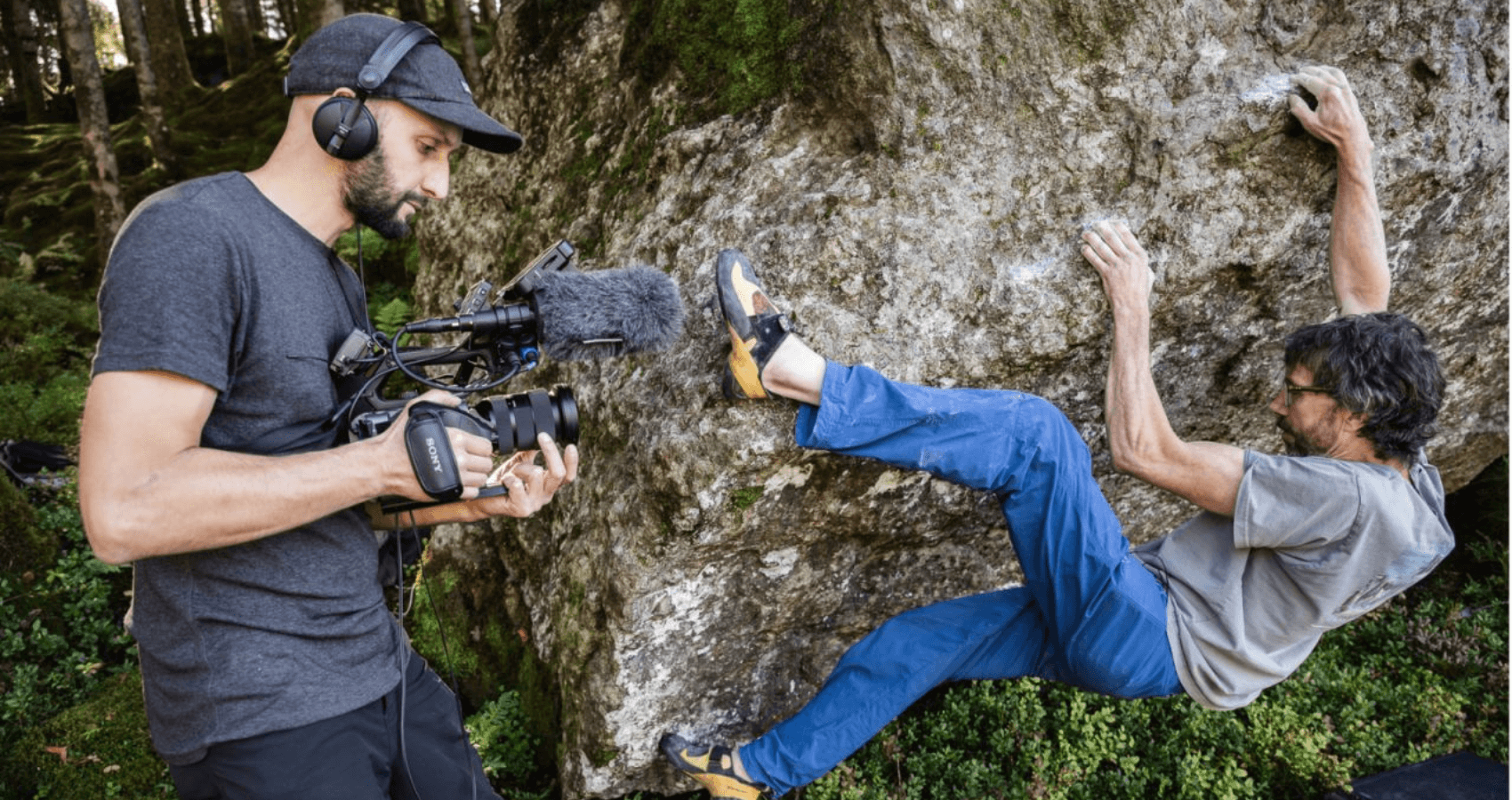
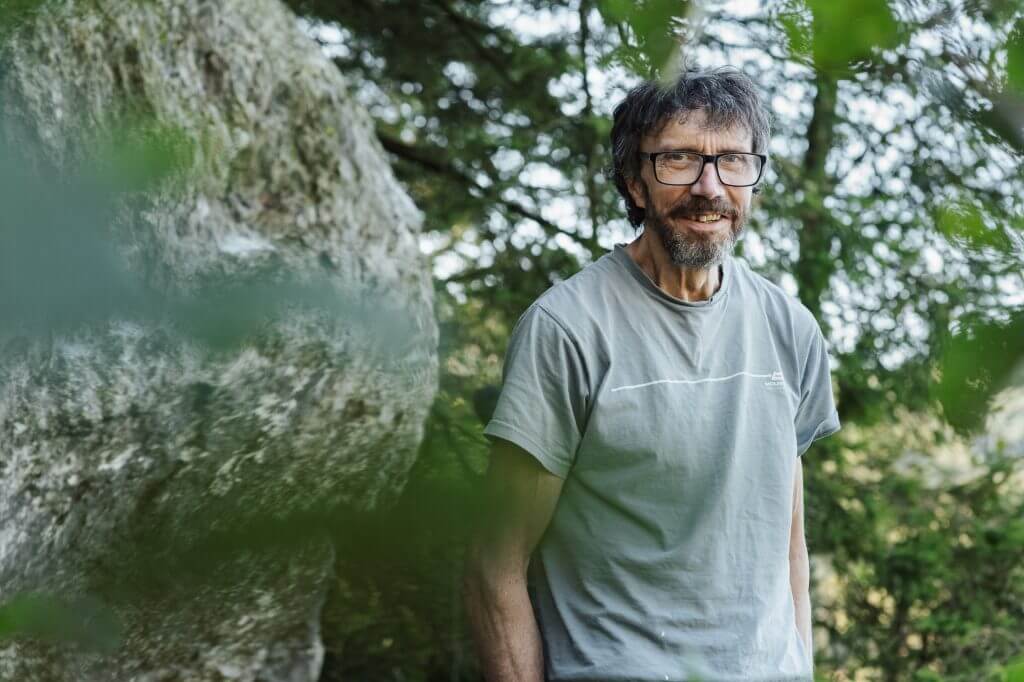
It was while doing his lifelong hobby that former teacher Chris Hamper noticed something was wrong. “I climb a lot, and I realised that my left hand was weak for some reason. I was normally quite a strong climber, and my hand was just letting go on its own,” he says.
Chris, who taught physics at United World Colleges in Wales and then Norway for over 30 years, also noted cognitive changes. “I noticed in the classroom I couldn’t answer students’ questions anymore. I couldn’t stand at the board and spontaneously answer exam questions like I used to be able to.”
It is now eight years since Chris, now 66, received his Parkinson’s diagnosis, and his condition has progressed. “I’m weaker than I was, just slowly my left side gets more and more useless. I can’t do much with this hand; this one doesn’t really move – it shakes. Sometimes my right hand does the same, so that’s the next stage.”
Although he has now retired from teaching, Chris is still climbing. It is something he has done ever since he was small and growing up in Coventry in the UK. “I used to climb trees and stuff and climb around the house. Any bit of rock I’d try and climb around it,” he says. He also used to go climbing with his dad in the Peak District, a famous UK climbing spot.
After graduating from Leeds University, Chris tackled a lot of the classic routes alongside some of the world’s best climbers at that time. Before he had Parkinson’s he reached the advanced climbing grade of 8a. Although this has now dropped to 6b due to his condition, Chris is determined to keep going. Now, his passion for climbing and his approach to life with Parkinson’s is being captured for a new documentary – with a working title of The Parkinson Project – which will be released in autumn 2024.
Chris Hamper. Photo credit: Jess James
The idea to make a film about Chris was sparked when his wife, Hilary, told Jess James, a professional filmmaker and family friend, about a time when Chris went to a climbing wall and how, having appeared physically weak, he proceeded to wow the other climbers with his skill.
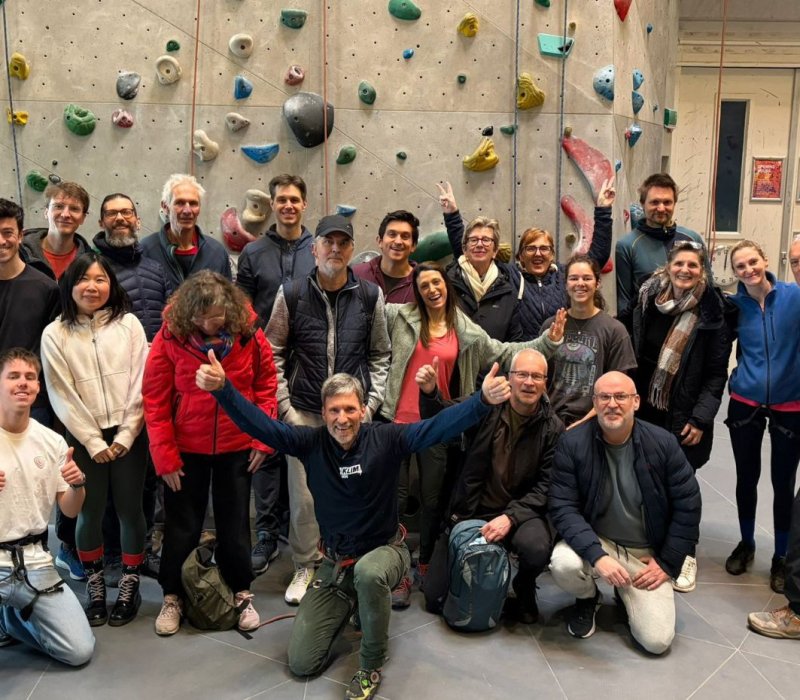
“He started climbing, and within a few minutes there was a crowd around him because he’d gone from being this person who hadn’t looked that comfortable to go into this physical space who then suddenly was doing moves that these younger climbers had all been failing on. And everybody was like, ‘How do you do this? How does this work?’
“That led to a conversation with Chris directly where he said that climbing was one of the key things that allowed his symptoms to be diminished and allowed him to feel much more how he used to pre-Parkinson’s,” says Jess.
Chris explains further: “I feel like I’m not much different to everyone else when I’m climbing. The biggest difference is when I’m clipping bolts – you have to clip the rope into carabiners as you’re climbing up – and my left hand doesn’t work properly; it can’t clip a bolt. But I discovered that the way round it was to put the carabiner always the same way round and then I can clip it. Sometimes I’m maybe a minute trying to hang on one arm, clipping this carabiner with my other arm, and when you pull the rope up to clip it in, if you fall off, then you fall a long way because you’ve got all this rope out. So, my friends get really worried about me. I can hear them talking at the bottom, saying ‘What’s he doing now?!’”
Chris refuses to take the easy option though.
“When I go climbing with them, I’m doing the same climb as they’re doing. And I fall off them; I don’t do them all, but I try the same ones – otherwise I would feel like I was a burden on them, and they’d have to do easy climbs for me.”
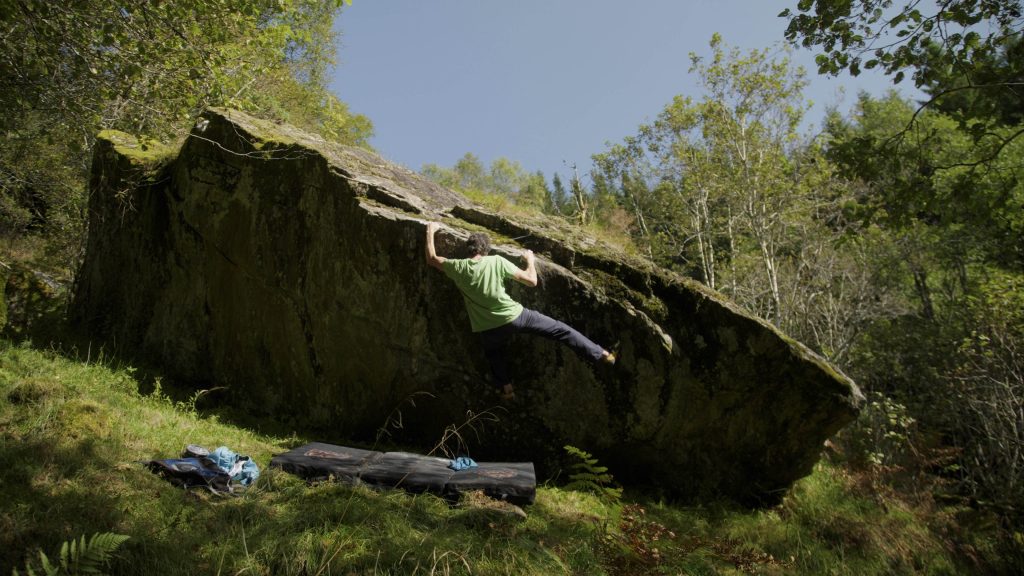
Although Chris has currently injured the tendons in his arm, he usually trains or climbs three times a week close to where he now lives in Flekke, Norway – where he built his home next to a boulder!
“Climbing is good for me, for the Parkinson’s, but it’s not good for my joints,” says Chris. “But the doctor says, ‘Just do it,’ because the benefit I get for the Parkinson’s outweighs the small injuries.”
Photo: Jess James
It also helps his mental health. “When I’m climbing it feels good. It’s because you concentrate when you’re climbing, so you don’t think about anything else: you just focus on it. It’s a bit like meditation, I suppose.”
There are other benefits too. “I like going to the climbing wall also because of the social aspect. It’s really disappointing when there’s no one there. I want to go and talk to people. With Parkinson’s, you can get a bit isolated.”
The film follows Chris everywhere from meeting his neurologist to climbing with friends at local crags to the rehabilitation centre. He is also shown climbing in the Peak District.
One of its key messages is that Chris refuses to let Parkinson’s beat him. He is even channelling the obsessive behaviour that is a side effect of his medications into something positive. Every morning he gets up at five o’clock – when it’s -10 degrees Celsius and still dark – to work on his pet project: taking a motorbike apart and rebuilding it into a café racing bike. “My neighbours think I’m crazy – I just can’t wait to get out there.” Before that, he spent two and a half years rebuilding a Triumph Spitfire car.
Jess says: “We hope that in making this film we shed more light on how it is to have Parkinson’s and allow people to be a bit more aware of what it is, the prevalence of it and to potentially offer an example of how somebody can cope very well with it.
“Obviously, from a medical standpoint, things go a very particular way, but if you push against that and are able to develop your life and build your skills around that, then there’s a huge amount to stay positive and be hopeful for. We really hope that in telling Chris’s story and shining a light on his particular example, that that’s a way into that world for a lot of people.”
Parkinson’s Europe is sharing this article for information purposes only; it does not represent Parkinson’s Europe’s views and is not an endorsement by Parkinson’s Europe of any particular treatments, therapies or products.
How can theatrical performances support people with Parkinson’s? Members of Tremanti di Passione share how the Italy-based theatre group is helping to forge friendships, inspire confidence – and offer participants a “journey of discovery”
Physiotherapist Gigliola Torello didn’t expect to help form a theatre group for people with Parkinson’s. “It all started intuitively,” she says, explaining that when one of her patients was struggling with symptoms of the condition, she proposed that he participate in a theatre workshop. “I didn’t know exactly what it would look like – but I realised it could be a good idea.”
In 2019, Gigliola and three fellow physiotherapists and actors – Simona Ferrari, Roberta Sfulcini and Nicoletta Ricci – formed Tremanti di Passione, a theatre lab based in Parma, Italy. They recruited theatrical trainer Franca Tragni to help with directing. The lab offers people with Parkinson’s the opportunity to work on theatrical performances and tackle their motor skills.
“We considered what we could do beyond physiotherapy, to offer people a space outside of their condition,” says Roberta, who has been a physiotherapist since 1982. “We were also interested in reaching a wider audience in order to raise awareness of Parkinson’s.”
In 2019, four physiotherapists and actors set up Tremanti di Passione, a theatre lab based in Parma, Italy.
Taking participants “on a journey of discovery”
Through exercises, improvisations, vocalisations, tongue twisters and movements, director Franca aims to guide participants to a greater awareness of their “means of expression.” “The theatre workshops take participants on a journey of discovery,” she explains. “They allow them to express their own individual creativity.”
Giovanni Canetti, who joined the group in 2019, three years after his Parkinson’s diagnosis, agrees. He says being part of the project has helped him to express himself emotionally: “It gave me back confidence in myself – and made me understand how much I can give back.” What stays with him most is “the final applause. It’s like a hammer that hits your heart without warning and releases adrenaline and chills throughout your body.”
The theatre workshop has developed and performed two productions so far, written by the group participants and adapted for the stage by Franca, in various theatres across Parma and beyond.
Roberta has witnessed first-hand the impact that performing can have on members. “Some have come out of a kind of social isolation that can sometimes characterise the condition,” she explains. “They are proud of the courage and strength they express during their performances.”
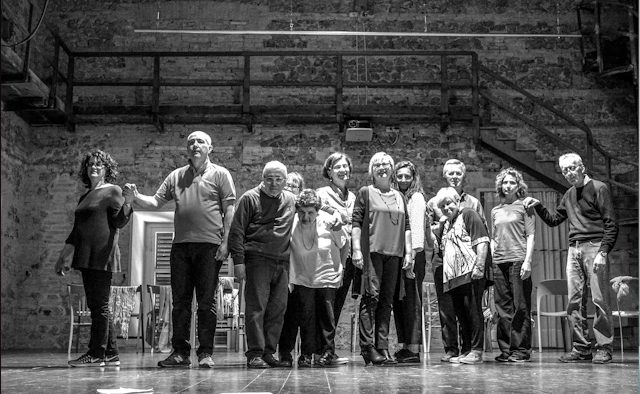
Members of the Tremanti di Passione theatre lab moments being going on stage to perform.
A place of understanding and support
Another participant of the lab, Idajet Fiku, values the social aspect of the group. Diagnosed with Parkinson’s in 2007, Idajet was encouraged to join the group as a way to tackle loneliness. “For me, Tremanti di Passione offers a group of friends who understand and help me.”
Giovanni agrees, adding: “Being part of a group of people who share the same hardships can free you from a burden. It’s a way that people can talk about their fears, to find confidence.”
The participants highlight how the group has also helped them highlight the realities of living with Parkinson’s to the wider public. For Idajet, “Having my family watch me perform has helped them understand the difficulties of my condition.”
“Talking to an audience about one’s experiences has a very strong emotional return,” says Giovanni. “It gives me an incredible strength and desire for life.”
Franca, meanwhile, has felt rewarded throughout her experience with Tremanti di Passione. “Every single meeting, every minute with this wonderful group is always special,” she says. “They give so much beauty to the world.”
“The theatre workshops take participants on a journey of discovery,” Franca explains.
How can theatre and performance workshops support people with Parkinson’s?
We asked members of Tremanti di Passione to share their perspectives. Here’s what they said…
“It gives me strength, courage and positivity – and I carry this attitude with me every day” (Angelo Vernazza, participant)
“New friendships, new skills – learning to live better with Parkinson’s” (Gian Paolo Filipello, participant)
“Stimulating creativity through gestures” (Gianpaolo Bellanova, participant)
“Demonstrating that I can perform difficult tasks” (Ginetta Gianferrari, participant)
“To play beyond the limits of Parkinson’s” (Margherita Corradi, participant)
“Being able to talk about Parkinson’s with courage and without fear” (Maria Cristina Avanzini, participant)
“Having a shared adventure with people with Parkinson’s” (Massimiliano Mezzadri, participant)
“Allowing participants to feel like people before being patients” (Nicoletta Ricci, physiotherapist)
“Being understood and listened to – overcoming shyness” (Simona Ferrari, physiotherapist)
“The reality of OFF periods is they suck!” says Gary Boyle, a Parkinson’s Europe Board member, who was diagnosed with Parkinson’s in 2011.
An OFF period is what happens when a person’s Parkinson’s medication wears off.
“It’s both a motor and a non-motor phenomenon, so whatever their motor profile is and whatever their non-motor profile is they can get a worsening of those symptoms,” says Brian Magennis, Advanced Nurse Practitioner at Mater Hospital in Dublin, and Parkinson’s Europe Board member. “And then in the midst of that as they’re switching off, they can get non-motor symptoms like numbness, tingling, a peculiar feeling in the tummy, [they can feel] agitated, irritable, cranky, [get] pins and needles – all sorts of weird and wonderful symptoms – and then as soon as their next dose kicks in, these go.”
Generally speaking, OFF periods will start to occur once a person has had Parkinson’s for ten years or so. Just as every person with Parkinson’s will experience the condition differently, the characteristics of their OFF periods will vary too.
Gary explains what his OFF periods are like. “I start to tremor in my hand and my arm. I go really slow. I can’t really write. I find it hard to operate my phone. I feel down, I feel nervous. I start wondering, ‘When am I going to be back ON again?’ Being OFF impacts pretty much everything.”
Although the terms ‘ON’ and ‘OFF’ suggest a stark decline, going OFF can be more of a gradual deterioration.
Factors including environment and lifestyle – diet, nutrition, exercise and sleep – and the time of day all have an impact on a person’s OFF state. OFF periods can also occur at night as well as during the day. And they can also happen suddenly – apparently for no reason.
“Sudden OFF periods are rare enough but when they happen it’s really debilitating,” says Gary. “I’ve never been OFF for more than four hours – that’s the worst case – but that happens nearly every six months and it happens when you least expect it.”
If you are suddenly – over a few days or weeks – experiencing more OFF periods than is normal for you, there is likely to be a reason, says Brian. This situation is usually a temporary setback and does not necessarily mean that your Parkinson’s is progressing. But it is important to consult a healthcare professional who can help identify the cause.
In most cases, a sudden increase in OFF periods is due to one of 10 reasons, says Brian:
You are constipated. This can affect the absorption of Parkinson’s medication and make it less effective.
You are unwell (for instance, with a urinary or chest infection or influenza), or recovering from surgery. These stress the body, which can cause a temporary worsening of symptoms.
You are going through a stressful period.
You are dehydrated. This can reduce blood volume and affect medication absorption.
You are not taking your medication at the correct times, or your medication regime has changed.
You are taking a contra-indicated medication for a non-Parkinson’s health issue, and it is making your Parkinson’s medication less effective.
You are depressed. This can cause a sudden worsening of both motor and non-motor symptoms.
You are suffering from acute or chronic pain.
You are experiencing anxiety or having panic attacks. This can result in an increase in motor symptoms. Anxiety is also a common symptom of a levodopa dose wearing off.
You are not sleeping well. An extensive period of poor sleep can – temporarily – impair motor function.
“Constipation is a big one because it blocks the absorption of levodopa,” Brian says. “If you’re sick from an infection or any surgical procedure, you might be more OFF, because you may have been on some medications that are contra-indicated. Stress is a big thing that can really induce an OFF period.
“Once you identify the cause, treat the cause, allow a bit of time, they’ll get back to that baseline that they were at. Unless it’s medication-related,” he says.
He advises that people with Parkinson’s keep a diary of their OFF periods, recording how long it takes for their medicines to work and how long they last to show to their healthcare provider. People with the condition should avoid having a situation where, say, they are spending a total of eight hours a day in an OFF state.
Lastly, Brian advises that people with Parkinson’s work with the pattern of their OFF periods.
“Some people are really good in the morning and as the day goes on, they wear OFF and are more OFF and dyskinetic in the evening and that’s their pattern. Other people are really bad in the morning and as the day goes on and into the evening, they’re much better. So, tailor your day and your lifestyle if you know there’s a pattern.”
If OFF periods are becoming problematic, he says: “Go to your healthcare professional to help you manage things better. We can identify very quickly what’s going on.”
Parkinson’s Europe is sharing this article for information purposes only; it does not represent Parkinson’s Europe’s views and is not an endorsement by Parkinson’s Europe of any particular treatments, therapies or products.
A new short film, titled Cursed2Move, has just been released which investigates what benefits dancing can bring for people with Parkinson’s.
Produced by the Centre for Parkinson’s and Movement Disorders (ZfPB) at Bern University Hospital in Switzerland, together with Bernese filmmaker Bettina Rotzetter, it shows one of its neurologists Dr Ines Debove visiting Parkinson’s dance groups in various countries to find out what dance can do for people with the condition.
The first stop is Martigny, Switzerland, where Agostina Castelletti teaches a dance class for people with Parkinson’s. One of her pupils, James, shares how attending the class has helped him physically: “Probably the main thing is posture. When I first came to dance, I was like this [puts his hands on his knees and hunches forward], and the other thing is rigidity, which kind of goes with posture, so now I can move much more freely than before,” he says.
As well as speaking to people with Parkinson’s about what they get out of dancing, Dr Debove interviews Professor Bas Bloem, neurologist at Radboud University in the Netherlands. Although studies have shown that dance can benefit motor symptoms, none have been done on whether dance can also improve non-motor symptoms, but Prof. Bloem is convinced that it can relieve low mood. “Take mood as an example, I think [dancing] is an anti-depressant. If you’re asking for my professional conviction, there’s no question,” he says.
Dr Debove interviewing Professor Bas Bloem
Dr Debove also visited New York and spoke to David Leventhal, founder and director of the globally successful Dance for PD programme, as well as some of the people with Parkinson’s who attend his class at the Mark Morris Dance Center in Brooklyn.
One of the dancers, J.M., describes Dance for PD as “the best thing that ever happened to me.” Remembering his first class, he says: “I heard the music, and my body just moved so smoothly – I just felt like magic was happening, and I never looked back after that. I came on a regular basis.”
Carol highlights the friendship aspect of attending the class: “It’s not just the dance; it’s the people involved, and the commitment they have to being welcoming to everybody who walks in the door,” she says. “If you dance and you make friends, you have a very good support group, and the social and emotional aspects of Parkinson’s are very hard.”
Leventhal tells of how Dance for PD originally evolved – and is still developing today: “We’re never coming at it from the perspective of therapy or trying to achieve a specific mechanic goal, we’re trying to achieve an artistic goal, but embedded within that goal are other goals that relate to Parkinson’s physiology, Parkinson’s symptoms,” he says.
Cursed2Move is produced by Bernese filmmaker Bettina Rotzetter of Fernwerk Films and is available to view on YouTube.
Parkinson’s Europe is sharing this article for information purposes only; it does not represent Parkinson’s Europe’s views and is not an endorsement by Parkinson’s Europe of any particular treatments, therapies or products.
In a new episode of the Parkinson’s Life podcast, sponsored by Bial, a neurologist and a person with Parkinson’s come together to discuss how those with the condition can tackle ‘off’ periods – from holistic strategies to treatment options – and why honest communication is key
The artist and former teacher says she had started to notice some “unusual symptoms”, such as weakness in one arm, and was referred to a neurologist to get to the bottom of what she was experiencing. When the doctor confirmed her diagnosis, Barbara admits she was shocked: “I did not expect this diagnosis”.
Like many others with the condition, Barbara takes medication to help manage her symptoms. However, she has had to get to grips with ‘off’ periods – when medication is not working optimally and both the motor and non-motor symptoms become more difficult to control.
Dr Silvia Rota joins Barbara to discuss different management options for people with Parkinson’s.
“‘Off’ periods are an interesting phenomenon that usually happens a few years into a person’s condition,” explains Italian neurologist Dr Silvia Rota, who joins Barbara on this podcast to share her professional insight into the potential treatment options and management approaches that may help with tackling ‘off’ states.
Barbara, who experiences ‘off’ periods most days, shares some of her personal strategies – from using an app to track her symptoms to putting her hobbies into practice. “I used to be a professional mime artist, so when I create characters or illusions with my body, it really helps me override the lack of energy that an ‘off’ period gives me,” she explains.
Together, Silvia and Barbara shed light on a variety of approaches to help tackle ‘off’ states – and discuss why open communication with healthcare providers is essential.
Barbara practises and teaches mime workshops to help others with Parkinson’s manage their symptoms.
Lead image credit of Barbara: Carrie Branovan
Parkinson’s Europe is sharing this article for information purposes only; it does not represent Parkinson’s Europe’s views and is not an endorsement by Parkinson’s Europe of any particular treatments, therapies or products.
In a new episode of the Parkinson’s Life podcast, sponsored by pharmaceutical company Bial, a neurologist and a person living with Parkinson’s discuss how those with the condition can identify ‘off’ periods, what forms these states might take – and why raising awareness of this phenomenon is so important
Early into his journey with Parkinson’s, US-based Bill Bucklew wasn’t sure how to answer when his neurologist asked him if he experienced ‘off’ periods.
“I didn’t really understand the concept,” explains Bill, who was diagnosed with the condition in 2012. “For the first few years of taking my Parkinson’s medication, I didn’t really experience them – but after four or five years I started to see what an ‘off’ period was.”
‘Off’ periods occur when Parkinson’s medication is not as effective as it should be, and it can be become more difficult to manage both motor and non-motor symptoms.
Bill Bucklew was diagnosed with Parkinson’s in 2012.
Joining Bill on the latest episode of the Parkinson’s Life podcast, ‘What to expect with ‘off’ periods in Parkinson’s’, is Dr Valentina Leta, a neurologist based in Italy. She explains that these states “tend to occur in up to 50% of people with Parkinson’s in the first five years of their condition – so it’s important to identify them”.
Highlighting his personal experience, Bill shares that one of the most challenging aspects of ‘off’ periods is their unpredictability. “Every day is going to be different,” says Bill. “When I can’t do things, all I can do is manage expectations and laugh it off.”
With different types of ‘off’ periods impacting people differently, Valentina says it’s important for those with the condition to understand how these states affect them personally – and regularly discuss their symptoms with their healthcare providers.
This episode is the first in a two-part series all about ‘off’ periods, sponsored by pharmaceutical company Bial.
Dr Valentina Leta says it’s important for people with Parkinson’s to understand how ‘off’ periods affect them.
Parkinson’s Europe is sharing this article for information purposes only; it does not represent Parkinson’s Europe’s views and is not an endorsement by Parkinson’s Europe of any particular treatments, therapies or products.
We talk to the CEO of Herantis Pharma Plc Antti Vuolanto about HER-096, a molecule which may have the potential to stop the progression of Parkinson’s and to relieve symptoms
A potential new disease-modifying Parkinson’s treatment achieved positive results when it was tested on humans for the first time, the clinical-stage biotechnology company Herantis Pharma Plc announced at the end of October.
With the aim of developing a medication that could slow or stop the progression of Parkinson’s and provide symptom relief, the Finland-based company began working on a molecule called HER-096 in 2018.
“At that time, we worked with a protein called CDNF, says Antti Vuolanto, CEO of Herantis Pharma, “and we wanted to find smaller molecules that would have the same activity but also have the ability to go through the blood/brain barrier, so we could use a patient-friendly administration route.”
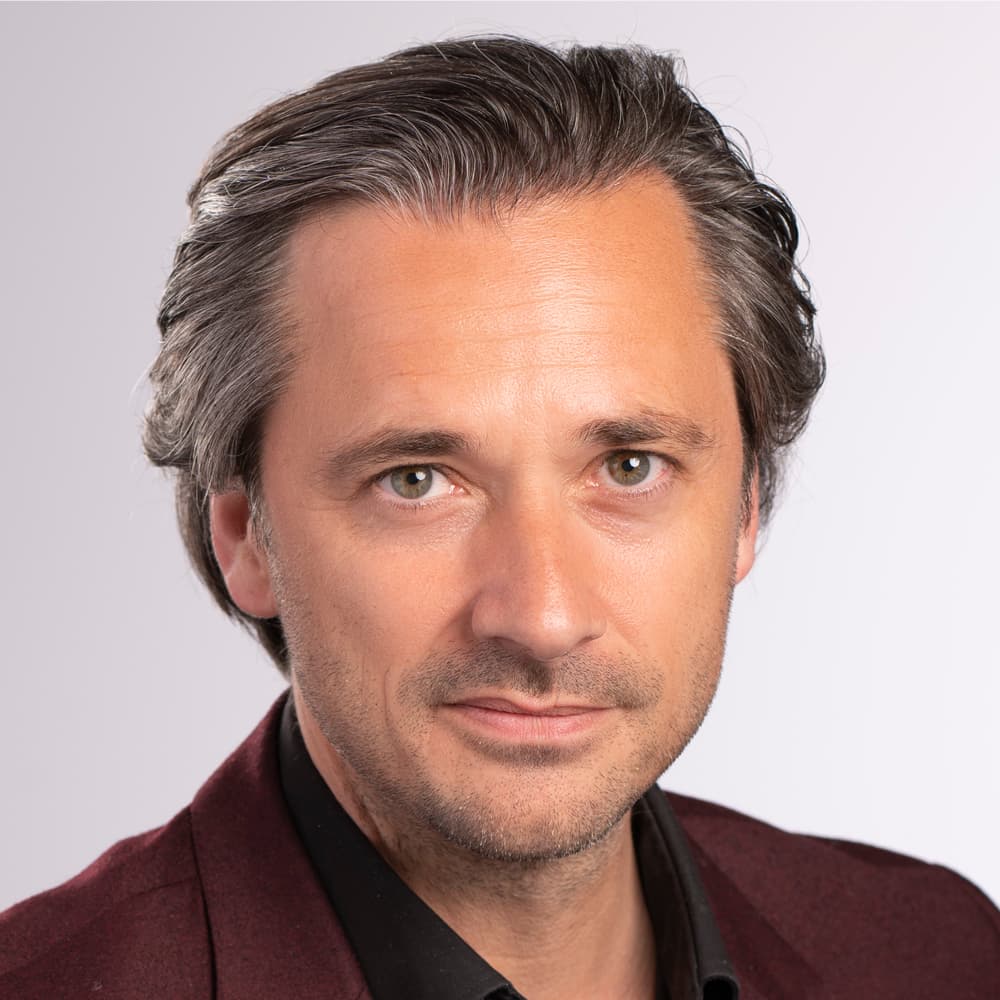
Antti Vuolanto, CEO of Herantis Pharma Plc
Following a successful pre-clinical stage, in a Phase 1a clinical trial that took place earlier this year, HER-096 – which is administered by subcutaneous injection – achieved good results for safety and tolerability in 60 healthy people (without Parkinson’s) from three different age groups (20-45, 50-64 and 65-75 years). A major milestone for the drug’s development was achieved, as tests conducted in the second part of the trial, involving the 50-75 age group, proved that HER-096 is able to cross the blood/brain barrier.
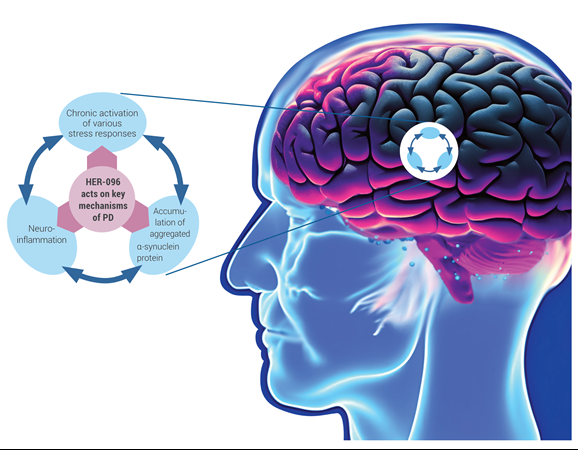
A diagram explaining how Herantis Pharma Plc hopes HER-096 could have a therapeutic effect on the brains of people with Parkinson’s
“That has been one of the biggest challenges in Parkinson’s drug development,” says Vuolanto, “how to get the drug molecules into the brain, into the target tissue, as there is a mechanism of the blood/brain barrier that protects the brain from foreign substances. Now we have shown that, yes, we can cross that efficiently enough to deliver a therapeutic dose into the brain tissue.”
Further trials will be required to prove if HER-096 can have a therapeutic effect on those with Parkinson’s, but findings from the earlier, pre-clinical stage suggest that the potential benefits of HER-096 could be three-fold for people with the condition.
“In the scientific, pre-clinical testing stage, we have seen that it protects neurons, it decreases the amount of toxic protein aggregates – the alpha synuclein aggregates – and also removes neuro inflammation from the target area,” says Vuolanto.
Earlier studies on mice found that HER-096 had a positive effect on relieving motor symptoms too. “We saw robustly exactly what we wanted to see in the pre-clinical setting, so that’s very clear evidence,” says Vuolanto. “But, of course, the pre-clinical data and transferring that to humans, to patients, that’s always the critical part of developing a drug.”
If trials of HER-096 continue to proceed successfully, Vuolanto outlines Herantis Pharma’s vision for its future.
“What we hope is that once patients have been diagnosed, they could start using HER-096 and that would stabilise the disease at that stage, so there would be no further degradation of the neurons, and at that stage the symptoms should be quite well managed. And we have also seen in animal studies that it has a symptomatic effect, so it’s also possible that HER-096 when used to treat people long term might also alleviate the symptoms.
“But most likely it may also be possible to combine HER-096 and, let’s say, levodopa, so one is treating the symptoms, and one is preventing the symptoms from getting worse. That kind of combination therapy could be one of the potential usages going forward.”
The next step is to set up a Phase 1b clinical trial to start next year, which will test the safety and tolerability of multiple doses of HER-096 on people with early-stage Parkinson’s. Subject to the results of this trial, a Phase 2 clinical trial and long-term studies would then be carried out to test whether HER-096 can have a therapeutic effect on people with Parkinson’s.
Parkinson’s Europe is sharing this article for information purposes only; it does not represent Parkinson’s Europe’s views and is not an endorsement by Parkinson’s Europe of any particular treatments, therapies or products.
A man with Parkinson’s is able to walk without fear of falling, thanks to a new neuroprosthetic that stimulates his spinal cord.
Marc, 62, who lives in France, has had Parkinson’s for nearly three decades. Although dopamine treatment and Deep Brain Stimulation (DBS) have helped with tremors and stiffness, in recent years he developed a walking disorder which – until now – could not be treated.
“I practically could not walk anymore without falling frequently, several times a day. In some situations, such as entering a lift, I’d trample on the spot, as though I was frozen there, you might say,” said Marc.
Two years ago, he was the first person with Parkinson’s to be fitted with a neuroprosthetic that stimulates the spinal cord electrically and corrects his walking.
“The idea of developing a neuroprosthetic that stimulates the spinal cord electrically to harmonise the procedure and correct locomotor disorders in patients with Parkinson’s is the result of several years of research on the treatment of paralysis due to spinal-cord injuries,” says Grégoire Courtine, professor of neuroscience at EPFL, Lausanne University Hospital (CHUV) and UNIL, where Marc had his operation.
Courtine and his team developed the device along with Dr Erwan Bezard, neuroscientist at Inserm, affiliate at the CNRS and the University of Bordeaux, France.
Grégoire Courtine, professor of neuroscience at EPFL, Lausanne University Hospital (CHUV) and UNIL
The neuroprosthetic is made up of an electrode field placed against the spinal cord, which controls walking, and an electrical impulse generator, which was implanted under the skin of Marc’s abdomen.
Using a targeted programming of spinal-cord stimulations which adapts in real time to his movements, Marc has quickly seen his walking disorder subside.
After several weeks of rehabilitation with the neuroprosthetic, he is able to walk almost normally. He currently uses his neuroprosthetic for around eight hours a day, only turning it off when he is sitting down for a long period of time or when he is sleeping: “I turn on the stimulation in the morning and I turn off in the evening. This allows me to walk better and to stabilise. Right now, I’m not even afraid of the stairs anymore. Every Sunday I go to the lake, and I walk around 6 kilometres. It’s incredible.”
As Marc is the first person with Parkinson’s who has used the implant, Courtine and his team are working with ONWARD Medical on optimising the implant for large-scale use in other people with Parkinson’s.
Clinical tests will be carried out on six new patients at Switzerland’s NeuroRestore centre next year in order to identify those most likely to benefit from the treatment.
Parkinson’s Europe is sharing this article for information purposes only; it does not represent Parkinson’s Europe’s views and is not an endorsement by Parkinson’s Europe of any particular treatments, therapies or products.
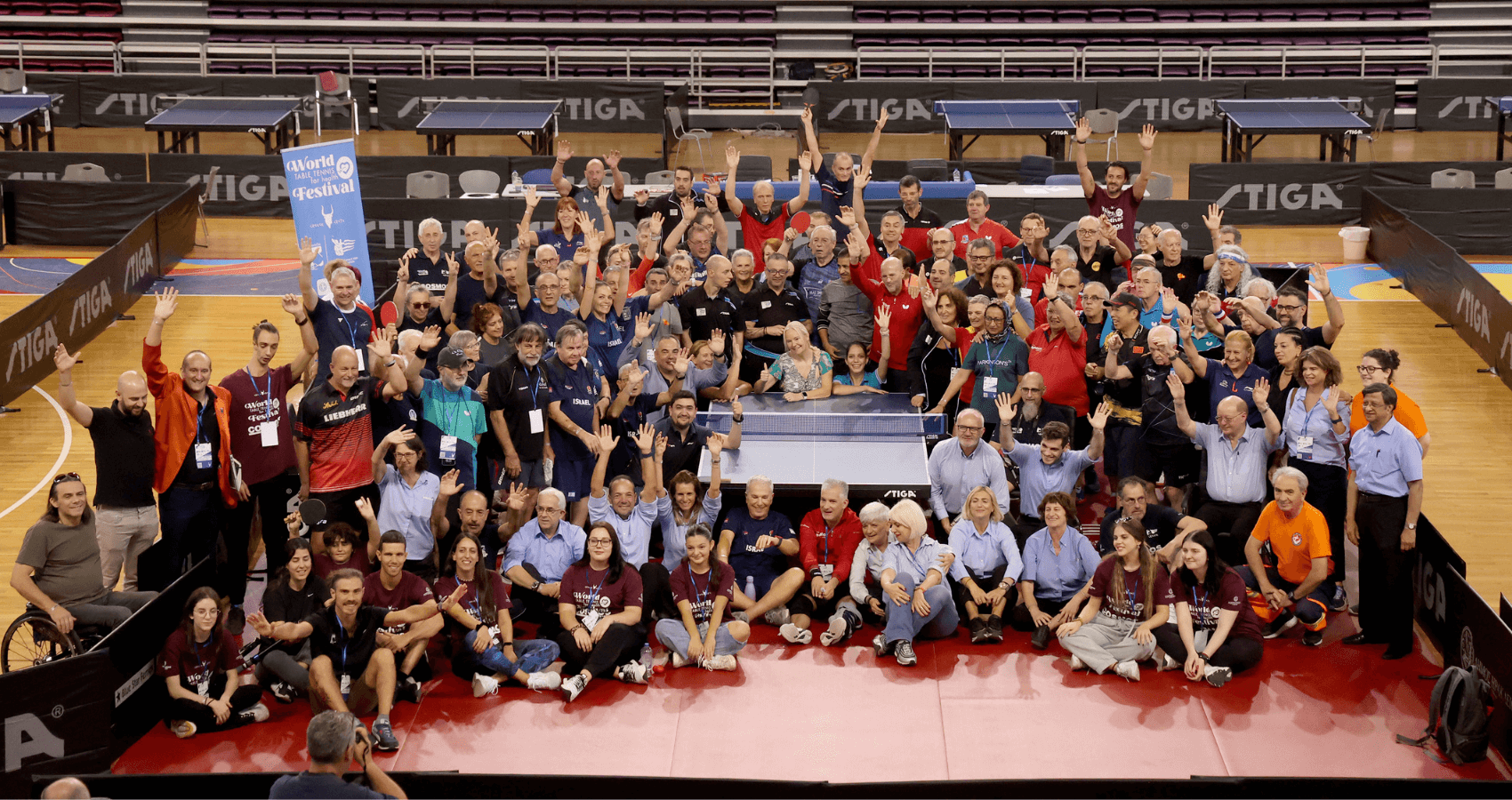
The participants of the ITTF World Parkinson’s Table Tennis Championships
People with Parkinson’s from all over the world took part in the third ITTF World Parkinson’s Table Tennis Championships in Crete, Greece, at the beginning of November.
Taking place from 1-5 November, the event was part of the very first World Table Tennis For Health Festival which also hosted the World Alzheimer’s Championships and the first World Table Tennis For Health Congress, a platform for sharing knowledge, experiences and ideas in the pursuit of better health through playing table tennis.
ITTF and ITTF Foundation President, Petra Sörling, expressed her pride in the diversity of representation, stating, “I am extremely proud to see we have representation from five continents – it is a key factor for us because we want to be a sport for all, everywhere. Table tennis for all, for a better life, here at the first World Table Tennis For Health Festival!”
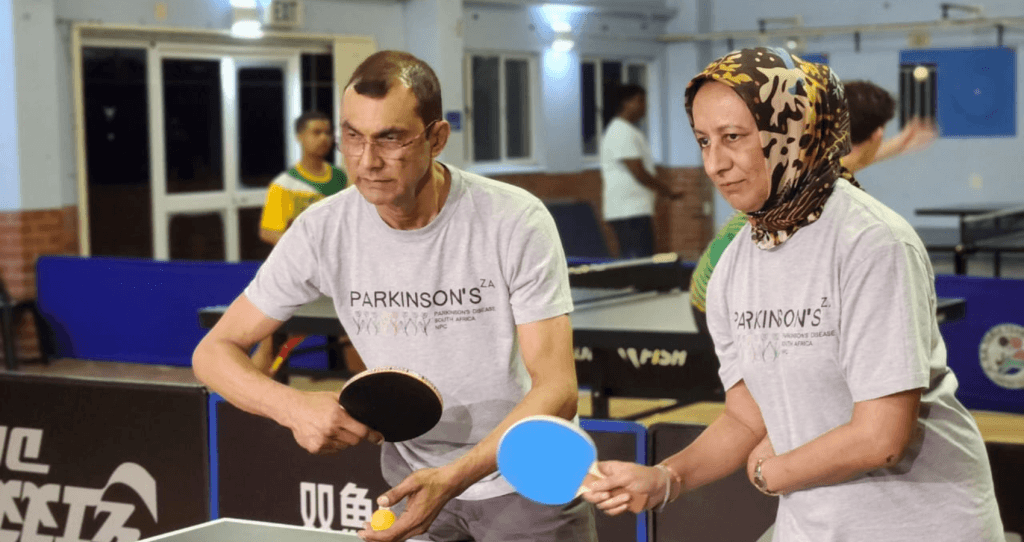
This year’s ITTF World Parkinson’s Table Tennis Championship, which was organised in partnership with The Hellenic Table Tennis Federation, saw two participants from Africa taking part for the first time. As part of the legacy of the World Table Tennis Championships held in Durban in May this year, two South African athletes with Parkinson’s were sponsored by ITTF to go to the Festival in Greece. Naseema Parak and Rajesh Nanjee from South African organisation Parkinson’s ZA made the 24-hour trip to Crete from South Africa to compete in the four-day Championship and to raise funds for Parkinson’s ZA.
Rajesh Nanjee and Naseema Parak from Parkinson’s ZA
Also competing was Elisabeth Ildal, a person with Parkinson’s and founder of Danish Parkinson’s group Cure4Parkinson. Now in her sixties, she has been playing table tennis for more than 50 years.
“You shouldn’t think that we were just there to enjoy Crete, sunbathe, swim, enjoy each other’s company or relax,” Ildal told Parkinson’s Europe. “Make no mistake: we are also a bunch of competitive people who came to perform. Several probably played their best ever. They fought until the last ball was played and for some the fight started even before the game started.”
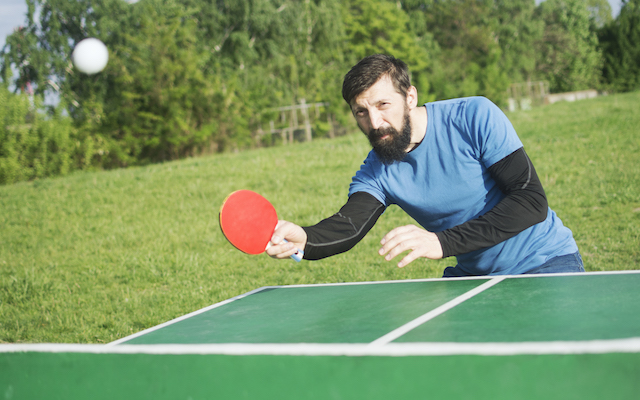
Table tennis is thought to be beneficial for people with Parkinson’s because of its need for good hand-eye coordination, balance, movements in different directions and the social aspect.
“For most, the combination of table tennis and Parkinson’s seemed a contradiction in terms,” said Ildal. “How can people with dead nerve cells and very low dopamine production move and coordinate hands, arms, eyes, the body as a whole, handle strong stimuli to the brain and jump around a ring at full speed? In a way, it is more fascinating and more impressive to watch people with Parkinson’s than to watch two ordinary people play table tennis.”
The 2024 ITTF World Parkinson’s Table Tennis Championships will take place in Hennebont, France, in October.
Watch games from this year’s ITTF World Parkinson’s Table Tennis Championships on YouTube
Parkinson’s Europe is sharing this article for information purposes only; it does not represent Parkinson’s Europe’s views and is not an endorsement by Parkinson’s Europe of any particular treatments, therapies or products.
More than half (58 per cent) of people with Parkinson’s admitted to NHS hospitals in England last year did not receive their medication on time, a report by charity Parkinson’s UK has revealed.
Highlighting how this can affect those with the condition, the Every Minute Counts report said: “A delay as little as 30 minutes can mean the difference between functioning well and being unable to move, walk, talk or swallow.”
On the back of these findings, Parkinson’s UK has launched a campaign to tackle this issue.
The report also included the experiences of people with Parkinson’s and their families.
“Not getting my medication on time has delayed my recovery and left me traumatised,” said one person with Parkinson’s after a hospital stay.
After seeing how not getting his Parkinson’s medication on time while in hospital affected her husband, Anna told Parkinson’s UK: “I live in constant fear that Samuel is going to have to go back to hospital.”
Highlighting that poor adherence to Parkinson’s medication regimes is a problem in hospitals throughout the UK, the report found that:
One in four NHS hospital trusts does not have policies that allow people with Parkinson’s to take their own medication in hospitals.
Only 52 per cent of NHS trusts require staff responsible for prescribing and administering medication to have training on time-critical medication.
Despite 81 per cent of NHS trusts having e-prescribing systems, only 58 per cent of them are using them to report on whether people with Parkinson’s receive their medication on time.
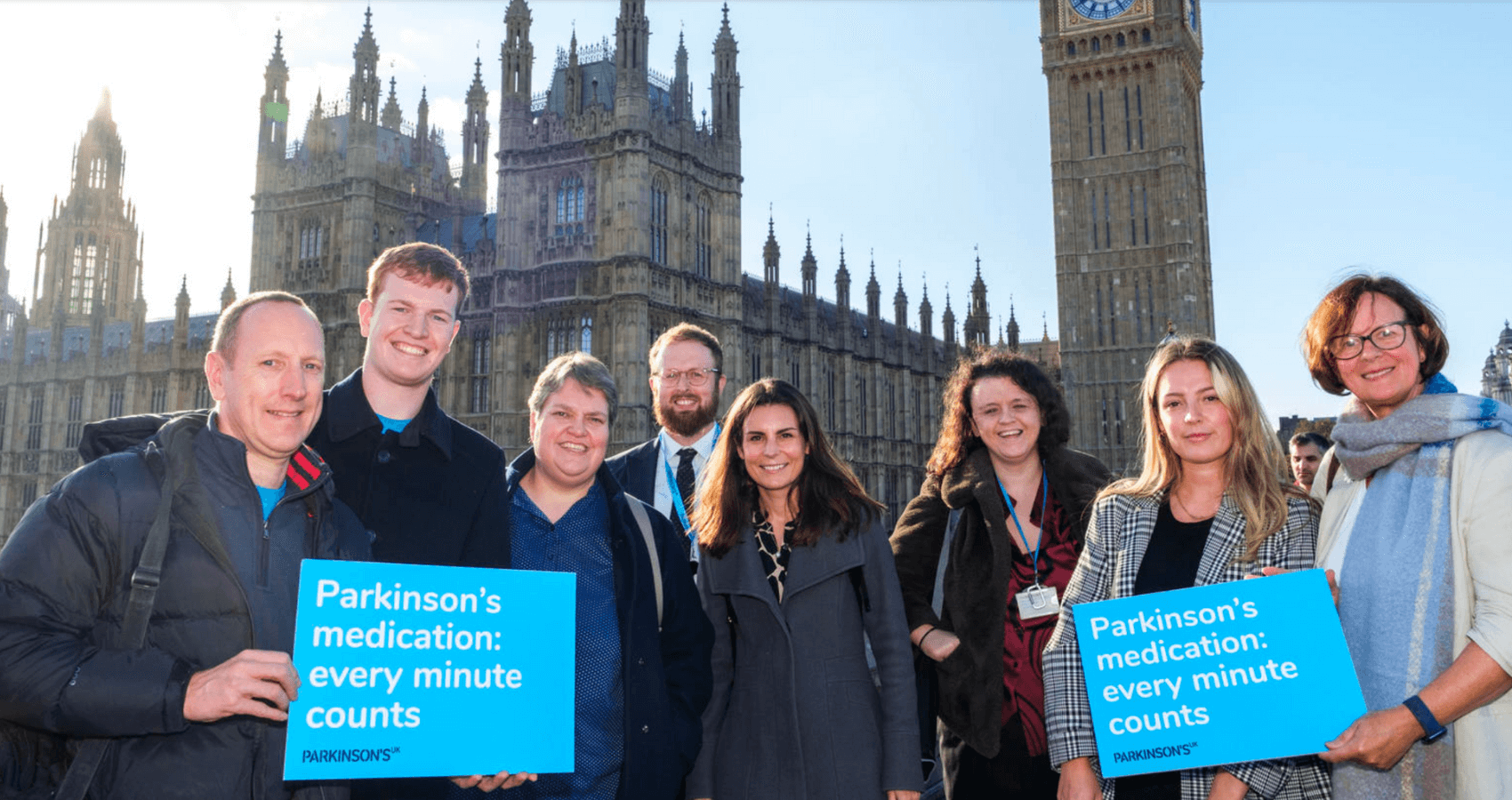
Representatives of Parkinson’s UK met with MPs in London last week to raise awareness of the issue. The charity is also asking the Parkinson’s community to add their names to its campaign.
Parkinson’s Europe is sharing this article for information purposes only; it does not represent Parkinson’s Europe’s views and is not an endorsement by Parkinson’s Europe of any particular treatments, therapies or products.