Living with Parkinson’s can come with its own particular set of challenges. As can being part of the LGBTQIA+ community. So what do you do when both apply to you? For person with Parkinson’s Chris Rawlins, the answer was clear. There was a need for a Parkinson’s LGBTQIA+ network.
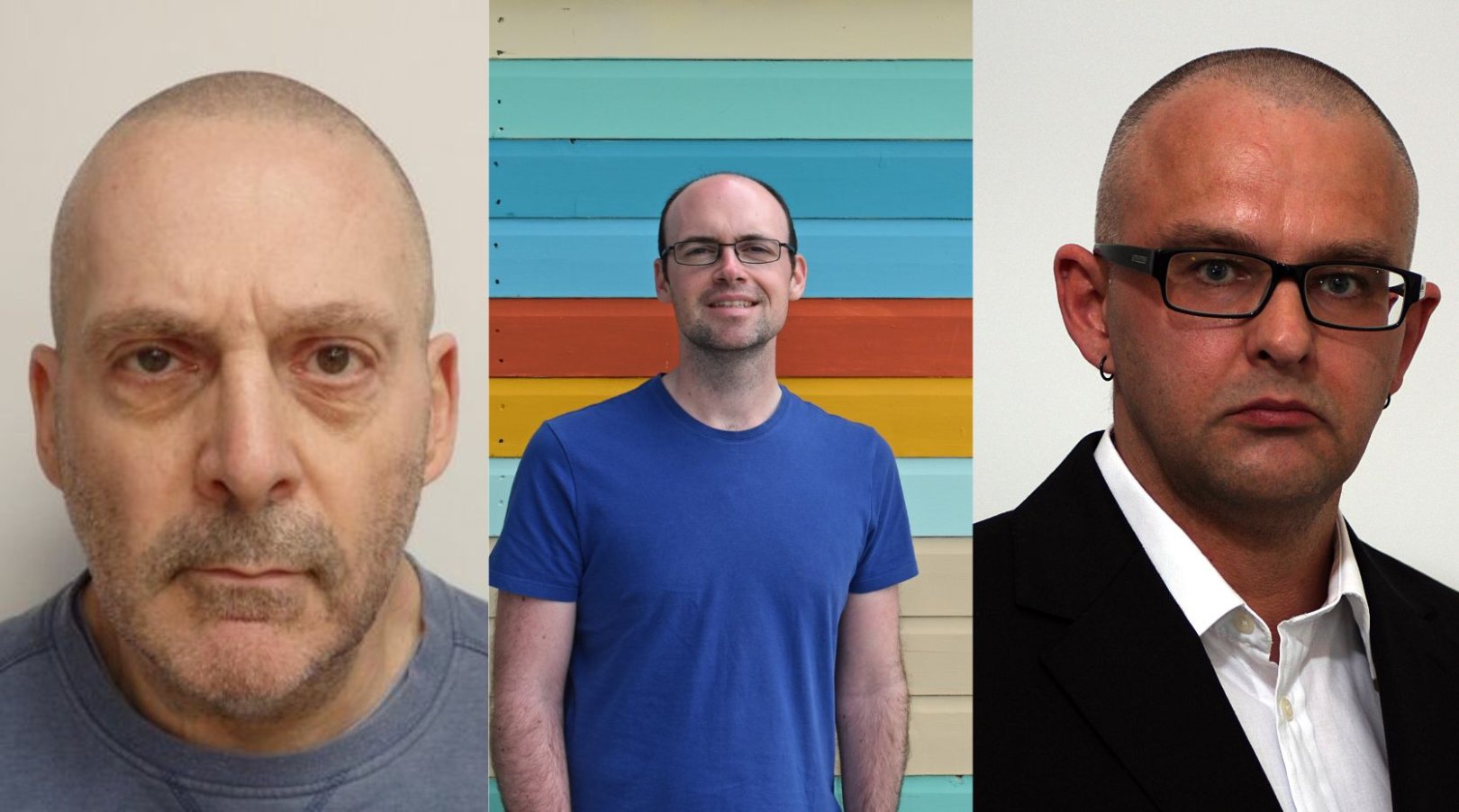
Seeking a space where people could both be fully themselves without fear of prejudice, and connect over shared experiences, he teamed up with two other volunteers to establish Parkinson’s UK’s dedicated LGBTQIA+ network. The group held its first regular meeting in August 2023, and since has grown to a network of 30 members.
“I have never met (co-founders) John, based in the northeast and Paul, Bristol, in person,” says Chris. “But we got together as we were all members of the LGBTQIA+ community, who had been diagnosed with Parkinson’s, trying to find a way to meet up with people in a similar situation.”
The trio quickly realised there would be too few members to warrant local gatherings in person. So instead, they decided to set up UK-wide online meetings.
“We started off meeting every two months, but it is now monthly,” Chris says. The meetings alternate between a relaxed social gathering, and a more formal meeting with speakers.
While the group is run by volunteers, Parkinson’s UK provides “fantastic” support. This has included providing free access to Zoom subscription services to help easily hold the meetings online. In fact, recent speakers have included Parkinson’s UK CEO Caroline Rassell, as well as speakers from external organisations.
There are plans to expand the range of speakers even further. “We are keen to split the mix of speakers 50-50 going forward, for example there is scope to talk to people at [UK LGBTQ+ charity] Stonewall, for example,” Chris says. “Because there are specific issues LGBT+ people with Parkinson’s face that others don’t. So we need to start engaging with more LGBT+ organisations too.”
Connecting the Parkinson’s LGBTQIA+ community
Since its first meet-up, the group has grown not only in size but in confidence. For the first few meetings, “We were all a bit nervous, both the co-ordinators and those attending,” says Chris. “It takes a while to build trust and confidence, so our first meetings were about building that. We make it very clear that what is discussed in the room stays in the room. We have some really good friendships developing. It is a safe space.”
That is not to say connecting with current members, and attracting new ones, is straightforward. With members spread across the UK, and the fact Parkinson’s can make travel difficult for many, the group is limited to meeting virtually for now.
“It is much easier to shake hands, look someone in the eye and offer them a cup of tea in person,” Chris says. “Online it is more challenging. We have to think more creatively about what the ice breaker should be, to enable everyone to speak and settle the nerves.”
Expanding the network
Over the past two years, the group has grown by word of mouth. Along with support from Parkinson’s UK who added details of the group to their website, and encouraged local group co-ordinators to share it with their members.
“But there may be people in the community who are diagnosed with Parkinson’s who don’t know about Parkinson’s UK at all. Or that they have anything for LGBT+ people,” says Chris. Building up relationships with other organisations and media, such as Stonewall, could help raise awareness of the network, he says. “I would be really interested in finding out whether other groups like ours exist in different parts of Europe. In linking up with them to learn from each other and swap ideas.”
Wider outreach is important to make sure everyone is aware of and feels welcomed into the network, he adds. While the UK spread and age range is diverse, membership is currently made up mainly of white, gay men. So there are plans to connect with more people with Parkinson’s from other demographics.
“There is a whole piece of work about going out to other organisations to think about how we engage people nationally. As well as LGBT+ bodies, we need to speak to representatives from different communities.”
Uniting over shared experiences
Connecting with other people sharing similar experiences is a core part of the group’s purpose. Studies have shown that LGBTQIA+ people tend to face specific challenges, for a number of reasons. Chris references a recent report focusing on the LGBT+ community aged 50-plus in London. It highlights the increased hardships and discrimination faced by this demographic, along with social isolation, long-term health conditions, and financial stress.
“There are issues for LGBT people, and having Parkinson’s adds another layer of complexity.” Chris says.
“The feedback we have had is that people are just thrilled and delighted that the group exists. Because they know that there is a readily accessible group of people going through issues similar to them that they can talk to. Where they can just be themselves.”
Recalling his own experience of not feeling comfortable enough to mention his husband at a local Parkinson’s group, Chris explains members of the network appreciate knowing “they do not have to hide anything, or ask themselves the question ‘what happens if I come out in this meeting? Will I be accepted?’ So by having a specific group, I think it just provides that safe space to people.”
LGBTQIA+ advocacy for people with Parkinson’s
While the network has primarily served to connect LGBTQIA+ people with Parkinson’s socially, there is scope for advocacy in future, Chris says. The network works closely with the team within Parkinson’s UK that organises the charity’s attendance at London Pride, for example. However, despite the benefits of meeting up in person at such an event, logistical challenges prevent many members from attending. In addition to travelling to London, taking part often involves waiting around for long periods of time and limited access to toilet facilities.
“There are simple things that Pride could do, such as allowing disability charities to go first in the march, so they do not have to wait at the beginning,” Chris explains. “Now we have found our feet, it is time to start thinking about campaigning and advocacy.”
Improving support for the LGBTQIA+ Parkinson’s community in general can be as simple as avoiding assumptions, Chris says. “It goes back to basics. It is about language. When I first went to see a Parkinson’s nurse one of the first questions was ‘Is your wife supportive?’. Because I had said I was married.”
As a gay man with a husband, phrasing the question to use spouse or partner might have made the exchange easier, he says. “So across the health service generally, there is a requirement for training people in how to use language correctly.”
Accessing support both at home, or in a care home, can also be a daunting prospect, he adds. “I’m in my sixties and I don’t know whether I will have to go into a social care setting at some point. But there are lots of stories, both anecdotal and in print, of where LGBT people have faced huge discrimination from staff within nursing homes. It would be tragic if people felt they had to go back into the closet in order to feel safe in a care home.
“Part of our advocacy has to be thinking about the issues LGBT people generally face in nursing home settings. And how they can be protected to make sure this sort of thing doesn’t happen.”
Chris’ advice for other Parkinson’s organisations (or individuals) across Europe who would be interested in setting up a similar network:
- Take action: “My best pointer is to just get started. And the best time to do it is now. You will not get everything right to start off with, but by doing something and seeing what could be better, you end up in a better place.”
- Connect: “As part of getting started, get in touch with others who have been in the same situation. I am happy to share our experience with you. It’s so easy in this type of work to get ‘analysis-paralysis’, so just get started!”
- Be relevant: “Part of the challenge of having an online group is motivating people to attend. That’s why we try to find interesting speakers who can actually say something that will add value to people’s lives and be relevant to them.”
- Share the work: “At first three people felt a bit much, but now preparing for a social Saturday meeting can take three-four hours to set up. Setting up and preparing for speaker meetings also takes a bit of time. So if we start to do more advocacy, we will need to split the work in 3 different spheres.”
Interested in finding out more about Parkinson UK’s online LGBTQIA+ network? Or in exchanging ideas about setting up your own? You can contact Chris on [email protected].