The phrase ‘self-care’ may conjure up Instagram-friendly images of bubble baths, but the concept is much more than a social media buzzword. At heart, it simply means taking time to tend to your own needs, which can feel hard to prioritise amid busy schedules. When applied to Parkinson’s, self-care can also mean the actions and choices you can make at home that support the care provided by your healthcare team.
The World Health Organization defines self-care as ‘the ability of individuals, families and communities to promote health, prevent disease, maintain health, and to cope with illness with or without the support of a health or care worker’.
The idea being individuals can actively help manage their own healthcare, turning the concept into one of empowerment, and working in tandem with healthcare providers. With the Parkinson’s care gap recognised across Europe, the notion of looking after oneself well seems especially important for people living with Parkinson’s.
In practice, self-care can vary from person to person, be it practical habits to support mental and physical health, mood-boosting pampering activities, or complementary therapies such as yoga.
You can find a host of tips on self-help and living well with Parkinson’s on our website, plus articles with practical tips on things like freezing, swallowing and exercising at home with Parkinson’s.
Below, experts explain how people with Parkinson’s can look after themselves in ways that supports and complements their healthcare plan. We also ask people living with Parkinson’s what self-care means to them, rounding off with self-care tips you can try yourself.
It is important to remember that every person living with Parkinson’s deserves the right care from healthcare professionals. So Parkinson’s self-care should always support, not replace, your expert medical care.
Self-care for Parkinson’s: expert advice on supporting your health at home
Parkinson’s self-care for your mind
Dr Angeliki Bogosian, School of Health and Medical Sciences, University of London, UK
“Mindfulness is an increasingly popular approach for supporting emotional wellbeing, and can be particularly beneficial for people living with Parkinson’s. Rather than trying to push thoughts or feelings away, mindfulness teaches us to meet our inner experience with curiosity and kindness.
“Research shows that mindfulness courses can reduce symptoms of depression and anxiety and improve health-related quality of life across a range of long-term conditions, including Parkinson’s.

“A mindfulness practice is simple at its core: we rest our attention on something steady, often the rhythm of the breath, and gently guide the mind back whenever it wanders. Over time, this helps build a calmer, more grounded relationship with thoughts, emotions and physical sensations. Parkinson’s UK offers guided practices, and you can also try an app like Medito.”
Parkinson’s self-care – movement
Physiotherapist (and President of Parkinson’s Europe), Josefa Domingos, Portugal
“For many people living with Parkinson’s, one of the most frustrating changes is how movement can suddenly feel harder to start or control. They often face challenges with initiating movement, as well as maintaining movement amplitude, speed, and rhythm, due to the loss of automatic motor control.
“Cueing strategies are subtle techniques that provide additional signals to your brain and body, acting as reminders to help you move with greater confidence. These strategies can be very effective for improving mobility and daily functioning. They can be used anywhere, but they are particularly powerful when applied in your own home.
“Auditory cues, such as rhythmic counting, clapping, using a metronome, or listening to music with a strong beat, can help maintain a steady walking rhythm and reduce shuffling. In fact, sound is one of the most effective ways to prompt movement. These cues not only make walking smoother but also boost confidence.
“Visual cues provide spatial guidance. For instance, placing coloured tape or lines on the floor can help a person start or continue walking through doorways or tight spaces. Touching a visual cue on the floor or a chair in front of the person can effectively direct movement and help with getting out of a chair. Tactile cues from a caregiver, such as gently tapping on the back or providing a light push , can also help someone rise from a chair.
“Cognitive cues include techniques such as thinking about shifting weight from side to side, mentally counting steps, or using phrases like ‘think big steps’ and ‘heel first’ as reminders to exaggerate movement and posture. These can support the initiation or maintenance of movement.
“Using cueing strategies and practicing them regularly can help individuals with Parkinson’s to improve their self-management skills, boost their confidence, and promote greater independence in daily activities related to Parkinson’s. These straightforward strategies can transform everyday challenges, such as getting out of bed, rising from a chair, walking across the kitchen, or stepping outside, into manageable routines.”
Parkinson’s self-care – nutrition and gut health
Marta Camacho, Parkinson’s UK Senior Research Fellow, Department of Clinical Neurosciences, University of Cambridge, UK
“Managing constipation is important in any condition but particularly in Parkinson’s. It is not only uncomfortable, but it can also reduce medication effectiveness (by hindering medication absorption). It is is a risk factor for future cognitive problems. Here are practical steps to support your gut health:
- Know your gut transit time: consider doing the Blue Poop challenge, taking 20 drops of blue food colouring (or eating a good amount natural alternative like corn or beetroot), and timing how long it takes until the first appearance of the chosen marker (a blue stool, undigested corn kernels, or a red/pink hue from beetroot). This measures your whole gut transit time, which ideally should be around 3 days.
- Drink: drinking adequate amounts of water helps to keep stools soft and reduces straining. Try to drink more in the morning and early afternoon if you wake at night for toilet breaks.
- Move: Regular, gentle physical activity stimulates the bowels and improves gut motility.
- No diet fits all: While increasing fibre intake (e.g ground flax seeds, prunes, kiwi) or fermented foods are common recommendations, these do not benefit everyone. Consult your healthcare team and discuss making dietary changes that are right for you.”
Kinga Topolowska, Highly Specialist Neurosciences Dietitian at the National Hospital for Neurology and Neurosurgery (part of UCLH) in London.
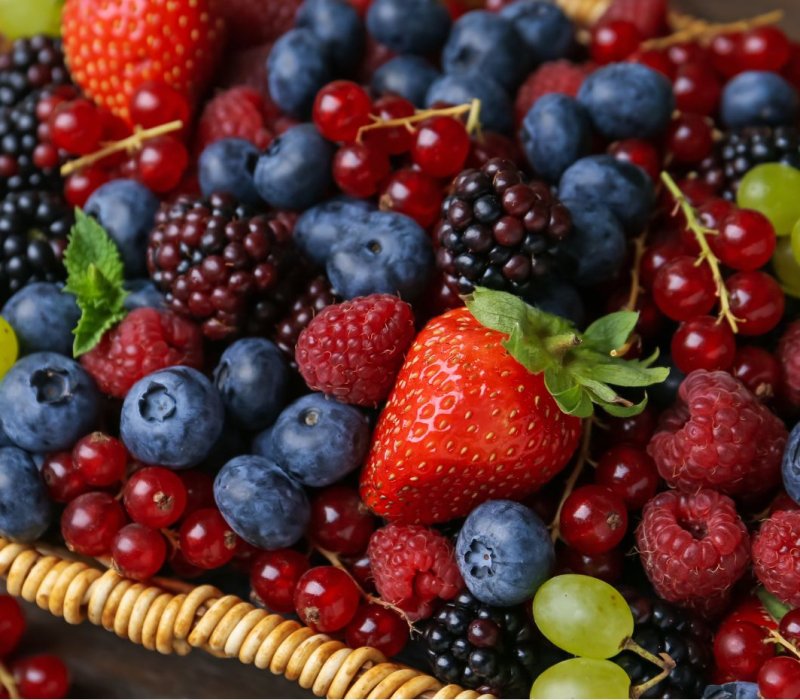
“If I were to choose one or two nutrition habits for people living with Parkinson’s to include in their daily self-care, they would be staying well hydrated and eating enough fibre.
“Drinking enough fluids can help prevent some symptoms from getting worse, such as tremor, stiffness, muscle weakness, or dizziness caused by low blood pressure. When your fluid intake is low, you may also feel more tired, get headaches, or find it harder to concentrate.
“Having a glass of water when you notice these signs can help. Most people should aim for 6–8 glasses of fluid a day. This can include water, tea, coffee, juice, milk, soups, smoothies, and even juicy fruits and vegetables.

“Constipation is also common in Parkinson’s. Fluids are important, but they work best when combined with fibre. On their own, water or fibre may not have much effect, but together they can make a real difference to your bowel habits.
“You can get fibre from many foods, including fruit, vegetables, wholegrains, nuts, and seeds. Adding a source of fibre to each meal, or choosing fruit as a snack, along with a glass of water, can help keep things moving gently and naturally.”
Self care and Parkinson’s disease: people living with Parkinson’s share ‘what self care means to me’
Emma Lawton, UK

“Living with Parkinson’s from 29 years old has slowly reshaped what ‘self-care’ means to me. It is no longer just about getting enough sleep, eating well, or trying to keep up with an exercise routine (to be honest I have never been good at those things!) Over the years, self-care has become something deeper and more personal: the ongoing work of helping myself stay me.
“Parkinson’s can feel like it’s constantly asking you to shrink your world, to avoid the unfamiliar, to stick to what’s predictable. But I’ve learned that holding on to my identity means doing the opposite.
“Self-care now looks like saying yes to new experiences, even small ones: learning a skill I never thought I’d try, going somewhere I’ve never been, meeting people outside my usual circles. Each new thing, no matter how imperfectly I do it, pushes back against the parts of the disease that want to narrow my life.
“Trying new things reminds me that I am still growing, still capable, still more than the symptoms I manage every day. It’s become an act of rebellion and self-preservation. In that sense, self-care isn’t just about maintaining my health. It’s about protecting my Emma-ness.”
Reena Uusmets, Estonia

“I have been living for nine years with young-onset Parkinson’s, diagnosed at 42. My tips for practising self-care include knowing what you’re good at and practising those things every day. I’m good at creating beauty out of darkness meaning I turn negative thoughts, actions, situations into positive. I create my most authentic inspiring poems and songs when I am having hard times. It’s important to be creative and have fun. Sometimes it means I write poems, make social media content about my life with Parkinson’s, play with my cat.
“My morning routine is simple, effective and creatively fun: wake up, take my meds, turn on music with my favorite melodies, start dancing while making my bed, eating breakfast and Cappuccino, singing while picking my outfit of the day.
“I practice an active lifestyle, mindfulness and positive mindset. I do affirmations in the morning and before going to sleep: I am enough, I love myself, I am my best friend. Today is the best day ever! I also visit my local cat shelter; I leave my mobile phone outside, sit in silence and observe cats, letting my mind and body rest.”
Kathrin Wersing, Germany

“Six years ago, I was diagnosed with Parkinson’s disease at the age of 40. For me, self-care means empowerment, actively dealing with my illness and standing up for my own interests. I often experience how essential it is for us to be well informed about our condition.
“When I know as much about medications, side effects and alternative therapies as I do about psychological, mental and social support options, I can talk to my doctors on an equal footing, exchange ideas with others and manage my life independently.
“For me, self-care also means being active, doing lots of sport, and continuing my hobbies, such as singing and dancing, because that’s good for my soul.”
Lucía Ferro, Spain
“For me, self-care with Parkinson’s is a daily choice to create space—physically, mentally, and emotionally—where I can feel grounded and true to myself. One of the first areas I transformed was my diet. Living in Barcelona made the Mediterranean lifestyle feel natural. So I embraced extra-virgin olive oil, nuts, and daily berries, especially blueberries.
“I became curious about gut health, so I include probiotic and prebiotic foods and avoid refined flours and sugars because my body feels calmer without them. I also choose natural, eco-friendly, vegan products for my home and personal care.
“My inner environment matters just as much. I don’t have a TV, and that silence helps me stay focused and less overstimulated. I carve out quiet moments throughout the day, sometimes with essential oils that help me reconnect with myself. A steady sleep routine—herbal tea, no screens before bed or right when I wake up—has become one of my anchors.
“Movement keeps me balanced: swimming, yoga, meditation, breathing exercises, cycling everywhere on my electric bike, and walking as much as I can.
“An important part of my self-care is sharing my journey on Instagram and doing young-onset Parkinson’s activism. Helping others feel less alone gives meaning to my own experience.”
Matt Eagles, UK

“Self-care for me is not beating myself up if I cannot make a prior engagement. Learning sometimes it is important just to sit and chill. Learning to say ‘no’ and not feeling guilty.
“I often need a snooze but now I don’t feel guilty about it, because I know I’ll be a better version of me if I do. Self-care is listening to your body.
“When I am faced by a new experience or appointment that is worrying me and making me nervous, I ask myself ‘What is the best thing that can happen ?’”
Barbara Salsberg Mathews, Canada

“In 2023, I posted my philosophy for living with Parkinson’s on X (formerly Twitter), paired with a video of me dancing. It immediately went viral among the global Parkinson’s community, becoming a source of shared inspiration and action. I remember this saying whenever I need a lift:
‘Parkinson’s reminds me how precious life is.
I’m aware of my diminishing energy and time to get things done.
So I’ve removed negative people in my life, I focus on today and what I can leave behind.
If I hear good music you can be sure I’ll be dancing to it.
Parkinson’s can’t stop me from dancing.’”
Urs Bratschi, Switzerland

“I believe it’s incredibly valuable to see Parkinson’s not as a disease, but as a unique trait of one’s body. I actually feel healthy, and I try to lead as active a life as possible. Acknowledge my body’s Parkinson’s symptoms, without giving them more weight than they deserve. I consciously avoid trying to live a ‘normal’ life. Because, in reality, there really is no such thing as normal.
“Since my Parkinson’s diagnosis, friendship has gained immense importance. True friends care for each other’s souls. A good friend doesn’t just know your story – they are part of it.
“Equally important is setting goals. Goals give your life purpose and allow you to actively participate in the adventure of living. Personally, I aim so high that my goals might seem unreachable at first glance. But when you truly want something, you can achieve incredible things, even with Parkinson’s.
“You can also do a lot of good for your body, which can positively influence the course of Parkinson’s. This includes exercise, training your body awareness, meditation, and nutrition. But when it comes to eating, it’s important not only to focus on what’s healthy for the body.
“There’s also a soul, and it has its own needs. Often, what nourishes the body and what nourishes the soul don’t completely align. Finding a balanced approach is key and that sometimes means allowing yourself a slice of chocolate cake.
“Living with Parkinson’s has taught me that health is not just about the absence of illness, but about embracing your body, cherishing your friends, pursuing your goals, and nourishing both body and soul. It is about creating a life that feels full, meaningful, and truly your own.”
Parkinson’s self-care tips: Mary Dalton, Board Member for Move4Parkinson’s
Mary has been living with Parkinson’s for over 10 years, and is a longstanding member of Move4Parkinson’s, Ireland. The organisation provides information and support to people with Parkinson’s on how to improve quality of life through self-management.
Mary’s self-care tips:
- Write down your plans weekly. This can help you not to make too many appointments and commitments. You can also use this as a symptom tracker.
- Establish a support network of family and friends you can rely on, keeping in mind that this could be a marathon rather than a sprint.
- Identify a care team to include doctors, P.D. nurses, local health service and pharmacist.
Follow the doctor’s advice regarding the dosage and timing of your meds. Always check before adding anything new, including over-the-counter preparations. - Exercise daily. Choose something you enjoy as you are more likely to stick to it. Consider joining a group and also check out online resources.
- Eat healthily. Try out the Mediterranean diet and small meals during the day. Avoid constipation. Stay hydrated.
- Cultivate good sleep habits and also take a rest or short nap if you need it.
- Buy some touch lamps.
- Try something new. Join a choir, learn a language, take up a new hobby. You might discover a hidden talent as well as enjoying yourself.
- Order your meds a few days before you need them. When travelling always carry your meds with you – not in your checked-in luggage. Bring more than you need and also a copy of your prescription.
- Consider alternative treatments e.g. acupuncture, massage or mindfulness.
- Try to avoid stress – easier said than done! Stay positive.
- Finally – life is short. Take the trip, eat the cake, buy the shoes.”