Motivation, determination and solid team values are all attributes you might expect to find in a lifelong sports enthusiast such as Rune Vethe. These are also exactly the qualities that shine through when the 50-year-old Norwegian shares his journey of receiving a young-onset Parkinson’s diagnosis, and going on to set up a cycling club that spans 12 countries.
A campaigner, Rocksteady boxing coach, and the co-founder of ZWAP (Zwifters Against Parkinson’s), Rune lives in Sandefjord, Norway, with his wife and two teenage sons. The former family therapist speaks to Parkinson’s Life about adapting your goals, and how indoor cycling can benefit everyone with Parkinson’s, regardless of their age or experience.
Family values
Rune was diagnosed with Parkinson’s in 2009, after experiencing symptoms for three years. “I first noticed it on my left side. For example, in my wrist – it became hard to turn a fork. Or when jogging, I noticed my left foot sounded different,” he says. A GP visit led to an assessment, a DaTSCAN, and a diagnosis of Parkinson’s at just 34 years old.
“At that point my boys were one and three years old. So I was worried about how my role as a father would be, 10-15 years ahead. Would I be able to be physically active, would I be the father I’d like to be? That was a heavy thought,” he recalls. “But I am still jumping around with my kids and I have been a good father. I am very proud of how they have grown up. My relationship with my wife and our journey has also been very important. Figuring out how to be with this new thing in our family, in our own way.”
Growing community connections
In the years following his diagnosis, Rune began to make connections with other people with Parkinson’s. “In 2011 or 2012, I took part in a seminar run by the Norwegian Parkinson’s Association, to get some information about how to adapt my working situation. From there I connected with my local Parkinson’s branch, and met up with other young people such as [Norwegian photographer] Anders Leines. Five of us then started Parkinson’s Boxing, and turned it into Rock Steady Boxing Norway, which is now huge.”
Rune had been cycling outdoors for some years before discovering Zwift in 2020. The online cycling training programme allows multiplayers to connect virtually, while riding indoors. Riders can splash out on a full-package smart bike or opt for adaptive accessories that replace the rear wheel of a regular bike. For a more immersive experience, you can buy accessories such as a fan to simulate headwind.
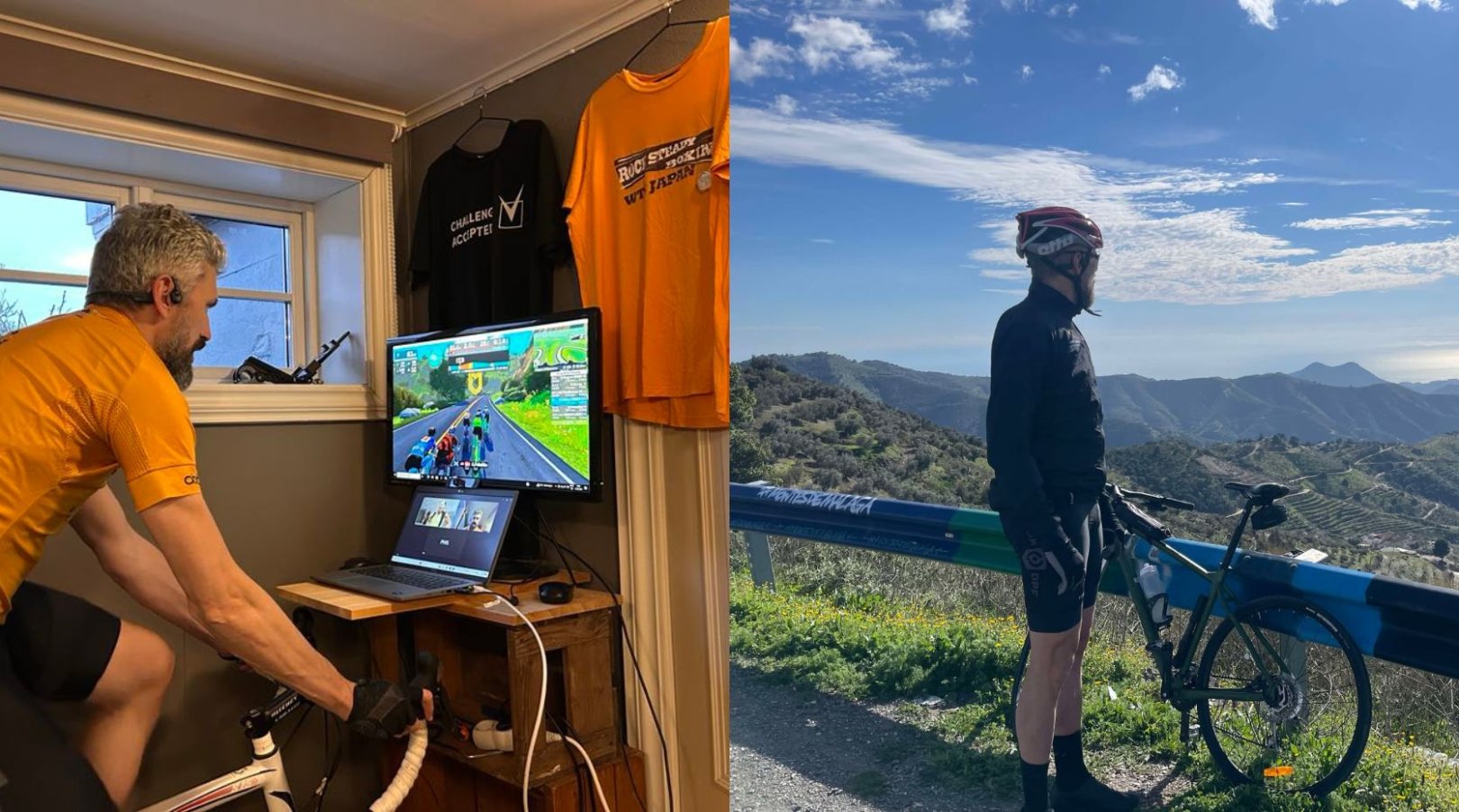
Discovering a compact, indoor exercise option that connected with a community could not have come at a better time for Rune. “I had Deep Brain Stimulation surgery (DBS) on 11 March 2020, and Norway went into complete lockdown the next day. So I was lucky to have the surgery, which had a huge impact on me. But it meant I could not have any visitors,” he explains. “With time, I found I had lots more energy, and was looking for more ways to exercise. So I removed the back wheel of my road bike, added the trainer and plugged it in, and connected it to the Zwift app on my computer.”
Being able to replicate famous – and challenging – routes opened the door to a new, highly motivating world of exercising at home. “I discovered I could choose different routes in Zwift, for example the last leg of Tour de France, where it is a bit hilly leading up to the Arc De Triomphe and feels heavier to cycle. It really motivated me, and meant I could do really high-intensity training at home.”
The birth of Parkinson’s cycling club ZWAP
Rune began to meet up with other people with Parkinson’s for Zwift riding sessions. “I started doing rides with the Parkinson’s Exercise Group Zwift (PEGZ) on Zwift, along with people with Parkinson’s in Norway. That was the start of our group,” he says. “Fellow cyclist Rune Bjerke joined the group and wanted to join the Barcelona bike trip we had planned, which we did a lot of preparation for on Zwift. As our friendship developed, we discussed the idea of a cycling club.”
Before long, the cycling group was formally created, incorporating the PEGZ group and facilitating a mix of outdoor and indoor riding sessions. “I came up with the name ZWAP – Zwifters Against Parkinson’s, and Rune (Bjerke) was experienced in creating startups. From there we founded the club, which is now a registered organisation here in Norway.”
The ZWAP Parkinson’s cycling club grew slowly and steadily, from around 15 registered members to a group that now boasts around 130. The club initially organised between one and three meet-ups per week, but now runs sessions almost twice daily.
Welcoming everyone
The range of timings allows people in different timezones, such as North America, to join in. But this is not the only way in which the club aims to make everyone feel welcome.
“We ride as a group and can see our avatars on screen. Zwift has a function to keep everyone together during the group ride – even a world champion alongside a much slower rider. That’s a really important feature for people with Parkinson’s, as your symptoms can feel huge on some days but you can still be part of the group. We couldn’t have this inclusive aspect on an outdoor ride.”
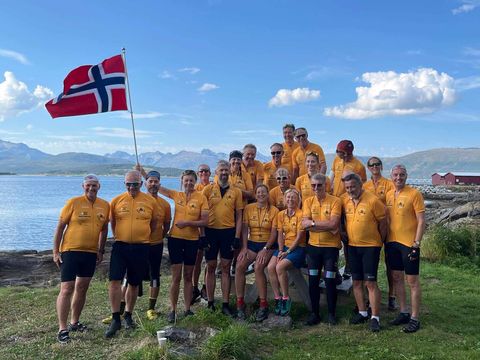
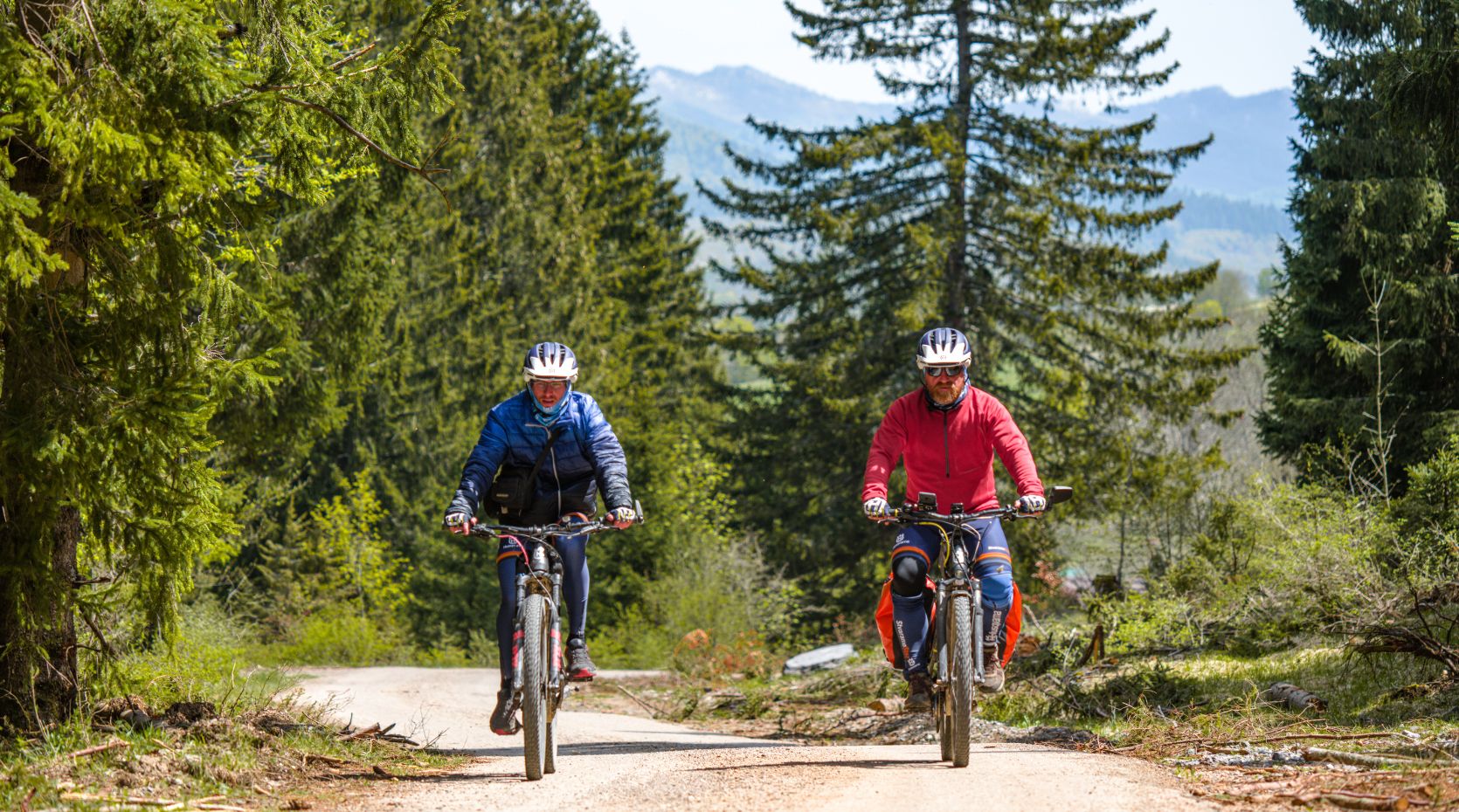
In addition to the indoor sessions, the club is known for its challenging awareness-raising ‘Tour de ZWAP’ rides. These outdoor missions include last year’s 635km ‘Parktic Race’ across Norway, and a 10-day, 850km event set to start in Portugal in June. There is also still space to sign up for Team West Coast, which will see ZWAP members cycle from Seattle to the WPC 2026 congress in Phoenix, USA.
However, Rune is keen to stress the inclusive nature of the club. “Anyone can join, regardless of fitness level. You are very welcome, whether you can pedal like (professional racing cyclist) Mark Cavendish, or just pedal for five minutes. As long as your pedals are moving, you are in the group.”
Connecting cyclists across the globe
As well as cycling together, riders can connect via a Zoom call during the session. “I have two screens during a ride – one with Zwift, one with Zoom,” says Rune. “Most people join both, as then you get the discussion, the jokes, we talk about whatever comes to mind during the ride.”
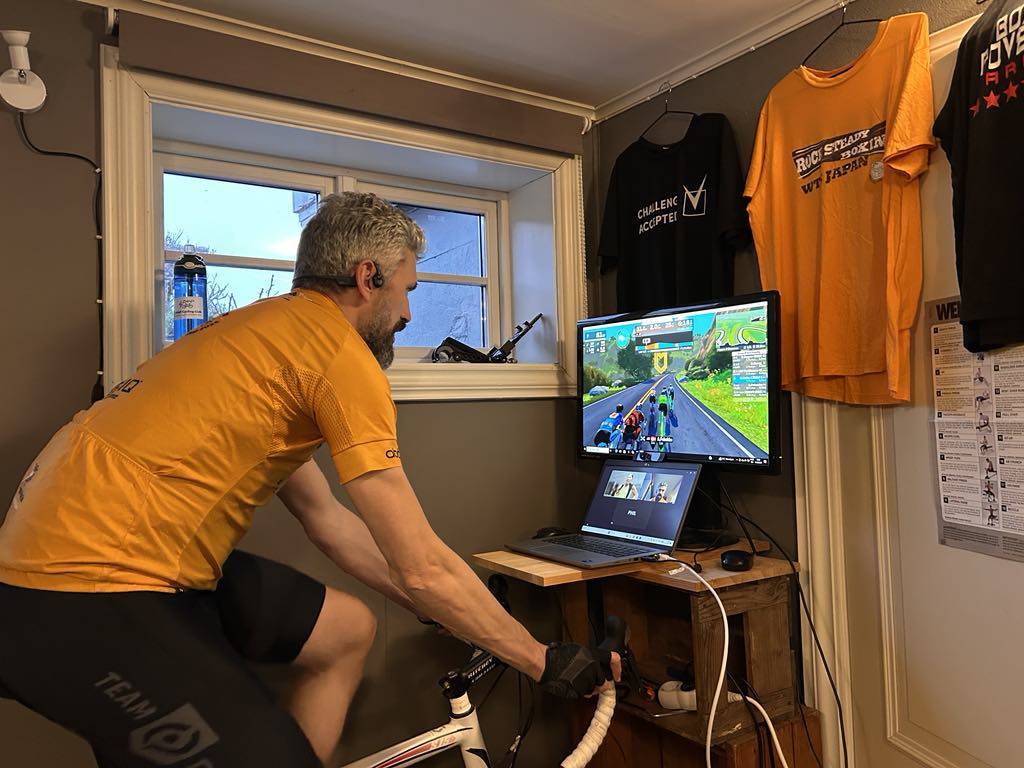
Discussing Parkinson’s, and related research, is also an important part of the ZWAP experience. “It builds a community inside the club. That’s the real difference for me – to know I have a group of people with Parkinson’s to exercise with me in my basement. In Norway, people live in very remote rural areas, and can quickly become isolated. This makes it possible to be a part of a community and get high-intensity exercise.”
People with Parkinson’s have joined the club from across the globe, with members in Norway, Canada, the US, and UK. They range from those in their forties to their seventies. “We have people who have had Parkinson’s for six months and found us quickly, and some who have had it for 20 years. As well as the bike, you can be part of Zwift on a tricycle, and so some members are doing this,” says Rune. “There is room for everyone with Parkinson’s, and their supporters. You do need some equipment, but we have a lot of experience so can help people get set up.”
Empowering the community to adapt and grow
With a masters degree from the Norwegian School of Sport Sciences, it is perhaps no surprise Rune’s lifelong passion for exercise has influenced his response to his diagnosis. And while community is at the heart of ZWAP, there is plenty of space to set individual targets.
“I have always been very good at many sports, but it is not that easy to be very good with Parkinson’s,” Rune says. “In cycling, to adapt with the diagnosis, you need to change your goals. But we still need to push ourselves, even while moderating our goals – you have to find a balance.”
Boosted motivation, fun and convenience are some of the benefits given by ZWAP members who enjoy exercising this way. For Rune, the effects are both immediate and forward-looking. “For myself, to know that I’m doing something that research says is good for me is important. After a hard workout on Zwift, I feel better, looser, and symptoms like bradykinesia and stiffness are reduced. Endorphins play a part, but I believe it is connected to improving my symptoms. Also, I really believe exercise that raises my heartbeat like this will really benefit me in the longterm. Believing in that really helps me here and now.”
Many ZWAP members also appreciate the steadiness of a Zwift bike, compared to an outdoor ride. “Some may say it doesn’t challenge your balance as much,” Rune says. “But what we with Parkinson’s need as well as cardio, are strong and quick feet. That is what will help prevent falls now and in the future.”
Looking to the future
Be it inside or out, the club’s goal is for “everyone with Parkinson’s to get into a saddle and ride a bike.” While it is an ambitious aim, this “working target” is underpinned by Rune’s characteristic determination.
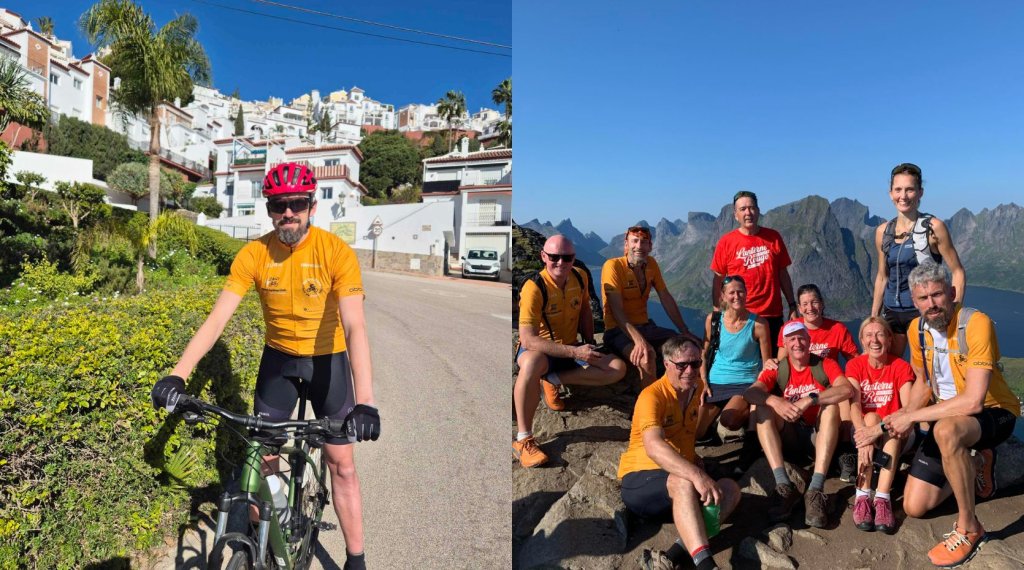
“It is possible for everyone to start,” he says. “I will not get rid of Parkinson’s in the near future, my symptoms will develop. But I am still going to ride. Be it indoors on Zwift or outdoors, I will adapt. I am already thinking I will get a trike at some point, when it’s no longer safe to ride a two-wheel bike any more. I train hard to delay the development of Parkinson’s, and I truly hope to grow to be so old that I get to sit in a wheelchair.”
Are you interested in joining the ZWAP online cycling group? Membership is free and you can find out more here.