With the 2024 Tour de France well underway and thrilling as ever, watching the coverage on TV might have made you wonder about giving cycling with Parkinson’s a try. We’ve spoken to three people with Parkinson’s about their love of cycling to find out how it benefits their condition, and why they find cycling so rewarding.
Dejan Đuran: “Riding my bike is when I feel closest to normal functioning”
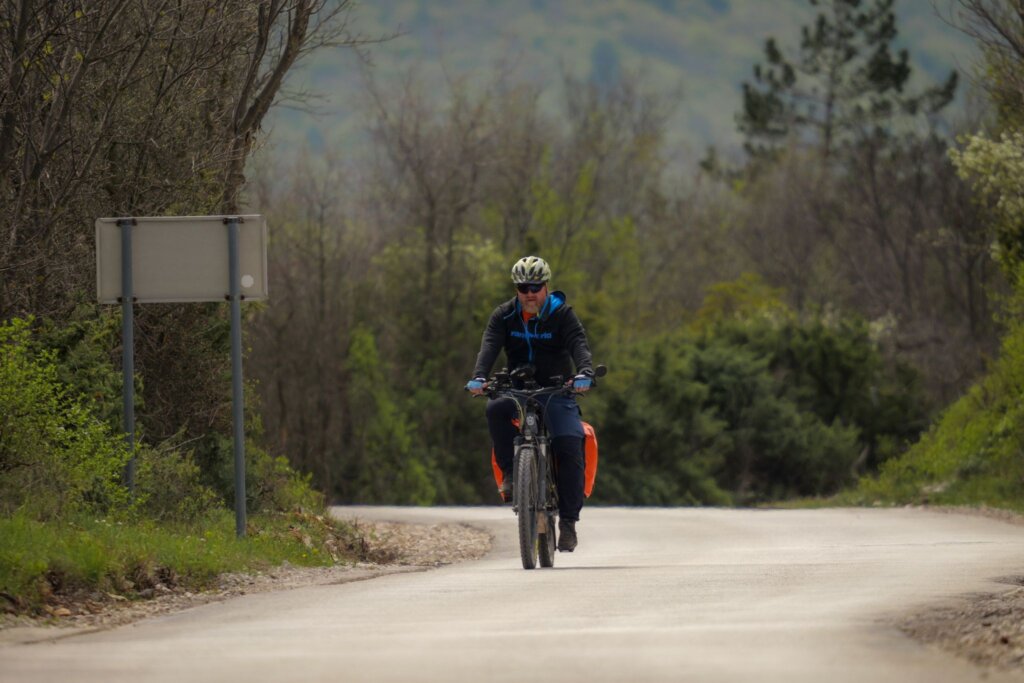
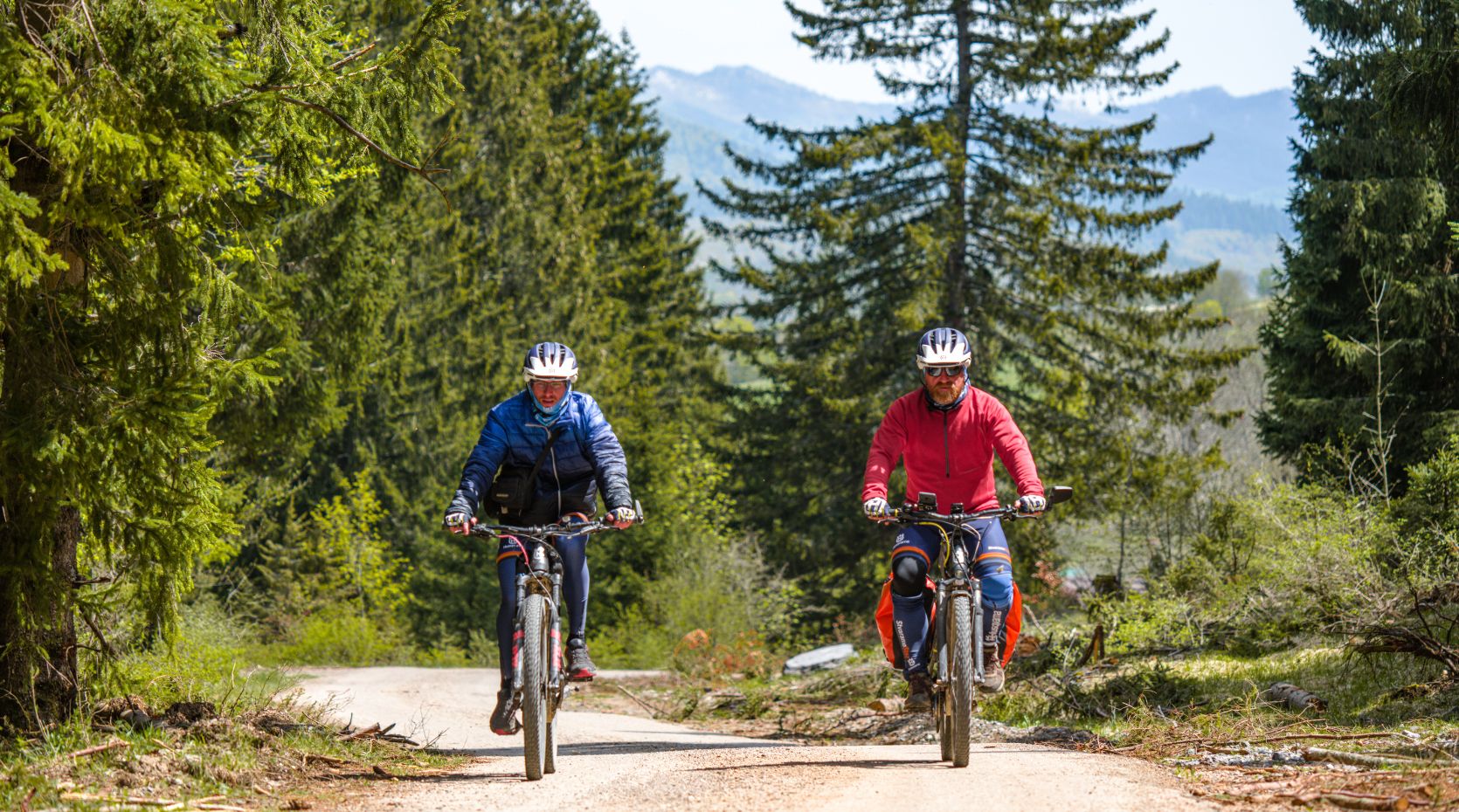
Dejan Đuran from Croatia is in his early fifties and was diagnosed with Parkinson’s at 48. For him, cycling combines exercise with his love of the outdoors.
“Although I have been riding a bicycle since childhood, I started taking cycling more seriously after the symptoms of Parkinson’s prevented me from actively engaging in hiking and mountaineering,” he says. “I have always loved spending time in nature and going on long, demanding hikes, but due to health problems, I had to find an alternative that would allow me to stay active.”
However, it got to the point where his Parkinson’s symptoms meant that he could no longer ride a regular bike.
“A friend visited me and suggested I try out his electric bike. The moment I pedalled that bike, I knew it was the solution I was looking for.
“Riding an electric bike, whether due to the reduced effort or the different muscle activation compared to walking, I don’t experience symptoms like muscle cramps or my legs freezing in one position, and the tremors in my hands are much less. The only symptom I struggle with while riding is maintaining balance,” he says.
Dejan’s passion for cycling – and for raising awareness about Parkinson’s – is such that he has been on much longer rides across Europe. At the end of April, he began riding a shorter version of the EuroVelo 13, and expects to reach his final destination, the Baltic Sea, at the end of July.
Dejan has also set up an organisation called Living with Parkinson’s – Cycling – with the slogan “start now and immediately” – through which he undertakes short cycle rides with other people with Parkinson’s, as well as those who don’t have the condition.
Describing why cycling is so important to him, Dejan says: “Riding my bike is when I feel closest to normal functioning, without the constant reminder of my Parkinson’s symptoms. It is not just a physical activity but a way to fight the progression of the disease and preserve my quality of life. In those moments, I feel like I can overcome the obstacles Parkinson’s imposes on me, which is incredibly motivating and essential for my daily life. Cycling has become my new way of coping with the challenges brought by the disease and continuing to live a fulfilling and active life.”
Keith Wilson: “The adrenaline I get from downhill cycling turns the clock back”
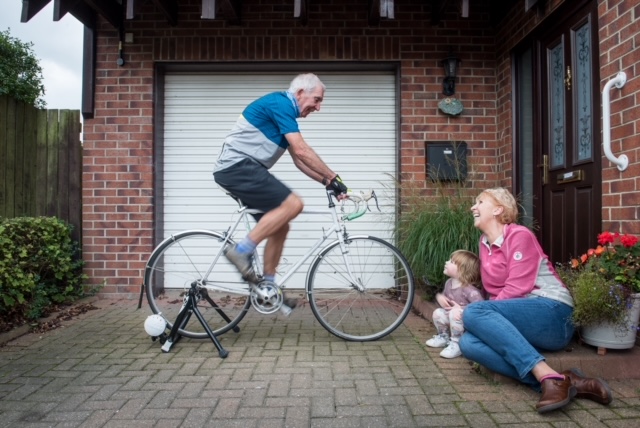
Keith Wilson, 73, from Darlington in the UK, was diagnosed with Parkinson’s in 2020, just as the Covid-19 lockdown began.
“I’ve always done a little bit of cycling, but my main sports were running and climbing. Before Covid, I cycled twice a week with Darlington Cycling Club, normally 60 miles or so each day.”
Like Dejan, Keith has been on long-distance cycling trips with some of his friends. “This year, we completed a tour of the Zeiderzee in Holland. We cycled from Newcastle to North Shields and caught the ferry to Ijmugen near Amsterdam,” he says.
To train for these longer trips – or when it’s too wet to ride outside – Keith cycles his bike in his garage while using a turbo trainer (which keeps the bike stationary). At the same time, he wears a VR set and uses Beat Sabre, a program where you ‘drum’ with your arms in time to music.
“You hold a ‘light sabre’ in each hand and have to split blocks coming towards you with the right colour sabre, in the direction indicated, and on the beat while dodging obstacles. I have The Rolling Stones and a rock soundtrack – Nirvana, Foo Fighters – and the combination of music with an upper body workout while pedalling is very enjoyable. I credit Beat Sabre with restoring my sense of balance and coordination,” he says.
Asked what he enjoys about cycling, Keith emphasises the high it gives him.
“The adrenaline rush I get from fast downhill cycling is almost priceless and was one of the key turning points in making me feel I could battle the condition. I joke that in Back to the Future the DeLorean car turns into a time machine at 88mph and that I can achieve the same effect at 38mph. The adrenaline I get from downhill cycling turns the clock back and makes me feel ‘normal’. It’s not endorphins but adrenaline, which my consultant says is chemically very similar to dopamine.”
Katherine Buttfield: Cycling “helped me forget I even had Parkinson’s”
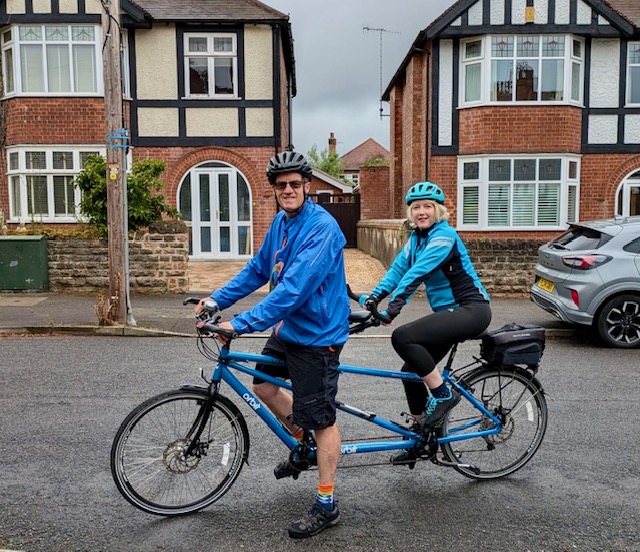
When Katherine Buttfield, who lives in Nottingham in the UK, was diagnosed with Young Onset Parkinson’s at the age of 46 seven years ago, one of the things she worried about was that she might no longer be able to ride a bike.
“But that didn’t seem to be the case. Sitting on a bike helped me forget I even had Parkinson’s,” says Katherine, who has loved cycling since the age of seven.
“I’m a commuter cyclist – I cycle every day, sometimes several times a day – riding in short, fast bursts to get me to various places, whether it’s to meet a friend for coffee, go to the cinema, get to the gym, or do my job as a part-time carer in the community. Sticking to the cycle paths and cut-throughs is quicker and safer than taking the car.”
On top of this, she often goes on long rides with her partner on their specially made tandem, Bluebell. They have even cycled the 196-mile Lakes and Dales Loop cycle route on it.
Apparently, riding in tandem can push people with Parkinson’s harder, which can reap benefits. Katherine quotes a study called Neurorehabilitation and Neural Repair (Ridgel et al., 2009), which found that riding in tandem with a physiotherapist/trainer setting the pace in the front seat pushed people with Parkinson’s in the back seat to work harder than a control group who were on single bikes and cycling at their own pace.
“The results showed that people with Parkinson’s on tandem bikes performed better than the other group and significantly improved their motor symptoms (by 35% on the Unified Parkinson’s Disease Rating Scale),” says Katherine. “The scientists concluded that forced exercise enhances neuroplasticity in the brain.”
Since being diagnosed with Parkinson’s, Katherine has become more active, also going Nordic walking and doing Pilates on top of cycling. “Since having Parkinson’s, I now enjoy all sorts of exercise. I urge everybody with Parkinson’s to keep moving and keep exercising!”
Find out more about cycling with Parkinson’s – and plenty of other ideas for staying active – on our Sports & Exercise hub.