How about introducing something a little out of the ordinary to your exercise regime? More than just a novelty, there are unusual sports and activities that can have real benefits for people with Parkinson’s. Give these five unconventional exercises for Parkinson’s a try:
1. Popping
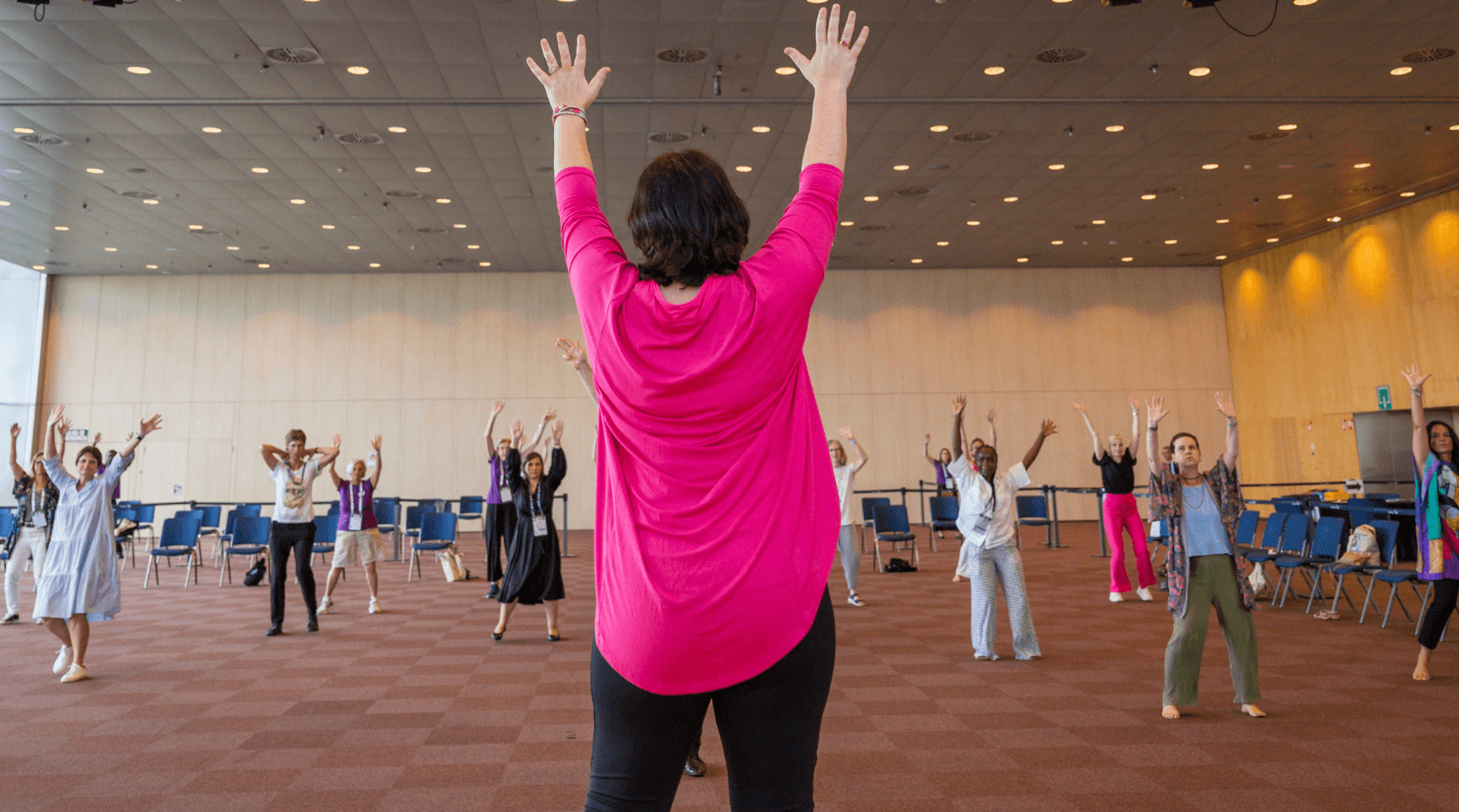
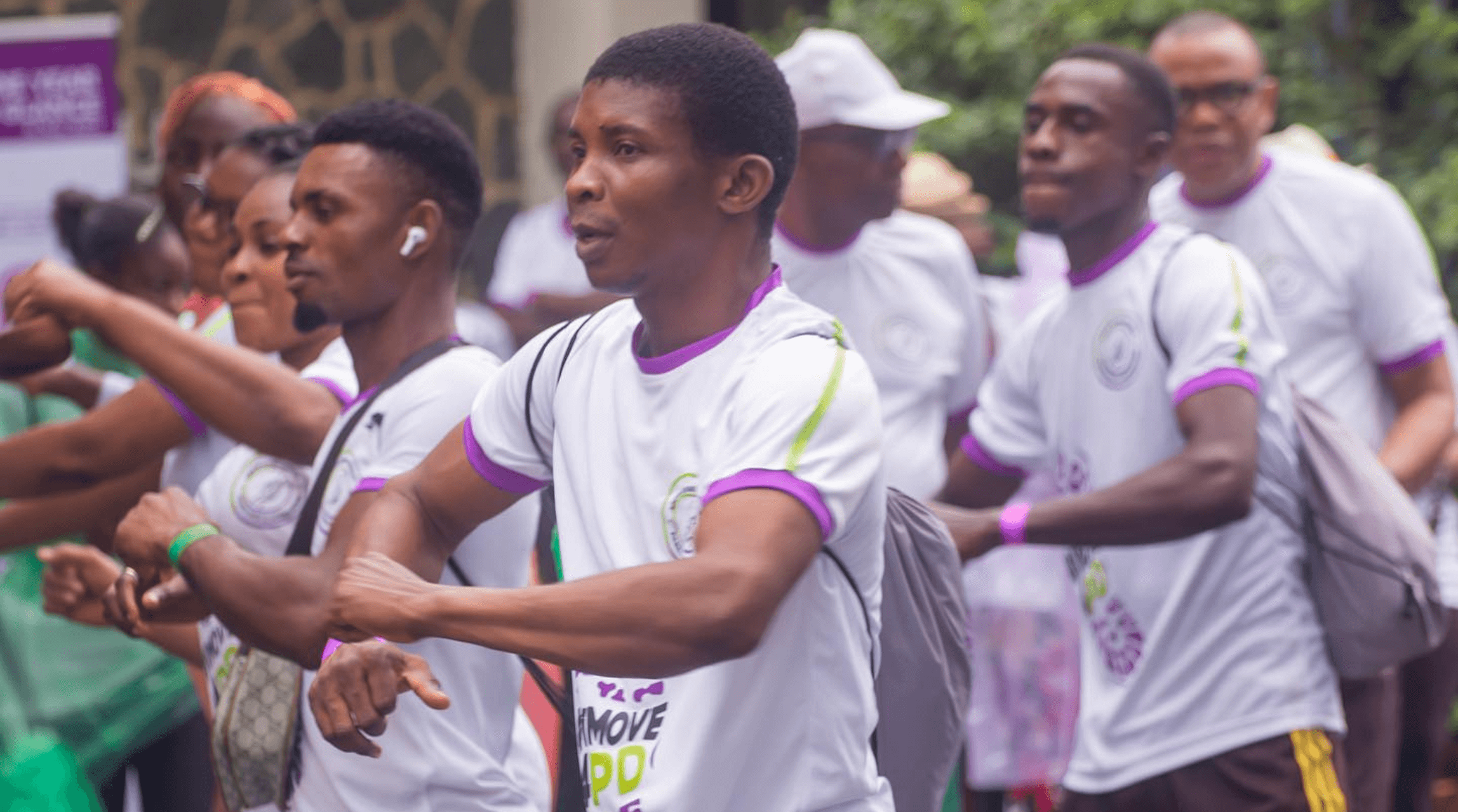
Trained professional dancer Simone Sistarelli of Popping for Parkinson’s was inspired to teach popping – a form of dance – to people with Parkinson’s because his grandfather had the disease.
“Popping is a form of dance originating in California in the late 1970s, involving rhythmic contractions of the dancer’s muscles to accent the beat,” explains Simone, who is Italian. “Michael Jackson was one of the most famous popping dance students: all of his robotic movements were directly taken from popping dance.”
Simone has been teaching Popping for Parkinson’s classes in London for nine years and also runs live online classes in English and Italian so people can join in wherever they are. He says: “The key concept of our Popping for Parkinson’s classes is to use popping dance techniques as an innovative therapeutic tool for improving the lives of people affected by Parkinson’s disease. The dance technique does not differ at all, but it is provided in a safe, dedicated space and in an accessible way for people with this condition.”
So why is popping among the good exercises for Parkinson’s? Simone explains how performing the ‘pop’ can help to relieve symptoms: “The contraction and release of the muscle to the music, which is the main technique of the dance, allows most students to lessen their tremor,” he says.
Simone points out that dancing has mental as well as physical benefits for people with Parkinson’s. “Psychologically, dance helps with stress, depression and loneliness; it boosts mood and confidence. Socially, dance is a great platform to connect with people in a non-Parkinson’s based way, which can be tremendously valuable.
“Participants not only see improvement in their natural movement capacities, but also gain confidence, feel less socially isolated and have fun. To some, this is the only chance they have during their week to feel ‘normal’ and to have fun!”
If you want to give popping a try, register for Popping for Parkinson’s’ free weekly live online classes. They will also run in-person classes from September this year in Wimbledon, London.
2. Surfing
Surfing offers a range of benefits for people with Parkinson’s at all levels of physical ability – as demonstrated by the Fuerte es la Vida Parkinson No Limits Association based in Fuerteventura in the Canary Islands.
Surfing is included in the Association’s specially created protocol of complementary therapies and sports they provide for both local people with Parkinson’s in Fuerteventura, as well as those with the condition who visit the island for the therapeutic holidays they run.
Francesca De Bartolomeis, Parkinson No Limits’ coordinator and psychomotor therapist, says: “Surfing is an absolutely fascinating discipline that gives a sense of deep freedom and harmony with the ocean. But that wasn’t enough for us. We have incorporated surfing techniques with a team effort to create a technique specifically for people with Parkinson’s.”
At Parkinson No Limits, that team, who use surfing as a therapeutic and rehabilitative sport, includes a psychomotor therapist, neurologist, physiotherapist, clinical psychotherapist, psychologist and researcher, a speech therapist and a surf instructor, as well as surfers with Parkinson’s.
Francesca outlines the physical benefits for those who practise surfing regularly – from those who are only able to lie down on the board to those who are able to stand: “It stimulates a total body workout, improving coordination, balance, fitness, and posture, as well as improving circulation of the blood and lymph.”
There are also psychological benefits, including improving self-esteem, confidence, independence, and counteracting the depression, anxiety and apathy that can affect some people with Parkinson’s. It is also cognitively stimulating.
“Each of them is practising and giving their best, improving day by day, based on their starting point – age, level of Parkinson’s and aptitude for sport and fitness. In all of them, we see immediate improvements and improvements that last a long time, evolving and expanding all the time,” says Francesca.
“One of the women with Parkinson’s we have helped didn’t even know how to swim. At 76 years old and after 10 years of Parkinson’s, and despite suffering panic attacks, she started to get to grips with the water and the surfboard while being supported by the multidisciplinary team that is always present at every surfing session. Today, for her, lying on the board and surfing a wave half a metre high, with the team close by, is as great an achievement as that of the 50-year-old man – a former skating champion – who has had Parkinson’s for 14 years, and who manages to stand on the board, making use of his body’s muscle memory.”
Francesca says that surfing helps to change the outlook of people with Parkinson’s, including increasing their courage and determination: “They say their way of living life has changed, in which Parkinson’s is a cumbersome part, but it is not the only component. Many have rediscovered energies and aspects of themselves that were already in them, but were hidden, forgotten, or which they had not allowed to ‘bring to the surface’.”
Find out more about water sports as exercises for people with Parkinson’s, as well as tips for swimming with Parkinson’s.
3. Drumming
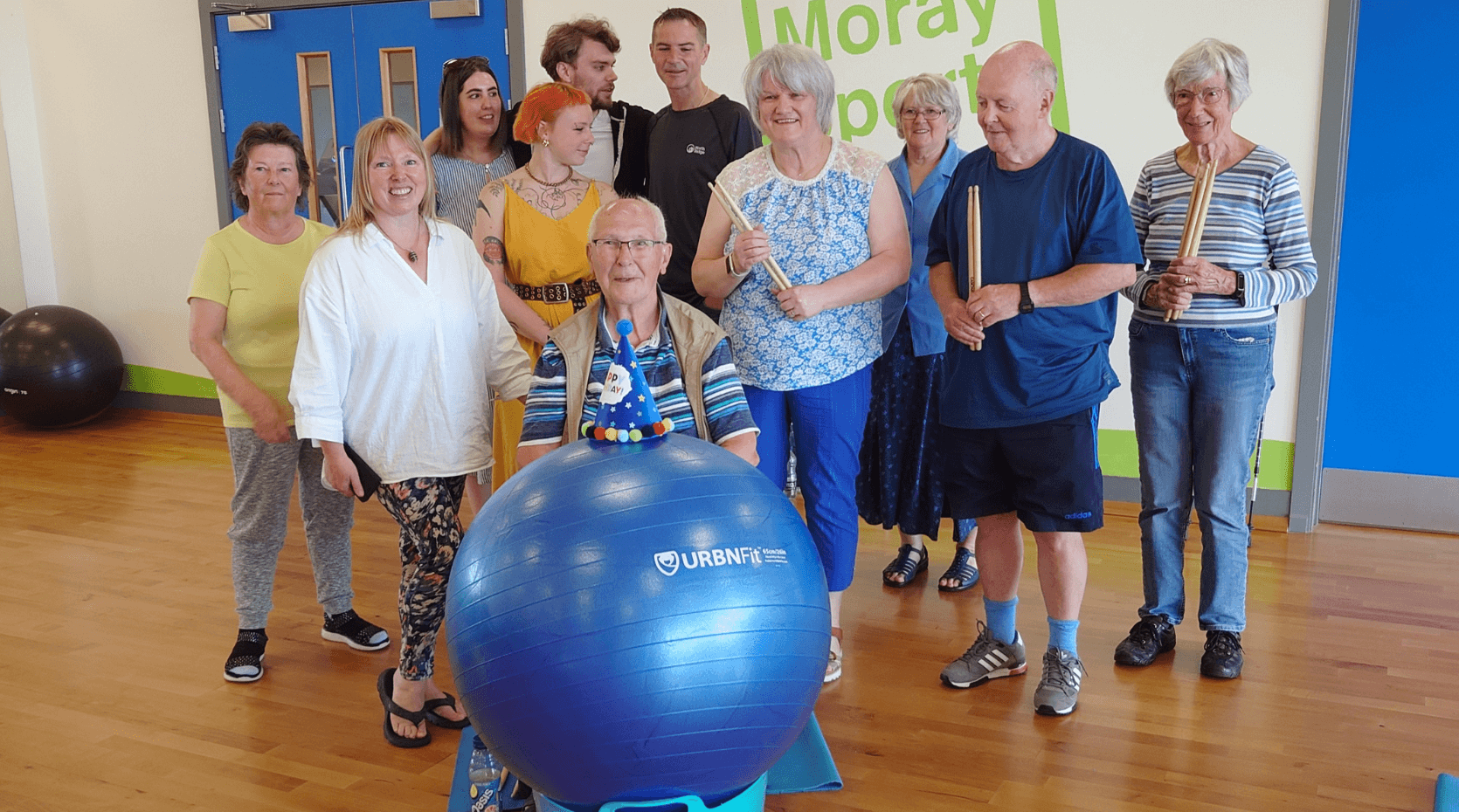
Based in Elgin, Scotland, Jo Holland, who has Parkinson’s, started Parkinson’s Beats, a drumming class for others with the condition, 18 months ago.
Drummers are seated and use drumsticks to drum on a Swiss exercise ball to music which sits in a bucket in front of them for stability. “Those who are physically able will sing too as this is good for people living with Parkinson’s,” says Jo.
She explains more: “Parkinson’s Beats is a form of cardio drumming encompassing aerobic activity, flexibility, balance and strength exercises combined with rhythmical drumming. It engages all muscle groups, improves muscle tone and helps coordination, while the singing strengthens the vocal chords and can enhance voice levels.
“Parkinson’s Beats also aids cognitive abilities as you match rhythm to movement and learn and repeat patterns of rhythm. In addition, it promotes a feeling of wellbeing, reduces stress and counteracts anxiety. The community aspect of exercise drumming is remarkable even when conducted online. It is a LOT of fun! People always leave the session with a smile on their face.”
Here are some of the comments from Jo’s class members: “I feel energised, and it lasts the rest of the day;” “I am not sure if it is because of the drumming, but I have noticed my handwriting has improved recently, and my medication has not changed;” “On drumming days I’m a lot more [chilled] because I don’t have the pain and the stiffness;” “You’re concentrating on the drumming and forget about your tremor.”
Jo and Sharon Finlay teach two live drumming sessions in Elgin a week – one face to face on Monday mornings and one on Thursday afternoons – with the option to live-stream the class and take part wherever you live. “We have had people join us online from as far away as Portsmouth in the UK, Ireland, Toronto and Andalusia,” says Jo. “We hope to bring Parkinson’s Beats to other communities in the near future.”
To find out more about drumming exercises for Parkinson’s, visit the Parkinson’s Beats Facebook page.
4. Mime
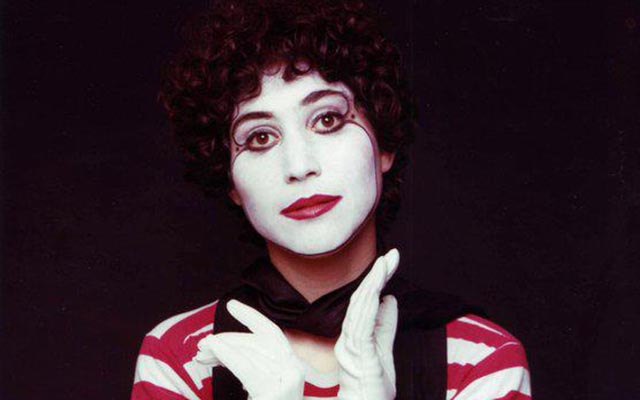
This performing art has plenty of benefits for people with Parkinson’s, offering practical help with everyday tasks from getting dressed to walking down the street – as well as being pure fun.
Based near Toronto, Canada, artist and person with Parkinson’s Barbara Salsberg Mathews, 65, has made it her mission to pass on the benefits of mime to others with Parkinson’s – for free.
Barbara toured with her own theatre company before becoming an art and drama teacher and later a corporate trainer. When she was diagnosed four years ago, Barbara was not moving her right arm and was dragging one foot. She read about a man with Parkinson’s who improved his gait using a method that reminded her of mime, and it inspired her to do the same.
Barbara used the techniques she learned as a mime artist: “I was taught how to do a mime stationary walk, like Michael Jackson’s moonwalk, but with the illusion of moving forwards, not backwards. For posture, I use imagery a lot; for example, I picture ‘swallowing a coat hanger’ and that helps me to keep my shoulders back, and I visualise a marionette wire [lifts arm, with the other arm above as if lifting it on a wire] and I do that for my right arm. I also use internal cues such as concentrating on feeling my right heel touch the ground versus dragging my right foot. I now appear to walk normally.”
Barbara’s classes have a practical focus. “What I have my students do is find something that they have difficulty with, an everyday movement, like brushing their teeth, putting on clothes. And we break the movement down and look at where to compensate so that you can do it correctly.”
She uses music and tools such as flow rings – a set of large bracelets that you can move up and down your arms and legs – to help people learn large, fluid movements. “A lot of people say this type of movement [stretching arm out] is what we do to put on a jacket or trousers [stretches out leg and moves hands as if putting on trousers]. Afterwards, the students perform the same movement without the flow ring. “It really wakes up new neuro pathways,” says Barbara.
Another one of Barbara’s exercises for people with Parkinson’s involves balancing the base of a peacock feather on your hand, focusing on the colourful feathers at the top, while walking across the room with it. “What always seems to happen is someone whose hand is shaking, like mine sometimes does, they stop shaking because their brain is somewhere else.”
Barbara says that her pupils get a lot of fun out of her mime classes: “They love the play, and the sense of fun and engagement.”
In the future, Barbara hopes to produce classes that people will be able to access free through an online platform.
Find out more at mimeovermind.com.
5. Padel
Padel is a lesser-known racquet sport, but it’s taken off among Copenhagen’s Parkinson’s community, with a wealth of benefits to be had.
Diagnosed with Parkinson’s in 2012, Morten Gunvad, who lives in the Danish capital, took up padel around six years ago, and this year organised the very first Unofficial Parkinson Padel World Championship 2024, which took place in Copenhagen in May.
So what makes padel one of Denmark’s best-loved exercises for Parkinson’s? Padel is similar to tennis in that it uses the same scoring system, but it is played in a court that is half the size, with walls which the balls can bounce off, so you can easily achieve longer rallies, and it requires less physical strength.
Having played both tennis and squash, Morten gave padel a try and was instantly hooked: “This is the best thing since sliced bread,” he says. Now he plays doubles in two-hour sessions twice a week with other people who have Parkinson’s.
After playing padel, he says “I feel so tired I can’t walk – in a good way! I’m sore all over, my muscles are aching. But I’m in a good mood.”
He thinks padel has helped relieve his Parkinson’s symptoms. “It helps my Parkinson’s symptoms quite massively, I would say, especially with my balance, with my walking, the fast movements, going backwards. You use the walls, and as soon as you approach, someone tries to lob the ball over you, and you have to run backwards. That’s quite a challenge, I can tell you that. The first couple of months I played, I was just falling over, and it wasn’t good. But that has improved quite a bit. I don’t fall over anymore.”
He thinks it has cognitive benefits too.
“It’s a fast-moving, fast-paced game – you constantly have to adjust and move and think about whatever is thrown at you. You’ve got to strategise all the time. You’ve got to react to your opponent’s next move. And that keeps you going – you can’t fall asleep.”
Padel has become so popular among his local Parkinson’s community that they have decided to set up a club and devote two days a week where people can come and play padel. “The number of people who want to participate, it’s growing on a weekly basis,” says Morten.
Watch Morten and his friends play padel.
Find out more about overcoming barriers to exercise with Parkinson’s, and for more information about exercises for Parkinson’s, explore our Parkinson’s Sport & Exercise Hub.