John Korede Akinola is Programs Manager at The Adewunmi Desalu Parkinson’s Foundation (ADPF), a non-profit supporting people with Parkinson’s and their families across Nigeria. He spoke to our Insight and Engagement Manager Fiona Montague about why their Parkinson’s exercise programmes are having such a big impact on the community, as well as discussing the biggest challenges faced by people with Parkinson’s in Nigeria, including accessibility and the rising cost of medication.
“For people with Parkinson’s, we have just one centre in the whole of Nigeria,” John reveals at the beginning of his call with Fiona.
This shocking fact is even more staggering considering Nigeria has a population of over 220 million people, with estimates of Parkinson’s prevalence potentially in the hundreds of thousands, but this only makes the sheer breadth of the services offered by The Adewunmi Desalu Parkinson’s Foundation (ADPF) all the more impressive:
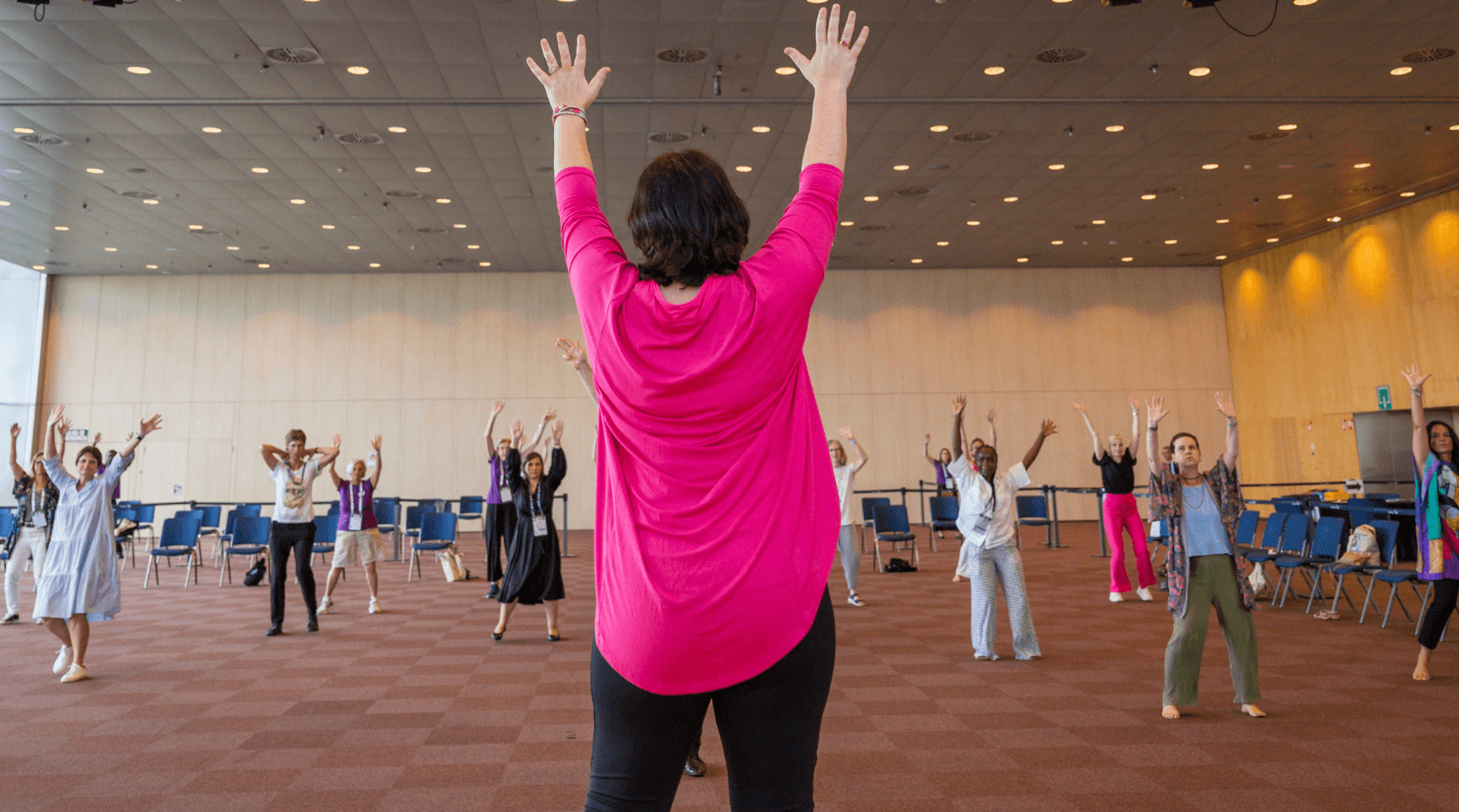
“First and foremost, we provide a pathway for diagnosis to referral,” John explains. “We reach out to people with Parkinson’s that are yet to confirm their disease diagnosis, through community outreach, and once they come to us we refer them to a neurologists at the teaching hospital just to ensure that they get the right diagnosis. We also have a physiotherapy service that will give an assessment and prepare a treatment or a rehabilitative care plan, which is tailor-made for each individual. Then we have other programmes, that we call rehabilitative programmes, like dance therapy, non-contact boxing, table tennis, walking football, a low-impact gym. And we have support groups.”

The ADPF also runs an “Overcoming Micrographia” group, which helps people with their handwriting, and is about to launch some speech therapy and occupational therapy services using materials from the global LSVT (Lee Silverman Voice Treatment) organisation.
Without their foundation, there would be virtually no rehabilitative care and support for people living with Parkinson’s in Nigeria. But this doesn’t put John and his team off their ambitions to extend their Parkinson’s exercise programme even further.
“As time goes on we want to engage in biking, across the vicinity where we are… and we are hoping that once we get some other evidence-based sporting activities that we can incorporate into the programme.”
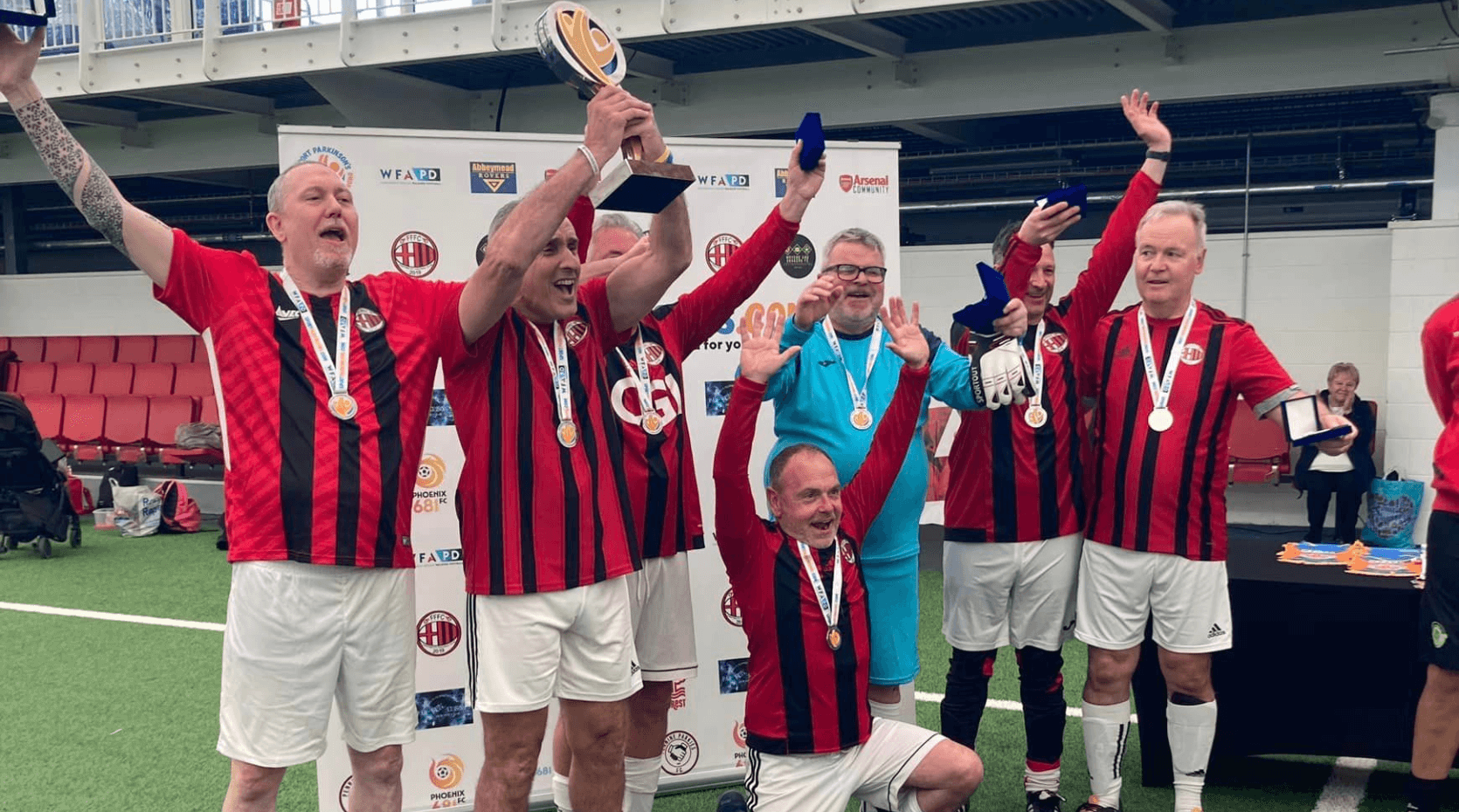
The foundation has also recently hosted a table tennis tournament, which was very popular, and last year they and Parkinson’s Africa co-hosted the Walking Football Parkinson’s Cup 2023, the first walking football and Parkinson’s awareness tournament in Nigeria. But while walking football has proven hugely popular for both men and women who take part in the centre’s Parkinson’s exercise programmes, funding issues are currently preventing them from running full walking football sessions.
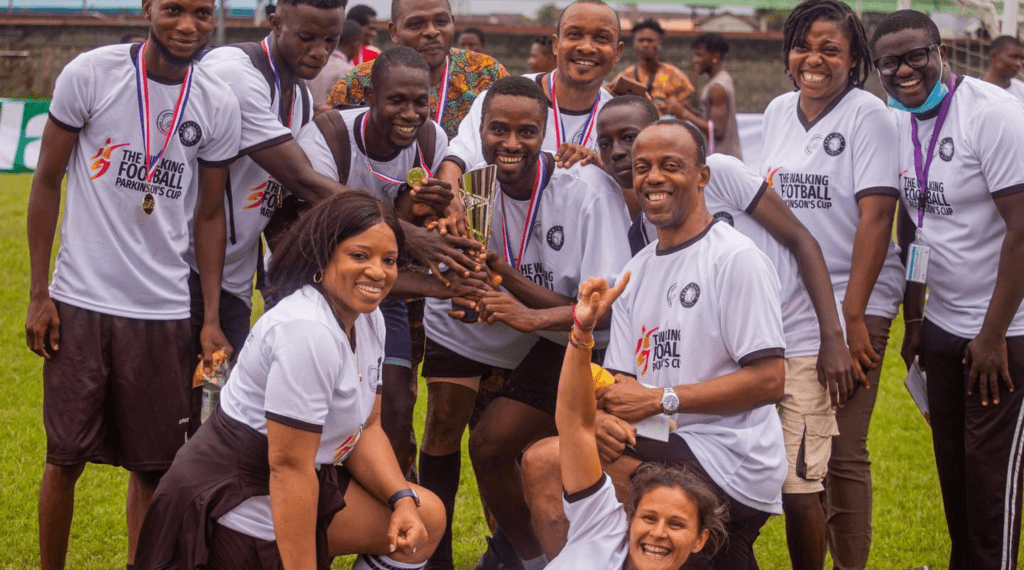
“For now, we only have a small pitch where we do warmup exercises,” John says, “It’s one of our major activities at the centre, and while both males and females participate in these warm-ups, they’re hoping that one day we’ll kickstart full sessions.”
“From day one, once they see people like them doing exercise, they are encouraged.”
While there’s certainly no lack of enthusiasm for the Parkinson’s exercise programmes offered by the ADPF, it can of course be difficult initially to motivate people who are struggling with their diagnosis.
“At the ADPF, there’s always one thing we observe,” John says, “Anybody that comes to the centre for the first time, they always have this apathy. They don’t want to do anything. They’re like ‘let me just go and see what’s going on there’. But from day one, once they see people like them doing exercises, engaging in different activities, they are motivated… they are encouraged.”
The centre also employs various techniques to spur on less confident attendees to participate, such as Parkinson’s exercise buddies, encouraging caregivers to take part in the sessions, and offering classes grouped by different stages of Parkinson’s so participants have similar physical abilities. And when the barriers are more in the mind, verbal affirmations work wonders:
“We try as much as possible to motivate people, to make them see that okay, yes, Parkinson’s doesn’t have a cure yet, but you can actually slow down the progression if you adhere to your medication and you adhere to an exercise regime, based on what your body can carry. So that gives them the motivation to want to do more.”
The results speak for themselves. The centre uses the MDS-Unified Parkinson’s Disease Rating Scale to conduct an assessment when participants make their first visit, and then repeat a followup assessment after they’ve been taking part in the Parkinson’s exercise programme to show participants how far they’ve come.
“They see tremendous improvement, and they’ve been able to manage their symptoms, the psycho-social aspect of the disease. The willingness and motivation to want to do more is one major thing that we’ve observed with all the members that are attending the facility.”
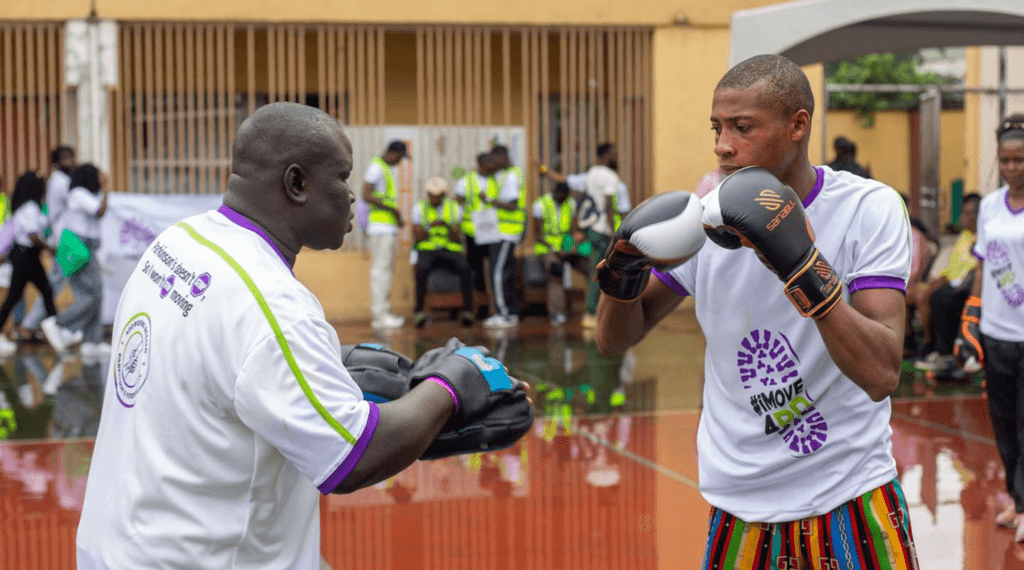
“We’re doing our best to change the narrative”
Inspiring as it is to hear about these achievements, there are two major barriers standing in the ADPF’s way: accessibility and the cost of medication.
“Some people just can’t get to the centre,” John explains. “And we don’t have the means to help, we don’t have a mobile centre. Sometimes members help each other by giving some form of transportation to our sporting activities. If we had structured funding for that, it could help.”
The ADPF tries to offer hybrid exercise sessions and support groups so people can take part virtually, but it’s not the same, and some of the activities need sporting equipment that people wouldn’t have at home. And in some rural areas of Nigeria, people don’t even have access to a phone or the internet to be able to take part remotely.
John explains that the Foundation also uses modern technology to bridge the gap of not having enough physiotherapists to help the growing number of people with Parkinson’s in Nigeria.
“We have a physiotherapist that does assessments, but sometimes they get overwhelmed, because of the number of people we have coming in. We need additional hands. That’s why we always leverage the use of social media the internet to transmit some of the interventions that we provide. It might not be the most appropriate means, in terms of how physiotherapy services should be rendered, but we hope that it will help people with Parkinson’s who do not have access to physiotherapy in some rural areas in Nigeria.”
Sadly, another major challenge is the price of Parkinson’s medication, which is rapidly growing in Nigeria.
“Some people don’t have the funds to get the medication they need. Without it, they can’t participate in any sporting activities, and that’s very critical for us. And some people that visit us are very vulnerable; for instance, we have a single mother, without any help, catering for children and living with Parkinson’s, and she needs to go to work, to manage, so those are some of the challenges that people with Parkinson’s in Nigeria face. We’re doing our best to change the narrative.”
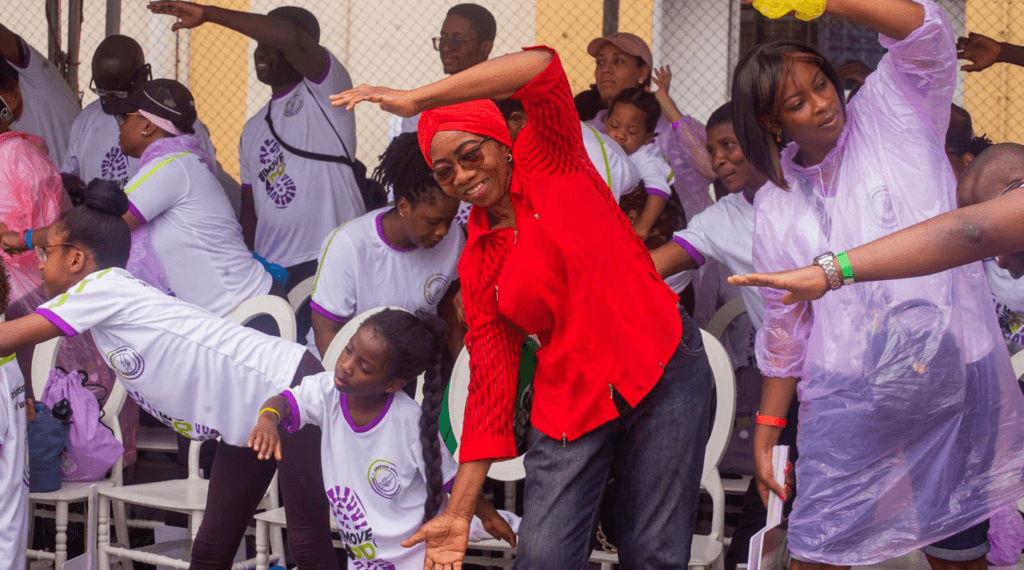
“The Parkinson’s community in Nigeria, they are willing, they are ready!”
But alongside these significant challenges, the people who work at the ADPF are kept motivated by the results they see in the people who visit their centre.
“I remember someone saying ‘Parkinson’s doesn’t stop, so I won’t stop,'” John says, “After coming to the centre and doing the exercises, they want to keep moving. Someone said to me: ‘Exercise brightens my day. I know that after exercising, I’m able to carry out all my daily activities.'”
This joy after exercising is palpable:
“There’s this thing that we see with people after they participate in the walking football, there is this aura that we see around them, the excitement, the joy to want to do more — even though we do it maybe for 30 or 40 minutes, in that period, there’s this light that is shining on somebody’s face, somebody that has not been smiling, has not been active, after exercise you see that aura, this change within them.”
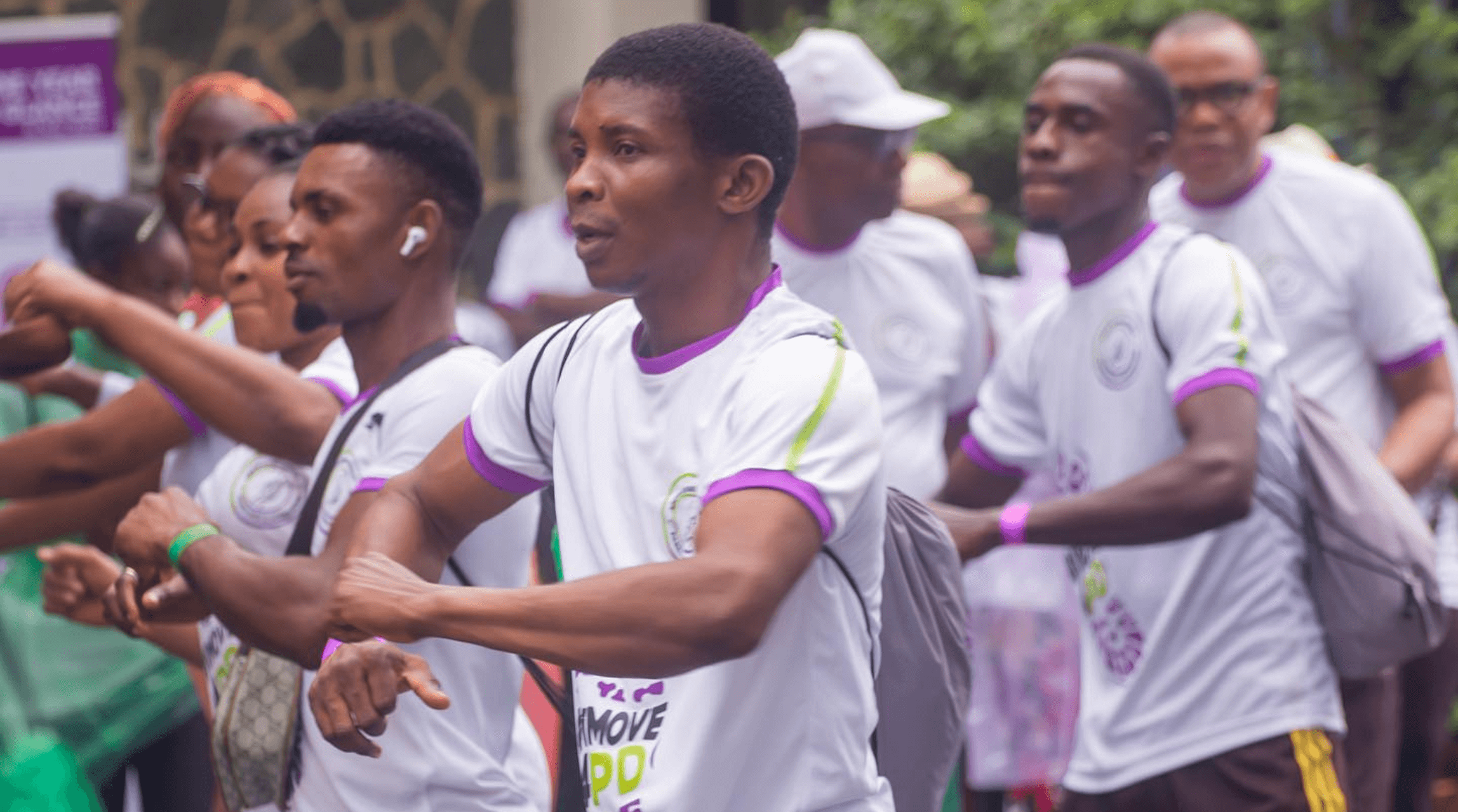
These results spur the team on to push forward with more fundraising activities. In June, the ADPF is once again hosting its annual “Move 4 PD”, a two-kilometre walk for people with Parkinson’s to raise awareness and sponsorship, which they hope will have a large media presence from across Nigeria.
“We are limiting the number of people that can access this because of funding,” John explains, finishing our call with a rallying cry that we want the whole Parkinson’s community to hear.
“There are so many programmes that we have in the pipeline that we cannot even implement! For instance, the walking football — I’ve explained how excited the members are when they play walking football. It’s something that they would want to do over and over again. Once we have funding for all of this, there is a lot we can do with the programmes — and the Parkinsons community in Nigeria, they are willing, they are ready! They want to participate in all of this.”
For more information about Parkinson’s exercise and sport, visit our Sports & Exercise Hub. Find out more about the Adewunmi Desalu Parkinson’s Foundation (ADPF) on their website, where you can also make a donation to help continue their work.