Freezing at a glance
Also known as: start hesitation, gait ignition failure, freezing of gait
Key symptoms: difficulty initiating leg and foot movements
Treatments: medication, therapies, exercise, surgery
Freezing is a symptom that makes it difficult to initiate leg and foot movements. It can occur in several situations, for example when taking the first step (‘start hesitation’), turning, walking through narrow spaces, approaching a doorway, or when trying to do more than one thing at the same time.
Freezing is sometimes described by people with Parkinson’s as feeling like your feet are glued to the ground. It can last for a few seconds or minutes.
Not everyone with Parkinson’s will experience freezing. It can occur more frequently as Parkinson’s progresses. Freezing can also happen more often during ‘off’ periods, i.e. when your medication is wearing off.
Freezing symptoms
When freezing occurs, your feet will feel ‘frozen’ or stuck to the ground, although the top half of your body will still be mobile. It happens suddenly, mainly when walking, but other movements such as speech or writing can also be affected.
If freezing makes it difficult to initiate a movement, this is known as ‘start hesitation’. This might happen when you try to step forward just after getting up, or when you start walking after getting out of bed.
Is freezing the same as wearing off?
Some people with Parkinson’s have ‘on’ and ‘off’ periods, where they switch from being able to move when their medication level is higher (‘on’) to being unable to move without difficulty when their medication level is low (‘off’). Many people notice that freezing is worse during ‘off’ periods, but freezing is not the same as being ‘on’ or ‘off’.
Why do people with Parkinson’s freeze?
The exact cause of freezing is unclear, but it usually happens when there is an interruption to a familiar or automatic sequence of movements. During walking, freezing is mainly observed when:
- Walking towards doorways, chairs or around obstacles
- Turning or changing direction, especially in a small space
- While distracted by another task when you are walking
- In places that are crowded, cluttered or have highly patterned flooring
- When your “flow” is interrupted, or you start to concentrate on something else
- When you’re in a group situation or in conversation
- When walking from smooth to uneven ground, or from open to narrow spaces.
Some people are more prone to freezing than others, and freezing tends to occur more often as Parkinson’s progresses. While there are signs that freezing is linked to long-term use of the Parkinson’s medication levodopa, it can also be experienced by people who do not take levodopa, so freezing is not simply a lack of medication.
Freezing seems to be more prevalent in those whose initial symptoms included gait problems and anxiety profiles, and less prevalent in people who initially present with tremor.
Usually the length of our steps changes when we walk from smooth to uneven ground, or from open to narrow spaces. But people with Parkinson’s won’t always react in the same way to these things.
For some people with Parkinson’s, changes in stride length and speed are not made automatically, as they are in other people. You may be able to walk without a problem on uneven surfaces but may freeze when the floor is smoother or has a patterned surface.
Or, the opposite might happen. You may find your walking pattern gets out of control and your steps get smaller and smaller or you speed up as you walk.
Whatever the cause, not everyone with Parkinson’s will experience freezing and it is impossible to accurately predict those who will.
Is freezing always linked to Parkinson’s?
Freezing is a common symptom of Parkinson’s, but it also occurs in other neurological conditions such as progressive supranuclear palsy (PSP) and hydrocephalus (excess fluid in the brain).
Freezing and Parkinson’s: treatment
There are many things you can do to help yourself but there are also experienced professionals who can support you.
Treatment of freezing in Parkinson’s can include:
Medication
The most important factor in treating freezing is to establish whether or not it responds to standard Parkinson’s medications. Freezing that occurs during ‘off’ periods, when medication is not working well. Off-related freezing often responds well to adjustments in the timing and dosage of medications. You should always discuss any changes to medication with your doctor, or Parkinson’s nurse if you have one.
Freezing that is not related to ‘off’ periods and occurs during ‘on’ periods is rare (less than 5% of cases) and does not generally respond well to standard Parkinson’s medications or adjustments to their timing or dosage.
Physiotherapy and occupational therapy
A physiotherapist and/or occupational therapist can teach you techniques to avoid freezing and will recommend compensation strategies to deal with it if it does occur. They can also advise on the most suitable footwear to minimise freezing and on walking aids which may help.
By assessing your home and daily routine, they can recommend ways of adapting your home to avoid episodes of freezing, or overcome them if they occur. For example, moving furniture may widen narrow spaces that trigger freezing, or lines on the floor to step over in doorways may be helpful. They can also advise on techniques to reduce anxiety which can trigger freezing episodes.
Parkinson’s can affect your posture and balance. A physiotherapist will suggest techniques and exercises to improve these so there is less chance of falling forward if you freeze. They will help you learn how to do two things at once, while remaining focussed on walking, so you are less likely to freeze. This is particularly important in unfamiliar or crowded places where your mind needs to stay in control of your movements.
Exercise
It is important for anyone with Parkinson’s to maintain sufficient exercise levels. A physiotherapist can advise you on a suitable form of exercise and adapt it to your freezing episodes.
Surgery
Deep Brain Stimulation (DBS) may improve freezing and other axial signs, especially in the medication-OFF state in selected patients. However, gait and balance problems after DBS are complex, and may persist or worsen in some people.
What can I do to help relieve freezing in Parkinson’s?
Freezing in public places can be upsetting, embarrassing and even frightening. You may feel tempted to avoid situations that are more likely to make you freeze – crowded rooms, narrow entrances etc – but this may not always be practical.
Social activities are important to quality of life and overall wellbeing, so it is important to find out what strategies work best for you. This will help you continue to do things you enjoy.
The first thing to remember if you think you are about to freeze is to stop moving, so you have time to think about your balance. Use the Pause-Look-Plan-Proceed method:
- Pause: Stop and don’t insist on moving. Breathe and restart.
- Look: look ahead and assess your environment and look for obstacles such as people or trolleys, and see if there are quieter routes.
- Plan: plan the next part of your route section by section to your destination
- Proceed: only move off once you have completed all these steps.
If you experience frequent freezing, your doctor may suggest that you keep a medication or freezing diary to help establish possible causes. You can record the timing, duration and frequency of freezing episodes, as well as the timing and dosage of each medication. This can help your doctor in adjusting your medication to try to overcome freezing problems.
The risk of freezing is also increased by anxiety. If you freeze and fall you may become even more anxious, so it becomes a vicious circle. It is therefore important to try to find strategies to help you overcome freezing, as you will then feel more confident when it occurs.
Compensation strategies (cueing)
You may find certain strategies or ‘tricks’ help you to restart your walking, or even to avoid freezing in the first place. These methods are very individual, so you may need to try different approaches to find what works for you. Remember that something that works now may become less effective over time, or vice versa.
These tricks will not make freezing disappear, but you will feel more confident in your ability to control it. A physiotherapist or occupational therapist will be able to advise on appropriate cues for your situation.
Visual cues
- Lines on the ground or on the edges of steps will prompt you to step over and reduce the risk of freezing, for example when approaching a doorway. See our ‘Coping Strategies: overcoming freezing when approaching a doorway’ video.
- A line or several lines of tape across a threshold can help you to focus and step through a doorway. You can use any sticky tape, provided that it is in a contrasting colour to the floor. The tape may get worn and scuffed, so will need to be replaced from time to time.
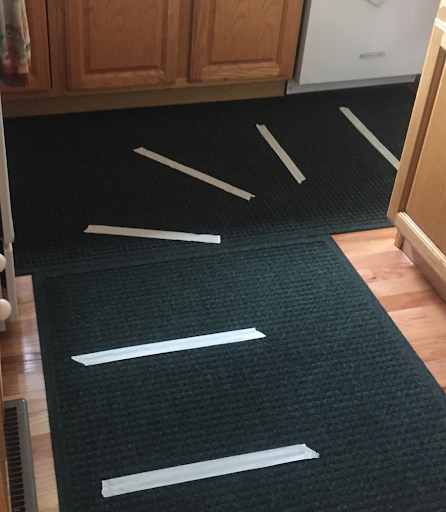
- Ask your physiotherapist about the best spacing between lines of tape. Generally:
- Cut the tape into strips of approximately 40-60cm length (depending on how big and safe your step is intended)
- On a bend or corner, similar length strips should radiate out in a fan shape.
- Ideally aim to passover the tape (requires less cognitive effort) and not on the tape.
- Some patterned carpets, and the cracks between tiles or paving stones, can act as cues and help to focus attention on the quality of your walking and keep the step size regular. But look out for any rugs or mats which seem to cause you to freeze, such as patterned bathmats, and move them out of your normal path to see if this helps.
- You may find it useful to shine a small torch or laser pointer onto the floor ahead, with the light acting as a visual cue.
- Try looking through a doorway or focussing on a point beyond, rather than looking directly at the doorway itself.
- If you freeze and someone is with you, they can help by putting their foot in front of yours for you to carefully step over (make sure you raise your foot as you do so to avoid tripping) to help you start walking again.
Rhythmical or auditory cues
- A steady beat from a metronome or suitable music can help. The rhythm should be a comfortable pace, the beat prompting you to lift your feet and step.
- Decide which foot you want to step forward with, then (silently or aloud) try saying a phrase such as ‘one, two, three, step’, ‘one, two, one, two’, or ‘left, right, left, right’, or keep counting up to 10. If said in a firm, rhythmical tone, this can cue the feet to walk forwards. This can be particularly helpful when approaching a spot where you often freeze. The rhythm, if started early, may prevent freezing, or it may prevent the shorter, more shuffling pace that often occurs just before a freezing episode.
- Develop a trigger word such as ‘go’, ‘step’ or ‘march’ to re-start your walking.
- Hum a tune, or download music with a good beat onto a portable device (e.g. a phone, or MP3 player) to keep your walking pattern going. Remember though that you should not use headphones in busy places where you should listen for traffic.
- The cue timing can be varied according to where you are. For example you will probably walk faster when outside, and slower in your home. See our ‘Coping Strategies: overcoming freezing by counting: 1’ and ‘Overcoming freezing by counting: 2’ videos.
- Ask a physiotherapist or occupational therapist to advise on mini metronomes or similar devices that can be clipped onto clothing.
Attentional strategies – use your imagination
- Try rehearsing certain movements in your mind and focus on the sequence. For example, concentrate on putting your heel down firmly on the ground as your foot makes contact to help step evenly, or imagine a line to step over to help you negotiate narrow entrances.
- Attentional strategies require concentration though, which can be difficult if there are external distractions. They work because thinking about moving and rehearsing a sequence uses the same part of the brain as when you actually move.
- Imagining a line to step over might also help you to negotiate narrow entrances.
The weight shift method
- When you freeze, gently shift your weight onto the opposite leg, rather than trying to move forward. This will allow you to move forward on your other leg. Gently rocking your head and shoulders from side to side may help you achieve this shift in weight.
- It may help to step or stamp your feet from side to side, especially if freezing when opening doors is a problem for you. This might help you maintain a stepping movement until the door is open and passable.
Mental rehearsal for ‘start hesitation’
- ‘Start hesitation’, or difficulty in starting an action, may be overcome by imagining the detailed sequences of an action, making sure that you complete the sequence in your mind. When you have done this without problem, then try to start the movement. It may help to count ‘three, two, one’ before you follow the actions you have run through in your mind.
- This technique is sometimes known as mental rehearsal and is often used by musicians or athletes to improve their performance. It works because the imagined sequences use the same part of the brain as the actual movements, so the ‘rehearsal’ prepares the brain for the ‘performance’.
- Taking a step back and then forward with the same foot is one of the most effective strategies.
- Try never to stop with your feet next to each other. Instead stop with one slightly in front of the other with a wider base to help prevent freezing.
Touch
- Touching a particular part of the body can also sometimes be helpful as a cue to unblock freezing.
How can I prevent falls when freezing with Parkinson’s?
Freezing can affect your balance and risk of falling, which may affect your confidence in moving around. The following tips can help to prevent falls:
- Before starting to walk, turning, or stepping through a doorway, take a moment to stand tall, feel your feet on the floor, and prepare your first step.
- Take extra care and consider having someone with you when walking along waterways and crossing busy roads, if needed.
- Avoid using escalators or automatic walkways if you are able to do so
- Ask for help, such as asking someone to hold your arm to help you regain your balance
- Concentrate on your walking, and try not to walk and talk at the same time. Plan your route in short stages, so you can focus on each section at a time.
- Slow down when changing direction. Avoid quick turns or pivoting on the spot. Instead, turn in a wider circle using small, deliberate steps.
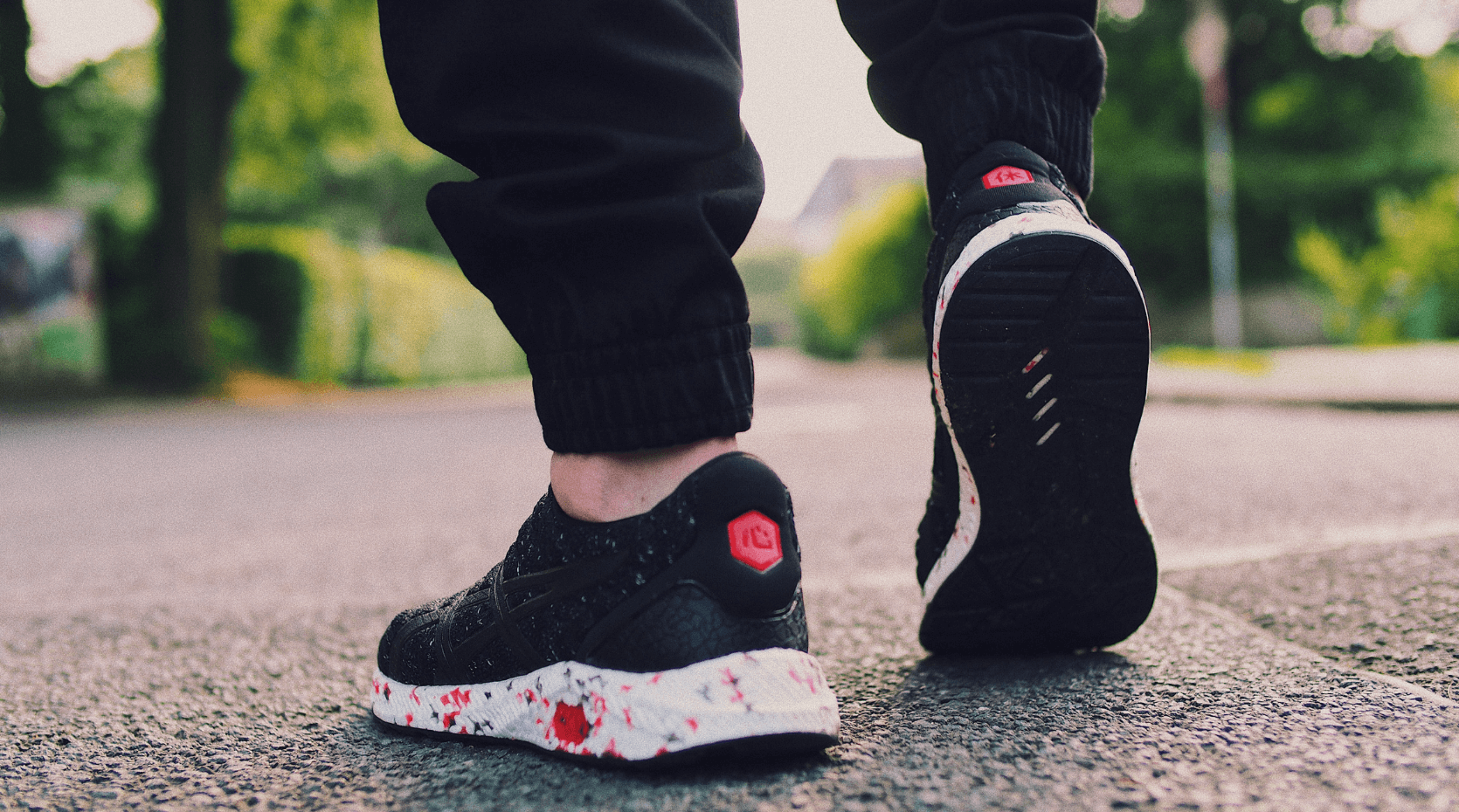
- To reduce the risk of falling when you freeze, wear supportive shoes which are comfortable for you to walk in, such as low heels or flat soles.
- If you feel stuck or unsteady, ask someone to stand beside you or offer their arm. Avoid being pulled forward, as this can increase the risk of falling.
References and acknowledgements
We would like to thank the following:
- Parkinson’s UK for permission to use the following source(s) in compiling this information: Freezing in Parkinson’s.
- Dr Jorik Nonnekes (Radboud University Nijmegen Medical Centre, The Netherlands) for his help in reviewing an earlier version of this information.
- Physiotherapist Parkinson Specialist (Egas Moniz School of Health & Science, Lisbon) Prof Josefa Domingos for reviewing this information
Content last reviewed: June 2026