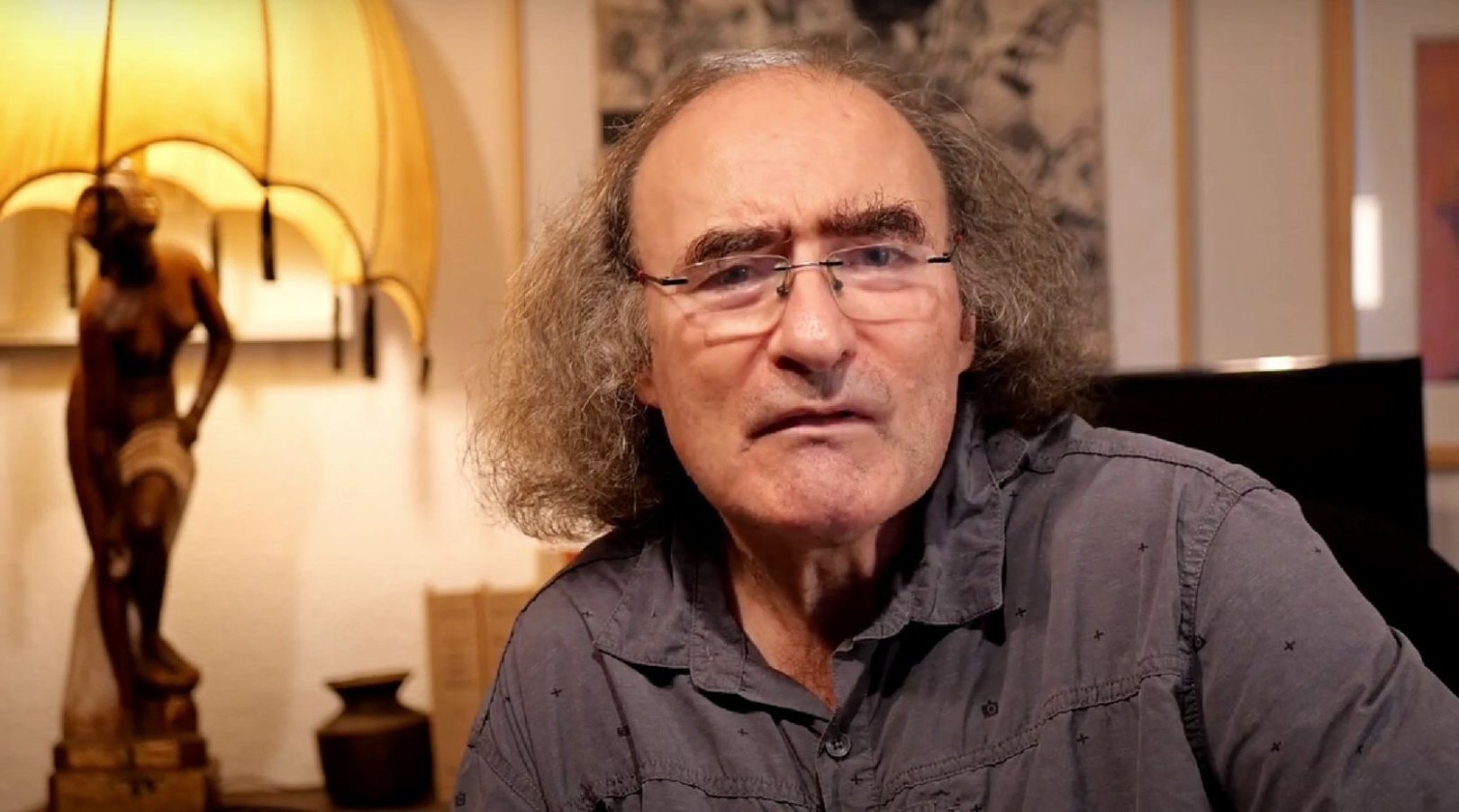
When Martin Guillemot was diagnosed with Parkinson’s in 2015, his first reaction was shock.
It took time, and the drive to thoroughly research Parkinson’s, to help the 73-year-old come to accept life with the condition. However, this process also unexpectedly led to something else. The information Martin gathered on this journey of curiosity resulted in the creation of a successful Parkinson’s-focused YouTube channel, Parkinson’s Follies, gathering more than 3,000 subscribers.
The 73-year-old agricultural engineer lives in Sète, on the Mediterranean coast of France. His career has spanned a range of jobs and locations – cheese farmer in Provence, France and West Cork, Ireland, a landscaper in the Pyrénées-Orientales, bookseller and publisher in Narbonne.
But the lifelong environmental activist is now focused on creating content to reach out to the Parkinson’s community.
Parkinson’s Life spoke to Martin to find out more.
Martin, please tell us about your Parkinson’s diagnosis journey.
“I was diagnosed with Parkinson’s in 2015 during a routine medical appointment. It came as a shock because I wasn’t expecting it.
“It was only after the diagnosis that I thought back to the symptoms that had been present for about two years and could have alerted me. For example, stooped walking, loss of dexterity, slight tremors, and so on.
“The diagnosis came as a huge shock. It took me several months to absorb the shock. It was by compulsively researching the disease that I managed to accept it.
“My reaction to the diagnosis was the subject of the first two episodes of Parkinson’s Follies, which I launched in October 2022. In episode two I say: “But very quickly my curiosity took over. By learning about it from all angles, through books, newspaper articles, blogs, videos, I discovered an unknown continent, with its own social organisation, its particular rituals, its rhythm, its media and its associations… In short, for me, acceptance came from my curiosity: the disease opened the doors to this new world for me. A new world to discover and get to know…
“I have very little direct contact with other people with Parkinson’s, apart from belonging to a small group in Sète (about 20 members).
“However, I am active in several French-speaking Facebook groups. I also keep up to date via the internet with the activities of numerous groups and associations in Quebec, Canada and the USA.”
When you launched the Parkinson’s Follies YouTube channel, what was your experience in creating content for social media?
“I had used Facebook and YouTube to promote my bookshop, but in a rather limited way. I had neither the skills nor the equipment to record and edit videos at that time.”
What was your aim for the channel, and has that changed over the years?
“The channel’s subtitle highlights my fundamental intention: ‘Parkinson’s from the inside’. To raise awareness of the lives, wishes – and even demands – of people with Parkinson’s and those around them such as carers and family.
“In 2022, patients’ voices were already buzzing on the internet in the English-speaking world and in Quebec. But they were virtually absent in France. The testimonials of patients that we found came from the media and France Parkinson, and [I felt they] were often unspontaneous and stereotypical.
“In France, Parkinson’s Follies was one of the first YouTube channels run by a person with Parkinson’s. This need for direct expression was in keeping with the modern trend, as numerous initiatives were developed on YouTube, Instagram, Twitter, Facebook groups, etc., often launched by young patients.
“The objectives of Parkinson’s Follies evolved somewhat when I realised that the channel was widely used by internet users simply to learn about Parkinson’s. This gave me an additional responsibility, a need for rigour, without losing the direct tone I had chosen.
“Special editions such as ‘10 questions, 10 answers about Parkinson’s’ were created to respond more specifically to this objective. But all episodes maintain this need for precision.”
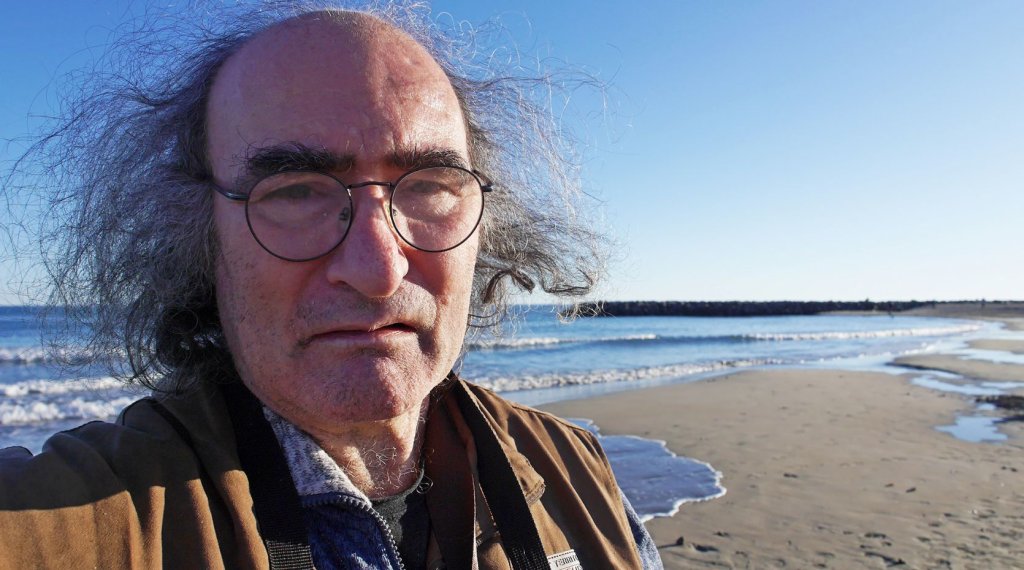
What types of topics do you cover on Parkinson’s Follies, and how do you decide on the content of each episode?
“Everything related to Parkinson’s, which is sometimes common to other neurodegenerative diseases. I believe that people with Parkinson’s should be informed about all aspects of the condition. Including complex scientific topics, societal issues, policy choices, and research directions.
“To this end, I conduct extensive research on the topics I cover, aiming to make them easy for everyone to understand.
“My personal experience of the subject matter is highlighted whenever it is useful to the explanation.
“Now in its 63rd episode, the channel is increasingly resembling a comprehensive encyclopaedia of Parkinson’s. All seen from the perspective of people living with the condition.
“However, the order of the episodes has not followed a scientific rigour but is the result of my personal questions as my symptoms worsened or in response to current events.”
What has been your most popular episode so far?
“The episode ‘10 questions, 10 answers about Parkinson’s’ has currently received 31,000 views, compared to an average of around 2,000 views per episode.
“Some 50% of Parkinson’s Follies’ visitors are in France. The remaining 50% are spread across North Africa, Belgium, Quebec, Switzerland, French-speaking Africa and elsewhere.
“YouTube’s automatic English dubbing, which is surprisingly effective, may further expand the audience. This feature has been in effect since episode 59.”
What inspired you to create your first fiction film, ‘JAMES or The Extravagant Adventures of James Parkinson in His Future,’ and how was it received?
“The idea of a fictional story allowing James Parkinson to visit our era had been on my mind for some time. I often thought to myself, ‘James would be appalled to see the state of environmental pollution’. Or, ‘James Parkinson wouldn’t believe his eyes’ when talking about the increase in the number of people affected.
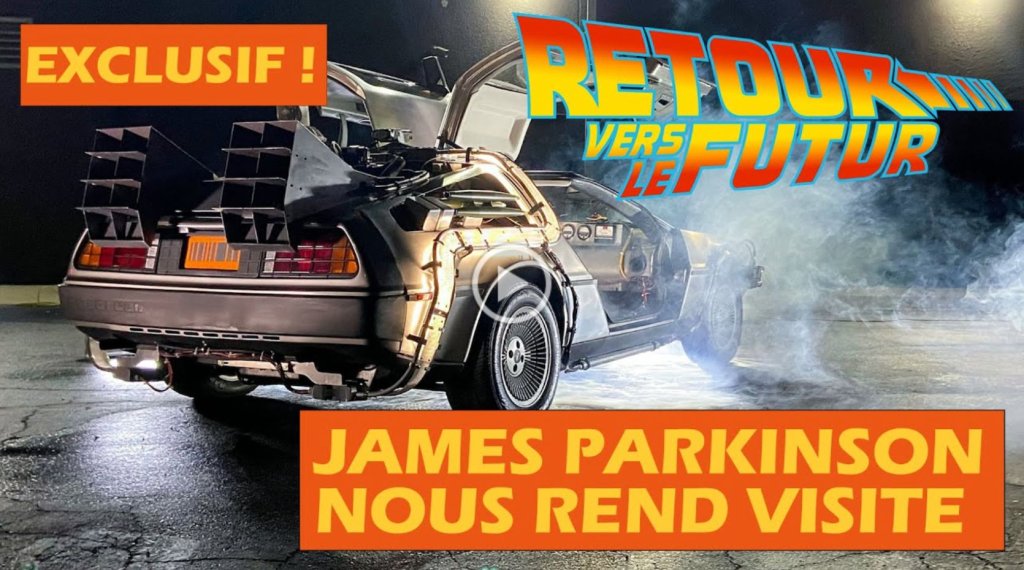
“I was considering submitting the idea to a professional documentary filmmaker. Then came the idea of using the DeLorean from the film ‘Back to the Future’ and incorporating Michael J Fox into the script. One thing led to another, and I started making the film, a bit like a rough draft.
“It was so well received by friends I showed it to, that I decided to publish it on Parkinson Follies. Here it is enjoying a quiet little career, making people laugh and think about the serious subject of Parkinson’s and environmental pollution.”
Tell us about your plans for the Parkinson’s Follies channel – how do you hope it will evolve in the future?
“I have announced that I will continue as long as I can. I am physically committed to this project, accepting that I will show myself declining over time.
“The increasingly visible symptoms and the deterioration of my speech and voice are part of the project, without any voyeurism. At some point, I will be physically unable to make the videos. That will be the sign that it is time to put an end to Parkinson’s Follies.
“But until then, I have many topics under consideration. Some that I have not yet covered, others that will complete incomplete episodes.
“The number of subscribers is increasing at a rate of 100 per month. The volume of visits is also growing steadily. The channel is meeting a need. Add to that the many comments of congratulations and thanks, and it all compels me to continue!”
What advice would you give to someone considering creating their own YouTube channel?
“I discovered YouTube with Parkinson’s Follies. It’s a great tool if you have a ‘story to tell’. It is unlike Instagram, TikTok, Twitter and Facebook, which show a constant stream of shocking images and short texts. On YouTube, you can build a lasting body of work by accumulating videos that can be viewed over time thanks to Google’s search engine. It’s free, with the only drawback for the viewer being commercial breaks.
“The playlist system is important and must be used wisely. YouTube, owned by Google, is not democratic in its management or its corporate objectives. Yet for now, it is an exceptional platform for expression that covers the entire world.”