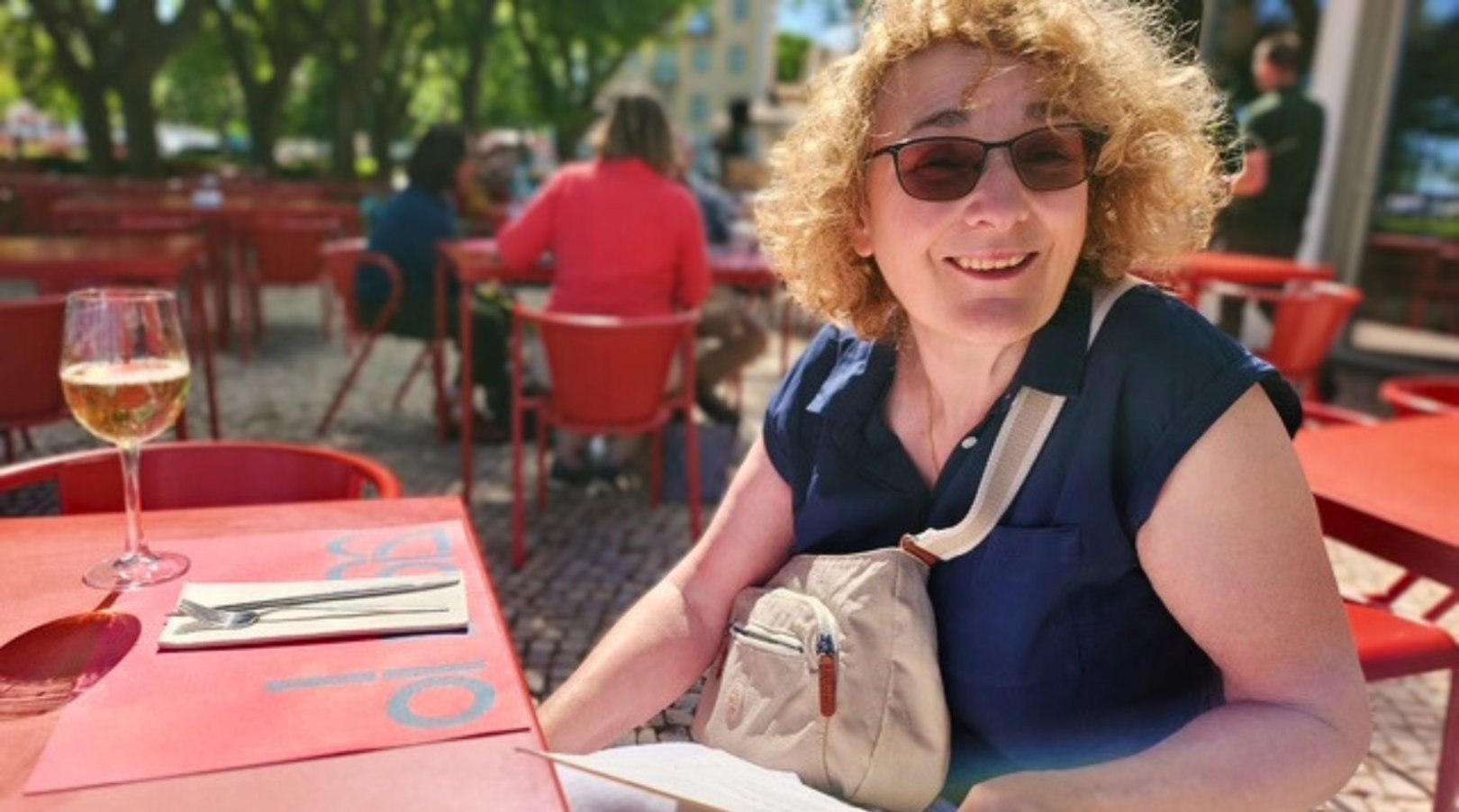
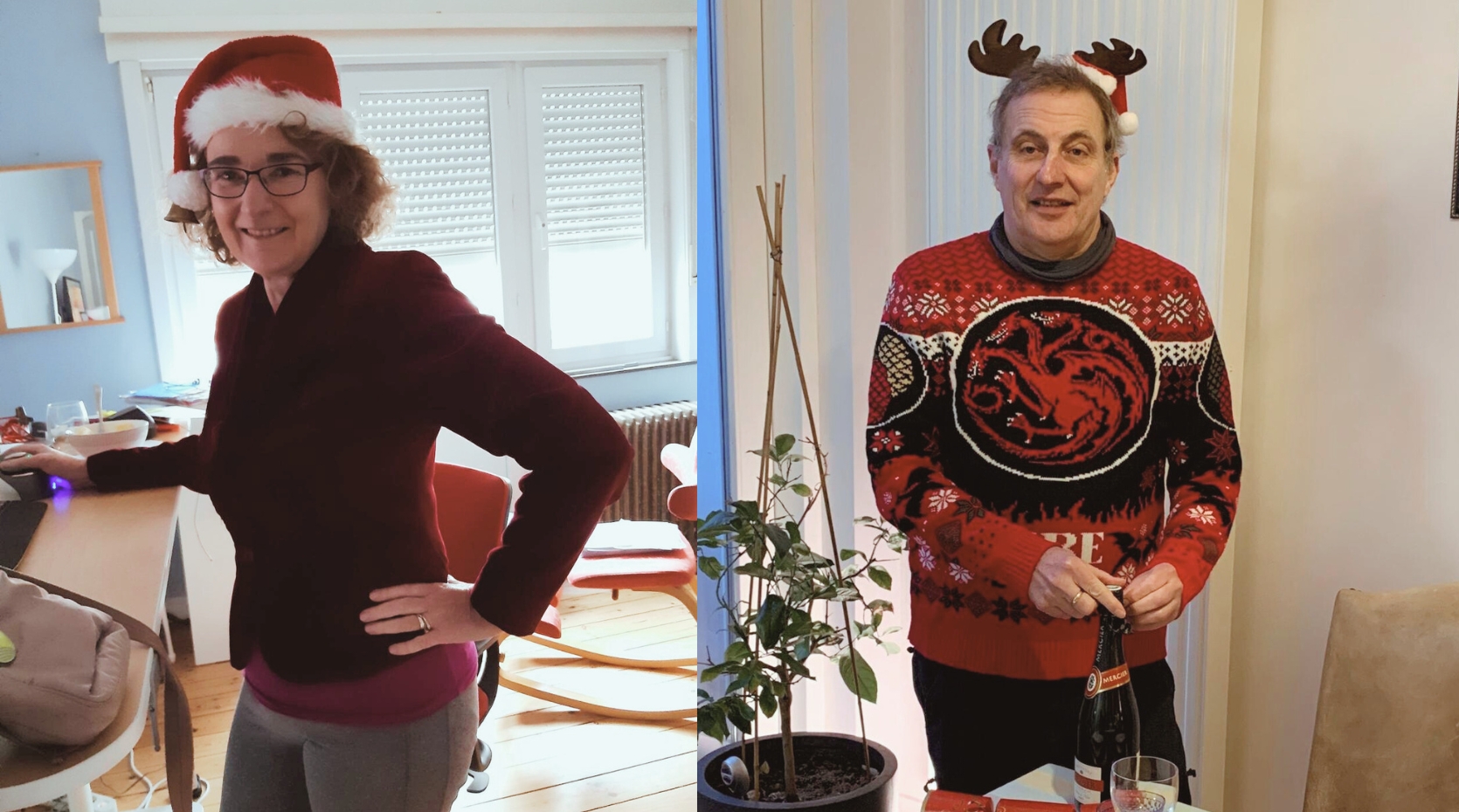
Janette Sinclair is a UK national living in Brussels Belgium with her husband and son. She is a member of the Parkinson’s Europe Board. Here, she tells us about her recent personal experience of DBS (Deep Brain Stimulation surgery), which she underwent in January 2025.
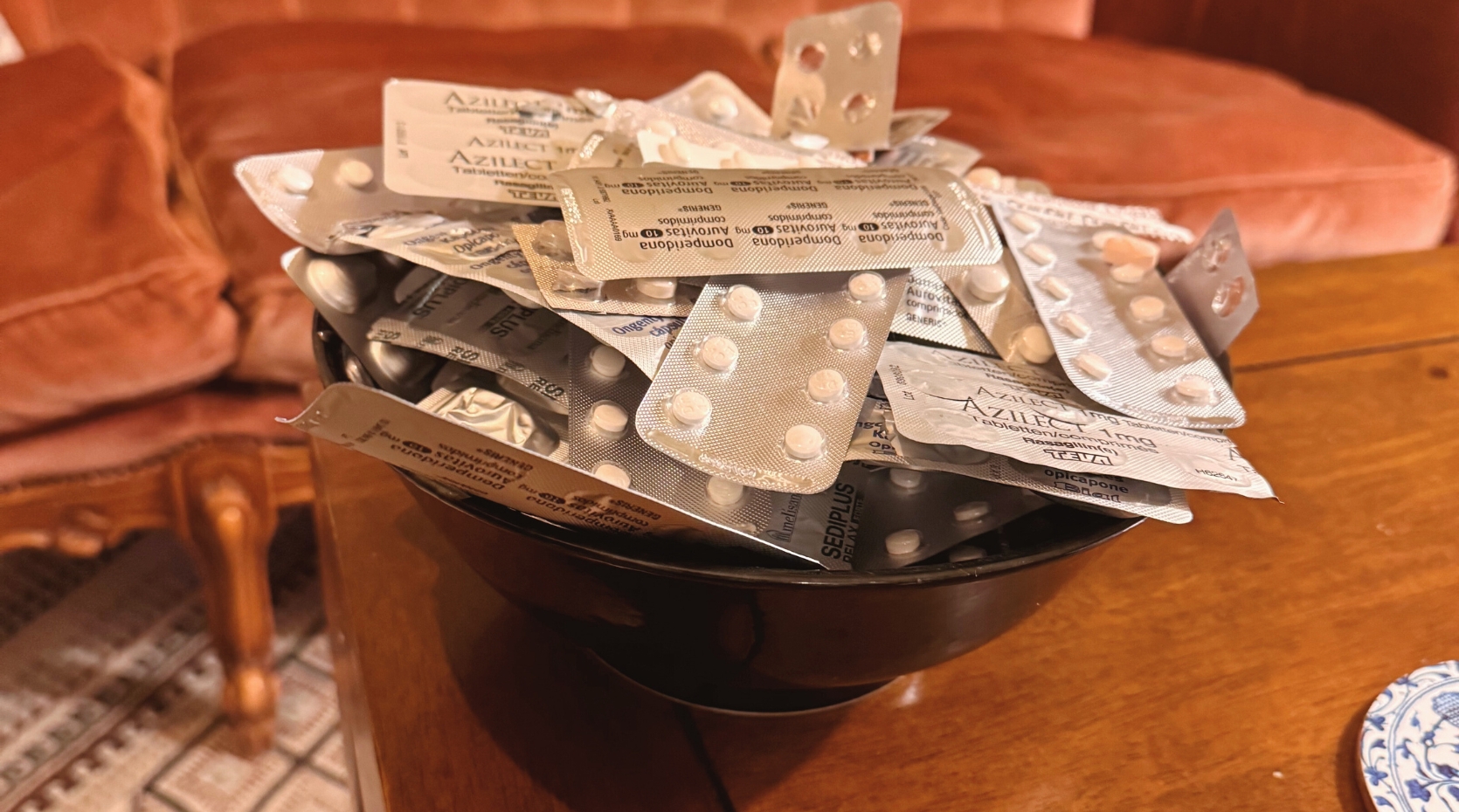
“I was diagnosed with Parkinson’s in 2013, aged 50. For the first nine years, I managed quite well with a lot of exercise, and medications like Requip (ropinerol) and Azilect. I was not keen on levodopa, as it gave me highs and I found it unreliable. But then things started to get more complicated. I was no longer able to get the same results with agonists alone. I reluctantly started taking levodopa in the form of Stalevo and quickly ramped up to five times a day while still taking quite a large dose of Requip. I was also taking other medication like soluble and slow-release prolopa and Xadago.
I was having more and more difficulties with the unpredictability of the medication. In the end, I never knew when I was going to go off and this eroded my confidence to the point where I would not even feel comfortable walking five minutes to our local shops. I had always been very independent in the past and this was not only a physical challenge for me, but also a huge psychological battle. I think people looked at me and thought that I was in quite good shape but I just could not cope with the swings, four or five times every day, between ‘ons’ and ‘offs’, and the nights mostly ‘off’.
I really felt I had nowhere to go, and had even started thinking about assisted dying (which is legal in Belgium).
This was compounded by my work situation. I had managed to keep working at a relatively senior level, but the last year defeated me and I was off on sick leave for a year until I retired last November.
Making the decision to begin my DBS experience
“I was ‘in between’ neurologists due to departures at my local hospital and I therefore took advice from a British neurologist at King’s Hospital London. In fact I had seen him when I was first diagnosed with Parkinson’s and he had mentioned DBS as a solution, I even met the surgeon. But when I started looking into the practicalities, several years later, it was clear that it would be very complicated to have the operation in the UK while living in Belgium. So at the beginning of 2024, I started investigating DBS possibilities in Brussels and surroundings.
I was looking for an multidisciplinary team with lots of DBS experience, not so obvious in a small country like Belgium; and I wanted to have the operation done while asleep. I was terrified of the idea of being awake during part or all of the operation and I was already imagining every conceivable disaster scenario.
There was a sense of urgency around my search because there is a window of opportunity for DBS; it needs to be done while the body is still in reasonable shape, as posture changes cannot easily be reversed. I worried that chronic problems with my lower back and my neck would decline before I had the operation and cause problems.
By June, I had found my team at Leuven University Hospital.
The university hospital has a large Neurology department and specialises amongst other things in Parkinson’s with a DBS unit and a Parkinson’s nurse. We met the surgeon several times. He answered all my questions seriously and explained the risks, and I had a good feeling about him.
Up to then, I had been in exploration mode, but decision-time for me came in June 2024 when we were discussing the details of the operation – he said that he usually had the patient awake during at least part of the operation. I asked, “Could you do it with me asleep throughout?” He said that he could, citing some references that showed the benefits of awake versus asleep procedures, mentioning that he did similar operations asleep for other pathologies and referring to the fact that the robotics he used helped with the accuracy of the electrodes placement (the main reason for keeping the patient awake).
So I surprised everyone by signing up there and then. Once I had made up my mind, I asked for the earliest date possible, which turned out to be the beginning of January.
My experience begins: DBS assessments
“We discussed risks, the main ones being infection and bleeding on the brain. The hospital had a low incidence of both, however, when these occur they can be catastrophic. Each of us reacts differently to risk and each one will make his or her own decision. I tried to put things in perspective because the DBS procedure has been around for several decades now, and nowadays is a fairly routine and safe procedure.
Not everyone is suited for the operation, so there were some important and rigorous tests to go through before I could have the operation. The most important test is the levodopa challenge. Basically, a good response to levodopa is a good indicator for DBS success, so the doctors want to see how you react off levodopa, and then how good your response is when the medication is reintroduced. The test requires overnight hospitalisation in case there are difficulties or a bad reaction, and all I can say is that I was very grateful to my neurologist when he let me take my last dose of medication at 8pm – so the night was bearable – before stopping all of my medication.
The next morning, at around 10am, I was filmed while in an ‘off’ state – it was horrible, especially the mental shutdown. The neurology team checked the video – it was enough! – and I was allowed my medication. Once the meds kicked in, I was filmed again to show me doing the same exercises while fully ‘on’. I was told that, as a rule of thumb, at best the DBS might match my ‘on’ results, but was unlikely to be better. This was a good way for us to understand what I might achieve through the DBS experience, to manage expectations. I was happy, though, as I usually had very good results when my meds were working, they just didn’t work for long enough.
The other extremely important test is a Neuropsychiatric evaluation. Essentially, this is a whole barrage of cognitive tests aimed at assessing memory, to see if there is any risk or sign of dementia. The tests took around three hours. There was a questionnaire to assess emotional status. The cognitive tests were very varied and quite intense: naming images, remembering and repeating long lists of words, copying shapes and patterns. I personally really enjoyed it, but it was very tiring and I can imagine it could easily be very stressful for some people.
Pre-op nerves
“My operation date had been reserved and was now confirmed for 6 January – Epiphany, which seemed auspicious. I thought I felt fine about it, but with hindsight I was letting my anxiety get away from me, and I got really wound up about an administrative issue, regarding direct billing of costs of the operation to my health insurance. It was a low point for me, focusing intensely on one issue, writing long emails, avoiding the phone, spiralling (typical Parkinson’s?!)
Luckily everyone was very patient with me, and the issue was resolved quickly and positively.
Then suddenly it was Christmas and I started to have doubts. I felt that I did not know enough of what I was letting myself in for, not helped by my husband Carl who took the view that I had nothing to lose and plenty to gain, and according to him that was all I needed to know. I tried to find more specific practical information about the operation and what happens afterwards.
The hospital had quite a long and detailed guide to the DBS experience, but it was in Dutch and for (unknown) technical reasons we could not get it translated. But other reputable guides were available and they were all much of a muchness, with technical descriptions of process, how the device would work etc, but nothing really about what it would feel like, how long it would take for the wounds to heal, what the physio/exercise regime was like etc.
Was there someone I could talk to? I realised that I only knew a few people who had experienced the operation. They were happy to give me answers about their own DBS experience if I could just work out what questions to ask!
Just before my operation date, we spent the evening with friends. After about half an hour I went off my meds, and spent nearly two hours lying on the floor while waiting for the next dose to kick in. By the time I was feeling okay, it was already gone 11pm. Too late to enjoy the food, but we sat chatting. And then my meds went off again! I knew that if we did not leave immediately I would not manage the 10-minute walk home before the rigidity and slowness set in.
The couple we were visiting had experience of Parkinson’s and they were very sympathetic to my difficulties, but other people can be less understanding and even when people make the effort, I know that my own reaction is not neutral. I may have Parkinson’s but I still wanted to keep my dignity when the Parkinson’s was showing; I worried about being vulnerable in ‘unsafe’ places (which by now had become anywhere other than inside my own home); I hated looking ‘weird’ and drawing stares.
January loomed, cold and dark. I was scheduled to report to Leuven hospital on 4 January, but there were practical points that I still wanted to confirm before the surgery – which make of device I would have implanted, whether to have left or right-side placement of the neurostimulator, whether to choose a rechargeable device or not. Another long letter later, and once more I was reassured, this time with a detailed reply from the surgeon himself, addressing each point and proposing to pass by on the Sunday evening before the operation.
Just before the operation was due, we realised we had not signed a Power of Attorney allowing Carl to manage my health insurance affairs in the event that I was incapacitated. There were probably other things we should have done…
My DBS surgery experience
“I checked into the hospital and settled into my room. When we arrived we were informed of a pilot project allowing a nominated person to stay for longer hours, beyond the regular visiting hours. We jumped at this opportunity, given my concerns about stopping my medication: from Sunday morning, no more Parkinson’s meds were allowed. I handed in the large pack of drugs I would usually take over 2-3 days, to avoid any temptations I might have to ease the ‘off’ time. As I got more and more ‘off’, I resorted to movement for relief, stretching out my back as much as possible.
Carl and I decided to do laps around the ward corridors, going slower and slower as the evening progressed. The surgeon came by at around 9pm and went through the basics of the operation. It was really good to see him, though I’m not sure how much I took in. Not for the first time, it flashed through my mind that I ought to record such conversations so I could listen to them later.
Carl was about to go home, planning to come back early in the morning. I was anticipating a difficult night, and on a whim, I asked if he could stay. The staff looked dubious and went off to investigate. To my surprise, the response was positive, and they made up a sofa bed straight away. I didn’t get much sleep throughout the night – my legs were spasming and twitchy – but at least I was not alone.
Next morning, it was dark and snowing outside. I got washed and was helped into a hospital gown. At around 7am we headed down to the operating theatre. Carl was allowed to come with me part of the way. He was evidently taking things very seriously, as his usual jokey patter had vanished.
Then I was on my own. UZ Leuven is a very large hospital and I realised that there were dozens of people on hospital beds being brought down to a central dispatching hub. Someone came and checked my name and asked which operation I was going to have (was there a choice?!), then I was off again to the end of the corridor. Once there, a series of medical staff came up to me and introduced themselves, promising to look after me during the operation. Then came the surgeon, and he wished me good luck!
Everyone was very busy getting organised, and then came the anaesthetist, who told me to countdown from ten: ’10, 9, 8…’
The next thing I knew, people were calling my name and trying to wake me. I was resisting, enjoying such a good sleep, but in the end I gave into the inevitable and opened my eyes. It was evening already. Apparently people with Parkinson’s take longer to come round after a general anaesthetic. My operation had finished early, by 1.30pm, but I did not come round till much later. Carl had gone home but was now back, having panicked when the surgeon rang early to tell him the operation was done.
My head was a mass of black stitches and congealed blood with dressings stuck on top. There were more things going on there than I had expected, for example the cable and connection behind my ear running down to the device. It had to go somewhere I suppose… But my hair was mostly intact and there was very little pain – just a slight headache, which soon passed.
The neurostimulator was not yet turned on, and I was disappointed to be put back on my pre-op levels of medication, even though I had expected this. I was not as dependent on them as before, however, due to the strange effect of brain swelling after the operation.
Post-surgery recovery and DBS device switch-on
“And two days later I was on my way home to heal. A largely uneventful few weeks followed, except for the joys of trying to remove a very sticky and tenacious substance from my hair while being mindful of the head wounds. The challenge was beyond me and I ended up cutting out the worst tangles from my hair.
Apparently the substance was silicone, placed onto the stitches to keep them clean, but impossible to remove with shampoo. I also had a little scare when the wound behind my ear looked a bit red and infected. I called the DBS Secrétariat, sent photos, and spoke directly with the surgeon, who immediately asked me to come in for a check-up straight away, which I was happy to do. We were both relieved when he gave the ‘all clear’.
In the period from 8 January to 9 February I generally felt well, though tired, and I looked well and was able to do some exercise. I was still taking my full meds but did not feel the same desperate reliance on them that I felt before the operation, although the effect had finally worn off by the beginning of February.
On Sunday 9 February, it was back to Leuven, checking into the Neurology ward again. Carl took advantage of the extended visiting hours again but could not stay overnight as this time I was sharing a room with another DBS patient. He hung around as long as he could before heading home, leaving me to face a difficult night – yet again, I had to stop taking all my meds, this time so that an ‘OFF’ baseline could be established before setting the device.
First thing the next morning the DBS expert, Dr Swinnen, arrived and took me off for baseline testing of my neurostimulator device.
He began by running through various programmes to establish some guide measurements. I reacted quite strongly to the higher levels each time – I felt that the skin around my eyes was tingling and pulling tight, which was very unpleasant. Once this was done we fixed the setting quite low, and I was prescribed 8mg of Requip and 2 prolopa 250 tablets.
There was no “Eureka!” moment for me: the device just took the place of the drugs I had been taking, only it worked all the time, with no dosage fails or nighttime panics. A quiet miracle.
The aim when regulating the device is to find the best mix between the device settings and the medication, as measured by the levels of dyskinesia and ‘off’ states. For the next two days the device was gradually adjusted, and my reactions were closely monitored. Then, my levodopa dosage was reduced to 1 tablet per day.
Over the next four months, I have had regular appointments with the team to regulate the neurostimulator device – twice weekly the first two times, then weekly, and then with a gap of a fortnight and a month to accommodate my holidays. At each visit, a detailed record of my everyday symptoms and reactions were taken and discussed, and we then agreed what action to take – most often, we would increase the settings of the device by a few points, as I was more susceptible to ‘off’ symptoms than dyskinesia.
We, or rather, Carl did the adjustments, each time we had clear parameters for the changes. We went to Wales to visit my mother. She was so pleased to see the changes in my condition.
I did not manage to sustain my fitness levels after the operation and so I organised a 4-week physical rehab programme at a specialist centre in Portugal, called Centro Neurologico Senior, in Torres Vedras.
Four months on: reflections from my DBS experience
“It’s important to emphasise that four months on from the operation, my body is still gently healing, and I am still going through the initial phase of adjustment of the neurostimulator.
But let me just say that I’m really happy the way things are going. I didn’t have a dramatic moment when the neurostimulator was first turned on – I’m told that is more likely to happen for tremor-dominant patients, whereas I had more rigidity.
For me, it’s been more of a quiet miracle – my DBS device works 24/7, and without the drugs.
In fact, l have reduced the levodopa I was taking by around 80%, the agonist Requip by nearly half, and I have stopped just about everything else.
The downsides of my DBS experience
“There are a few things on the negative side, but so far they seem to be manageable :
- The extension wires in my neck connecting the neurostimulator to the brain are a bit tight – I’m doing physio as advised, and will see the surgeon later if there is no improvement.
- I’ve put on weight – around 10 kilos. This seems to be a fairly common response following DBS.
- The charging pack is heavy and not very user-friendly.
There were also a few things missing from my DBS experience which, on reflection, would have been helpful:
- Written guidance on scalp wound care, covering:
The location of wounds
Stitches care and removal
How soon I can wash and/or dye my hair
Any special products I could use, for instance to remove the silicon from my hair
Scar treatment
How long sensitivity / pain/ numbness would last - Advice on regular/ routine tests to get out of way before the operation, for instance a mammogram
- Advice on weight gain – if I’d been more aware, would have made an effort to stem the excess eating
- More information on the sheer physicality of neurotransmitter – not comfortable for me. A problem affecting women more than men?
- User-friendly guidance on things to avoid for battery safety, such as saunas, sunbathing, swimming, and different types of medical scans and imagery
Despite the substantial progress so far, I believe that my DBS adventure will be continuing for a long time yet, and I’m looking forward to the new lease of life it has given me.
What does my DBS experience mean in practice?
“I’m gradually regaining my confidence to go out by myself, and this means I am regaining my independence – I started by walking to the local shops 10 minutes away, and then staying out for longer each time. Recently, I went alone to a World Parkinson’s Day event – a journey of around 30 minutes on public transport and a 10-minute walk at each end – and finished the day with dinner with friends.
This is nothing and everything: most of you do this every day, but those of you familiar with more advanced Parkinson’s will know what I’m talking about.
I can go to bed without fear.
I can use chopsticks again.
And my husband said he got me back.”
Note: Janette was treated at UZ Leuven under the care of neurologist Professor Dr Wim Vandenberghe, neurosurgeon Professor Dr Philippe De Vloo, and Dr Bart Swinnen, a neurologist specialising in DBS.
Discover more DBS experience stories in our Demystifying DBS campaign, including Ivan’s DBS experience in Ireland in our in-depth article, and Gerlach Roomans’ DBS experience in the Netherlands in our DBS podcast.