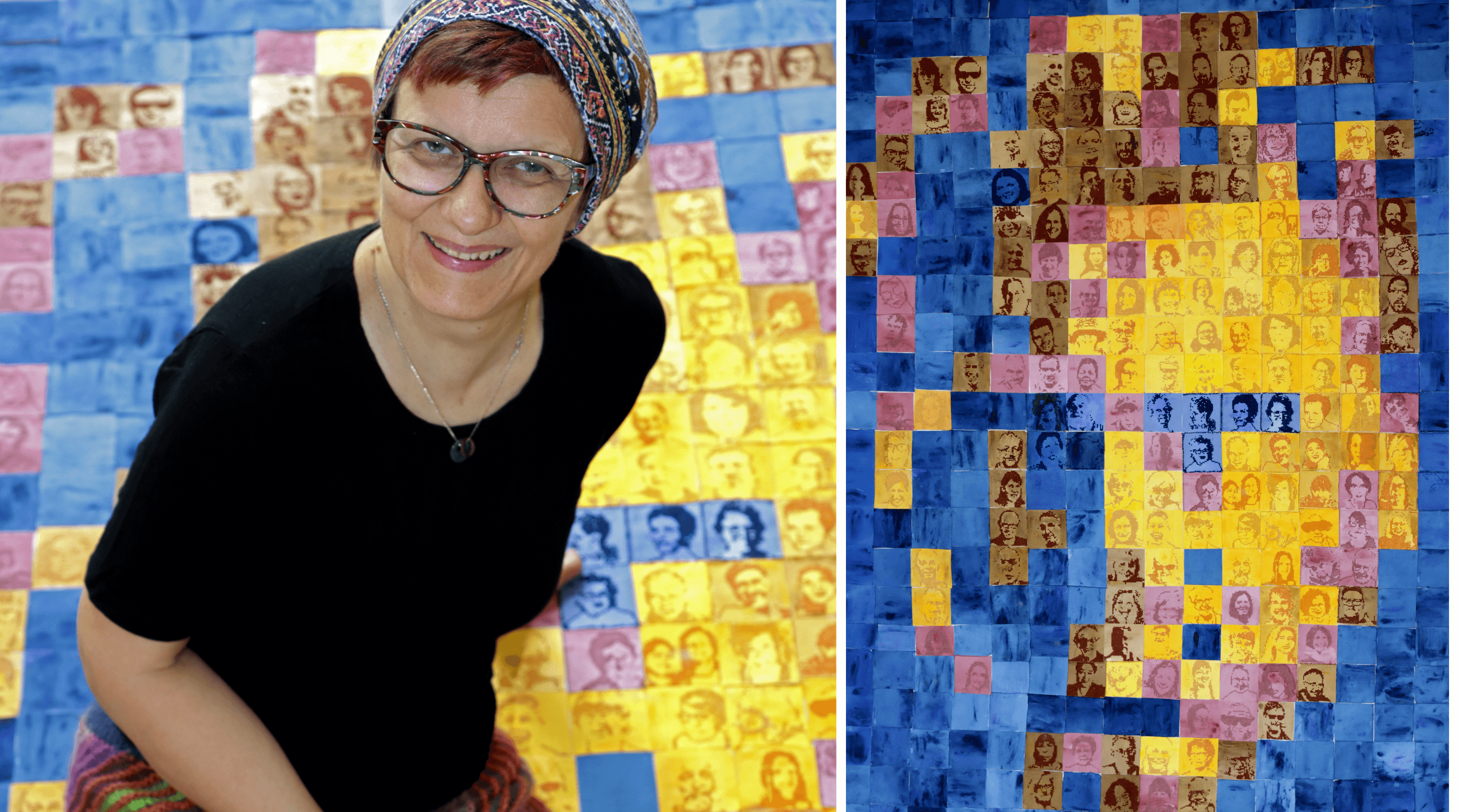
“So what if I’ve got Parkinson’s?” Kanti Khanna says was her first thought after being diagnosed with Parkinson’s 16 years ago, at the age of 64. Kanti has lived in Birmingham since 1968, when she travelled to the UK for the first time as a newly-wed Indian bride.
“You might as well have told me I’d got the flu. I wouldn’t have reacted differently,” says Kanti. “I’d already had tremors in my left hand for a couple of years. Something I had chosen not to think about until it got to a point when my family and friends insisted that I see my GP.”
When the diagnosis was made, Kanti says, “Those around me made it out to be a big deal, they were upset. I chose to not dwell on the implications.”
“Whatever comes, goes,” is a Hindu philosophy that may be applied to the cycle of life and also to situations, somewhat on the lines of “this too shall pass” or “nothing lasts forever.”
Kanti says this philosophy helped her see Parkinson’s as “just another situation that is as impermanent as the body.”
“I wanted to be invincible, to not be bothered in the mind because that’s where the negativity starts—the fear, the self-pity or the depression. We’re all going to face some obstacles in life. What matters is how you face them.”
Kanti faced her obstacles by coming closer to God, she says. “I’d been meditating for decades before my Parkinson’s diagnosis but the condition deepened my connection with the Divine.”
One day while sitting on the top floor of a double-decker bus, Kanti remembers drawing a fire on her iPad. “I had been thinking about the concept of ‘the fire of meditation’, in the sense that meditation is a tool to introspect and change deep-seated habits.”
Doodling on her iPad and taking photographs of flowers were two fascinations that Kanti kept up with even after her Parkinson’s diagnosis, driven by her innate love for the art of presentation.
“I have always been attracted by the art of presentation,” she says. “I taught cookery in the eighties, and would have demonstrations of Indian cooking at home for groups of 12-20 people. The elements of design in food presentation and flower arrangements is something I enjoy. It’s a creative hobby.”
That experience drew Kanti to art when in 2015, she was “looking for something to fill my life and to get away from the isolation that sometimes hit me,” she says. “By then I’d experienced the pitiful looks, the ‘what-have-you-done-to-get-Parkinson’s’ looks, and I believe, I had held up pretty well against the odds.”
But still, sometimes, I had this nagging thought of proving myself.
“I decided to try my hand at painting, and that worked for me from the word go,” she says. “The beauty is I would get fully immersed in the colours and the form, it was the perfect release. While I was painting, the tremors ceased. And I could be so creative.”
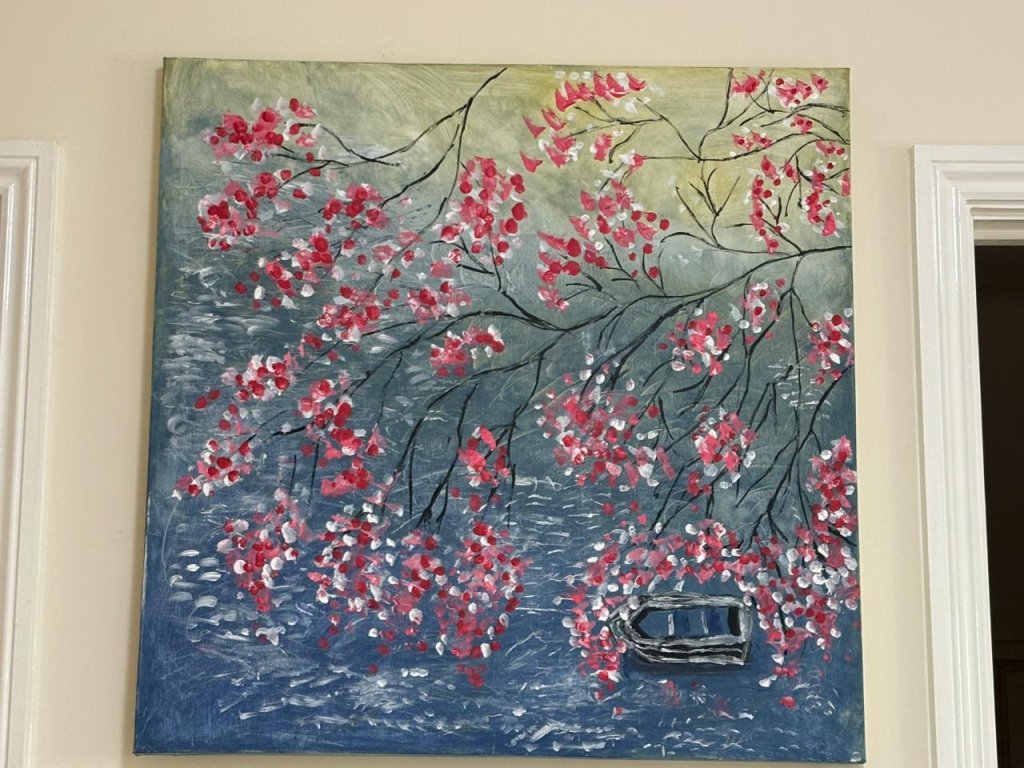
At the outset, flowers were a recurring theme in Kanti’s art but she became bolder after a friend who is an art consultant once remarked on seeing one of her paintings: “I would pay Pounds 400 for that.”
“I had never thought of selling my work,” says Kanti. “I was just painting for the love of it. But the fact that someone put a value to my work gave me a boost.”
Kanti gradually switched to themes associated with her interest in spirituality and meditation.
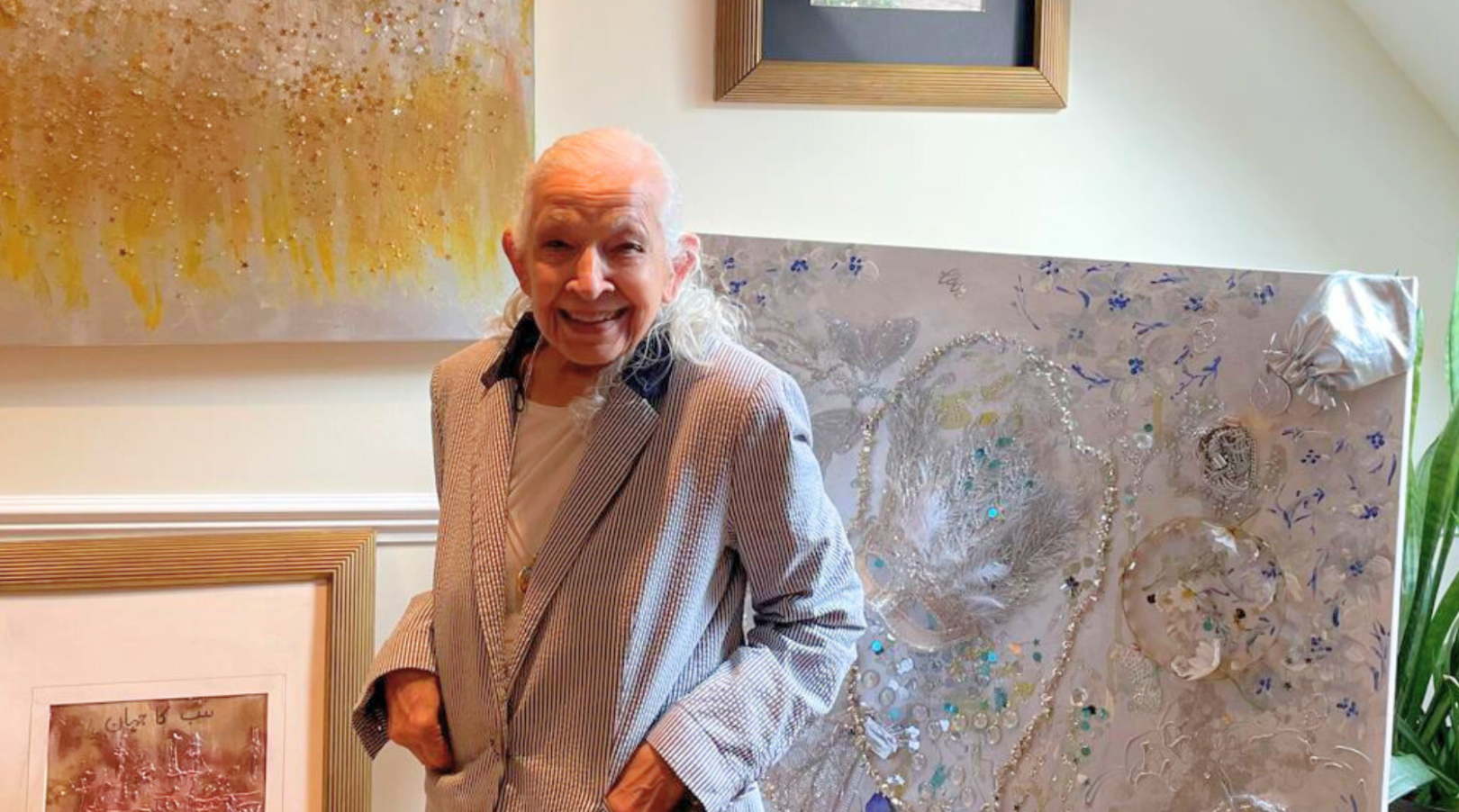
“My art looks abstract but it is actually themed on my understanding of life,” she says. “I believe the soul is like a sparkling point of energy, a star, if you will; that’s why you see a lot of use of jewels and stones and glitter in my art.”
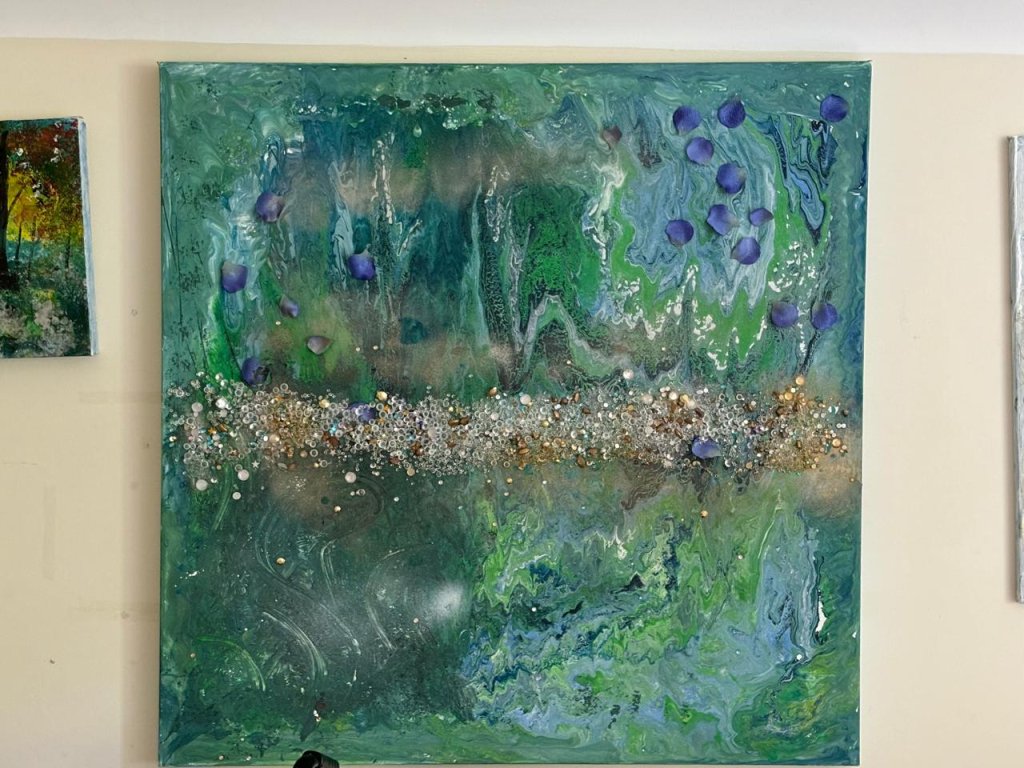
“Many of my paintings are representations of the brotherhood of souls, or the home of souls, you could say. I am also attracted to trees, from the concept of the ‘tree of life’.”
Kanti’s work brings to life the walls of her home in Birmingham, UK. But with no plans to sell her work, her husband and she soon ran out of place to showcase her best effort. “I presented a few paintings to friends and family. Once when a friend was decorating a home, she asked for a few pieces, and we agreed that she would pay the cost of the materials.”
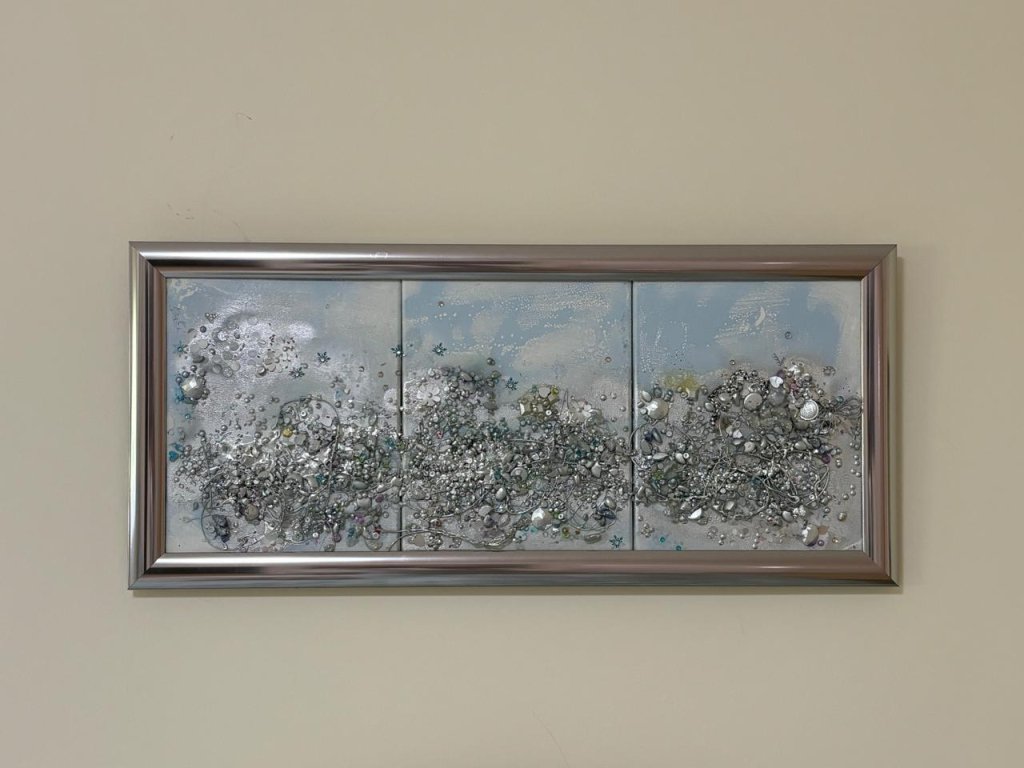
Kanti remembers a time she left home to visit a meditation centre without her purse. “Forgetfulness and falls were two downsides I had to learn to contend with,” she says. “I realised I had no money when the ticket collector came round. He knew me well, and he knew I had Parkinson’s. Not just he, all the regulars on the bus knew of my condition. But that didn’t help. I needed a ticket. So I asked a woman seated near me, a regular, if I could borrow a pound. Of course she was happy to help.”
“The next time I boarded the bus, I had a painting for her.”
“Yes, she loved it. And yes, such moments reaffirm my belief that Parkinson’s isn’t a constraint to living a full life.”
Find out more about creativity and Parkinson’s