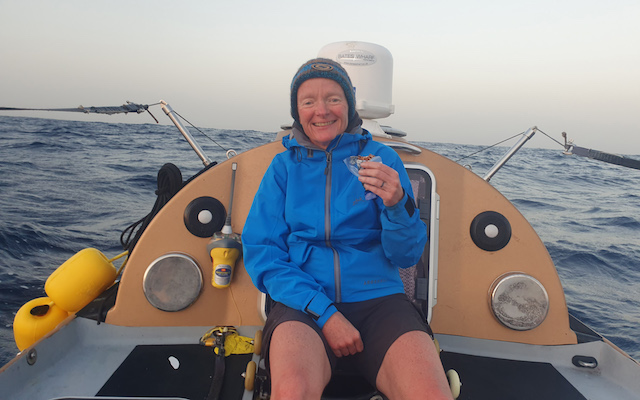
On 15th April 2024, Bertand Delhom and his crewmates docked their ship, The Neptune, at Cowes in the Isle of Wight, the finishing line for the 2024 Ocean Globe Race. This momentous event cemented Bertrand’s place in the history books as the first person with Parkinson’s to sail around the world – and he’s not finished there.
In this interview, we talk to Bertrand about his momentous, awareness-raising journey on the Ocean Globe Race and beyond, and why he wants to change the way the world looks at Parkinson’s.
Hello, Bertrand! Tell us a bit about yourself.
I’m Bertrand Delhom, I live in Plabennec, Finistère, near Brest. I’m from a region that’s called ‘Le Pays pagan’, known to be the home of legends and shipwreckers. I’m 60 years old, I’m married, I have three children and seven grandchildren.
What has your Parkinson’s journey been like so far?
I got diagnosed randomly at age 57, it was my birthday present! Unfortunately, I have a heavy track record of health issues. Among these issues I was diagnosed previously with cervical dystonia. Treating cervical dystonia requires botulinum toxin injections but with my doctor we wanted to stop these injections and try a deep brain stimulation. So I went to Rennes to do a pre-operative assessment and following this assessment, the neurologist asked for a DAT-scan. Upon results of this DAT-scan, the neurologist told me that I had Parkinson’s.
Now, looking back at it, I did have precursory symptoms like fatigue and on/off episodes that I couldn’t explain at the time. I had symptoms pre-diagnosis that I can now put a name on.
Receiving the news was really an uppercut for me. My grandmother, an amazing woman, had Parkinson’s and it considerably affected her life. So when I received the news, I got her image straight away. I told myself: “I’m in for a long and painful ride”. It took me at least a month to digest the news.
I had two choices: to make do or to not make do. Not making do with my disease, is to, without beating around the bush, basically let go and killing yourself. For having previously experienced suicidal ideation, it was something that was unimagineable for me as it leaves your family broken. So after a month, I told myself: “what can you do and what do you know about?”. So I signed up to HandiVoile Brest [an organisation which helps people of all abilities to take part in sailing] and after a short initiation period, I got assigned to one boat with only blind people onboard.
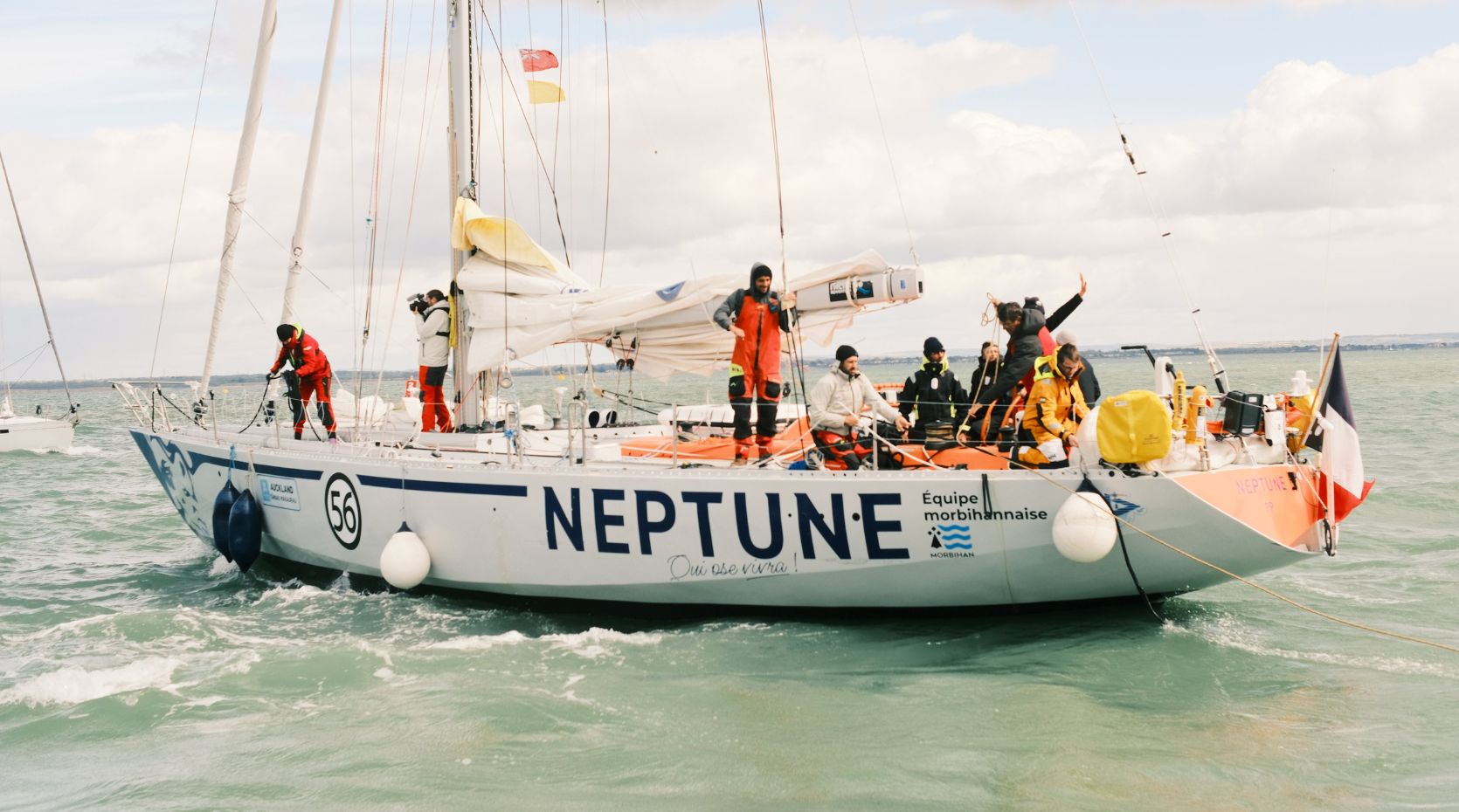
Can you tell us about the Neptune sailing project – how and why did you get involved in the Ocean Globe Race?
Sailing and furthermore the sea has always been a passion of mine. My first experience off the coast was on a fishing boat and since then, it has always been a part of me.
In 1985, I had asked Eric Tabarly to join the Whitbread Round the World Race but at the time he let me know that there weren’t any spaces left, unfortunately for me. So this time around, when I heard about the Ocean Globe Race (OGR), I took a little bit of a revenge on life. I contacted all the French boats from the OGR, I received four replies including two negative and two positive replies. And I chose Neptune and Tanneguy.
Neptune had the advantage of being close to where I live but most importantly, when I went to Tanneguy’s for dinner for the first time, he told me that his step-dad had Parkinson’s and that one of his closest friends had Parkinson’s and committed suicide so he felt very close to the condition. It finalised my decision and I joined his team.
My role went crescendo. From Tanneguy’s words, I was really the connecting element in the team to bond them around a common theme, Parkinson’s. On a more practical aspect, I was a ‘normal’ team member meaning I would take two watches a day. I also helped with the cooking and with the stewardship on board.
The Neptune Gagner Avec Parkinson social media account says you want to “change the way we look at Parkinson’s” – can you tell us more about why you want to do this? And how you feel the project is achieving this?
In the general public’s eyes, Parkinson’s is an old person’s disease and furthermore a disease that makes sense as you approach your end of life, without anyone paying attention to it. And finally no, Parkinson’s is not that! Parkinson’s is a disease that touches people that are working and it even touches children – it impacts everyone. There is a lot of work to do on that aspect.
Additionally, the diagnosis phase can be so isolating and lonely that we need people to say to the new diagnosees that they can do things and make their dreams come true with this condition. How you act enormously affects your Parkinson’s and its progression, hence why it is important to fulfil one’s self. For me it was sailing on a world tour but for others it could be dancing or drawing – regardless of the activity, everyone diagnosed with Parkinson’s needs to find something that will help them fulfil themselves. This also counts for people diagnosed later on in their life, doing this will also help counteract the ageing process.
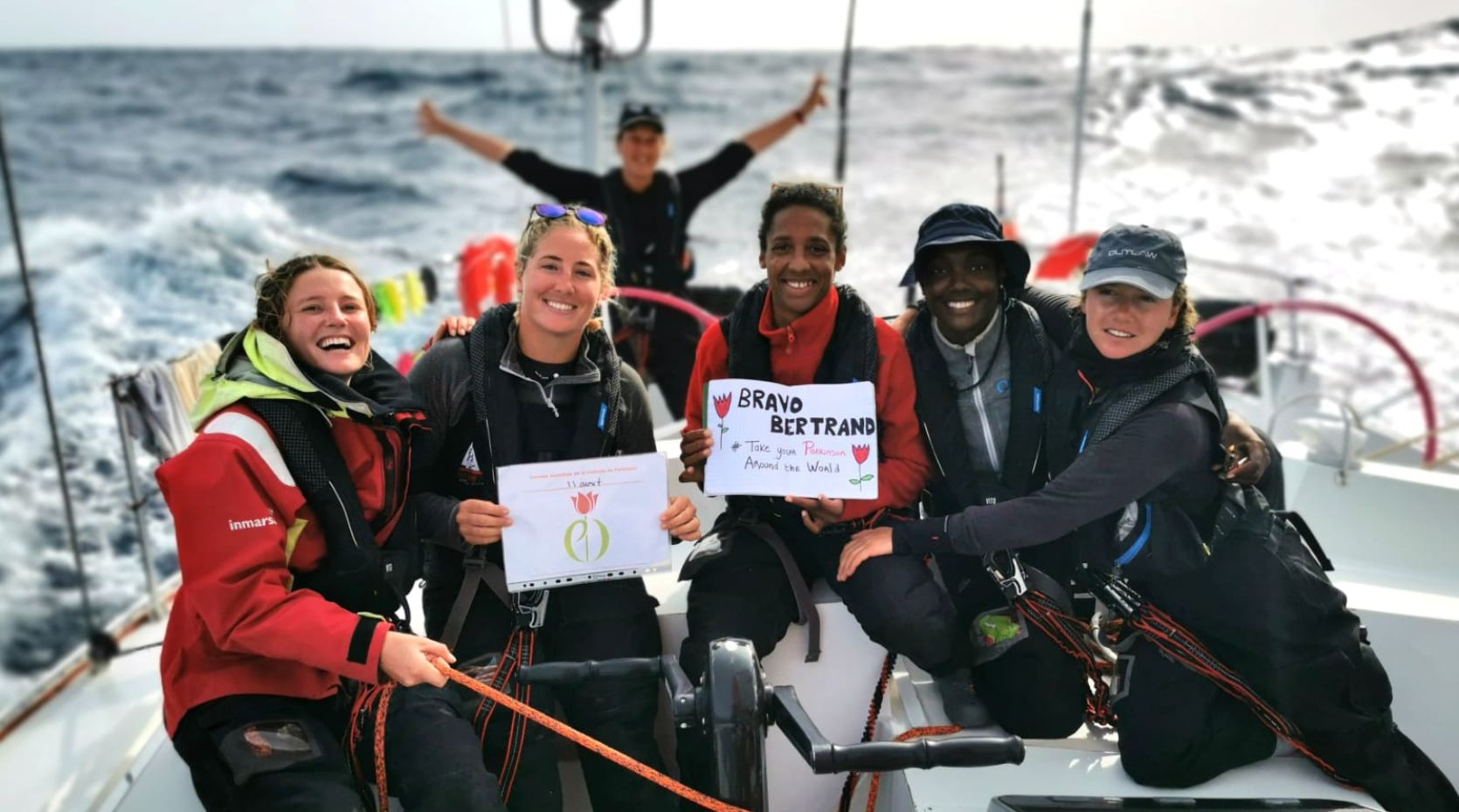
What has the experience of the Ocean Globe Race been like for you? What have been the highlights, and what have been the challenges?
Starting on the departure day, I was a little bit sceptical of my capability of lasting the entire race even though I was listed for its entirety. So it started with a cautious mindset on my part. And day by day, I noticed that I could do it, and that I was feeling good on the boat. In a race like this one, a great advantage for me is the flexibility – if I’m feeling tired in the middle of the day and it’s not my watch, no one is going to complain that I’m going to take a nap.
Prior to this adventure, I went through a year of mental and physical training. Physically it involved a lot of adapted gymnastics, a lot of swimming with fins, of cycling and of windsurfing. And mentally, I took lessons of self-hypnosis to allow my mind and body to evade myself a little bit.
Something important to note is that, for this race, I decided with my doctors to stop all of my medication that I was taking for my psychic problems. So all of these were stopped, something very positive for me.
What was quite striking for me was to have an entire crew pushing and supporting me, doing everything they could to allow me to face the problems that I needed dealing with in the best environment possible.
The biggest problem I had to face on the boat was in fact not Parkinson’s, but my cervical dystonia. To a point where Parkinson’s would be pushed back a little bit to the background, as the cervical dystonia had such a strong grip on my body. My priority was to deal with the pain from this cervical dystonia. For the race, I decided to not take the botulinum toxin injections that I usually take to treat my symptoms as it could cause pulmonary aspiration on the boat, and I didn’t want to pose this risk to the crew. So I had to grit my teeth.
On the fourth stage, a nurse joined the crew and she was of great help to me with my self-hypnosis. Self-hypnosis really helped me on board to control my symptoms for my various diseases.
Otherwise, controlling the disease with the medication was fairly straightforward. What caused me trouble was the loss of balance aboard. I didn’t go in certain parts of the boat due to this and due to the fact that I kept on repeating to the crew that I did not want to be a burden to them. Hence, I limited myself on certain aspects so that the rest of the team could go on with their lives without having to worry about me and my health/security aboard.
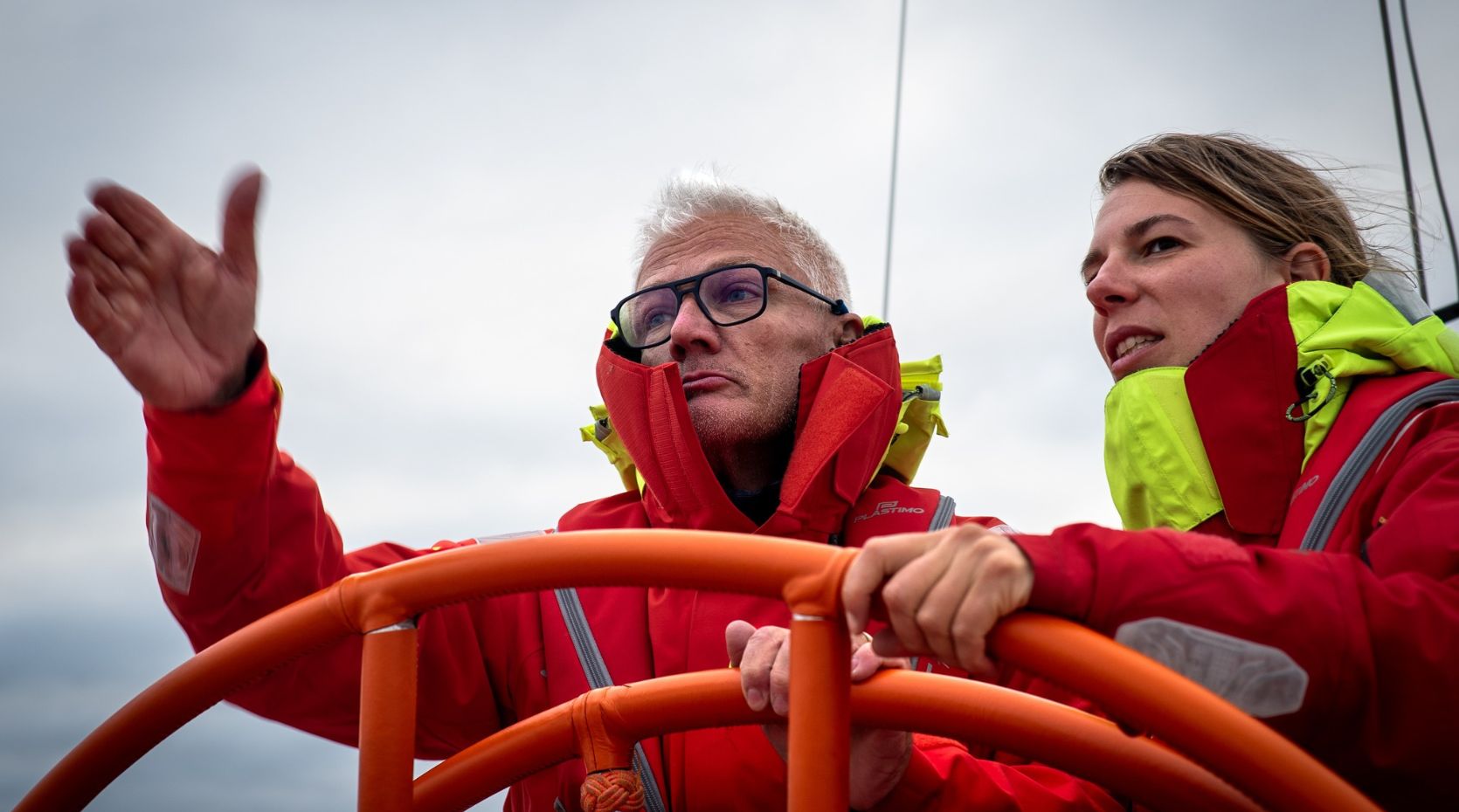
My role on the boat was essentially at the wheel and at the back manoeuvring in the cockpit.
What has it been like working with the rest of the Ocean Globe Race team on the Neptune, as the only crew member with Parkinson’s? Have you been able to do everything you wanted to?
I did less than I would’ve ideally liked to – such as manoeuvring at the front of the boat. I decided on my own to draw a red line on what I could and could not do, not necessarily for my safety but rather for the rest of the team to not have to worry about me. Likewise, I was the only one to have my own sleeping berth as I had a special system to keep me in a position where I could sleep comfortably.
What were your favourite places to visit during the race, and why?
Something that instantly comes to mind for me is the sea. Some people find the sea boring, but I find it fascinating as it constantly changes. I am in ecstasy at the beauty of this element. So I was able to take my time in valuing and appreciating the beauty of the sea.
Otherwise, a specific place/moment that comes to mind is the arrival at the Cape Horn. After being at large for more than three weeks without seeing any other humans, it was a confusing feeling when the first human contact at the VHF was the coast guards asking us what we were doing here. Even at the far end of a continent, the world reminded us of its obligations. It’s a bizarre contrast to enjoy the wonderful scenery whilst something else reminds you of the material elements of this world.
Departing towards the Indian Ocean from Gqeberha (Port Elizabeth) in South Africa, we were faced with a gigantic storm. It was grandiose to see the power of nature taking place in front of our eyes – and the beauty of it. It’s something very hard to describe in words. That was probably the highlight that comes to mind when thinking about the world tour.
Otherwise, the stages that I preferred were in South Africa. The beauty of its landscapes combined with the warmth and kindness from its people was very touching. Arriving in Oakland in New Zealand was also very pretty! Uruguay was another marking stage as well.
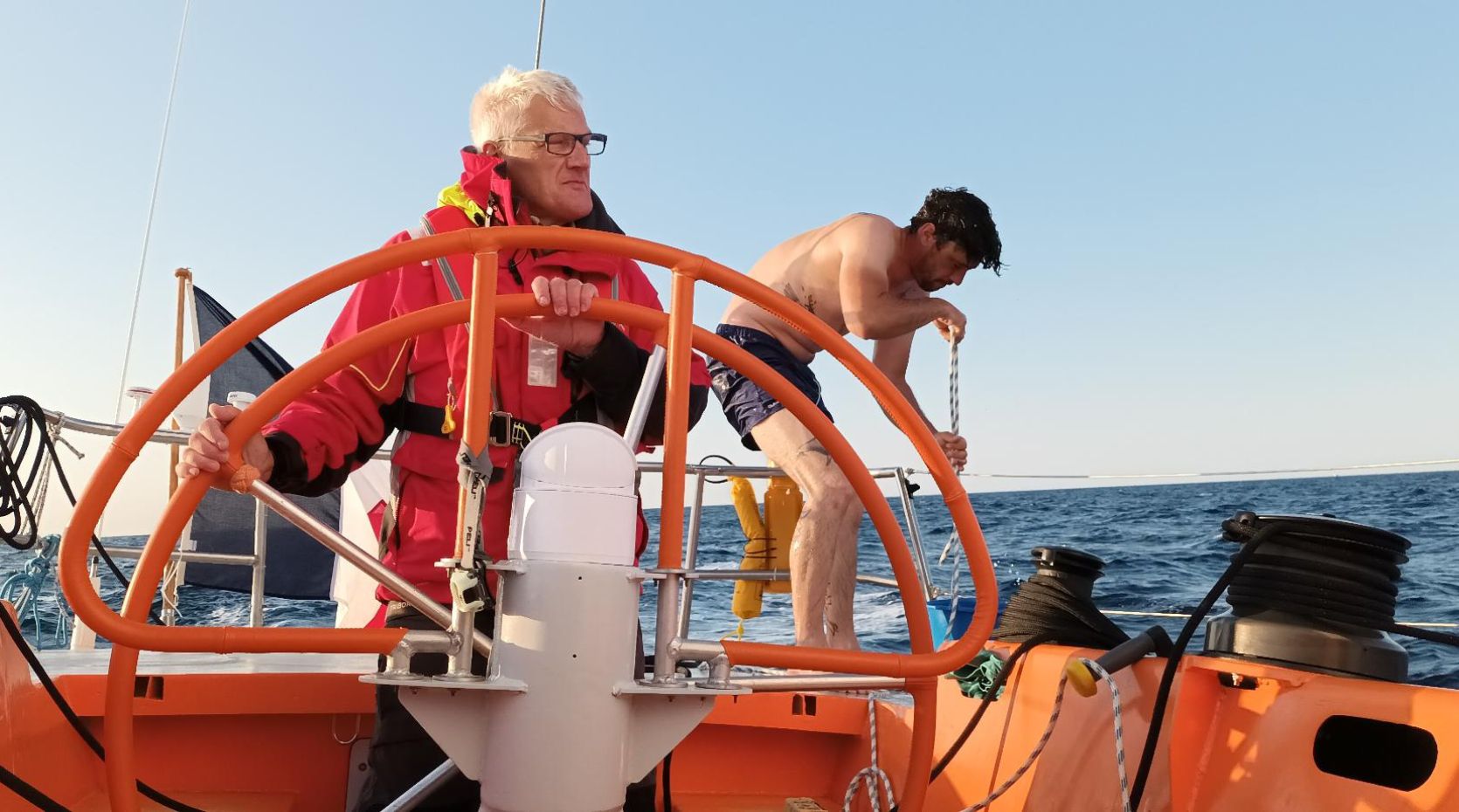
How did you manage your Parkinson’s while on the trip? Were your symptoms better / worse than usual on the boat?
The main symptoms that bothered me were the on/off periods. When you’re at the wheel at two in the morning and you suddenly switch off, your teammate better be informed of this possibility! So I had told the rest of the crew that these on/off symptoms would happen in advance.
Intense fatigue was also an issue, although it was harder to know if this was linked to my Parkinson’s or simply due to the fact that I was participating in a world tour!
How do you feel now it’s over? Did you achieve everything you wanted to? What are your main takeaways from the experience?
There’s always takeaways in any given experience. In this case and although I set the bar high, I managed to reach my goal so there’s a little bit of pride for sure in that. Another takeaway is that the disease is here with us, but we can do great things with it.
On the other hand, I’d like to add that I’m not judging anyone. Everyone reacts differently to a diagnosis and to Parkinson’s. For me, my vision is the best way of dealing with the condition but I totally understand that others may see it differently.
What would you like to do next?
Firstly, I’d like to continue talking about my experience and my vision of Parkinson’s, as I think that it could help people. On a sailing aspect, I’d like to participate in the ‘Transat Jacques Vabre’ – sticking to my vision of being able to realise great things with my condition.
And furthermore, as I’ve got a heavy background with a variety of health issues, I think that I can address a range of different people with my message. When I say to someone with depression or with pancreatic cancer that they can do this or that, I have this right and legitimacy because I’ve been through all this myself first.
If the message that I’m conveying finds echo in only two or three percent of the people that I’m addressing, then I’ve won.
Find out more about the Ocean Globe Race on their website and Neptune Gagner Avec Parkinson