Researchers have created a map of disrupted brain networks which could make Deep Brain Stimulation (DBS) more effective in Parkinson’s and other disorders.
DBS works by implanting small electrodes into specific areas in the brain, which then emit electrical pulses to that area. When successful, it can help alleviate symptoms in those who have Parkinson’s, as well as other conditions. However, DBS is not always successful, and even small discrepancies in electrode placement can lead to it being less effective.
The researchers from Charité – Universitätsmedizin Berlin and Brigham and Women’s Hospital, in Boston, Massachusetts, made the map after analysing cases of those who had DBS at one of ten treatment centres in seven countries.
The researchers were led by neuroscientists Prof. Andreas Horn and Dr Ningfei Li at Charité and Brigham and Women’s Hospital. “Our goal was to better understand where in the brain possible ‘brakes’ can be released through neuromodulation to normalise the symptoms of Parkinson’s disease, for example,” says Dr Li.
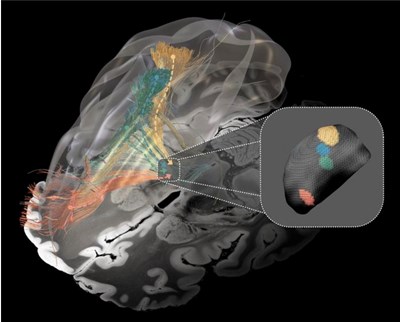
The team’s research focused on the small area of the brain which is targeted in DBS: the subthalamic nucleus in the basal ganglia. They analysed data from 534 DBS electrodes implanted in 261 patients, of whom 127 had Parkinson’s, and used software to reconstruct the location of each. Computer simulation was used to map neural tracts that were activated in patients, including those who had less than optimal outcomes.
Using these results, they were able to identify specific brain circuits that had become dysfunctional in Parkinson’s, as well as three other disorders. The production of the map means that as the first step, the researchers have succeeded in localising the exact networks in the forebrain and midbrain that are crucial in treating Parkinson’s.
It is hoped that the map may help health professionals achieve more optimal results when using DBS.
The map and results have been published in a study entitled “Mapping dysfunctional circuits in the frontal cortex using deep brain stimulation” in Nature Neuroscience.
Parkinson’s Europe is sharing this article for information purposes only; it does not represent Parkinson’s Europe’s views and is not an endorsement by Parkinson’s Europe of any particular treatments, therapies or products.