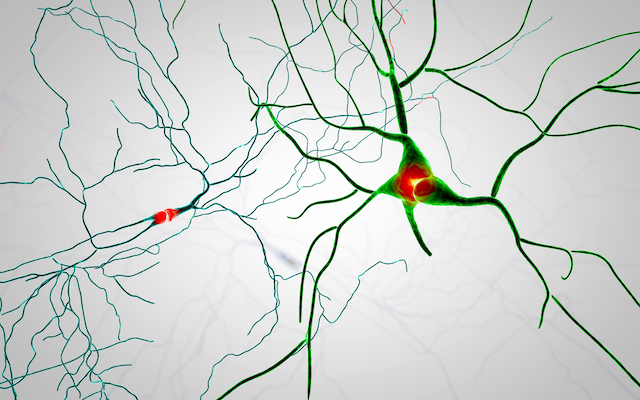
Canadian scientists have proposed a new model for detecting Parkinson’s which focuses on biological factors rather than observations of motor symptoms.
Scientists from the Krembil Brain Institute at the University Health Network in Toronto, Canada, made the proposal for the new model, called ‘SynNeurGe’, in a recent article published in Lancet Neurology.
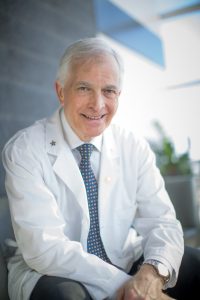
Dr Anthony Lang, a neurologist and senior scientist at the Krembil Brain Institute, who led the research team, says: “We know Parkinson’s exists in the brain for one to two decades, or longer, before the clinical manifestations present, so, we believe current research must be driven by biological determinants of the disease, rather than limited clinical descriptions of its signs and symptoms.”
Instead, tests that can detect biomarkers underpin the proposed new model. For instance, there is now a test which can indicate the build-up of the protein α-synuclein which leads to neuron degeneration in people with Parkinson’s.
The SynNeurGe model emphasises the important interactions between three biological factors that contribute to Parkinson’s:
- the presence of pathologic α-synuclein in the brain (S);
- evidence of neurodegeneration, which occurs as the disease progresses (N); and
- the presence of gene variants that cause or strongly predispose a person to the disease (G).
According to the team, this “S-N-G” classification system better accounts for the biological heterogeneity of Parkinson’s and the many ways in which it can present.
“We need to recognise that Parkinson’s can differ dramatically between patients,” explains Dr Lang. “We are not dealing with a single disorder. Our model provides a much broader, more holistic view of the disease and its causes.”
Cautioning that the model is currently intended for research purposes and is not yet ready for use in clinic settings, Dr Lang outlined his hopes that such a model would help to focus research.
“Without looking at the biology, you can’t get answers. And without answers, we won’t have much-needed breakthroughs in Parkinson’s,” he says.
Parkinson’s Europe is sharing this article for information purposes only; it does not represent Parkinson’s Europe’s views and is not an endorsement by Parkinson’s Europe of any particular treatments, therapies or products.