We hear from four experts in the field of Parkinson’s on why global collaboration is vital to advancing deep brain stimulation (DBS) – and achieving better treatment results for patients
Leading neurosurgeons and neurologists from around the world came together last year for an international meeting organised by Boston Scientific in Porto, Portugal, to share their expertise on deep brain stimulation (DBS) – an established therapy for people with Parkinson’s.
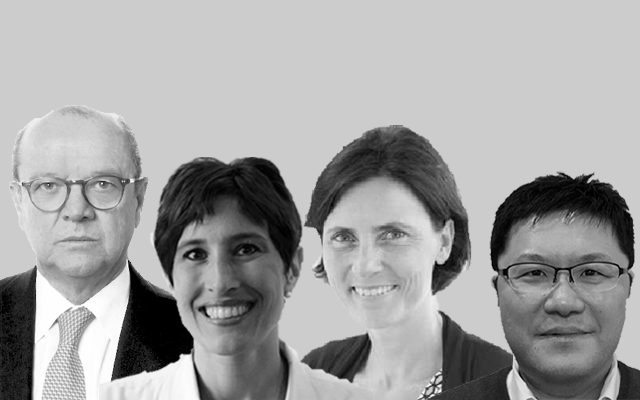
The event brought together more than 70 specialists from around the world. We managed to speak to four experts to learn from them about how global collaboration is leading to medical breakthroughs, their hopes and predictions for the future of the treatment – and what it all means for people with Parkinson’s.
Improving Parkinson’s treatments through global collaboration
Collaborating with a global network of peers is a fundamental step in developing DBS, explains Katsuo Kimura, an assistant professor of neurology at Yokohama City University, Japan: “Collaboration is key to future medical breakthroughs because medical systems and information are different in each country – so it’s an important way to break those barriers, share our knowledge, and improve our countries’ clinical activities.
“The number of people diagnosed with Parkinson’s is increasing in every country. However, the number of patients who receive DBS in each country is still limited. If we discuss our findings in person, like here in Porto at the DBS Academy, we can achieve medical breakthroughs more rapidly.”
Andrea Kuhn, a consultant and professor of neurology at Charite Universitatsmedizin, Germany, adds: “The DBS Academy in Porto is a very specific meeting on DBS. It’s an important exchange on new technical advances and clinical studies on the therapy. It’s a relatively small meeting, so we take the opportunity to sit together and discuss our projects – and that really fosters collaboration.”
It’s through this sharing of knowledge that the medical community is able to improve available treatment for people with Parkinson’s, explains Rui Vaz, a neurosurgeon at Centro Hospitalar de Sao Joao, Portugal.
“Parkinson’s is different from patient to patient, so it’s very important that DBS continually improves,” says Professor Vaz. “Collaboration is important because we need to go from treating the condition to treating the patient – we need to develop DBS to offer personalised treatment.”
Developing DBS therapy for better results
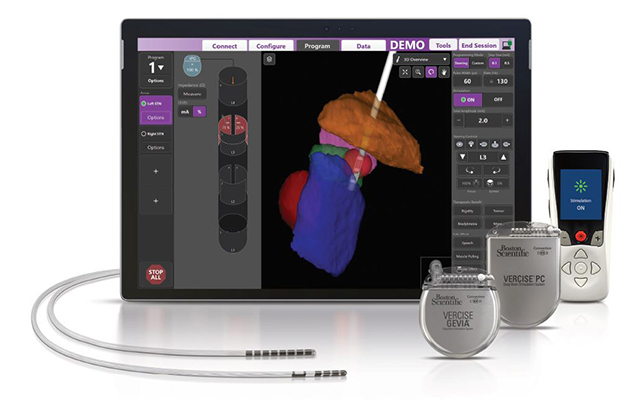
DBS is a therapy where two very small electrodes (wires) in the brain are connected to a battery – also known as a device or pulse generator – under the skin in the chest. The therapy helps control the motor symptoms of Parkinson’s by delivering electrical signals into the specific areas of the brain affected.
The therapy is continuously advancing with better outcomes for people with Parkinson’s, avoiding side effects and targeting specific symptoms of the condition.
Professor Vaz explains why the development of electrodes, which are placed into the brain during DBS surgery, and the development of batteries, which power the stimulator device, has significantly improved the therapy: “With directional electrodes, we can now steer currents exactly in the direction we want, allowing us to control specific symptoms. And the new small rechargeable batteries in DBS allow us to better regulate the current of the device.”
He continues: “Collaboration was key in achieving these developments because it required multidisciplinary knowledge. In this case, the partnership between medicine and engineering was essential for the development of new technology that is helping us to better treat people with Parkinson’s.”
Professor Kuhn adds that directional lead technology, where “the two middle contacts of the DBS device are segmented into three smaller contacts so that the device can direct the current much better”, is a significant advance. This new technology, she explains, “reduces side effects that can occur when the current is too high, or the electrodes are not perfectly in the area where we would like to place them”.
“There’s also the improvement in using the telemetry – the handheld devices for the patient – which are now smaller and easier to handle,” she says.
A bright future ahead for DBS
A specialist in the field of gait disorders, Carine Karachi, professor in neurosurgery at University Hospitals Pitie Salpetriere, France, hopes in the near future to tailor DBS to specifically alleviate freezing of gait – a symptom of Parkinson’s where walking is suddenly impaired.
“Gait disorders remain one of the main motor disabilities in Parkinson’s,” says Professor Karachi. “We’re starting a new trial next year using directional DBS electrodes into the area of the brain called the subthalamic nucleus to see if steering current can alleviate freezing of gait.
“We want to stimulate specific spots that we know are connected to gait disorders from studying the data of 300 patients. We also plan to collaborate with experts in Canada to build a template with data on targeting to alleviate gait because sharing our experience and results will improve DBS therapy for patients.”
Professor Vaz notes that as the therapy advances, its offerings will also expand: “I’m very excited about DBS’s potential to treat other neurological conditions. We would very much like to better understand the connections between different circuits of the brain and be able to develop DBS in the treatment of other conditions, for example psychiatric conditions like depression and anorexia.”
Professor Kuhn says there are many opportunities to enhance DBS and shares her vision of indivualised treatments for people with Parkinson’s.
“Parkinson’s is not the same in every patient or the same at every hour of the day,” she says. “That’s the biggest challenge. For example, we may need specific therapy for tremor dominant Parkinson’s in comparison to a patient that suffers more from dyskinesia. DBS is still not a perfect therapy, and it’s always important to improve. What we really look forward to is individualised DBS therapy that can be adjusted to the patients’ needs throughout each day.”
Parkinson’s Europe is sharing this article for information purposes only; it does not represent Parkinson’s Europe’s views and is not an endorsement by Parkinson’s Europe of any particular treatments, therapies or products.