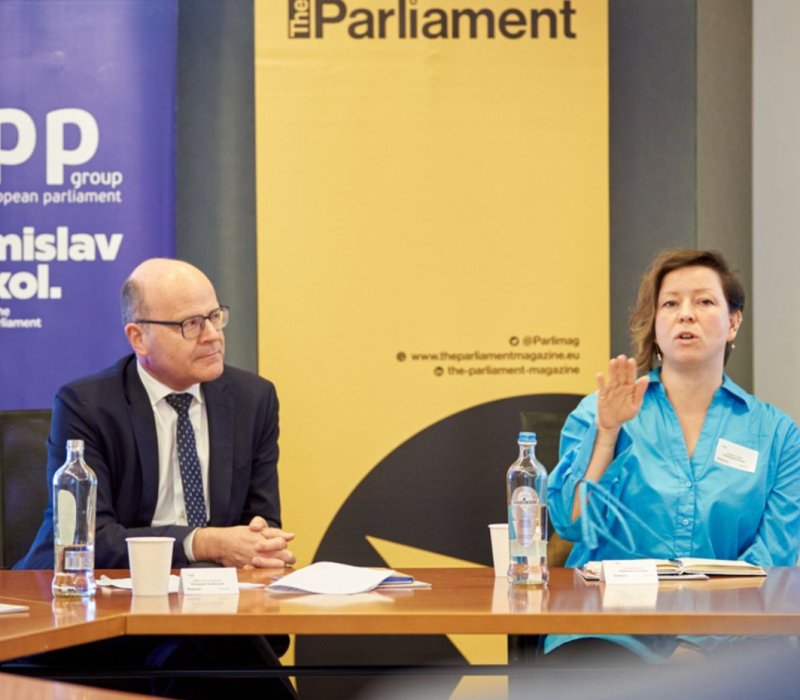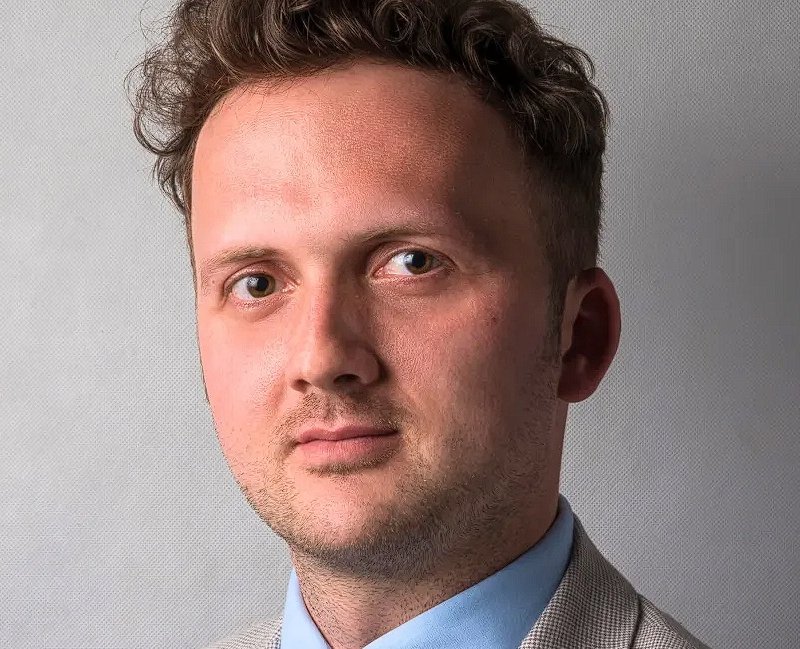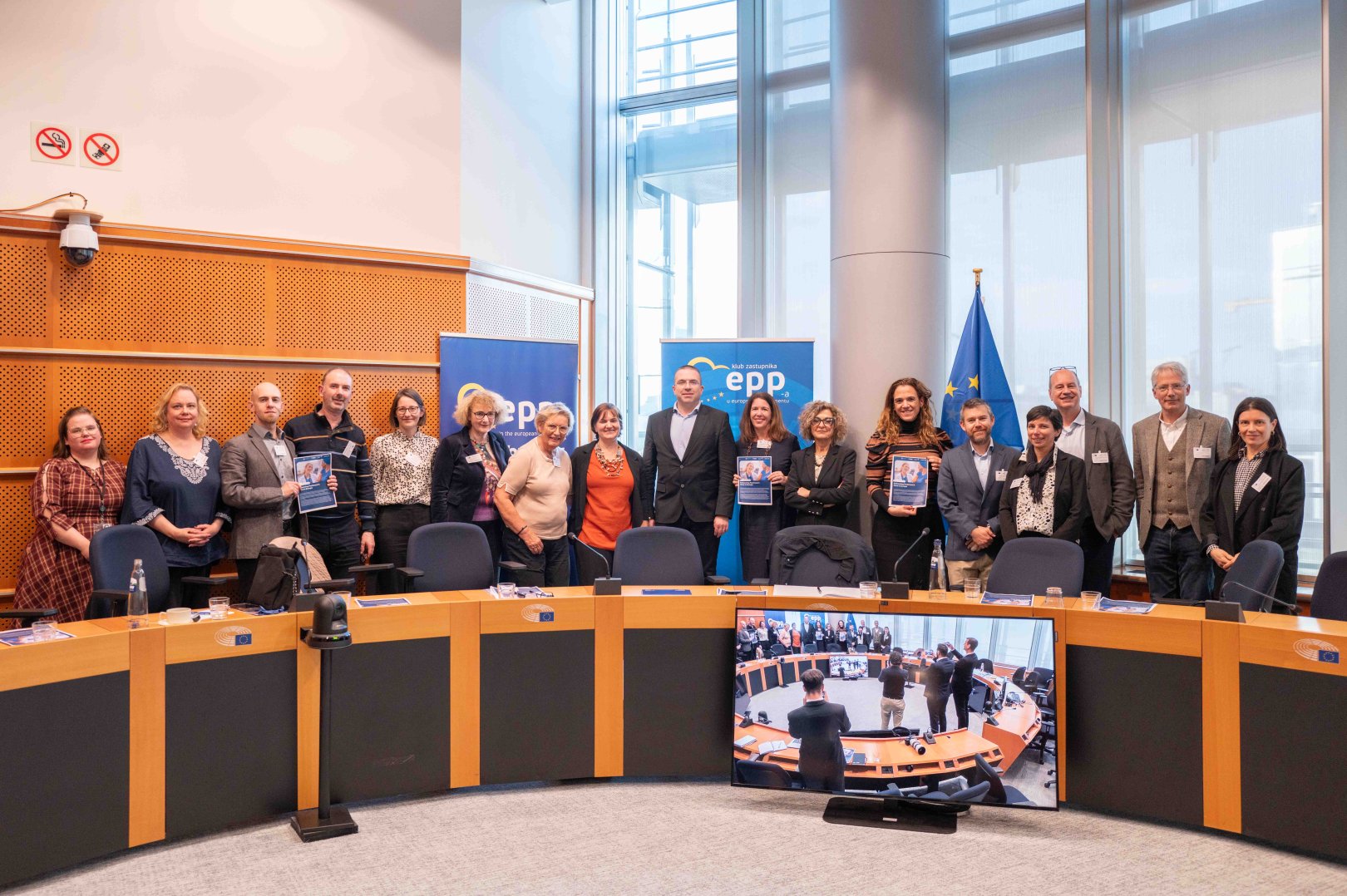
In an important meeting with the Parkinson’s Europe board on 5 November, Croatian MEP Tomislav Sokol brought hope to the Parkinson’s community by outlining how the EU could help improve Parkinson’s healthcare.
The meeting took place between MEP Sokol, Parkinson’s Europe board members and other stakeholders at the European Parliament in Brussels. Its aim was to inform MEP Sokol of the healthcare challenges the European Parkinson’s community faces, and to find out what the European Union and its institutions can do to help.
A member of the European People’s Party (EPP), MEP Sokol has been an advocate for stronger EU action in the area of health since he was first elected in 2019. He is the EPP Coordinator in the Committee on Public Health (SANT), as well as the European Parliament’s rapporteur for the European Health Data Space (EHDS) and the EPP Group rapporteur for the reform of pharmaceutical legislation.
At the meeting, the board members who live with Parkinson’s and/or work in the field made powerful statements about what needs to change.
Board member Cathy Molohan, who was diagnosed when she was 38, highlighted the lack of information she was given on her diagnosis. She also emphasised the urgent need for new Parkinson’s medications – with levodopa first tested to treat the symptoms of Parkinson’s in 1961.
“The same year the Berlin wall was built; the same year JFK said: ‘Let’s get a man on the moon.’ Now we’ve had a man on the moon, the wall has gone, but levodopa is still the best option,” said Cathy, who was moved to tears as she spoke.
Board member Elisabeth Ildal highlighted how caring for someone with Parkinson’s is usually left to their family members. “That’s not good enough,” she said.
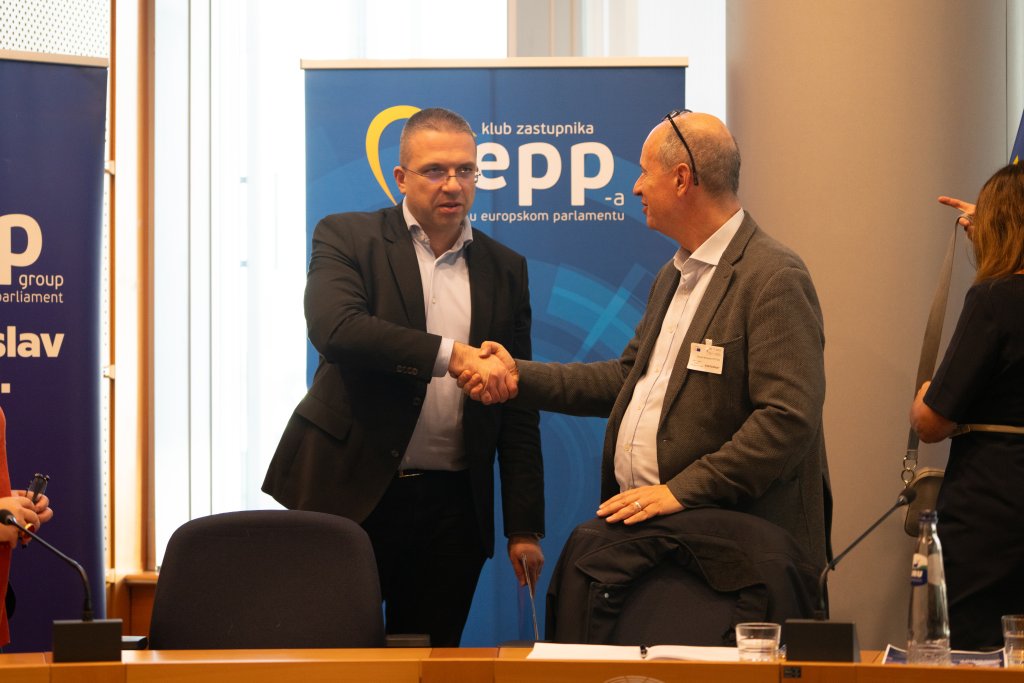
Afterwards, MEP Sokol thanked the board members for their “deeply moving stories” and admitted that he had not known that Parkinson’s is the fastest growing neurological disease.
He acknowledged the need for “a common systematic strategy with concrete goals and benchmarks” to improve Parkinson’s healthcare, before setting out positive ways in which the EU could help.
To address the shortage of nurses trained in neurological conditions, MEP Sokol said that EU Member States should be able to obtain financial support for training healthcare personnel from the EU Social Fund and Cohesion Funds. He also spoke of the need to prioritise the manufacture of medicines in Europe and suggested a way to address inconsistent access to Parkinson’s medications.
“We should propose to introduce an obligation that when a new medicine is approved, it is to be made available in all EU Member States within a year, to avoid inequality in access,” he said.
In reference to clinical trials, he said there was a need to “review the regulations” to make them easier to develop and run. “This is especially important for smaller Member States where currently there is limited access to clinical trials,” he said. He also stated that the EU Horizon Programme could provide funds for research and innovation.
To this, Brian Magennis, board member and Parkinson’s Nurse Specialist at Mater Hospital in Dublin, a centre of excellence for Parkinson’s care, voiced his concerns: “We are at a standstill. I have nothing new to offer my patients. DBS has been developed and has been good from a treatment point of view, but if we need and get more nurses, they need to be trained – that takes a long time. I worry for the future if numbers [of people with Parkinson’s] are doubling by 2030. We need to be proactive rather than reactive, so I’m glad to hear about the Horizon Programme. It’s very encouraging, but I think we need more to offer our patients.”
MEP Sokol concluded with a pledge to take action: “I cannot promise you that this will result in full success, that you’ll have a cure or a medicine that will make life easier in 10 years for patients suffering with Parkinson’s, but we’ll definitely try. We’ll do our part as much as possible. We will fight for this and especially fight to give this topic more visibility than it now has.”
Sponsored by Parkinson’s Europe industry partner AbbVie, the meeting reflected Parkinson’s Europe’s drive to raise the profile of Parkinson’s as the fastest-growing neurological condition globally with MEPs and to forge closer, long-lasting relationships with them, as set out in the Awareness and Visibility pillar of Parkinson’s Europe’s strategy, which was launched earlier this year.
Call to action update
The meeting also highlighted the progress that has been made following Parkinson’s Europe’s launch of the joint Call to Action (CTA) for the improvement of Parkinson’s healthcare last year.
Aimed at European policymakers, it was developed by Parkinson’s Europe with the European Federation of Neurological Association, the International Parkinson and Movement Disorder Society and AbbVie.
It focused on three areas: the recruitment and retention of doctors, nurses and other healthcare professionals who treat people living with Parkinson’s; the establishment of the professional profile of neurodegenerative nurses in all European healthcare systems; and prioritising the adoption of innovative therapies and technologies to optimise timely access to care, particularly in hard-to-reach geographical areas.
The aim is to achieve support for the CTA across all Member States. At the meeting, MEP Sokol and the rest of the delegates were informed that, so far, 11 commitments to the CTA have been gathered across four political families and nine Member States. In addition, Patient Advocacy Groups across nine Member States and key opinion leaders from four Member States have signed up to the CTA.
Other positive steps that have taken place include supporting the healthcare workforce, recognising qualifications and avoiding medical deserts. The SANT Committee, which shapes EU policies on healthcare, pharmaceutical legislation and public health, has also committed to the Neurological Health Strategy.
Although these steps forward were acknowledged, the presentation also emphasised the need to maintain momentum and for health systems to fully recognise the extent of the challenge ahead.
Referring to the CTA, board member Cathy said: “This is only good to me if something comes of it. So it’s wonderful to have a Call to Action but can I emphasise ‘action’ is needed.”
Parkinson’s Europe President Josefa Domingos offered her reflections on the event: “It has been a huge inspiration – to have hope that you can actually do something. We don’t know the results of what we just did, but we know that it inspires us all to fight more. And to know that we can do things at a European and a global level, it is good that we are reminded of that mission – together, we are stronger.”
As a sponsor of PARKINSON’S EUROPE, AbbVie has provided a sponsorship which has been utilised to support the organisation of this meeting. AbbVie has had no influence over the organisation of this meeting. AbbVie and Parkinson’s Europe worked in partnership to develop the nonpromotional “Addressing barriers to care for people with advanced Parkinson’s” report which was discussed by Parkinson’s Europe during this meeting.