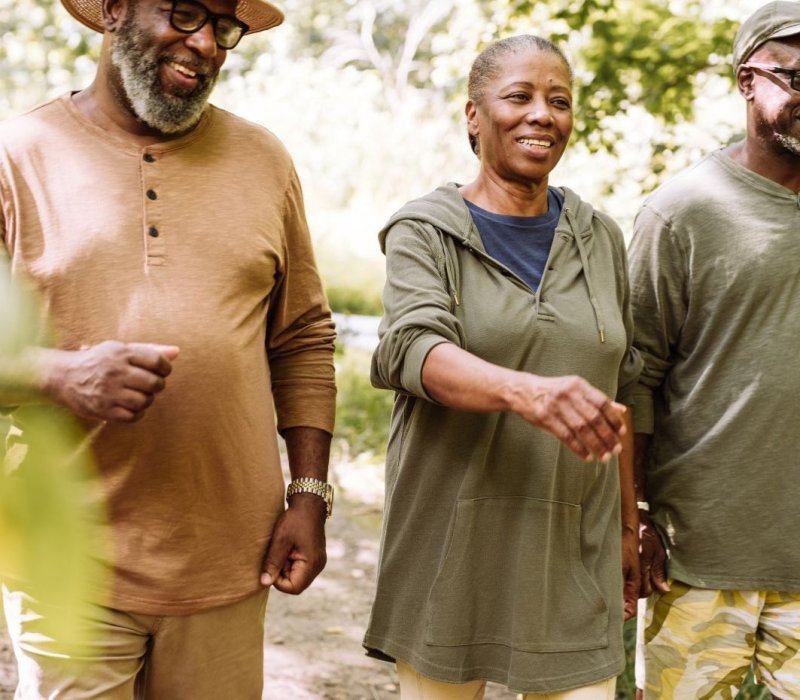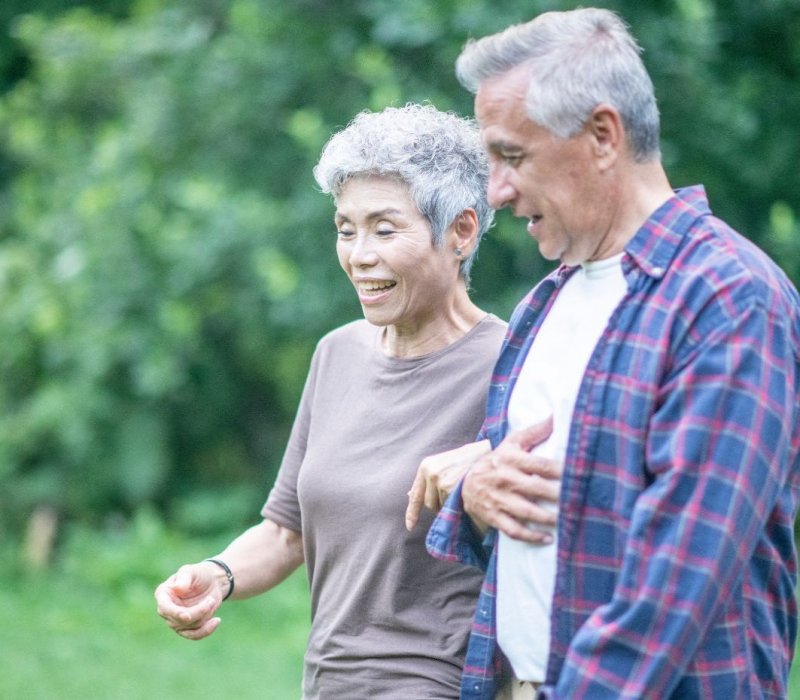
Walking is very good for our physical and mental health. While Parkinson’s can make walking more difficult, it is important to keep active, so we have come up with some helpful walking tips for people with Parkinson’s.
People with Parkinson’s can experience issues with gait, leading to a distinctive, less steady, shuffling walk, as well as poor balance and freezing (the sensation of feet being glued to the floor).
While problems with walking do not tend to respond as well to medications as other motor symptoms, there are different treatment strategies and exercises you can use to improve your walking.
Physiotherapist (and President of Parkinson’s Europe) Josefa Domingos – who has spent decades specialising in physiotherapy for Parkinson’s – has approved the following advice.
Walking tips for people with Parkinson’s
Work on posture
Posture can impact your gait significantly, so it pays to spend time working on this every day. A good way to do this is to designate moments during the day that you will focus on your posture.
For example, after you pass through a doorway at home, stand against the wall with your head, shoulders, hips and heels all making contact with the wall.
Also, when walking, try to focus on maintaining a good, upright posture and look forward as you walk, avoiding looking down at your feet.
Think about your stride
Parkinson’s means you need to concentrate more on how you walk, to improve your walking capacity. Make sure to place your heel firmly on the ground first after each step and also – this will help you not to shuffle your feet.
Practise taking longer strides, keeping focussed on stride length so that it doesn’t gradually shorten, and try to forcefully swing your arms at your side to help with balance.
Also, maintain a good space between your feet when standing and also walking.
Speak to the experts
Ask for advice from a physiotherapist. They will be able to advise on compensation strategies and exercises to improve your gait, balance and posture according to your individual needs.
They can help by breaking down the sequence of walking, so that you focus on each individual component and consciously carry out each movement.
Stretch and strengthen
Trunk mobility exercise and daily stretching are invaluable when it comes to reducing rigidity or stiffness. Try and work extensor muscle strengthening exercises into your daily life too. These will help you maintain an upright posture, which in turn will help with balance. If you’re unsure of where to start, your physiotherapist will be able to suggest some specific exercises.
Use different walking cues
Use auditory, visual and cognitive cues to improve the quality of your walking and reduce the risk of freezing when you walk.
Techniques like rhythmical counting can help keep your stride even and rhythmic, while marking a line to step over can help initiate walking and maintain the length of your steps. Even imagining lines on the floor of a confined space can help prevent loss of balance or freezing.
A physiotherapist or an occupational therapist are recommended to get to know about ways to help overcome freezing and keeping an even pace when walking.
Wear the right shoes
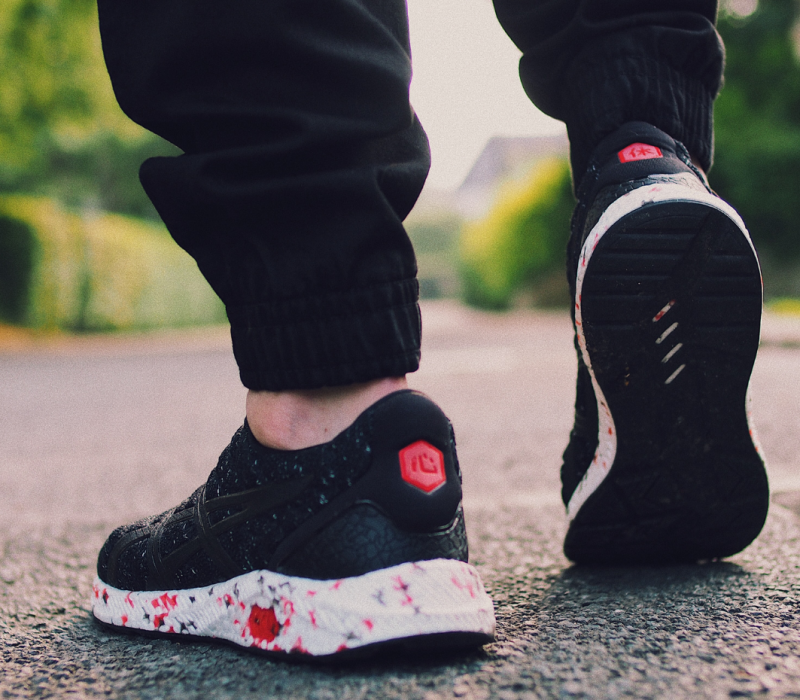
Avoid shoes with a high heel or a crepe sole, as these may ‘catch’ on the ground. A podiatrist or occupational therapist will be able to advise on the best footwear to help your walking, especially when it comes to the height of the heel and the material of the shoe soles.
Find a suitable walking aid
Not all walking aids are suitable for people with Parkinson’s – in fact, some can even be a hindrance. Because of this, it’s also worth talking to your physiotherapist or occupational therapist who can recommend the right kind of walking aid and the best way to use it.
It’s important that any aid, e.g. walking frame or stick, is the correct height for you and you use it correctly.
Find out more about walking, gait and Parkinson’s
Acknowledgements
We would also like to thank Prof Jorik Nonnekes (Radboud University Nijmegen Medical Centre, The Netherlands) for his help in previously reviewing this information.