On 10 March, the presenters behind the well-known UK Parkinson’s podcast Movers and Shakers reignited their Parky Charter campaign by starting an official parliamentary petition.
Their aim is for the ‘Increase funding for people with Parkinson’s and implement the “Parky Charter”’ petition to obtain 100,000 signatures by 10 September 2025. If successful, the five-point Parky Charter will then be debated in the UK Parliament.
The charter has identified areas for improvement in Parkinson’s care, ranging from quicker diagnosis to increasing the amount spent on research. It is hoped to kickstart change for people with Parkinson’s in the UK.
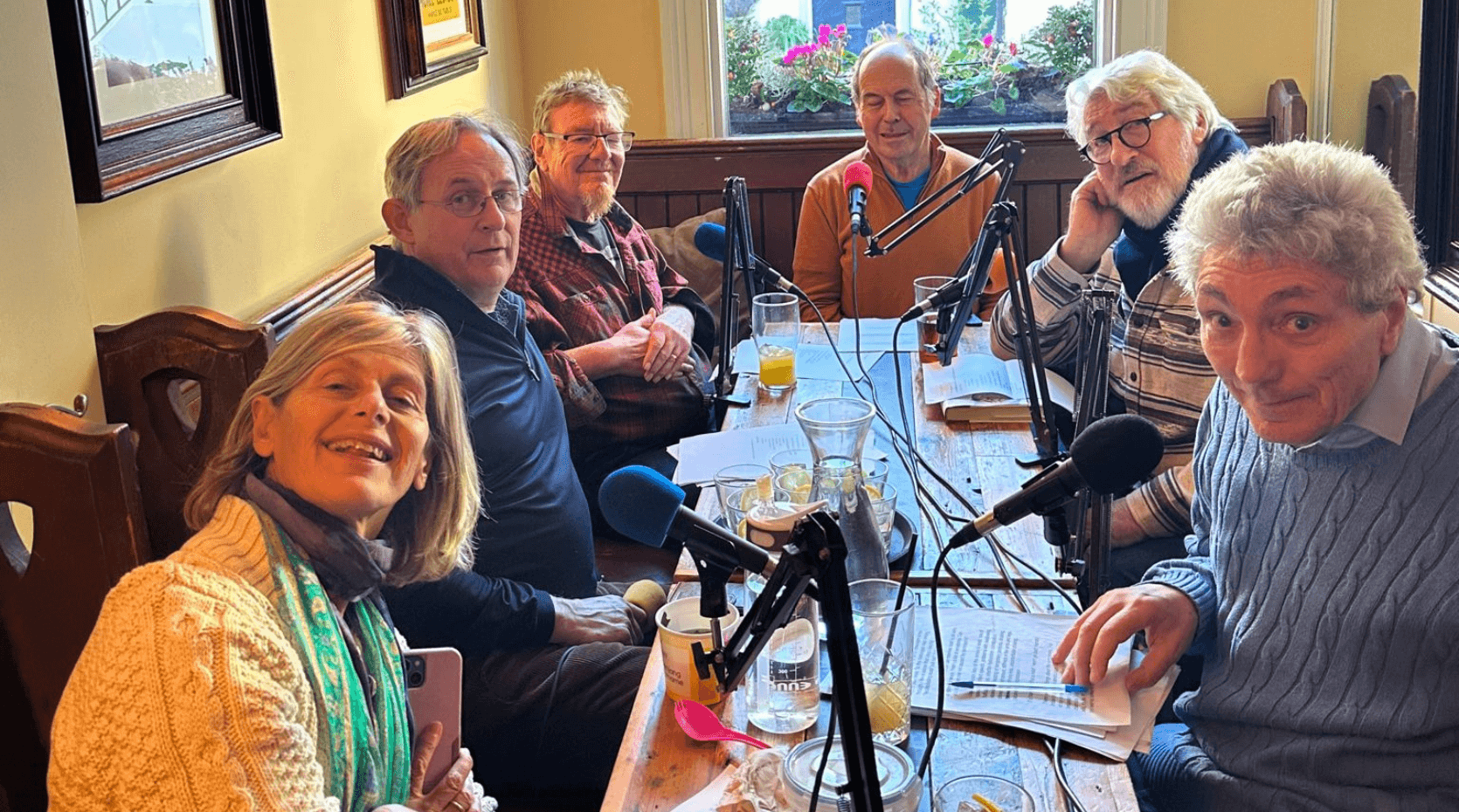
The Parky Charter was put together last year by the Movers and Shakers podcasters – former BBC broadcasters Jeremy Paxman, Mark Mardell and Rory Cellan-Jones, former High Court judge Sir Nicholas Mostyn, co-writer of British comedy series Vicar of Dibley Paul Mayhew-Archer, and BBC correspondent Gillian Lacey-Solymar.
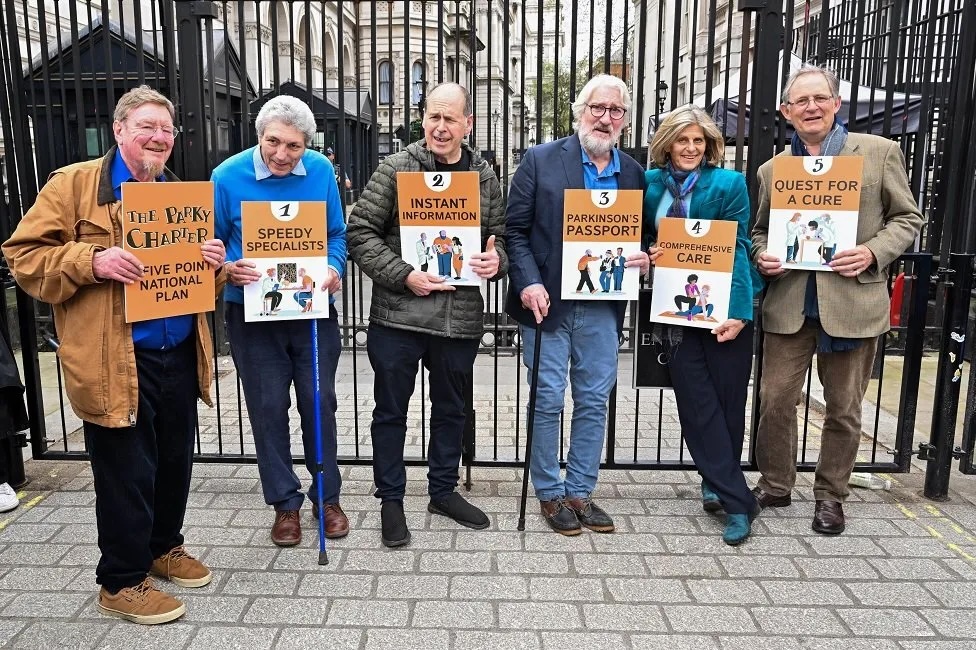
On World Parkinson’s Day 2024, the group memorably assembled outside 10 Downing Street, London, to present the-then Prime Minister Rishi Sunak with a 20,000-signature petition for the government to implement their Charter.
Sign the Parky Charter petition
Now, with the new petition having clocked up more than 95,000 signatures at the time of writing, 67-year-old former BBC journalist and Movers and Shakers presenter Rory Cellan-Jones – who was diagnosed with Parkinson’s in 2019 – explains why the journey is just as important as the goal.
How did the Movers and Shakers podcast lead to the Parky Charter?
“It was March 2023, the first episode. It just took off, and we had the most amazing reaction from listeners. Lots of people saying, ‘Thank goodness this is being talked about’ and ‘It is entertaining’ and ‘You are reflecting what we are experiencing’. But also, lots of people were telling us how bad Parkinson’s care was.”
The idea for the Parky Charter began when Caroline Rassell, Chief Executive of Parkinson’s UK, challenged you, is that right?
“At a Parkinson’s UK event we were broadcasting from, Caroline told us to, as she put it, ‘Get aggy [annoyed]’. We produced this Parky Charter, and then we found ourselves promoting it and meeting politicians just before the 2024 general election campaign. Then during the election campaign, we actually had [now Health Secretary] Wes Streeting on [the podcast], making promises.”
Talk us through the five-point Parky Charter.
- Speedy Specialists, for people to be seen by a specialist within 18 weeks of a referral. “Speedy specialists, which is one of the key things, will take years [in view of the shortage of neurologists in the UK]. Because training a doctor does not happen overnight. We have got to make [neurology] a more fashionable thing. We need to tie the government down because it has made this commitment to have a number of extra appointments, and with the aim that no one should wait more than 18 weeks for a meeting with a specialist for diagnosis.”
- Instant Information. “It is still shocking how people walk out of a diagnosis meeting knowing very little [about Parkinson’s]. It is very common to not be told about things like diet and exercise, which turn out to be important. There is a good Parkinson’s UK folder that some places give people. That needs to be made standard.”
- Parkinson’s Passport, giving people with Parkinson’s certain benefits automatically. “That is an idea with various aspects to it. It is about people standing up on trains so that you can sit down, but it is also about benefits. There is a lot of ignorance. We hear tales of people who are told, “Well, you may not be fit for work today, but maybe in a couple of months you’ll get better.” So basically, it’s another means of promoting public understanding.”
- Comprehensive Care? “As well as a neurologist, we think people need access to a Parkinson’s nurse, above all. But also, physiotherapists, nutrition experts – it is basically a call for a more flexible way of dealing with Parkinson’s.”
- Quest for a Cure. “This one is just about the tiny amount of government money that goes into Parkinson’s research. I think Parkinson’s UK did a Freedom of Information request and found that in the 2021/2022 financial year, the total spent directly on Parkinson’s research [in the UK] was around £6m, which is, as I pointed out to my MP, the price of one of the bigger houses [in London].”
You had a Parky Charter petition for World Parkinson’s Day 2024, didn’t you. Then, you started the new one this year.
“We began to realise that what you needed was one of these parliamentary petitions, which is official, and where [the government] have to respond at certain levels.
“I am kind of obsessed with it at the moment. I’ve worked out that we need to get upwards of probably about 650 signatures every day between now and 10 September to get to 100,000. And we were some days getting only 300 and now we’ve upped our activity.”
So your focus at the moment is to reach 100,000 signatures and get the Parky Charter discussed in the UK Parliament?
“There has been a backbench debate in Parliament. But what’s great about this is it is a hat to hang your campaign on. Yes, it would be great to have the debate, but it’s also just the very process of getting out and getting names, educating people about Parkinson’s.
“I am having conversations all the time about Parkinson’s that I would not be having if we weren’t on this journey. So, the destination is important; the journey is also very important.”
Because you’re raising awareness all the time?
“Yeah, and also it’s great for [Parkinson’s] community groups. We’ve started a competition, saying we’ll make an episode of the podcast with the group that gets the highest number of signatures.
“What we really need to do is encourage local groups, because, you know, we can’t on our own go out into every town centre and read the message [to sign the petition], but we can give you a template for a leaflet. We can give you a QR code. So that is the appeal. Please do it.”
What tips would you give those in other countries who want to run a similar campaign to improve life for people with Parkinson’s?
“For a campaign, obviously, you have got to build a community. You have got to rely on people with Parkinson’s coming together, so you have got to have some sort of forum. You can’t start from nowhere. And we were fortunate enough with that.
“Our podcast doesn’t have huge download numbers, but the listeners we have are very, very dedicated. So, we have this community, and we are not at all experienced campaigners. At the moment, we have got this petition.
“But obviously, social media is vital these days, and you have got two quite different audiences. You have got the Parkinson’s community, who may not be – this is obviously a massive generalisation – technically aware or social media savvy.
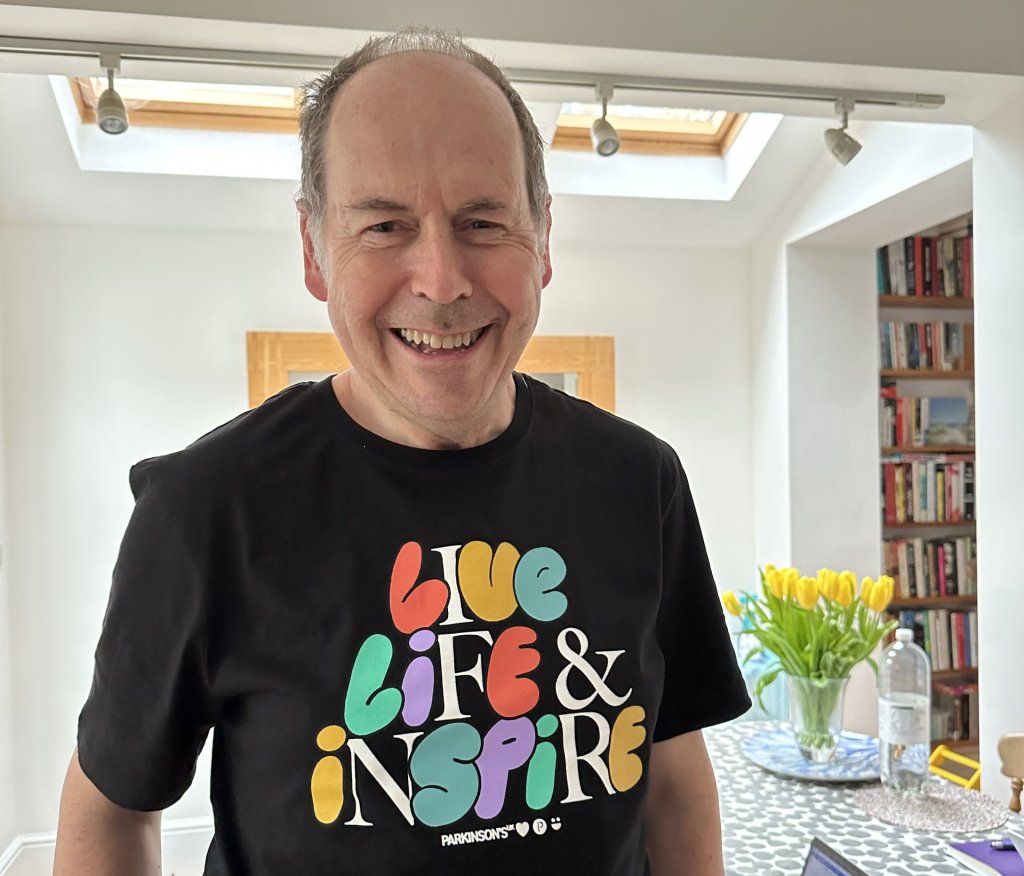
“And then your other audience is the rest of society, who you really want to be onside. You have to reach them in different ways. I mean, we have been out promoting this petition. I have got a T-shirt with a QR code on the back that people can scan.
“First of all, think, what are we trying to achieve? Then, have a reasonably simple message, and then get out there and spread it. I was keen that [the Charter] was focused, so that we had no more than five principles in it. Social media can only get you so far. I think going and meeting people face to face is quite powerful. Politicians, but also just people in the street. You need a call to action – sign our petition, or whatever.”
Have you got any plans for the Movers and Shakers podcast?
“What is amazing is, we are carrying on. Over the summer, we have got four people being profiled, including the novelist Linda Grant, and a man called Jagdeep Aujla [a man with Parkinson’s who runs boxing classes in London for others with the condition].
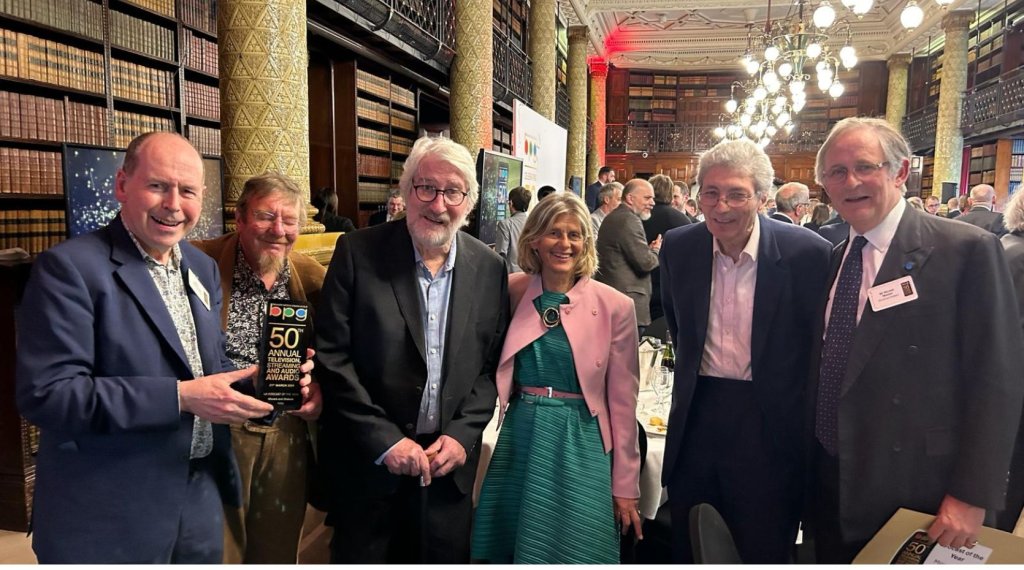
“Then we are preparing series six, which will start going out in September. We have already recorded two episodes – one of them about cannabis, interestingly. They will go out once a week on a Saturday.
“What we are finding is that the back catalogue is very important. We encourage people to go back to the beginning and listen to the ones about diagnosis and so on. And there are ones about nutrition, about exercise, so there are more than 70 episodes now. They are all available free of charge.”
You’re basically offering light entertainment and information at the same time.
“Yeah. What I often say in my intro is, “We’re here for a bit of a laugh and a bit of a moan.” That is what people do in the pub.”
Is there anything else you would like to add?
“Sign the petition! There are supposed to be around 150,000 people with Parkinson’s in the UK, and when you add in their relatives, approaching a million people are directly affected by it. So, it shouldn’t be hard to get 100,000 signatures but the message just needs to get out there.”
Sign the Parky Charter parliamentary petition