In 1981 JWS Van der Wereld, a Dutch horticulturist with Parkinson’s, created a prize tulip to honour the International Year of Disabled Persons. He named the flower – pink, with a white feather on each petal – the Dr James Parkinson’s tulip, after the British surgeon who first identified the condition.
But how did it come to be known as a global symbol for Parkinson’s, and the official logo for Parkinson’s Europe? We spoke to Parkinson’s Europe co-founder Lizzie Graham to find out more about Parkinson’s Europe and the history of the tulip.
Europe-wide charter for people with Parkinson’s
Just over ten years after the Parkinson’s tulip was created, Parkinson’s Europe (known then as the European Parkinson’s Disease Association or EPDA) was established. The organisation, set up in 1992 with just nine members, was building connections across the globe. Co-founder Lizzie Graham says they began to notice that many national Parkinson’s organisations around the world, from Europe to Australia and New Zealand, had incorporated a common symbol in their logos – a tulip.
One of the EPDA’s first projects was to conduct a survey of both its European members and others they were in touch with worldwide, in 1994. The results revealed they were all working to the same criteria, inspiring the EPDA to create a five-point charter, to be promoted on a worldwide day to raise awareness about Parkinson’s.
The charter stated that people with Parkinson’s should have the right to:
- be referred to a doctor with a specialist interest in Parkinson’s
- receive an accurate diagnosis
- have access to support services
- receive continuous care and
- take part in managing the disease.
Keen to advocate for these rights, the EPDA got in touch with the World Health Organisation (WHO). “At this point the WHO were interested in neurology, and when EPDA contacted them they were interested in taking forward the charter for Parkinson’s,” says Lizzie.
A day to unite across the globe
The EPDA then asked member organisations around the world if they would support a World Parkinson’s Day (WPD), suggesting 11th April, as it was Dr James Parkinson’s birthday. The response was a resounding yes, with organisations keen to unite and support the launch of the charter with the WHO.
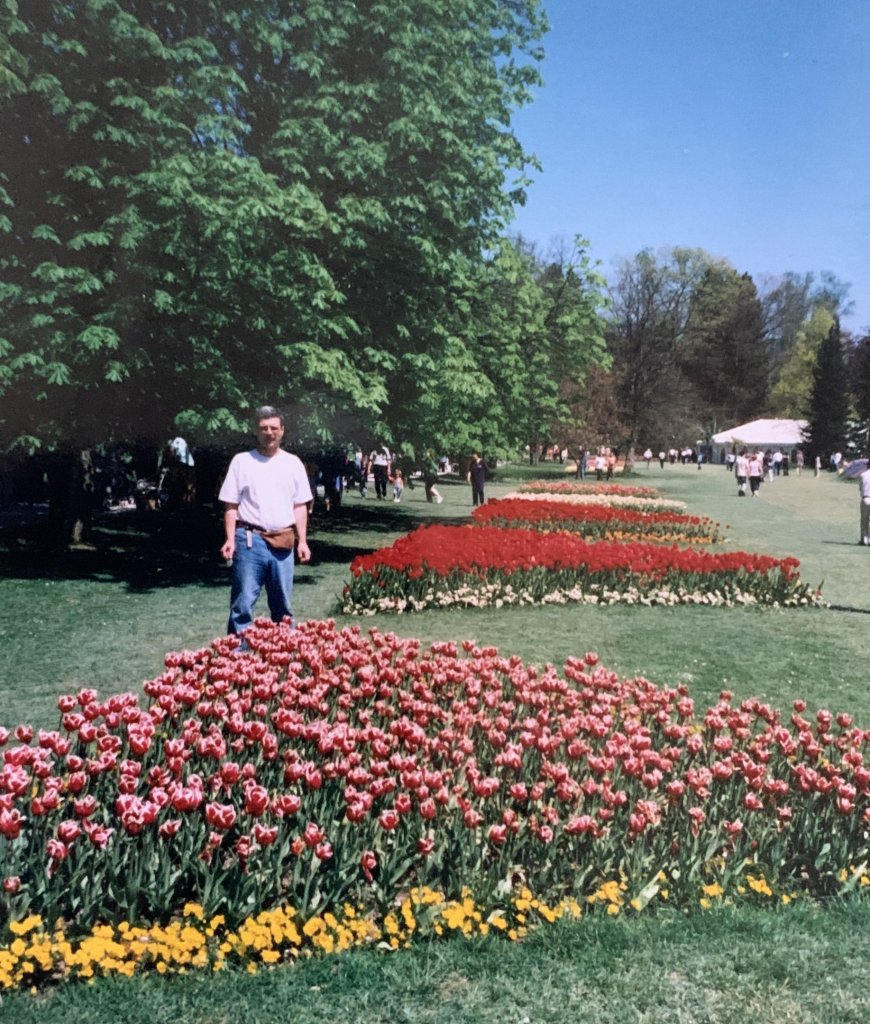
Having learned about the Parkinson’s tulip, the EPDA decided to adopt the flower to help promote the launch. “So the EPDA connected with a Lincolnshire, UK-based tulip grower, Robert, who was really keen to help,” Lizzie recalls. “We had all these tulips delivered, our whole office was covered in tulip bulbs. The EPDA then contacted all its members to see if they would be interested in planting these tulips in their countries to celebrate WPD. In the UK, supermarket chain Tesco agreed to sell the tulips for EPDA to help raise awareness, they were very supportive.”
Royals support WHO-backed launch
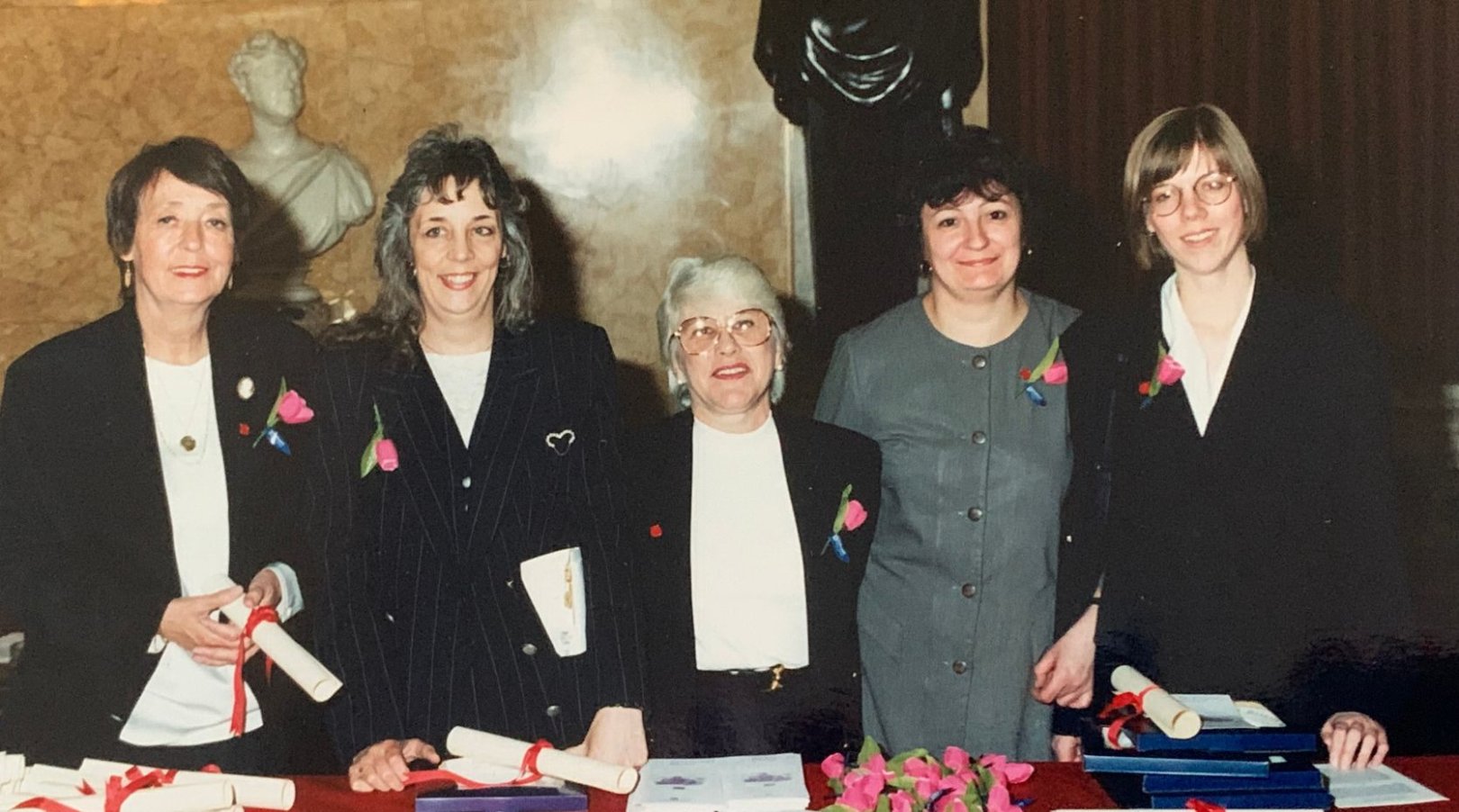
As the flower became a symbol of the hard work being done, the inaugural World Parkinson’s Day was set for 11 April, 1997. The awareness-raising day, and the charter, were launched with a prestigious event.
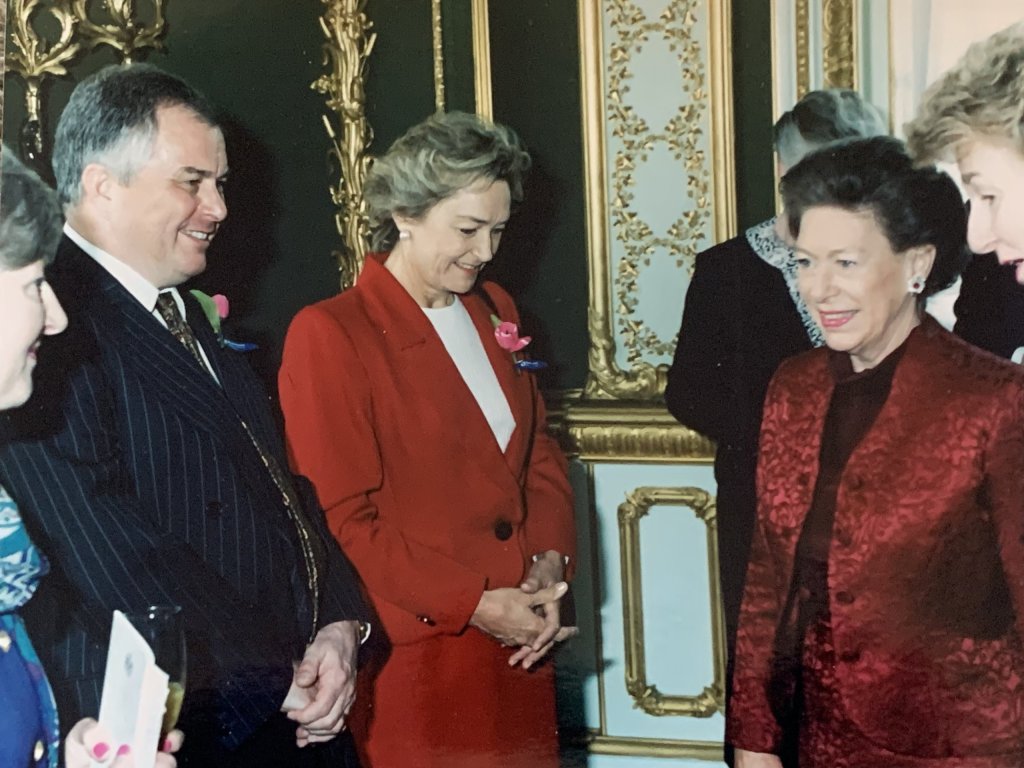
Co-sponsored by the WHO, and held at Kensington Palace, London, the launch won support from high-profile people around the world including UK royals HRH Princess Margaret and Princess Diana, UK prime ministers John Major and Tony Blair, Pope John Paul II, Italian opera singer Luciano Pavarotti and US boxing legend Muhammad Ali.
Around the world, member organisations held their own events to mark the day. “Europe was awash with tulips,” Lizzie says.
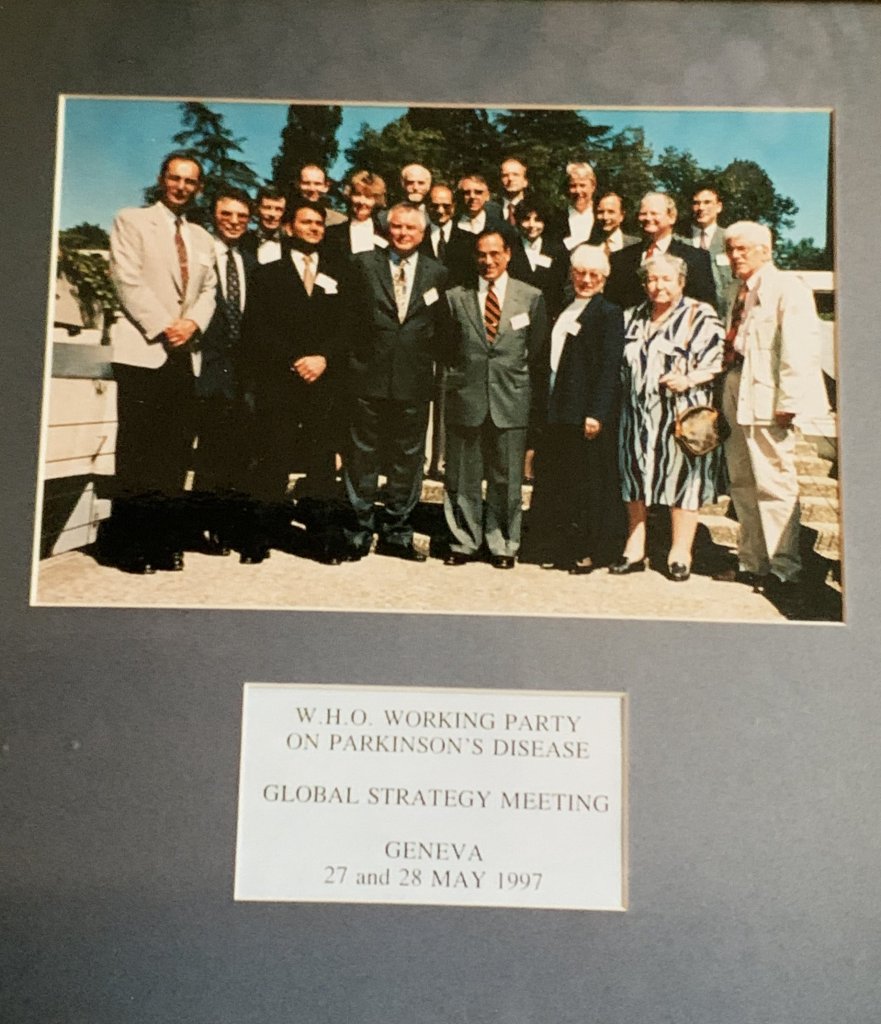
Out of that first WPD day, a new WHO working group on Parkinson’s was formed, which ran between 1997-2004.
Lizzie adds: “And so the message spread. Remember, this was all before the days of email. This was the start of WPD and the tulip.”
The symbol endures today, not only as a logo for Parkinson’s Europe and other organisations, but also as an inspirational theme. For example, Czech Republic organisation Spolecnost Parkinson’s activities for WPD 2025 include planting tulip beds in various locations, accompanied by signs to raise awareness. Meanwhile, Parkinson’s UK is asking supporters to knit or crochet a blue tulip and to send it to them to create a striking, symbolic display to mark the day.
A symbol of growth and strength
So what was it about this small, vibrant flower that saw it organically adopted by so many Parkinson’s organisations across the world, and led to it becoming the EPDA, and Parkinson’s Europe’s, official logo?
For Lizzie, it lies in what the tulip represents to people, and a desire to connect with a global community. “People feel it shows hope and optimism,” she says. “At that time, people wanted to work together. All the countries had been independent, but with the formation of Europe it was something we could all work on together, and have a symbol. People were so keen to work together to raise awareness about Parkinson’s.”
Parkinson’s Europe Operations Director Dominic Graham adds: “It is a colourful vision of hope for a community that really needs it. I cannot think of anything better – it is something that grows, blossoms, inspires joy. The following year it wilts and dies, but then comes up again.
“So a flower seems such an apt metaphor for what we’re all trying to do as Parkinson’s advocates. It’s really hard and challenging to generate change, there are always ups and downs, but the hope will continue to rise up and blossom, just like the tulip.”