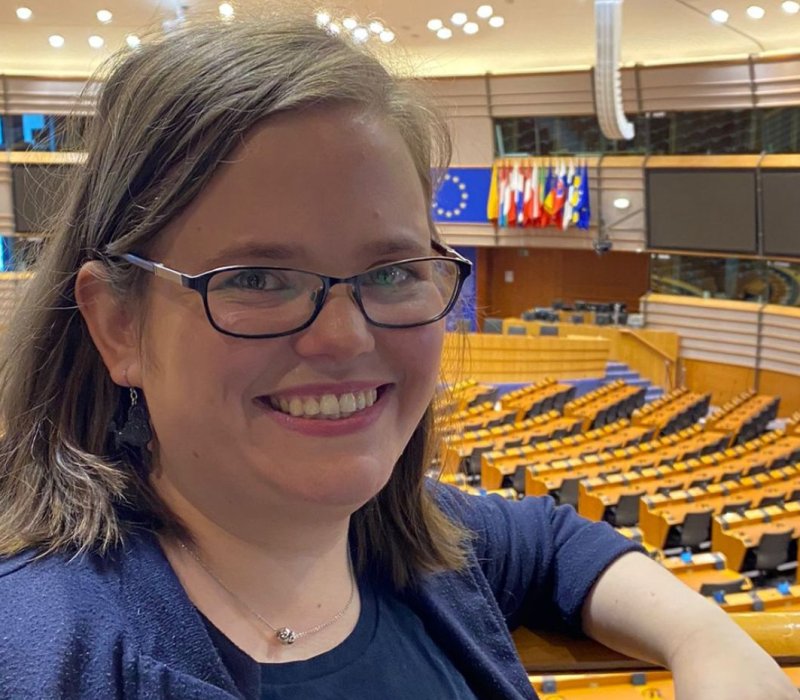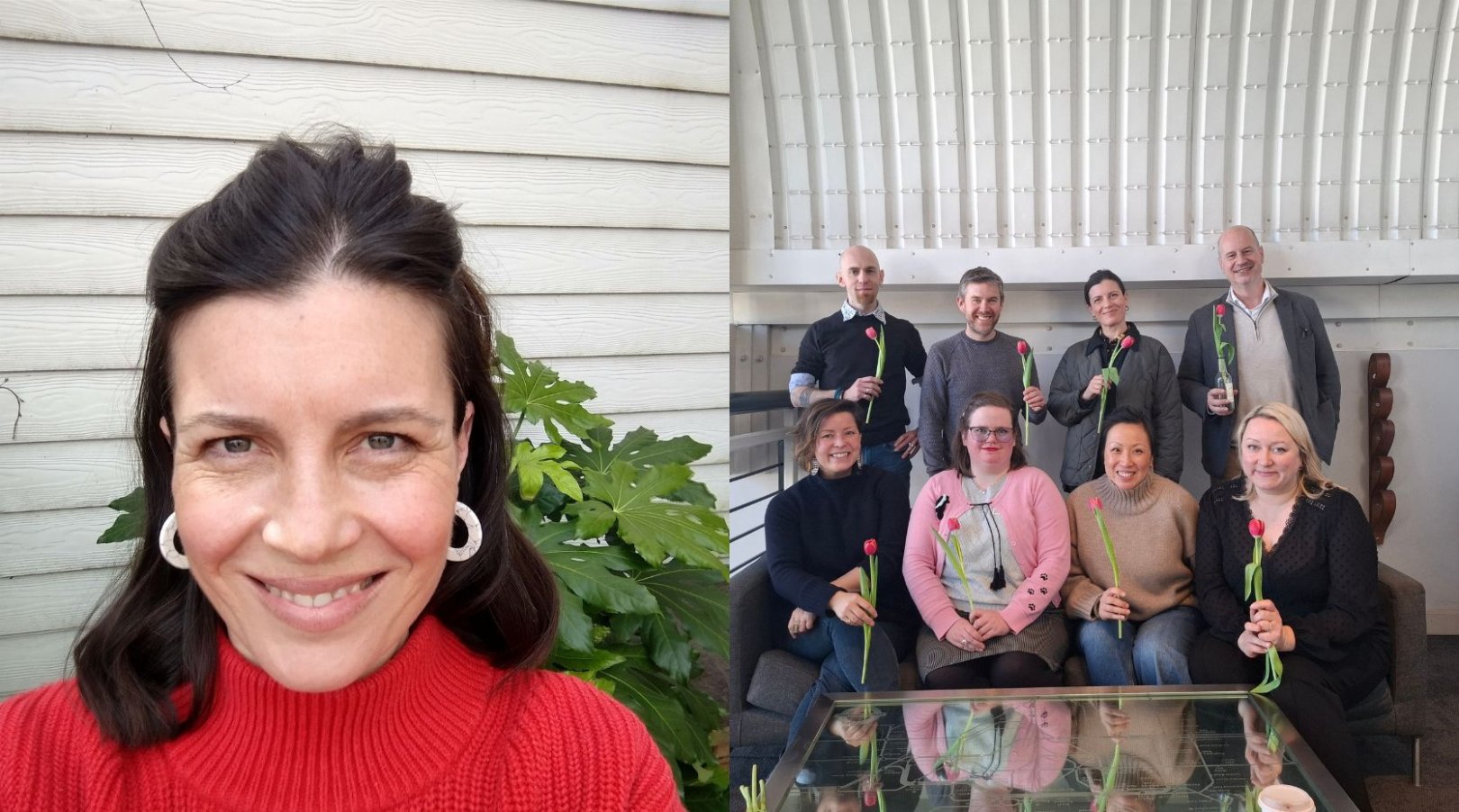
We chat to Jessie Duncan, new Outreach and Engagement Manager at Parkinson’s Europe, to find out about the hard work she is doing for our organisation.
As Outreach and Engagement Manager at Parkinson’s Europe, what does your job involve?
The role is very much about engaging with and building on the variety of stakeholders we work with. There’s quite a diverse range of members. Some very small organisations with quite limited resources, and also some very large organisations with big teams who are able to do lots of exciting things.
It’s about empowering all of these organisations, bringing them together and sharing knowledge, and strengthening the Parkinson’s community.
I also try to increase our membership. Part of the plan further down the line is to target academia, healthcare professionals, and engage with other areas where we want to build our network.
What sort of background do you have, career-wise?
My most relevant experience is the eight years that I worked in a political communications organisation in Brussels, working with European institutions and various organisations, including NGOs.
Being in the political sphere showed me the context in which Parkinson’s Europe works and how decisions are made in the EU.
Why did you want to work for Parkinson’s Europe?
I wanted to do something that was worthwhile. And the fact that we’re a European umbrella organisation brings with it a really unique perspective of what is happening across Europe. Also, I enjoy working in different languages and across different cultures. I speak French and I understand a little Italian and German.
What are you working on at the moment?
World Parkinson’s Day is coming up, and we’re going to record a podcast for that. I’m trying to capture the diversity of the activities our members are hosting. There’s a really impressive range – lots of campaigns, conferences and events. But also plenty happening on a very small scale at local level, which is equally as important.
I’m also in touch with the organisations we partner with on a European level, such as the European Patients’ Forum, so I’m working on the bigger-picture activities too.
What do you hope to achieve this year?
Over the next few months, I’m having individual meetings with all of our members to get to know them better. For instance, this morning, I was talking to [Dutch organisation] Parkinsonisme Vereniging. And later today, I’m talking to Društvo Trepetlika (Trepetlika Association) in Slovenia. We also have members in Central and Eastern Europe and also further afield, in Israel and Ukraine.
Making sure that all of these voices are heard and that we’re connecting with everybody is a really important part of my job. I’m trying to understand the context in which each organisation is operating, the number of staff they have, the resources they have. What are their challenges? How can we help them?
Something I’m really keen to do in the next year or two is to organise face-to-face meetings once again. Members enjoy the human connection, and it’s quite hard to replicate that online. I would also like to connect more directly with people with Parkinson’s, and I’m trying to do that as the role evolves.
How will you be involved in growing the Parkinson’s Europe Engagement Network?
It’s been doing really well. Lots of people have signed up to it and lots of opportunities have been shared. Part of my role will be to develop that and increase uptake. It’s got so much potential to, again, be part of this empowerment of increasing knowledge and connecting the different groups within the Parkinson’s community.
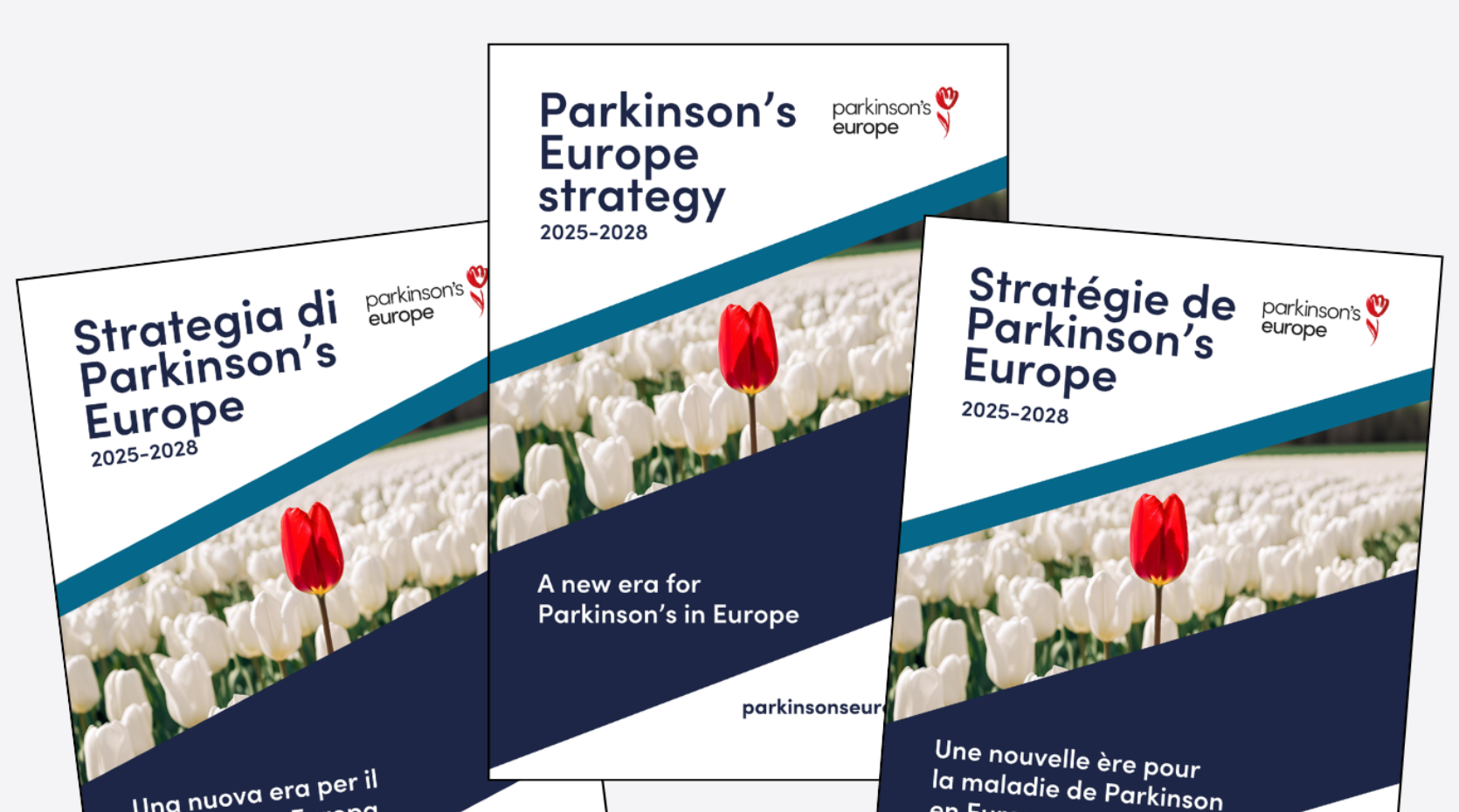
How does your role support Parkinson’s Europe’s new strategy, which was unveiled earlier this year?
The strategy has three pillars. The first is data and innovation – so, getting a clearer picture of Parkinson’s across Europe. There are definitely gaps in data. The second pillar is empowerment, which is a big part of my role – helping the community grow together. And the last pillar is awareness and visibility.
Under each of these pillars, we will have steering groups that include the Parkinson’s community as well as other stakeholders from research and industry. I’m really looking forward to being involved in the steering groups. It is incredibly valuable to have the insight of different stakeholders helping to guide us over the next four years. We’re now looking to recruit 9-10 people for each group. For people who might be interested, the role descriptions are available on our website.
What are the benefits of being a member of Parkinson’s Europe?
The obvious things are bringing people into a broader discussion and allowing them to learn from other organisations around Europe. Gaining greater visibility at European level and at global, international level is a big part of why you would want to be part of Parkinson’s Europe. My intention is to try to join the dots for people, to connect them with other organisations, all with a view to increasing their knowledge, their strengths and their visibility.
If people are interested in learning about membership, and what it takes to become a member, that’s something I would be keen to discuss with any organisation.