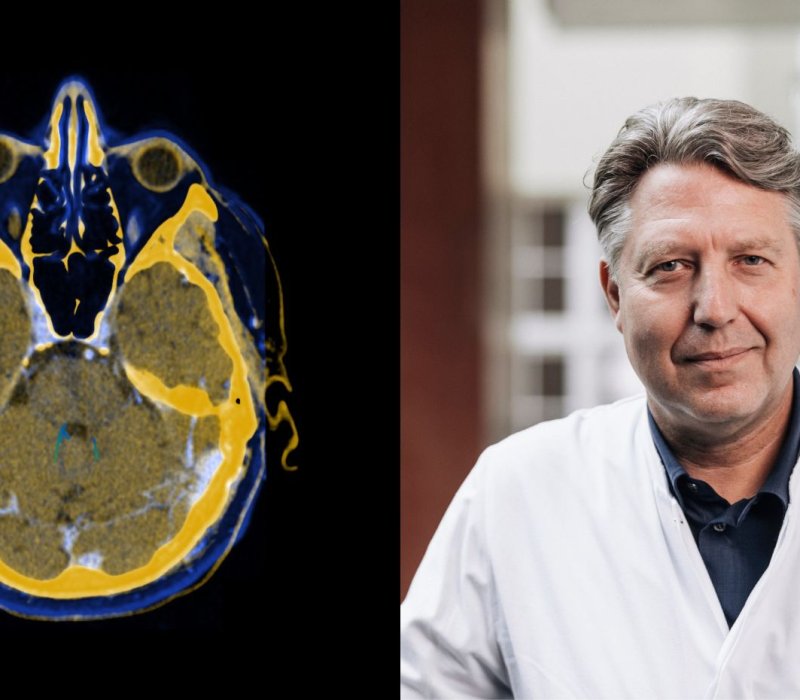
Since Deep Brain Stimulation (DBS) was first invented as an advanced treatment for Parkinson’s in the late 1980s, much has changed.
When Professor Lennart Stieglitz, neurosurgeon and Senior Attending Physician at Zurich’s University Hospital in Switzerland, started his career 19 years ago, it was viewed differently. “DBS was a last-resort therapy for elderly and very advanced Parkinson’s patients,” he says.
Since then, the technology has evolved and the available clinical data has expanded, and now Deep Brain Stimulation is being offered to people with Parkinson’s at an earlier stage.
“Today, we know that patients benefit from this treatment whenever you start it – and for all their life. This means that, for us, the appropriate time to discuss DBS is as soon as wearing off, dyskinesias or something like that appears,” he says. “At the moment, it is, in my opinion, the state-of-the-art treatment for advanced Parkinson’s disease.”
DBS surgery is one of the treatment options offered when a person’s Parkinson’s symptoms are no longer responding well to medication.
It involves an incision being made in the skull before thin wires (electrodes) are inserted into the brain. Next, a small device called a pulse generator is inserted under the skin in the chest or abdomen. At a certain point after surgery, the high-frequency stimulation is switched on and its effects on a person’s Parkinson’s symptoms are monitored. The stimulation is then gradually increased, usually over a period of many months, to achieve optimum levels and the best quality of life. Since Parkinson’s is a progressive condition, the DBS therapy can also be continuously adjusted and personalised according to the patient’s journey.
Deep Brain Stimulation can improve motor symptoms such as tremor, slowness and stiffness, but it does not treat non-motor symptoms. It usually means that people with Parkinson’s are able to reduce their medication – by as much as two thirds, says Professor Stieglitz.
Plenty of people with Parkinson’s have enjoyed tremendous benefits as a result – to the extent that some have a second birthday where they celebrate the date of their surgery.
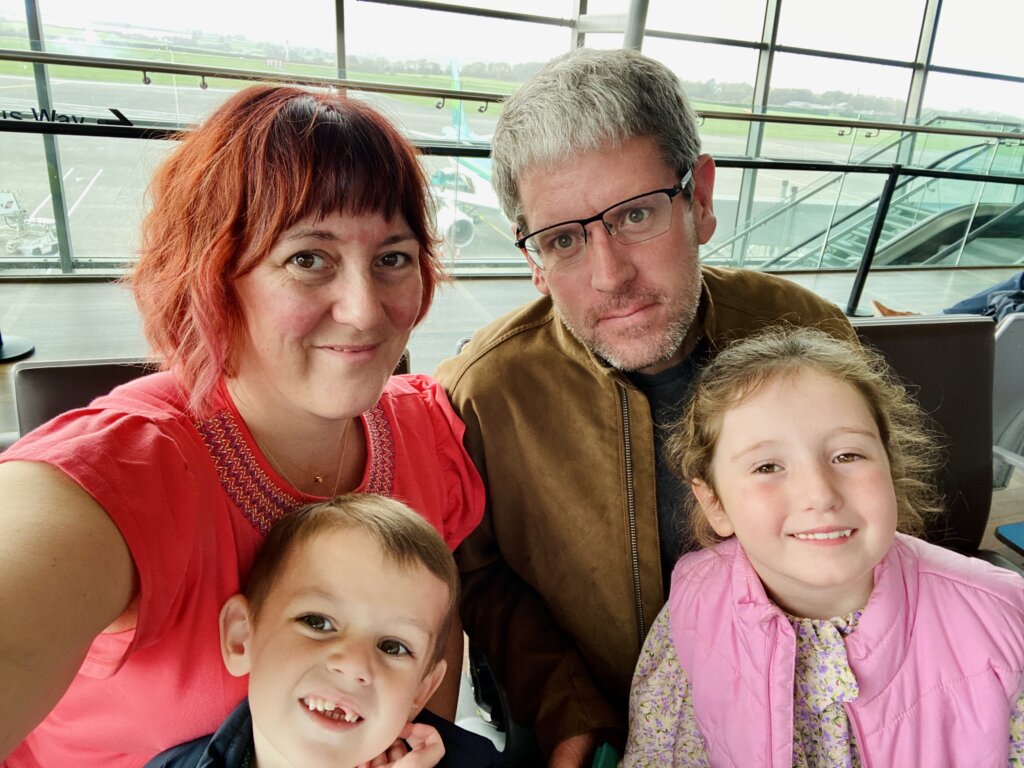
Ivan O’Regan, a 44-year-old accountant from Ireland, hasn’t looked back since having DBS in February 2022. Before that, he had had an apomorphine pump since 2017, but by 2020 using it was making him vomit and causing stomach cysts. His mental health was also suffering. “I would have preferred to be sitting there, unable to move, than to put on the pump – that’s the way things were,” he says.
Since having DBS, his Parkinson’s symptoms and quality of life have vastly improved. “If I hadn’t had DBS,” he says, “I don’t know what we would have done. It’s like night and day.”
Yet despite the benefits of Deep Brain Stimulation, misinformation or a general lack of awareness persists – and fears of what could go wrong are common among those thinking of having the procedure done.
Dr Alexandra Boogers, currently clinical fellow and neurologist at the University of Toronto, Canada, was one of the founders of the DBS Select education programme at Health House centre in Leuven, Belgium. She has a wealth of experience in educating people with Parkinson’s about the surgery, the risks involved, the possible side effects and, crucially, what benefits they might expect from DBS.
Asked what concerns people with Parkinson’s tend to have, she says it varies: “One of the fears is obviously that it is a brain surgery and [that] something [in the brain] would be damaged, meaning that the individual would come out of the surgery in a worse shape.”
She continues: “The majority of the patients have this general reluctance of undergoing surgery.”
Essential in allaying this fear is making sure that people with Parkinson’s are well educated about all aspects of DBS.
“When educating, we do not look away from any details,” says Dr Boogers. “I talk about everything – every possible complication, every possible benefit, every possible side effect. Interestingly, sometimes I get the feedback that I spend more time discussing side effects than the benefits; but that is because I believe people should be very well informed.”
Professor Stieglitz, who has carried out approximately 500 DBS procedures – performing two a week on average – agrees that educating people with Parkinson’s before DBS surgery is vital for dispelling anxiety.
At Zurich University Hospital, a Parkinson’s nurse is often the first healthcare professional to raise the possibility of having DBS to a person with Parkinson’s. Having looked after them since diagnosis, nurses are likely to have a close relationship with the patient and will answer any questions they may have about it. Prospective DBS patients at Zurich University Hospital are also given a lengthy booklet to read – and, crucially, time to reflect.
The whole Deep Brain Stimulation process – from suggesting it as a potential treatment, educating the person, performing the preliminary tests that need to be carried out to establish if someone is a suitable candidate for the procedure, to actually having it done – may take about six months.
“We discuss this process several times before the patients have to decide,” says Professor Stieglitz. “And we give them a lot of information. My experience is that when I talk to patients about possible DBS, they have no fear anymore. I try to close the gaps, so they are really well informed – so after this it is not a problem at all.”
Dr Boogers is careful to reassure people with Parkinson’s by telling them what will happen in each eventuality. “I split it up first of all into risks related to the surgery: bleeding, infection, anaesthesia, antibiotics,” she says.
Balancing risks and opportunities
As with any operation, a DBS procedure comes with certain risks, but these are in line with other surgeries (e.g. for bleeding or infection). Cerebral bleeding is an aspect of surgery that people with Parkinson’s worry about; however, this is rare, occurring in only one to three per cent of cases. At Zurich University Hospital, it’s one per cent.
Professor Stieglitz says: “In the 500 cases I have done, I have seen two patients with severe symptomatic bleeding, and both recovered well.”
Infection rates can vary from one centre to another, but in general these are low as well. At Zurich University Hospital, the risk of DBS patients contracting an infection that will require surgical treatment and either partial or complete removal of implants is one to two per cent.
Dr Boogers says: “When discussing side effects, I emphasise how we can mitigate them. If infection happens, we need IV antibiotics; so people with Parkinson’s must be sure to inform hospital staff of any allergies to antibiotics.”
Even if a patient contracts an infection that results in the device being removed, it does not mean they cannot have DBS again. Dr Boogers says, “At the earliest, three months later we consider reimplantation.”
Professor Stieglitz recounts a recent case – just one in the last 300 surgeries at Zurich University Hospital – where they had to explant the DBS system after a person with Parkinson’s developed an infection seven months after their DBS surgery. Despite this, the person in question is keen to undergo DBS once again this autumn.
“He benefited from the therapy extremely well, and so he’s very unhappy that at the moment he’s living without it.”
Professor Stieglitz also says that people with Parkinson’s have a higher risk of delirium after being anaesthetised. “This is one thing that we inform the patients about.”
Other concerns about Deep Brain Stimulation
An important fear that people with Parkinson’s have relates to having suicidal thoughts after surgery – although, according to Dr Boogers, this is extremely rare.
“If you google deep brain stimulation, you may find stories that can come across as very overwhelming,” she says.
Dr Boogers emphasises that anyone affected would need to get in touch with their DBS consultant, who can then investigate why the thoughts are materialising.
Another concern some people with Parkinson’s may have relates to being wheelchair-bound after the procedure. However, data shows that this is very rare.
Dr Boogers says, “That is a highly infrequent situation. That would basically mean that the surgery had a complication, that inserting the electrode led to a massive bleed which caused significant damage. Now, a bleed caused by insertion of the electrode is extremely rare – it’s lower than one per cent. And if there is a bleed then it’s usually asymptomatic, meaning that we pick it up on the CT scan, but we don’t actually see any symptoms related to it. So, these massive things that [people think could] go wrong actually almost never happen.”
Those considering DBS can also worry that they won’t feel a benefit afterwards – in other words that it may not work. Dr Boogers says: “If the lead is well positioned, motor symptoms always improve to a certain extent. And then we have to define what ‘works’ actually means for the patient. For one patient, DBS ‘working’ could mean going to the grocery store and buying groceries using a walker. And maybe for another patient, ‘working’ could mean they are able to fly to the other side of the world, to be independent.”
Realistic expectations
It is essential that people with Parkinson’s have realistic expectations about what DBS can do for them. Broadly speaking, what they can do when they’re on medication before the surgery is what they can do after the surgery. In other words, the surgery won’t improve the quality of their ‘on’ time, but it should increase the quantity.
Dr Boogers gives an example: “I saw a patient last week who said, ‘I’m 65, I’m working full time, I have a shop. And I want to have DBS because I want to be able to work full time in my shop when I’m 75.’ Unfortunately, this is not realistic.”
She continues: “But if your expectation is that in 10 years from now you still want to be able to take care of yourself in a way that you would only need minimal help from others? That is something that DBS may be able to help with.”
DBS patients also need to know that while DBS can improve their quality of life, the treatment does not slow progression of Parkinson’s.
Professor Stieglitz says: “DBS works the same from when you begin using it. The problem is that Parkinson’s changes over time and, at some point, new symptoms can come into play (like swallowing disorders, balance disorders or even dementia), and these symptoms don’t respond to medications or DBS.”
A conversation about side effects
In the same way that any medication can come with side effects, people also need to have an open conversation with a healthcare professional about unwanted effects DBS may have in their case – and which overall outcome they want to achieve. Some people with Parkinson’s might for example experience balance problems and slurred speech – this is something Ivan has experienced: “My speech has probably deteriorated a bit, probably more so over the last six months. I’m not quite sure whether or not that would have happened if I didn’t have DBS.”
Dr Boogers says advancements in DBS technology mean that in some cases they are able to minimise these side effects by adjusting the stimulation.
“Often, I let the patient decide: what is more important to you? Do you want to be free of tremor but have a bit of slurred speech? Or do you want your speech to be clear, but with some tremor left?”
Improving family life
Another factor to be aware of is that DBS can be so effective that it changes someone’s life drastically – and therefore the relationship they have with loved ones.
Professor Stieglitz says: “From the beginning, we tell the patient that this is a disease affecting not one person, but the whole family. Relationships might change and role models in the family might change after the treatment, and they have to be prepared,” he says.
For Ivan and his partner Eleanor, DBS improved his symptoms so much that they believe that the treatment saved their relationship.
Before DBS, Ivan admits that he often told Eleanor that he had the apomorphine pump on when he didn’t. “Due to the side effects of the pump, I often chose not to use it, preferring to remain in an ‘off’ state where I was unable to move,” he says. “This led to situations where Eleanor would find me ‘stuck’ on a chair when I was supposed to be taking care of our two young children. My unreliability and the burden it placed on Eleanor put a considerable strain on our relationship,” he says.
Thankfully, DBS changed all that.
“The most significant improvement has been the restoration of trust in our relationship,” says Ivan of the benefits DBS has brought him and his family. “I’m always moving now, which has eliminated the unpredictability that was so challenging for us before. We can now plan activities together, such as day trips or holidays, without the constant worry of my symptoms interfering. The improvement in my condition has had a profound effect on our family life,” he says.
Another thing to consider is that having a DBS, and thus typically reducing the medication intake, reduces the risk of getting the timing or dosage wrong – something which can be a concern for older patients or people with dementia.
Making the decision to have Deep Brain Stimulation
Asked what advice he would give someone who is worried about having DBS surgery, Professor Stieglitz says: “I would say to them, try to get as much information about it as you can.”
Although there is an optimal window for DBS, Stieglitz says the window is sufficiently large that people with Parkinson’s have plenty of time to gather all the facts they need to decide if DBS surgery is right for them.
“There is definitely enough time to read, to get information, to talk to different specialists or even to patients. If the patients want that, we put them in contact with other patients who have been treated before, so they can get their information first hand.”
Professor Stieglitz’s long list of patients happy to share what DBS has done for them speaks for itself as to the benefits the treatment can offer people with Parkinson’s. As a result, they and people like Ivan are now enjoying an improvement in symptoms that is often no less than life-changing.
Find out more about Deep Brain Stimulation on our Parkinson’s treatment page.