Researchers have developed a simple blood test for identifying Parkinson’s which could predict the condition seven years before symptoms begin. This exciting research was co-funded by one of our Member Organisations, Parkinson’s UK.
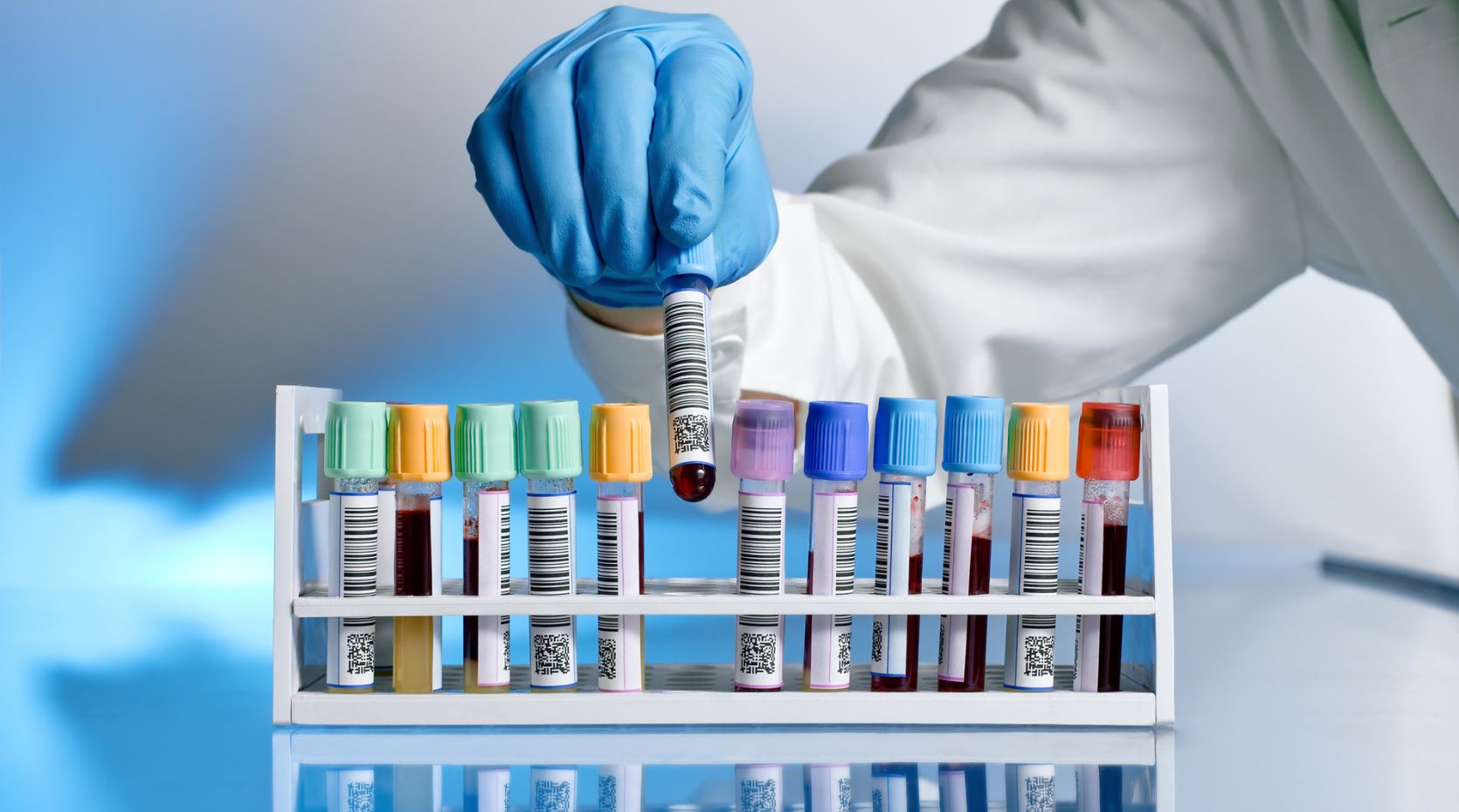
Using machine learning – a form of AI (artificial intelligence) – researchers from University College London in the UK and University Medical Centre in Goettingen, Sweden, screened blood samples from 99 people with Parkinson’s and 36 people without the condition, and this led them to identify eight key proteins or “biomarkers” common to those with the condition.
The team then analysed blood samples taken a decade ago from 72 people with a sleep condition called Rapid Eye Movement Disorder, who are known to be at higher risk of developing Parkinson’s. By identifying the presence of these eight proteins, the AI tool has so far been able to correctly predict which of these people would go on to develop Parkinson’s – in some cases, up to seven years before their symptoms began.
What could a blood test for Parkinson’s mean for the Parkinson’s community?
One of the lead researchers, Professor Kevin Mills, explains:
“As new therapies become available to treat Parkinson’s, we need to diagnose patients before they have developed the symptoms. We cannot regrow our brain cells and therefore we need to protect those that we have.
“At present we are shutting the stable door after the horse has bolted and we need to start experimental treatments before patients develop symptoms. Therefore, we set out to use state-of-the-art technology to find new and better biomarkers for Parkinson’s and develop them into a test.”
Dr Michale Bartl at UMC Goettingen in Sweden added: “By determining eight proteins in the blood, we can identify potential Parkinson’s patients several years in advance,” said “This means that drug therapies could potentially be given at an earlier stage, which could possibly slow down disease progression or even prevent it from occurring.”
What are the next steps for this research?
Larger trials are now needed to validate this blood tests’ accuracy for predicting Parkinson’s, and develop a version that could be easily used in a clinic. Prof Michele Vendruscolo from the University of Cambridge has said the blood test for Parkinson’s could be performed with equipment already in major hospitals, and Kevin Mills is hopeful that this might even be possible within two years. This would replace the invasive lumbar puncture that is currently used to diagnose Parkinson’s.
Read the research paper in full in the Journal of Nature Communications.