Here, Dr Antonella Macerollo, who is Consultant Neurologist with expertise in movement disorders at The Walton Centre in Liverpool, UK, and Honorary Clinical Senior Lecturer at the University of Liverpool, discusses clinical features and available treatments of Parkinson’s disease and Essential Tremor. Afterwards, we hear from Cathy Molohan, a person with Parkinson’s disease, and Jackie Farrell, who has Essential Tremor, to learn how they have each experienced stigma and what can be done to reduce it.
Dr Macerollo on Parkinson’s disease and Essential Tremor
What are the differences between Parkinson’s disease and Essential Tremor?
Essential Tremor and Parkinson’s disease are two completely different conditions that are part of the wide family of movement disorders. These disorders can be present in the same patient due to the high prevalence of both of them. Parkinson’s disease is a neurodegenerative condition involving the basal ganglia. Usually, the peak of incidence is around 65 years old, but there are young onset forms with an onset before 50 years old which are often genetic. The main motor symptoms are resting tremor, rigidity, slowness of movement and changes in posture. Moreover, patients are affected by several non-motor symptoms (for instance, lack of sense of smell, fatigue, pain).
Essential Tremor was defined in the past as benign Essential Tremor because it is not associated with a neurodegeneration of the brain. However, although we label it as benign, it is a condition that progresses over a lifetime, and it is significantly disabling. The age of onset can be as young as primary-school or secondary-school age, but the peak of incidence is between 60 and 70 years old.
The Essential Tremor is an action or postural tremor and not present at rest (contrary to the Parkinsonian tremor). Typically, the patients describe the presence of the tremor during voluntary actions (e.g. holding a cup of tea). Essential Tremor is also associated with changes in a part of the brain called the cerebellum, causing balance difficulties in this group of patients. Unlike in Parkinson’s disease, cognitive function is not affected in those with Essential Tremor.
What sort of treatment is there for Essential Tremor?
Essential Tremor is treated in the first instance with pharmacological treatments, such as propranolol, primidone, gabapentin, pregabalin, and zonisamide. These are symptomatic treatments to reduce the severity of the tremor. However, only 50 per cent of patients respond to the pharmacological treatments. Moreover, these therapies lose efficacy over time due to the progression of the tremor. It is important to note that many patients have side effects, such as drowsiness, and they have to come off these medications. For those patients who are medication-refractory, advanced therapies may be considered.
What advanced treatments are there for Essential Tremor?
Once we have tried at least three different pharmacological treatments, the next step is to discuss with the patient the possibility of an advanced therapy such as deep brain stimulation and MRI-guided focused ultrasound thalamotomy.
Deep brain stimulation is a treatment discovered and established about 30 years ago by Alim Benabid and his team in Grenoble, France.
MRI-guided focused ultrasound thalamotomy is a relatively new treatment which has been available for around eight or nine years in different European countries, especially in Spain. Magnetic resonance-guided focused ultrasound (MRgFUS) is an incisionless technology using MRI imaging to guide high-powered, focused ultrasound to a sub-millimetre point. At that point, molecules are vibrated extremely quickly, which creates localised heat. First, with medium power and thermal imaging feedback this can be used to clinically test the safety and efficacy. Then, once the target is confirmed, this can be used to create a permanent lesion, blocking the faulty signals.
MRgFUS allows clinicians to target a very specific focal point, so only the targeted tissue is affected. Patients remain awake for the approximately two-hour treatment, often experiencing an immediate reduction in their tremor and in many cases leaving hospital the same day.
As for every neurosurgical procedure, there are selection criteria to be eligible for this treatment such as pharmaco-resistant tremor, no significant balance impairment, and no significant cognitive difficulties.
MRI-guided focused ultrasound is CE marked and approved for staged bilateral treatment, meaning treatment of both sides of the body, for Essential Tremor in countries where the CE label applies including the UK. However, only unilateral treatment (treatment of one side of the body) is currently covered in the UK by the National Health Service. For non-NHS patients where a staged bilateral treatment is being considered, specific conditions of treatment should be discussed with an expert centre.”
Does DBS for Essential Tremor work in the same way as it does for Parkinson’s disease?
The mechanism of action is the same, but the stimulation is directed to a different region of the brain.
What sort of treatment is there for Parkinson’s disease?
We have several pharmacological treatments such as dopamine agonists, levodopa, MAO-B inhibitors, and COMT inhibitors.
The first-line therapy is dopamine agonists in the young-onset forms of Parkinson’s disease; however, side effects are very common (especially impulsive control behaviour disorders). Levodopa is the most used therapy; however, some patients can develop side effects in the long-term such as involuntary movements (dyskinesia).
What advanced treatments are there for Parkinson’s?
There are advanced therapies such as deep brain stimulation, apomorphine pump and duodopa. Notably, MRI-guided focused ultrasound is now CE mark approved for the treatment of Parkinson’s disease but is yet to be available on the UK NHS.
From your experience of Essential Tremor, what sort of stigma have people experienced?
Stigma affects especially young people. For example, I have a 28-year-old patient who is a chef, and the tremor significantly affects his job’s activities. The main stigma is that patients feel continuously observed in social environments and, if this is the case, they become isolated to avoid these situations.
In addition, patients with Essential Tremor very often describe feeling stressed by constant questions such as “why do you have tremor? Is it Parkinson’s disease? Are you drunk?”
Importantly, some patients with Essential Tremor start to drink excessive amounts of alcohol to reduce the severity of their tremor. Indeed, Essential Tremor typically responds to alcohol – but this is of course not medically recommended.
What stigma have you heard about from people with Parkinson’s disease?
People with Parkinson’s disease feel the stigma of other people watching them in the social environment. Moreover, people often confuse dementia and Parkinson’s disease; therefore, patients with Parkinson’s disease feel the stigma that other people are thinking they have dementia when they do not.
Cathy Molohan
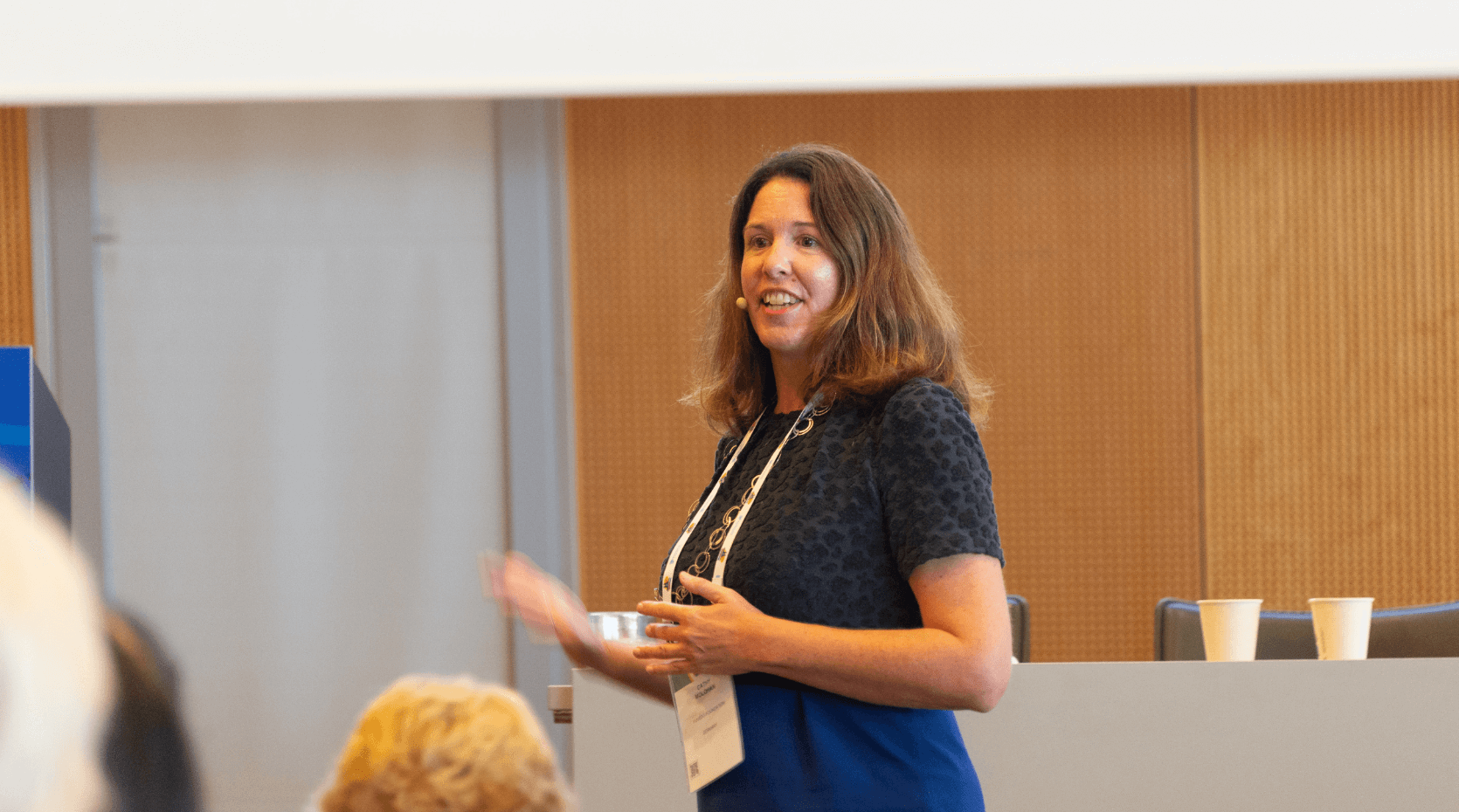
Cathy Molohan is a 50-year-old Irish woman with Parkinson’s who lives in Germany. She was diagnosed when she was 38 after noticing a finger tremor. She has had DBS, which has reduced her hand tremors. Here, she discusses her experience with stigma and tells us what she thinks needs to change.
What has your experience been with stigma – from yourself or from others?
Self-stigma is definitely more of an issue for me than stigma I’ve experienced from others. I’ve been very lucky in that sense. For a while the tremor in my hand was the worst symptom: carrying two drinks from the bar was impossible. So, I’d only take one and the barman would be thinking, ‘What’s wrong with you, why can’t you carry two glasses?’ You get odd looks from people where you know they’re thinking, ‘What’s wrong with her?’ Why does she walk funny or have a tremor, or whatever. You’d have people looking at you in a restaurant when you’re trying to cut steak and you’re like this [shakes both hands], so I noticed when I went out, I was avoiding ordering something like steak and would order risotto or something easy to use a fork with. That’s when the self-stigma kicks in.
Have you experienced stigma at work?
I ran my own business for years, and I just told my business partners and my colleagues: “This is the story.” I told them pretty much straight away. They were super relaxed about it. I was very aware of the fact that I didn’t want to have to hide my symptoms at work and I knew the tremor was visible, and I didn’t want people to think I was drunk or nervous or having withdrawal symptoms from drugs or something like that.
I was doing sales for my own company, so I was very client-facing, and I just contacted clients of mine and said: “This is what is going on” and they were all super understanding.
As I had my own business, I knew I couldn’t be fired. I knew I wouldn’t be disadvantaged because of my symptoms, so it was a very privileged position to be in. Not everybody is in that position.
When you say people have given you funny looks, has that made you withdraw in any way or stop doing things you used to do?
In the beginning, I would try to hide symptoms. I’ve kind of learnt to get on with it now. I wouldn’t say I don’t care, that’s not the case, but I’ve learnt to say, “This is who I am: take it or leave it.”
I’m lucky in that I don’t have severe dyskinesia or something that would draw lots of attention to myself. I can see people on the train if my leg is shaking thinking ‘God, she’s very nervous.’ Or if I’m having a bad day and my gait is maybe a bit funny.
What can be done to reduce stigma?
I think the key to battling stigma or self-stigma is openness and education. There are situations, for instance, if you’re in a group yoga class and you’re struggling to do the moves as fast as everybody else, or you fall over when you’re told to do the balancing exercises. In those situations, when the teacher asks, “Does anybody have any restrictions?” at the beginning of the class, I’ll always put up my hand and say, “I’ve got Parkinson’s, so don’t worry if I look a bit funny.” And then 95 per cent of people will just smile and go, “Fair play.” That’s western society in a big city where people tend to be more aware.
I think a lot of people aren’t aware that you can get Parkinson’s young, so I get a lot of looks like ‘Ooh, Parkinson’s at your age; God, that’s unusual.’ I try to enter into dialogue and say, “It’s not as rare as you think.”
That’s where we as a community need to work to change the image of Parkinson’s. When you google Parkinson’s, you get an image of a very bent-over, shaky old man with a stick, and we’d love to change that, just to change the perspective in people’s heads and for people who are newly diagnosed as well. Even if you’re diagnosed when you’re older, it can take a long time till you get to that bent-over, shaky, dependent stage.
You ran a workshop on stigma at the World Parkinson Congress in Barcelona last year. What have you discovered from talking to other people with Parkinson’s about stigma?
It’s a huge range. You’ve got people who are scared to say they have Parkinson’s because they’re the main breadwinner in the family. They’re afraid of losing their jobs. You’ve got people in African countries who literally get accused of witchcraft, and that’s a real issue in some places. We had examples of people who don’t go out anymore because they’re afraid of being judged or laughed at and who suffer then from massive social withdrawal symptoms, isolation, loneliness. You’ve got people who themselves don’t know about the disease, so they don’t know what to tell other people. They mightn’t have the vocabulary or knowledge to explain what’s going on with themselves, never mind to help other people understand.
What needs to change to relieve stigma for people with Parkinson’s?
We need data; we need to prove that this is a huge issue that impacts people’s wellbeing, mental health, financial status, workplace situation. Based on that data, we need coordinated campaigns to educate people about Parkinson’s and other neurological diseases, so that people with the condition feel more aware, more empowered, more comfortable to talk about their diagnosis and therefore don’t get excluded from the workplace or from social life.
A lot of people could keep on working but they’re afraid to say, “I need to work slightly differently,” or, “I need a dictation program for my computer.” Or “I need to start a bit later in the day because my medication doesn’t kick in in the morning.” Or “I need to work part time because I get fatigued very often.” People try to push themselves to be normal – whatever that is. They reach their limits and then they crash out at the workplace and become a financial burden for the state instead of being a contributing member of society for as long as possible. If I hadn’t had an understanding team around me, I would not have been able to keep working.
We need universal language that’s culturally aware, where people can describe their symptoms and their fears, and we need education from school age upward. I was in Ireland a couple of days ago babysitting my nieces, and the seven-year-old says “How’s your Parkinson’s?” I just think it’s lovely that my brother brought her up to be aware and not to be afraid to ask.
What would your advice be for someone with Parkinson’s who is battling stigma?
I would encourage people to network, to talk to other people with Parkinson’s, and to reach out to organisations. If you’re finding yourself tending to hide away, really try to battle that. There are people out there who can help you to fight that.
It’s about accepting differences in society, I think we’ve all become very Instagrammable, TikTokkable: you have to be perfect; you have to be sexy; you have to be gorgeous; you have to be clever – and you’re not allowed to have a shake or have something wrong with you. We need to really move away from this image of ‘everything is perfect’ for people’s mental health as well because who is perfect? We really need to combat that in our society. It just adds to it all.
Jackie Farrell
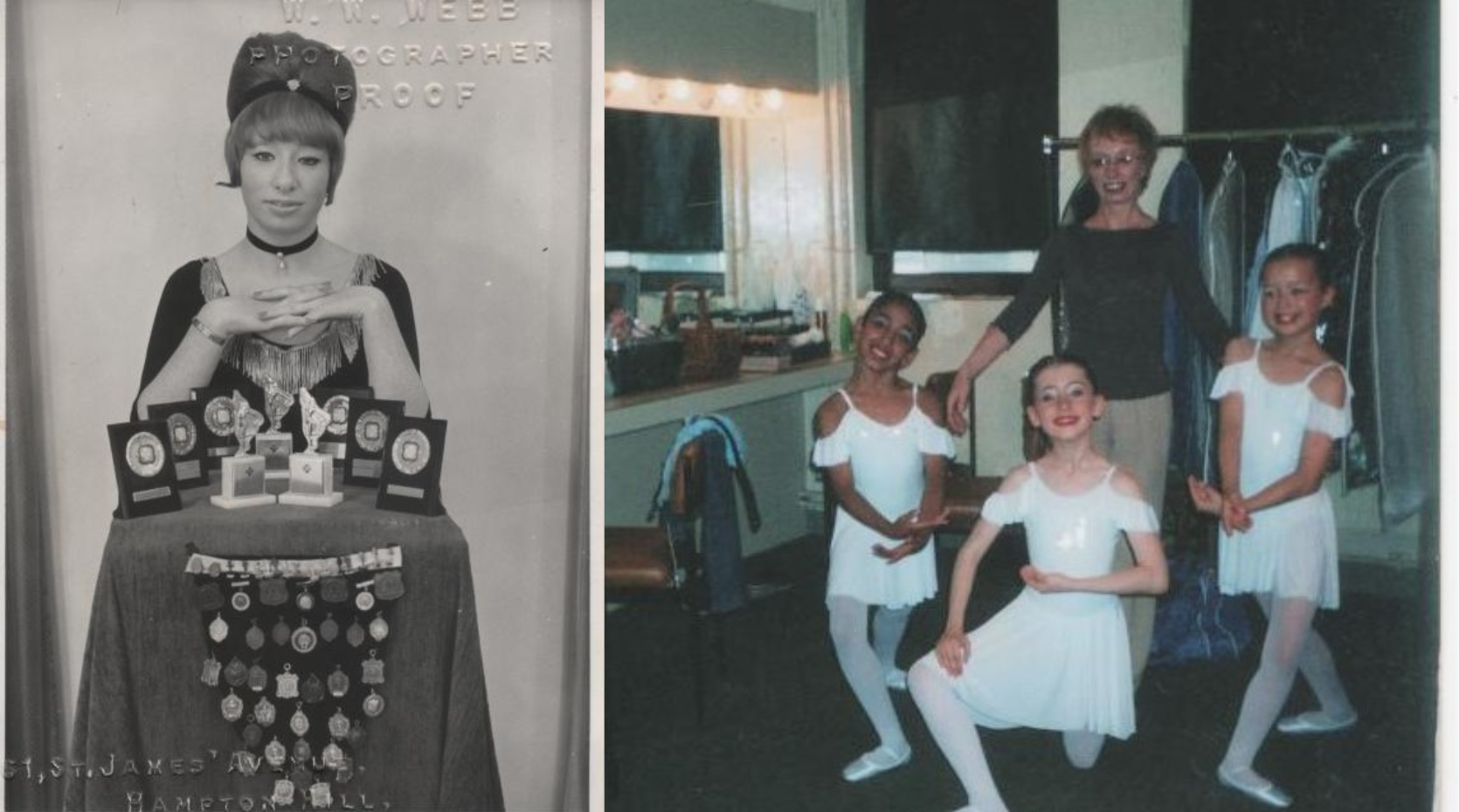
Jackie Farrell, 77, from the UK, was diagnosed with Essential Tremor back in the 1970s when she was in her twenties, after a friend noticed a tremor in her hand. A retired dance teacher, her condition has since progressed; her hand tremor has worsened and now she has a head and jaw tremor and also experiences leg tremors. She does not take medication, preferring to manage her condition through practising daily meditation and mindfulness, which she finds helps calm the tremors. She now volunteers as Support Group Coordinator for the National Tremor Foundation (NTF) in the UK. Here, she tells us her experiences with stigma and what she believes can be done about it.
How does Essential Tremor affect your life?
My hand tremor affects eating, drinking, writing, mobile phones, technology, cutting nails – any fine motor task. And when you have a head tremor you have other challenges: for example, putting on makeup. One of the biggest challenges is going to the dentist. On rare occasions, my leg tremors can trigger a wave of tremors up the body, and then I’m left looking a bit like I’m a wobbly jelly or I’m having a fit.
How has it affected your work?
I’m a retired dance teacher and I started my school in 1964. I’ve always been self-employed. I had a mild tremor in my hands back then, so it didn’t really affect my teaching – but with hindsight maybe it did. Classical ballet was the main subject I taught and, as you can imagine, you have to have very precise hand movements. Because the hand tremors had started to progress from about 2000, I knew that the time would come when I would have to stop teaching, and that was in 2004. I’d had my school 40 years. It was a devastating time for me, not only with the school, but because dance had been my life since the age of three.
How has stigma affected your life?
Going back many years ago when there was no internet and no associations, we really were on our own. If you were out in a social environment, or out in a restaurant or a cafe, that could be very embarrassing when you had never met another person with the disorder, and I would notice people looking at me, and I’d automatically think: ‘They’re looking at me because I’m shaking. Do they think I’m drunk; do they think I’m on drugs?’ And some people have thought I have Parkinson’s, so all these things would go through my mind.
And on some occasions, if a person had been sitting on a table next to me, they would move, just one table along. My mind would think: ‘They’re moving because of my tremors,’ but of course I had no reason to believe that was the case. At checkouts, I’d be standing there trying to get the money out of my purse or to pay by card. And then it would take so long that a queue would build up behind me and I could hear, “Tut, tut, she’s taking so long.” These days, I say very politely to those behind me “Please excuse me, I have tremors.”
I was at St Pancras International station in London a few years back. All the trains had been cancelled, and I was panicking as I had no idea how I was going to get home. Stress and anxiety will increase the tremor, and it caused a whole-body tremor, and people just moved away. It really hit me that nobody was coming to see if I was OK. All I wanted to do was find somewhere to sit down as if I sit down, the tremors will calm down. It took a while, but then one kind lady came up to me and asked if I was all right. And I said, “Oh, thank you, I just need to sit down.” A station attendant then came over and he was brilliant and kept me updated on the train situation.
I’ve never experienced any stigma from family or friends – I’ve been quite fortunate. However, I do hear from other people who withdraw from society through embarrassment, who won’t even go to eat with family members.
Did you experience self-stigma?
I didn’t avoid going anywhere. A lot of people will hide their tremors, and years ago I was one of those. We’ll sit on our hands, or we’ll let them relax, because if our hands are relaxed, they will generally be still.
How have you dealt with stigma?
Going back to when I was teaching, before 2004, I never told the parents about my tremor. Looking back, I wish I’d have had the confidence to tell them. I had ways I could hide the tremors while I was teaching. It was only when I had to stop teaching that I told the parents for the first time: “This is what I have.”
About 12 years ago, after I’d retired from teaching, I thought ‘What can I do that would help others with Essential Tremor?’ So, I started raising awareness and supporting people, and for the last eight years I’ve been Support Group Coordinator for the National Tremor Foundation.
What is your advice to others about dealing with stigma?
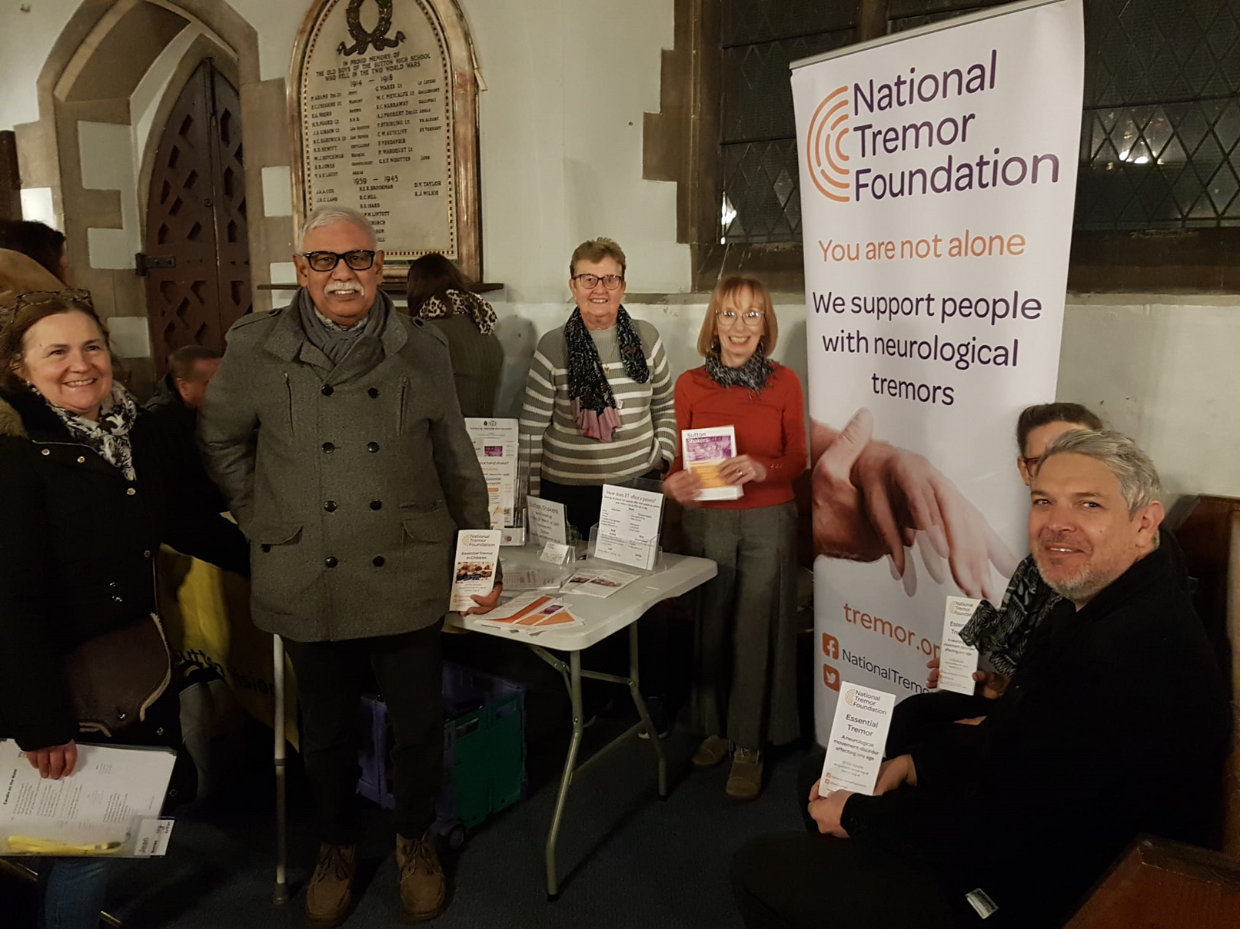
Contact the NTF and meet others with the condition. I run two support groups myself face to face, and meeting others helps lift any self-stigma. People say: “It’s so lovely to talk to somebody else who knows what it’s like.” We support one another – and myself as well – but it’s also an opportunity to have fun and make new friends.
Since I’ve been a Support Group Coordinator, people have told me “I feel alone”, and “I don’t go out; I stay at home through embarrassment.” One of the things that we encourage people to do is to talk about their tremors. For example, if you’re at a social occasion and there’s people there that you don’t know, if you explain in the beginning that you have a tremor, if they see you shaking, they’ll know not to worry. The president of the NTF is Lord Julian Fellowes, creator of UK TV series Downton Abbey, and he’ll encourage people to explain in advance if you’re in a social environment: it helps put the people around you at ease. And it helps the person with the tremors to relax as well. But it does take a lot of confidence to take that first step: to talk about your tremors and to just not worry what people think.
The NTF has a handy Essential Tremor leaflet, so what I sometimes suggest to those with the disorder is, “Look, have some of these leaflets in your bag.” I have them in my bag, so if I’m stopped anywhere and somebody wants to know more about the condition, I say, “Here’s a little leaflet,” and that’s quite a simple thing to get over the embarrassment.
I found that once I started talking about my tremors, it was almost like a weight had been lifted. And that first time is the hardest. But the more I started talking about it, the easier it got. I’m not so embarrassed now. This is who I am, and if people do move then they move – that’s not my issue.
What can be done to reduce stigma in general society?
More awareness: that’s what Essential Tremor needs. And in the medical profession as well. People have told me: “I was diagnosed but basically just sent home; there was nothing to give me any information or tell me where I could go for advice.”
Of course, there are neurologists that are very supportive, so I do hear the other side, from people that tell me how good their neurologists/GPs have been to explain in more detail, and even to point them in the direction of the NTF, which is great to hear, but we need that right across the board.
And in schools, teachers don’t know about Essential Tremor, and I never say it disrespectfully; it’s just a lack of awareness. But if a parent doesn’t know if their child has Essential Tremor – they haven’t been diagnosed – teachers may think the child is naughty, fidgety.
At NTF, ITV’s Coronation Street actor Rob Mallard has Essential Tremor in real life, and he’s recently been appointed as NTF Ambassador for Young People. His condition is hereditary, and he has been very instrumental in helping raise awareness. By having younger people that are out there on social media does help and helps the parents as well.
Find out more about Yuvedo Foundation
Find out more about the National Tremor Foundation
Parkinson’s Europe is sharing this article for information purposes only; it does not represent Parkinson’s Europe’s views and is not an endorsement by Parkinson’s Europe of any particular treatments, therapies or products.