When Alexandra Karadimou’s father Konstantinos – who has Parkinson’s – was admitted to hospital in Greece with a urinary infection last year, it quickly turned into a nightmare for her family. At first, things seemed positive, as Alexandra’s mother Stella was by Konstantinos’ side, but when they both caught Covid, they placed Alexandra’s father into isolation.
“For a patient like my father that is unable even to drink water himself, this is unacceptable,” Alexandra explained. “My mother was on the phone all day long asking the doctors and the nurses to allow her in or at least to ensure that he is taking his medication.”
Failure to administer Konstantinos’ Parkinson’s medication on time meant that Alexandra’s father was eventually sent home dehydrated and unable to speak or eat.
“My mother brought him back to life, she used to feed him with a teaspoon and same for water. It took more than a month to get back to his daily routine, eating and drinking as before. We believed that we were losing him.”
Sadly, this experience is all too common for the families of people with Parkinson’s across Europe. In Parkinson’s UK’s Get It On Time report, hospital patients spoke of how not getting their Parkinson’s medication on time “delayed my recovery and left me traumatised,” with the report revealing that a shocking 58% of people with Parkinson’s who were admitted to UK hospitals in 2022 didn’t get their medication on time.
Similarly, a study in The Netherlands found that incorrect medication was one of the most important factors for deterioration of people with Parkinson’s during hospital stays, with over one-quarter of patients receiving incorrect Parkinson’s medication. In Ireland, a study at University College Cork found that Parkinson’s medications were being missed entirely or given late in over 30% of the hospital patients whose treatment they monitored.
Parkinson’s Nurse Specialist Lisa Wynn, who works with Parkinson’s Ireland, says that getting Parkinson’s medication on time is “a crucial aspect to living well with Parkinson’s”, explaining:
“Medication manages symptoms, for most, very effectively but it only does so for a period of time. To avoid a spiral of symptoms such as tremor or anxiety, medications, at set times, are to ensure a near consistent level of dopamine is maintained in the bloodstream.”
At a time when health services across Europe are struggling, it’s easy to believe this issue will only get worse, however there is some hope in sight.
As far back as 2020, trials in Scotland and Minnesota, USA found that significant improvements could be made to the timely administration of Parkinson’s medications in hospital thanks to things like e-prescription, alert systems, and adding common Parkinson’s medications to automated medication dispensing machines on key hospital units.
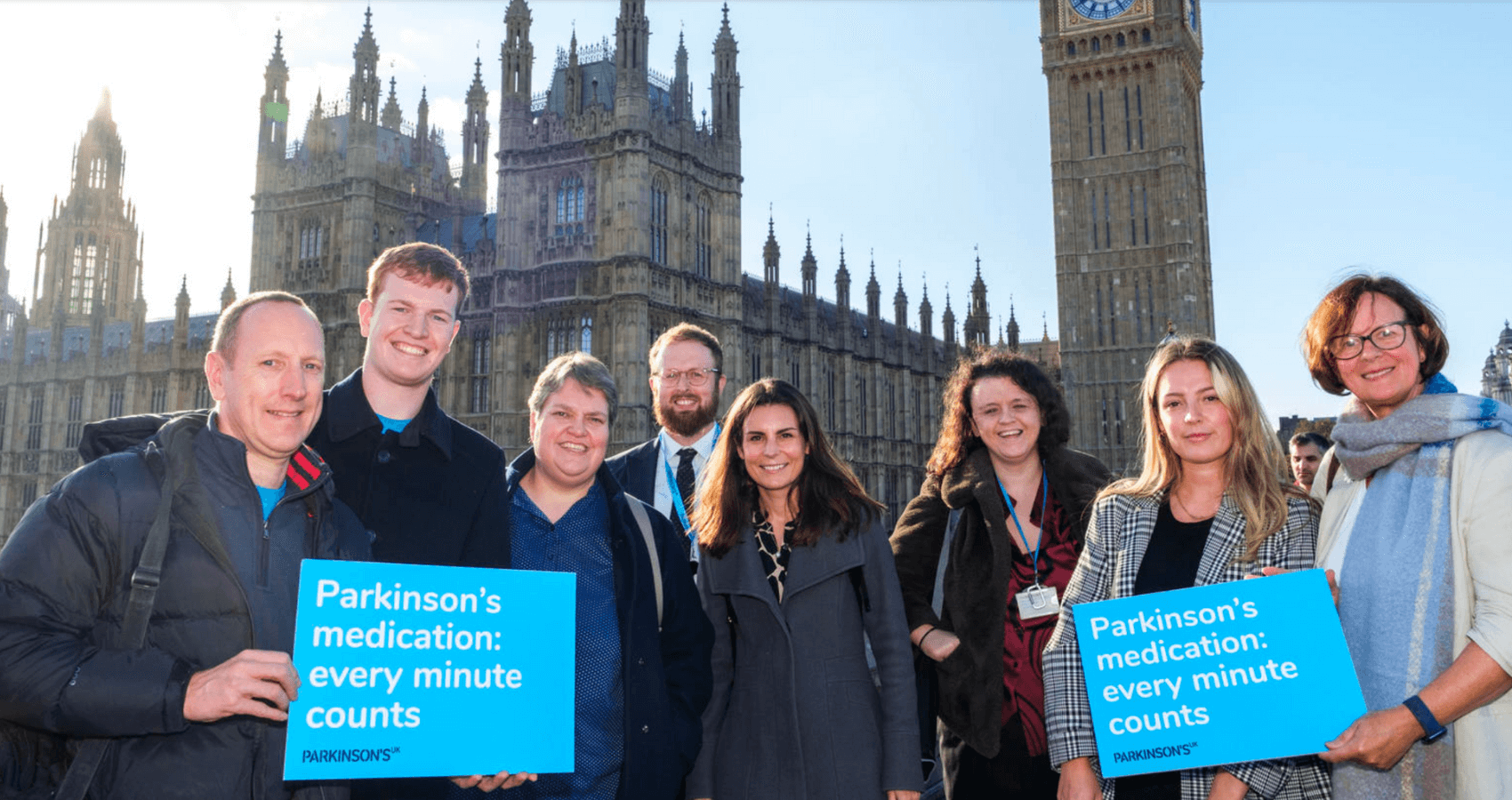
Perhaps the biggest step forward, however, has been the Get It On Time campaign organised by Parkinson’s UK. This has more recently included producing several guides for hospital staff, including ones about time-critical Parkinson’s medication both for hospital pharmacy staff and nurse in charge or ward staff, and advice on electronic prescribing. They’ve also produced some practical awareness-raising resources for healthcare professionals including campaign posters and stickers for hospital staff to use on patients’ notes to highlight that time-critical medication is needed.
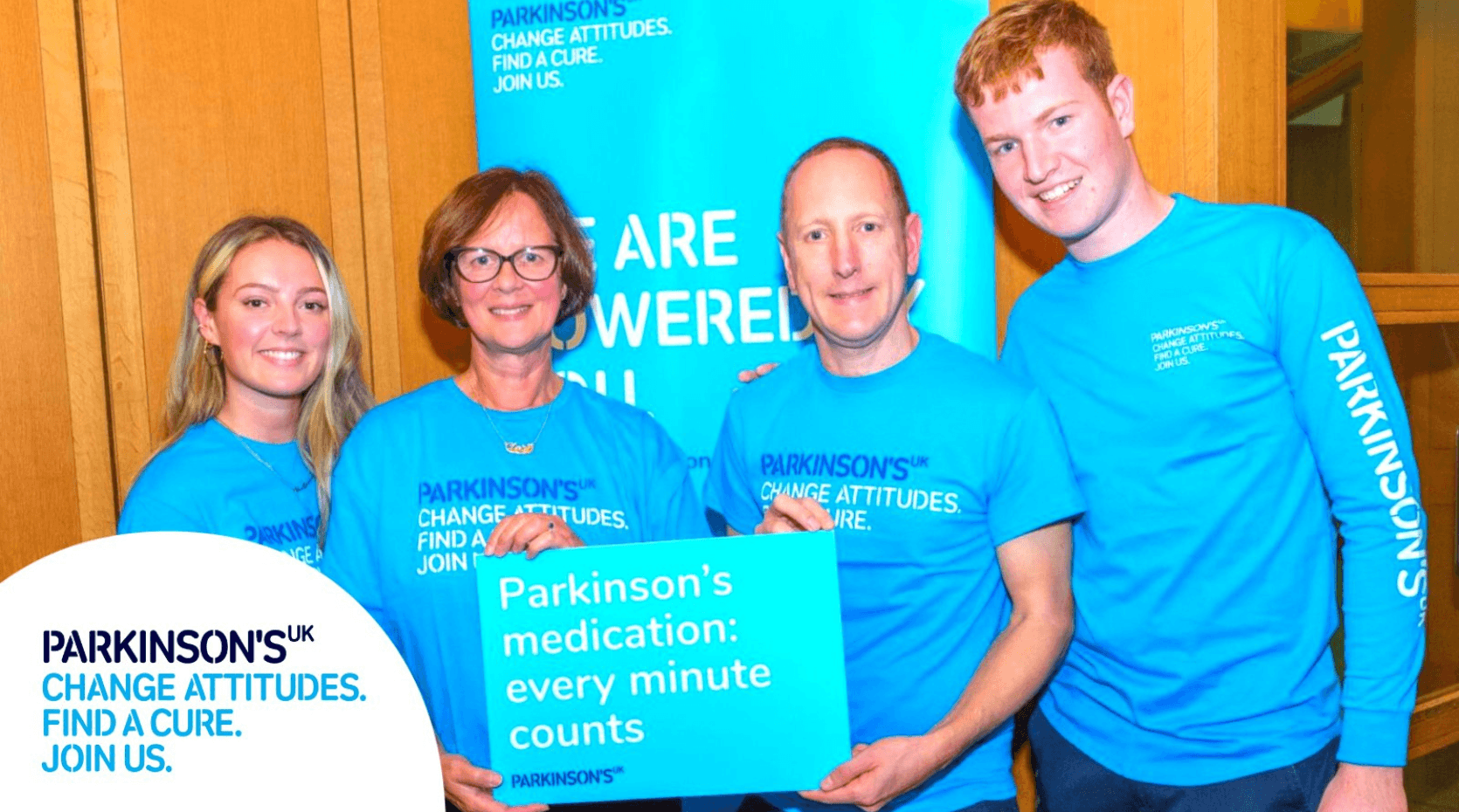
Lisa Wynn describes the Get It On Time resources as an “invaluable tool to assist those who may not be familiar with Parkinson’s and the recommended medication guidelines,” adding:
“To have accessibility to these materials will not only increase essential education and awareness to those healthcare professionals caring for people with Parkinson’s, but will in turn reflect positively on the care experience, recuperation and positive health outcomes for those people with Parkinson’s and their care partners.”
The question remains as to how the wider European healthcare system can implement these kinds of improvements – and soon – to avoid more painful and distressing experiences like the one Konstantinos’ family endured.
Perhaps if Get It On Time’s resources were translated and distributed among healthcare professionals across Europe, it could inspire more widespread improvements? Or do we as the Parkinson’s community need to develop initiatives tailored more specifically to each European country’s healthcare system and resources?
Europe doesn’t have an answer yet, but for Alexandra, these improvements can’t come soon enough:
“I do understand that in the hospital it is difficult to have a nurse 24/7, but still they must give priority to patients that cannot do without their medicine. If instead of Parkinson’s my father had diabetes, he would be dead. I mean, it should be illegal to neglect patient medication; they can easily lose their life.”
Read more about the Get It On Time campaign on the Parkinson’s UK website, and find additional advice about hospital stays on our website.