
We kick off the new series of the award-winning Parkinson’s Life podcast with a conversation about sleep and Parkinson’s. Brian Magennis, a Parkinson’s advanced nurse practitioner, talks with married couple Cormac and Mary Mehigan about how their sleep has been affected by the condition – from insomnia to vivid dreams – and how people with Parkinson’s can get a good night’s sleep
“When Cormac was diagnosed, I thought that Parkinson’s was all about motor symptoms and a tremor and a shake. I never realised that there were these non-motor symptoms. What we’ve found is that Cormac’s movement isn’t too bad – but he’s had enormous issues with sleep.”
Mary Mehigan is talking about her husband Cormac’s Parkinson’s disease. The couple, who live in Limerick, Ireland and have been married for nearly 25 years, have been affected by Cormac’s sleep disturbance since he began experiencing Parkinson’s symptoms around six years ago. He was finally diagnosed with the disease in 2018.
They share their experiences in the first episode of the new series of Parkinson’s Life podcast – which brings together people impacted by the condition for a candid and often emotional discussion. The episode is part of a new campaign, Sleep Well, by Parkinson’s Europe.
Up to 90% of people living with Parkinson’s suffer from sleep problems, which can include insomnia, problems moving in bed and urinary issues, as well as hallucinations, nightmares and vivid dreams.
Cormac, a consultant in emergency medicine, sometimes physically acts out his dreams – leading to broken nights of sleep for his wife Mary. Kicking his lamp off the bedside table is a regular occurrence, he says.
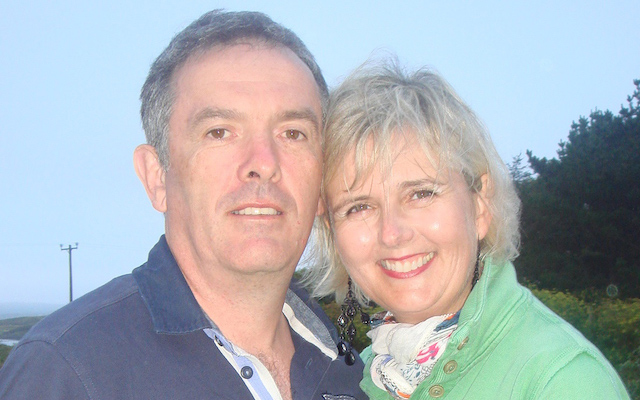
Recalling one of his earliest experiences of a vivid dream, in which he thought he was being chased by skeletons on a sleeper train, he says, “I turned around (to this skeleton) and hit him as hard as I possibly could across the face, and then woke up to [Mary] screaming beside me.”
Mary, a teacher, says she rarely gets a full night’s sleep and has struggled with tiredness at work. “It got so that I learned where to sleep in the bed, where to position myself and I could sense when he was about to kick off,” she says.
“It’s a big surprise. I thought all these Parkinson’s issues were Cormac’s issues and sleep was Cormac’s issue. But actually, it’s a shared issue for us.” She now keeps a sleep diary to track her sleeping pattern and how to improve it.
Getting a good night’s sleep
They are joined in conversation by Brian Magennis, a Parkinson’s advanced nurse practitioner from Dublin, Ireland, who is one of only four specialist Parkinson’s nurses in the whole of Ireland.
He has a close personal connection to the condition: his father was diagnosed with the condition when Brian was just 18 months old. “I don’t know my dad any other way except having Parkinson’s,” he says. “He’s been so positive and lived really well with it.”
Vivid dreaming, or REM sleep behaviour disorder, says Brian, can sometimes predate the motor symptoms of Parkinson’s. “There often seem to be dreams of people being in a fight or being chased – and it can be quite violent,” he says. “When we assess people in the clinic, we have a whole list of the non-motor symptoms that we go through – and the same with the motor symptoms. And the non-motor symptoms are the ones that really affect the quality of life.”
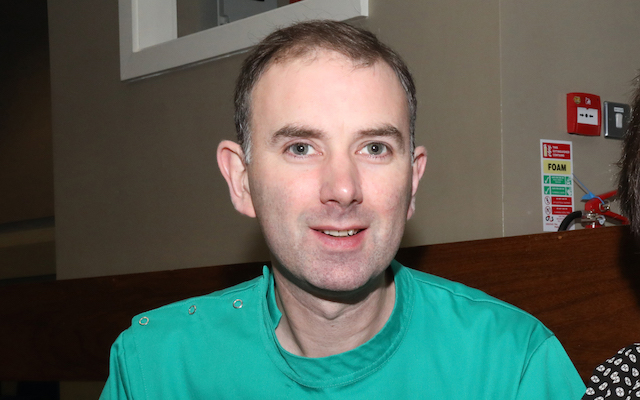
“It is very difficult,” he continues. “What usually ends up [happening] is that the partner moves out into a separate bed or a separate room. And that’s not good for the relationship.”
All guests agree that quality of sleep has a huge influence on other symptoms of Parkinson’s. “When people have a good night’s sleep,” says Brian, “they’re actually much better from a motor point of view.”
“I would agree 100%,” Cormac adds. “The day after a good night’s sleep, I’m buzzing. It makes such a difference.”