Parkinson’s Europe shared key statistics and advocated for improved healthcare for people with Parkinson’s at a recent event in Brussels.
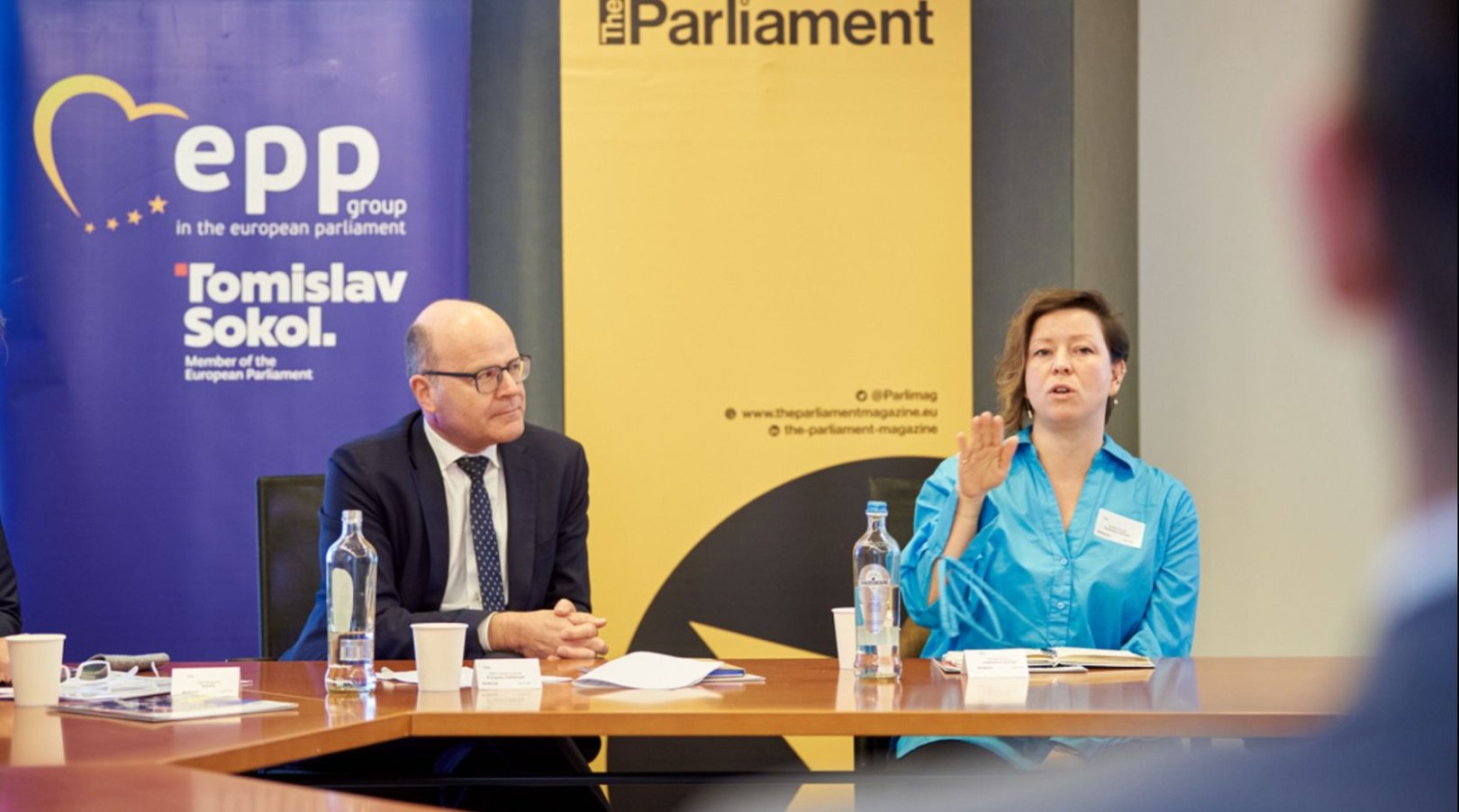
The working group event, “Europe’s leading role in healthcare”, was hosted by The Parliament magazine and Croatian MEP Tomislav Sokol. Critical challenges facing European healthcare systems, such as workforce shortages and rising chronic diseases, were among subjects discussed.
Amelia Hursey, Strategic Director for Parkinson’s Europe, addressed around 20 attendees at the event. These included MEPs such as German politician Oliver Schenk (pictured), policy advisors and key stakeholders.
She spoke of the importance of Parkinson’s Europe’s joint call to action for enhanced Parkinson’s care in Europe. The call was created with Abbvie, European Federation of Neurological Associations (EFNA) and the International Parkinson and Movement Disorder Society European Section (MDS-ES).
Need for improved Parkinson’s healthcare
Amelia also explained the expected rise in the number of people with Parkinson’s globally, and the impact on healthcare.
“Around 2010, the approximate number of people with Parkinson’s globally was thought to be 6.3 million,” she said. “In 2021 it was 11.9 million, and it is estimated that in 2050 it will be 25.2 million people. As there are not enough healthcare professionals currently to serve this population, something needs to change now.”
The event took place at the European Parliament in Brussels in March, as part of a series on healthcare run in partnership with AbbVie.
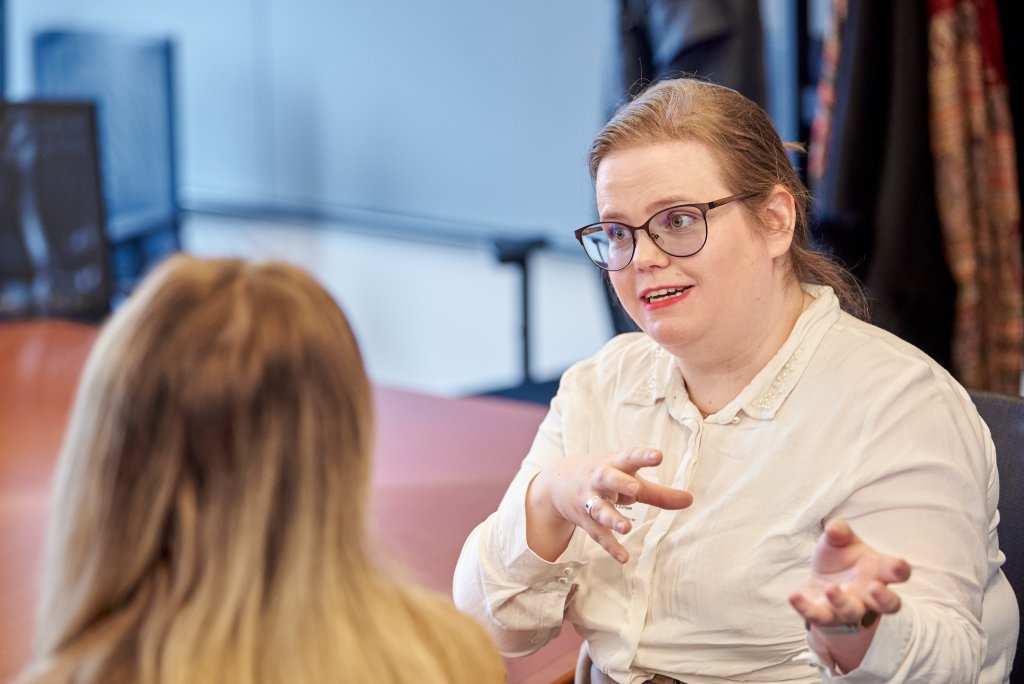
Parkinson’s Europe’s Campaigns and Advocacy Manager Hildur Kristjana Önnudóttir (pictured above) also attended. She said: “There is no health without healthcare professionals. Amelia’s contribution at the event ensured the complex needs of people with Parkinson’s was a prominent part of the discussion. Which is beneficial not only to the European Parkinson’s community but also to a wide range of persons who live with conditions that require access to a diverse team of healthcare professionals.”
Amelia added: “It was great to to bring the patient voice to this conversation, highlighting how much real-world data is already out there. I hope this will be part of what the MEP’s take forward into bigger discussions in this area.”