Research associate Dr Natasha Fothergill-Misbah and wildlife photographer David Plummer teamed up to create the short Parkinson’s awareness film, ‘Shaking Hands with the Devil’. They explain why they decided to collaborate, what they hope people will gain from watching their documentary – and why stigma around the condition is such a pressing issue in low- and middle-income countries
More than 10 million people are living with Parkinson’s around the world. Yet, global awareness of the condition and its symptoms remains relatively low – particularly in low- and middle-income countries.
The stigma that can arise from limited understanding of Parkinson’s is a topic that Dr Natasha Fothergill-Misbah has studied extensively through her work as a researcher. When completing her PhD, Natasha looked at the lived experiences of people with the condition in Kenya. She found that many people with Parkinson’s, in Kenya and beyond, had experienced stigmatisation.
In early 2023, Natasha – who now works as a research associate at Newcastle University, UK – was introduced to wildlife photographer David Plummer through a mutual connection. David, who was diagnosed with Parkinson’s in 2009, says he experienced stigmatisation and persecution first-hand as a result of his condition, in a country he had visited for work.
It was David’s personal experience, and Natasha’s background in Parkinson’s research, that prompted the pair to create the awareness documentary ‘Shaking Hands with the Devil’.
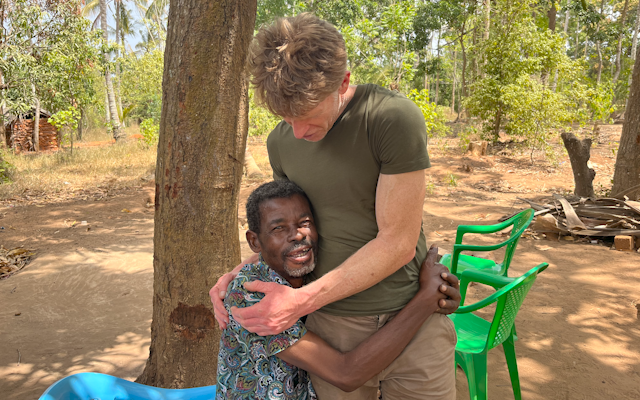
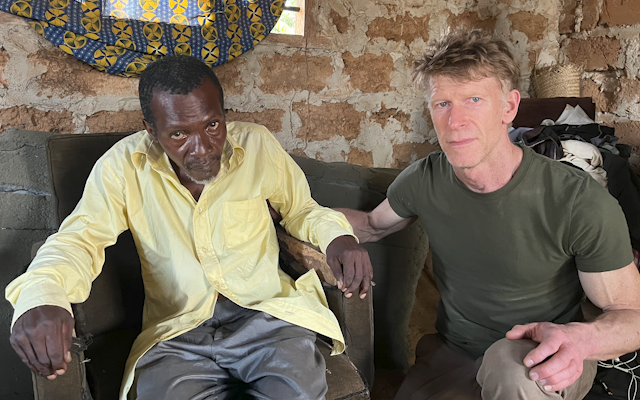
First released in August 2023, the short film follows David on his travels through Kenya – a low-middle income country in Africa – as he meets people who have reported being “marginalised, stigmatised and persecuted for having Parkinson’s”.
We spoke to Natasha and David to find out more about the project.
Please tell us about your documentary.
Natasha: ‘Shaking Hands with the Devil’ is about people with Parkinson’s who live in Kenya, and their experiences of stigma. It looks at how individuals manage and negotiate their condition with limited access to medicines. It also sheds light on others’ perceptions of their condition and the subsequent discrimination that those with Parkinson’s experience in day-to-day life.
David: We produced this film to explore the effects of stigma on both people with Parkinson’s and their families. Stigmatisation can result in persecution in parts of the world, but in this documentary, we focused on the lived experiences of people in Kenya.
How did ‘Shaking Hands with the Devil’ come about?
Natasha: As a researcher and Parkinson’s advocate I’m linked to several organisations, including The Cure Parkinson’s Trust. It is through a connection at this charity that I was introduced to David. We wanted to see if there was something we could do to tackle stigma and misinformation around Parkinson’s.
So, we came up with the idea to make a documentary. My role in producing it was to facilitate access to people with Parkinson’s who could share their stories with us – and to act as an on-the-ground contact.
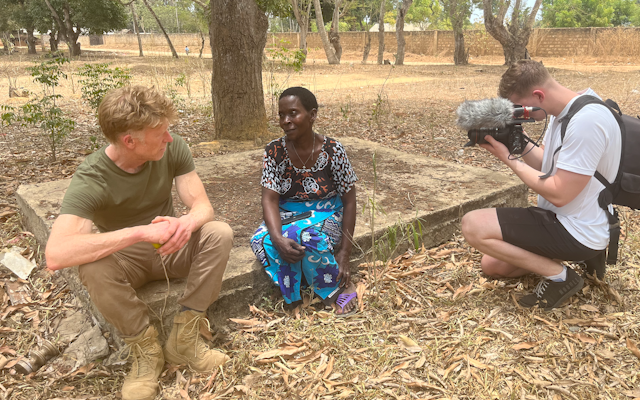
David: When I visited another country for work, I experienced stigmatisation and persecution on several occasions as a result of my Parkinson’s. I cut my business trip short.
After I returned to the UK, I was put in touch with Natasha. Between us, we decided to produce a documentary to highlight her invaluable research into the heart of the subject itself. The short film is a personal journey through my own eyes and shares real-life accounts from the people who are interviewed.
What do you hope to achieve with the documentary?
Natasha: We hope to improve viewers’ understanding of stigma related to Parkinson’s. On the ground in Kenya, we aim to raise awareness that Parkinson’s is a neurological condition. We also want to be able to showcase this to the policymakers and government officials, to really highlight the issue and push for change.
David: One million people watching the film and being shocked by the situation is not enough. But one key individual, who is in a position of power within their country, could see the short film and put steps in place to properly action change.
Can you share some examples of empowering stories that came across during the filming process?
Natasha: One of the most striking things for me was the joy that it brought the people with Parkinson’s to be interviewed by David, who also lives with the condition. To see someone else with Parkinson’s and know that they were not alone was a moving experience.
You could also see how difficult the lives of the interviewees were because they didn’t have access to medication. I think it brought them hope to see how treatment could help to manage the condition.
David: For me, the most poignant stories are told through our documentary.
What are the key messages you want viewers to take away from the documentary?
David: It’s hard enough dealing with Parkinson’s as it is. But in low- and middle-income nations, where you might have scant access to medication, the situation for people with the condition is not acceptable.
Natasha: We would like people to be aware of the challenges people in the Parkinson’s community are facing around the world. Of course, there are issues everywhere related to the condition – and stigma – but when we’re thinking about advanced therapies and research to develop new treatments, it’s important to remember that even the most basic medications aren’t available for people in many parts of the world.
If you’re moved by the documentary and you know organisations and individuals that could make a difference, please do reach out and share it with them. The whole point of this film is to raise awareness of the situation, not only in the country but globally as well.