Ahead of International Women’s Day, we share the highlights of our Women and Parkinson’s campaign – from eye-opening accounts of how menstruation, pregnancy and menopause can affect symptoms to a look at whether the coronavirus pandemic has disproportionately affected women with the condition
1. “Where are the women with Parkinson’s?”
When Francisca Ruiz González from Spain joined an association for people with Parkinson’s disease, she wondered, “Where are the women?”. Soon after her diagnosis, she found that research into how Parkinson’s uniquely affects women was limited.
Francisca shared her experience co-founding ‘Con P de Párkinson’, a blog “to give a voice to women with Parkinson’s disease”. As a space to share “experiences, triumphs, doubts and fears”, the blog is helping to raise awareness and make young women with the condition visible to the world.
“Women with Parkinson’s disease deserve proper diagnosis, better treatment options and a better quality of life,” said Francisca. “Through our blog, I feel that we are shouting to the world: ‘Look at us – we are here!’”
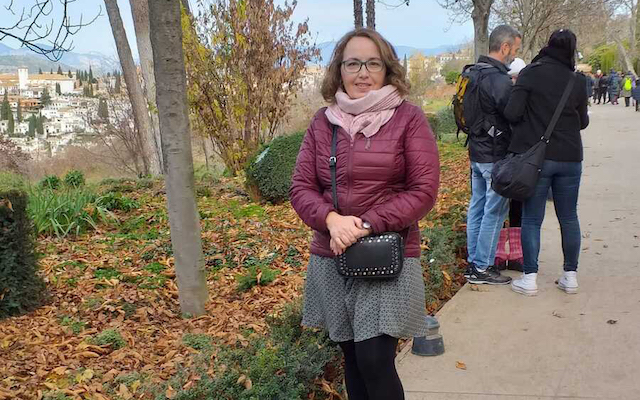
Read Francisca’s story here.
2. “Women are heard differently in medical settings”
It took two years for Ireland-based author and academic Kathleen Reardon to be diagnosed with Parkinson’s disease. Doctors disagreed about her symptoms and she found that “women are heard differently in medical settings”.
After her diagnosis, she struggled to find resources for women with the condition and to communicate effectively with healthcare professionals. For example, she described, doctors noting patients’ “complaints” would have greater implications for women – because doctors could tune out a female patient’s real symptoms as complaints.
She said: “Doctors may inadvertently tune out if they consider what a female patient is saying as a complaint. While my doctors have smiled when I’ve mentioned this, they’ve changed their approach. They now write, ‘The patient explained, described, discussed or emphasised’. If nothing else, it raises their awareness to an unconscious bias.
“As women with Parkinson’s, we need to listen to ourselves, and observe whether those around us, including our doctors, are hearing and heeding what we’re saying.”
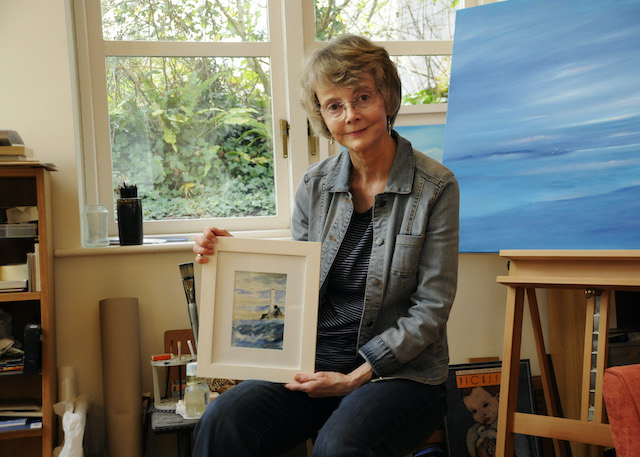
Read Kathleen’s story here.
3. How coronavirus is affecting women with Parkinson’s
We asked women living with Parkinson’s disease how Covid-19 has impacted their lives – from juggling work and childcare to keeping up with daily life, all while fearing for their health.
Emma Kyriacou in New Zealand described a “growing storm of inner rage” at the sudden pressure to teach her children, work and run a household. While the pressure eased when she got support from her husband, she said: “Life isn’t easy. And having a chronic illness increases the degree of difficulty somewhat. Put a pandemic on top? It definitely takes an adjustment period!”
Kitty Fitton, also based in New Zealand, noted the difficulty in finding a work-life balance. She said: “I’ve been a mother, carer, counsellor, sports coach, teacher, musician, cleaner, gardener, IT whizz, cook and special events coordinator.
“I don’t want sympathy or tucking away in a chair wrapped in a shawl for my Parkinson’s, but I do find some things hard. It’s tougher to get going in the morning, and I worry about going to the supermarket.”
Read their stories here.

4. “My medication only works three weeks out of four”
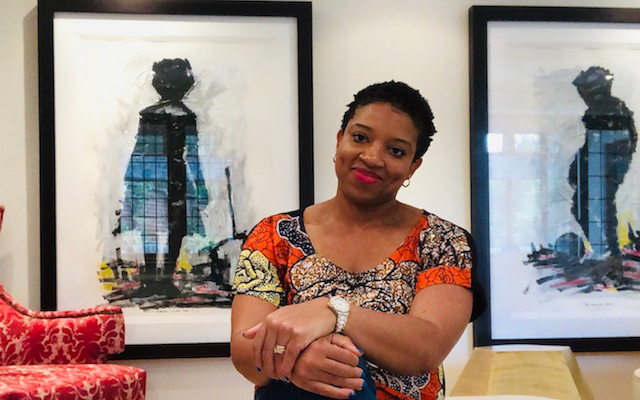
UK campaigner and blogger Omotola Thomas, who was diagnosed at the age of 35, shared the impact menstruation has on her Parkinson’s. By monitoring her Parkinson’s symptoms over a month, Omotola noticed a pattern: her Parkinson’s medication was less effective on the days before and during her period.
Omotola noted the impact this has on her roles as wife and mother, as she experiences heightened emotions beyond what she regards as ‘normal premenstrual syndrome’. “Attending my children’s school events, doing household chores, and sometimes simply being engaged in family life require a lot of effort,” she said.
Nevertheless, being aware of these symptoms has helped her better prepare for them. Omotola believes the issue deserves greater attention: “If women can be equipped early with the information on how Parkinson’s will impact them as women, they’ll be in a much better position to manage it.”
Read Omotola’s story here.
5. “Being pregnant was scary”
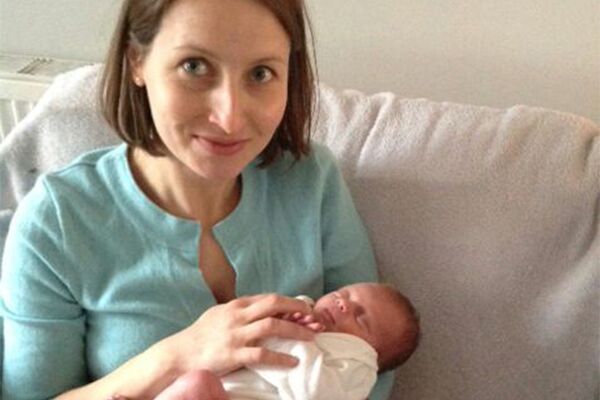
Since being diagnosed with Parkinson’s seven years ago at the age of 29, UK blogger Ellie Finch Hulme has given birth to two children. With little information about Parkinson’s and pregnancy available, Ellie admitted that her first experience “was quite scary”.
Her medication was reduced to the very lowest dose during the pregnancy, resulting in much worsened symptoms. She was unable to make any milk during pregnancy and advised not to breastfeed after.
Ellie found her second pregnancy much easier, however, and has adapted to parenting young children with Parkinson’s. She said: “It’s nothing that can’t be overcome, personally. I just crack on with things just like anybody else, and I try not to worry because stress and anxiety trigger symptoms.”
Read Ellie’s story here
6. “We need to be having more conversations about menopause”
Heather Kennedy, a US writer and campaigner who was diagnosed aged 41, wrote a candid account about her onset menopause. She discussed the changes she’s noticed as she approaches menopause, including a lower libido, an urge to withdraw emotionally and a growing frequency of night sweats – concerns that were dismissed when raised with her doctor.
“I was unsure if it was a result of my medication or because of the menopause,” Heather said. “All of these things melt into one so it’s hard to tell what’s happening to my body. Most of the time the doctors can’t tell.”
Heather highlighted issues like feelings of insecurity and impulse control disorders and implored women with Parkinson’s to “connect with other women at this time in your life” to combat these problems.
“We need to be having way more conversations about menopause, and particularly about how menopause affects women with Parkinson’s.”

Read Heather’s story here.
7. Breaking down the data gap
Medical research into gender differences is only a “new phenomenon”, according to Italian neurologist Marina Picillo. As part of our Women and Parkinson’s series, she explored how recognising the unique experience of men and women with the condition is essential for Parkinson’s research and ensuring better treatment.
Marina focuses particularly on dyskinesia in women, their ‘diagnostic delay’, and psychosocial aspects surrounding the condition – such as the tendency for women to pay less attention to their own health as caregivers. She also wants to investigate problems facing women with young onset Parkinson’s, especially those still considering children.
Summarising the current state of research on women and Parkinson’s, Marina said: “There has been progress, and everything is changing – but we still have some way to go.”
Read about Marina’s story here.
8. “Incompetence, racism and prejudice delayed my diagnosis”
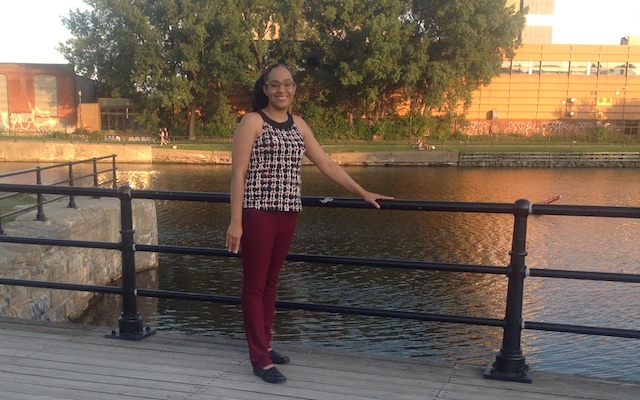
It took Manon Day a decade to be diagnosed with Parkinson’s, which the Canadia Parkinson’s campaigner attributes to “incompetence and prejudice”. While her symptoms started at the age of 17, the neurologists she initially consulted disbelieved her; instead, they stereotyped the young black woman as a drug addict.
“It reached the point where I became very ill and could not walk,” Manon shared. “Racism was the cause of my delayed diagnosis and I felt powerless.”
To tackle the underrepresentation of women and minority ethnics in Parkinson’s research community, she created a Facebook group called Everything about Parkinson’s Disease three years ago. The group connects patients of all ages and races and is over 15,000 members-strong.
Read Manon’s story here.